Can You Use A Hacksaw For Wood: Safe Cutting Tips
Yes, you can use a hacksaw to cut wood, but it is usually not the right tool for the job. A hacksaw can cut thin, soft pieces of wood in a pinch. However, its fine metal-cutting blade works slowly, may clog with sawdust, and often leaves a rough or uneven cut.
For most wood projects in the United States, use a hand saw, panel saw, backsaw, coping saw, or power saw instead. A hacksaw is best saved for metal, plastic, pipe, and other hard materials.
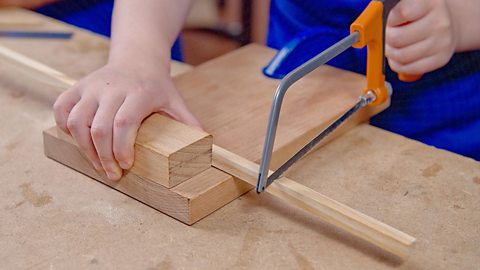
Why a Hacksaw Can Cut Wood
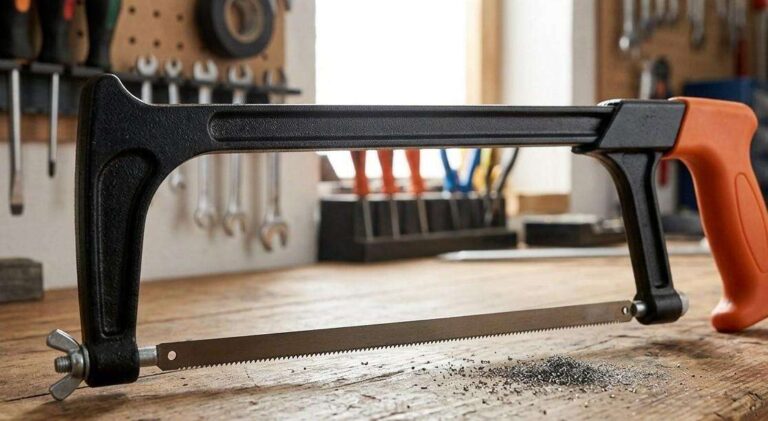
A hacksaw cuts by using a row of small teeth that remove material as you push and pull the blade. Wood is softer than most metals, so those teeth can pass through it.
The issue is not whether the blade can cut wood. The issue is how well it does the job.
Most hacksaw blades have fine teeth. Common blades may have about 14 to 32 teeth per inch, or TPI. These small teeth are made to cut materials such as:
- Steel
- Aluminum
- Copper pipe
- Plastic pipe
- Threaded rod
- Bolts and screws
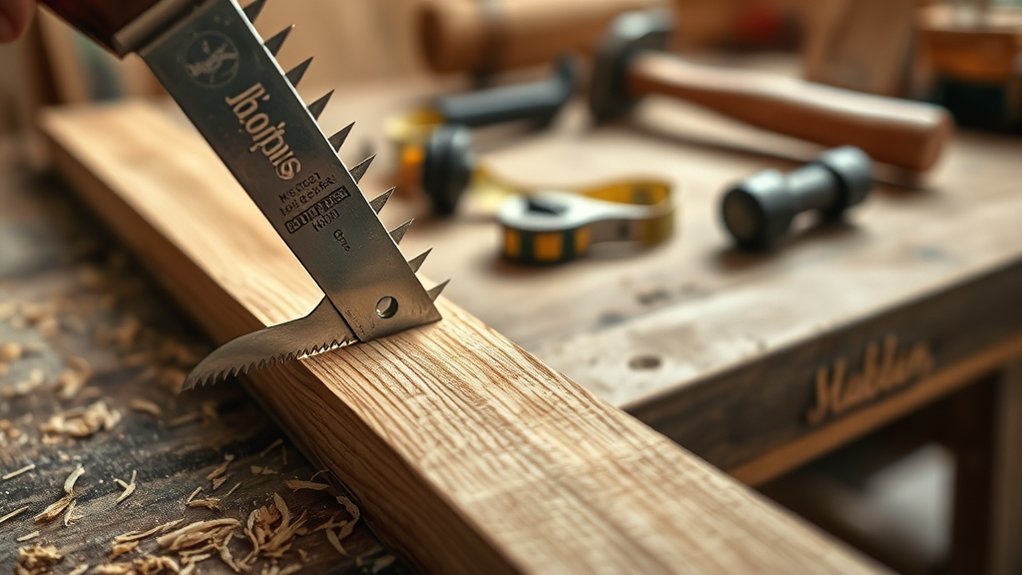
Wood saws usually have larger teeth with deeper spaces between them. These spaces are called gullets. They help carry wood chips out of the cut.
A hacksaw has smaller gullets. Sawdust can fill them quickly, especially in softwood. When that happens, the blade may rub instead of cut. The cut can become slow, hot, and rough.
When a Hacksaw Is Useful for Wood
A hacksaw can work for small, low-risk wood cuts when you do not have another saw nearby. It is most useful under these conditions:
- The wood is thin.
- The wood is soft, such as pine or cedar.
- The cut is short.
- The finish does not need to look clean.
- The piece can be held firmly.
- You only need to make a few cuts.
For example, a hacksaw may cut a thin wooden shim, a small trim piece, a craft stick, or a narrow piece of softwood. It may also help trim a small wooden dowel, though a fine-tooth wood saw usually gives better control.
A hacksaw is less suitable for thick boards, hardwood, plywood, long cuts, or visible finish cuts. The blade can flex, and the narrow frame may limit how far you can cut into a board.
The best answer depends on the material and the result you need. If speed, accuracy, or a clean edge matters, choose a saw made for wood.

Hacksaw vs. Wood Saw
A wood saw is the better choice because its teeth and blade shape are designed for wood fibers. A hacksaw is designed for harder materials and uses a different tooth pattern.
| Tool | Best use | Cut speed in wood | Typical result |
|---|---|---|---|
| Hacksaw | Small emergency cuts | Slow | Rough to fair |
| Panel saw | Boards and sheet goods | Fast | Fair to good |
| Backsaw | Straight, controlled cuts | Moderate | Clean |
| Coping saw | Curves and small shapes | Moderate | Controlled |
| Pruning saw | Branches and green wood | Fast | Rough |
| Jigsaw | Curves and sheet goods | Fast | Depends on blade |
| circular saw | Long, straight cuts | Very fast | Good with the right blade |
A hacksaw may seem safer because it cuts slowly. Slow cutting does not always mean better control. A blade made for the wrong material can catch, wander, or require excess force.
A hand saw for wood usually gives you a better grip on the work. Its larger teeth clear chips more easily, and its wider blade is less likely to twist during a straight cut.
Blade tooth count matters
If you must use a hacksaw on wood, a blade with fewer teeth per inch is generally more useful than an extremely fine blade. A coarse hacksaw blade leaves more space for sawdust and may cut more freely.
Still, a hacksaw blade is not a true substitute for a wood blade. Tooth count alone does not change the blade’s overall design.
The blade direction also matters
Many hacksaw blades are installed so they cut on the forward stroke. The teeth should face away from the handle on a standard hacksaw frame.
Check the frame and blade instructions before cutting. A backward blade may still scrape through wood, but it will cut poorly and can make the tool harder to control.
How to Cut Wood With a Hacksaw
Use a hacksaw for wood only when the piece is small, stable, and suitable for a rough or basic cut.
What you need
- A hacksaw with a sound frame
- A sharp, properly fitted blade
- A pencil or marking knife
- A vise or clamps
- Safety glasses
- A file or sandpaper for the cut edge
Do not use a bent, cracked, badly rusted, or loose blade. Replace it first.
Follow these steps
-
Mark the cut line.
Use a pencil for a general cut. For better accuracy, score the line lightly with a marking knife. -
Support the wood.
Clamp the workpiece to a sturdy bench. Keep the cut close to the support point to reduce vibration. -
Check the blade path.
Make sure the hacksaw frame will not strike the workbench or another object as you cut. -
Start with short strokes.
Place the blade on the waste side of the line. Use light strokes until a shallow groove forms. -
Keep the blade straight.
Hold the frame with both hands if that gives you better control. Do not twist the blade to widen the cut. -
Use steady pressure.
Let the teeth do the cutting. Heavy force can bend the blade, damage the teeth, or cause the saw to jump. -
Slow down near the end.
Support the waste piece so it does not tear away and split the wood. -
Smooth the edge.
Remove splinters with sandpaper or a file. A hacksaw cut may need more cleanup than a wood-saw cut.
Signs that the cut is going well
You should see a narrow kerf, or cut line, with steady progress. The blade should stay tight in the frame. The wood should remain firmly held, and the blade should not become excessively hot.
Stop if the blade binds, bends, slips, or produces smoke. Release the pressure and inspect the setup before continuing.

Common Problems When Cutting Wood With a Hacksaw
The most common problem is poor performance caused by the mismatch between the blade and the material.
The blade cuts very slowly
Possible causes:
- The blade has very fine teeth.
- The blade is dull.
- You are using too little stroke length.
- Sawdust has packed between the teeth.
- The wood is thick or dense.
What to do:
Use a sharp, coarser blade if available. Clear the cut by lifting the blade away from the kerf from time to time. If the wood is thick, switch to a hand saw made for wood.
The blade binds in the cut
Possible causes:
- The wood moves during cutting.
- The cut closes around the blade.
- You are pushing too hard.
- The blade is not aligned with the cut line.
What to do:
Clamp the wood more firmly. Reduce pressure and use straight strokes. Do not force the blade sideways.
The wood splinters
Possible causes:
- The blade is dull.
- The wood is unsupported near the exit point.
- You are using a rough cutting motion.
- The cut crosses a weak area or knot.
What to do:
Place painter’s tape over the cut line, score the line first, and support both sides of the workpiece. Finish with sandpaper.
The blade breaks
Possible causes:
- The blade was over-tightened.
- The blade was twisted.
- The blade was bent during the cut.
- The frame or blade was damaged before use.
What to do:
Wear eye protection and keep your hands away from the blade path. Replace the blade and inspect the frame. Do not try to straighten and reuse a damaged hacksaw blade.
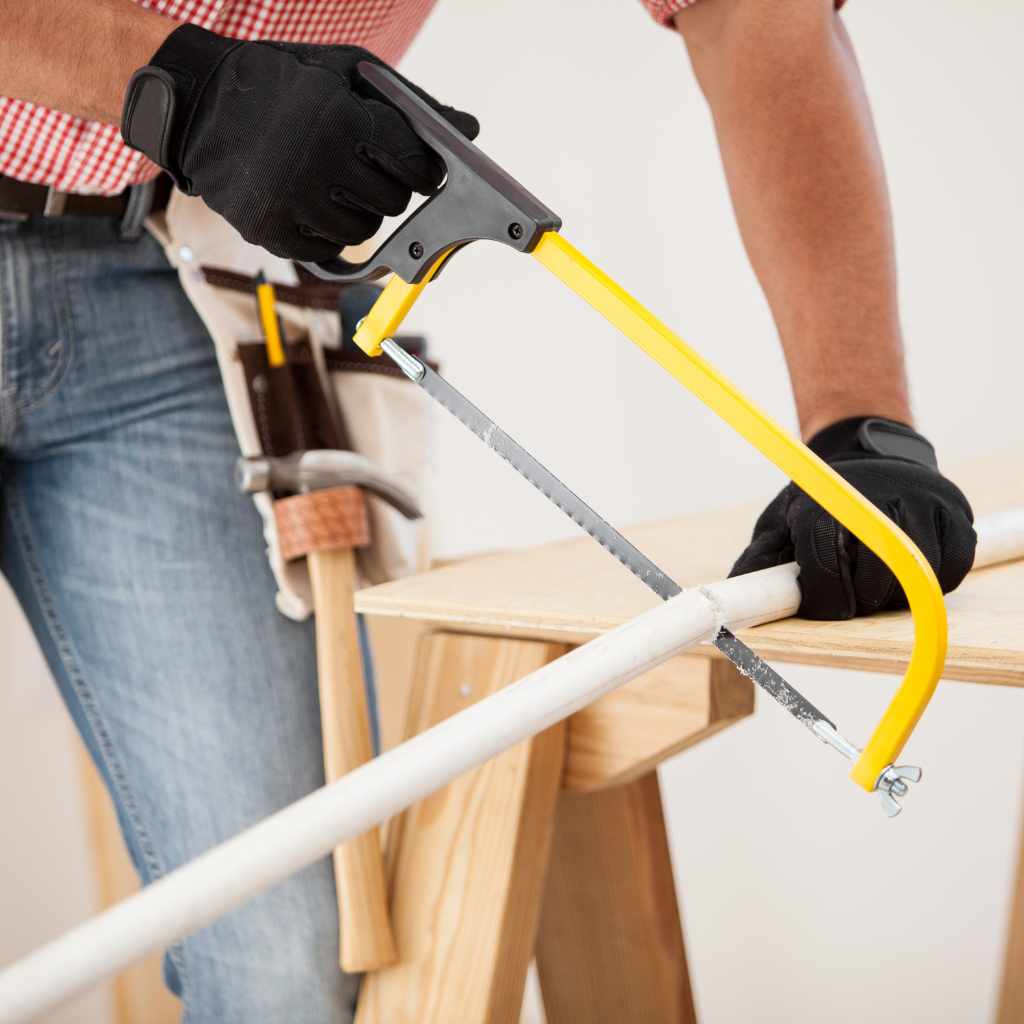
Is a Hacksaw Safe for Cutting Wood?
A hacksaw can be safe for a small wood cut when you secure the work and use light, controlled strokes. The main risks are slipping, splintering, blade breakage, and loss of control.
Use these safety practices:
- Wear safety glasses.
- Clamp the wood instead of holding it in your hand.
- Keep both hands behind the teeth.
- Check that the blade is tight and seated correctly.
- Keep the frame clear of nearby objects.
- Cut away from your body when possible.
- Do not use a damaged blade.
- Keep children away from the work area.
- Do not cut wood that contains hidden nails, screws, or metal fasteners.
If the wood may contain lead paint, treated coatings, or other hazardous finishes, avoid creating dust without proper controls. Older painted wood in homes may need special care. Do not sand or cut suspect coatings casually.
For long, thick, or awkward pieces, use a saw designed for the task. A power saw can also be appropriate, but it needs proper guarding, support, and training. Follow the tool maker’s instructions and the safety guidance that applies to your equipment.
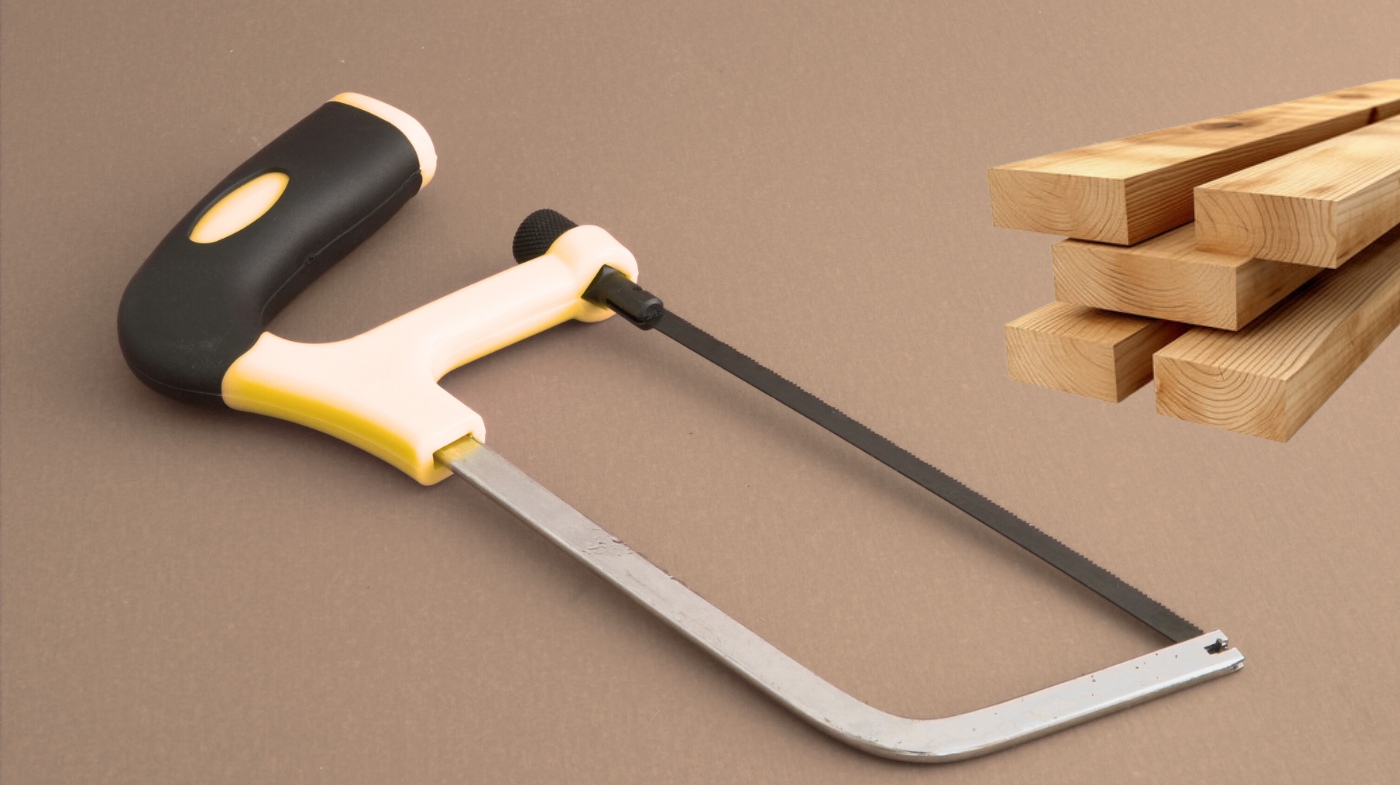
Which Saw Should You Use Instead?
Choose the saw based on the wood, cut shape, and finish you need.
- Use a panel saw for simple cuts across boards or plywood.
- Use a backsaw for straight cuts that need better control.
- Use a coping saw for small curves and inside shapes.
- Use a pruning saw for branches and rough outdoor cuts.
- Use a jigsaw for curves or openings in sheet wood.
- Use a circular saw for long, straight cuts in boards and panels.
- Use a miter saw for repeated crosscuts and angled trim cuts.
- Use a Japanese pull saw for thin stock and clean hand cuts.
A hacksaw is a reasonable backup for thin softwood. It is not the best general-purpose wood saw.
Quick decision guide
| Your task | Better tool |
|---|---|
| Cut a small trim piece | Backsaw or fine-tooth hand saw |
| Cut a 2-by-4 board | Panel saw or circular saw |
| Cut a wood dowel | Dowel saw, backsaw, or fine hand saw |
| Cut a curve | Coping saw or jigsaw |
| Cut a tree branch | Pruning saw |
| Cut plywood | Panel saw, jigsaw, or circular saw |
| Cut a thin craft stick in an emergency | Hacksaw can work |
The deciding factor is not only whether the tool can make the cut. It is whether the tool can make the cut with enough control, speed, and finish quality for your project.

Key Takeaways
- Yes, a hacksaw can cut wood.
- It works best on thin, softwood pieces and short cuts.
- Its fine metal-cutting teeth may clog with sawdust.
- It cuts wood more slowly and often more roughly than a wood saw.
- Clamp the wood, wear safety glasses, and use light pressure.
- Use a hand saw or power saw made for wood when the cut is thick, long, visible, or important.
Frequently Asked Questions
Can a hacksaw cut plywood?
Yes, but it is usually slow and may leave a rough edge. Plywood can splinter as the blade exits. A fine-tooth panel saw, jigsaw blade made for plywood, or circular saw blade designed for sheet goods will usually work better.
Can you use a hacksaw to cut a 2-by-4?
You can, but it is not practical for most people. A 2-by-4 is thick enough to make the narrow hacksaw frame and fine blade feel slow and awkward. Use a panel saw, handsaw, or circular saw instead.
Can a hacksaw cut hardwood?
It can cut some hardwood, especially in thin sections, but progress may be slow. Dense wood places more demand on the blade and can increase binding. A sharp backsaw or hand saw with teeth made for wood is the better option.
Will a hacksaw cut a wooden dowel?
Yes. A hacksaw can cut a small dowel, but the cut may crush or splinter the end. Clamp the dowel, wrap masking tape around the cut area, and sand the end after cutting. A fine-tooth backsaw often gives a cleaner result.
Is a hacksaw better than a hand saw for wood?
No, not for normal woodwork. A hand saw made for wood usually cuts faster and clears sawdust better. A hacksaw is useful mainly when you need a small emergency cut and do not have a suitable wood saw.
Conclusion
You can use a hacksaw for wood, but treat it as a backup tool rather than the standard choice. It is suitable for thin, soft pieces and rough cuts when the work is secured and safety precautions are followed.
For clean, fast, and controlled results, use a saw designed for wood. Before cutting, ask three simple questions: How thick is the wood, how clean must the edge be, and do I have the right blade? Those answers will usually point you to the safest and most effective tool.
Recent Tool Guides
 Hammer
How To Hammer Flowers Onto Paper: Easy Guide
Learn how to hammer flowers onto paper with simple steps, helpful tips, and beautiful results for...
Read Guide → Wrench
How To Use A Hex Wrench: Easy Step-By-Step Guide
Learn how to use a hex wrench correctly with simple steps, helpful tips, and common mistakes...
Read Guide → Hacksaw
How To Cut Curtain Pole With Hacksaw: Easy Guide
Learn how to cut curtain pole with hacksaw safely and neatly. Follow simple steps for accurate...
Read Guide → Wrench
How To Use A Husky Torque Wrench: Easy Guide
Learn how to use a Husky torque wrench correctly with simple steps, torque settings, and safety...
Read Guide → Hammer
How To Hold A Hammer: Safe Grip Guide
Learn how to hold a hammer with the right grip, stance, and technique for safer, more...
Read Guide → Hacksaw
How To Cut Flexible Metal Conduit With Hacksaw: Easy Guide
Learn how to cut flexible metal conduit with hacksaw safely and cleanly. Follow simple steps for...
Read Guide →