How To Cut Curtain Pole With Hacksaw: Easy Guide
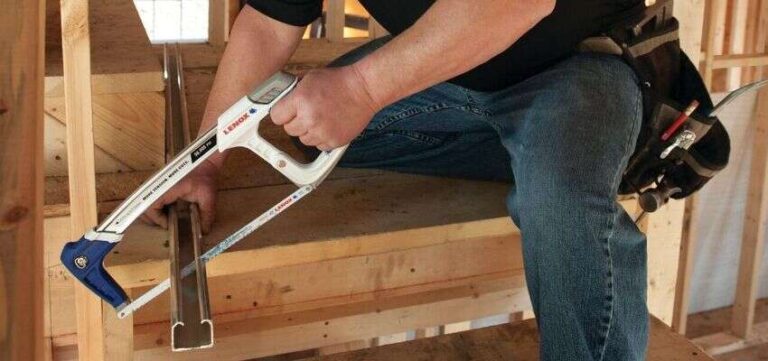
Cutting a curtain pole with a hacksaw is simple when you measure twice, support the pole well, and use the right blade. For most metal curtain rods, a fine-tooth hacksaw gives a clean cut without the need for power tools. Wood poles can also be cut with a hacksaw, though a fine-tooth wood saw usually works better.
This guide is written for common curtain hardware used in U.S. homes. Measurements are given in inches, and the method works for steel, aluminum, and many hollow metal curtain poles.

Can You Cut a Curtain Pole With a Hacksaw?
Yes. A hacksaw can cut most metal curtain poles, including steel and aluminum rods. It can also cut some wooden poles, but the finish may be rougher than a cut made with a fine-tooth wood saw.
A hacksaw is a good choice when:
- The pole is too long for the window.
- You need a custom length.
- You do not have access to a power saw.
- You want a low-cost tool with good control.
Before cutting, check the pole and its parts. Some curtain rods have a solid core, while others are hollow. Some have a telescoping section, spring section, or internal joiner. Avoid cutting through a joint, locking hole, threaded end, or fixed mounting point.
A cut rod must still fit inside the brackets and finials. The cut end should also be hidden when possible.

What You Need Before Cutting
Gather the tools and supplies before you start. This keeps the work steady and reduces the chance of a poor cut.
Tools and materials
- Hacksaw
- Fine-tooth metal-cutting blade
- Tape measure
- Pencil or fine marker
- Painter’s tape or masking tape
- Bench vise, clamps, or a sturdy work surface
- File or fine-grit sandpaper
- Safety glasses
- Work gloves
- Scrap wood or cardboard
For a metal curtain pole, choose a blade with about 24 to 32 teeth per inch. A fine blade helps prevent chatter and leaves a smoother edge. A coarse blade can catch on thin metal and bend the pole.
Use a new or sharp blade. A dull blade needs more force. More force can make the hacksaw slip or crush a hollow rod.
For a wood pole, a fine-tooth blade may work in a pinch. However, a fine-tooth hand saw is usually the better tool. It cuts wood faster and is less likely to leave a ragged edge.
Prepare a safe work area
Work on a stable bench or table. Keep the pole away from the edge. Remove loose objects that could catch the hacksaw.
Wear safety glasses. Small metal chips can come off during the cut. Gloves can help protect your hands from sharp edges, but keep them clear of the blade.
Do not hold the pole in one hand while sawing with the other. The pole can twist, slip, or move into the blade.

How to Measure a Curtain Pole Before Cutting
Measure the pole against the finished length you need, not just the width of the window.
For a typical curtain setup, the pole should extend beyond the window on both sides. This gives the curtains room to move away from the glass. The exact extension depends on the brackets, finials, curtain fullness, and the look you want.
Use this basic calculation:
Cut length = required finished pole length − length of the pole that must be removed
Example
Suppose:
- The required finished pole length is 72 inches.
- The current pole is 84 inches long.
- The finials and brackets do not change the pole length.
You need to remove:
84 inches − 72 inches = 12 inches
If you want the cut to be centered, remove 6 inches from each end. If one end will be hidden behind a finial, removing all 12 inches from that end may be easier.
Measure the hardware, not only the pole
Dry-fit the pole with the brackets and finials before marking it. Check:
- How far the pole enters each bracket
- Whether the finials attach inside or outside the pole
- Whether the curtains need extra space at each end
- Whether a center bracket changes the usable length
- Whether the pole has a telescoping overlap
- Whether the cut end will be visible
If the pole has a decorative end, cut the plain end whenever possible. Keep factory-finished ends for visible areas.
Use the curtain width as a check
Measure the curtain panels and the window together. The pole should usually be wider than the window so the curtains can clear the opening when pulled back.
Do not cut the pole to the exact window width unless the hardware instructions call for it. A pole that is too short may leave gaps at the sides and may not support the brackets correctly.

How to Cut a Metal Curtain Pole With a Hacksaw
Follow these steps for a clean and controlled cut.
1. Mark the cut line
Measure from the correct end of the pole. Mark the cut with a pencil or fine marker.
Wrap painter’s tape around the pole so the tape crosses the cut line. The edge of the tape gives you a clear guide. It can also reduce light scratching near the cut.
For a round pole, check the mark all the way around. A line that does not meet evenly can produce a slanted cut.
2. Protect the pole
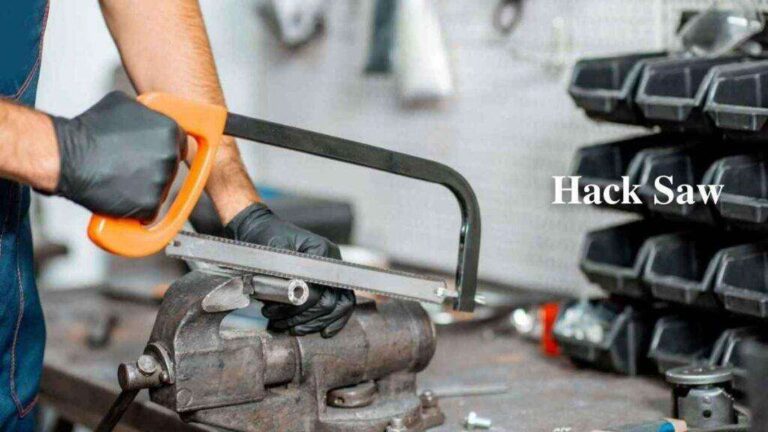
Place the pole in a vise with a piece of cardboard, leather, or scrap wood between the jaws and the pole. Tighten the vise enough to stop movement.
Do not crush a hollow pole. Excess pressure can flatten the tube and prevent the bracket or finial from fitting.
If you do not have a vise, use two clamps. Support the pole on both sides of the cut. Leave enough room for the hacksaw to move freely.
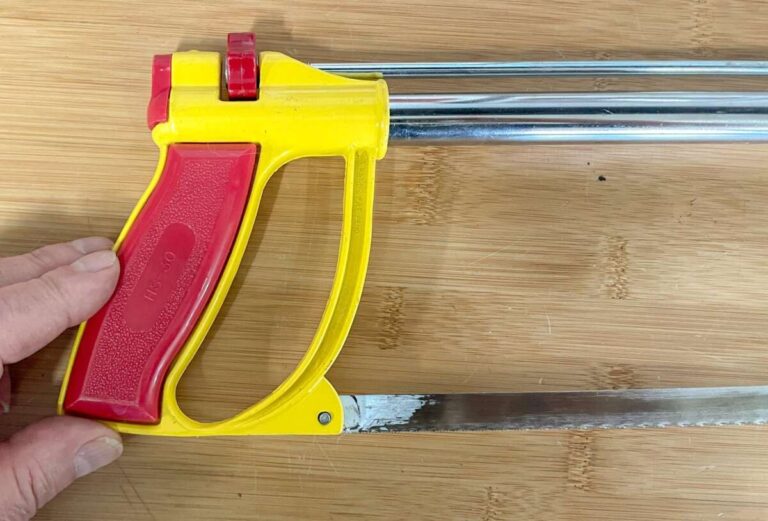
3. Fit the hacksaw blade
Install the blade with the teeth pointing forward, toward the end of the hacksaw. Most hacksaws cut on the forward stroke.
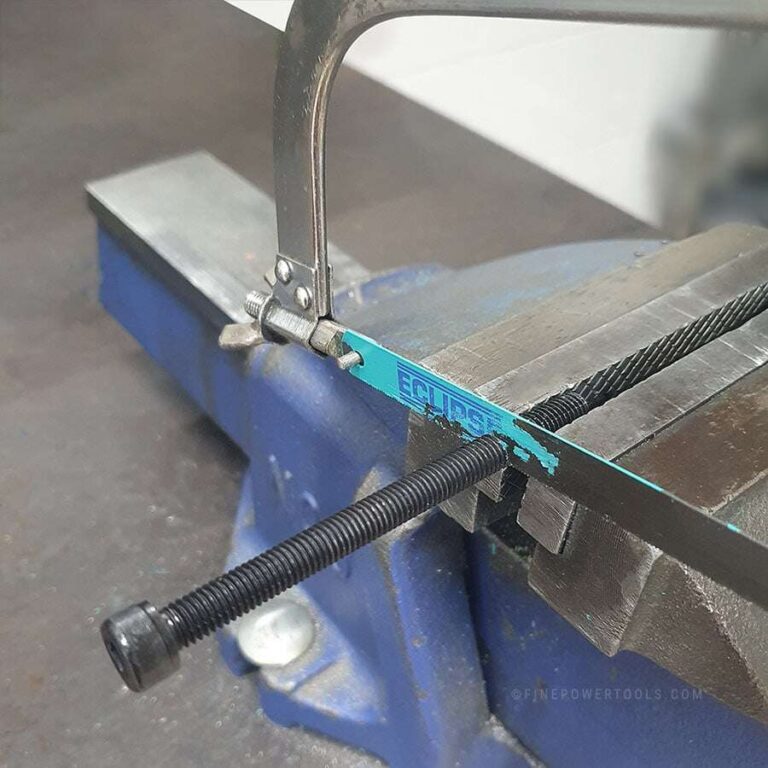
Make sure the blade is tight. A loose blade can bend, wander, or break. Use a fine-tooth blade for thin metal or aluminum curtain poles.
4. Start a shallow groove
Place the blade on the marked line. Use short, light strokes to create a shallow groove around the pole.
Do not press hard at the start. The groove helps guide the blade. It also reduces the chance that the blade will slide across the surface.
Keep the hacksaw square to the pole. A square cut makes it easier to fit the finial and bracket.
5. Make steady strokes
Once the groove is established, use longer strokes. Apply steady pressure on the forward stroke and ease up as you pull the blade back.
Let the blade do the work. Fast, hard strokes create heat and can make the blade jump. Slow strokes usually give you more control.
Keep the pole supported close to the cutting area. If the pole vibrates, stop and improve the support.
6. Finish the cut carefully
As the blade nears the far side, reduce pressure. The last section can break away suddenly if you force it.
Support the waste piece with your free hand, but keep your hand away from the blade. Let the final metal fibers separate under light strokes.
7. Remove the burr
A burr is a sharp ridge left around the cut edge. Remove it with a file. Work around the outside edge first, then smooth the inside edge if the pole is hollow.
You can also use fine-grit sandpaper for a light finish. Wear gloves when handling the cut end.
Test the edge with a cloth. If the cloth catches, continue filing. A sharp burr can damage curtains or scratch your fingers.

How to Cut a Wooden Curtain Pole
A hacksaw can cut a wooden pole, but use a fine blade and take extra care to prevent splintering.
Mark the cut line, then wrap painter’s tape around it. The tape helps hold the wood fibers together. Support the pole on both sides of the cut.
Start with short strokes. Once the groove is clear, use smooth strokes and avoid twisting the saw. Cut just outside the line, then sand down to the final mark if needed.
A fine file or sandpaper can smooth the end. If the pole has a painted or stained finish, lightly sand the cut edge and touch it up if the cut will remain visible.
Do not cut through a decorative turned section unless you plan to refinish it. A plain section is easier to cut and hide.

What to Do When the Cut Goes Wrong
Most cutting problems come from poor support, a dull blade, or an incorrect measurement.
The cut is crooked
A crooked cut often means the hacksaw was not held square. File the high side carefully. If too much material was removed, the pole may need a new finial or a different mounting position.
The pole is crushed
A vise that is too tight can flatten a hollow pole. Try placing the cut end inside a matching sleeve or connector if the hardware allows it. If the bracket will not fit, do not force it. A replacement pole may be safer and cleaner.
The metal edge is sharp
File both the outside and inside edges. Run a scrap cloth over the end. The cloth should slide without snagging.
The blade keeps slipping
The mark may be too shallow, or the blade may be dull. Start with short strokes and use painter’s tape as a guide. Replace the blade if it no longer cuts with light pressure.
The pole is now too short
Do not try to restore length by stretching the pole. Check whether the mounting brackets can move outward while still landing on solid wall support. If not, a longer replacement pole is usually the practical answer.
The finial will not fit
The cut may have left a burr, or the pole may have been slightly crushed. File the edge and check the pole shape. Do not hammer a finial onto a damaged end because it may split the finial or deform the rod.

Should You Cut One End or Both Ends?
Cut one end when the pole has one plain end and one decorative or factory-finished end. This keeps the visible end intact and makes the job faster.
Cut both ends when:
- You want the pole centered in the window.
- Both ends have enough plain material.
- The brackets require equal spacing.
- The pole has a finish or pattern that must remain balanced.
For a telescoping curtain rod, avoid cutting the overlap area unless the manufacturer allows it. The overlapping sections help the rod reach its stated length and may contain internal parts.
Before cutting an adjustable rod, extend it fully and inspect both ends. Look for:
- Locking holes
- Spring sections
- Threaded ends
- Plastic inserts
- Internal couplers
- Crimped or expanded sections
Cut only a plain section that will still work with the brackets and end caps.

Hacksaw Cutting Mistakes to Avoid
Avoid these common errors:
- Measuring the window but not the brackets
- Cutting before checking the finials
- Using a coarse blade on thin metal
- Cutting without clamping the pole
- Holding the pole in your hand
- Tightening a vise until the pole flattens
- Cutting through a telescoping joint
- Applying too much force
- Leaving the cut edge unfiled
- Installing a pole that is too short to reach safe support
Do not use a damaged hacksaw frame or a loose blade. Stop if the blade bends, cracks, or begins to snag.
For wall-mounted curtain poles, the cut itself is not usually the main structural concern. The brackets and wall anchors must support the pole, curtains, and movement of the fabric. Mount brackets into suitable wall material, studs, or properly rated anchors.

How to Get a Clean, Professional Finish
A clean result comes from careful marking and light finishing work.
After cutting:
- File the outer edge.
- File or sand the inner edge.
- Wipe away metal dust.
- Test the finial or bracket.
- Touch up exposed paint if needed.
- Cover the cut edge if it will contact fabric.
For painted metal, a small amount of matching touch-up paint can protect the exposed edge from corrosion. Let the paint dry fully before installing the curtain.
If the cut remains visible, place it near a bracket or behind a finial when the design allows. If the pole has a chrome or polished finish, avoid coarse sandpaper because it can leave visible scratches.

Frequently Asked Questions
Can I cut a curtain pole with a junior hacksaw?
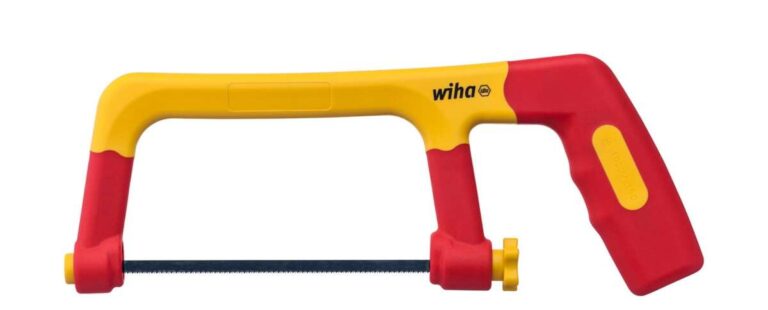
Yes. A junior hacksaw can cut many lightweight curtain poles. Use a fine blade, support the rod well, and take short strokes. It may take longer on thick steel poles.
What type of hacksaw blade should I use?
Use a fine-tooth metal-cutting blade. A blade in the range of about 24 to 32 teeth per inch is suitable for many thin metal curtain poles. A fine blade helps create a smoother cut.
Can I cut a curtain rod without a vise?
Yes, but the pole must still be held securely. Use padded clamps or a second person to support the rod while you cut. Do not hold the pole in your hand while sawing.
Should I cut a curtain rod from the middle?
Usually, no. Cut from a plain end when possible. Cutting the middle can remove a joint, damage a telescoping feature, or make the center support unusable.
Can I use a pipe cutter instead of a hacksaw?
A pipe cutter may work on some thin, round metal rods, but it can crush hollow curtain poles and leave an inward ridge. A hacksaw gives you more control over where the cut occurs.
How do I stop a metal curtain pole from splintering or cracking?
Metal does not splinter like wood, but thin tubing can deform. Use a fine blade, light pressure, firm support, and a padded vise. For wood, painter’s tape around the cut line helps reduce splintering.
Final Check Before Installation
Before mounting the pole, confirm that:
- The finished length is correct.
- The cut end is smooth.
- The finials fit fully.
- The brackets fit without force.
- The pole is not crushed or bent.
- The curtain rings or grommets move freely.
- The brackets have suitable wall support.
A hacksaw gives a clean curtain pole cut when the pole stays still and the blade stays square. Measure the installed hardware first, cut the least visible end, and file the edge before you hang the curtains.
Recent Tool Guides
 Hammer
How To Hammer Flowers Onto Paper: Easy Guide
Learn how to hammer flowers onto paper with simple steps, helpful tips, and beautiful results for...
Read Guide → Wrench
How To Use A Hex Wrench: Easy Step-By-Step Guide
Learn how to use a hex wrench correctly with simple steps, helpful tips, and common mistakes...
Read Guide → Wrench
How To Use A Husky Torque Wrench: Easy Guide
Learn how to use a Husky torque wrench correctly with simple steps, torque settings, and safety...
Read Guide → Hammer
How To Hold A Hammer: Safe Grip Guide
Learn how to hold a hammer with the right grip, stance, and technique for safer, more...
Read Guide → Hacksaw
How To Cut Flexible Metal Conduit With Hacksaw: Easy Guide
Learn how to cut flexible metal conduit with hacksaw safely and cleanly. Follow simple steps for...
Read Guide → Wrench
How To Use An Inch Pound Torque Wrench: Easy Guide
Learn how to use an inch pound torque wrench correctly with simple steps, accurate settings, and...
Read Guide →