

For most metal, choose a bi-metal hacksaw blade with 18 to 24 teeth per inch.
Choosing what type of hacksaw blade to cut metal depends on the metal’s hardness, thickness, and shape. A good blade makes a clean cut with less effort, while the wrong one can bind, chatter, or break teeth. This guide explains the best blade types, tooth counts, materials, and cutting methods so you can work with confidence.
What Type of Hacksaw Blade Cuts Metal Best?
The best all-purpose choice is a bi-metal hacksaw blade with 18 or 24 teeth per inch (TPI). Bi-metal blades combine a flexible spring-steel back with a hard high-speed steel cutting edge. This design helps the blade resist snapping while keeping its teeth sharp.
For hard steel, stainless steel, and thick metal, choose a blade with 14 to 18 TPI. For thin sheet metal, tubing, and electrical conduit, use 24 to 32 TPI. The teeth should stay engaged with the work, much like a row of small oars pushing through water.
The right choice depends on these factors:
• Metal type: Aluminum cuts easily, while stainless steel needs a tougher blade.
• Metal thickness: Thick stock needs larger teeth. Thin stock needs finer teeth.
• Cut shape: A straight cut may use a standard blade, while tight curves need a narrow blade.
• Work speed: Coarse teeth cut faster, while fine teeth give better control and smoother cuts.
A carbon steel blade can work for light jobs and soft metals. However, a bi-metal blade usually offers better life, flexibility, and value for general metalworking.
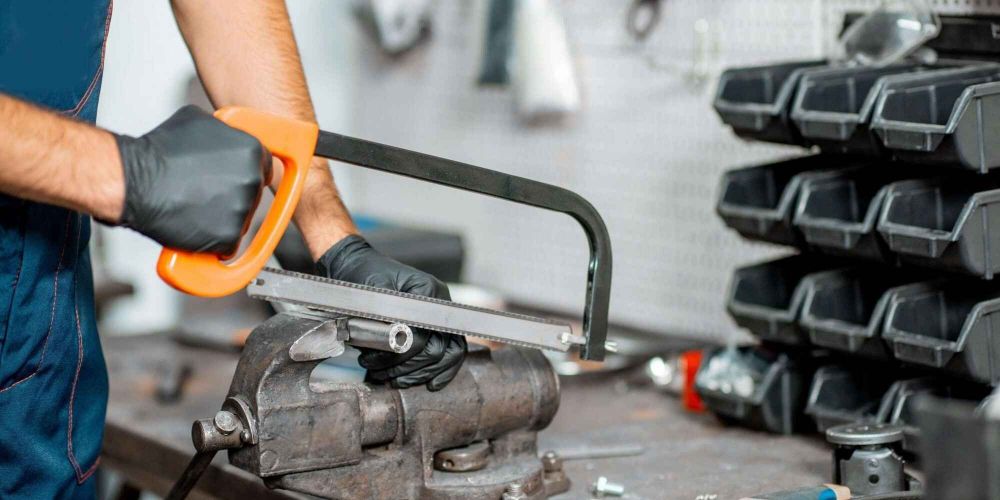
Hacksaw Blade Materials Explained
Hacksaw blades are made from several types of steel. Each material has a different balance of cost, cutting speed, toughness, and wear resistance.
Bi-metal hacksaw blades
Bi-metal blades are the best general-purpose option for cutting metal. Their flexible body helps prevent breakage, while the high-speed steel edge holds a sharp tooth profile.
They work well on:
• Mild steel
• Stainless steel
• Copper
• Brass
• Aluminum
• Steel pipe
• Threaded rod
• Metal brackets
Bi-metal blades cost more than basic carbon steel blades, but they often last much longer. For regular home repair, plumbing, automotive, or workshop use, they are usually the safest purchase.
Carbon steel blades
Carbon steel blades are affordable and flexible. They are suitable for soft metals and occasional cutting jobs.
Use them for:
• Aluminum
• Copper
• Brass
• Plastic
• Thin mild steel
Carbon steel teeth can dull quickly when used on stainless steel or hardened steel. They are useful in a basic tool kit, but they are not the best choice for heavy or repeated work.
High-speed steel blades
High-speed steel, or HSS, blades resist heat and wear. They are often used as the cutting edge in bi-metal blades.
A solid HSS blade can cut hard materials well, but it may be less flexible than a bi-metal blade. If the blade twists during a cut, a rigid blade may snap more easily.
Carbide-grit blades
Carbide-grit blades do not use normal pointed teeth. Instead, they have a rough carbide surface that grinds through hard or abrasive materials.
They can cut:
• Cast iron
• Hardened steel
• Fiberglass
• Ceramic-coated metal
• Abrasive sheet material
Carbide-grit blades are not always the best first choice for common steel. They cut in a different way and may feel slower on softer metals.
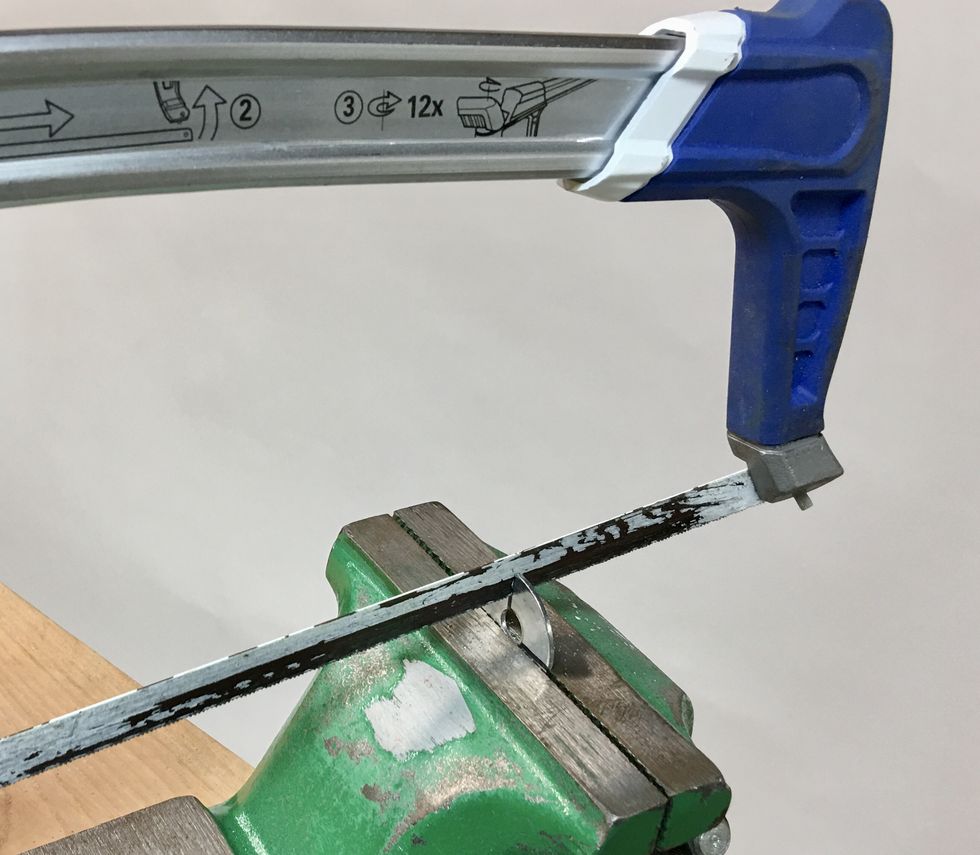
How Many Teeth Per Inch Should a Metal Hacksaw Blade Have?
Teeth per inch, or TPI, tells you how fine the blade is. A higher TPI means smaller teeth and a smoother cut. A lower TPI means larger teeth and faster material removal.
Use this basic guide when choosing what type of hacksaw blade to cut metal:
| Metal or job | Recommended TPI |
|---|---|
| Thick steel plate | 14 to 18 TPI |
| Steel bar or heavy pipe | 14 to 18 TPI |
| General mild steel | 18 to 24 TPI |
| Stainless steel | 18 to 32 TPI |
| Thin-wall tubing | 24 to 32 TPI |
| Sheet metal | 24 to 32 TPI |
| Aluminum | 14 to 24 TPI |
| Copper and brass | 18 to 24 TPI |
| Small bolts and screws | 24 to 32 TPI |
Try to keep at least three teeth in contact with the metal during the cut. If only one or two teeth touch the work, they can catch and break. If too many fine teeth are buried in thick metal, chips may clog the gullets and slow the cut.
A useful rule is simple:
• Thick metal needs coarse teeth.
• Thin metal needs fine teeth.
• Hard metal usually needs a durable bi-metal blade.
• Soft metal may need a blade with more space between teeth to reduce clogging.
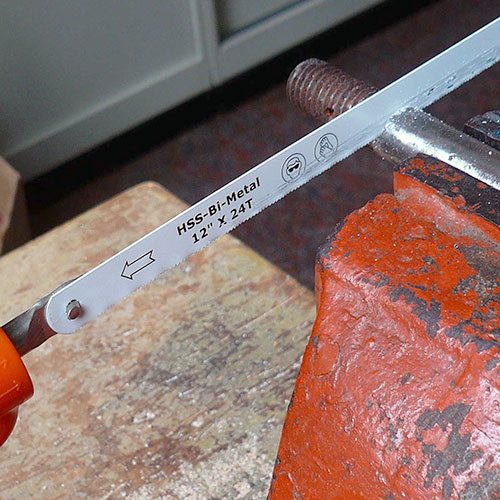
Best Hacksaw Blade for Different Metals
Different metals react differently to cutting. The best blade for mild steel may not be ideal for aluminum or stainless steel.
Mild steel
For mild steel, use a bi-metal blade with 18 to 24 TPI. A 14 TPI blade works well for thick plate, angle iron, and heavy steel bar.
Mild steel is forgiving, so it is a good material for learning. Keep the blade straight and use steady pressure. Let the teeth cut rather than forcing the frame through the work.
Stainless steel
Stainless steel is tough and can harden when overheated or rubbed without cutting. Use a sharp bi-metal blade with 18 to 32 TPI.
Apply firm, even pressure during the forward stroke. Avoid light rubbing because it creates heat and may harden the surface. Cutting fluid can help reduce heat and extend blade life.
Aluminum
Aluminum is soft, but it can clog blade teeth. A 14 to 24 TPI blade with generous tooth gullets works well.
Clean the teeth often if aluminum builds up. A light cutting lubricant can reduce loading, but do not use an excessive amount. A clogged blade may slide over the metal instead of cutting it.
Copper and brass
Copper and brass usually cut well with an 18 to 24 TPI blade. These metals are soft, so excessive pressure can bend the blade or damage the cut.
Use a sharp blade and support the work close to the cut. This reduces vibration and keeps the teeth from grabbing.
Cast iron
Cast iron is hard and brittle. A bi-metal blade may work for small sections, but a carbide-grit blade can be a better option for repeated cuts or large castings.
Keep the work secure and expect dust or small chips. Wear eye protection, and avoid breathing airborne particles.
Hardened steel
Hardened steel can quickly dull a standard hacksaw blade. Use a high-quality bi-metal blade or a carbide-grit blade designed for hard materials.
If the material is extremely hard, a hacksaw may not be the most efficient tool. An abrasive cutoff wheel, reciprocating saw, or band saw may be more suitable.

How to Read Hacksaw Blade Tooth Patterns
Tooth shape affects how the blade enters and leaves the metal. Most standard hacksaw blades use a regular tooth pattern, but some have special designs.
Regular-set teeth
Regular teeth alternate slightly from side to side. This creates a narrow cutting path and helps clear chips.
They are a reliable choice for common steel, aluminum, copper, and brass.
Wavy-set teeth
Wavy teeth are arranged in groups that form a wave pattern. They reduce vibration and work well on thin sheet metal or softer materials.
A wavy blade can make a smoother cut, especially when the metal is thin and likely to bend.
Variable-pitch teeth
Variable-pitch blades use different tooth spacing along the blade. This design helps reduce vibration and chatter.
They are useful for:
• Stainless steel
• Structural steel
• Bundled material
• Tubing
• Jobs where vibration is a problem
Variable-pitch bi-metal blades often cost more, but they can feel smoother and last longer in demanding work.

How to Choose the Right Hacksaw Blade Size
Most hand hacksaws use 12-inch blades. In the United States, a typical replacement blade measures about 12 inches from pin hole to pin hole.
Common blade lengths include:
• 10 inches for compact frames
• 12 inches for standard hand hacksaws
• 14 inches for larger frames
The blade must match the frame. Check the distance between the mounting pins before buying a replacement. A blade that is too short or too long may not fit safely.
The blade should also have the correct width and thickness for the frame. Most standard hacksaw frames accept common universal-fit blades, but specialty frames may require a specific size.
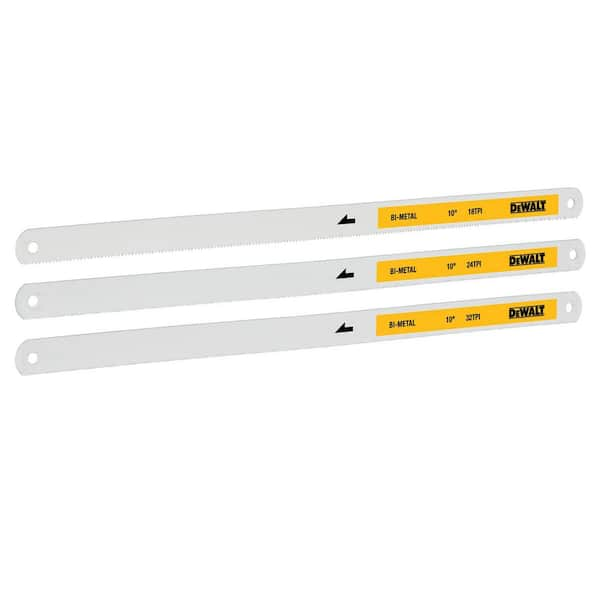
How to Cut Metal With a Hacksaw
A good blade can still perform poorly if the cutting method is wrong. Use this process for a cleaner and safer cut.
Mark the cut clearly with a scribe, marker, or layout dye.
Clamp the metal firmly in a vise. Place the cut close to the jaws to reduce vibration.
Install the blade with the teeth pointing forward, away from the handle.
Tighten the frame until the blade is straight and firm. Do not overtighten it.
Start with short, light strokes to create a groove.
Use long, steady strokes once the groove is established.
Apply pressure on the forward stroke only.
Lift the blade slightly on the return stroke.
Keep the frame square to the work unless you need a special angle.
Slow down near the end so the remaining metal does not snap or tear.
A common mistake is pressing hard on every stroke. The blade should cut on the push stroke, not on the pull stroke. Think of the teeth as tiny chisels. They need control, not brute force.
For long cuts, use cutting fluid suited to the metal. Light machine oil may help with steel, while a specialized cutting fluid can work better for stainless steel. Always follow the fluid manufacturer’s safety guidance.

Common Mistakes When Cutting Metal
Many poor cuts come from a mismatch between the blade and the job. These mistakes are easy to avoid.
Using too few teeth on thin metal
A coarse blade can catch the edge of thin sheet metal. It may bend the sheet, tear the cut, or break teeth.
Choose 24 to 32 TPI for thin stock. Support the material well on both sides of the cut.
Using too many teeth on thick metal
A very fine blade can clog when cutting thick steel. The cut may feel slow, and the blade may become hot.
Use 14 to 18 TPI for heavy material. Give the chips room to leave the cutting area.
Cutting with a dull blade
A dull blade creates heat and needs more force. It may also wander away from the layout mark.
Replace the blade when the teeth look rounded, the cut slows sharply, or the blade begins to slide across the surface.
Letting the blade twist
Twisting causes uneven wear and can snap the blade. Keep both hands aligned with the cut and avoid turning the frame during the stroke.
If the cut must change direction, widen the groove gradually instead of forcing the blade sideways.
Failing to secure the work
Loose metal can vibrate, move, or grab the blade. It can also cause an inaccurate cut.
A sturdy vise is the best support. For large work, use clamps and blocks to prevent movement.

Safety Tips for Hacksaw Metal Cutting
Hand sawing is slower than power cutting, but it still has risks. Sharp teeth, broken blades, burrs, and metal chips can cause injury.
Use these precautions:
• Wear safety glasses with side protection.
• Wear gloves when handling sharp stock, but keep gloves away from moving power tools.
• Deburr the cut edge with a file.
• Keep the blade tight and inspect it before use.
• Replace damaged or cracked blades.
• Secure loose clothing and long hair.
• Keep your free hand behind the blade path.
• Use hearing protection when working near loud machinery.
• Wash your hands after cutting metal, especially before eating.
Safety organizations commonly stress eye protection and secure workholding for cutting tasks. Those two habits prevent many avoidable injuries. A clean, controlled cut is safer than a rushed one.

My Practical Lessons From Hacksaw Work
One lesson stands out: the blade usually gets blamed before the setup does. In many workshop cuts, the real problem is loose material, poor tooth selection, or too much pressure.
A useful habit is to inspect the first few strokes. If the blade skips, check whether the teeth are too fine, the metal is moving, or the frame is not square. Fixing the cause early saves both time and blades.
Another lesson is to keep more than one blade type nearby. A 14 TPI blade, an 18 or 24 TPI bi-metal blade, and a 32 TPI blade cover most household and workshop repairs. This small selection is more useful than one expensive blade used for every material.
For example, cutting a thick steel bolt with a 32 TPI blade can feel painfully slow. Cutting thin conduit with a 14 TPI blade can produce a rough, bent edge. Matching the blade to the work makes the task feel almost effortless.
When to Use a Different Cutting Tool
A hacksaw is excellent for small cuts, repairs, and jobs where control matters. It is quiet, portable, and does not create the same sparks as an abrasive wheel.
However, another tool may be better when:
• You need many repeated cuts.
• The metal is very thick.
• The cut is long.
• The material is hardened.
• You need a precise production finish.
• You need to cut curves or complex shapes.
A reciprocating saw with a metal-cutting blade can handle larger work. A portable band saw often gives a cleaner, cooler cut. An angle grinder with a cutoff wheel is fast, but it creates sparks and requires stronger safety controls.
Use a hacksaw when the job is small enough to control by hand. Choose a powered tool when time, thickness, or quantity makes hand cutting inefficient.
Frequently Asked Questions About What Type of Hacksaw Blade to Cut Metal
What type of hacksaw blade is best for general metal cutting?
A bi-metal hacksaw blade with 18 to 24 TPI is the best general-purpose choice. It can cut mild steel, stainless steel, copper, brass, aluminum, and many types of tubing.
Is a higher TPI blade better for cutting metal?
A higher TPI blade is better for thin metal because more teeth stay engaged with the work. It is not automatically better for thick metal, where fine teeth can clog and cut slowly.
What TPI hacksaw blade should I use for stainless steel?
Use a sharp bi-metal blade with 18 to 32 TPI for stainless steel. Apply steady pressure and avoid rubbing lightly, since heat and friction can harden the surface.
Can I use a hacksaw blade to cut aluminum?
Yes, you can use a hacksaw blade to cut aluminum. Choose a 14 to 24 TPI blade, support the material well, and clean clogged aluminum from the teeth.
Which hacksaw blade cuts hardened steel?
A high-quality bi-metal blade may cut small sections of hardened steel, but a carbide-grit blade is often more effective. For very hard material, consider a band saw, abrasive wheel, or another tool designed for the job.
Should hacksaw teeth point forward or backward?
Hacksaw teeth should point forward, away from the handle, on a standard hand hacksaw. The blade cuts during the forward push stroke.
How do I stop a hacksaw blade from breaking?
Use the correct TPI, keep the blade tight, secure the metal, and avoid twisting the frame. Apply pressure only on the forward stroke and replace blades that show damage or severe wear.
Conclusion
The best answer to what type of hacksaw blade to cut metal is usually a bi-metal blade matched to the metal’s thickness. Choose 14 to 18 TPI for thick stock, 18 to 24 TPI for general work, and 24 to 32 TPI for thin sheet metal and tubing.
Secure the work, keep the blade straight, use steady pressure, and let the teeth do the cutting. Start with a quality 18 or 24 TPI bi-metal blade, then add coarse and fine blades as your projects grow. Explore more metalworking guides, share your cutting experience, or leave a comment with the material you need to cut.
