How To Cut Gutter With Hacksaw: Easy DIY Guide
Introduction
You can cut most residential gutters with a hacksaw if you use the right blade, support the gutter well, and mark the cut with care. This method works well for aluminum, galvanized steel, copper, and many vinyl gutter sections.
For most homes in the United States, a hacksaw offers a low-cost way to shorten a gutter without using power tools. The cut may take a few minutes, but it gives you good control and creates less noise than a circular saw or angle grinder. Always remove the gutter from the roof edge before cutting it.

What You Need Before Cutting a Gutter
Gather the tools and safety gear before you begin. A stable work setup helps prevent bent gutter edges and uneven cuts.
Tools
- Hacksaw
- Fine-tooth hacksaw blade, ideally 18 to 32 teeth per inch
- Tape measure
- Pencil or fine-tip marker
- Combination square or straightedge
- Clamps
- Workbench, sawhorses, or a flat support surface
- Fine file or 120-grit sandpaper
- Clean rag
Safety gear
- Safety glasses
- Work gloves
- Long sleeves
- Hearing protection if other power tools are nearby
- A dust mask when cutting painted or coated material
Use a blade that matches the gutter material. A fine-tooth blade makes a smoother cut in thin aluminum and vinyl. A coarser blade may cut faster, but it can tear thin metal or leave a rough edge.
Check the gutter before cutting. Look for hidden screws, sealant, brackets, end caps, and debris. Remove anything that could catch the hacksaw blade.
How to Cut Gutter With a Hacksaw
The basic process is simple: measure twice, mark one clear line, support the gutter, and let the saw do the work.
1. Remove and clean the gutter
Take the gutter section down before cutting it. Cutting a gutter while it is attached to the fascia can damage the roof edge, brackets, siding, or sealant.
Clean leaves, dirt, and old caulk from the section. A clean surface makes the cut line easier to see and helps you check the final fit.
If the gutter is attached with hidden hangers, release it carefully. Do not twist the section, because thin aluminum can bend easily.
2. Measure the needed length
Measure from the correct end of the gutter. Include the overlap or connector space required by your gutter system.
For example, if a gutter section must fit between two end points, measure the open space first. Then subtract the amount needed for the end caps, corner pieces, or slip connectors. The exact allowance depends on the gutter system.
Write down the final cut length. Measure again before marking the gutter.
Tip: A short gutter can often be corrected with a connector. A gutter that is cut too long may need another cut, which can waste material.
3. Mark the cut line
Place the gutter on a flat surface with the open side facing up. Use a square or straightedge to draw a line across the full width of the gutter.
For a round or half-round gutter, keep the mark square to the gutter length. An angled cut can create a poor seal at an end cap or connector.
Make the line easy to see, but avoid deep scratches that could weaken thin metal. A pencil works well on bare aluminum. A fine-tip marker works better on dark or coated surfaces.
4. Secure the gutter
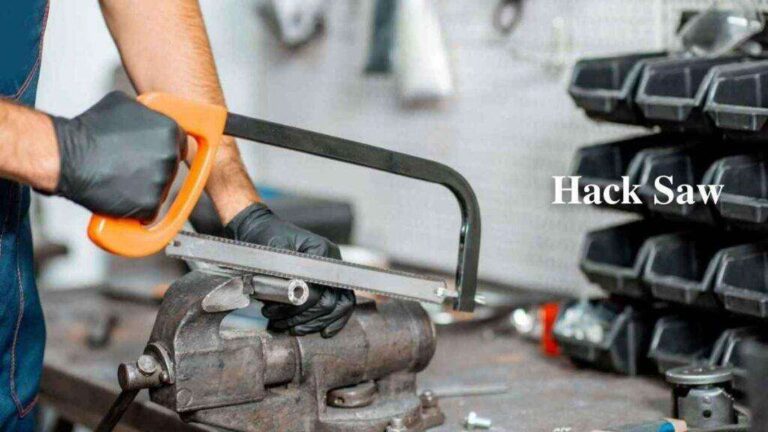
Support the gutter along its length. Place it on padded sawhorses or a workbench, and clamp it near the cut line.
Do not clamp so tightly that you crush the gutter profile. Use a piece of cardboard, cloth, or thin wood between the clamp and the gutter to spread the pressure.
The gutter should not move when you start sawing. Movement can cause a crooked cut and may force the blade to bind.
5. Set up the hacksaw
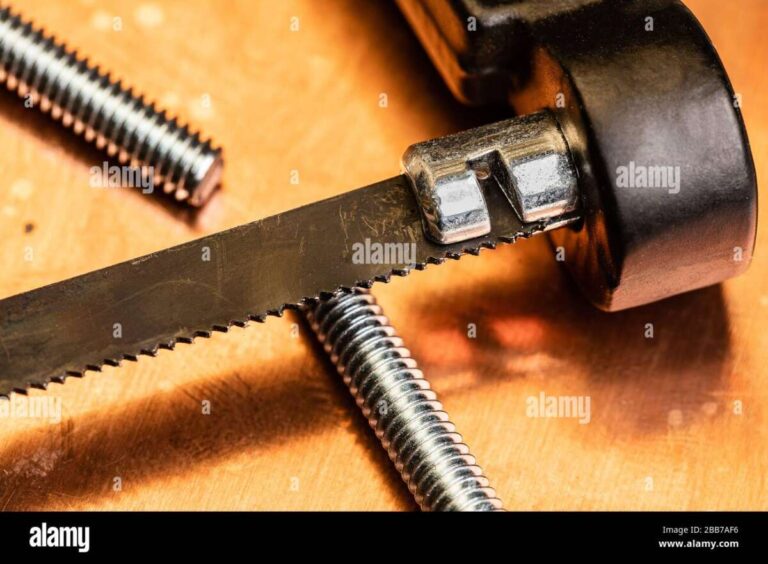
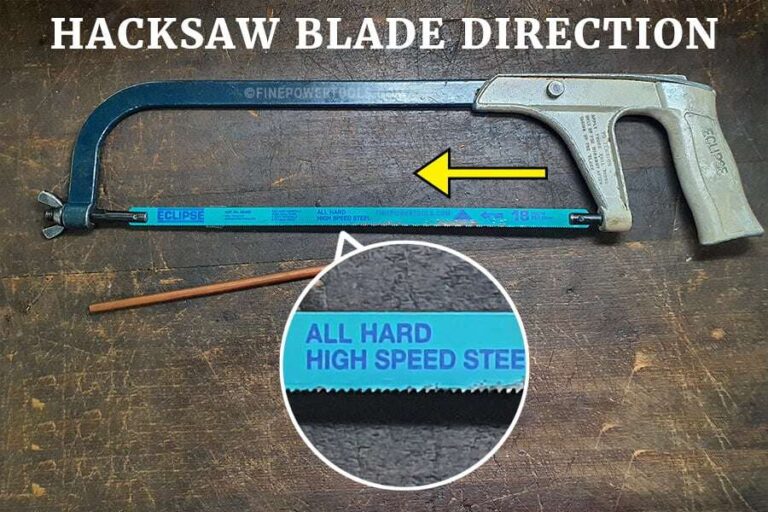
Install a sharp, fine-tooth blade. The teeth should point forward, toward the end of the hacksaw frame. Tighten the blade so it does not flex from side to side.
Hold the saw with both hands when possible. Keep one hand on the handle and the other on the front of the frame. This gives you better control during the first strokes.
6. Start with short strokes
Place the blade on the waste side of the cut line. Begin with short, light strokes. These first strokes create a shallow groove that keeps the blade on track.
Do not press hard. A hacksaw cuts on the forward stroke, so use gentle pressure as you push the blade away from you. Release pressure as you pull it back.
Once the groove is established, use longer strokes. Keep the blade at about a right angle to the gutter. Let the teeth cut the material instead of forcing the saw.
7. Finish the cut slowly
As the blade nears the opposite side, reduce pressure. Thin aluminum and vinyl can crack or bend when the final section breaks free.
Support both sides of the gutter until the cut is complete. Keep your fingers away from the blade and the sharp cut edge.
If the blade begins to bind, stop and check the setup. The gutter may have shifted, or the cut may be closing around the blade.
8. Smooth the cut edge
Use a fine file or sandpaper to remove burrs and sharp points. Work around the inside and outside edge of the cut.
Wipe away metal filings and dust with a rag. This step matters because a rough edge can:
- Cut your hand during installation
- Damage a rubber or silicone seal
- Prevent an end cap from fitting
- Leave loose metal particles in the gutter
Do not remove so much material that the cut becomes shorter than planned.
9. Test-fit the gutter
Place the cut section back in position before applying sealant or fastening it. Check the length, slope, end caps, corners, and downspout outlet.
The gutter should fit without force. If you need to push hard to make it fit, remove it and inspect the cut. Do not bend the gutter to correct a major measuring error.
Once the fit is correct, install the gutter according to the system instructions. Use the recommended screws, connectors, and gutter sealant.

How to Cut Different Gutter Materials
The material changes how you should use the hacksaw. Aluminum needs light pressure, vinyl needs support, and steel may need more time.
| Gutter material | Recommended approach | Main concern |
|---|---|---|
| Aluminum | Use a fine-tooth blade and light pressure | Bending or tearing the thin metal |
| Vinyl or PVC | Use short strokes and support both sides | Cracking, especially in cold weather |
| Galvanized steel | Use a sharp fine-tooth blade and steady strokes | Slow cutting and exposed bare steel |
| Copper | Use a clean fine-tooth blade with light pressure | Scratches and visible burrs |
| Painted or coated metal | Protect the finish near the cut | Chipped coating and corrosion at the edge |
Aluminum gutters
Aluminum is common in U.S. residential gutter systems. It cuts easily, but the thin wall can deform under pressure.
Keep the blade sharp. If the blade catches, stop instead of twisting the hacksaw. A twisted blade can flare the edge outward.
Vinyl gutters
Vinyl becomes less flexible in cold weather. If possible, let the gutter warm to room temperature before cutting it.
Support the section close to the cut line. Use short strokes at the start, then lengthen the strokes once the groove is stable.
Steel gutters
Steel takes more effort than aluminum. Use a sharp blade and steady pressure. Do not rush the cut by pushing harder, since excess force can bend the gutter or break the blade.
After cutting galvanized steel, inspect the edge for exposed bare metal. Follow the gutter manufacturer's repair guidance if the cut needs touch-up protection.
Copper gutters
Copper cuts cleanly with a fine-tooth hacksaw, but scratches show easily. Keep the work surface clean and place a soft cloth under the gutter.
Avoid dragging metal filings across the visible surface. File the cut edge carefully so you do not leave marks on the face of the gutter.
How Much Gutter Should You Cut Off?
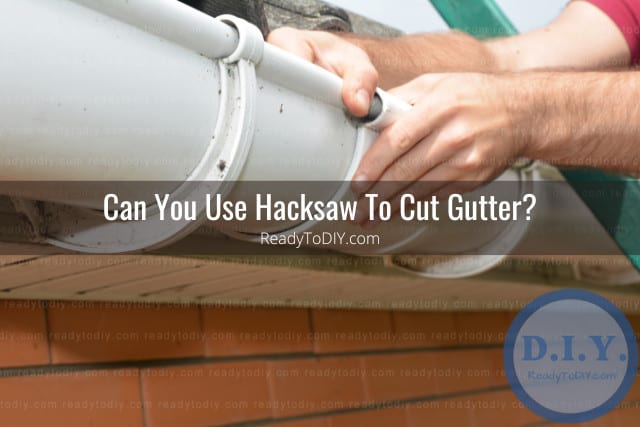
Cut only the amount needed for the planned fit. The correct length depends on the gutter layout and the type of connector used.
Use this simple calculation:
Cut length = measured opening − required overlap or fitting allowance
The fitting allowance is not the same for every system. Check the instructions for your end cap, corner, slip connector, or outlet. If no instructions are available, test-fit the parts before making the final cut.
Never guess when the gutter is expensive, difficult to replace, or part of a complex roofline. Make a cardboard template first if you need to check an unusual angle or length.
Should You Cut Gutter in Place?
You should normally remove the gutter before cutting it. This is safer and gives you a cleaner result.
Cutting in place creates several risks:
- The saw can damage fascia, soffit, siding, or roofing.
- Metal filings can fall into the gutter or onto the roof.
- The gutter may move while you cut.
- You may need to work from a ladder with both hands occupied.
- The saw can slip toward your hand or the building.
If removal is not practical, use a professional who has the right access equipment and experience. Never stretch sideways from a ladder to reach the cut. Move the ladder instead.

Common Problems and How to Fix Them
The cut is crooked
A crooked cut usually comes from a weak mark, poor support, or starting with long strokes.
Place a square against the gutter and remark the line. Secure the gutter again, then start slowly on the waste side of the line. A small amount of filing may correct a minor uneven edge, but do not file away too much material.
The gutter bends while you cut
The gutter may not have enough support, or the clamp may be too tight.
Support the gutter near the cut and along its length. Loosen the clamp and use padding. For thin aluminum, place a short piece of scrap wood inside the gutter near the cut if it does not interfere with the saw.
The hacksaw keeps binding
Binding can occur when the gutter shifts or the cut closes around the blade.
Stop sawing and check the clamps. Make sure the blade is tight and straight. Do not force the saw free with a twist. Pull it back along the cut, reset the gutter, and continue with lighter strokes.
The vinyl cracks
Cold vinyl is more likely to crack. Warm the section indoors before cutting, if practical. Use a fine-tooth blade, short strokes, and firm support on both sides of the cut.
If the vinyl is brittle, faded, or already cracked, replacement may be better than cutting. A connector cannot reliably repair a weak section.
The end cap or connector does not fit
Check for burrs, an angled cut, or an incorrect measurement. File the edge lightly and test the fitting again.
If the gutter is still too long, mark and cut a small amount from the waste end. If it is too short, do not stretch it into place. Use a properly sized replacement section or a connector designed for the system.

Safety Rules for Cutting Gutters
A hacksaw is a hand tool, but gutter work still involves sharp edges, falling parts, and ladder hazards.
Follow these rules:
- Wear safety glasses whenever you cut gutter material.
- Wear gloves when handling cut gutter sections.
- Remove the gutter before cutting whenever possible.
- Keep the gutter supported on a stable surface.
- Keep your hands behind the blade path.
- Use a sharp, properly tensioned blade.
- Do not cut near live electrical wires.
- Do not work on a wet, icy, or unstable roof.
- Use a ladder only on firm, level ground.
- Get help when handling long gutter sections.
If the home has overhead utility lines, damaged fascia, steep roofing, or a high second-story work area, hire a qualified professional. The cutting itself is simple; safe access is often the harder part.
For general ladder guidance, review the Occupational Safety and Health Administration's ladder safety information at OSHA.gov.

Hacksaw vs. Other Gutter-Cutting Tools
A hacksaw is not the only option. The best tool depends on the material, cut quality, and amount of work.
| Tool | Best use | Limitation |
|---|---|---|
| Hacksaw | One or a few clean cuts | Slower than power tools |
| Aviation snips | Short cuts in thin aluminum | Can bend or curl the edge |
| Fine-tooth jigsaw blade | Several cuts or thick material | Needs power and careful control |
| Reciprocating saw | Demolition or heavy material | Rough cut and more vibration |
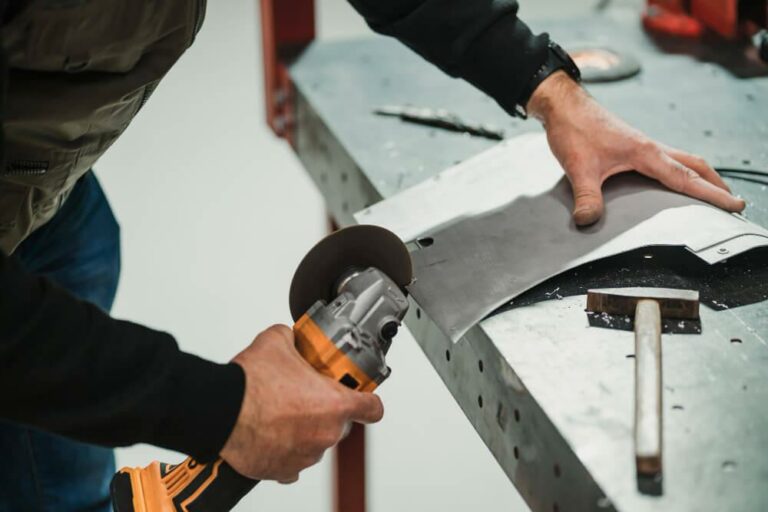
| Angle grinder | Thick metal and fast removal | Sparks, heat, and high injury risk |
For a single residential cut, a hacksaw is often the simplest choice. Snips may work for a short aluminum cut, but they can distort the gutter profile. Power tools can save time, yet they require more control and create more noise, dust, or sparks.
Do not use a tool that can produce sparks near dry leaves, roofing debris, fuel, or other flammable materials.
After Cutting: Check the Gutter Slope and Seal
Cutting the gutter is only part of the job. The installed section must still direct water toward the downspout.
Place the gutter so it has a slight, consistent fall toward the outlet. The exact slope depends on the gutter system and local installation practice. Follow the manufacturer's instructions rather than relying on a universal measurement.
After installation, run water through the gutter with a hose. Check the cut end, end caps, seams, corners, and downspout outlet for leaks.
If water pools away from the downspout, adjust the hangers or slope. Do not try to fix poor drainage by cutting more from the gutter unless the layout itself is wrong.

Frequently Asked Questions
Can I cut an aluminum gutter with a regular hacksaw?
Yes. Use a sharp fine-tooth blade and light pressure. Support the gutter well so the thin aluminum does not bend or tear.
What hacksaw blade is best for gutters?
An 18- to 32-teeth-per-inch blade is a practical choice for most residential gutter materials. Use a fine-tooth blade for aluminum, vinyl, and copper. A sharp blade matters more than using excessive force.
Can I cut a gutter while it is still installed?
You can, but it is usually unsafe and less accurate. Remove the gutter when possible. Cutting from a ladder or near siding, fascia, roofing, or wiring increases the chance of damage or injury.
How do I stop vinyl gutter from cracking?
Cut it at room temperature, support both sides of the cut, and use short strokes at the start. Replace vinyl that has become brittle or shows existing cracks.
Do I need to seal the cut edge?
The cut edge itself does not always need sealant. The joints, end caps, corners, and outlet connections usually need the sealant specified for the gutter system. Follow the product instructions and keep sealant off surfaces that must remain clean for proper fitting.
Final Takeaway
To cut a gutter with a hacksaw, remove and clean the section, measure twice, mark a square line, secure the gutter, and use slow strokes with a sharp fine-tooth blade. File away burrs, test-fit the section, and check the finished installation for leaks and proper drainage.
The safest next step is to measure the opening and identify the gutter material before choosing the blade and making the cut.
Recent Tool Guides
 Hammer
How To Hammer Flowers Onto Paper: Easy Guide
Learn how to hammer flowers onto paper with simple steps, helpful tips, and beautiful results for...
Read Guide → Wrench
How To Use A Hex Wrench: Easy Step-By-Step Guide
Learn how to use a hex wrench correctly with simple steps, helpful tips, and common mistakes...
Read Guide → Hacksaw
How To Cut Curtain Pole With Hacksaw: Easy Guide
Learn how to cut curtain pole with hacksaw safely and neatly. Follow simple steps for accurate...
Read Guide → Wrench
How To Use A Husky Torque Wrench: Easy Guide
Learn how to use a Husky torque wrench correctly with simple steps, torque settings, and safety...
Read Guide → Hammer
How To Hold A Hammer: Safe Grip Guide
Learn how to hold a hammer with the right grip, stance, and technique for safer, more...
Read Guide → Hacksaw
How To Cut Flexible Metal Conduit With Hacksaw: Easy Guide
Learn how to cut flexible metal conduit with hacksaw safely and cleanly. Follow simple steps for...
Read Guide →