What’s A Hacksaw: Uses, Types, And Buying Guide
A hacksaw is a hand tool used to cut metal and other hard materials. In the United States, plumbers, electricians, mechanics, DIY users, and maintenance workers use hacksaws to cut bolts, threaded rod, pipe, conduit, brackets, plastic pipe, and thin sheet metal.
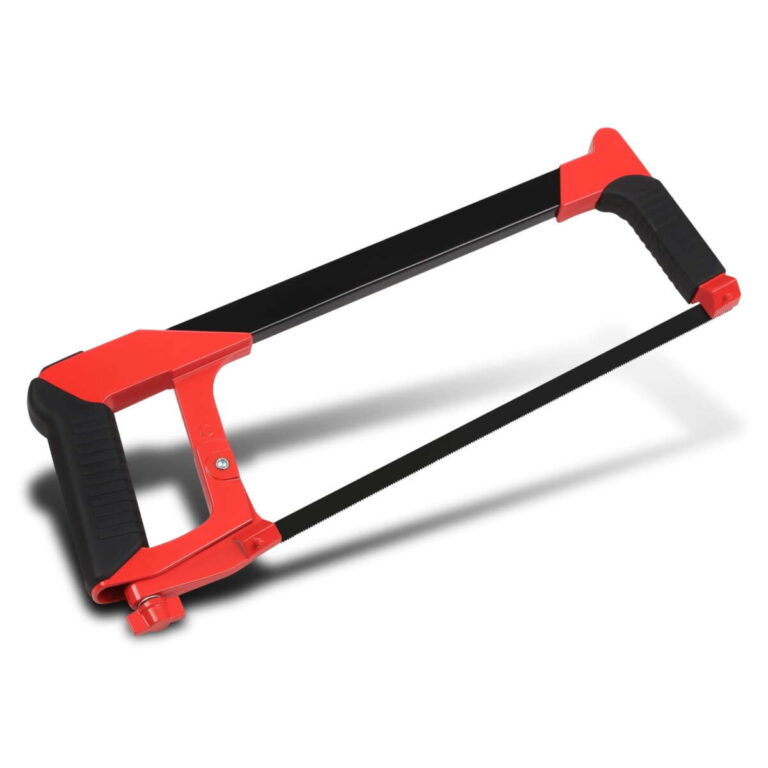
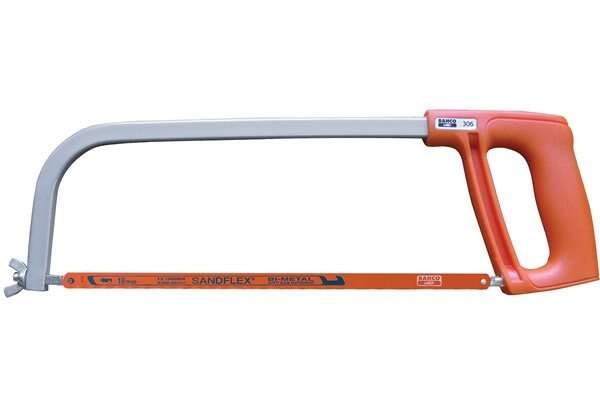
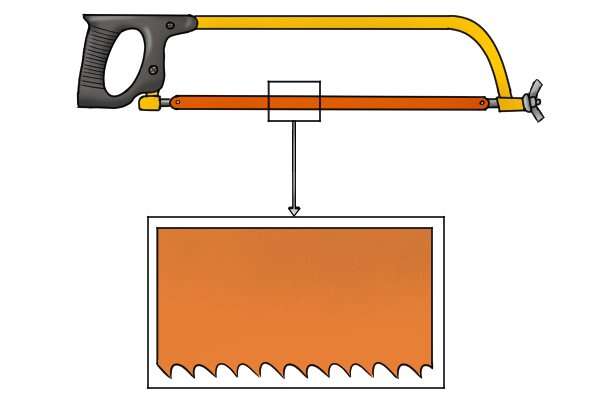
A hacksaw has a rigid frame, a narrow toothed blade, and a handle. The blade moves back and forth by hand. Unlike a wood saw, it uses small teeth that remove a small amount of material with each stroke.
This guide explains what a hacksaw is, how it works, which blade to choose, and how to use one safely.

What Is a Hacksaw?
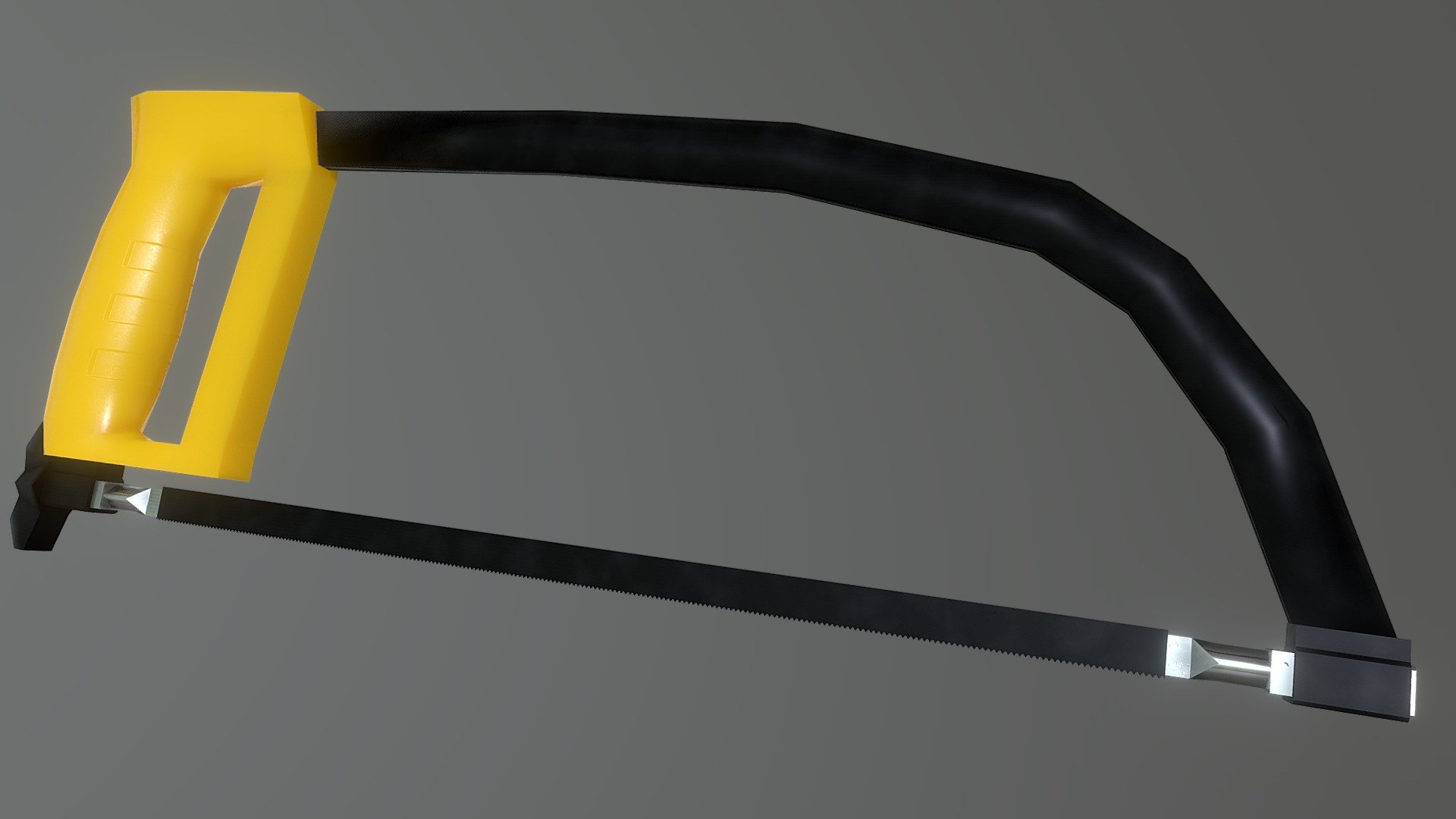
A hacksaw is a manually operated saw with a fine-tooth blade made for cutting hard materials. Most hacksaws use a replaceable blade held under tension in a metal frame.
The blade usually has teeth along one edge. In a standard hacksaw, the teeth point away from the handle. The saw cuts as you push it forward. A return stroke brings the blade back without cutting.
Hacksaws are best known for cutting metal. They can also cut some plastics, composite materials, and other materials when the blade and technique match the job.
The main parts are:
- Frame: Holds the blade straight.
- Handle: Gives you a firm grip.
- Blade: Has small teeth that cut the material.
- Blade pins: Fit into holes at each end of the blade.
- Tensioning mechanism: Tightens the blade so it does not bend during use.
- Front and rear blade mounts: Secure both ends of the blade.
Most full-size hacksaws use blades about 12 inches long. The actual cutting length may vary by frame design. Compact and junior hacksaws use shorter blades for small jobs or tight spaces.
A hacksaw is not the same as a reciprocating saw. A reciprocating saw uses a motor to move its blade. A hacksaw depends on hand power, so it cuts more slowly but gives the user better control and does not need electricity or a battery.

How Does a Hacksaw Work?
A hacksaw cuts when its teeth scrape across a workpiece and remove small chips of material. The blade needs steady tension and controlled pressure to work well.
The teeth are set with a slight side-to-side pattern. This creates a cut, called a kerf, that is a little wider than the blade itself. The wider kerf helps prevent the blade from binding.
Each tooth has a cutting edge. When you push the hacksaw forward, the teeth bite into the material. The blade should then move back with little pressure.
A hacksaw works best when:
- The workpiece is held firmly.
- The blade is tight and straight.
- The teeth match the material.
- The saw moves in long, smooth strokes.
- The blade stays aligned with the cut.
Short, fast strokes may feel quicker, but they often create heat, wear the blade, and make the cut wander. Long strokes use more of the blade and usually produce a straighter cut.
A hacksaw does not cut well when the blade is loose. A loose blade can flex, twist, or break. Excessive force can also damage the teeth or cause the blade to jump from the cut.
What Are the different Types of Hacksaws?
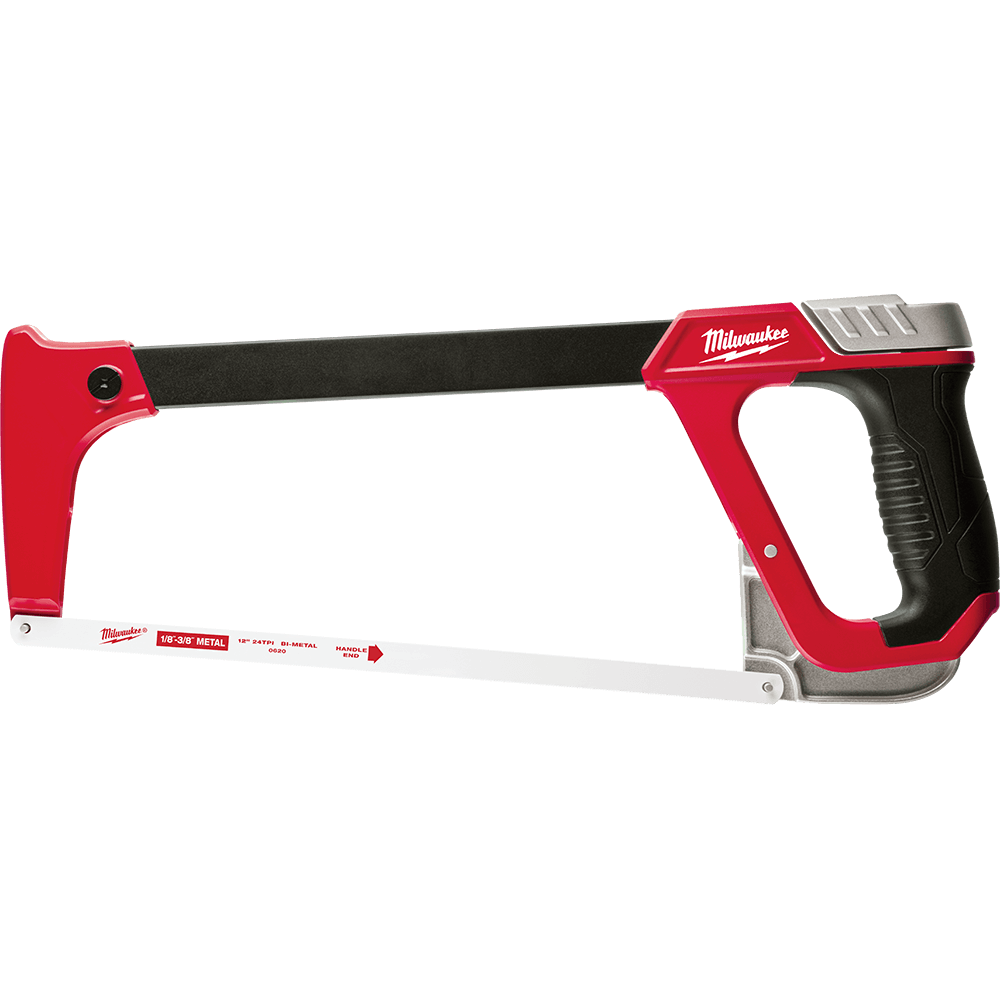
Hacksaws differ mainly by frame size, frame shape, blade length, and tension system.
Full-size hacksaw
A full-size hacksaw is the standard choice for general work. It often accepts a blade around 12 inches long and gives the user a longer cutting stroke.
Use one for:
- Metal pipe
- Bolts and threaded rod
- Steel brackets
- Electrical conduit
- Aluminum stock
- Plastic pipe
- General repair work
A full-size frame is easier to control for long cuts. It may be too large for narrow spaces.
Junior hacksaw
A junior hacksaw is smaller and lighter. It uses a short, narrow blade and works well for light cuts in confined areas.
Use one for:
- Small plastic parts
- Thin metal
- Model work
- Light plumbing tasks
- Small bolts
- Tight spaces
It is not usually the best choice for thick steel. Its shorter blade takes more strokes and may flex more easily.
Adjustable-frame hacksaw
An adjustable frame can accept more than one blade length. This makes it useful for users who work on different projects.
The trade-off is that some adjustable frames feel less rigid than heavy fixed-frame models. For thick metal, choose a frame that holds the blade firmly and keeps it straight.
Mini or pocket hacksaw
A mini hacksaw has a small handle and a short blade. It can reach spaces where a full frame will not fit.
These saws are useful for quick cuts in plastic, thin metal, and small hardware. They are less suitable for long or deep cuts.
Powered hacksaw
A powered hacksaw uses a motor to move the blade. It is a separate machine from a hand hacksaw.
Powered models can cut larger quantities of material with less manual effort. They also create more mechanical hazards and require the safeguards listed by the manufacturer.
How Do You Choose the Right Hacksaw Blade?
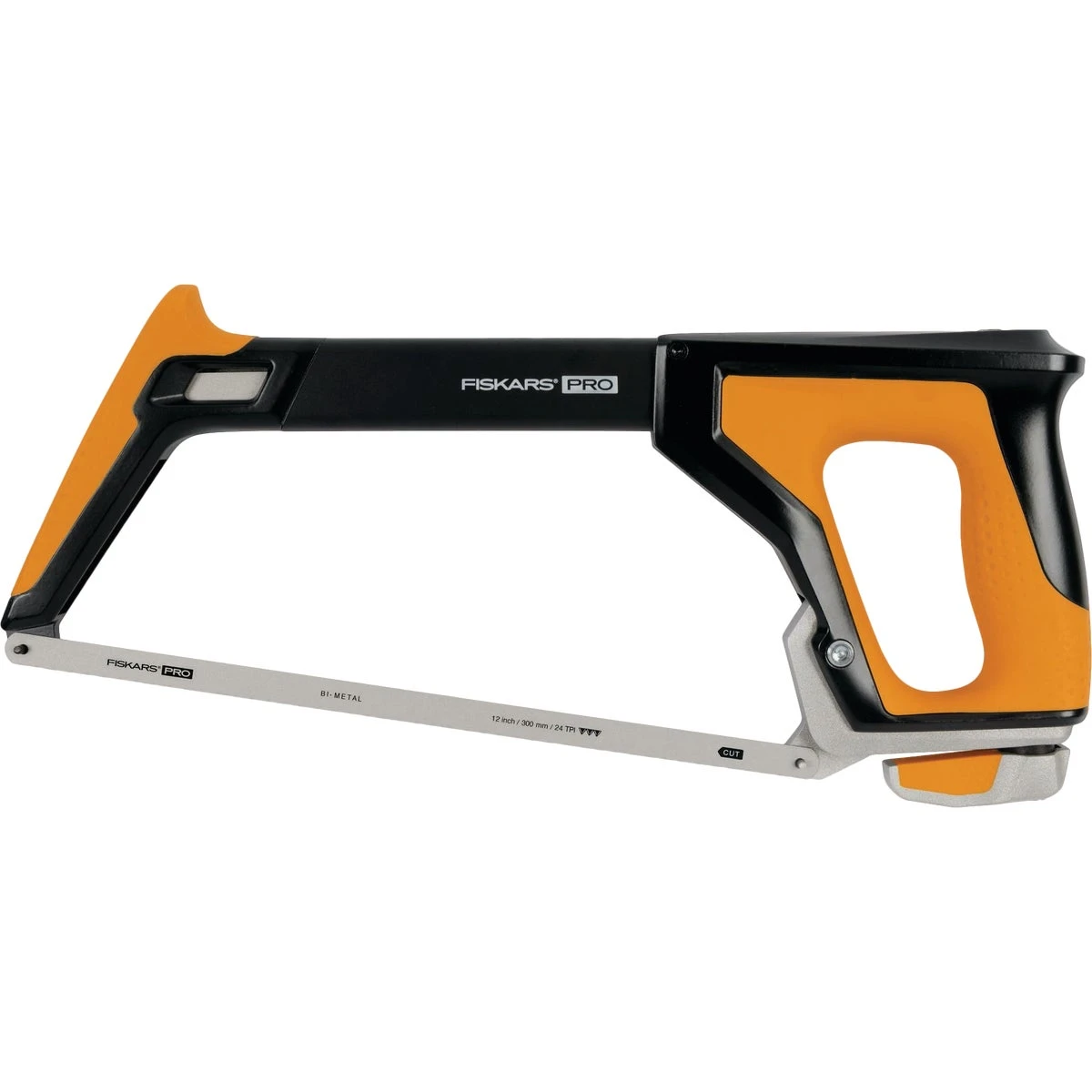
Choose a hacksaw blade by its tooth count, material, length, and the thickness of the workpiece. The wrong blade can cut slowly, clog with chips, or break.
Tooth count
Hacksaw blades are commonly labeled by teeth per inch, or TPI. A higher TPI means smaller teeth and a finer cut. A lower TPI means larger teeth and faster chip removal.
| Blade tooth count | Common use | Main benefit |
|---|---|---|
| 14–18 TPI | Thick metal, aluminum, large stock | Faster cutting and more space for chips |
| 24 TPI | General-purpose metal work | Good balance of speed and control |
| 32 TPI | Thin sheet metal, small tubing, thin-wall conduit | Reduces tooth snagging and rough cuts |
These ranges are general guides. The material, shape, and thickness also affect the choice.
A useful rule is to keep at least two or three teeth engaged in the material during the cut. If only one tooth touches the workpiece, it may catch and break. If too many fine teeth are buried in thick material, chips may clog the blade.
Blade material
Common hacksaw blades include:
- Carbon steel: Lower cost and suitable for light work.
- High-speed steel: Hard and wear-resistant, but often less flexible.
- Bi-metal: Combines a hard cutting edge with a flexible backing. This is a common choice for demanding general work.
Bi-metal blades can tolerate bending better than many basic blades, but no hacksaw blade should be intentionally twisted or forced sideways.
Blade length
The blade must fit the frame. A full-size frame often takes a blade near 12 inches, while a junior frame takes a shorter blade.
Check the frame or its instructions before buying a replacement. A blade that is too short may not reach both mounting pins. A blade that is too long may not tension correctly.
Blade direction
On most standard hacksaws, install the blade with its teeth pointing away from the handle. This lets the saw cut on the forward stroke.
Some specialty frames or blades may use a different setup. Follow the frame maker’s instructions if they differ.

How to Use a Hacksaw Correctly
Use a hacksaw with the workpiece secured, the correct blade installed, and enough room for a full stroke. Do not start cutting until the blade is tight and the cut line is clear.
What you need
Gather:
- A hacksaw
- A suitable replacement blade, if needed
- A vise, clamp, or other secure support
- A marker or scribe
- Eye protection
- Work gloves when appropriate
- A file or deburring tool
- Cutting oil for some metal cuts
Gloves can help protect against sharp edges, but they must not become caught in moving equipment. Do not wear loose clothing, jewelry, or anything that can snag.
Step-by-step method
-
Mark the cut.
Use a marker or scribe to draw a clear line around the pipe, bolt, or stock. -
Install the blade.
Place the blade pins into the frame mounts. Set the teeth in the cutting direction. On a standard hacksaw, they point away from the handle. -
Tighten the blade.
Turn the tensioning knob until the blade is firm and straight. Do not over-tighten it. Excess tension can damage the frame or blade. -
Secure the workpiece.
Place the material in a vise or clamp. Support it close to the cut so it does not vibrate. -
Start a shallow groove.
Hold the saw at a slight angle and use a few light strokes to create a starting notch. Once the groove is established, bring the frame into a normal cutting position. -
Use long, steady strokes.
Move the blade across as much of its length as practical. Apply pressure on the forward stroke and reduce pressure on the return stroke. -
Keep the blade aligned.
Follow the cut line without twisting the frame. Side pressure can bend or break the blade. -
Reduce pressure near the end.
When the cut is almost complete, use lighter strokes. This helps prevent the remaining material from tearing or the saw from jumping. -
Remove the burr.
The cut edge may be sharp. Use a file or deburring tool to smooth it before handling or installing the part.
Signs of a good cut
A good hacksaw cut is:
- Close to the marked line
- Relatively straight
- Free of deep gouges
- Not excessively hot or discolored
- Easy to finish with a file
If the blade wanders, stop and check the workpiece, blade tension, tooth count, and your grip.

Can You Use a Hacksaw on Wood, PVC, and Other Materials?
A hacksaw can cut some nonmetal materials, but it is not the best tool for every material.
Plastic pipe and PVC
A hacksaw can cut PVC and other plastic pipe. Use a fine-tooth blade to help limit tearing. Support the pipe well because flexible plastic can move during the cut.
After cutting, remove the inside and outside burrs. A rough edge can interfere with fittings and may leave loose chips inside the pipe.
Aluminum
A hacksaw can cut aluminum with a suitable blade. Aluminum is soft, but it can clog fine teeth. A blade with a moderate tooth count often works better than an extremely fine blade.
Keep the cut clean and avoid forcing the saw. A small amount of suitable cutting lubricant may help, but follow the lubricant label and keep it away from ignition sources.
Wood
A hacksaw can cut thin wood in an emergency, but it is usually the wrong tool. Wood saws have larger teeth and a shape designed to clear wood chips.
For normal wood cutting, use a hand saw, backsaw, coping saw, or power saw suited to the task.
Drywall and soft materials
A hacksaw is not the right choice for drywall, insulation, foam, or soft sheet goods. The small teeth may clog or produce a poor cut.
Hardened steel
A standard hacksaw may struggle with hardened steel. If the blade skates across the surface instead of forming chips, stop forcing it. A different tool, abrasive method, or professional machining process may be needed.

Hacksaw Safety Rules
Use eye protection whenever you cut with a hacksaw. Small metal chips, broken teeth, and burrs can become airborne.
Follow these safety rules:
- Secure the workpiece before cutting.
- Keep both hands on the tool when the cut requires extra control.
- Keep fingers away from the blade path.
- Inspect the blade for cracks, missing teeth, rust, or severe wear.
- Replace a damaged blade instead of trying to straighten it.
- Keep the frame aligned with the cut.
- Use light pressure when the blade begins to bind.
- Do not use a hacksaw as a pry bar.
- Do not cut toward your hand or body.
- Clean sharp burrs after the cut.
- Store spare blades where their teeth cannot injure someone.
- Keep the work area dry and well lit.
Stop if the blade bends, chatters, jumps, or becomes loose. These signs can point to poor support, incorrect tension, a dull blade, or excessive force.
For workplace use, follow your employer’s procedures and current Occupational Safety and Health Administration requirements for hand tools and personal protective equipment. OSHA’s hand and power tools guidance is available at osha.gov/hand-tools.
Hacksaw Problems and Quick Fixes
| Problem | Likely cause | What to do |
|---|---|---|
| The blade breaks | Too much pressure, side force, or poor tension | Replace the blade and use steady forward pressure |
| The cut wanders | Loose workpiece, dull blade, or twisting | Secure the material and keep the frame straight |
| The saw binds | Narrow kerf, poor alignment, or material movement | Stop, realign the saw, and improve support |
| The cut is very slow | Dull blade or TPI too high for thick stock | Use a fresh blade with a suitable tooth count |
| Teeth strip quickly | Wrong blade, excessive force, or hardened material | Choose a stronger blade and reduce pressure |
| The blade clogs | Soft metal or plastic fills the teeth | Use a suitable tooth count and clear chips |
| The frame feels weak | Poor tension or damaged frame | Check the tension system and replace a bent frame |
| The cut edge is sharp | Burrs remain after cutting | Smooth the edge with a file or deburring tool |
A blade that cuts poorly is not always dull. The workpiece may be moving, the blade may be installed backward, or the teeth may not match the material thickness.
Hacksaw vs. Other Cutting Tools
A hacksaw is a good choice when you need a controlled, low-cost cut and do not need high production speed.
| Tool | Best for | Main trade-off |
|---|---|---|
| Hacksaw | Small metal and plastic cuts | Slow compared with powered tools |
| Tubing cutter | Clean cuts on suitable pipe and tubing | Limited by pipe size and material |
| Bolt cutters | Cutting some bolts, rods, and soft metal | May crush or deform the cut end |
| Angle grinder | Fast cuts in many metals | Creates sparks, noise, dust, and heat |
| Reciprocating saw | Fast cuts in construction and repair work | More vibration and less manual control |
| Band saw | Repeated or accurate stock cuts | Larger, more expensive, and less portable |
| Metal-cutting snips | Thin sheet metal | Not suitable for thick stock |
Choose a hacksaw when portability, control, and low cost matter more than speed. Choose a powered or specialized tool when the material is thick, the cut must be repeated many times, or the work requires high accuracy.
How Do You Maintain a Hacksaw?
Maintain a hacksaw by keeping the frame clean, checking the tension mechanism, and replacing worn blades.
After use:
- Brush away metal chips.
- Wipe moisture from the frame and blade.
- Check the blade mounts for damage.
- Loosen the blade slightly for storage if the frame maker recommends it.
- Store the saw where the blade will not contact hard surfaces.
- Replace blades that are dull, bent, cracked, or missing teeth.
Do not try to sharpen a typical disposable hacksaw blade. Replacement is usually safer and more practical.
A small amount of light oil on a threaded tension mechanism can help it turn smoothly. Keep oil off the handle and grip surfaces.
Frequently Asked Questions About Hacksaws
What is a hacksaw mainly used for?
A hacksaw is mainly used to cut metal by hand. Common jobs include cutting bolts, threaded rod, conduit, pipe, brackets, and metal tubing. It can also cut some plastics and aluminum.
Why do hacksaw blades have different teeth per inch?
Different TPI ratings suit different material thicknesses. Coarse blades remove chips faster from thick material. Fine blades work better on thin stock because more teeth stay engaged with the workpiece.
Which way should a hacksaw blade face?
On a standard hacksaw, the teeth should face away from the handle. The blade then cuts on the forward push stroke. Follow the instructions for specialty frames if their design differs.
How tight should a hacksaw blade be?
The blade should be tight enough to stay straight and resist light finger pressure, but it should not be tightened excessively. A blade that flexes during a cut is too loose. A damaged frame or broken blade can result from over-tightening.
Can a hacksaw cut a bolt?
Yes. Secure the bolt in a vise, select a suitable fine- or medium-tooth blade, and cut with steady strokes. File the cut end afterward to remove burrs. If the bolt must accept a nut, protect the threads or restore them with a thread file or die.
Can a hacksaw cut stainless steel?
A hacksaw can cut some stainless steel, but the job may take time. Use a sharp, durable blade and steady pressure. Do not let the blade rub without cutting, because stainless steel can harden at the surface from excessive heat and friction.
Conclusion: Is a Hacksaw Right for Your Job?
A hacksaw is a simple hand saw for controlled cuts in metal and some plastic. Its performance depends on four things: a secure workpiece, a tight blade, the right TPI, and smooth forward strokes.
Use a full-size hacksaw for general repair work and a junior or mini hacksaw for tight spaces. Choose a different tool when the material is too thick, too hard, or needed in high volume.
Before cutting, mark the line, secure the material, wear eye protection, and check the blade. After cutting, file away sharp burrs so the finished part is safe to handle.
Recent Tool Guides
 Hammer
How To Hammer Flowers Onto Paper: Easy Guide
Learn how to hammer flowers onto paper with simple steps, helpful tips, and beautiful results for...
Read Guide → Wrench
How To Use A Hex Wrench: Easy Step-By-Step Guide
Learn how to use a hex wrench correctly with simple steps, helpful tips, and common mistakes...
Read Guide → Hacksaw
How To Cut Curtain Pole With Hacksaw: Easy Guide
Learn how to cut curtain pole with hacksaw safely and neatly. Follow simple steps for accurate...
Read Guide → Wrench
How To Use A Husky Torque Wrench: Easy Guide
Learn how to use a Husky torque wrench correctly with simple steps, torque settings, and safety...
Read Guide → Hammer
How To Hold A Hammer: Safe Grip Guide
Learn how to hold a hammer with the right grip, stance, and technique for safer, more...
Read Guide → Hacksaw
How To Cut Flexible Metal Conduit With Hacksaw: Easy Guide
Learn how to cut flexible metal conduit with hacksaw safely and cleanly. Follow simple steps for...
Read Guide →