Is A Hacksaw Good For Wood: Best Cutting Guide
Introduction
A hacksaw can cut wood, but it is not a good general-purpose wood saw for most jobs in the United States. Its fine blade and rigid frame are made mainly for cutting metal, so it works best for small cuts in thin wood, plastic, or a quick emergency repair.
For clean, fast wood cuts, use a hand saw, panel saw, pull saw, jigsaw, or circular saw that has teeth designed for wood. The right choice depends on the wood thickness, cut shape, accuracy needed, and tools you already have.

Quick answer: Can a hacksaw cut wood?
Yes, a hacksaw can cut wood, but it is usually slow and less effective than a wood saw.
A standard hacksaw has a narrow blade with many small teeth. Those teeth remove little material with each stroke. That design helps the blade cut hard materials such as steel, aluminum, and threaded rod. Wood usually needs larger teeth and wider gullets, which are the spaces between teeth, to clear chips quickly.
A hacksaw may work well when:
- The wood is thin.
- The cut is short.
- The wood is soft.
- You only have a hacksaw available.
- You need a rough cut rather than a finished edge.
- You are trimming a small wood shim, dowel, or craft piece.
It is a poor choice when:
- You need to cut a full sheet of plywood.
- The board is thick or hardwood.
- You need a straight, smooth edge.
- You have many cuts to make.
- You need to cut large framing lumber.
- The blade keeps binding or filling with wood dust.
The key issue is not that a hacksaw cannot cut wood. The issue is that its blade geometry does not match wood very well.
Why hacksaw blades are not made for wood
Hacksaw blades are designed around the needs of metal cutting. Most have fine teeth, a thin blade, and a fairly short cutting stroke. These features help control a hard material, but they slow work in wood.
Fine teeth remove wood slowly
A hacksaw blade often has a high tooth count per inch, or TPI. A blade with more TPI has smaller teeth. It takes more strokes to cut through the same board because each stroke removes less material.
Wood saws often use larger teeth with deeper spaces between them. The larger spaces carry sawdust out of the kerf, which is the narrow slot made by the blade.
Wood can clog the blade
Fresh wood and resinous wood can pack between fine hacksaw teeth. This buildup reduces cutting speed and can make the blade slide over the surface. Pressure then rises, and the blade may bend or twist.
Fine teeth may also create heat from friction. Heat can dull the blade faster and make resin stick to the teeth.
The blade may be too narrow for a straight cut
A hacksaw blade is thin and flexible. The frame keeps it under tension, but the blade can still wander if you push hard or turn during the cut. This is more likely in thick wood or long cuts.
A wood hand saw has a broader blade that is easier to guide. Many wood saws also have a set, meaning the teeth bend slightly from side to side. This creates a wider kerf and helps prevent the blade from binding.
The hacksaw frame limits the cut
A typical hacksaw has a shallow throat. The frame can strike the wood before you finish a deep or long cut. You also have less room to make a full stroke than with a panel saw or bow saw.

When a hacksaw is useful for wood
A hacksaw can be useful for a few small wood tasks. Think of it as a backup tool, not a primary wood-cutting tool.
Cutting small dowels and trim pieces
A hacksaw can cut small dowels, thin strips, and narrow trim. Clamp the piece firmly and use light strokes. A fine blade may leave a neat cut, though it can still leave rough edges or crushed fibers.
For visible work, wrap painter’s tape around the cut line. The tape can help reduce splintering, but it does not replace a sharp blade or proper support.
Trimming shims
A hacksaw can trim a thin wood shim after you place it in a gap. Keep the blade clear of nearby surfaces, and protect the finished area with a scrap block or tape.
For repeated shim work, a flush-cut saw is better. Its flexible blade can cut close to a surface without the bulky frame of a hacksaw.
Cutting thin plywood or hardboard
A hacksaw may cut thin plywood, hardboard, or craft board if the cut is short. Support the sheet on both sides of the cut line. Without support, the sheet may vibrate and splinter.
A blade with very fine teeth may leave less tear-out, but it will cut slowly. A wood blade with the correct tooth pattern usually gives better control.
Emergency or one-time repairs
If a hacksaw is the only saw in your toolbox, it can solve a small problem. Mark the line, clamp the work, and let the teeth do the cutting. Do not force the blade just because the cut feels slow.
For a single short cut, the time loss may not matter. For a project, the wrong tool can make the work tiring and increase the chance of an uneven cut.
How to cut wood with a hacksaw
Use the following method for thin wood only. For thick boards, large sheets, treated lumber, or structural parts, choose a saw made for wood.
What you need
- A hacksaw with a tight, undamaged blade
- A blade with a suitable tooth count
- A pencil or marking knife
- A square or straightedge
- Two clamps
- Eye protection
- A workbench or stable support
- Sandpaper for the cut edge
Before cutting, check the blade. Do not use one with cracked teeth, heavy rust, a sharp bend, or a loose connection at either end.
Steps
-
Confirm that the workpiece is safe to cut.
Check for nails, screws, staples, wires, or hidden fasteners. Do not cut wood that may contain an active electrical cable or plumbing unless you have verified the area is safe. -
Mark the cut line.
Use a square for a straight crosscut. Mark the waste side of the line so you know which part will be removed. -
Support the wood.
Place the wood on a firm surface. Support it close to the cut, but leave enough room for the blade. Clamp the piece so it cannot shift. -
Set the blade in the frame.
Most hacksaw blades are installed with the teeth pointing away from the handle. Confirm the direction marked on the blade or frame. Tighten the blade until it is firm, but do not over-tighten it. -
Make a shallow starting groove.
Hold the hacksaw at a low angle and use short, light strokes. The first groove helps keep the blade on the line. -
Use long, steady strokes.
Once the groove is established, use as much of the blade length as the frame allows. Apply gentle forward pressure. Let the teeth cut instead of forcing them. -
Reduce pressure near the end.
When only a small amount of wood remains, use shorter strokes. Support the waste piece so it does not snap and tear the fibers. -
Inspect and smooth the edge.
Remove loose fibers with fine sandpaper or a small file. If the edge is badly torn, recut it with a proper wood saw.
Signs that the method is working
- The blade stays on the marked line.
- Sawdust leaves the kerf instead of packing the teeth.
- The blade remains straight.
- The wood does not move.
- The cut advances with steady strokes.
- The blade stays cool enough to touch after a pause.
Stop if the blade bends, the wood shifts, smoke appears, or the cut begins to close around the blade. Find the cause before continuing.
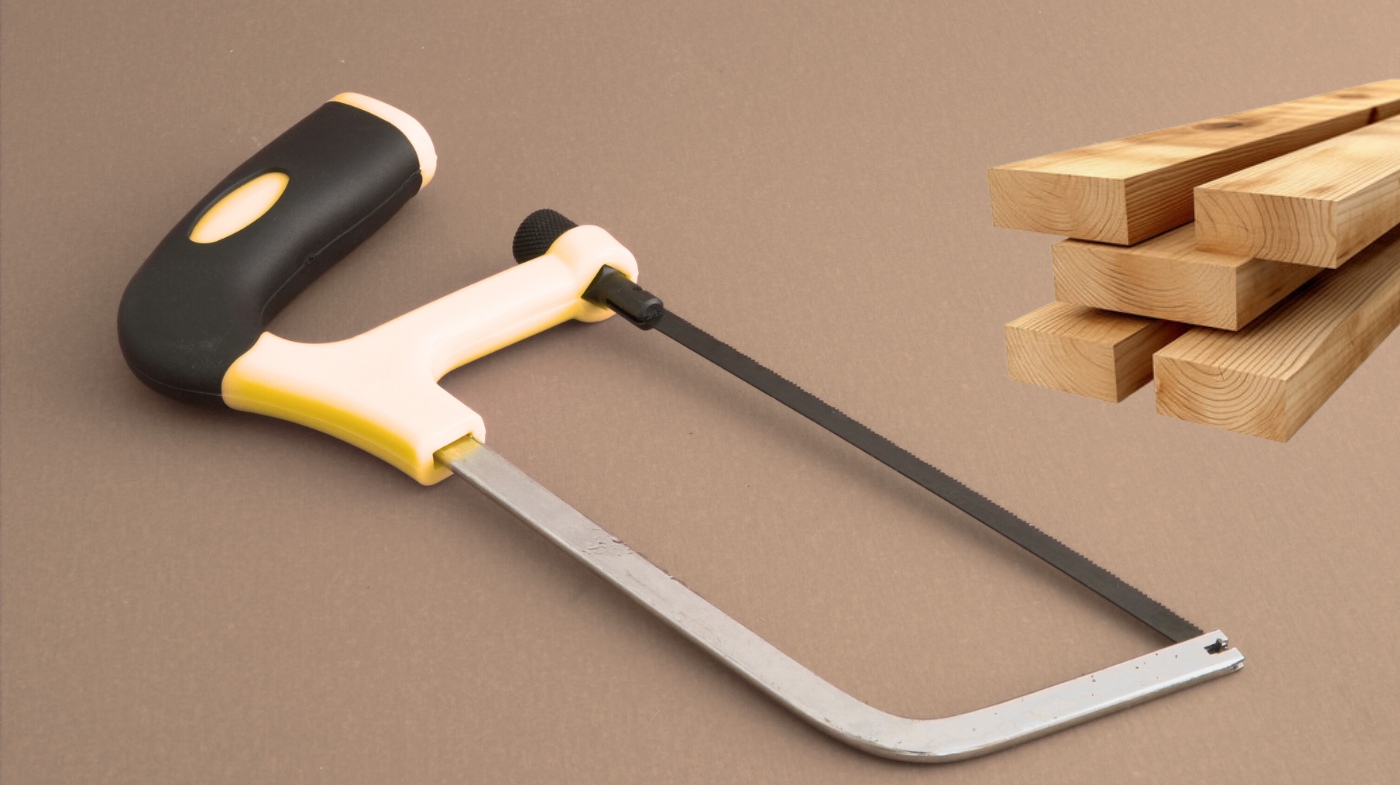
Which hacksaw blade is best for wood?
If you must use a hacksaw, choose the blade based on the wood thickness and the finish you need. There is no single best blade for every piece of wood.
| Wood task | Hacksaw blade approach | Main trade-off |
|---|---|---|
| Thin balsa or craft wood | Fine teeth and light pressure | Clean control, but slow cutting |
| Thin softwood strip | Medium or fine teeth | Reasonable control, with some roughness |
| Small hardwood dowel | Fine teeth and firm clamping | Can work, but may take time |
| Thin plywood | Fine teeth with support on both sides | Less tear-out, but slow |
| Thick board | Not recommended | Blade may bind, wander, or overheat |
| Long rip cut | Not recommended | Frame and blade are poorly suited |
| Flush trimming | Use a flush-cut saw instead | Better access and control |
Avoid using a coarse hacksaw blade simply because it seems faster. A coarse blade may catch wood fibers, tear the surface, or make the narrow blade wander. The better answer is usually a proper wood saw with teeth designed for the cut.
Hacksaw vs. wood saw: Which tool should you use?
The best saw depends on the job. A hacksaw is one option, but it rarely wins for ordinary woodwork.
Hand saw or panel saw
Use a hand saw or panel saw for boards, studs, and common home repairs. These saws have larger wood-cutting teeth and a blade shape suited to long strokes.
They are usually the best low-cost choice for cutting dimensional lumber in a garage or home workshop.
Pull saw
Use a pull saw for small, accurate cuts in trim, dowels, molding, and joinery. Pull saws cut as you pull the blade toward you. Their thin blades can make clean cuts, but they require care because the blade can bend if you press too hard.
Coping saw
Use a coping saw for curved cuts in thin wood. Its narrow blade can turn more easily than a hacksaw blade. It is not the best tool for long straight cuts.
Jigsaw
Use a jigsaw for curves, openings, and short cuts in sheet goods. Select a blade made for wood and match the blade to the thickness and finish required.
A jigsaw needs a stable base and careful control. Keep the cord or battery tool away from the blade path, and wait for the blade to stop before setting the tool down.
Circular saw
Use a circular saw for fast, straight cuts in plywood and lumber. It is efficient, but the exposed rotating blade creates more risk than a hand saw. Follow the tool manual, keep both hands clear of the blade path, and use proper support.
Reciprocating saw
Use a reciprocating saw for rough demolition cuts. It can cut wood quickly, especially where access is poor. It usually leaves a rough edge and can damage nearby materials if the blade passes too far through the work.
Pruning saw
Use a pruning saw for branches and outdoor wood. Its tooth pattern is made for green wood and larger limbs, not finished indoor trim.
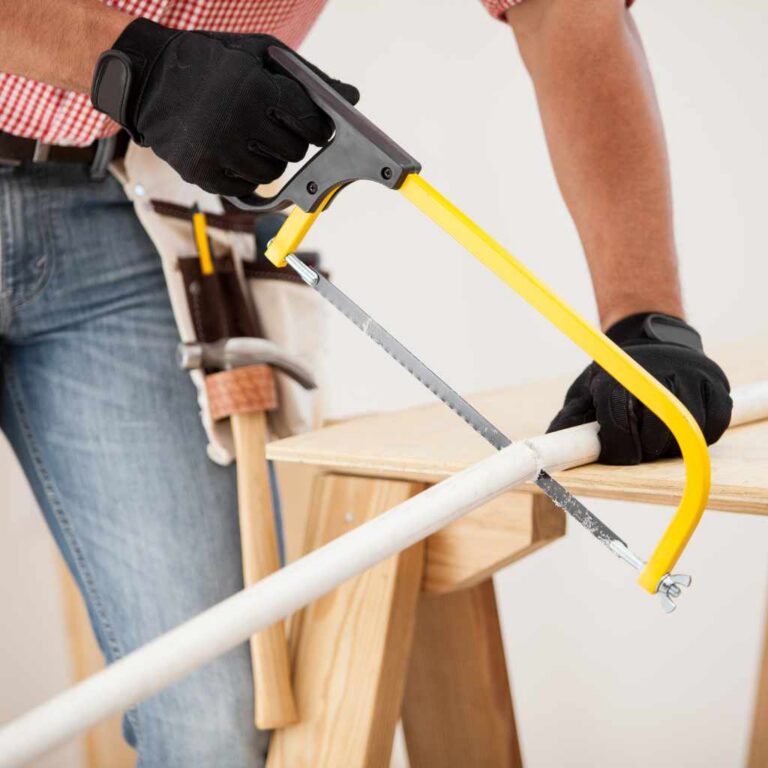
Common mistakes when using a hacksaw on wood
Pushing too hard
Heavy pressure can bend the blade, cause the teeth to snag, and pull the cut off line. Use light pressure on the forward stroke and little or no pressure on the return stroke.
Cutting without clamping
A moving workpiece creates a poor cut and a safety risk. Clamp the wood, or use a stable work support that prevents movement.
Using a dull blade
A dull blade creates heat and needs more force. Replace the blade when it skips, cuts slowly despite clean teeth, or produces excessive dust and heat.
Starting with a steep angle
A steep angle can make the blade catch on the edge. Start with a shallow angle and a few controlled strokes. After the groove forms, use a more natural stroke.
Ignoring the waste side
If you mark only a single line and cut on the wrong side, the finished piece may be too short. Mark the waste side clearly and leave enough material for final sanding when needed.
Cutting treated or painted wood without precautions
Older paint may contain lead, and treated lumber may contain chemicals that should not be inhaled or spread around the work area. Avoid creating dust when possible. Follow current guidance from the U.S. Environmental Protection Agency for lead paint and the Centers for Disease Control and Prevention for workplace exposure information.
Do not burn sawdust, scraps, or treated wood. Collect waste and dispose of it according to local rules.
Hacksaw safety for wood cutting
Wear safety glasses because small chips can leave the kerf at speed. Keep both hands behind the blade and maintain a firm grip on the frame.
Secure the wood before cutting. Do not hold a small piece in your hand while sawing toward your fingers. Use a clamp, vise, or suitable work support.
Inspect the frame and blade before use. A loose blade can twist or break. A damaged blade may release sharp fragments, so replace it instead of trying to straighten it.
Keep the cut area clear. Make sure the blade cannot contact the bench, clamp, floor, or another object after it passes through the wood.
Use extra care around nails and screws. A hacksaw blade may cut metal, but sudden contact can damage the blade or cause it to catch. Remove fasteners first when possible.
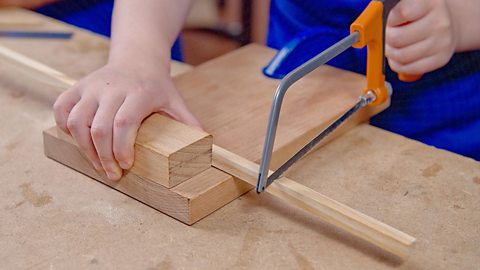
Can you use a metal hacksaw blade on wood?
You can use a metal-cutting hacksaw blade on wood, but the result depends on the wood and the cut. A fine metal blade may cut thin softwood or plywood with control, yet it will usually work more slowly than a wood blade.
A metal blade is not a substitute for a wood-cutting blade in a power saw. Do not install a hacksaw blade in a tool unless the tool maker specifically allows that blade and connection. Blade shape, speed, mounting, and guard design all matter.
For a manual hacksaw, the practical limit is simple: if the blade clogs, binds, overheats, or wanders, stop and switch to a wood saw.
Is a hacksaw better than a hand saw for wood?
For most wood cuts, a hand saw is better than a hacksaw. It usually cuts faster because its teeth and blade shape are made for wood. It also offers more usable blade length for boards and framing lumber.
A hacksaw may be better for a very short cut in thin material when:
- You need a fine cut.
- You already have the tool nearby.
- The workpiece is too small for a large hand saw.
- The cut also includes a thin metal fastener.
- You need a narrow blade and can accept slow progress.
The decision is mainly about the material thickness and the required finish. Choose a hacksaw for convenience in a small task, not because it is the most efficient wood-cutting tool.
Frequently asked questions
Can a hacksaw cut a 2-by-4?
It can, but it is a poor choice. A hacksaw blade may cut through a 2-by-4, yet the process will be slow and tiring. The narrow blade can wander, and the frame may limit the depth of the cut. Use a hand saw or circular saw instead.
Can a hacksaw cut plywood?
Yes, a hacksaw can cut thin plywood. Clamp the sheet, support both sides of the cut, and use light pressure. For thick plywood or long cuts, use a panel saw, jigsaw, or circular saw with a plywood blade.
Can a hacksaw cut MDF?
It can cut thin MDF, but MDF produces fine dust that can irritate the eyes and lungs. Wear eye protection and use dust control. A hacksaw is still slow, so a wood hand saw or power saw with suitable dust collection is usually better.
Will a hacksaw cut hardwood?
A hacksaw can cut a small hardwood piece, such as a dowel or thin strip. It will usually cut slowly and may dull faster if you force it. Clamp the wood firmly and use a sharp blade.
How do you keep wood from splintering with a hacksaw?
Support the wood near the cut, score the line before sawing, and use steady light strokes. Painter’s tape over the cut line may reduce surface splintering. A sharp wood saw with the correct tooth pattern will usually give better results.
Can you cut a tree branch with a hacksaw?
A hacksaw may cut a very small branch, but it is not a good pruning tool. Use a pruning saw for branches. For large limbs or work near power lines, stop and use a trained professional.
Key takeaways
- A hacksaw can cut wood, but it is not designed for most wood-cutting jobs.
- It works best for thin wood, short cuts, dowels, shims, and emergency repairs.
- Fine teeth cut slowly and may clog with sawdust or resin.
- Clamp the wood, wear eye protection, and use light, steady strokes.
- Choose a hand saw, pull saw, jigsaw, circular saw, or pruning saw when the task calls for it.
- If the blade binds, bends, overheats, or wanders, stop and change tools.
Conclusion
A hacksaw is acceptable for a small wood cut when it is the tool you have on hand. It is not the best choice for thick boards, long cuts, hardwood projects, or work that needs a clean edge.
For regular woodwork, use a saw with teeth made for wood. The right blade will cut faster, stay easier to control, and reduce strain on both the tool and the person using it.
Recent Tool Guides
 Hammer
How To Hammer Flowers Onto Paper: Easy Guide
Learn how to hammer flowers onto paper with simple steps, helpful tips, and beautiful results for...
Read Guide → Wrench
How To Use A Hex Wrench: Easy Step-By-Step Guide
Learn how to use a hex wrench correctly with simple steps, helpful tips, and common mistakes...
Read Guide → Hacksaw
How To Cut Curtain Pole With Hacksaw: Easy Guide
Learn how to cut curtain pole with hacksaw safely and neatly. Follow simple steps for accurate...
Read Guide → Wrench
How To Use A Husky Torque Wrench: Easy Guide
Learn how to use a Husky torque wrench correctly with simple steps, torque settings, and safety...
Read Guide → Hammer
How To Hold A Hammer: Safe Grip Guide
Learn how to hold a hammer with the right grip, stance, and technique for safer, more...
Read Guide → Hacksaw
How To Cut Flexible Metal Conduit With Hacksaw: Easy Guide
Learn how to cut flexible metal conduit with hacksaw safely and cleanly. Follow simple steps for...
Read Guide →