Can Hacksaw Cut Metal Screws: Easy Cutting Guide
Yes. A hacksaw can cut most metal screws, including common steel, stainless steel, brass, and machine screws. Use a sharp blade made for metal, secure the screw or workpiece, and make steady forward strokes.
A hacksaw may struggle with hardened screws, large bolts, or screws in tight spaces. In those cases, a rotary tool, reciprocating saw, bolt cutter, or drill may work better.
This guide applies to common DIY and repair jobs in the United States, such as trimming screws, removing damaged fasteners, and cutting threaded rod.

When Can a Hacksaw Cut a Screw?
A hacksaw works well when the screw is made from a metal softer than the blade and you can reach the cutting area. Most ordinary screws are made from carbon steel, stainless steel, brass, or similar metals that a metal-cutting hacksaw blade can cut.
A hacksaw is useful for:
- Cutting a screw shorter
- Removing a stripped screw head
- Cutting through exposed threaded rod
- Trimming machine screws or bolts
- Cutting a damaged fastener free
- Making a slot in a screw head for a flat-head screwdriver
The screw’s size and hardness affect the job. A small wood screw may take only a few strokes. A thick stainless steel screw can take much longer.
Screws a hacksaw may not cut well
A standard hacksaw may perform poorly on:
- Hardened steel screws
- Hardened masonry screws
- Large structural bolts
- Case-hardened fasteners
- Screws coated with very hard finishes
- Screws located where the saw frame cannot fit
A hacksaw can sometimes cut these materials, but the blade may dull quickly. If the screw is extremely hard, the teeth may skate across the surface instead of forming a cut.
The practical rule is simple: if a file can create a small mark on the screw, a good metal-cutting hacksaw blade will usually cut it. If the file barely marks it, choose a stronger cutting method.

Which Hacksaw Blade Should You Use?
Use a blade labeled for metal cutting. A bi-metal blade is a strong general choice because it combines a flexible body with hard cutting teeth.
The blade’s teeth per inch, or TPI, also matter. The correct TPI depends on the screw’s diameter and wall thickness.
| Screw or metal thickness | Useful blade range | Best use |
|---|---|---|
| Thin sheet metal or small screw | 24–32 TPI | Cleaner cuts and less tooth snagging |
| Common screws and bolts | 18–24 TPI | General DIY cutting |
| Large bolts or thick threaded rod | 14–18 TPI | Faster cutting through solid metal |
Try to keep at least three teeth in contact with the metal during each stroke. If too few teeth touch the work, the blade can catch, chatter, or break. If the teeth are too fine for thick metal, the cut may be slow and the blade may clog.
Choose the blade by material
- Carbon-steel screws: A standard high-speed steel or bi-metal blade usually works.
- Stainless steel screws: Use a sharp bi-metal blade and light pressure. Stainless steel can work-harden if you rub the blade without cutting.
- Brass or aluminum screws: A metal-cutting blade works, but the softer metal may clog the teeth.
- Hardened screws: Use an abrasive wheel or a tool designed for hardened metal if a hacksaw does not make progress.
Do not use a wood-cutting blade. Its teeth are too large and shaped for wood fibers, not metal.

How to Cut a Metal Screw With a Hacksaw
Follow these steps for a clean and controlled cut.
1. Choose the cut location
Mark the screw with a pencil, permanent marker, or a light center-punch mark. A shallow groove helps guide the first strokes.
If you are trimming a screw that passes through wood or plastic, place a nut on the screw before cutting. After the cut, unscrew the nut over the fresh threads. The nut can help realign the threads and remove small burrs.
2. Select and inspect the blade
Install a sharp metal-cutting blade with the teeth pointing forward, toward the hacksaw handle. Most hacksaws cut on the forward stroke.
Check that the blade is tight. It should not sag or twist easily. Replace it if teeth are missing, dull, cracked, or heavily worn.
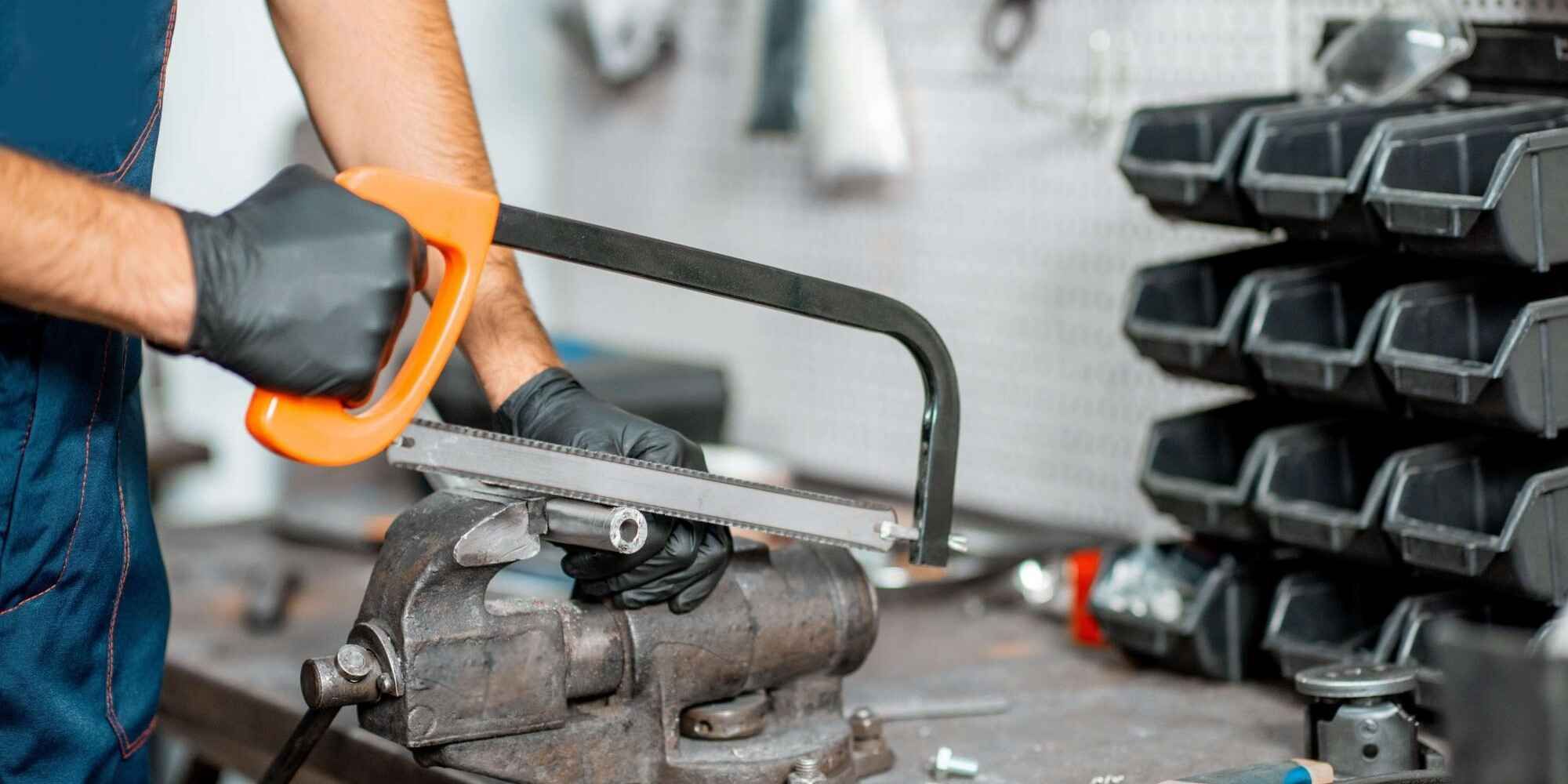
3. Secure the screw or workpiece
Clamp the screw in a vise when possible. Use soft jaws, wood blocks, or cardboard between the vise and finished surfaces to reduce marks.
If the screw is already installed, support the surrounding part so it does not move. Keep your hands away from the blade path. Never hold a loose screw in your fingers while sawing.
4. Start with short strokes
Place the blade on the mark and use short, light strokes to create a small groove. This groove keeps the blade from sliding across the screw.
Once the groove is established, use longer strokes. Let the teeth do the work. Heavy pressure can bend the blade, damage the teeth, or make the cut wander.
5. Keep the blade straight
Hold the hacksaw so the blade stays square with the screw unless you need a specific angled cut. Use smooth strokes at a steady pace.
Do not force the blade sideways. Side pressure can break a thin blade and leave a sharp fragment.
6. Finish the cut carefully
Slow down as the blade nears the other side. The remaining metal may break suddenly, which can damage threads or cause the workpiece to shift.
Support the cutoff piece if it could fall. After the cut, remove burrs with a metal file or deburring tool.
7. Check the result
A successful cut should be:
- Fully separated
- Close to the marked line
- Free from large burrs
- Safe to touch after filing
- Usable with the correct nut or fitting, if threads remain
If the screw will carry a load, inspect it closely. Cutting can reduce the usable threaded length and may create a weak or damaged end.
How to Cut a Screw That Is Already Installed
Cutting an installed screw requires more care because the nearby material may be easy to damage.
For a screw sticking through wood, plastic, or thin metal, first protect the surface with a metal shield, putty knife, or thin scrap material. Keep the shield between the hacksaw blade and the finished surface.
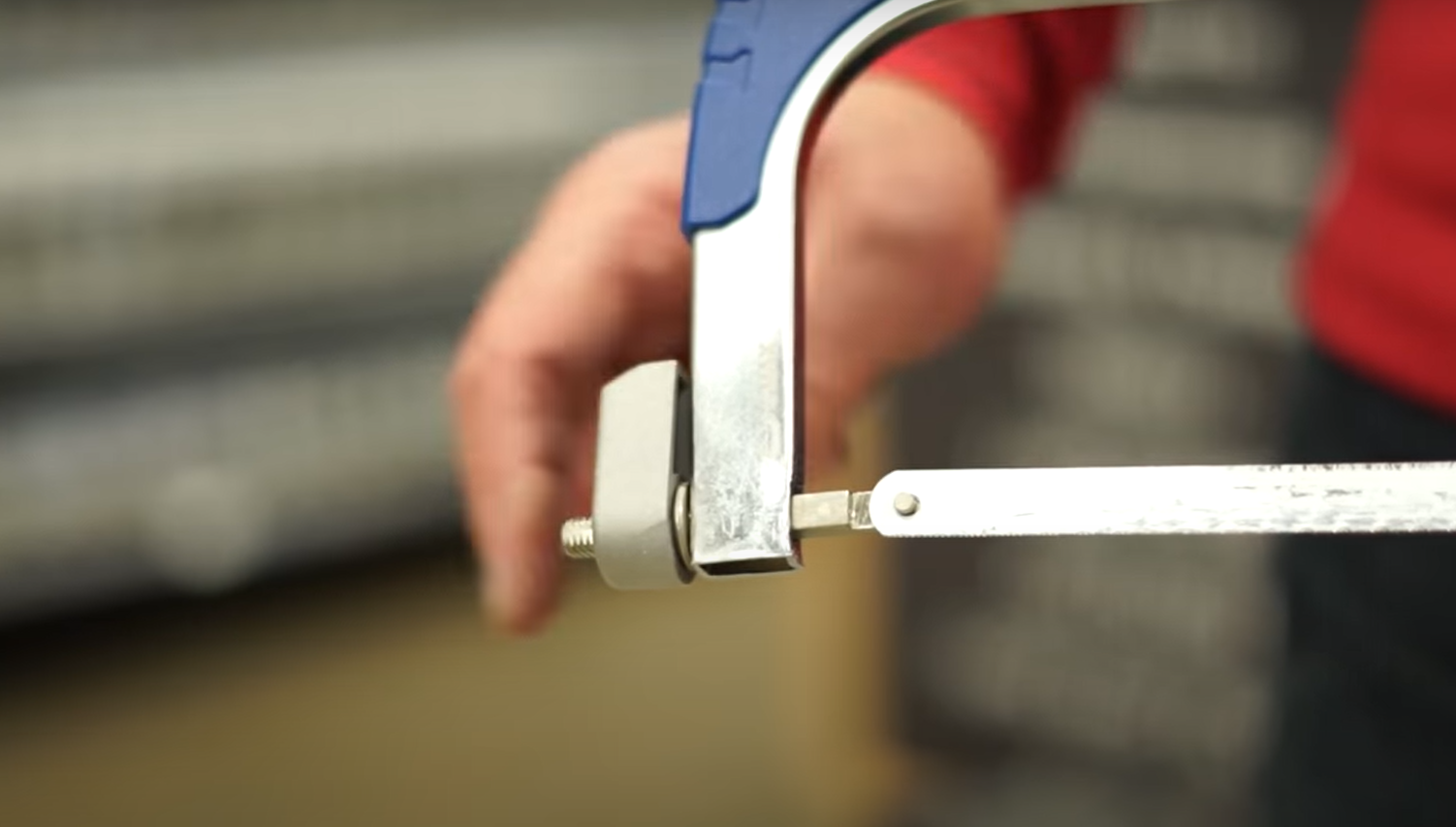
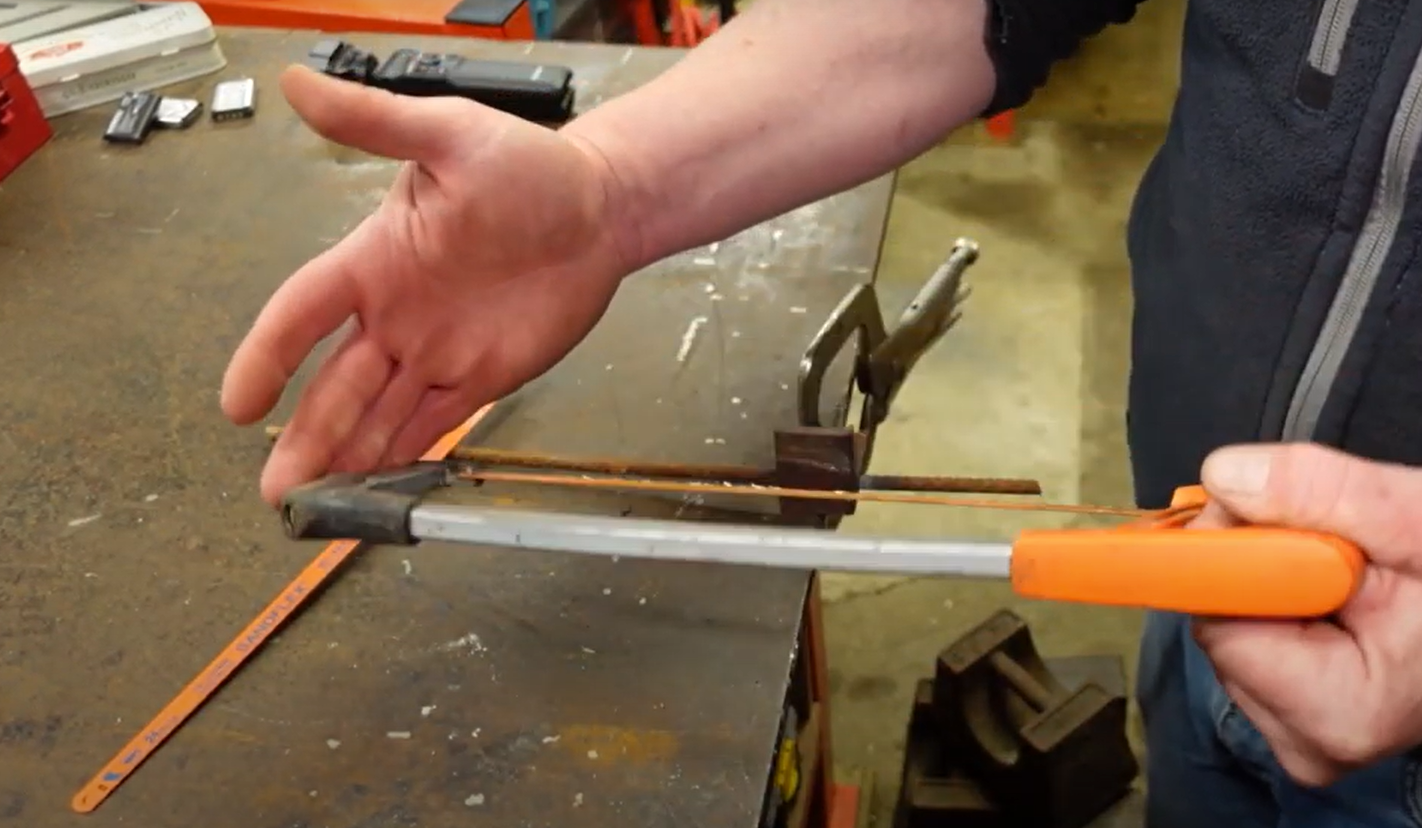
A mini hacksaw or compact hacksaw can fit in places where a full-size frame cannot. You can also remove the blade from a standard hacksaw and wrap one end with tape to make a simple hand-held saw. Use this only when you can control the blade safely. The exposed teeth can cut skin quickly.
If the screw is flush with a surface, a hacksaw may not be the best tool. A rotary tool with a cutting wheel may make a cleaner cut, but it creates sparks and requires eye protection. A drill with a left-hand bit may help remove a damaged screw, depending on the fastener and access.
Do not cut blindly near wires, fuel lines, plumbing, or hidden parts. In a wall, vehicle, appliance, or electrical box, identify what is behind the screw before cutting.
What If the Hacksaw Will Not Cut the Screw?
When a hacksaw makes little progress, stop and check the cause instead of pressing harder.
| Symptom | Likely cause | Safer next step |
|---|---|---|
| Blade slides over the surface | Screw is very hard or the blade is dull | Try a fresh bi-metal blade or a different tool |
| Blade clogs with metal | Teeth are too fine or the metal is soft | Clean or replace the blade; use a suitable TPI |
| Cut wanders | The starting groove is too shallow or pressure is uneven | Re-mark the screw and start with short strokes |
| Blade breaks | Too much side pressure or poor tension | Install a new blade and keep it straight |
| Screw spins while cutting | The fastener is not secured | Clamp it or lock the mating part |
| Cut takes too long | Screw is too thick for the tool | Use a reciprocating saw, rotary tool, or cutoff wheel |
A hacksaw is often the best low-cost choice for one small screw. It is not always the fastest choice for several large screws or hardened fasteners.
Other tools that may work better
- Reciprocating saw: Useful for large or exposed fasteners. Use a metal-cutting blade.
- Rotary tool: Good for tight spaces and small screws. A cutting wheel creates sparks.
- Angle grinder: Fast for thick metal, but it creates heat, sparks, and more debris.
- Bolt cutters: Useful only when the fastener is small and soft enough. They can crush threads.
- Drill and extractor: Better when the goal is to remove a screw rather than simply cut it.
- Cutoff wheel: Effective for hard metal, but it requires firm control and proper guarding.
Choose the tool based on access, screw hardness, cut quality, and the risk to nearby materials.

Safety Rules for Cutting Metal Screws
Wear safety glasses or a face shield because metal chips and broken teeth can travel quickly. Use hearing protection when operating powered cutting tools.
Secure the work before cutting. A loose screw can twist, catch the blade, or become a sharp projectile. Keep both hands on the hacksaw when possible and keep fingers clear of the cut.
Wear work gloves when handling sharp metal, but do not let gloves become loose near powered tools. Avoid loose clothing, jewelry, and long hair around rotating equipment.
Metal can become hot during cutting. Let the screw cool before touching it, especially when using a rotary tool, grinder, or reciprocating saw.
Use power tools only in a well-ventilated area. Cutting painted, plated, or coated metal can release dust or fumes. Do not create sparks near gasoline, solvents, propane, or other flammable materials.
Inspect the finished screw for sharp burrs. File the edge smooth, and remove metal filings from the work area with a brush or vacuum approved for the material. Do not wipe sharp filings away with bare hands.
The Occupational Safety and Health Administration advises employers and workers to maintain hand tools in safe condition and use suitable personal protective equipment. For home projects, the same basic approach applies: control the work, protect your eyes, and use the right blade.
Common Mistakes to Avoid
The most common mistake is using a dull or incorrect blade. A wood blade will not cut metal well, and a worn metal blade encourages excessive force.
Another mistake is cutting without clamping the screw. Even a small screw can rotate, bend, or pull the blade off the mark.
Avoid fast, hard strokes. A hacksaw removes metal through its teeth, not through brute force. Smooth strokes usually give better control and extend blade life.
Do not cut through a screw without checking what lies behind it. A hidden wire, tube, panel, or finished surface can suffer more damage than the screw is worth.
Finally, do not reuse a screw in a critical joint after cutting or damaging its threads unless the application allows it. A cut fastener may no longer have the required strength or engagement.

Can You Cut a Screw Without Damaging the Threads?
Yes, but the method depends on where the cut is made. To preserve usable threads, place a matching nut on the screw before cutting. Cut just beyond the nut, then remove the nut slowly.
The nut can help push minor burrs back into alignment. It cannot repair badly crushed or missing threads.
For a cleaner result, cut the screw slightly long, file the end flat, and test it with the correct nut. Never force a nut over damaged threads because it may cross-thread and make later removal difficult.
If the screw is part of a load-bearing connection, use a fastener with the correct length and strength rating instead of modifying it unless the design specifically permits cutting.

Frequently Asked Questions
Can a hacksaw cut stainless steel screws?
Yes. Use a sharp bi-metal blade, often in the 18–24 TPI range for common screw sizes. Apply steady pressure and avoid rubbing the blade in one place, since stainless steel can harden from heat and friction.
Can a hacksaw cut hardened screws?
Sometimes, but hardened screws can quickly dull a normal blade. If the blade does not create a groove after several controlled strokes, use a carbide or abrasive cutting method suited to hardened metal.
Can I use a junior hacksaw to cut a screw?
Yes. A junior hacksaw is useful in tight spaces and for small screws. Its smaller frame may require more strokes, but it can provide better access than a full-size hacksaw.
Should the hacksaw teeth point toward or away from the handle?
They should usually point toward the handle. Most hacksaws cut on the forward stroke, so the teeth face the direction in which you push the saw.
Is it better to cut a screw with a hacksaw or an angle grinder?
A hacksaw is quieter, produces no sparks, and offers good control for small jobs. An angle grinder is faster for thick or hard screws but creates sparks, heat, noise, and more flying debris.
Can I cut a screw while it is inside wood?
You can trim an exposed section, but protect the wood and check for hidden wires or other parts. A flush cut may be difficult with a standard hacksaw, so a compact saw or oscillating tool may provide better access.
Final Answer: Is a Hacksaw Good for Cutting Screws?
Yes, a hacksaw can cut most metal screws. Use a sharp metal-cutting blade, choose the TPI for the screw’s thickness, clamp the work, and make smooth forward strokes.
For one or two ordinary screws, a hacksaw is simple and effective. For hardened screws, thick bolts, or cuts near delicate surfaces, choose another tool and follow the added safety steps. After cutting, file away burrs and check that the remaining fastener still suits the job.
Recent Tool Guides
 Hammer
How To Hammer Flowers Onto Paper: Easy Guide
Learn how to hammer flowers onto paper with simple steps, helpful tips, and beautiful results for...
Read Guide → Wrench
How To Use A Hex Wrench: Easy Step-By-Step Guide
Learn how to use a hex wrench correctly with simple steps, helpful tips, and common mistakes...
Read Guide → Hacksaw
How To Cut Curtain Pole With Hacksaw: Easy Guide
Learn how to cut curtain pole with hacksaw safely and neatly. Follow simple steps for accurate...
Read Guide → Wrench
How To Use A Husky Torque Wrench: Easy Guide
Learn how to use a Husky torque wrench correctly with simple steps, torque settings, and safety...
Read Guide → Hammer
How To Hold A Hammer: Safe Grip Guide
Learn how to hold a hammer with the right grip, stance, and technique for safer, more...
Read Guide → Hacksaw
How To Cut Flexible Metal Conduit With Hacksaw: Easy Guide
Learn how to cut flexible metal conduit with hacksaw safely and cleanly. Follow simple steps for...
Read Guide →