How To Use A Hacksaw Safely: Safe Cutting Tips
A hacksaw can cut metal, plastic pipe, conduit, bolts, and other materials used in homes, garages, workshops, and job sites across the United States. It is simple to use, but a loose blade, poor grip, or unstable workpiece can cause cuts and eye injuries.
To use a hacksaw safely, wear eye protection, inspect and tension the blade, secure the material, keep both hands behind the blade, and use slow, steady strokes. Let the blade do the work instead of forcing it.

What Is a Hacksaw?
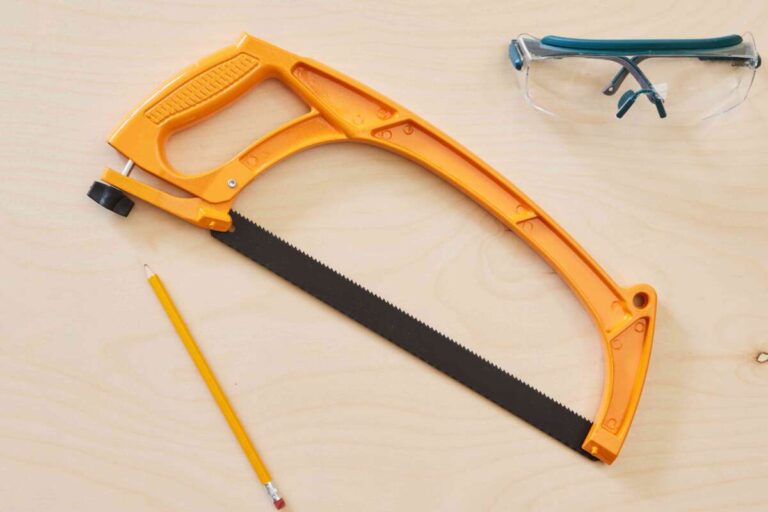
A hacksaw is a hand saw with a thin, replaceable blade held in a metal frame. Most standard hacksaws have a handle at one end and a tensioning screw or lever at the other.
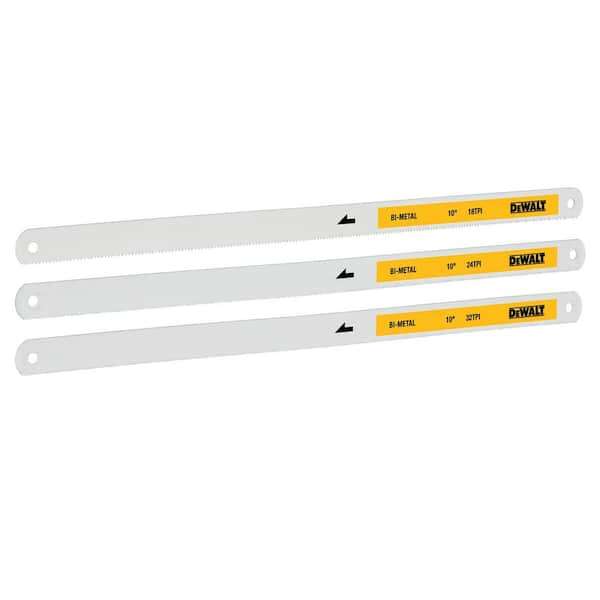
The blade has small teeth made for cutting hard materials. Common blade types include:
- Bi-metal blades: Flexible and resistant to tooth breakage.
- Carbon-steel blades: Often less costly but may wear faster.
- Fine-tooth blades: Better for thin metal and small tubing.
- Coarse-tooth blades: Better for thicker stock and faster cutting.
- Specialty blades: Made for materials such as plastic, stainless steel, or hardened metal.
Blade tooth size is often listed as teeth per inch, or TPI. A higher TPI blade has smaller teeth. A lower TPI blade has larger teeth.
For safe cutting, keep at least two or three teeth in contact with the workpiece at all times. This helps prevent the blade from catching or snagging.
A hacksaw is not the right tool for every job. Do not use it to cut live electrical wire, pressurized pipe, gas pipe, structural parts, or materials that may contain asbestos or other hazardous substances.
What You Need Before You Start
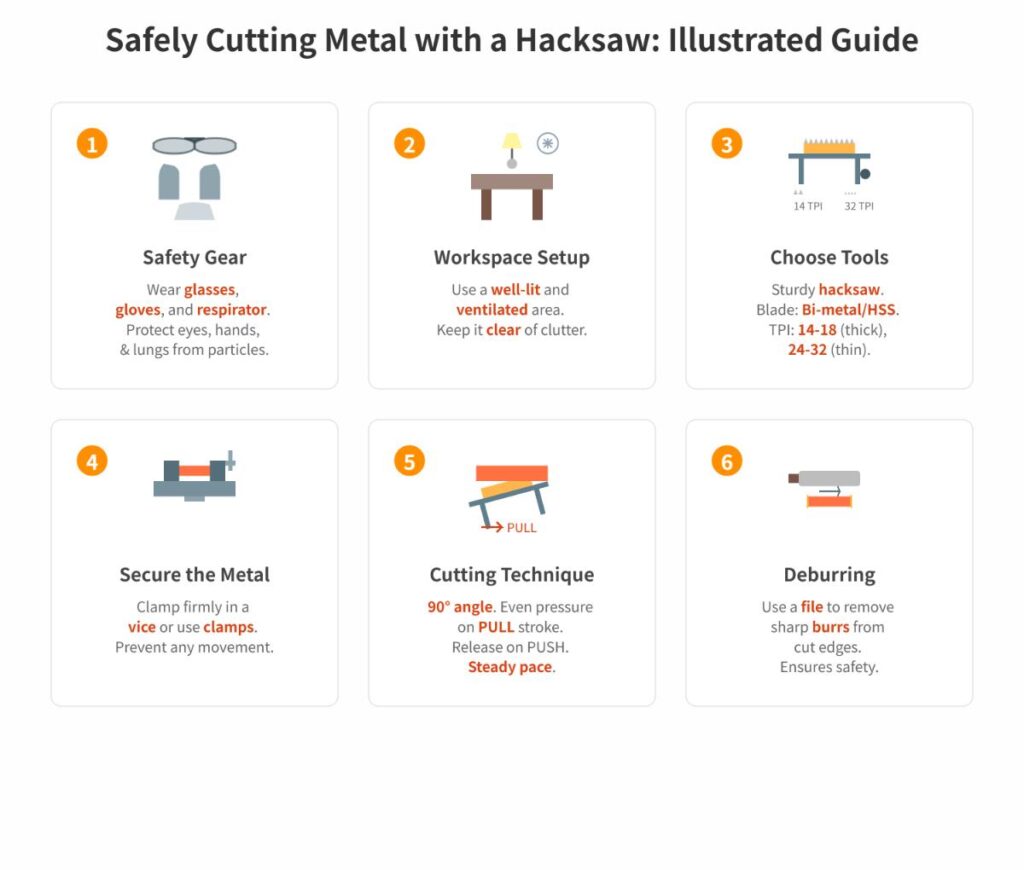
Gather the right tools and protective gear before making the first cut.
Basic equipment
You will usually need:
- A hacksaw with a sound frame
- A blade suited to the material
- Safety glasses with side protection
- Work gloves that fit well
- A vise, clamp, or other secure support
- A file or deburring tool
- A measuring tool and marking tool
Safety glasses are the minimum for most hand-saw work. In the United States, OSHA requires suitable eye and face protection when workers face hazards from flying particles or other eye dangers. For workplace use, follow your employer’s hazard assessment and personal protective equipment rules.
Gloves can help protect your hands from sharp edges and burrs. They must not reduce your grip or come close to moving machinery. Remove loose jewelry, tie back long hair, and avoid loose sleeves.
Check the work area
Use a clean, well-lit space. Keep the floor dry and remove items that could cause you to trip.
Make sure you have room to move the saw forward and back. Do not position your body directly behind the blade path. If the blade slips, your hand or arm should not move into the cut.
Before cutting into a pipe, panel, wall, or other fixed item, confirm what is inside or behind it. Hidden electrical wires, water lines, gas lines, and other services can create serious hazards.
How to Inspect and Set Up a Hacksaw
Inspect the saw before each use. A short check can prevent a broken blade or a loss of control.
- Check the frame. Look for cracks, bends, sharp damage, or a loose handle.
- Inspect the blade. Do not use a blade with missing teeth, deep rust, cracks, or a bent edge.
- Confirm the blade direction. On most hacksaws, the teeth point away from the handle. Follow the frame or blade maker’s instructions.
- Install the blade fully. Make sure both ends sit correctly on the pins or posts.
- Tighten the blade. Use the tension screw or lever until the blade is firm.
- Test the tension. A properly tensioned blade should not sag or twist easily.
- Check the handle. Hold it firmly and make sure it does not shift.
Do not over-tighten the blade. Too much tension can damage the frame or cause the blade to break. Do not use a blade that is too short, too long, or not designed for the frame.
A broken blade can move quickly when it fails. Keep your face away from the blade while setting tension, and wear eye protection during setup as well as cutting.
How to Use a Hacksaw Safely
Follow these steps for a controlled cut.
1. Mark the cut
Measure the material and mark the cut line clearly. If the cut must be precise, mark all the way around a pipe or use a square to guide the line.
For a tube or round stock, a complete guide line helps keep the cut straight. A partial mark can cause the saw to drift.
2. Secure the material
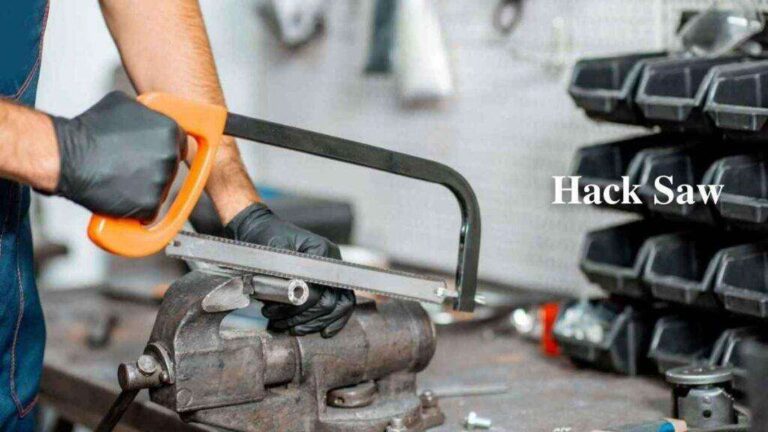
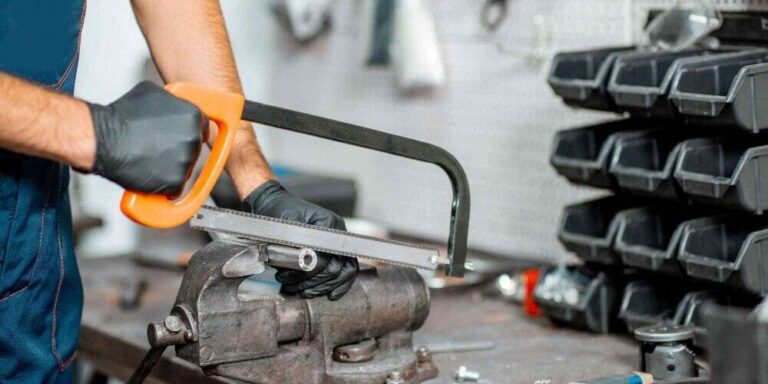
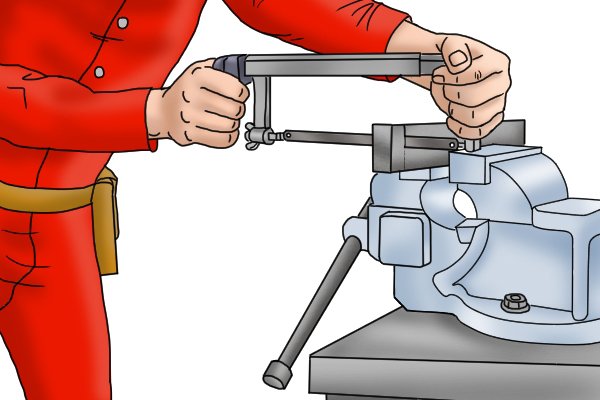
Place the workpiece in a vise or use a clamp that can hold it without crushing it.
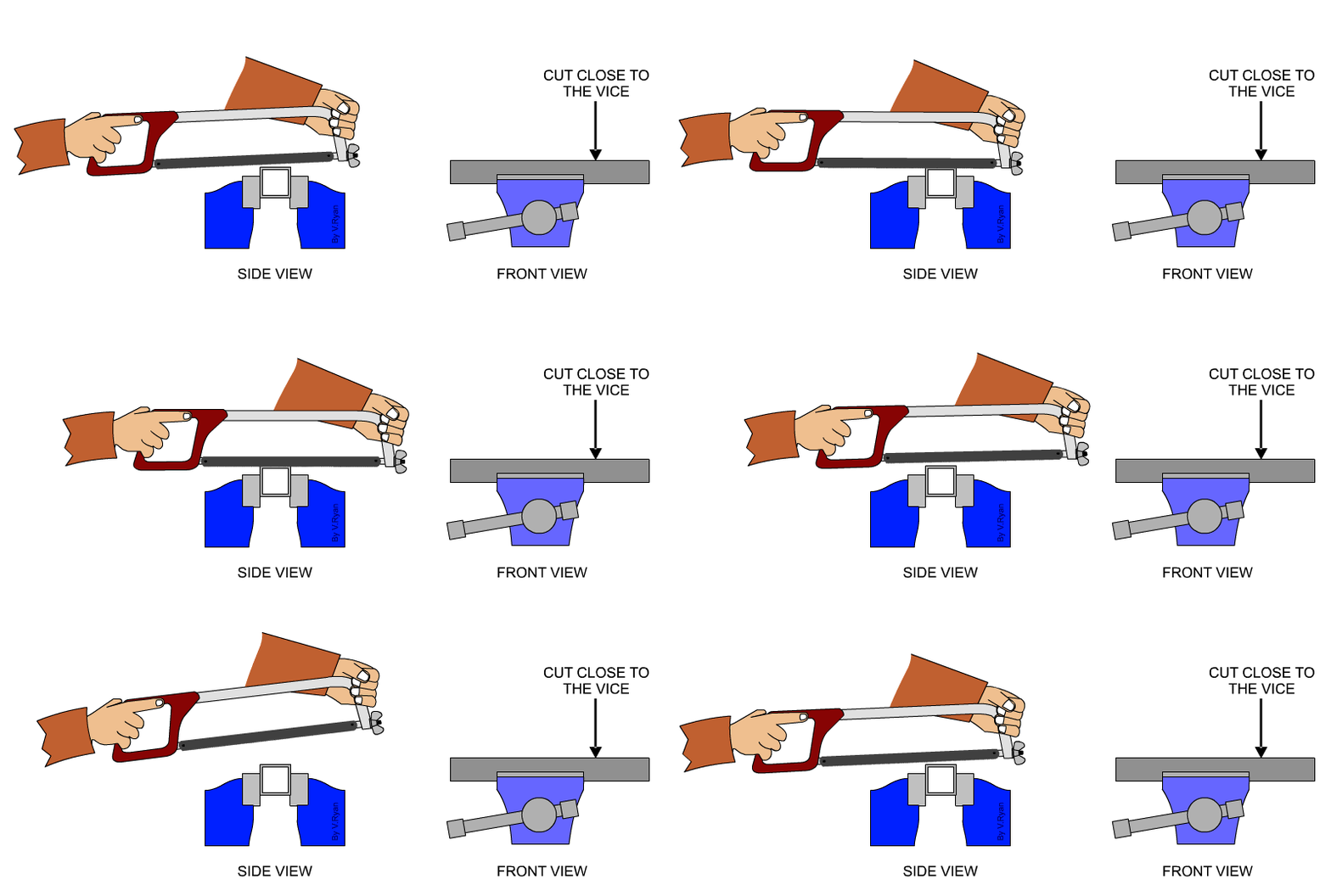
Position the material so the cut is close to the support point. A long piece that extends far beyond the vise can shake or bend during the cut.
Do not hold the material in one hand while sawing with the other. The blade may slip into your hand, or the material may twist and catch the blade.
When using a vise, tighten it enough to hold the workpiece firmly. Do not strike the vise handle or add a pipe for extra leverage unless the vise manufacturer allows it.
3. Choose a safe stance
Stand with stable footing. Keep your shoulders relaxed and your body balanced.
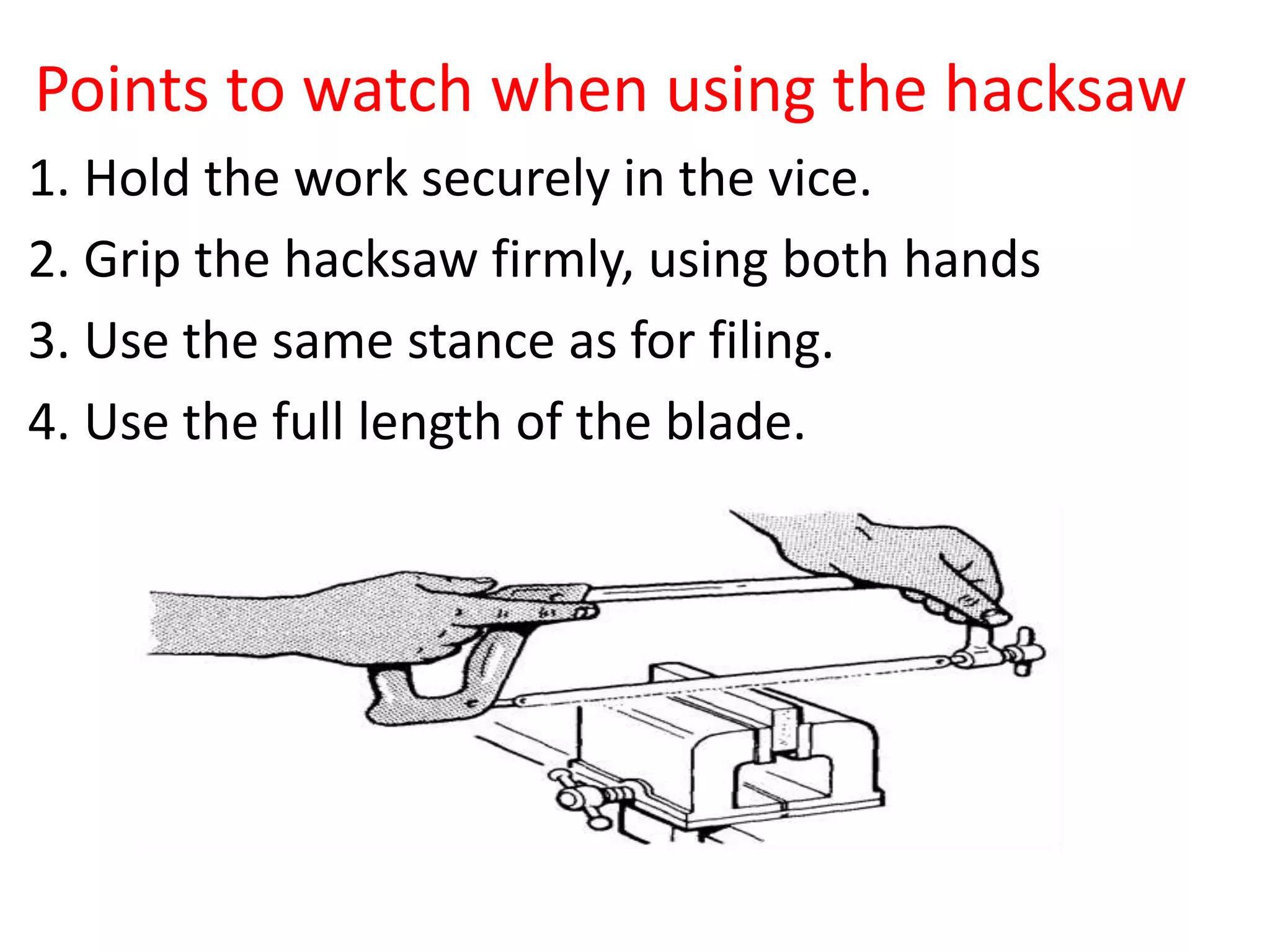
Place your main hand on the hacksaw handle. Use your other hand on the front of the frame if you need extra control. Keep both hands behind the blade and away from the teeth.
Start with the blade near the cut mark. Keep the saw level and align it with the intended cut.
4. Start with short strokes
Use light pressure and short strokes to create a shallow groove. This first groove is called a starting kerf.
Short strokes give you control and help stop the blade from skating across the surface. Do not press hard at this stage. A slipping blade can scratch the material, damage the blade, or injure your hand.
5. Use steady forward strokes
Once the groove is established, use smooth, full strokes. Apply pressure on the forward stroke and ease off as you pull the saw back.
Keep the blade in the same line. Let the teeth remove the material. If the blade begins to bind, stop and check the setup instead of forcing it.
A hacksaw cuts on the push stroke. Pressing on the return stroke wastes effort and can bend the blade.
6. Keep the blade straight
Use the full length of the blade when practical. Long, even strokes spread wear across more teeth and reduce heat at one small point.
Do not twist the frame while cutting. Twisting can bend the blade or cause it to break. If you need to change direction, stop cutting and reset the workpiece or begin a new cut.
7. Finish the cut with control
As the blade nears the other side, reduce pressure and shorten the stroke. The final section may break away suddenly if you push too hard.
Support the piece so it does not drop, swing, or pinch the blade. Keep your hands clear of the cut line until the material is fully separated.
8. Remove sharp edges
After the cut, inspect the edge for burrs. A burr is a sharp ridge of material left by cutting.
Use a file or deburring tool to remove it. Push the file away from your body and keep your free hand behind the cutting edge. Do not wipe the edge with your bare hand to check for sharpness.

How to Choose the Right Hacksaw Blade
The best blade depends on the material thickness and hardness.
| Material or task | Useful blade choice | Key point |
|---|---|---|
| Thin sheet metal | Fine tooth, often 24–32 TPI | Keep several teeth engaged |
| Small metal tubing | Fine or medium tooth | Secure the tube firmly |
| Thick steel bar | Coarser tooth, often 14–18 TPI | Use steady strokes and avoid forcing |
| Aluminum | Medium tooth | Clear chips and avoid clogging |
| Plastic pipe | Fine or medium tooth | Support the pipe to prevent crushing |
| Stainless steel | Strong bi-metal blade | Use light, steady pressure |
| Small bolts or threaded rod | Fine tooth | Protect the threads when starting |
These ranges are general. Follow the blade maker’s instructions when they differ.
A blade with teeth that are too coarse may catch on thin material. A blade with teeth that are too fine may cut slowly and clog with chips. If the teeth become packed with material, stop and clean or replace the blade.
For a thick workpiece, choose a blade long enough to pass through the material during most strokes. A blade that barely travels across the cut may wear in one small area and heat up.

Common Hacksaw Mistakes and How to Fix Them
The blade keeps slipping from the cut
Likely causes:
- You started with too much pressure.
- The blade is dull.
- The material was not secured.
- The frame was held at an angle.
Fix: Stop cutting. Recheck the vise or clamp, replace a damaged blade, and restart with short, light strokes.
The blade breaks
Likely causes:
- Too much tension
- Excessive downward force
- A twisted frame
- A bent or damaged blade
- The workpiece moved during the cut
Fix: Put on eye protection before removing the broken blade. Check the frame and blade mounts. Install a new blade and secure the workpiece more firmly.
Never continue using a hacksaw with a cracked frame or damaged blade mount.
The cut is not straight
Likely causes:
- The starting groove was not deep enough.
- You pushed the blade sideways.
- The material moved.
- The mark was hard to see.
Fix: Stop before the cut travels too far. Improve the mark, secure the workpiece, and use slower strokes. For a critical cut, begin again rather than trying to force the blade back into line.
The blade cuts very slowly
Likely causes:
- The blade is dull.
- The teeth are too fine or too coarse for the material.
- You are using too little stroke length.
- The material is unusually hard.
Fix: Replace the blade with the correct type. Use steady forward pressure, but do not force the saw. If the material is hardened or the cut is extensive, another tool may be safer and more suitable.
The blade binds in the cut
Likely causes:
- The cut closed around the blade.
- The workpiece was not supported.
- The blade twisted.
- The saw was pushed too hard.
Fix: Stop immediately. Do not yank the saw free. Support the material, release pressure, and gently remove the blade. Check for damage before continuing.

When a Hacksaw Is Not the Safest Choice
A hacksaw works well for small, controlled cuts. It may not be the safest option when:
- The material is large, heavy, or hard to secure.
- The cut is in a structural beam or load-bearing part.
- The material is under tension or spring force.
- The work involves live electrical systems.
- The pipe may contain gas, steam, chemicals, or pressurized liquid.
- The workpiece contains unknown coatings or fibers.
- You need a long, highly precise, or production-grade cut.
- A power saw would create more dust, sparks, noise, or kickback than the job allows.
For electrical, gas, structural, or hazardous-material work, stop and consult a qualified professional. Turn off and verify electrical power before working near wiring. Close and drain water lines when appropriate, but do not assume that a closed valve removes every pressure hazard.
A powered tool is not automatically safer. It may add kickback, sparks, noise, vibration, and flying debris. Choose the tool that matches the material, the work area, and your ability to control it.
Safety Checklist Before and After Cutting
Use this short checklist before you begin:
- The material is identified.
- The workpiece is secure.
- The blade fits the frame.
- The blade is sharp and free of cracks.
- The blade is installed in the correct direction.
- The blade has firm, moderate tension.
- Safety glasses are on.
- Loose clothing and jewelry are removed.
- The cutting path is clear.
- Hidden wires, pipes, and other hazards have been checked.
- Both hands will stay behind the blade.
- A file is ready for sharp burrs.
After cutting:
- Set the hacksaw down with the teeth facing away from people.
- Remove loose scraps and metal chips with a brush, not bare fingers.
- Deburr the cut edge.
- Replace a bent, cracked, or dull blade.
- Store the hacksaw where children cannot reach it.
- Keep spare blades covered or stored in a container.
Do not leave a hacksaw on the floor, on a ladder, or where someone may grab the blade by mistake.

Key Takeaways
- Wear safety glasses every time you use a hacksaw.
- Select a blade that matches the material and thickness.
- Secure the workpiece in a vise or with a suitable clamp.
- Start with short, light strokes.
- Apply pressure only on the forward stroke.
- Keep the blade straight and both hands behind the teeth.
- Slow down near the end of the cut.
- File away burrs before handling the finished edge.
- Stop if the blade binds, breaks, or begins to twist.
Frequently Asked Questions
Should hacksaw teeth point toward or away from the handle?
On most standard hacksaws, the teeth point away from the handle because the tool cuts on the forward push stroke. Check the markings or instructions for your specific frame.
Can I use a hacksaw to cut plastic pipe?
Yes. A hacksaw can cut many types of plastic pipe. Secure the pipe so it does not roll or collapse, use a suitable blade, and remove burrs from the inside and outside of the cut.
How tight should a hacksaw blade be?
The blade should be firm and straight without sagging. Do not tighten it so much that you bend the frame or risk damaging the blade. If the blade moves sideways easily, add a small amount of tension.
Why does my hacksaw blade keep breaking?
Common causes include excess pressure, sideways twisting, poor tension, a loose workpiece, or a damaged blade. Stop using the saw, inspect the frame, and install a new blade if needed.
Do I need gloves when using a hacksaw?
Gloves are useful when they protect against sharp edges and fit closely. They should not interfere with your grip. Eye protection remains essential because chips and broken teeth can become airborne.
Sources and Safety Guidance
This guide reflects general hand-tool safety practices and U.S. workplace guidance, including:
- OSHA: Hand and Power Tools
- OSHA: Eye and Face Protection, 29 CFR 1910.133
- OSHA: General Requirements for Personal Protective Equipment, 29 CFR 1910.132
- NIOSH: Hierarchy of Controls
OSHA rules apply to covered workplaces and do not replace the instructions for a particular hacksaw or blade. Always follow the tool manufacturer’s directions and your employer’s safety program when working on a job site.
Conclusion
Using a hacksaw safely comes down to control. Choose the right blade, secure the material, wear eye protection, and cut with slow forward strokes. If the blade slips, binds, twists, or breaks, stop and correct the problem before continuing.
For a small home repair, these steps can make a clean cut safer and easier. For energized systems, pressurized lines, structural parts, or unknown materials, use qualified help instead of taking a risk.
Recent Tool Guides
 Hammer
How To Hammer Flowers Onto Paper: Easy Guide
Learn how to hammer flowers onto paper with simple steps, helpful tips, and beautiful results for...
Read Guide → Wrench
How To Use A Hex Wrench: Easy Step-By-Step Guide
Learn how to use a hex wrench correctly with simple steps, helpful tips, and common mistakes...
Read Guide → Hacksaw
How To Cut Curtain Pole With Hacksaw: Easy Guide
Learn how to cut curtain pole with hacksaw safely and neatly. Follow simple steps for accurate...
Read Guide → Wrench
How To Use A Husky Torque Wrench: Easy Guide
Learn how to use a Husky torque wrench correctly with simple steps, torque settings, and safety...
Read Guide → Hammer
How To Hold A Hammer: Safe Grip Guide
Learn how to hold a hammer with the right grip, stance, and technique for safer, more...
Read Guide → Hacksaw
How To Cut Flexible Metal Conduit With Hacksaw: Easy Guide
Learn how to cut flexible metal conduit with hacksaw safely and cleanly. Follow simple steps for...
Read Guide →