

Use a bi-metal hacksaw blade with 18 to 24 teeth per inch for most metal-cutting jobs.
Choosing what hacksaw blade to cut metal depends on the metal’s thickness, hardness, and shape. A good blade can make a clean cut with less effort, while the wrong blade may chatter, dull fast, or break teeth. This guide explains blade types, tooth counts, materials, cutting methods, and safety tips so you can choose with confidence.

What hacksaw blade to cut metal?
For most home, repair, and workshop tasks, use a bi-metal hacksaw blade. It combines a flexible spring-steel body with hardened high-speed steel teeth. This design bends without snapping easily and keeps its edge longer than a basic carbon-steel blade.
The best all-purpose choice is usually:
• Blade type: Bi-metal
• Tooth count: 18 to 24 teeth per inch, or TPI
• Blade length: 10, 12, or 14 inches, based on the saw frame
• Tooth pattern: Regular or variable pitch
• Cutting direction: Teeth pointing forward, away from the handle
If you are unsure what hacksaw blade to cut metal with, start with a 24 TPI bi-metal blade. It works well on mild steel, aluminum, copper, brass, threaded rod, pipe, and many metal brackets.
However, no single blade fits every job. Thin sheet metal needs fine teeth, while thick steel needs larger teeth with deeper gullets. The right blade should keep at least three teeth in contact with the work at all times.
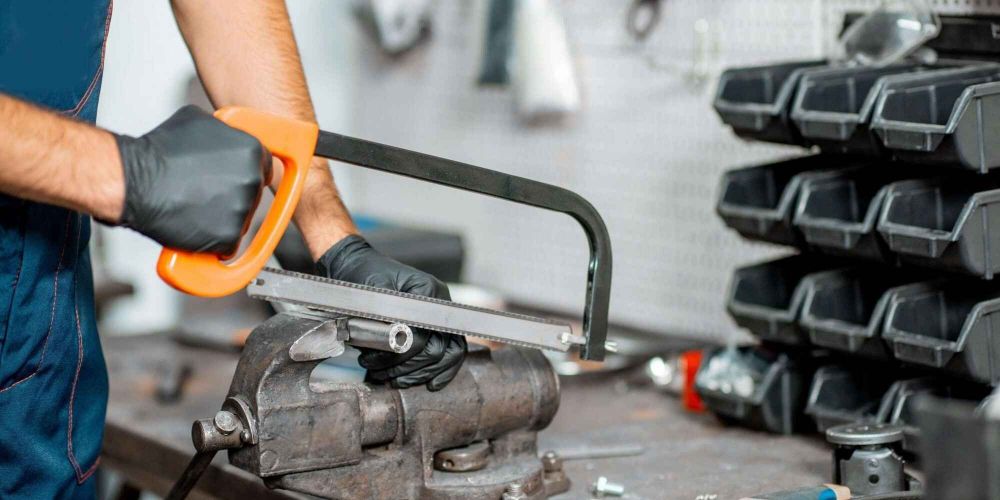
How teeth per inch affect metal cutting
Teeth per inch, or TPI, tells you how closely the teeth are spaced. A high TPI blade has small, closely packed teeth. A low TPI blade has larger teeth with wider gaps.
The correct TPI depends mostly on the thickness of the metal:
• 14 to 18 TPI: Thick steel, heavy pipe, angle iron, and solid bar
• 18 to 24 TPI: General-purpose cutting of steel, brass, copper, and aluminum
• 24 to 32 TPI: Thin tubing, sheet metal, conduit, and small fasteners
• 32 TPI: Very thin metal, delicate parts, and fine cuts
A useful rule is to keep at least three teeth inside the metal during each stroke. If only one or two teeth touch the work, they may catch and break. If too many teeth are engaged, the blade may clog and cut slowly.
When deciding what hacksaw blade to cut metal, avoid choosing the finest blade simply because it looks more precise. Fine teeth can remove less material per stroke and may fill with soft aluminum or copper chips.
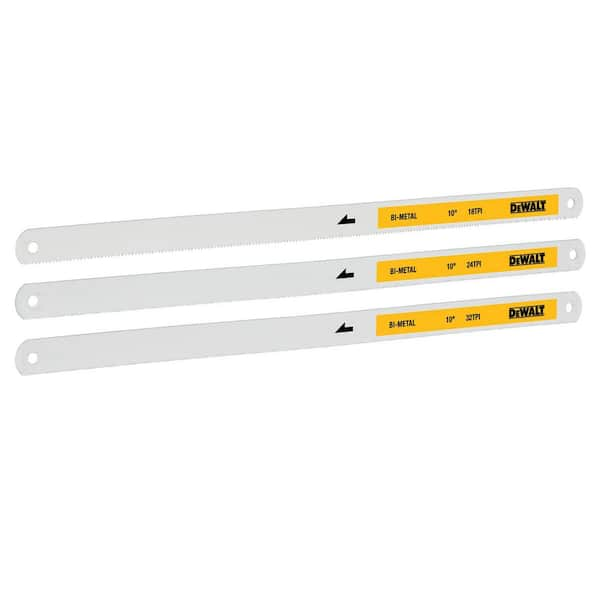
Best hacksaw blade types for different metals
Bi-metal hacksaw blades
Bi-metal blades are the best choice for most users. The flexible back resists fracture, while the high-speed steel edge handles hard cutting. These blades cost more than carbon-steel blades, but they usually last longer and provide smoother results.
Use a bi-metal blade for:
• Mild steel
• Stainless steel
• Tool steel
• Aluminum
• Copper and brass
• Steel bolts and threaded rod
• Metal conduit and tubing
A bi-metal blade is often the safest answer to what hacksaw blade to cut metal when the metal type is unknown.
Carbon-steel blades
Carbon-steel blades are inexpensive and work for light-duty cutting. They are useful for soft metals, plastic, wood, and occasional repairs. They do not handle heat or twisting as well as bi-metal blades.
Choose one for a simple job when cost matters more than blade life. Do not force a carbon-steel blade through thick stainless steel or hardened bolts.
High-speed steel blades
High-speed steel, or HSS, blades have very hard teeth. They resist wear and work well on hard metals. Their main weakness is brittleness, especially when the blade is bent or the frame is twisted.
HSS blades are best when you need a durable cutting edge but can maintain steady, straight strokes. They are less forgiving than bi-metal blades.
Tungsten carbide grit blades
Carbide-grit blades do not use normal saw teeth. Their surface has abrasive carbide particles that grind through tough materials. They can cut cast iron, fiberglass, hardened steel, and some very brittle materials.
These blades cut more slowly and produce fine dust. Use eye protection and follow the blade maker’s instructions.

What hacksaw blade to cut thick metal
Use a 14 to 18 TPI blade for thick metal. The wider teeth create larger gullets, which carry chips away from the cut. This helps prevent clogging and reduces heat.
Examples include:
• Thick-wall steel pipe
• Solid steel bar
• Angle iron
• Large bolts
• Heavy brackets
• Structural sections
Let the blade do the work. Press firmly enough to keep the teeth engaged, but do not force the frame. Excess pressure can bend the blade and cause uneven teeth wear.
For very thick metal, mark the cut clearly and begin with a shallow groove. Once the groove is straight, increase your stroke length. This keeps the blade from wandering.
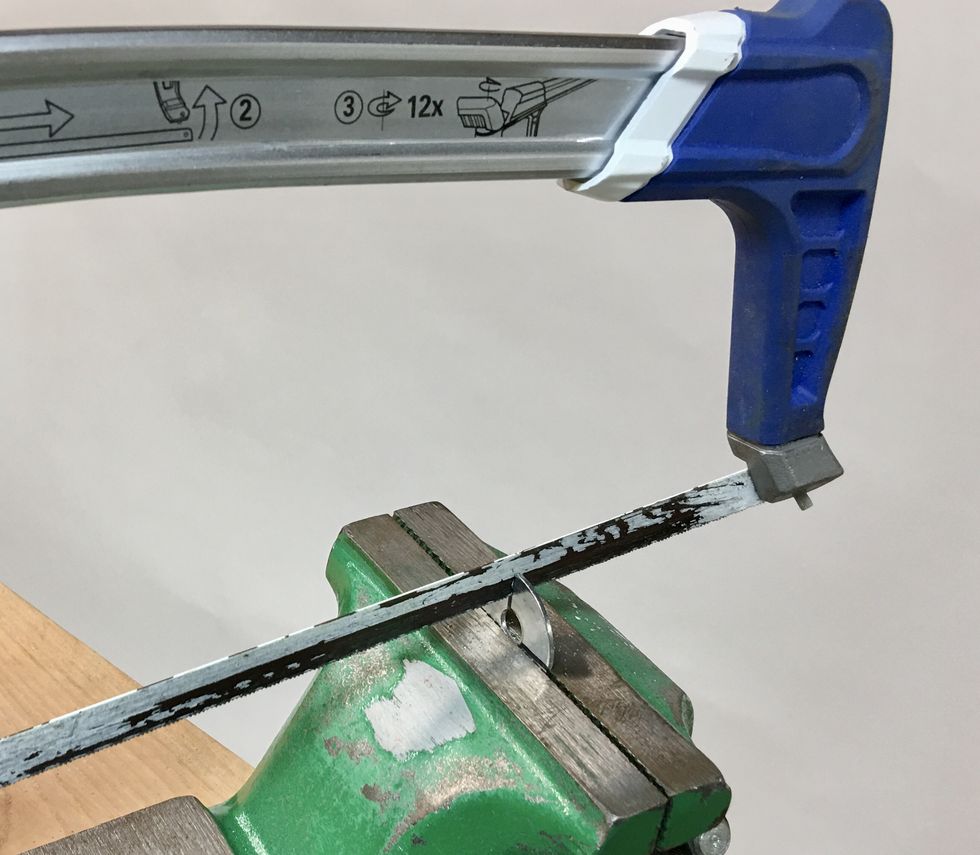
What hacksaw blade to cut thin metal
Thin metal needs a 24 to 32 TPI blade. The fine teeth reduce the chance of catching the edge or tearing the material.
Use a fine-tooth blade for:
• Sheet metal
• Thin-wall tubing
• Electrical conduit
• Small brackets
• Metal flashing
• Thin aluminum stock
• Small screws and bolts
When cutting thin sheet, clamp it between two pieces of scrap wood if possible. The wood supports the metal and reduces vibration. You can also place masking tape over the cut line to help reduce scratches and minor edge tearing.
The answer to what hacksaw blade to cut metal is not always based on the metal’s hardness. Thickness matters just as much.
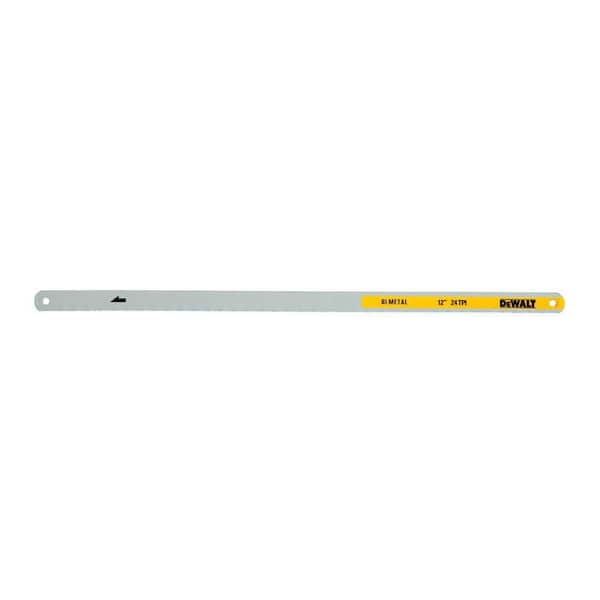
Choosing the right blade for common metals
Steel
For mild steel, use an 18 to 24 TPI bi-metal blade. Use 14 to 18 TPI for thick steel and 24 to 32 TPI for thin steel.
Stainless steel
Stainless steel is harder and creates more heat than mild steel. Use a sharp bi-metal or HSS blade with 18 to 24 TPI. Keep a steady pace and avoid stopping in the cut, since rubbing without cutting can harden the surface.
Aluminum
Aluminum is soft and can clog fine teeth. Use an 18 to 24 TPI blade with a larger tooth gullet. A light cutting lubricant can help prevent chips from sticking to the teeth.
Copper and brass
Copper and brass cut easily, but their chips can pack between fine teeth. An 18 to 24 TPI blade usually works well. Use light pressure and clean the blade when chips build up.
Cast iron
Cast iron is hard and brittle. A coarse bi-metal blade may work for small sections, but a carbide-grit blade is often better for thick or difficult cast iron. Clamp the part securely to prevent cracking or movement.
Hardened bolts and tool steel
Hardened steel requires a strong HSS, bi-metal, or carbide-grit blade. If a normal blade skates across the surface without making a groove, the material may be harder than the blade.

How to use a hacksaw blade correctly
Even the best answer to what hacksaw blade to cut metal will fail if the blade is installed or used poorly. Follow these steps for a clean cut.
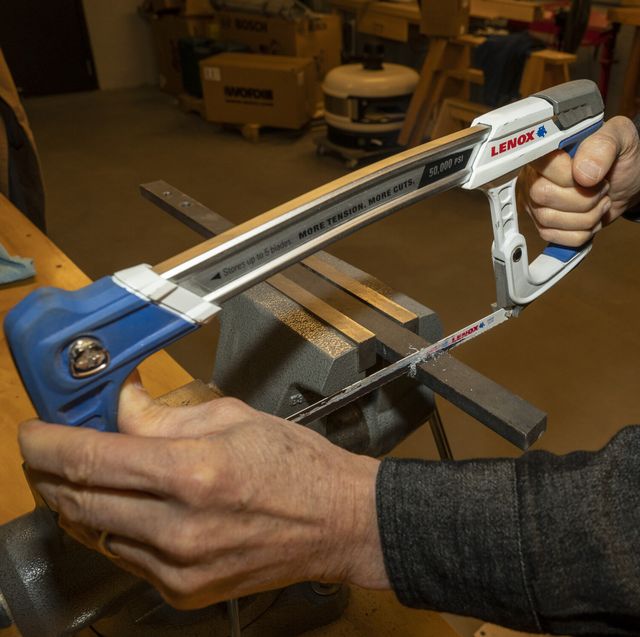
- Mark the cut line with a scribe, permanent marker, or layout dye.
- Secure the metal in a vise or clamp.
- Install the blade with the teeth pointing forward.
- Tighten the frame until the blade feels firm, but do not over-tighten it.
- Start with short, light strokes to create a straight groove.
- Use long strokes once the groove is established.
- Apply pressure only on the forward stroke.
- Release pressure on the return stroke.
- Keep the frame square to the work.
- Slow down as the blade approaches the end of the cut.
Most hacksaw blades cut on the forward stroke. Pressing during the return stroke creates heat and wears the teeth without improving the cut.
In my own hands-on repair work, the most common mistake is rushing the first inch of the cut. A small angled groove often turns into a crooked cut that no amount of later effort can fix. Starting slowly saves time.

Do you need cutting oil?
Cutting oil can help when cutting steel, stainless steel, and other hard metals. It cools the teeth, reduces friction, and helps carry chips from the cut.
Use a small amount of suitable cutting fluid on:
• Stainless steel
• Hardened steel
• Thick mild steel
• Tool steel
• Large bolts
Aluminum may clog when oil mixes with chips. A light lubricant can still help, but use it sparingly and clean the blade often.
Do not use oil if the work area makes it unsafe or if the material will later be painted, welded, or bonded without proper cleaning. Wipe the workpiece before the next process.
Common hacksaw blade mistakes
Using too few teeth
A coarse blade on thin metal can catch the edge and break teeth. Match the TPI to the material thickness.
Using too many teeth
A very fine blade on thick steel fills with chips. The blade then rubs instead of cutting and becomes hot.
Cutting with a loose blade
A loose blade can flex, wander, and twist. It may also snap from repeated bending.
Pushing on every stroke
The teeth are designed to cut in one direction. Pushing on the return stroke increases friction and heat.
Twisting at the end
Many blades break when the cut is nearly complete. Support the offcut and keep the frame straight until the final tooth leaves the metal.
Reusing a dull blade
A dull blade needs more force and creates more heat. Replace it when the teeth look rounded, the cut slows, or the blade begins to wander.
I once saw a small threaded rod take far longer than expected because the blade was dull and the frame was loose. Replacing the blade solved the problem within minutes. The lesson is simple: more force rarely fixes a worn blade.
Hacksaw safety tips
A hacksaw is simple, but it can still cause cuts, eye injuries, and hand strain. Use basic protective measures every time.
• Wear safety glasses or a face shield.
• Clamp the work firmly.
• Keep both hands on the saw frame when possible.
• Keep fingers away from the cutting path.
• Remove sharp burrs with a file.
• Do not use a cracked or bent frame.
• Replace blades with missing or damaged teeth.
• Keep oil and metal chips off the floor.
• Let hot metal cool before handling it.
• Use gloves when handling sharp stock, not as a substitute for careful technique.
Metal edges can be sharper than they look. After cutting, run a mill file or deburring tool along the edge. For small parts, hold the work with pliers or a vise instead of placing your fingers near the cut.
Hacksaw blade versus reciprocating saw blade
A hand hacksaw gives you control, low noise, and a clean cut for small jobs. It is ideal when you need to cut a bolt, pipe, bracket, or short length of conduit.
A reciprocating saw is faster for large or repeated cuts. However, it creates more vibration and can damage thin metal if you use the wrong blade. A metal-cutting reciprocating blade is rated by TPI in much the same way as a hacksaw blade.
Choose a hacksaw when:
• You need accuracy
• The work is small
• Noise must stay low
• You have limited access to power
• The metal is thin or delicate
Choose a powered saw when:
• You have many cuts to make
• The stock is large
• Speed matters more than a hand-finished edge
• The material is securely supported
The basic rule for what hacksaw blade to cut metal still applies to powered tools: use coarse teeth for thick stock and fine teeth for thin stock.
How to store and maintain hacksaw blades
Keep unused blades dry and protected from impact. Store them flat or in their original packaging. Do not toss them into a drawer where the teeth can strike other tools.
Clean chips from the blade after use. Inspect the teeth for missing sections, rounded tips, or uneven wear. A blade that cuts only on one side may indicate that the frame was held at an angle.
For the best results:
• Keep the blade straight during each stroke.
• Use the full length of the blade.
• Avoid side pressure.
• Use lubricant when suitable.
• Replace blades before they become extremely dull.
• Match the blade to the material before starting.
A sharp blade is not only faster. It is easier to control and usually produces a safer, cleaner cut.
Quick selection chart
| Metal or task | Recommended blade | Suggested TPI |
|---|---|---|
| Thin sheet metal | Bi-metal | 24 to 32 |
| Small steel tubing | Bi-metal | 24 |
| General steel | Bi-metal | 18 to 24 |
| Thick steel bar | Bi-metal or HSS | 14 to 18 |
| Stainless steel | Bi-metal or HSS | 18 to 24 |
| Aluminum | Bi-metal | 18 to 24 |
| Copper or brass | Bi-metal | 18 to 24 |
| Hardened steel | HSS or carbide grit | 18 to 24 |
| Cast iron | Carbide grit or coarse bi-metal | 14 to 18 |
| Small bolts | Bi-metal | 24 |
This chart gives a starting point, not an absolute rule. The exact choice may change with the metal’s hardness, wall thickness, access, and required finish.
Frequently asked questions about what hacksaw blade to cut metal
What hacksaw blade is best for general metal cutting?
A 24 TPI bi-metal hacksaw blade is the best general-purpose option for many metal-cutting tasks. It handles mild steel, aluminum, copper, brass, conduit, and small bolts well.
Is a higher TPI blade better for metal?
A higher TPI blade is better for thin metal because its small teeth reduce catching and tearing. It is not always better for thick metal, where the small gullets can clog with chips.
Which way should hacksaw blade teeth face?
The teeth should face forward, away from the handle. Most hacksaw blades cut during the forward stroke, so this direction allows the teeth to remove metal correctly.
Can a hacksaw cut stainless steel?
Yes, a hacksaw can cut stainless steel with a sharp bi-metal or HSS blade. Use steady pressure, avoid overheating, and choose about 18 to 24 TPI for common stock thicknesses.
Why does my hacksaw blade keep breaking?
A blade may break because it is too tight, too loose, dull, twisted, or used with the wrong TPI. Keep the frame straight, clamp the work firmly, and avoid side pressure.
Should I use oil when cutting metal with a hacksaw?
A small amount of cutting oil can reduce heat and friction on steel and stainless steel. Use it carefully, since some soft metals can clog when chips mix with lubricant.
How long should a hacksaw blade last?
Blade life depends on the metal, pressure, cutting speed, and blade quality. Replace it when the teeth become rounded, the cut slows, or you must use much more force.
Conclusion
The best answer to what hacksaw blade to cut metal is usually a bi-metal blade matched to the material thickness. Choose 14 to 18 TPI for thick metal, 18 to 24 TPI for general work, and 24 to 32 TPI for thin stock. Keep the blade tight, cut on the forward stroke, support the work, and replace dull blades early.
Start with a 24 TPI bi-metal blade if you need one dependable option for your toolbox. Match the blade to your next project, follow safe cutting habits, and share your metal-cutting experience or questions in the comments.
