How Many Types Of Hammer Are There: A Complete Guide
There is no single official number of hammer types in the United States. The answer depends on how you group them. If you count the most common hand tools sold and used in American homes, workshops, construction sites, and auto shops, you will find about 15 major hammer types. Specialized trades use many more variations.
The main difference between hammers is the shape, weight, and material of the head. These features control how the tool transfers force and what surface it can safely strike.

How Many Types of Hammer Are There?
Most people can group hammers into four broad families:
- General-purpose hammers for nails, wood, and basic repairs
- Metalworking hammers for shaping and striking metal
- Heavy-duty hammers for demolition and hard impact
- Soft-face hammers and mallets for work that must avoid damage
A practical list includes 15 common hammer types:
| Hammer type | Main use | Typical users |
|---|---|---|
| Claw hammer | Driving and pulling nails | Homeowners, carpenters |
| Framing hammer | Framing lumber and heavy nail work | Carpenters, builders |
| Ball-peen hammer | Shaping and peening metal | Mechanics, machinists |
| Cross-peen hammer | Starting nails and forming metal | Metalworkers, craftspeople |
| Straight-peen hammer | Detailed metal shaping | Blacksmiths, metalworkers |
| Sledgehammer | Demolition and heavy impact | Contractors, landscapers |
| Club hammer | Short, controlled heavy strikes | Masonry and demolition workers |
| Dead-blow hammer | Controlled impact with less rebound | Mechanics, installers |
| Rubber mallet | Light striking without metal marks | Tile workers, campers |
| Soft-face hammer | Assembly and surface protection | Mechanics, manufacturers |
| Brick hammer | Cutting and setting brick or block | Masons |
| Drywall hammer | Installing and trimming drywall | Drywall installers |
| Tack hammer | Small nails, tacks, and upholstery | Upholsterers, homeowners |
| Blocking hammer | Shaping sheet metal | Auto-body workers |
| Welder’s chipping hammer | Removing slag from welds | Welders |
This is not a complete count. A manufacturer may list several sizes, face shapes, handle materials, and specialty designs as separate models. Those are variations of a type, not always new types.
Why There Is No Exact Number
Hammer names are based on purpose, shape, trade, and local usage. One tool may also have more than one name. For example, a club hammer is sometimes called a drilling hammer, while a soft-face hammer may be grouped with mallets.
The count also changes when people include related tools. A rubber mallet, wooden mallet, and plastic mallet are often called mallets rather than hammers. However, all three perform a similar job: they deliver force while reducing marks or damage.
A useful way to count hammers is to ask three questions:
- What material will the hammer strike?
- How much force is needed?
- Can the surface tolerate a hard steel face?
These questions are more useful than memorizing a fixed number. A homeowner may need only a claw hammer and rubber mallet. An auto-body technician may need ball-peen, dead-blow, soft-face, and blocking hammers.
Hammer parts that affect performance
most hammers have four key parts:
- Face: The striking surface
- Head: The complete metal or nonmetal striking body
- Eye: The hole where the handle fits
- Handle: The part held by the user
Some hammers also have a peen, which is the shaped end opposite the main face. A ball peen has a rounded end. A cross peen has a narrow wedge that runs across the handle.
The face size affects accuracy. A small face can reach tight spaces but is easier to miss with. A large face is easier to hit with but may be less precise.
The 15 Main Types of Hammers
The best hammer depends on the job. The following types cover most common work in American homes and trades.
1. Claw hammer
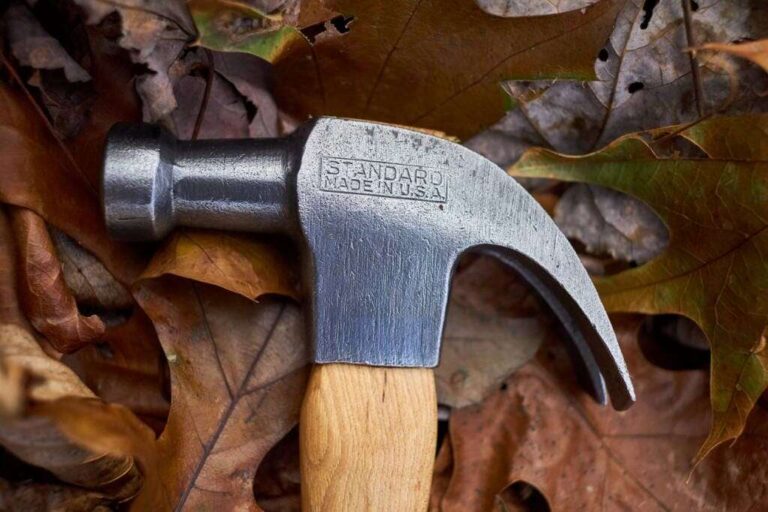
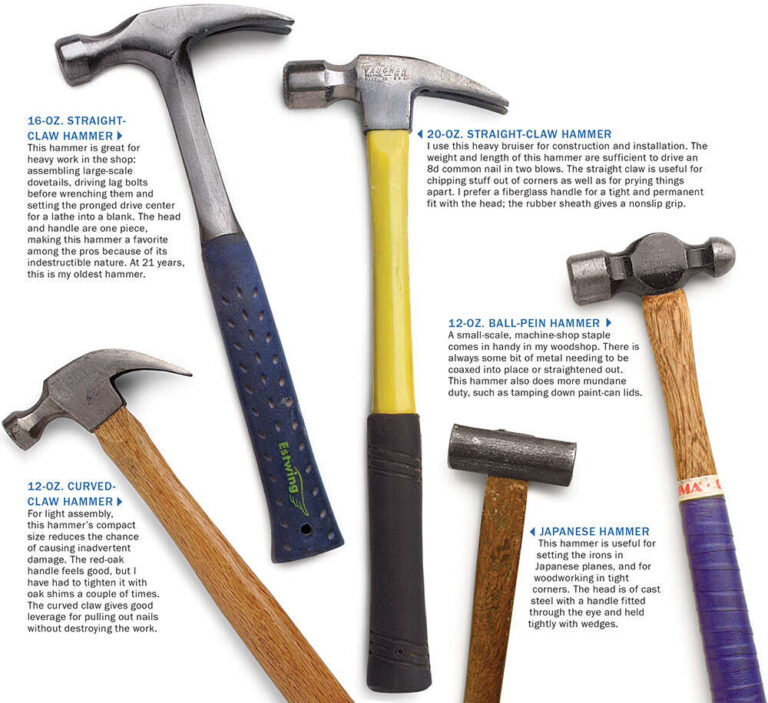
The claw hammer is the standard general-purpose hammer in the United States. One end drives nails, and the curved or straight claw pulls nails and pries boards apart.
Common claw hammer weights range from about 8 to 20 ounces. A 16-ounce model is a common general-purpose choice, but a lighter model may be easier to control for small repairs.
Choose a claw hammer for:
- Hanging pictures
- Building simple wood projects
- Driving common nails
- Removing nails
- Light prying work
Do not use the claw as a substitute for a pry bar when heavy force is needed. Excessive prying can bend the claw or damage the handle.
2. Framing hammer
A framing hammer is built for repeated, forceful strikes on large framing nails. It often has a heavier head, a longer handle, and a textured face that helps reduce slipping on the nail head.
Some framing hammers have a smooth face. A smooth face leaves fewer marks on the wood but may require more care. A milled face grips the nail better but leaves a pattern on the surface.
Use a framing hammer for:
- Wall and roof framing
- Building decks
- Driving long nails
- Heavy wood construction
It is usually too heavy and aggressive for small household repairs.
3. Ball-peen hammer
A ball-peen hammer has a flat striking face on one end and a rounded ball on the other. The ball is used to spread, shape, or harden some metal edges through peening.
Common uses include:
- Shaping metal
- Setting rivets
- Working with punches and chisels
- Auto repair
- Machine repair
A ball-peen hammer is not the best choice for driving wood nails. Its rounded end can damage parts, and its weight and balance are designed for metalwork.
4. Cross-peen hammer
A cross-peen hammer has a narrow wedge-shaped end that runs across the handle. The narrow end helps start small nails and apply force in a tight area.
It is useful for:
- Blacksmithing
- Small metal repairs
- Cabinet and furniture work
- Starting tacks or small nails
- Detailed shaping
The narrow peen concentrates force on a small area. That makes it useful, but it also increases the chance of dents or cracks if used on the wrong material.
5. Straight-peen hammer
A straight-peen hammer has a wedge-shaped peen that runs in line with the handle. It gives a metalworker a narrow striking surface for shaping and forming metal.
It is common in:
- Metal fabrication
- Blacksmithing
- Auto-body repair
- Sheet-metal work
The straight peen is best for controlled shaping rather than general construction.
6. Sledgehammer
A sledgehammer has a heavy head and a long handle. It delivers strong impact through the combined weight of the head and the swing.
Typical uses include:
- Breaking concrete
- Removing masonry
- Driving stakes
- Demolishing structures
- Moving heavy materials
Sledgehammers come in many weights. A smaller model offers better control. A very heavy model creates more force but also increases fatigue and injury risk.
Use both hands and keep other people away from the swing path. Never strike a hardened steel object with a sledgehammer unless the tool maker specifically allows it. Hardened fragments can break off and become dangerous projectiles.
7. Club hammer
A club hammer is a short-handled hammer with a relatively heavy head. It gives more control than a sledgehammer while producing more force than a claw hammer.
It is useful for:
- Light demolition
- Masonry work
- Driving cold chisels
- Breaking small blocks
- Setting paving materials
A club hammer is often a good choice when a full-size sledgehammer is too large for the work area.
8. Dead-blow hammer
A dead-blow hammer contains a shot or other moving material inside its head. When the hammer strikes, the internal material moves forward and reduces rebound.
This design can provide:
- Better control
- Less bounce
- Lower risk of accidental second impacts
- Reduced surface damage
- Useful force for assembly work
Mechanics often use dead-blow hammers when installing or removing parts. The hammer still needs the correct face material for the job. A dead-blow design does not make every surface safe to strike.
9. Rubber mallet
A rubber mallet has a rubber head and is designed for lighter impact. It can move parts into place without leaving the deep marks caused by steel.
Common uses include:
- Installing floor tiles
- Adjusting furniture
- Assembling equipment
- Setting tent stakes
- Working with sheet materials
Rubber can leave marks on some surfaces, especially when the rubber is soft, dirty, or exposed to heat. Test it on a hidden area when appearance matters.
10. Soft-face hammer
A soft-face hammer uses replaceable or built-in faces made from materials such as nylon, plastic, copper, brass, or rawhide. The face is softer than steel and helps protect finished surfaces.
Soft-face hammers are used for:
- Machinery assembly
- Auto repair
- Fitting parts
- Adjusting metal without deep marks
- Working near painted or finished surfaces
The right face depends on the material being struck. Copper is softer than steel but may still mark some surfaces. Nylon is hard and durable but can damage delicate finishes.
11. Brick hammer
A brick hammer has a flat striking face and a sharp blade or chisel end. Masons use it to score, split, and trim brick or block.
It is designed for masonry, not general nail work. The sharp end can chip brick and concrete, but it should not be used as a substitute for a masonry chisel in every task.
Wear eye protection when cutting or breaking masonry. Small chips can travel at high speed.
12. Drywall hammer
A drywall hammer has a narrow face and a notched or bladed end. The face drives drywall nails or specialized fasteners. The rear end can cut or remove small sections of drywall.
Many drywall installers now use screws and power drivers for large jobs. A drywall hammer remains useful for small repairs and some finishing work.
Do not strike hidden areas unless you know where electrical wires, plumbing, and other utilities are located.
13. Tack hammer
A tack hammer is small and light. It is made for upholstery tacks, small nails, picture-hanging hardware, and other delicate fastening tasks.
Some tack hammers have a magnetic face that holds a small tack in place before the first strike. This feature can help with placement, but it does not remove the need for eye protection.
A tack hammer is not suited to large nails or heavy demolition.
14. Blocking hammer
A blocking hammer has a large, smooth face. Auto-body workers use it with a sandbag, metal block, or other support while shaping sheet metal.
Its broad face spreads force over a wider area. That helps reduce sharp dents during panel work.
Blocking hammers are specialized tools. They are not a practical replacement for a claw or ball-peen hammer around the house.
15. Welder’s chipping hammer
A welder’s chipping hammer has a pointed end, a chisel end, or both. It removes welding slag and helps clean a weld bead after welding.
Use it only after the weld and metal have cooled enough for safe handling. Wear eye protection and suitable clothing because slag and chips can fly.
A chipping hammer is not intended for striking hardened steel or for general demolition.
How to Choose the Right Hammer
Choose a hammer by matching its face, weight, handle, and purpose to the job.
Match the face to the material
Use a steel face for tasks such as driving nails into wood. Use rubber, plastic, nylon, copper, or another soft face when the surface must stay clean.
A hard face transfers more force but can dent or chip the workpiece. A soft face protects the surface but may wear faster or deliver less force.
Match the weight to the task
A heavier head can deliver more impact, but it also requires more control. A lighter hammer may be safer and more accurate for small work.
As a simple guide:
- 8 to 12 ounces: Small nails, tacks, and light repairs
- 12 to 16 ounces: General household and carpentry work
- 16 to 24 ounces: Framing and heavier wood work
- 2 to 4 pounds: Masonry, chisels, and controlled demolition
- More than 4 pounds: Heavy demolition and demanding impact work
These ranges are general. The correct weight also depends on the user’s strength, the working position, and how long the task will last.
Check the handle
A handle should feel secure, balanced, and comfortable. Wood handles can absorb some vibration and are easy to replace on many traditional designs. Fiberglass handles resist splitting, but they can still be damaged by misuse. Steel handles are strong but may transmit more vibration.
Before use, inspect the handle for:
- Cracks
- Splits
- Loose head
- Sharp edges
- Oil or grease
- Mushroomed metal around the face or peen
A loose head is a serious warning. Remove the hammer from service until it is properly repaired or replaced.
Consider the work position
A long handle can increase leverage and swing speed. It also needs more room and can be harder to control. A short handle works better in tight spaces but may require more effort.
For overhead work, choose a tool that you can control without overreaching. If you must swing with your whole body to make the tool work, the hammer may be too light, the material may be unsuitable, or the task may call for a different tool.
Hammer Safety Rules for U.S. Home and Jobsite Use
Use eye protection whenever a hammer can chip, crack, or send material into the air. This is especially important for masonry, metalwork, welding cleanup, and hardened fasteners.
The Occupational Safety and Health Administration advises employers to keep hand tools in safe condition and use tools for their intended purpose. OSHA’s hand and power tool guidance is available in 29 CFR Part 1926, Subpart I.
Follow these basic rules:
- Wear safety glasses with side protection.
- Keep your non-striking hand away from the impact zone.
- Use a tool with a face suited to the work.
- Do not use a hammer with a loose head.
- Do not strike one hardened steel tool with another unless approved for that use.
- Keep the striking face clean and free of oil.
- Do not use a cracked handle.
- Stand clear of other people’s swing paths.
- Secure small work in a vise when practical.
- Use hearing protection during repeated heavy impact.
- Keep bystanders away from flying chips and broken material.
A hammer can also cause hand, wrist, elbow, or shoulder strain. Take short breaks during repeated striking. Change position when possible, and use a lighter tool if it can complete the task with control.
Common Hammer Mistakes
The most common mistake is using one hammer for every job. A claw hammer may drive a nail well, but it is a poor choice for shaping sheet metal or installing a delicate machine part.
Other mistakes include:
Using a hammer that is too heavy
A heavy hammer can increase force, but it also reduces control. It may cause missed strikes, damaged work, and more fatigue.
Striking with the wrong face
Never use the sharp peen of a metalworking hammer on a finished surface unless the mark is intentional. Likewise, do not use a rubber mallet when the task needs the concentrated force of a steel face.
Hitting hardened steel
Hardened steel can chip when struck. The fragments may travel quickly and cause serious eye injuries. Use tools made for the job and follow the tool maker’s instructions.
Ignoring a loose head
A loose head can fly off during a swing. Stop using the tool at once. Do not try to hold the head in place with tape, glue, or a temporary shortcut.
Holding a nail too close to the face
For small nails, use a magnetic tack hammer, a nail holder, or pliers when appropriate. Keep fingers out of the likely strike path.
Treating a mallet as harmless
A rubber or plastic mallet can still injure a person, damage a part, or send debris into the air. Soft face does not mean risk-free.
What Is the Best All-Purpose Hammer?
For most U.S. homeowners, a 12- to 16-ounce claw hammer with a secure handle and smooth face is the most useful starting point. It can drive common nails, remove nails, and handle basic repairs.
Add a rubber mallet if you assemble furniture, work with tile, or need to move parts without leaving steel marks. Add a ball-peen hammer if you work on metal or automotive parts.
For construction framing, choose a framing hammer. For demolition, choose a club hammer or sledgehammer based on the required force and available swing space.
The best hammer is not the heaviest one. It is the tool that delivers enough force while letting you stay accurate and in control.
Frequently Asked Questions
Is a mallet the same as a hammer?
Not exactly. A mallet is a related striking tool with a soft or broad head, often made from rubber, plastic, wood, or rawhide. People sometimes use “hammer” as a broad term for both tools, but trade classifications usually separate mallets from steel-faced hammers.
What hammer is used for nails?
A claw hammer is the usual choice for common wood nails. A framing hammer works better for repeated heavy framing work. A tack hammer is better for small tacks and delicate fasteners.
What hammer is used for metal?
A ball-peen hammer is a common choice for general metalwork. Cross-peen, straight-peen, blocking, and soft-face hammers serve more specific metal-shaping and assembly tasks.
What is the difference between a club hammer and a sledgehammer?
A club hammer has a short handle and is easier to control in tight spaces. A sledgehammer has a longer handle and usually delivers more force. Use the smallest tool that can safely complete the task.
How often should a hammer be replaced?
Replace or repair a hammer when the head is loose, the handle is cracked, the face is badly damaged, or the tool has unsafe sharp edges. There is no fixed replacement schedule because service life depends on use, storage, and condition.
Conclusion
There is no universal count for hammer types, but 15 major types cover most common U.S. household, construction, metalworking, masonry, and repair jobs. The exact number becomes much larger when you include specialized trade tools and design variations.
Start with the job, not the name. Match the hammer’s face to the material, its weight to the force needed, and its handle to the space and control required. Inspect the tool before use, wear eye protection, and replace any hammer with a loose head or damaged handle.
For most homes, begin with a claw hammer and a rubber mallet. Add specialty hammers only when the work calls for them.
Recent Tool Guides
 Hammer
How To Hammer Flowers Onto Paper: Easy Guide
Learn how to hammer flowers onto paper with simple steps, helpful tips, and beautiful results for...
Read Guide → Wrench
How To Use A Hex Wrench: Easy Step-By-Step Guide
Learn how to use a hex wrench correctly with simple steps, helpful tips, and common mistakes...
Read Guide → Hacksaw
How To Cut Curtain Pole With Hacksaw: Easy Guide
Learn how to cut curtain pole with hacksaw safely and neatly. Follow simple steps for accurate...
Read Guide → Wrench
How To Use A Husky Torque Wrench: Easy Guide
Learn how to use a Husky torque wrench correctly with simple steps, torque settings, and safety...
Read Guide → Hammer
How To Hold A Hammer: Safe Grip Guide
Learn how to hold a hammer with the right grip, stance, and technique for safer, more...
Read Guide → Hacksaw
How To Cut Flexible Metal Conduit With Hacksaw: Easy Guide
Learn how to cut flexible metal conduit with hacksaw safely and cleanly. Follow simple steps for...
Read Guide →