

Cutting metal without a saw is possible with snips, bolt cutters, grinders, rotary tools, plasma cutters, or hand tools.
Learning how to cut through metal without a saw starts with one key fact: the best method depends on the metal’s thickness, hardness, shape, and finish. A thin aluminum sheet needs a very different tool than a steel bolt or thick plate. This guide explains safe, practical methods, common mistakes, and tool choices so you can make a clean cut without reaching for a traditional saw.
Choose the Right Metal-Cutting Method
Before learning how to cut through metal without a saw, inspect the material. Check its thickness, type, shape, and location. Aluminum, copper, mild steel, stainless steel, and hardened steel all react differently to cutting tools.
Use this simple guide:
• Thin sheet metal: Use aviation snips, hand shears, or a rotary tool.
• Small metal rods or bolts: Use bolt cutters, a rotary tool, or a cold chisel.
• Medium steel sections: Use an angle grinder with a cutoff wheel.
• Thick steel plate: Use a plasma cutter or oxy-fuel torch.
• Delicate or precise work: Use a rotary tool, abrasive wheel, or professional cutting service.
• Metal pipe: Use a chain pipe cutter, tubing cutter, or abrasive cutoff wheel.
The phrase “without a saw” does not mean every method is quiet or risk-free. Many tools still create sparks, heat, sharp edges, or metal dust. Treat the job like a small fabrication task, not a casual household chore.

Safety Comes Before Cutting
Metal cutting can cause serious eye, hand, hearing, and breathing injuries. Sharp edges can cut skin even when the metal looks cool and clean. Sparks can also ignite sawdust, fuel, paint, solvents, or other flammable materials.
Wear the right protection:
• Safety glasses with side shields for all cutting work.
• A face shield when using a grinder, torch, or high-speed rotary tool.
• Cut-resistant gloves that fit well.
• Hearing protection near grinders, plasma cutters, or impact tools.
• Long sleeves made from natural fibers when sparks are present.
• A properly rated respirator when the process creates dust or fumes.
Keep the work area clear. Clamp the metal before cutting, remove flammable items, and provide strong ventilation. Never cut a sealed container, pressurized cylinder, fuel tank, or pipe that may contain trapped gas.
The Occupational Safety and Health Administration and the National Institute for Occupational Safety and Health both stress guarding, ventilation, eye protection, and fire control during cutting and grinding work. Follow the tool maker’s instructions and local safety rules as well.

How to Cut Thin Metal Without a Saw
Thin metal is often the easiest material to cut without a saw. Sheet aluminum, flashing, duct metal, and thin steel can usually be cut with hand tools.
Aviation Snips
Aviation snips look like strong scissors. They work well on thin sheet metal and come in three common versions:
• Left-cut snips, often marked red.
• Right-cut snips, often marked green.
• Straight-cut snips, often marked yellow.
Mark the cut line with a permanent marker or scribe. Start at the edge, keep the lower jaw under the waste side, and make short cuts. Do not force the handles through thick metal. This can twist the sheet and damage the tool.
Aviation snips are useful for HVAC work, flashing, ducts, signs, and light-gauge panels. They leave a sharp edge, so deburr the cut with a file.
Hand Shears
Hand shears can cut thin aluminum, copper, and light-gauge steel. They give you more control than power tools and create little heat. This makes them a good choice near painted surfaces or finished parts.
Support the sheet close to the cutting line. If the sheet flexes, the cut may wander. For long cuts, use a straightedge as a guide and make several light passes instead of one hard pass.
Rotary Tool With a Cutoff Wheel
A rotary tool with a reinforced cutoff wheel can cut thin metal, small screws, mesh, and narrow brackets. It is helpful when snips cannot reach a tight corner.
Use light pressure and let the wheel do the work. Hold the tool firmly with both hands when possible. The wheel can break if it twists, binds, or hits the metal at an angle.
A rotary tool produces sparks and fine particles. Wear eye protection and keep the tool moving. Do not use a damaged or cracked wheel.
How to Cut Metal Rods, Bolts, and Small Bars
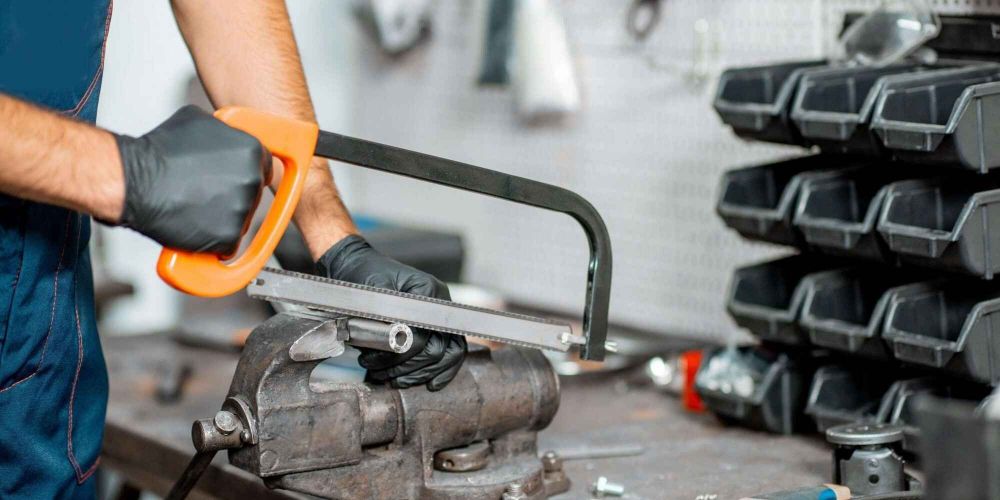
Small round metal pieces often need a different approach than sheet metal. The main challenge is holding the piece firmly while applying enough force.
Bolt Cutters
Bolt cutters work well on:
• Soft steel rods.
• Small chains.
• Nails.
• Wire rope designed for cutting.
• Small bolts and padlock shackles.
They are less effective on hardened steel. Hardened bolts, high-strength chain, and tool steel may damage the jaws or cause the tool to slip.
Place the material deep inside the jaws, close to the hinge. This gives the cutter more leverage. Keep your hands away from the jaws and wear eye protection in case the metal snaps.
Do not add a pipe to the handles for extra leverage. This can overload the tool and cause a sudden failure.
Cold Chisel and Hammer
A cold chisel can cut mild steel, bolts, brackets, and small bars. Place the metal on a solid anvil or sacrificial steel block. Hold the chisel at a slight angle and strike its head with a suitable hammer.
Make a shallow groove first. Then deepen the groove with repeated strikes. This is safer and more controlled than trying to split the metal with one heavy blow.
Inspect the chisel before use. A mushroomed head can send metal chips into the air. Grind the head back into shape if needed, but avoid overheating the tool edge.
Rotary Tool or Grinder
A rotary tool works for small fasteners and thin rods. An angle grinder with a thin cutoff wheel handles larger rods and brackets more quickly.
Secure the material in a vise. Mark the cut, support the waste piece, and let the tool reach full speed before touching the metal. Afterward, remove the burr with a file or flap wheel.

How to Cut Thick Metal Without a Saw
Thick metal requires more energy and better control. Hand tools may be too slow, while heat-based tools can change the metal’s surface or shape.
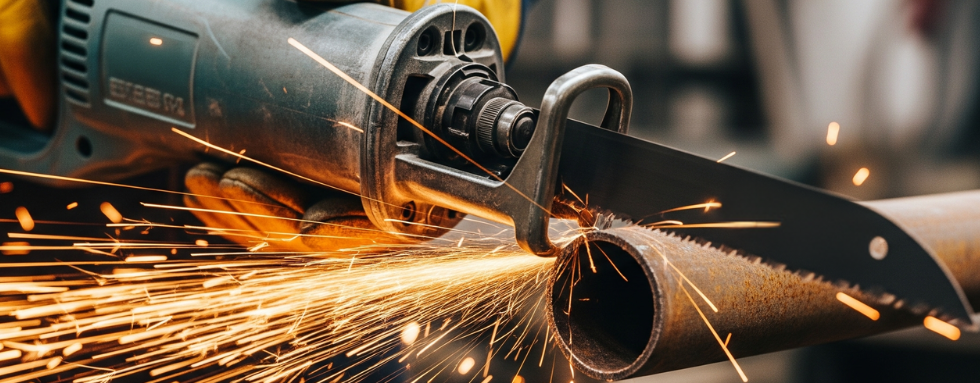
Angle Grinder With a Cutoff Wheel
An angle grinder is one of the most practical answers to how to cut through metal without a saw. It uses a thin abrasive wheel to remove metal through friction.
Choose a wheel labeled for metal. Match its maximum speed rating to the grinder. Never use a wheel that is cracked, warped, wet, or past its service life.
Follow these steps:
Mark the cut line clearly.
Clamp the workpiece to a stable surface.
Install the correct metal cutoff wheel.
Put on safety glasses, a face shield, gloves, hearing protection, and suitable clothing.
Stand to one side of the wheel, not directly in line with it.
Start the grinder and allow it to reach full speed.
Touch the wheel lightly to the metal.
Make several shallow passes instead of forcing one deep cut.
Let the wheel cool if it becomes excessively hot.
Deburr the finished edge with a file or grinding wheel.
Do not twist the wheel inside the cut. Binding is one of the main causes of wheel breakage. Also, do not use the side of a cutoff wheel for grinding unless the wheel is specifically designed for that purpose.
Plasma Cutter
A plasma cutter uses an electric arc and compressed air or gas to melt and remove metal. It can cut steel, stainless steel, and aluminum with speed and accuracy.
Plasma cutting is useful for:
• Steel plate.
• Metal brackets.
• Custom shapes.
• Automotive panels.
• Fabrication projects.
It requires more setup than hand tools. You need a suitable power supply, compressed air, a ground clamp, protective clothing, and a clean work area. Plasma cutting also creates ultraviolet light, fumes, sparks, and hot slag.
Practice on scrap metal first. Keep the torch at the correct height and move at a steady speed. Moving too slowly can create heavy slag. Moving too quickly can leave an incomplete cut.
Oxy-Fuel Torch
An oxy-fuel torch can cut thick mild steel by heating the metal and using oxygen to blow away the molten material. It is powerful and useful for heavy steel work.
However, it is not a beginner tool. Gas cylinders, hoses, regulators, flashback arrestors, ventilation, and fire control all matter. Oxy-fuel cutting also does not work the same way on aluminum or stainless steel.
Use formal training before operating an oxy-fuel system. Keep cylinders upright and secured. Check connections for leaks with approved leak-detection solution, never with a flame.

How to Cut Metal Pipe Without a Saw
Pipe requires a clean, square cut. A crooked cut can make joining, threading, or sealing difficult.
Tubing Cutter
A tubing cutter is ideal for copper, brass, aluminum, and thin-wall steel tubing. It has a cutting wheel and rollers that tighten around the pipe.
To use one:
Mark the cut line around the pipe.
Place the cutter over the mark.
Tighten it until the wheel lightly touches the pipe.
Rotate the cutter several times.
Tighten it slightly after each rotation.
Continue until the pipe separates.
Do not tighten too much at once. Excess pressure can crush thin tubing or create a raised ridge inside the pipe. Use the built-in reamer or a deburring tool to smooth the inside edge.
Chain Pipe Cutter
A chain pipe cutter works well on larger cast iron, steel, or clay pipe. The chain wraps around the pipe and uses cutting wheels to score it around the full diameter.
This method creates a fairly square break when used correctly. It is common in plumbing and repair work where a powered tool may be awkward or unsafe.
Abrasive Wheel
For large or thick pipe, an angle grinder with a cutoff wheel may be the most practical option. Rotate the pipe as you work when possible, or make shallow cuts around the circumference.
Never cut a pipe that may contain pressure, fuel, chemicals, or trapped vapor. Even an empty-looking pipe can hold dangerous residue.

How to Cut Metal With a Chisel
A chisel is slow but useful when you have no power tool. It works best on thin or medium-gauge mild steel, small brackets, bolts, and metal strip.
Score the cut line first. A deep groove guides the chisel and reduces wandering. Keep the workpiece supported on a firm surface that will not absorb the hammer’s force.
Use controlled strikes. Heavy, wild blows can bend the metal, damage the work surface, or send fragments across the room. Wear safety glasses and keep other people away from the strike zone.
After the cut, inspect the edge. Remove sharp burrs with a file. If the metal has bent, straighten it carefully with pliers or a hammer and block.

How to Cut Stainless Steel and Hardened Metal
Stainless steel is tougher to cut than mild steel. It also holds heat, which can discolor the surface and reduce tool life. Use a sharp, high-quality abrasive wheel or a cutoff wheel rated for stainless steel.
Avoid pressing too hard. Excess pressure creates heat and can cause the wheel to glaze. Keep the work moving when using a rotary tool, and allow the metal to cool between passes.
Hardened metal presents a bigger challenge. Bolt cutters may fail, and a cold chisel may chip. An abrasive wheel, carbide-rated rotary tool, or professional machining service is usually a better choice.
Do not assume a shiny bolt is soft. Many structural and automotive fasteners are heat-treated. If a tool does not cut after reasonable pressure, stop and change methods rather than forcing it.
How to Make a Clean Metal Cut
The tool creates the cut, but preparation controls the result. A few simple steps can prevent crooked lines and damaged material.
Use this process:
• Measure twice and mark once.
• Use a scribe for a fine line on bare metal.
• Use a permanent marker on painted or coated surfaces.
• Clamp the workpiece close to the cut.
• Support the waste section so it does not pinch the tool.
• Cut slightly outside the final line when accuracy matters.
• File or grind down to the final mark.
• Deburr both sides of the cut.
For a straight cut, place a metal ruler or square against the material. For a curved cut, make small relief cuts when using snips. This keeps the waste section from bending and blocking the blades.
Remember that heat can warp thin metal. If appearance matters, use light passes and let the material cool. A wet rag can help cool nearby areas, but never use water near energized electrical equipment or a hot abrasive wheel.
Common Mistakes to Avoid
Many cutting injuries and poor results come from rushing. The most common mistake is choosing a tool based only on what is available.
Avoid these problems:
• Cutting without clamping the metal.
• Wearing loose clothing near rotating tools.
• Using a grinding wheel that is not rated for cutting.
• Standing directly in line with a cutoff wheel.
• Applying too much pressure to a rotary tool.
• Cutting galvanized or painted metal without ventilation.
• Touching freshly cut metal with bare hands.
• Using bolt cutters on hardened steel.
• Cutting sealed or unknown pipes.
• Leaving sharp burrs on the finished piece.
One lesson from hands-on metal projects is that support matters as much as force. If the metal moves, even a good tool becomes unpredictable. A firm vise, proper clamp, and clear cut line often improve the result more than buying a larger tool.
Tool Selection by Metal Thickness
The following guide offers a practical starting point. Actual performance depends on the alloy, tool quality, and operator skill.
| Material condition | Recommended method | Main limitation |
|---|---|---|
| Thin aluminum sheet | Aviation snips | Can bend the sheet |
| Thin steel sheet | Aviation snips or rotary tool | Leaves a sharp edge |
| Small soft bolts | Bolt cutters | Poor on hardened steel |
| Small steel rod | Cold chisel or rotary tool | Slow or limited depth |
| Medium steel bar | Angle grinder | Sparks and heat |
| Thick mild steel | Plasma cutter | Needs power and training |
| Very thick steel | Oxy-fuel torch | High fire and fume risk |
| Copper or thin tubing | Tubing cutter | Not suited to heavy pipe |
| Large pipe | Chain cutter or grinder | Requires secure support |
This table is a guide, not a substitute for the tool manual. Always confirm that the accessory is rated for the material and speed of your equipment.
Environmental and Health Concerns
Metal cutting can release dust, fumes, coatings, and gases. Galvanized steel may release zinc oxide fumes when heated. Painted metal may release harmful compounds. Stainless steel dust can irritate the lungs and skin.
Use local exhaust ventilation when possible. A fan should move contaminated air away from your breathing zone, not blow it toward another person. For unknown coatings, stop and identify the material before cutting.
Collect metal fragments and abrasive dust after the job. Do not use compressed air to blow dust into the room. A suitable vacuum or careful damp cleanup is safer.
If you feel dizzy, nauseated, short of breath, or unusually tired during cutting, stop immediately and move to fresh air. Seek medical help for serious or lasting symptoms.
Frequently Asked Questions About How to Cut Through Metal Without a Saw
What is the easiest way to cut metal without a saw?
For thin sheet metal, aviation snips are usually the easiest option. For small bolts or rods, bolt cutters may work, while an angle grinder is better for thicker steel.
Can I cut metal with a drill?
A drill does not usually cut through large pieces of metal by itself. However, a drill with a metal hole saw, step bit, or rotary cutting attachment can make holes and small openings.
Can scissors cut metal?
Regular household scissors should not cut metal because they can become damaged or slip. Metal snips are made for thin sheet metal and are much safer and more effective.
Is an angle grinder safer than a saw?
An angle grinder is not automatically safer. It can cut metal quickly, but it creates sparks, heat, dust, and wheel-breakage hazards, so proper guarding and protective equipment are essential.
Can bolt cutters cut hardened steel?
Bolt cutters may cut some small hardened pieces, but many hardened bolts and chains are too strong. Forcing the tool can damage the jaws or cause the metal to snap unexpectedly.
What tool cuts thick metal without a saw?
A plasma cutter or oxy-fuel torch can cut thick metal without using a saw blade. Both methods require training, ventilation, fire control, and the correct protective equipment.
How do I smooth metal after cutting?
Use a hand file, deburring tool, flap wheel, or grinding wheel made for the material. Remove sharp edges from both sides, then check the part by running a gloved hand over it.
Conclusion
How to cut through metal without a saw depends on the metal, its thickness, the shape of the cut, and the finish you need. Use snips for thin sheet metal, bolt cutters for suitable small fasteners, chisels for controlled manual work, rotary tools for tight areas, grinders for medium sections, and plasma or oxy-fuel equipment for thick steel.
Measure carefully, clamp the work, wear proper protection, and control heat, sparks, and fumes. Start with the least aggressive tool that can do the job safely. Choose your method, practice on scrap metal, and share your project or questions in the comments.
