What Is The Side Of A Hammer Called: Parts Explained
The side of a hammer head is usually called the cheek. In American English, the cheek is the broad side surface between the hammer’s striking face and its opposite side. Do not confuse it with the face, which is the hardened end that hits a nail or other object.
In the United States, hardware stores, tool makers, and tradespeople may use slightly different terms. Still, cheek is the most precise name for the side of a traditional hammer head.
Introduction
If you are looking at a claw hammer, the main parts are easy to spot: the handle, the striking face, and the claw. The wide side of the metal head is less often named, but it has a standard tool term.
That part is the cheek of the hammer. It supports the head, surrounds the handle opening, and connects the striking face to the neck and claw.

What Is the Cheek of a Hammer?
The cheek is the broad side area of a hammer head. A hammer head normally has two cheeks, one on each side.
On a common American claw hammer, the cheek sits:
- Behind the striking face
- Around the handle opening, called the eye
- Below or beside the neck
- In front of the claw section
The cheek is not normally the part meant to strike a nail. Its main job is to give the head strength and help spread the force created when the face hits an object.
A simple way to remember the term is:
The face hits. The cheek is the side.
The cheek may be smooth, polished, textured, painted, or stamped with the tool maker’s name. Its shape changes with the type of hammer. A framing hammer may have a large, heavy cheek, while a small tack hammer may have a narrow head with less visible side area.
The term cheek also appears in descriptions of other tools and machines. It generally means a side plate or side surface that supports or surrounds another part.
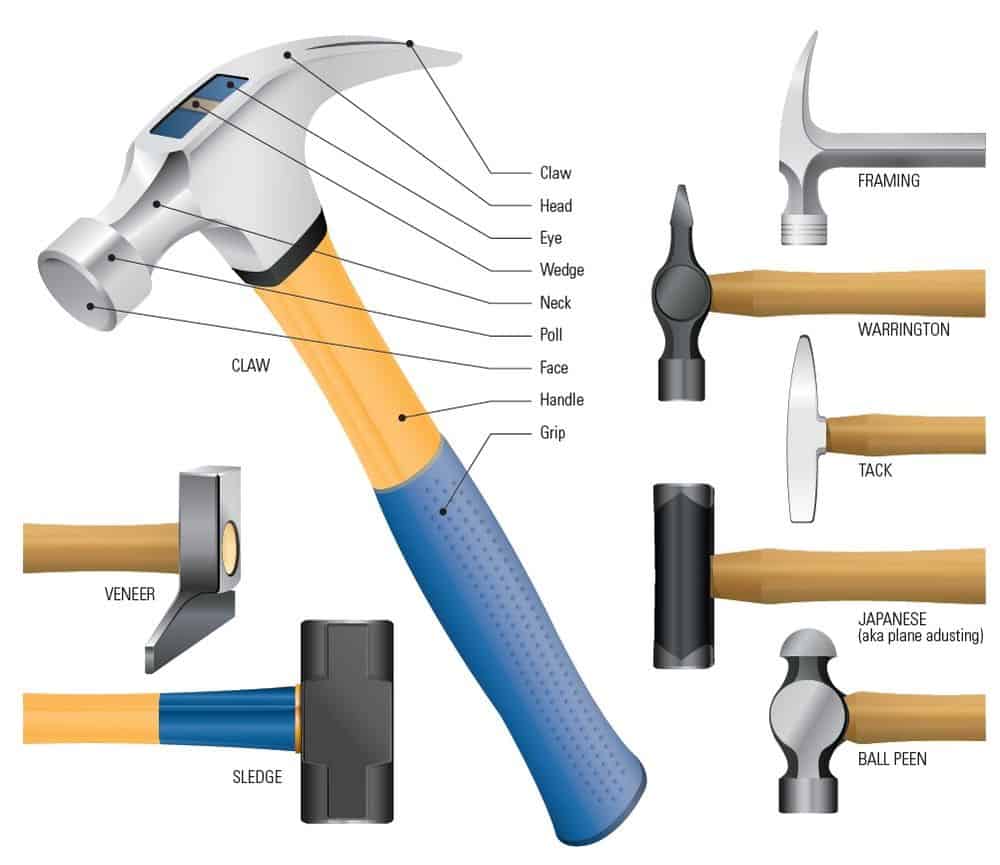
Hammer Parts: Cheek, Face, Neck, Eye, and Claw
Knowing the main hammer parts makes the word “cheek” easier to understand.
| Hammer part | What it is | Main purpose |
|---|---|---|
| Face | The striking end of the head | Hits nails, pins, or other work |
| Cheek | The broad side of the head | Adds strength and supports the head |
| Neck | The narrower area between the face and body | Connects the face to the main head |
| Eye | The hole in the head | Holds the handle |
| Claw | The split or curved rear section | Pulls nails on a claw hammer |
| Poll | The rear end of some hammer heads | Provides a solid rear striking or balancing section |
| Handle | The wood, fiberglass, or composite shaft | Lets the user control the hammer |
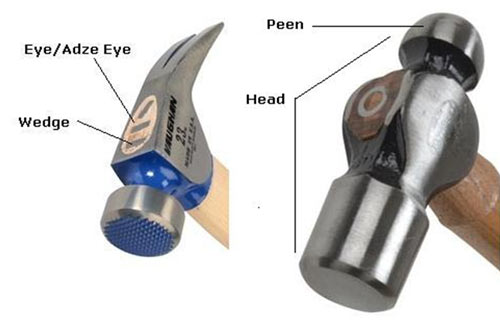
Not every hammer has every part. A ball-peen hammer has a rounded peen instead of a claw. A sledgehammer often has two striking faces and no claw. A hatchet has a cutting blade rather than a typical hammer cheek and claw.
The eye deserves special attention. It is not the same as the cheek. The eye is the opening through the head, while the cheek is the metal around the opening.
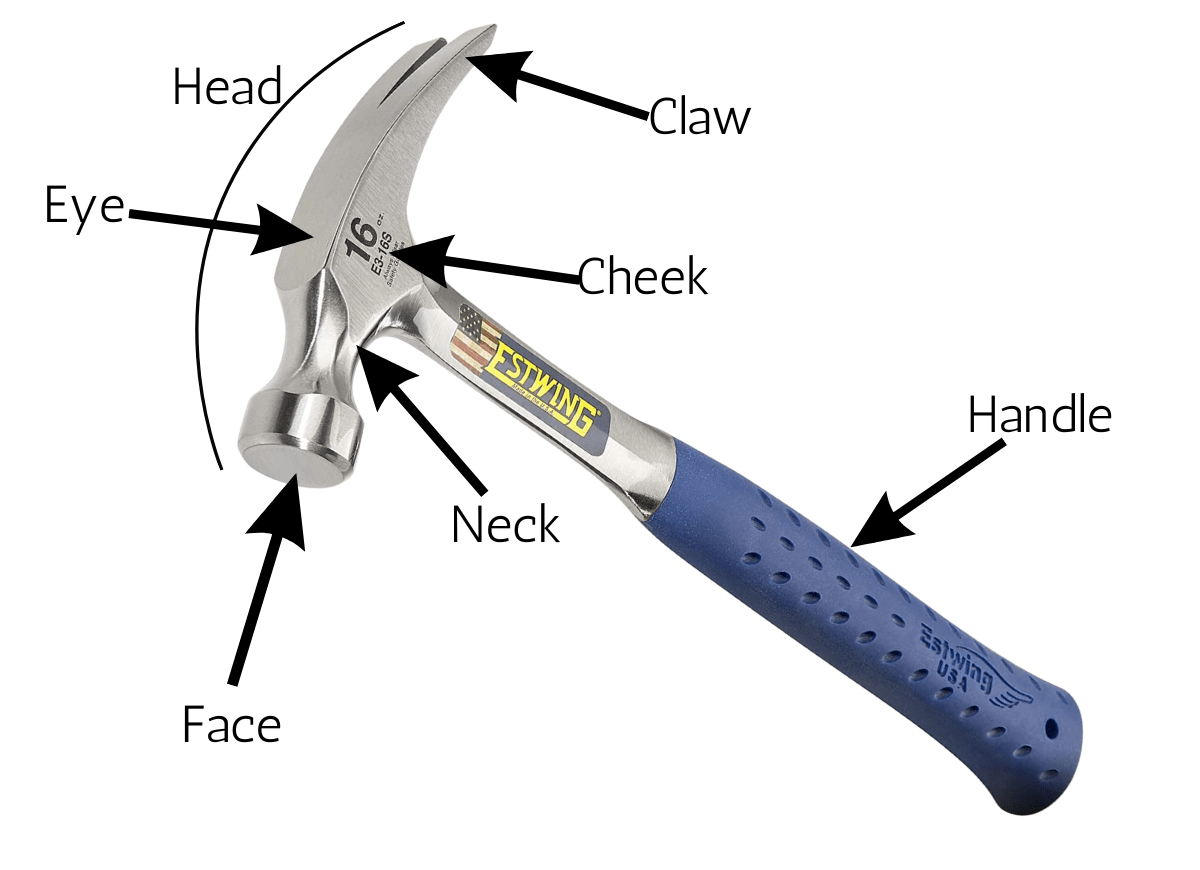
Is the Side of a Hammer Called the Face?
Usually, no. The answer depends on which part you mean.
The face is the end of the hammer head that makes contact with a nail or workpiece. It is often round or square and may have a smooth or textured surface.
The cheek is the side of the hammer head. It normally does not make the intended contact with the nail.
Consider these examples:
- “Use the face to drive the nail.”
- “The hammer’s cheek has the maker’s logo.”
- “The claw is bent.”
- “The handle is loose in the eye.”
People sometimes call the whole metal section the “hammer head.” That is correct in everyday speech, but it is less exact than naming the individual parts.
Face versus cheek
The difference is based on function as well as location:
| Feature | Face | Cheek |
|---|---|---|
| Location | End of the head | Broad side of the head |
| Intended contact | Yes | Usually no |
| Common shape | Flat, crowned, or textured | Flat, curved, or shaped |
| Main role | Transfers striking force | Supports and strengthens the head |
A hammer can have more than one face. For example, a double-faced hammer has a striking face at each end. Its center section still has side surfaces that may be called cheeks.
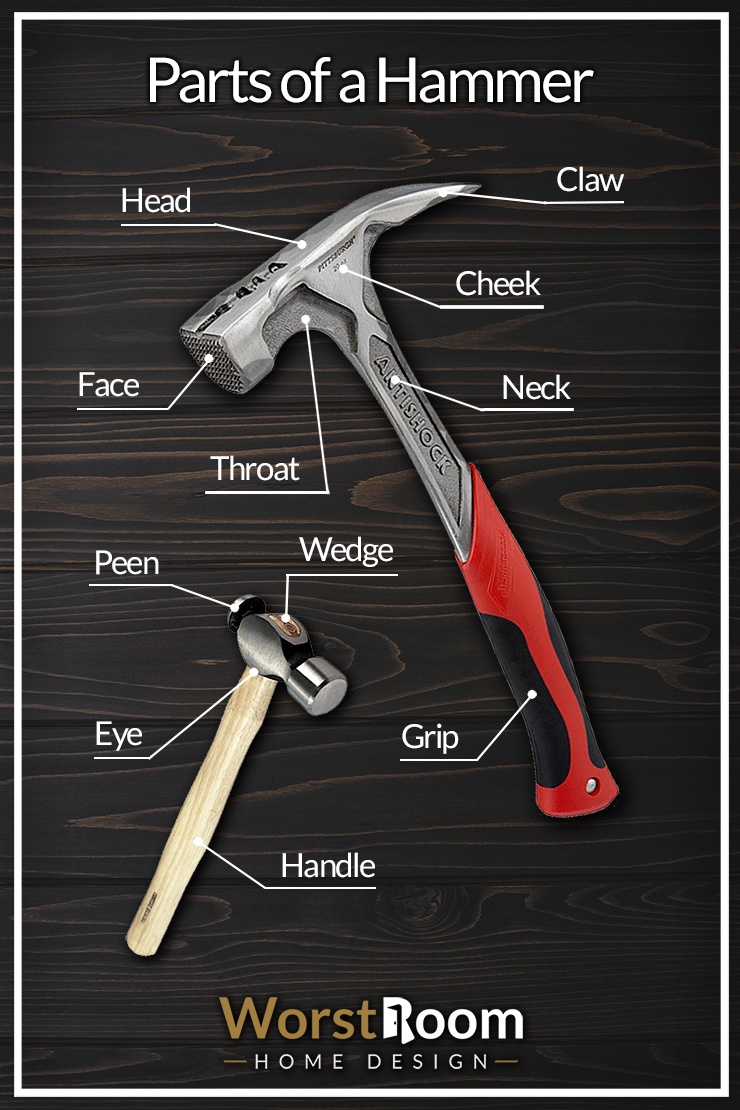
Do All Hammers Have Cheeks?
Most traditional metal-headed hammers have side surfaces that can be called cheeks, but the design may make the term less common.
Claw hammer
A claw hammer has a clear cheek on each side of its head. The cheek joins the face, eye, neck, and claw.
Ball-peen hammer
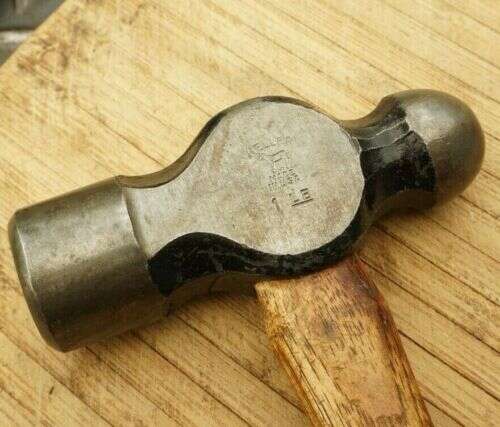
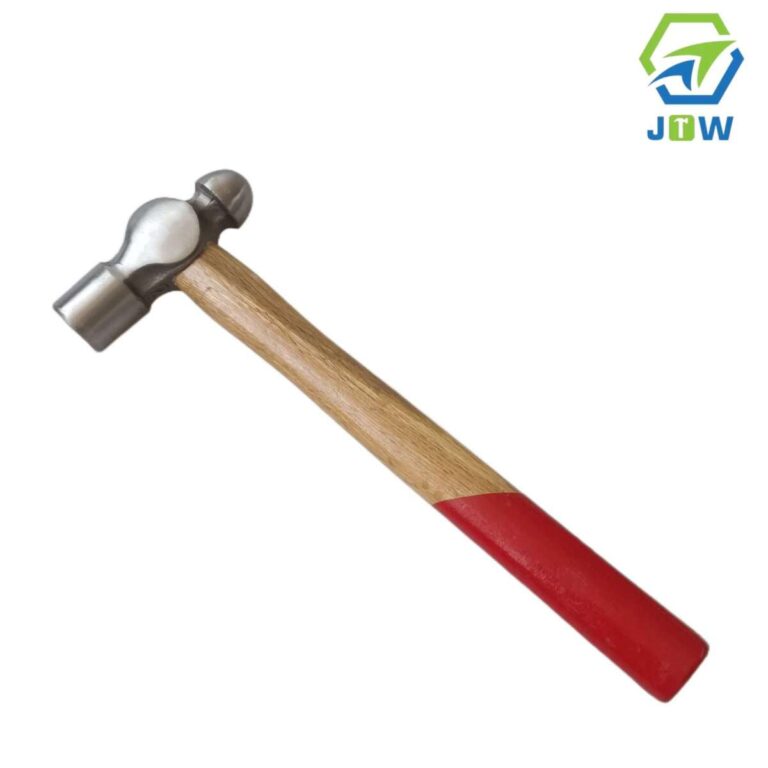
A ball-peen hammer has a striking face on one end and a rounded peen on the other. The broad side of the head is still the cheek.
Sledgehammer
A sledgehammer usually has a heavy head with two faces. People may simply call its side the side of the head, especially in casual conversation. In technical descriptions, “cheek” may still describe the side area.
Cross-peen hammer
A cross-peen hammer has a narrow wedge-shaped peen set across the handle. Its side areas may be more shaped than those on a claw hammer.
Soft-face hammer
A soft-face hammer may use replaceable plastic, rubber, nylon, or copper faces. The side body may be called the cheek, but the replaceable striking inserts are usually discussed separately.
Dead-blow hammer
A dead-blow hammer often has a hollow body filled with shot or other material. Its outer side is more often called the body or head shell, though “cheek” can still describe a side surface.

Why Does the Cheek Matter?
The cheek matters because it helps the hammer head withstand repeated impact. Each blow sends force through the face, neck, body, eye, and handle.
A strong cheek can help:
- Support the area around the eye
- Resist bending and cracking
- Keep the head aligned with the handle
- Provide enough mass behind the striking face
- Maintain the shape of the head during repeated use
The cheek is not a safe substitute for the face. Striking with the side of a standard hammer can damage the hammer, the workpiece, or both. The cheek may not have the same hardness or shape as the face.
A damaged cheek can also signal a larger problem. Look for cracks, deep chips, severe dents, or metal that appears to spread around the eye. If the head moves on the handle, stop using the hammer until it is repaired or replaced.

What Should You Call the Side in Everyday Speech?
Use cheek when you want the correct tool term. Use side of the hammer head when speaking to someone who may not know the word.
Both are clear:
- Technical: “The logo is stamped on the hammer’s cheek.”
- Plain English: “The logo is on the side of the hammer head.”
Avoid calling the side the “claw,” “face,” or “neck.” Those terms refer to different areas.
If you are writing a repair note, product description, or tool specification, “cheek” is the better choice. If you are giving quick instructions, “side of the head” may be easier for a new user to understand.

Common Mistakes About Hammer Terminology
Several mix-ups are common.
Calling the entire head the face
The head is the complete metal part. The face is only the striking end.
Calling the cheek the neck
The neck is the narrower transition area near the face. The cheek is the wider side area of the head.
Assuming every hammer has a claw
Only some hammers, such as claw hammers, have claws. A ball-peen hammer and sledgehammer do not have claw sections.
Striking with the cheek
The cheek is not normally designed as the working striking surface. Use the face or the hammer part intended for contact.
Ignoring a loose head
A loose head can fly off during use. Do not keep using a hammer that shifts, rattles, or slides on its handle.
How to Use a Hammer Safely
The correct hammer part depends on the job, but basic safety rules apply to most hand hammers.
- Inspect the hammer first. Check the face, cheek, eye, handle, and claw for cracks, chips, looseness, or major damage.
- Choose the right hammer. Use a tack hammer for small tacks, a claw hammer for general nail work, and a sledgehammer only for work suited to its size.
- Wear eye protection. Nails, chips, and damaged metal can create flying debris.
- Grip the handle near its end. This usually gives better control and useful leverage.
- Keep your free hand clear. Move it away before the hammer begins its swing.
- Use the face squarely. A glancing blow can bend a nail or send debris away from the work.
- Stop if the head is loose. Replace or properly repair the handle before using the hammer again.
Do not hit hardened steel with an ordinary claw hammer unless the tool maker allows that use. A broken hammer face or metal fragment can cause serious injury.

Frequently Asked Questions
What is the flat side of a hammer called?
The flat side is usually called the cheek. If you mean the flat end that strikes a nail, that part is the face.
What is the round part of a hammer called?
The answer depends on the hammer. A rounded striking end on a ball-peen hammer is called the peen. A rounded striking face may also be described as a crowned face.
What is the metal part of a hammer called?
The complete metal section is the hammer head. The head includes parts such as the face, cheek, eye, neck, and claw when those parts are present.
What is the back of a claw hammer called?
The back of a claw hammer is the claw. It is used mainly to pull nails. The exact shape may be called a curved claw or straight claw.
What is the hole in a hammer head called?
The hole is called the eye. The handle passes through the eye and is secured so the head does not come loose.
Conclusion
The side of a hammer is called the cheek. The cheek is the broad side surface of the hammer head, while the face is the end used for striking.
For everyday speech, “side of the hammer head” is perfectly clear. For precise tool terminology, use cheek. When inspecting a hammer, check the cheek, face, eye, handle, and any claw for damage before use.
Recent Tool Guides
 Hammer
How To Hammer Flowers Onto Paper: Easy Guide
Learn how to hammer flowers onto paper with simple steps, helpful tips, and beautiful results for...
Read Guide → Wrench
How To Use A Hex Wrench: Easy Step-By-Step Guide
Learn how to use a hex wrench correctly with simple steps, helpful tips, and common mistakes...
Read Guide → Hacksaw
How To Cut Curtain Pole With Hacksaw: Easy Guide
Learn how to cut curtain pole with hacksaw safely and neatly. Follow simple steps for accurate...
Read Guide → Wrench
How To Use A Husky Torque Wrench: Easy Guide
Learn how to use a Husky torque wrench correctly with simple steps, torque settings, and safety...
Read Guide → Hammer
How To Hold A Hammer: Safe Grip Guide
Learn how to hold a hammer with the right grip, stance, and technique for safer, more...
Read Guide → Hacksaw
How To Cut Flexible Metal Conduit With Hacksaw: Easy Guide
Learn how to cut flexible metal conduit with hacksaw safely and cleanly. Follow simple steps for...
Read Guide →