

Yes, a hacksaw can cut through a bolt when fitted with the right metal-cutting blade.
Knowing whether a hacksaw will cut through a bolt helps you choose the safest and simplest method for repairs, demolition, and stuck fasteners. The answer depends on the bolt’s size, hardness, location, and the blade you use. With the right setup and steady strokes, most ordinary steel bolts can be cut by hand.

Will a hacksaw cut through a bolt?
Yes, a hacksaw will cut through a bolt. A hacksaw uses a fine-toothed blade made for metal, so it can slowly remove material from steel, stainless steel, brass, and other common fasteners.
The process may take a few minutes for a small bolt and much longer for a thick or hardened bolt. The tool does not cut through the bolt by force alone. Its teeth make many small cuts as you push the blade across the metal.
A hacksaw works best when:
• The bolt is held firmly
• The blade is sharp and suited for metal
• The frame stays straight during each stroke
• You use steady pressure instead of rushing
In hands-on repair work, the most common mistake is using a wood-cutting blade. That blade has large teeth and can snag, bend, or break when used on metal. A proper bi-metal hacksaw blade is a much better choice.

What affects how well a hacksaw cuts a bolt?
Several factors determine how easy it is to cut a bolt. The bolt’s material matters, but so do its diameter, grade, position, and the condition of the blade.
Bolt size
A small bolt with a diameter of 1/4 inch may take only a short time to cut. A 1/2-inch or 5/8-inch bolt can require much more effort, especially if it is made from hardened steel.
The larger the bolt, the more metal the teeth must remove. A wide bolt also gives you a deeper cut, which can make the blade drag if you apply too much pressure.
Bolt hardness
Most household and automotive bolts are made from carbon steel or alloy steel. Standard low- and medium-strength bolts are usually manageable with a hacksaw.
High-strength bolts may be harder. Grade 8 bolts, some stainless steel bolts, and hardened security fasteners can wear down a blade quickly. A hacksaw may still cut them, but you need patience and a high-quality blade.
Bolt location
An exposed bolt is easy to cut. A bolt inside a narrow bracket or close to wiring is more difficult because the saw frame may not fit.
If the frame cannot reach the bolt, a compact hacksaw, mini hacksaw, or reciprocating saw may work better. Always protect nearby surfaces and parts from accidental contact.
Blade condition
A dull blade creates heat and friction instead of clean chips. It may squeak, wander, or leave a polished groove in the bolt without making much progress.
A sharp blade should produce small metal filings as you work. If the blade slips over the same groove, replace it.

Which hacksaw blade should you use?
The blade is the most important part of the tool. For most bolts, choose a bi-metal blade made for cutting steel.
Blade tooth count is measured in teeth per inch, or TPI. A higher TPI gives a smoother cut and works well on thin metal. A lower TPI removes material faster from thick metal.
Use these general guidelines:
• 18 TPI works well for thick bolts and heavy metal
• 24 TPI is a good general-purpose choice
• 32 TPI suits small bolts, thin metal, and narrow work areas
Try to keep at least three teeth engaged with the metal during each cut. If too few teeth touch the bolt, the blade may catch and break. If too many teeth engage, the blade can clog with filings and cut slowly.
A flexible bi-metal blade is often the best all-around option. It combines a tough backing with hard cutting teeth. This design is less likely to snap than a basic carbon-steel blade.
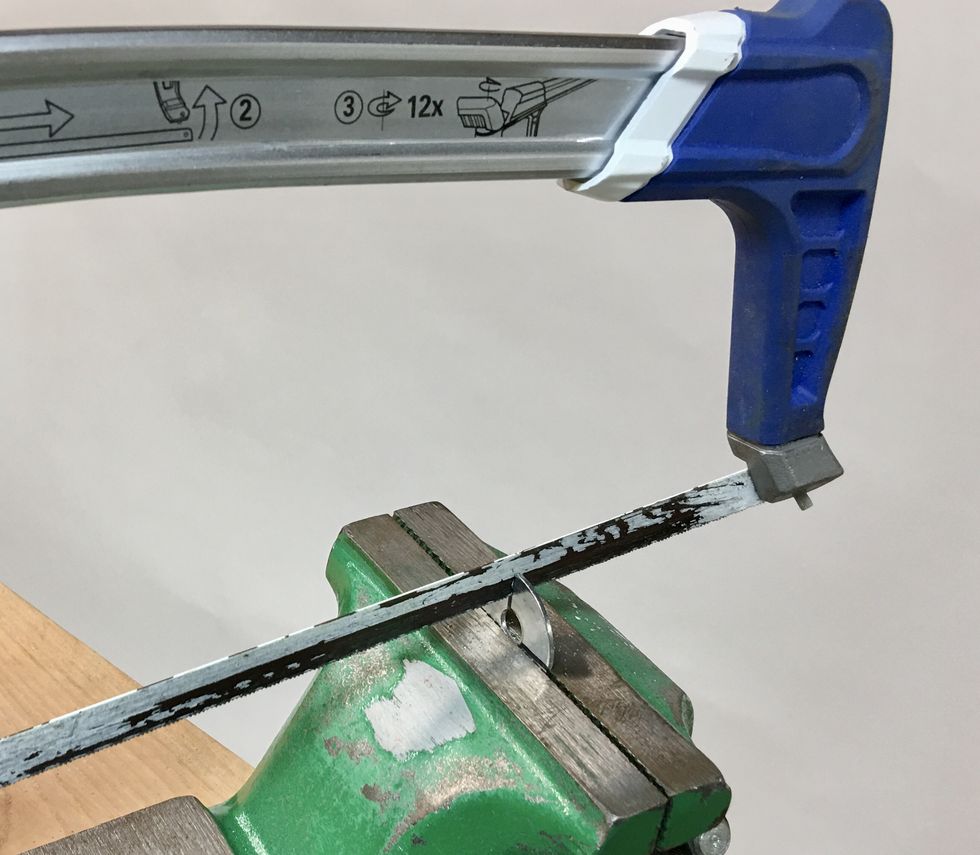
How to cut through a bolt with a hacksaw
Cutting a bolt is simple, but good preparation makes the job faster and safer. Follow these steps.
1. Wear basic safety gear
Put on safety glasses before you start. Small metal chips can fly from the cut, and broken teeth can become sharp fragments.
Wear work gloves if they do not reduce your grip. Avoid loose clothing, jewelry, and anything that can catch on the frame or nearby tools.
2. Secure the bolt
Clamp the bolt or the part holding it in a vise. The bolt should not move while you saw.
If you are cutting a bolt attached to a vehicle or machine, support the part so it cannot shift. Movement wastes force and can make the blade jump.
3. Mark the cut
Use a permanent marker, scribe, or center punch to mark the cutting line. A shallow groove helps the blade start in the correct spot.
If you need to preserve the threads, cut between the nut and the head only when you are certain which part should be removed. Think through the cut before starting.
4. Install the blade correctly
Most hacksaw blades cut on the forward stroke. Point the teeth away from the handle so the blade cuts as you push.
Tighten the frame until the blade feels firm. It should not bow or twist during use, but do not overtighten the frame.
5. Start with light strokes
Hold the frame with both hands and make short, controlled strokes. Use light pressure at first to create a groove.
Once the groove forms, use longer strokes that travel across more of the blade. Let the teeth do the cutting. Pushing too hard can bend the blade or make it jump out of the groove.
6. Keep the blade straight
Keep the blade square to the bolt unless you need a specific angled cut. A tilted blade wears one edge and can bind in the groove.
Watch the cut from both sides when possible. This helps you avoid cutting into nearby brackets, panels, or threads.
7. Add cutting fluid when needed
A small amount of cutting oil can reduce heat and friction on thick or hard bolts. Apply only a little to the cutting area.
Do not use oil near hot electrical parts, open flames, or equipment where contamination could create a problem. For a small bolt, dry cutting is often clean and simple.
8. Finish the cut carefully
As the cut nears completion, reduce pressure. The bolt may break suddenly, and the blade can strike the surrounding part.
After removing the bolt, smooth the sharp edge with a metal file. Clean away filings before reassembling the parts.

Should you cut the bolt or remove the nut?
Cutting is not always the first choice. If the nut is accessible, try loosening it before reaching for a saw.
Penetrating oil can help with light rust. Apply it, wait for it to work, and then use the correct wrench or socket. A six-point socket usually grips a damaged nut better than a twelve-point socket.
Cut the bolt when:
• The nut is rounded or seized
• The bolt spins without loosening
• Rust has fused the nut to the threads
• The fastener is damaged beyond normal removal
• You need to remove a broken or obstructed fastener
If the bolt turns freely, cutting may be unnecessary. You might hold the bolt head with one wrench while turning the nut with another.
A useful workshop lesson is to avoid cutting before checking what is behind the fastener. A hidden wire, brake line, fuel line, or delicate panel can turn a small repair into a costly one.
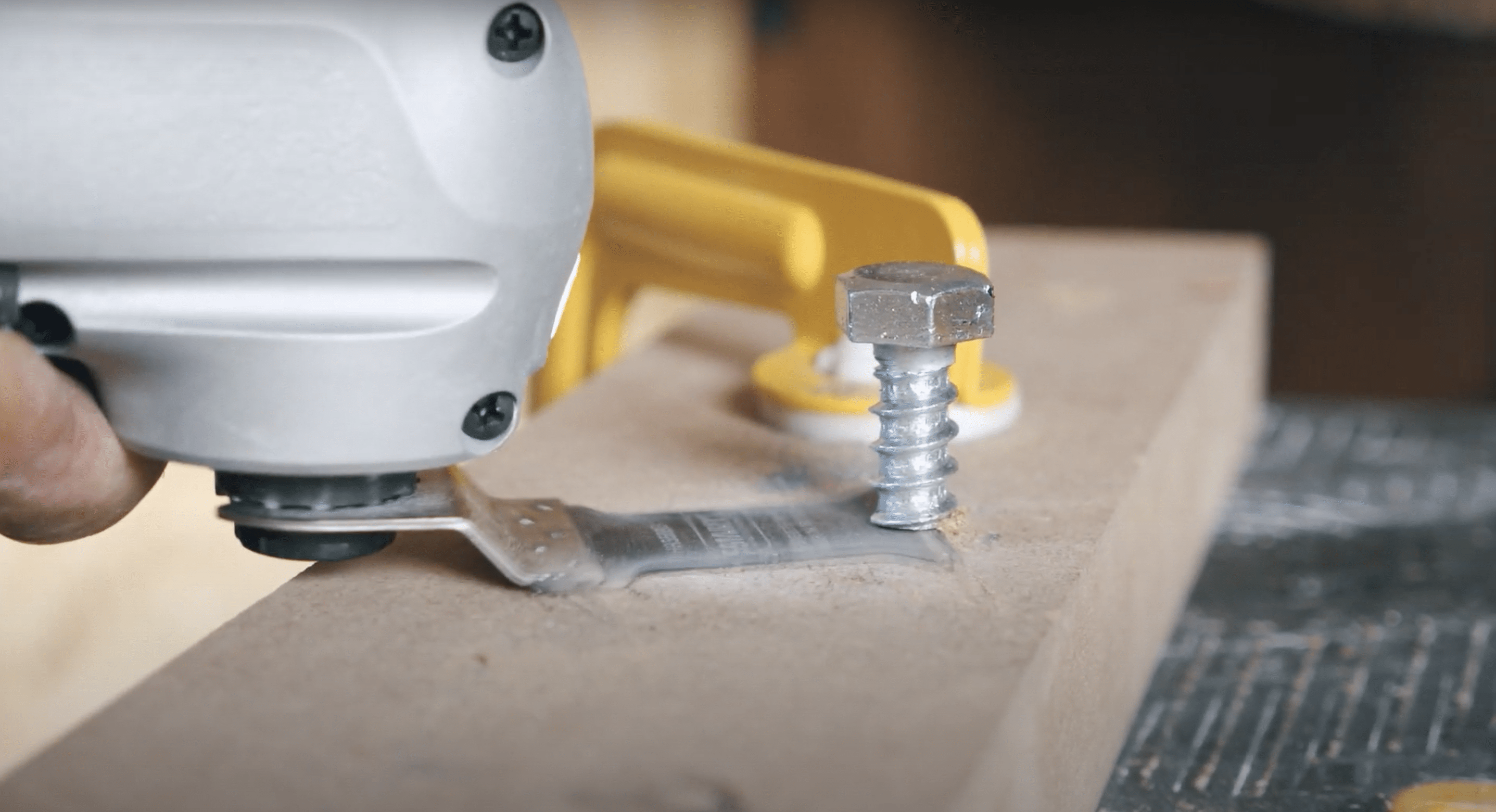
Can a hacksaw cut hardened or stainless steel bolts?
A hacksaw can cut some hardened and stainless steel bolts, but the task is slower and harder. These materials can wear ordinary blades quickly.
Use a sharp bi-metal blade with around 24 or 32 TPI for many small hardened bolts. Keep the blade moving at a steady pace and avoid excessive pressure. Too much force creates heat and can dull the teeth.
If the metal becomes blue, extremely hot, or difficult to mark, stop and reassess. The bolt may be too hard for an efficient hand cut. In that case, a carbide blade, angle grinder, or reciprocating saw may be more suitable.
Stainless steel also tends to work-harden. This means pressure without proper cutting can make the surface harder. Use firm, even strokes rather than rubbing the blade back and forth with almost no progress.

Hacksaw alternatives for cutting a bolt
A hacksaw is inexpensive and gives you good control, but it is not the only option.
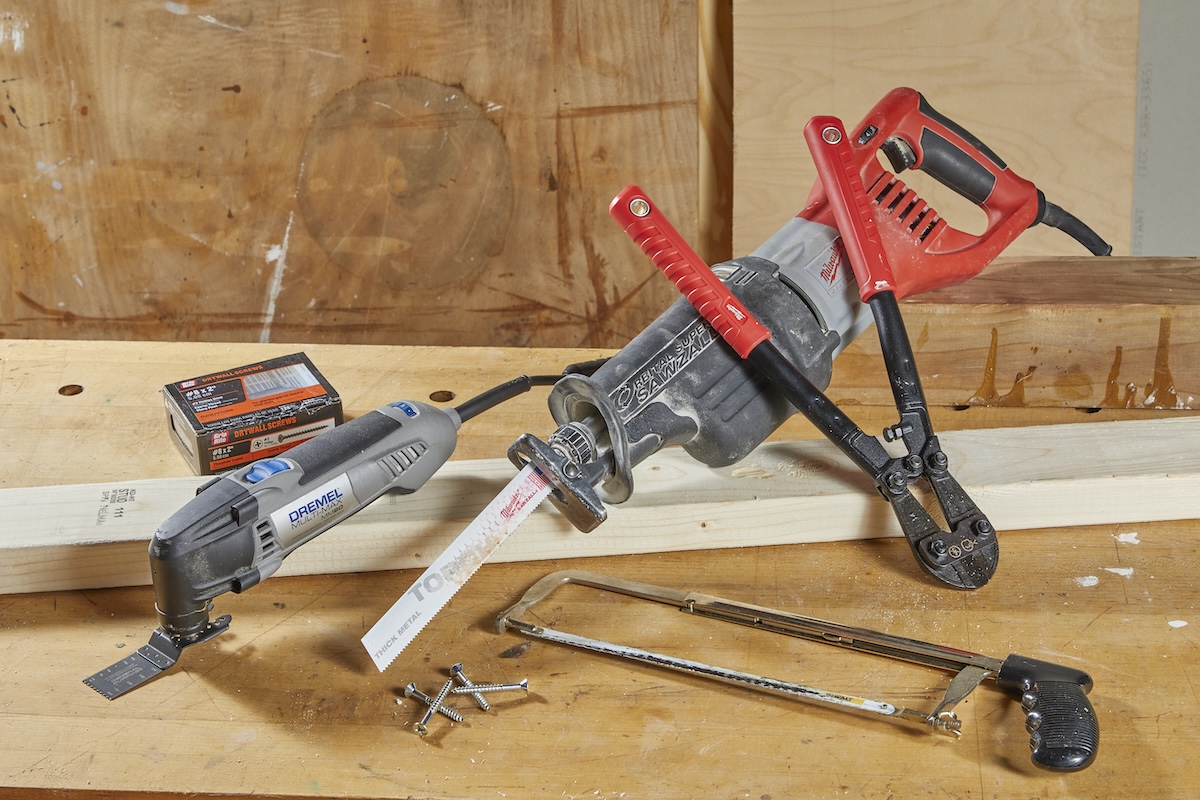
Reciprocating saw
A reciprocating saw can cut a bolt much faster. Use a metal-cutting blade with the correct tooth count.
This tool is useful for thick bolts or large repair jobs. It also creates more vibration and can damage nearby parts, so control and eye protection are important.
Angle grinder
An angle grinder with a thin metal cut-off wheel can cut through many bolts in seconds. It is effective for seized fasteners and heavy steel.
However, grinders create sparks, heat, noise, and sharp debris. Remove flammable materials, wear a face shield over safety glasses, and never use one near fuel or combustible dust.
Rotary tool
A rotary tool with a reinforced cut-off wheel works well in tight spaces. It is slower than an angle grinder but offers better control for small bolts.
The wheel is fragile. Keep it straight, avoid twisting, and replace it if it becomes cracked or worn.
Bolt cutters
Bolt cutters can handle some small, soft bolts. They are less useful on thick or hardened bolts and may crush the fastener instead of making a clean cut.
Use them only when there is enough room to open the jaws fully and the bolt is within the tool’s rated capacity.

Common mistakes when cutting a bolt
Avoiding a few simple errors can save time, blades, and damage to the workpiece.
Using the wrong blade
A wood blade or coarse general-purpose blade may not cut steel well. Always check the package for metal-cutting use.
Pulling during the return stroke
Most hacksaw blades cut on the push stroke. Lift or reduce pressure during the return stroke to protect the teeth.
Holding the bolt by hand
A loose bolt can move, twist, or throw the blade off line. Clamp it whenever possible.
Cutting too fast
Fast strokes can heat the blade and reduce control. A steady rhythm is more effective than speed.
Applying too much force
Heavy pressure can buckle the blade. Let the teeth remove the metal instead of forcing the frame through the bolt.
Ignoring the remaining thread
If you plan to reuse the nut, protect the threads. You can thread the nut onto the bolt before cutting, then remove it afterward to help clean and straighten the end.
Forgetting the sharp edge
A freshly cut bolt can have a razor-like burr. File the edge before touching or reusing the part.
Safety tips for cutting bolts
Metal cutting is a basic task, but it still has real risks. Follow these precautions:
• Wear safety glasses or a face shield
• Clamp the work securely
• Keep both hands on the hacksaw frame when possible
• Keep fingers away from the cutting path
• Replace bent, cracked, or dull blades
• Keep sparks away from fuel, solvents, and dry material
• Let hot metal cool before handling it
• Clean metal filings with a brush instead of bare hands
• Check for wires, hoses, and other hidden parts
If you are cutting a vehicle bolt, disconnect the battery when appropriate and identify nearby fuel, brake, and electrical components. Never assume a hidden line is clear just because you cannot see it.
How long does it take to cut a bolt with a hacksaw?
A small, soft steel bolt may take less than a minute with a sharp blade and a solid grip. A thick or hardened bolt may take five minutes or more.
The exact time depends on the bolt diameter, blade quality, access, and your cutting angle. A slow cut is not a failure. It often means you are protecting the blade and the surrounding part.
If you have made a deep groove but the blade stops removing material, inspect the blade. It may be dull, clogged, or unsuitable for the bolt’s hardness.
Frequently asked questions about will a hacksaw cut through a bolt
Will a hacksaw cut through a stainless steel bolt?
Yes, a hacksaw can cut through many stainless steel bolts. Use a sharp bi-metal blade, steady pressure, and avoid rubbing without cutting because stainless steel can work-harden.
What is the best hacksaw blade for cutting bolts?
A bi-metal blade with 18 to 24 TPI is a strong general choice for medium and large bolts. For small bolts or thin metal, a 32 TPI blade may give better control.
Can a hacksaw cut a Grade 8 bolt?
A hacksaw can cut a Grade 8 bolt, but the job may take longer than cutting a standard mild-steel bolt. Use a quality metal-cutting blade and replace it if the teeth stop making clean filings.
Is it better to cut a bolt with a grinder or a hacksaw?
A grinder is faster, while a hacksaw offers more control and creates no sparks. Choose the hacksaw near delicate parts or flammable materials, and choose a grinder only when you can manage its heat and sparks safely.
Can you cut a bolt without removing the nut?
Yes, you can cut a bolt while the nut is still installed if there is enough access. Protect the surrounding part and decide whether you want to cut between the nut and bolt head or through the nut itself.
How do you keep a hacksaw blade from breaking?
Keep the blade tight, hold it straight, and use light pressure. Do not twist the frame or force the blade through a jammed cut.
Conclusion
A hacksaw can cut through most standard bolts when you use the right metal-cutting blade, secure the work, and make steady strokes. Bolt size, hardness, access, and blade condition all affect the time and effort required.
For small repairs, a hacksaw is often the safest and most affordable choice. For thick or hardened fasteners, a reciprocating saw or angle grinder may be faster, but those tools need extra control and stronger safety measures.
Mark the cut, protect nearby parts, wear eye protection, and let the blade do the work. If this guide helped with your repair, explore more practical tool guides or share your cutting experience in the comments.
