What Size Hammer For Framing: Best Guide For Choosing
For most residential wood framing in the United States, a 16-ounce framing hammer is the best starting point. It has enough force for common framing nails, yet it is light enough for long work.
Choose a 20- to 22-ounce hammer if you frame often, drive large nails, or need more power. Choose a 12- to 14-ounce hammer for light framing, small repairs, overhead work, or less hand strain.
The right size depends on more than head weight. Handle length, balance, claw shape, face design, nail size, and your own control all matter.

Quick answer: What hammer size is best for framing?
A 16-ounce hammer with a straight claw is the most useful all-around choice for typical U.S. framing work.
Use this simple guide:
| Hammer size | Best use | Main trade-off |
|---|---|---|
| 12–14 oz | Light framing, trim, repairs, overhead work | Less driving power |
| 16 oz | General wall, floor, and roof framing | Good balance of power and control |
| 20 oz | Heavy framing and repeated large nails | More arm fatigue |
| 22–28 oz | Heavy timber work and large fasteners | Powerful but tiring for many users |
These numbers refer to the hammerhead weight, not the full tool weight. A long handle and a large steel head can make the complete hammer much heavier.
A 16-ounce hammer is not a rule. It is a practical starting point. If you cannot drive a nail with control, the hammer is too heavy, your swing is poor, or the wood and nail do not match.
Why 16 ounces works for most U.S. framing
A 16-ounce hammer gives a useful mix of speed, force, and control. It can drive common framing nails without the extra fatigue caused by a much heavier tool.
Many U.S. framing jobs use nails such as:
- 8d nails for lighter connections
- 10d nails for some sheathing and framing tasks
- 16d nails for common stud, plate, and joist connections
- Larger nails where plans or approved fastening schedules call for them
The correct nail still depends on the plans, building code, lumber, sheathing, and connection. A larger hammer does not make an incorrect nail acceptable.
A 16-ounce hammer also works well for tasks that need accuracy. You may need to start a nail near the end of a board, work close to a corner, or avoid damaging a finished surface. More weight can add force, but it can also make misses harder and increase damage.
When a 20-ounce hammer makes sense
A 20-ounce hammer may suit you if you:
- Frame houses or decks often
- Drive many 16d nails
- Work with dense or engineered lumber
- Use long nails or structural fasteners
- Prefer fewer, harder blows
- Have the strength and control to manage the tool
A heavier head stores more energy during the swing. That can reduce the number of blows needed. The cost is greater shock, slower recovery, and more fatigue.
When a lighter hammer is better
A 12- or 14-ounce hammer may be the better choice when you:
- Do occasional repairs
- Frame small projects
- Work above shoulder height
- Have a prior hand, wrist, elbow, or shoulder injury
- Need careful nail placement
- Use smaller nails most of the time
A lighter hammer is not automatically safer. You may swing it faster or use more blows. Good control and a neutral wrist matter as much as head weight.
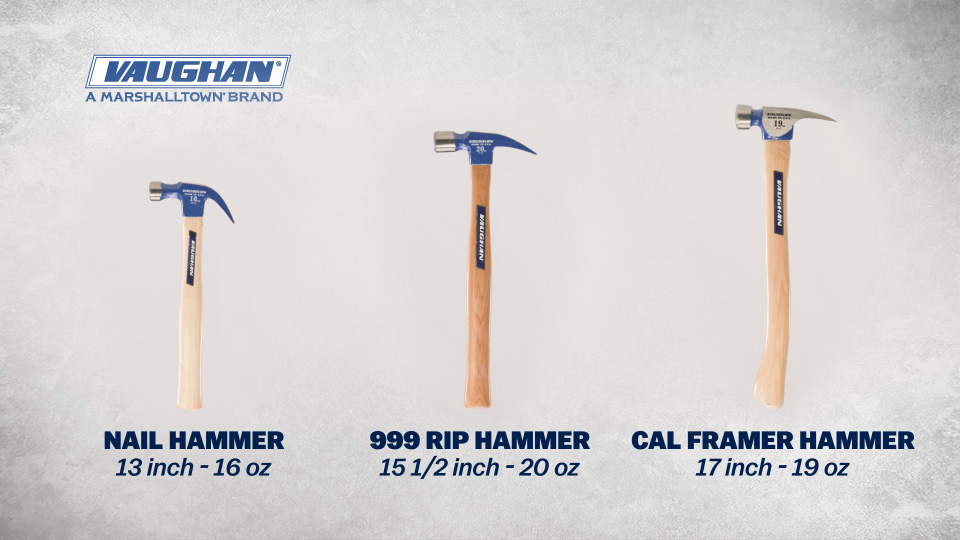
Framing hammer size by task
The best hammer size changes with the work. Use the table below as a guide, not as a substitute for the project plans.
| Framing task | Common starting size | Why |
|---|---|---|
| Light partition framing | 14–16 oz | Enough control for smaller work |
| General wall framing | 16 oz | Balanced choice for common nails |
| Floor joists and roof framing | 16–20 oz | More force may help with long nails |
| Deck framing | 16–20 oz | Depends on lumber and fasteners |
| Engineered lumber | 16–20 oz | Dense material can need more effort |
| Timber framing | 20–28 oz or a framing maul | Large joints need much more force |
| Sheathing work | 14–16 oz | Speed and control are useful |
| Overhead framing | 12–16 oz | Lower fatigue and better control |
Do not use this table to choose fasteners. Nail size and spacing must come from the applicable building code, approved plans, or the fastener maker’s instructions.
What features matter besides hammer weight?
Head weight is only one part of the choice. A well-balanced 16-ounce hammer may feel better than a poorly balanced 14-ounce model.
Straight claw or curved claw?
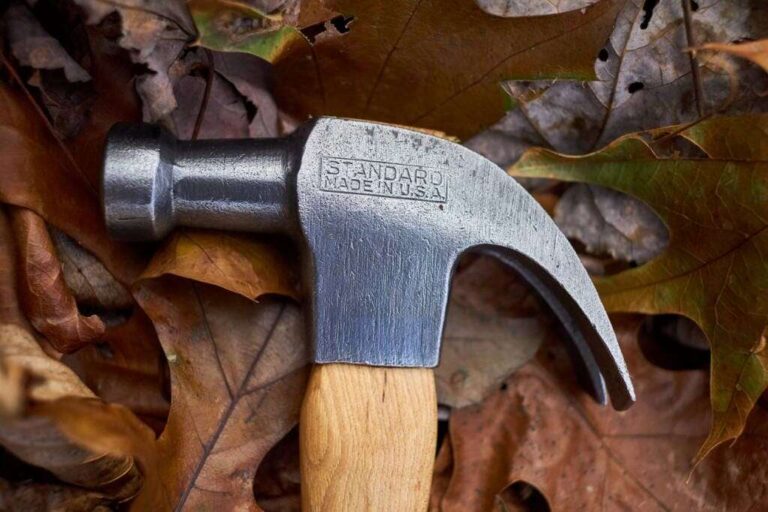
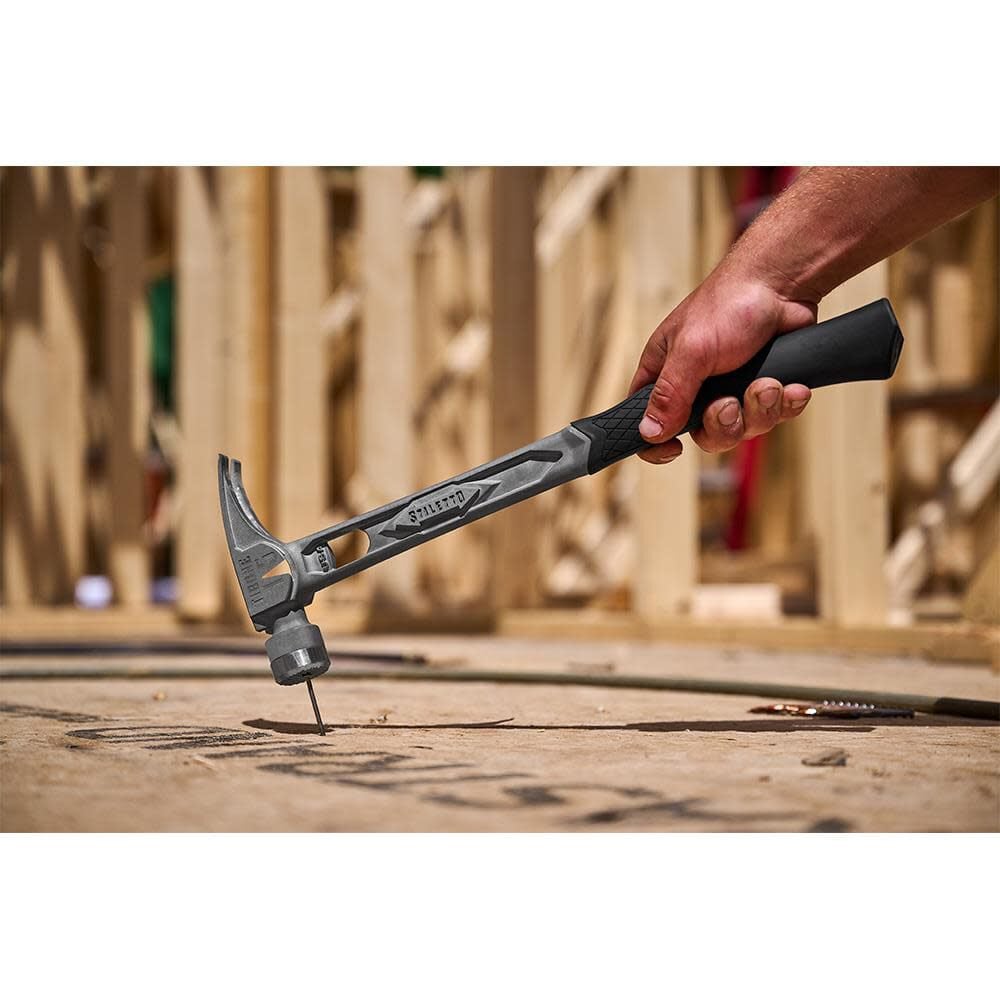
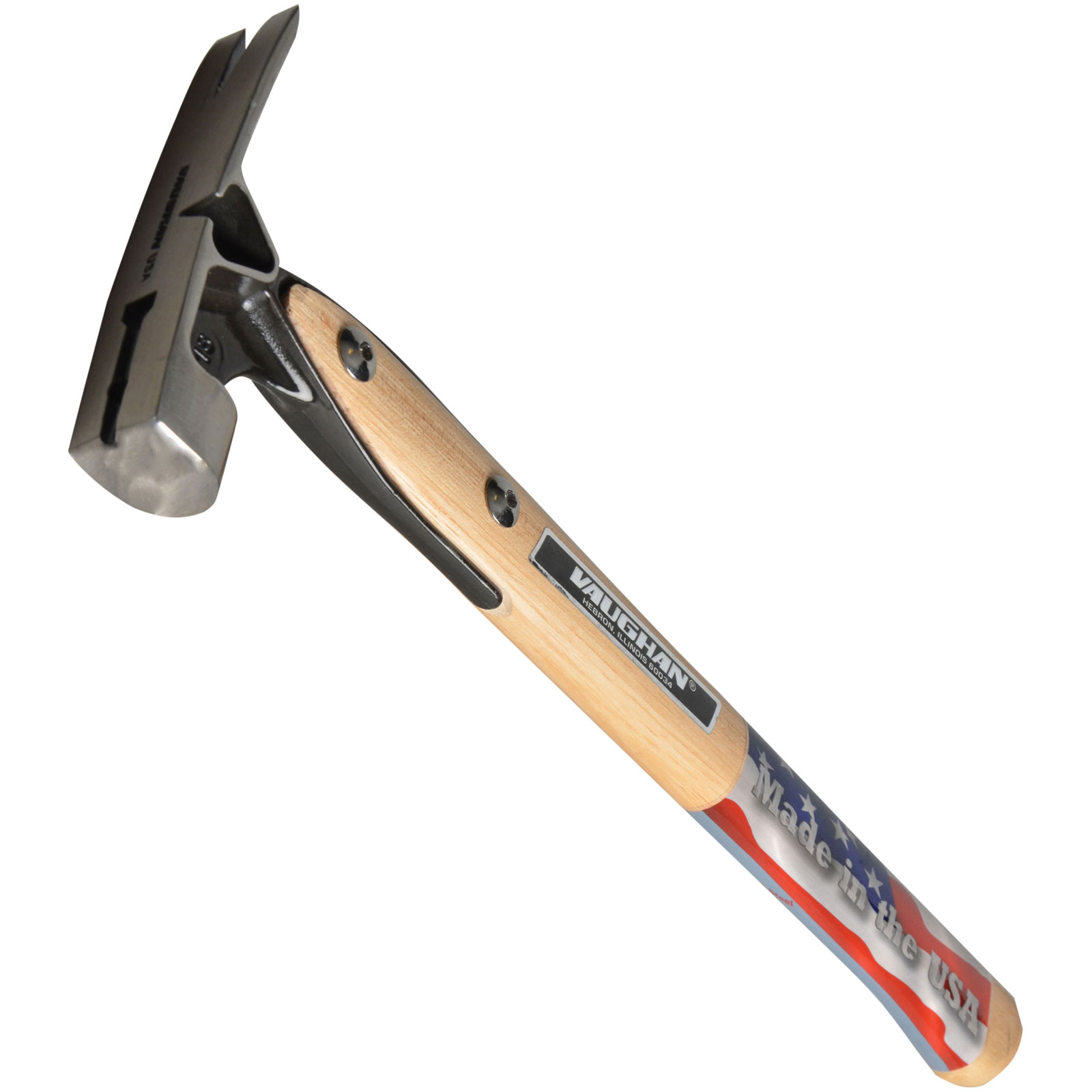
A straight-claw framing hammer is usually the better fit for framing. Its claw can help with:
- Pulling nails
- Splitting small pieces of wood
- Starting a gap
- Prying boards into place
- Aligning parts during rough work
A curved claw gives more leverage for pulling nails. It is common on general-purpose claw hammers. It may be useful, but it can be less suited to some rough framing tasks.
Smooth face or milled face?
A smooth face leaves fewer marks when you miss the nail head. It is a good general choice.
A milled face has a waffle-like pattern. It can reduce glancing blows, but it leaves a clear mark in the wood. That mark usually does not matter in rough framing, but it can matter near visible trim or finished surfaces.
Handle length
Many framing hammers have a handle near 16 inches long. A longer handle can increase swing speed and power. It can also feel harder to control in tight spaces.
Choose a handle that lets you keep your wrist straight and your swing relaxed. A hammer that is powerful but awkward can slow the work and increase strain.
Steel, fiberglass, or wood handle?
Each handle type has trade-offs:
- Steel handles are strong and durable, but they can transmit more shock.
- Fiberglass handles offer good durability and often reduce some vibration.
- Wood handles are light and easy to replace, but they can split or loosen if neglected.
The grip should stay secure when your hands are sweaty. Replace a hammer if the head is loose, the handle is cracked, or the face is badly damaged.
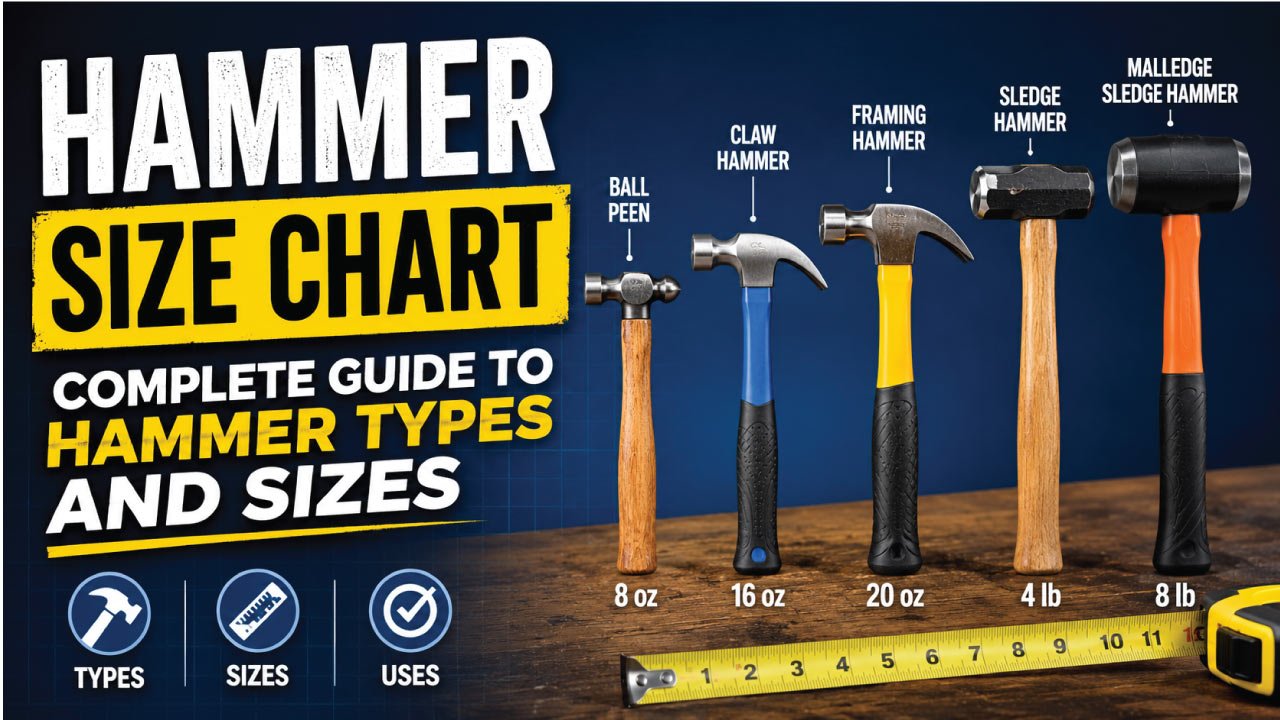
How to choose the right hammer for your body
The best hammer is the heaviest one you can control without pain. Do not choose by strength alone.
Try this simple check before buying:
- Hold the hammer at the end of the handle.
- Raise and lower it several times with a relaxed wrist.
- Practice a slow swing without gripping too hard.
- Check whether the head tracks straight.
- Stop if your wrist bends sharply or your shoulder tenses.
- Compare a lighter and heavier model if possible.
The hammer should feel like an extension of your arm. It should not pull your wrist down or force you to swing with your whole shoulder.
For long jobs, a lighter hammer may produce better overall work because fatigue can cause:
- Missed nail strikes
- Bent nails
- Damaged lumber
- Slower work
- Wrist and elbow strain
If you have ongoing pain, numbness, or weakness, stop the work and seek medical advice. Tool choice cannot correct an injury.
How to match hammer size to nail size
A larger nail often needs more driving force, but nail size alone does not decide hammer size. Wood hardness, nail type, access, and your technique also matter.
A simple rule works well:
- Use a light hammer for small nails and delicate work.
- Use a 16-ounce hammer for most general framing.
- Move to 20 ounces when large nails or dense wood make the 16-ounce hammer feel inefficient.
- Use a heavier framing hammer only when you can control it for the full job.
Do not keep increasing hammer weight when a nail will not drive. Check for other causes first:
- The nail is too long for the material.
- The lumber is unusually hard or wet.
- The nail is bent.
- You are striking off-center.
- The wood has split.
- The fastener is not approved for the connection.
- The hammer face is damaged.
A heavier hammer may drive the nail faster, but it may also bend it or damage the lumber.
A simple way to compare hammer sizes
Suppose you are choosing between a 16-ounce and a 20-ounce hammer for a wall-framing project.
The 16-ounce hammer may offer:
- Better control
- Less fatigue
- Easier nail placement
- Lower risk of overstriking
The 20-ounce hammer may offer:
- More force per swing
- Fewer blows for some large nails
- Better performance in dense lumber
- More useful power for heavy framing
If you frame only a few times each year, the 16-ounce model is usually the safer starting point. If you frame every week and already control a heavy hammer well, 20 ounces may save effort.
This is a trade-off, not a contest. More weight is not always more productive.
Common mistakes when choosing a framing hammer
Choosing the heaviest hammer available
A heavy hammer can feel powerful in a store. After several hours, it can feel very different. Extra weight may increase fatigue before it improves productivity.
Confusing head weight with total weight
A 16-ounce head does not mean the complete tool weighs 16 ounces. The handle and grip add weight. Balance can also change how heavy the hammer feels.
Using a finish hammer for framing
A finish hammer is often lighter and has a smoother, smaller face. It can work for small repairs, but it may be slow for repeated framing nails.
Using a framing hammer on hardened steel
Do not strike hardened steel, masonry tools, or other objects unless the tool maker says the hammer is designed for that use. Metal fragments can chip from the hammer or struck object.
Ignoring the nail schedule
The hammer drives the fastener. It does not decide whether the connection is correct. Follow the plans, the local code, and the fastener instructions.
Holding the hammer too tightly
A tight grip can increase hand and forearm strain. Use a controlled grip and let the handle move naturally through the swing.
Framing hammer safety in the United States
Wear safety glasses when driving or pulling nails. OSHA’s construction rules require suitable eye and face protection where workers face flying particles or similar hazards.
Before use, inspect the hammer:
- Make sure the head is tight.
- Check the handle for cracks or splits.
- Look for chips or mushrooming on the striking face.
- Keep the face clean and dry.
- Do not use a damaged hammer.
- Keep other workers clear of the swing path.
- Do not strike toward your hand or another person.
When pulling a nail, use a stable stance. Keep your free hand away from the claw and the nail path. For high work, use a proper platform or ladder rather than stretching for extra reach.
OSHA also requires hand tools to be maintained in safe condition under its construction standards. Local rules, employer policies, and the job hazard plan may add requirements.
What size hammer should a beginner buy?
A beginner should usually start with a 14- to 16-ounce framing hammer. A 16-ounce model gives enough power for common framing while leaving room to build control.
A 20-ounce hammer can work for a beginner who is strong and comfortable with it. Yet it is harder to control, especially when working overhead or near edges.
Start with practice on scrap wood:
- Set a common framing nail straight.
- Tap it until it stands on its own.
- Use smooth blows with the center of the face.
- Stop when the nail is flush or reaches the required depth.
- Check the wood for splits and the nail for bending.
Good framing comes from repeatable strikes, not brute force.

Is a 16-ounce or 20-ounce framing hammer better?
A 16-ounce hammer is better for most people and most general framing. A 20-ounce hammer is better when you need more power and can manage the extra weight.
Choose 16 ounces when:
- You want one general-purpose framing hammer.
- You do mixed work.
- You value control and lower fatigue.
- You are new to framing.
Choose 20 ounces when:
- You drive large nails all day.
- You work with dense lumber.
- You frame often.
- You can swing it without pain or loss of accuracy.
If you are unsure, choose 16 ounces. It is easier to add another blow than to recover from a tool that is too heavy for the job.
Key takeaways
- The best general framing hammer size is 16 ounces.
- Choose 20 to 22 ounces for heavy, repeated framing work.
- Choose 12 to 14 ounces for light work, overhead use, or lower fatigue.
- A straight claw and 16-inch handle are common framing features.
- Smooth faces leave fewer marks; milled faces offer more grip but mark wood.
- Head weight is not the same as total tool weight.
- Hammer size does not determine the correct nail or code connection.
- Replace any hammer with a loose head, cracked handle, or damaged face.
FAQs
Is a 16-ounce hammer enough for framing a house?
Yes, a 16-ounce hammer is enough for many residential framing tasks. It may take more blows than a 20-ounce hammer for dense lumber or large nails, but it offers good control and lower fatigue.
Is a 20-ounce hammer too heavy for framing?
Not always. A 20-ounce hammer suits many professional framers. It may be too heavy for beginners, overhead work, small repairs, or anyone who cannot control it without wrist or shoulder strain.
Is a framing hammer different from a regular hammer?
Yes. A framing hammer often has a heavier head, longer handle, straight claw, and face made for repeated construction work. A regular claw hammer is often lighter and better suited to general repairs or finish work.
Should a framing hammer have a smooth face?
A smooth face is the safer general choice if you want to limit marks in the wood. A milled face can help prevent slips, but it leaves a visible pattern on the lumber.
What hammer size is best for deck framing?
A 16- to 20-ounce framing hammer usually works for deck framing. The best choice depends on the fasteners, lumber, access, and how long you will work. Always follow the deck plans and approved fastener schedule.
Can a heavier hammer drive nails better?
A heavier hammer can deliver more force per blow. It does not always drive nails better. Poor nail choice, hard lumber, bad alignment, or weak technique can still cause problems.
Final recommendation
For most people framing in the United States, buy or use a 16-ounce framing hammer with a straight claw and a secure handle. Move to a 20-ounce model only when your work regularly demands more force and you can use the extra weight without losing control.
Before starting, check the fastener schedule, wear eye protection, and inspect the hammer. The right tool should make each strike steady, not painful.
Sources and standards
- OSHA: Hand Tools—General, 29 CFR 1926.301
- OSHA: Eye and Face Protection, 29 CFR 1926.102
- International Code Council: International Residential Code
- American Wood Council: National Design Specification for Wood Construction
Recent Tool Guides
 Hammer
How To Hammer Flowers Onto Paper: Easy Guide
Learn how to hammer flowers onto paper with simple steps, helpful tips, and beautiful results for...
Read Guide → Wrench
How To Use A Hex Wrench: Easy Step-By-Step Guide
Learn how to use a hex wrench correctly with simple steps, helpful tips, and common mistakes...
Read Guide → Hacksaw
How To Cut Curtain Pole With Hacksaw: Easy Guide
Learn how to cut curtain pole with hacksaw safely and neatly. Follow simple steps for accurate...
Read Guide → Wrench
How To Use A Husky Torque Wrench: Easy Guide
Learn how to use a Husky torque wrench correctly with simple steps, torque settings, and safety...
Read Guide → Hammer
How To Hold A Hammer: Safe Grip Guide
Learn how to hold a hammer with the right grip, stance, and technique for safer, more...
Read Guide → Hacksaw
How To Cut Flexible Metal Conduit With Hacksaw: Easy Guide
Learn how to cut flexible metal conduit with hacksaw safely and cleanly. Follow simple steps for...
Read Guide →