What Is A Ball Peen Hammer Made Of: Materials Explained
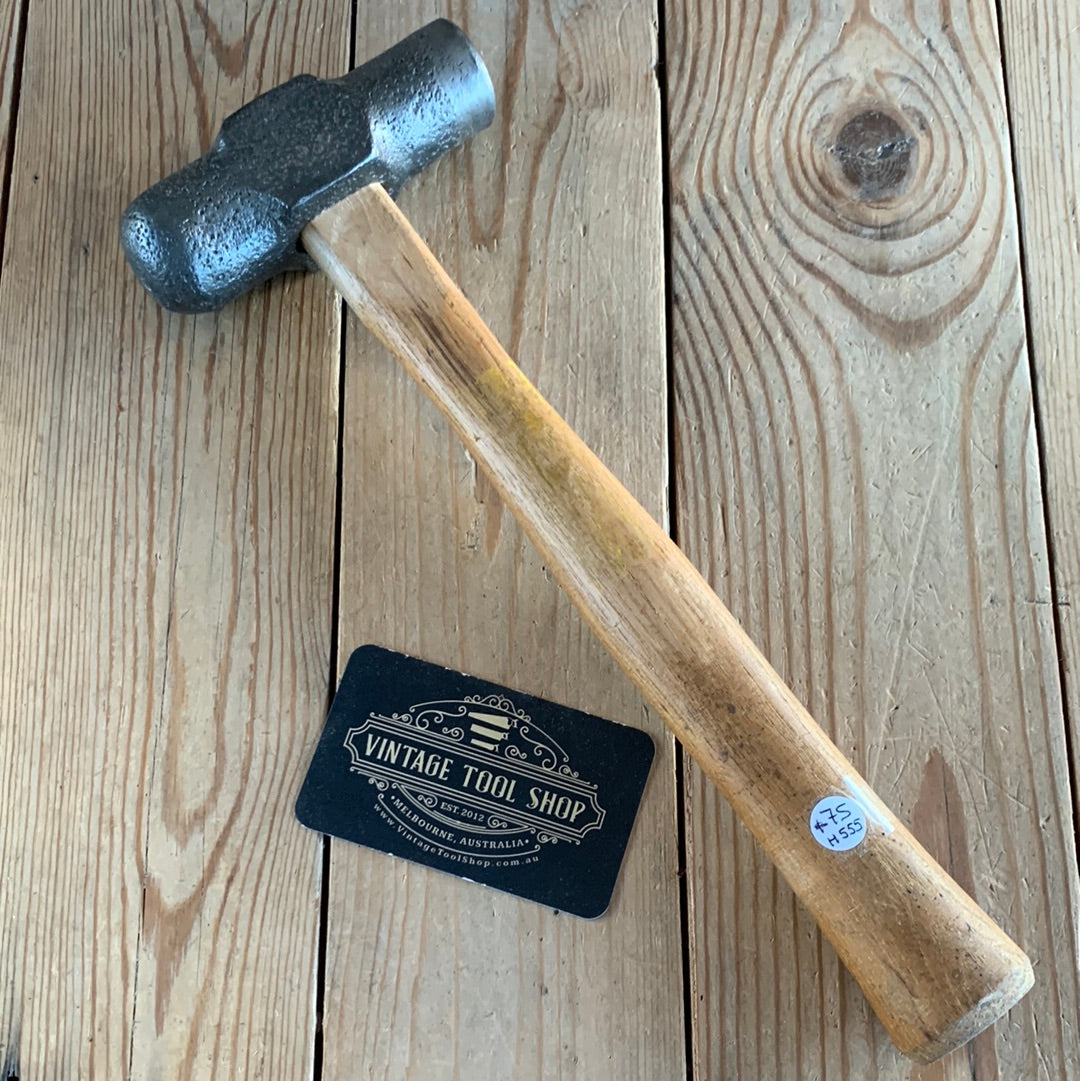
In the United States, a standard ball peen hammer is made mainly of hardened steel for the head and wood, fiberglass, or composite material for the handle. The head has two ends: a flat striking face and a rounded ball-shaped peen. Most general-purpose models use forged carbon steel because it can absorb repeated impact while keeping a hard working surface.
The exact materials vary by brand, weight, handle type, and intended use. A small jeweler’s hammer may use a different steel or handle than a heavy ball peen hammer used in an American machine shop.

What Are the Main Parts of a Ball Peen Hammer Made Of?
A ball peen hammer has three main material parts: the head, the handle, and the grip or finish.
1. The hammer head
The head is usually made from forged carbon steel or alloy steel. Forging shapes the hot steel under pressure, which helps create a strong, dense head with fewer internal defects than a simple cast part.
The steel is then heat-treated. This process changes the hardness and toughness of different areas:
- The striking face needs a hard surface.
- The ball peen needs enough hardness to shape and move metal.
- The inner part of the head needs toughness so it can resist cracking.
- The eye, or handle opening, must remain strong enough to hold the handle.
Many US tool makers describe their ball peen heads as drop-forged high-carbon steel. However, “high carbon steel” is a broad product term. It does not identify one exact chemical formula or hardness level.
2. The handle
Ball peen hammer handles commonly use one of these materials:
- Hickory: A traditional wood handle with good shock absorption.
- Fiberglass: A layered material that resists splitting and often reduces maintenance.
- Glass-fiber-reinforced nylon or composite: A synthetic option used in some modern designs.
- Steel: Less common for the full handle because it transmits more vibration to the user.
Hickory remains popular in the United States because it is light, flexible, and comfortable when properly fitted. Fiberglass handles can be useful in shops where moisture, rough storage, or frequent use may damage wood.
3. The grip and surface finish
A hammer may have a rubber, thermoplastic, or textured synthetic grip over part of the handle. This grip can improve comfort and control, but it does not replace the structural handle.
The head may receive a polished, black oxide, painted, or other protective finish. The coating mainly helps limit surface rust and improve appearance. It does not make a low-quality head into a high-quality one.
Why Is Steel Used for the Ball Peen Head?
Steel offers the mix of hardness, toughness, strength, and cost needed for repeated hammer blows.
The striking face must resist dents and excessive mushrooming. At the same time, the whole head cannot be so brittle that it chips or breaks under impact. Heat treatment helps manufacturers balance these competing needs.
Carbon steel versus alloy steel
Carbon steel gains much of its strength and hardness from its carbon content. It is common in hand tools because it can be forged and heat-treated at a reasonable cost.
Alloy steel includes added elements such as chromium, molybdenum, nickel, or vanadium. These elements can improve hardenability, wear resistance, toughness, or strength. The presence of an alloy does not automatically mean the hammer is better. The design, heat treatment, and quality control still matter.
A product label may say “forged alloy steel,” “high-carbon steel,” or simply “steel.” Those terms describe broad material groups, not a complete specification.
Why not make the head from cast iron?
Cast iron is hard but tends to be brittle. A hammer head must survive sudden shock loads. A brittle material can chip, crack, or fail in a dangerous way when struck against hard metal.
For that reason, a quality ball peen hammer head is normally forged from steel rather than made from ordinary cast iron.
Why not use stainless steel?
Stainless steel resists corrosion, but many stainless grades are harder to heat-treat for this type of impact tool. Stainless steel can be used in specialty hammers, but it is not the default material for a general-purpose ball peen hammer.
Manufacturers choose materials based on the job. Corrosion resistance may matter in one setting, while impact toughness and hardness matter more in another.

How Is a Ball Peen Hammer Head Made?
A typical steel ball peen hammer head goes through several production stages. The exact process differs by manufacturer, but the general sequence is well established.
1. Steel is cut and heated
A steel blank is cut to the required size and heated until it can be shaped. The temperature must be high enough for forging but controlled to avoid unwanted changes in the steel.
2. The head is forged
Large presses or hammers form the blank into the hammer shape. The process creates the face, central body, ball peen, and handle eye.
Forging can improve the grain flow of the steel around the shape. That is one reason forged heads are widely used for impact tools.
3. The head is heat-treated
The head may be heated, cooled, and tempered in a controlled sequence. These steps adjust hardness and toughness.
The working surfaces may receive additional treatment. Some manufacturers harden the face and peen more than the central body. This creates a hard working zone while keeping the rest of the head less brittle.
4. The surfaces are finished
After heat treatment, the head may be ground, polished, painted, or coated. The face and peen are shaped to their final form.
A proper ball peen face is usually flat or slightly crowned. The peen is smoothly rounded. Sharp lips, deep grinding marks, cracks, or rough transitions are warning signs.
5. The handle is fitted
The handle passes through the eye in the head. A wood handle may use a wooden wedge, a metal wedge, or both to expand the handle inside the eye.
Fiberglass and composite handles often use a bonded or molded connection. The method depends on the design.

What Is the Ball-Shaped End Made Of?
The rounded end, called the peen, is normally made from the same steel head as the flat face.
The peen is not a separate ball attached to the hammer. It is formed as part of the head during forging and finishing. Its rounded shape lets the user spread, shape, or “peen” metal in a controlled area.
A ball peen hammer is used for tasks such as:
- Expanding the end of a rivet
- Shaping sheet metal
- Forming small metal parts
- Starting or finishing a rounded edge
- Driving punches and similar tools when appropriate
- General mechanical and metalworking work
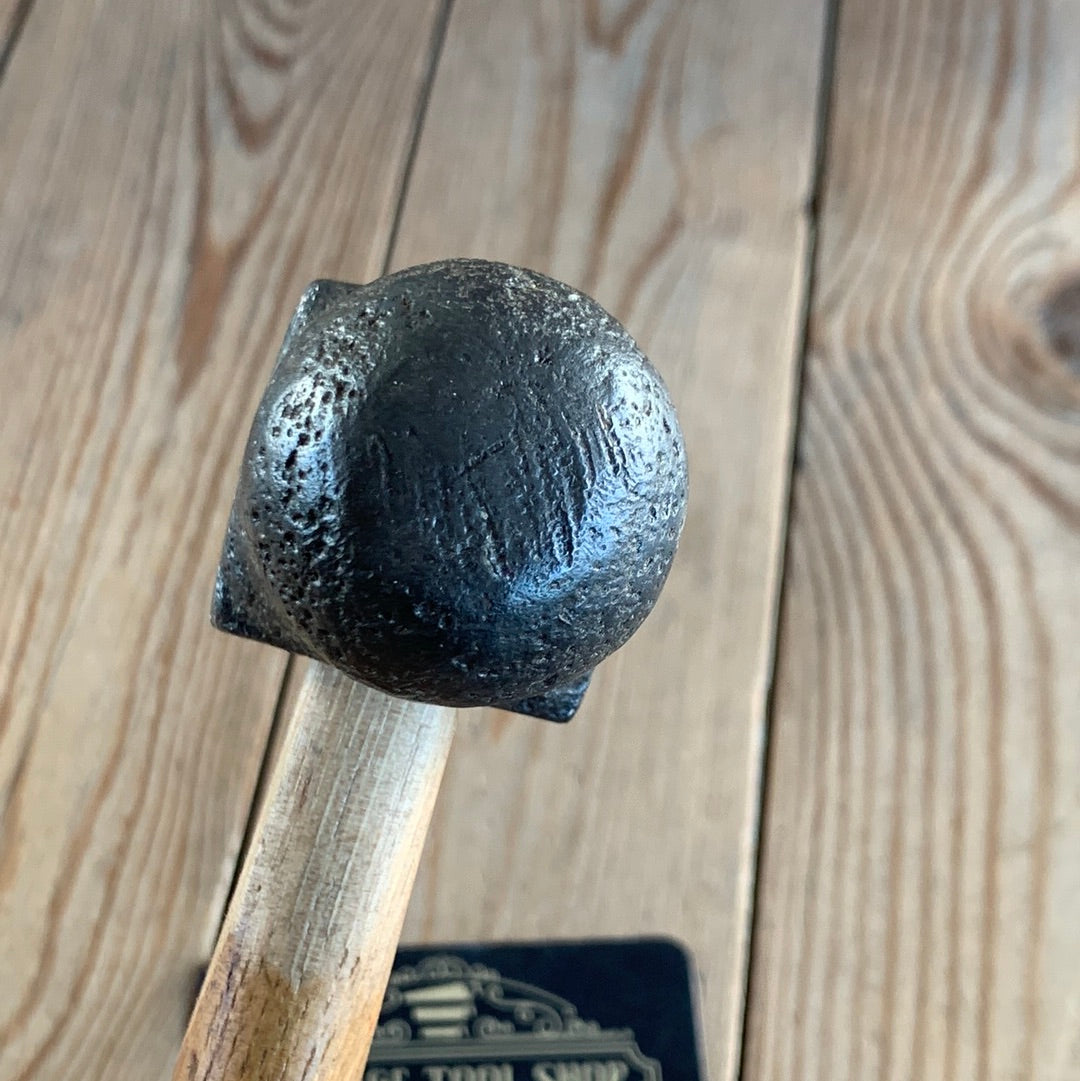
The ball end should have a smooth curve. If it develops flat spots, deep dents, cracks, or a sharp mushroomed edge, replace the hammer. Do not keep grinding away damage unless the tool maker specifically permits repair and the final hardness remains suitable.
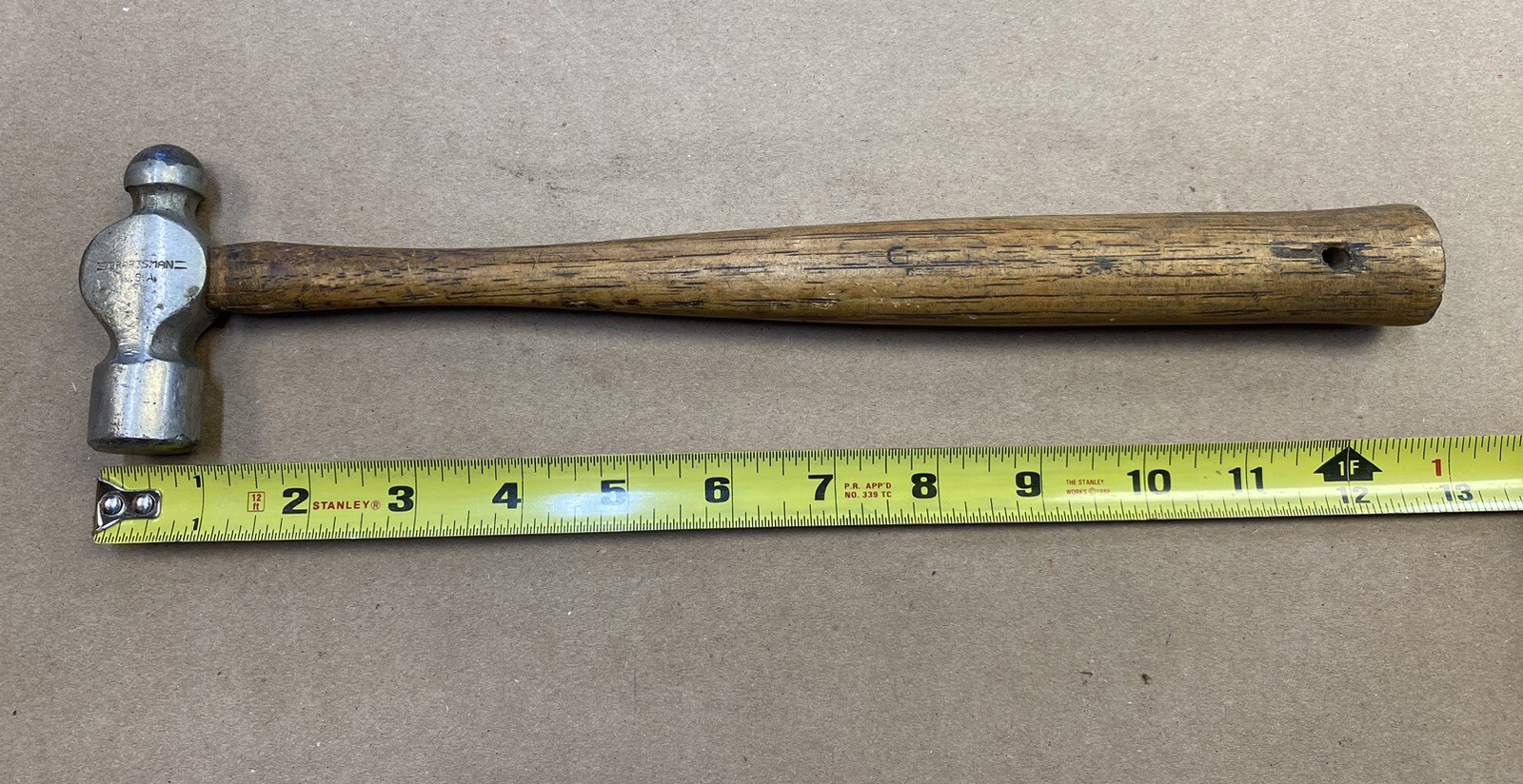
Does the Handle Material Change How the Hammer Feels?
Yes. Handle material affects vibration, balance, weight, grip, and maintenance.
| Handle material | Main benefit | Main limitation |
|---|---|---|
| Hickory wood | Good shock absorption and low weight | Can split, dry out, or loosen |
| Fiberglass | Resists splitting and moisture | May transmit a different type of vibration |
| Composite nylon | Durable and often low-maintenance | Quality varies by design |
| Steel | Strong and compact | Can transmit more shock to the hand |
The handle also affects balance. A wood-handled hammer may feel lively and easy to control. A heavier synthetic handle may feel steadier but less responsive.
No handle material removes all impact vibration. Good technique still matters. Hold the hammer firmly but do not squeeze harder than needed, keep the work stable, and choose a hammer that matches the task.
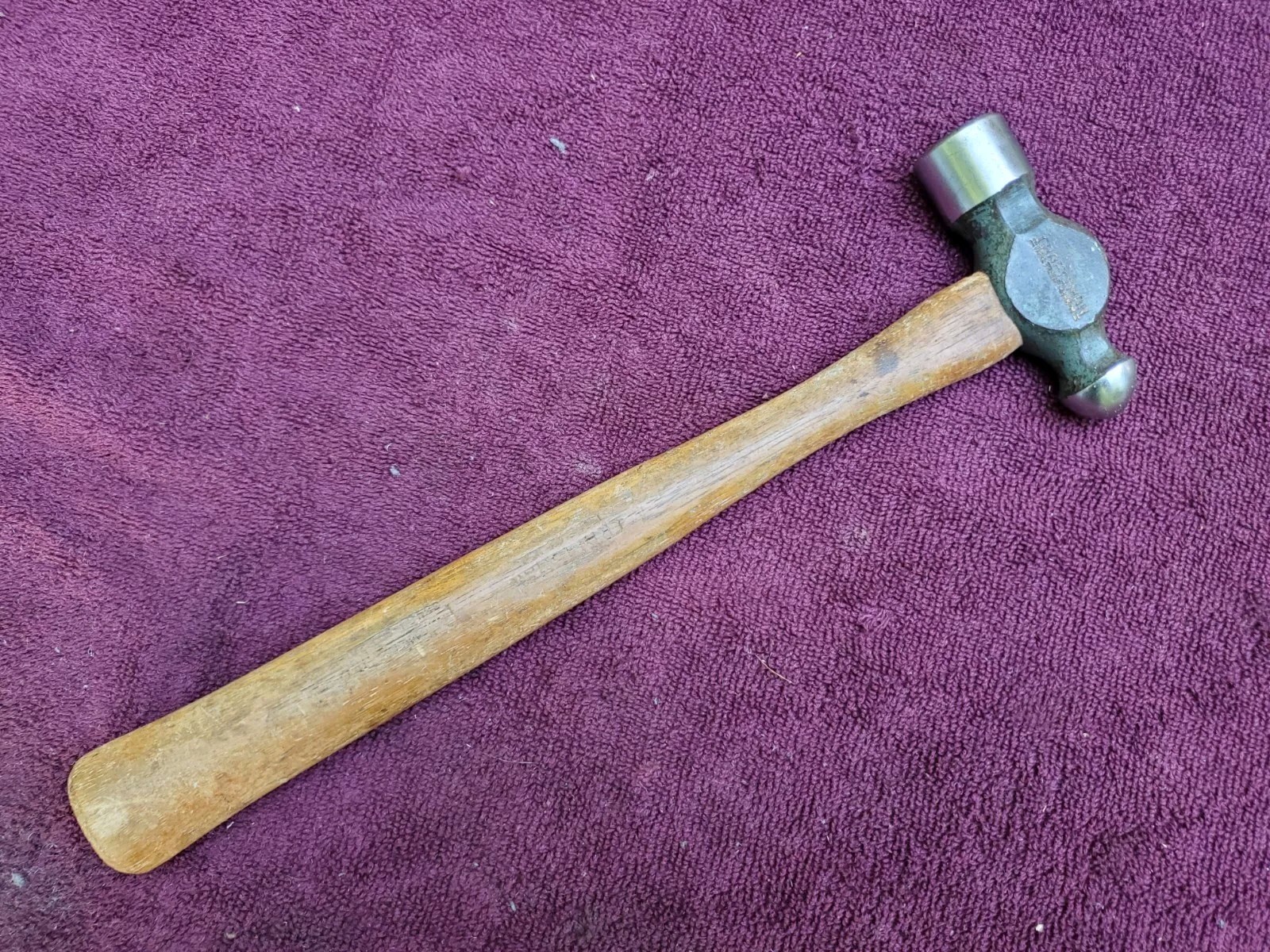
How Can You Tell What a Ball Peen Hammer Is Made Of?
The most reliable answer comes from the manufacturer’s specification, model number, or packaging. Look for terms such as:
- Forged carbon steel head
- Drop-forged alloy steel
- Hardened and tempered face
- Hickory handle
- Fiberglass handle
- Composite or reinforced handle
- Rubber or thermoplastic grip
Visual inspection can help, but it cannot identify the exact steel grade.
A shiny head is not necessarily stainless steel. A dark head may have black oxide, paint, or another finish. A wood-colored handle may be real wood or a printed synthetic cover.
For an unmarked or older hammer, avoid guessing the steel grade. You can identify the handle material and inspect the head, but chemical composition requires proper material testing.
Signs of a sound head
Before use, check for:
- Cracks around the face, peen, or eye
- Deep chips or missing metal
- A badly mushroomed face
- A loose head
- Severe rust that has reduced the metal
- Sharp edges caused by damage or poor grinding
A small surface stain is not the same as structural corrosion. Remove loose rust only if the head remains sound. Replace the hammer when damage affects the striking surfaces or head attachment.
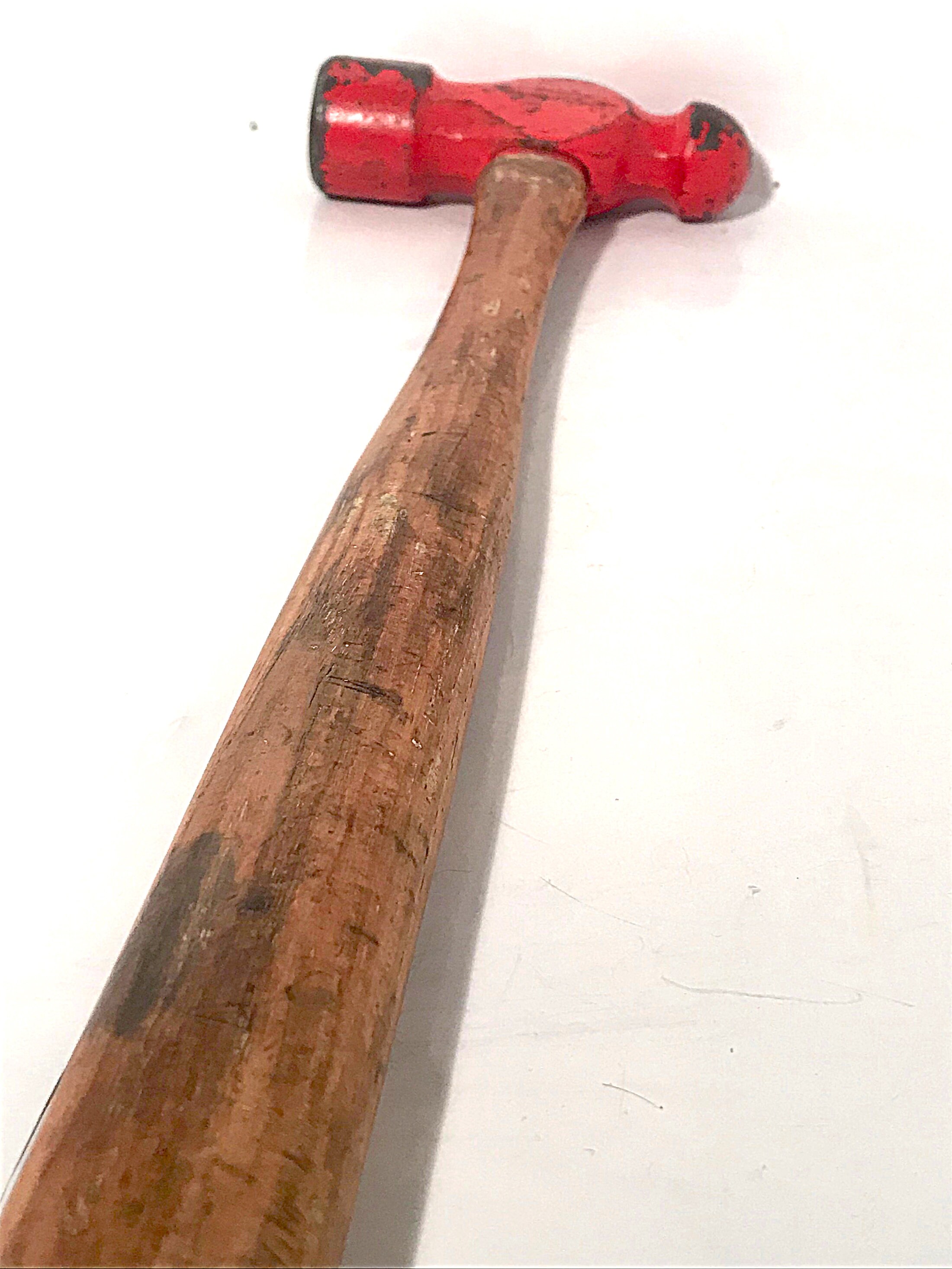
What Is the Difference Between a Ball Peen Hammer and Other Hammers?
The main difference is the shape and intended use of the head.
| Hammer type | Typical head feature | Common use |
|---|---|---|
| Ball peen hammer | Flat face and rounded peen | Metal shaping and riveting |
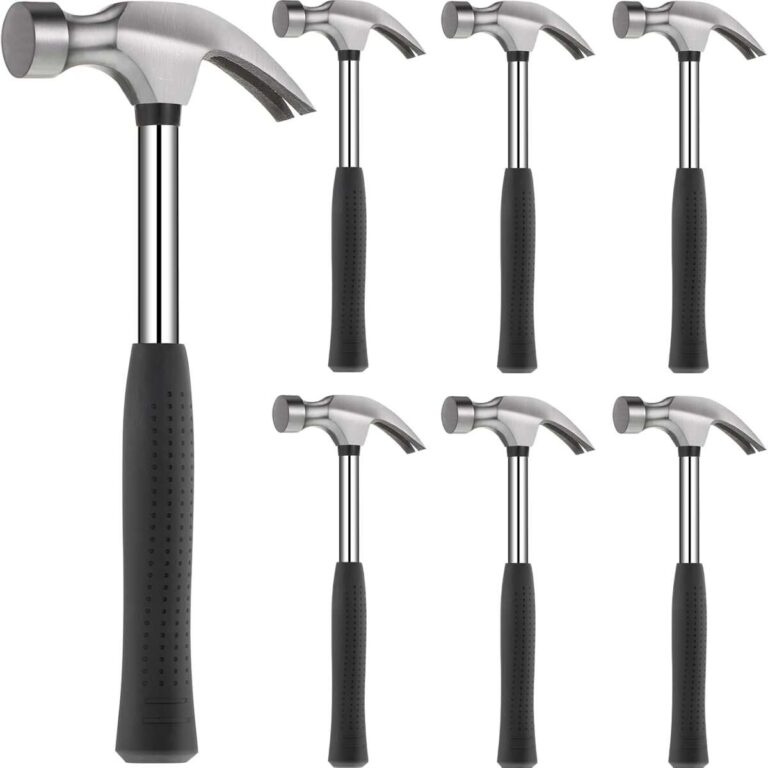
| Claw hammer | Face and curved claw | Wood framing and nail removal |
| Cross-peen hammer | Flat face and narrow wedge | Metal shaping and starting work |
| Dead-blow hammer | Filled or weighted head | Controlled impact with less rebound |
| Soft-face hammer | Replaceable non-marring faces | Assembly and finished surfaces |
| Sledgehammer | Large heavy steel head | High-force demolition or driving |
A ball peen hammer is not a universal metalworking tool. Its steel face can damage finished surfaces, and its peen can leave marks. Use a soft-face hammer when the workpiece must remain unmarred.
Do not use a ball peen hammer to strike another hardened steel hammer or a hardened punch unless the tool manufacturer allows it. Metal fragments can break off during impact.

Safety Tips for Using a Ball Peen Hammer
The hammer should be in good condition before every use. A damaged head or loose handle can turn a routine task into a serious injury.
Follow these basic precautions:
- Wear safety glasses with side protection.
- Inspect the face, peen, handle, and head-to-handle joint.
- Keep the workpiece on a stable surface.
- Use the correct hammer weight for the task.
- Keep your free hand away from the striking area.
- Do not strike hardened steel unless the tool is designed for it.
- Replace a cracked, chipped, loose, or badly mushroomed hammer.
- Do not modify the head by welding, heating, or aggressive grinding.
- Store the hammer in a dry place.
- Use hearing protection during repeated or high-force work.
The Occupational Safety and Health Administration recommends suitable eye and face protection where flying particles may create an eye hazard. A ball peen hammer can produce chips from the workpiece, the hammer, or another tool, so eye protection is a basic requirement in shop work.
Frequently Asked Questions
Is a ball peen hammer made of stainless steel?
Usually, no. Most general-purpose ball peen hammers use forged carbon steel or alloy steel. Specialty models may use stainless steel or another corrosion-resistant material, so check the product specification.
Is the ball peen harder than the flat face?
Not always. Both surfaces are usually heat-treated as part of the same head, but the manufacturer may use different finishing or hardness treatments. The product documentation is the best source for exact details.
Can a ball peen hammer break?
Yes. A hammer can crack, chip, or fail if it is damaged, badly abused, used against unsuitable hardened material, or altered by grinding or heating. Inspect it before use and replace it when the head or handle is unsafe.
Is hickory better than fiberglass?
Neither is best for every user. Hickory is light and has traditional shock-absorbing qualities. Fiberglass resists splitting and moisture. The better choice depends on balance, comfort, working conditions, and the quality of the specific handle.
Can I use a ball peen hammer for nails?
You can drive some nails with the flat face, but a claw hammer is usually better for ordinary nail work. A ball peen hammer lacks a claw and may not provide the balance or face shape intended for construction tasks.
Conclusion
A ball peen hammer is usually made from a forged, heat-treated carbon-steel or alloy-steel head and a hickory, fiberglass, or composite handle. The rounded peen and flat face are part of the same steel head, not separate pieces.
When choosing or inspecting one, focus on the head’s condition, the handle attachment, the intended task, and the manufacturer’s material details. A sound hammer with the right face shape and weight is safer and more useful than one chosen by appearance alone.
Recent Tool Guides
 Hammer
How To Hammer Flowers Onto Paper: Easy Guide
Learn how to hammer flowers onto paper with simple steps, helpful tips, and beautiful results for...
Read Guide → Wrench
How To Use A Hex Wrench: Easy Step-By-Step Guide
Learn how to use a hex wrench correctly with simple steps, helpful tips, and common mistakes...
Read Guide → Hacksaw
How To Cut Curtain Pole With Hacksaw: Easy Guide
Learn how to cut curtain pole with hacksaw safely and neatly. Follow simple steps for accurate...
Read Guide → Wrench
How To Use A Husky Torque Wrench: Easy Guide
Learn how to use a Husky torque wrench correctly with simple steps, torque settings, and safety...
Read Guide → Hammer
How To Hold A Hammer: Safe Grip Guide
Learn how to hold a hammer with the right grip, stance, and technique for safer, more...
Read Guide → Hacksaw
How To Cut Flexible Metal Conduit With Hacksaw: Easy Guide
Learn how to cut flexible metal conduit with hacksaw safely and cleanly. Follow simple steps for...
Read Guide →