Can You Use A Hacksaw On Wood: Safe Cutting Guide
Yes, you can use a hacksaw on wood, but it is usually not the best tool for the job. A hacksaw has a thin blade with small teeth made mainly for cutting metal. Those teeth can cut thin wood, plywood, or small trim pieces, but the cut will be slower and rougher than one made with a wood saw.
For a clean and faster cut in a U.S. home workshop, use a hand saw, backsaw, Japanese pull saw, jigsaw, or circular saw that has a blade made for wood. Use a hacksaw only when it is the tool you have, the wood is thin, or the cut needs to be very small and controlled.
Why a hacksaw can cut wood
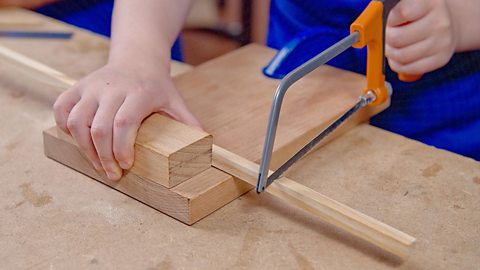
A hacksaw cuts by using repeated strokes to remove small amounts of material with its teeth. Wood is softer than steel, so the teeth can cut it. The problem is that hacksaw teeth are small and closely spaced.
Most hacksaw blades have a fine tooth pattern. This pattern works well on metal because it supports the thin material and helps prevent large teeth from catching. Wood usually needs fewer, larger teeth. Larger teeth clear wood chips more easily and cut faster.
A hacksaw may work well for:
- Thin boards
- Small wood dowels
- Wooden trim
- Thin plywood
- Plastic-coated wood parts
- Small cuts where speed does not matter
- Wood that contains a small nail or screw
It is less suitable for:
- Thick lumber
- Long straight cuts
- Firewood
- Large sheets of plywood
- Hardwood that needs a smooth finish
- Repeated cutting
- Cuts that must be square and accurate
The fine teeth may fill with wood dust. This is called clogging. When the teeth clog, the blade stops removing material well and may begin to rub instead of cut.

What happens when you use a hacksaw on wood?
A hacksaw can make a cut, but the result depends on the wood, blade, and cutting method.
The cut may be slow
A hacksaw removes less wood with each stroke than a typical wood saw. You may need many more strokes, especially in thick boards or hardwood.
The blade may clog
Wood chips can pack between the small teeth. A clogged blade creates more friction and makes the cut feel harder. It can also heat the blade and increase the chance of bending it.
The cut may be rough
The blade can leave a ragged edge or cause splinters. This is more likely with plywood, veneer, and wood with a finished surface.
The blade may bend
A hacksaw blade is narrow and flexible. If you twist it during the cut, it may wander or bend. Applying too much force can also break the blade or pull it out of the frame.
The wood may move
A hacksaw has a short cutting stroke. This can make the workpiece vibrate if it is not held firmly. Movement reduces accuracy and can make the blade catch.
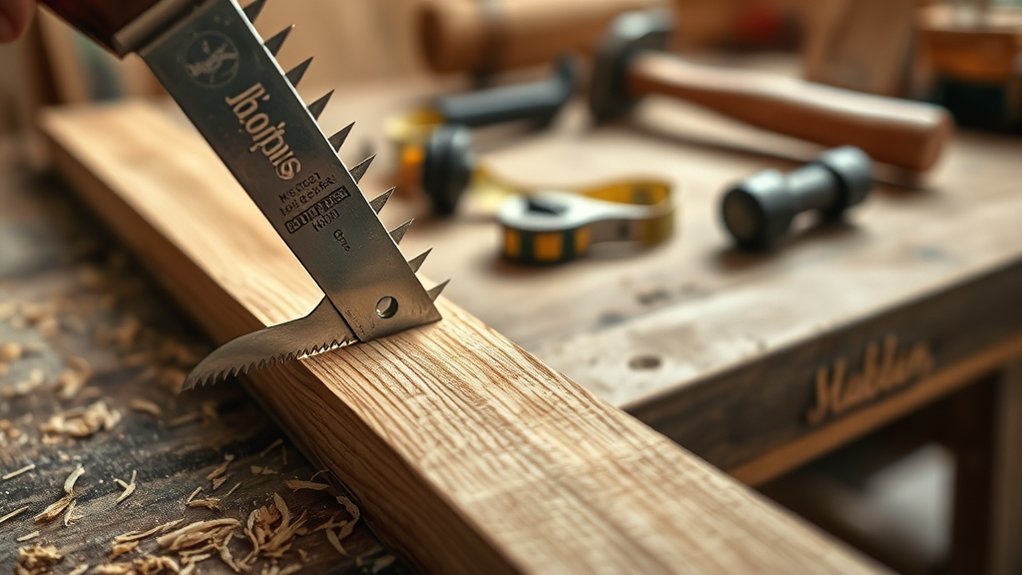
How to use a hacksaw on wood safely
You can use a hacksaw on a small wood cut if you secure the material and control the blade.
- Mark the cut line. Use a pencil, knife, or marking gauge. Mark all visible sides if the cut must be square.
- Secure the wood. Clamp it to a workbench or place it in a vise with protective blocks. Do not hold the wood in your hand while cutting.
- Choose a sharp blade. A clean blade cuts with less force. Replace it if the teeth are dull, damaged, or missing.
- Set the blade correctly. On most hacksaws, the teeth point away from the handle. Confirm the frame and blade instructions before use.
- Start with short strokes. Make a shallow groove on the waste side of the line. This keeps the blade from slipping.
- Use light pressure. Let the teeth do the work. Heavy force can bend the blade and make the cut wander.
- Keep the blade straight. Use long, steady strokes once the groove is established. Keep the frame aligned with the cut.
- Stop before the cut breaks through. Support the waste piece so it does not tear away wood fibers.
- Smooth the edge. Use sandpaper, a file, or a wood rasp to remove rough fibers.
Wear safety glasses. They protect your eyes from wood chips and from a blade that may break. Keep your other hand behind the blade path, and remove loose clothing, jewelry, and cords from the work area.
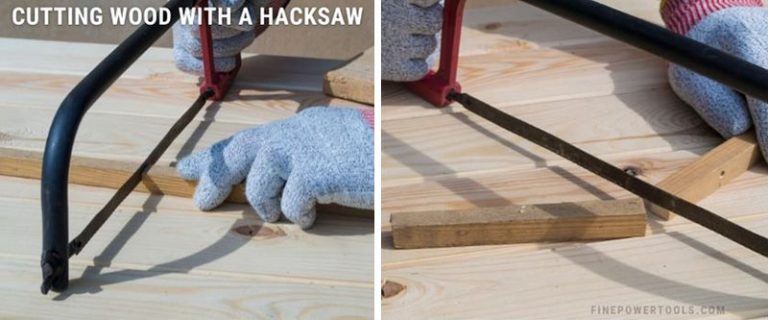
Which hacksaw blade is best for wood?
For occasional wood cutting, use a sharp blade with teeth large enough to clear chips. However, most standard hacksaw blades are still finer than a normal wood-cutting blade.
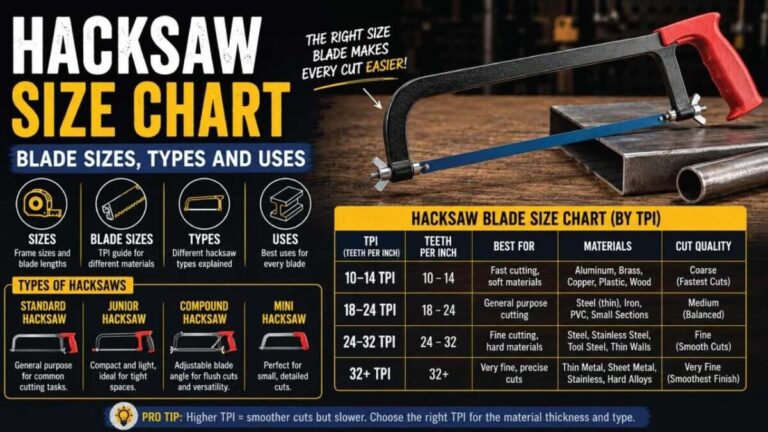
A hacksaw blade with about 14 teeth per inch may cut wood more quickly than a 24- or 32-teeth-per-inch blade. The trade-off is that very coarse teeth can catch in thin material. For thin plywood or small trim, a finer blade may give more control but may clog sooner.
| Material | Hacksaw result | Better choice |
|---|---|---|
| Thin softwood | Usable for small cuts | Hand saw or pull saw |
| Small wood dowel | Usable and controlled | Dowel saw or fine-tooth hand saw |
| Thin plywood | Possible, but may splinter | Fine-tooth wood saw or jigsaw |
| Thick board | Slow and tiring | Hand saw or circular saw |
| Hardwood | Possible, but inefficient | Sharp wood saw |
| Wood with nails | Hacksaw can cut the nail | Reciprocating saw with the right blade |
| Large sheet goods | Poor choice | Circular saw, track saw, or jigsaw |
If the wood contains a nail or screw, a hacksaw may be useful for cutting the exposed metal. Do not force the blade through hidden hardware. The blade may catch, break, or send the workpiece moving.
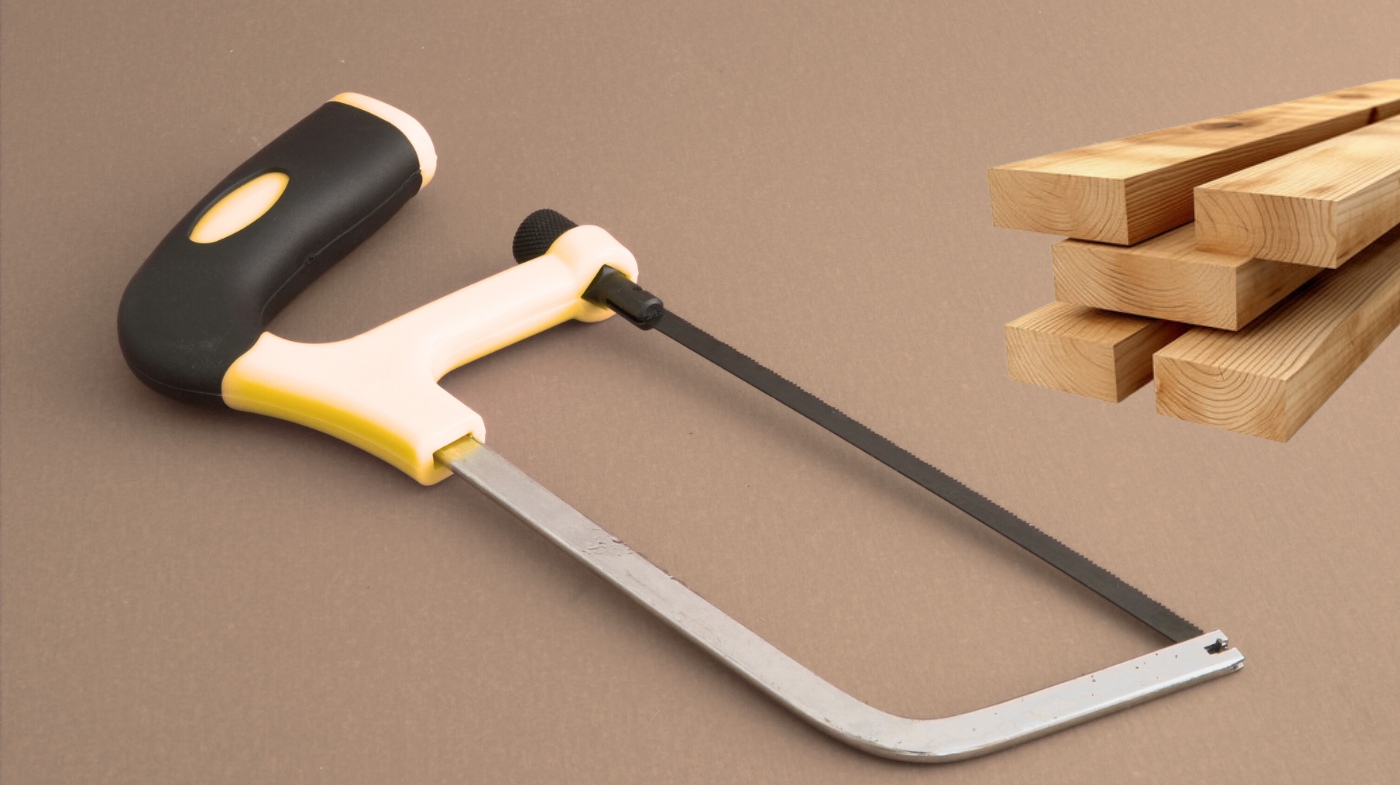
Hacksaw vs. wood saw
A wood saw is usually the better tool because its tooth shape and spacing match the way wood breaks into chips.
Hacksaw
- Fine teeth
- Narrow blade
- Good control on small cuts
- Made mainly for metal
- Slow in thick wood
- More likely to clog with sawdust
Wood hand saw
- Larger teeth
- Faster chip removal
- Better for boards and lumber
- Available for crosscuts and rip cuts
- Usually faster and more efficient
Jigsaw
- Good for curves and cutouts
- Works well on plywood and boards
- Needs the correct wood blade
- Requires more setup and electrical safety
Reciprocating saw
- Useful for rough demolition cuts
- Can cut wood with the correct blade
- Less precise than a hand saw
- Requires firm control because the blade moves quickly
The deciding factor is the cut. For one short cut in thin wood, a hacksaw is acceptable. For a straight cut in a board, use a wood saw. For repeated or thick cuts, choose a powered tool or a larger hand saw.
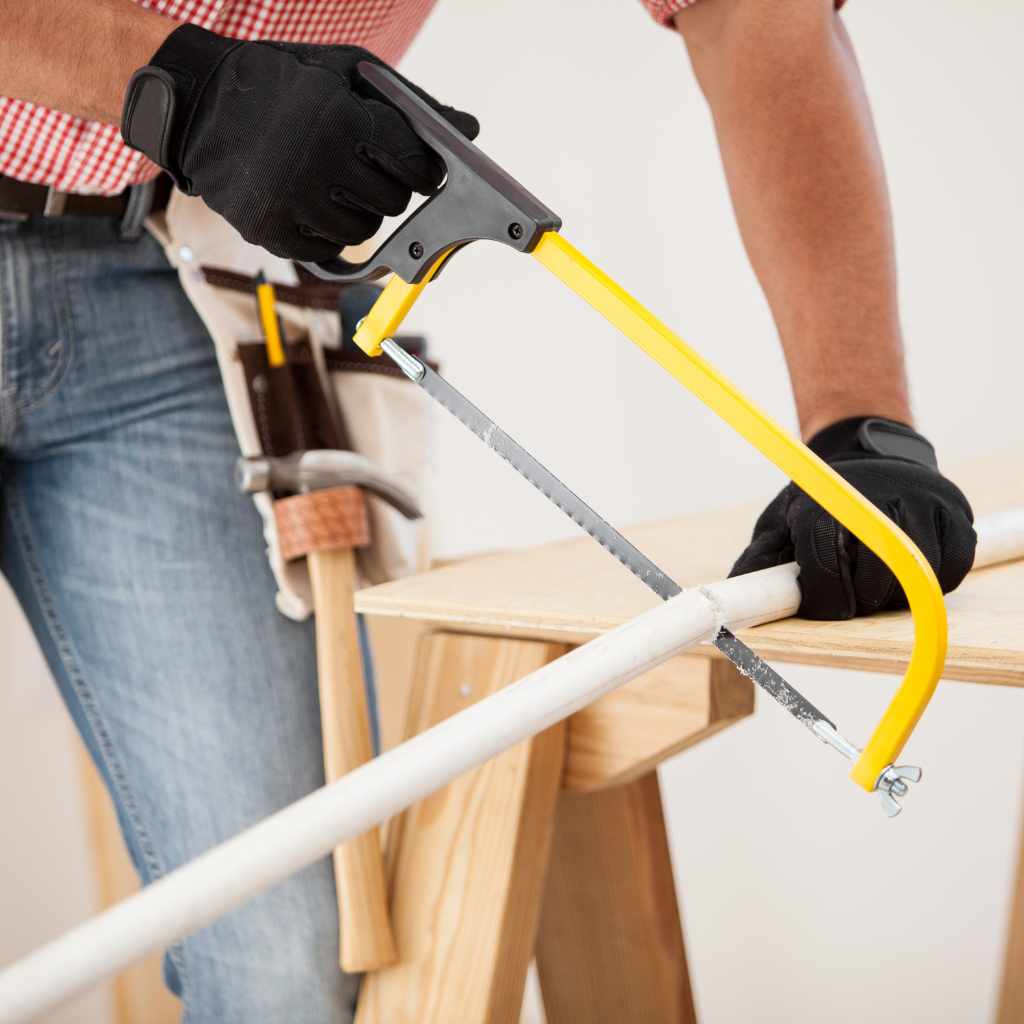
Can a hacksaw cut plywood?
Yes, a hacksaw can cut thin plywood, but it may leave a rough edge and cause splintering. Plywood has thin layers with grain directions that change from one layer to the next. The small hacksaw teeth can tear the surface veneer instead of making a clean cut.
To improve the result:
- Apply masking tape over the cut line.
- Support the plywood close to the cut.
- Use light pressure.
- Cut with the finished face positioned to reduce visible splintering.
- Sand the edge after cutting.
- Test the method on scrap plywood first.
For a long plywood cut, a fine-tooth hand saw or jigsaw is usually more practical.

Common mistakes to avoid
Pressing too hard
More force does not always mean faster cutting. It can bend the blade, damage the teeth, or cause the cut to leave the marked line.
Using a dull blade
A dull blade creates heat and friction. It may polish the wood rather than remove it. Replace the blade when it stops producing chips with normal pressure.
Cutting without support
A loose board can shake, pinch the blade, or pull away at the end of the cut. Clamp the wood before starting.
Using the wrong blade for mixed materials
A wood blade is not designed to cut metal hardware. A hacksaw blade can cut a nail, but repeated contact with nails or screws can wear it quickly. For demolition work, use a reciprocating saw blade rated for wood with embedded nails.
Ignoring the end of the cut
When the blade is almost through, the remaining wood can split. Hold the waste side in place, reduce pressure, and finish slowly.
Reusing a blade after damage
Do not keep using a blade that is cracked, bent, or missing teeth. A damaged blade can break during a stroke.

When should you not use a hacksaw on wood?
Do not use a hacksaw when the cut is long, deep, highly visible, or part of a structural repair. A hacksaw is also a poor choice when you need a precise angle or a smooth finished edge.
Stop cutting if:
- The blade binds repeatedly.
- The frame bends.
- The wood shifts in the clamp.
- The blade becomes hot.
- The teeth stop removing chips.
- The cut begins to travel away from the mark.
- You discover hidden wiring, plumbing, or fasteners.
If the wood is part of a load-bearing wall, roof, stair, deck, or other structural system, do not cut it based only on general tool advice. A cut can affect the safety of the structure. Ask a qualified contractor or structural professional before modifying it.

Frequently asked questions
Can you use a hacksaw to cut a wooden dowel?
Yes. A hacksaw can cut a small dowel, especially when the dowel is clamped firmly. Wrap masking tape around the cut line to help reduce splintering, then sand the end smooth.
Can a hacksaw cut a 2×4?
It can, but it will be slow and tiring. A standard hand saw is better for a 2×4 because its larger teeth remove wood faster and its longer blade makes a more efficient stroke.
Can you cut branches with a hacksaw?
You can cut a small branch with one, but a pruning saw is safer and faster. A hacksaw is not designed for large, uneven branches, and its frame may limit the depth of the cut.
Can you use a hacksaw on MDF?
Yes, but MDF creates fine dust that can clog the blade. Wear eye protection, work in a well-ventilated area, and use dust control. A fine-tooth hand saw or jigsaw blade made for wood-based panels will usually work better.
Can you sharpen a hacksaw blade for cutting wood?
Most hacksaw blades are inexpensive, hardened, and intended to be replaced rather than sharpened. Install a new blade when the teeth are dull or damaged.
Final answer
A hacksaw can cut wood, especially thin boards, dowels, trim, and plywood. It is safe to use when the wood is clamped, the blade is sharp, and you use light, steady strokes.
For most wood projects, choose a saw made for wood. Use a hacksaw when convenience, access, or a small cut matters more than speed and finish quality.
Recent Tool Guides
 Hammer
How To Hammer Flowers Onto Paper: Easy Guide
Learn how to hammer flowers onto paper with simple steps, helpful tips, and beautiful results for...
Read Guide → Wrench
How To Use A Hex Wrench: Easy Step-By-Step Guide
Learn how to use a hex wrench correctly with simple steps, helpful tips, and common mistakes...
Read Guide → Hacksaw
How To Cut Curtain Pole With Hacksaw: Easy Guide
Learn how to cut curtain pole with hacksaw safely and neatly. Follow simple steps for accurate...
Read Guide → Wrench
How To Use A Husky Torque Wrench: Easy Guide
Learn how to use a Husky torque wrench correctly with simple steps, torque settings, and safety...
Read Guide → Hammer
How To Hold A Hammer: Safe Grip Guide
Learn how to hold a hammer with the right grip, stance, and technique for safer, more...
Read Guide → Hacksaw
How To Cut Flexible Metal Conduit With Hacksaw: Easy Guide
Learn how to cut flexible metal conduit with hacksaw safely and cleanly. Follow simple steps for...
Read Guide →