Can A Hammer Drill Be Used As An Impact Wrench: What To Know
Introduction
For a homeowner or mechanic in the United States, the short answer is usually no. A hammer drill may turn a socket with the right adapter, but it is not designed to deliver the same type of force as an impact wrench.
A hammer drill makes rapid forward-and-back blows to help a bit drill into brick, block, and concrete. An impact wrench makes strong rotational blows to loosen or tighten nuts and bolts. The two tools may look similar, but their internal actions, drives, and safe uses are different.
You might use a hammer drill for a light fastening job in an emergency. However, it is a poor substitute for an impact wrench for automotive lug nuts, rusted bolts, suspension parts, or other high-torque work.

The Short Answer: A Hammer Drill Is Not an Impact Wrench
A hammer drill should not replace an impact wrench for high-torque fastening. The main reason is that a hammer drill’s hammer action works along the length of the bit, while an impact wrench’s hammer action works around the drive shaft.
Here is the basic difference:
| Tool | Main impact direction | Common drive | Designed for |
|---|---|---|---|
| Hammer drill | Forward and backward | Chuck or SDS holder | Drilling masonry |
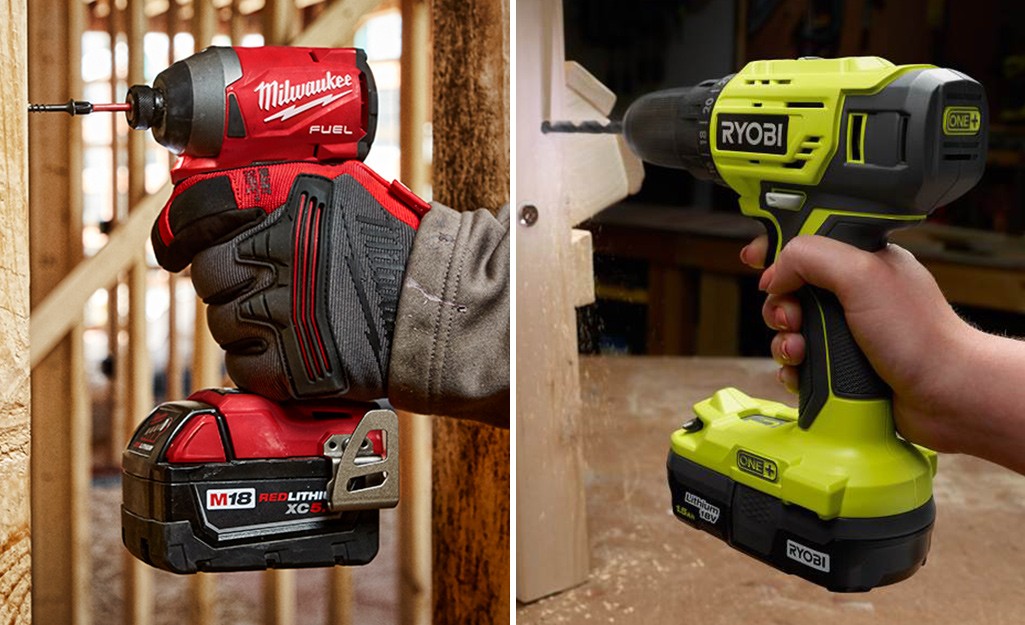
| Impact driver | Rotational | 1/4-inch hex chuck | Driving screws and small bolts |
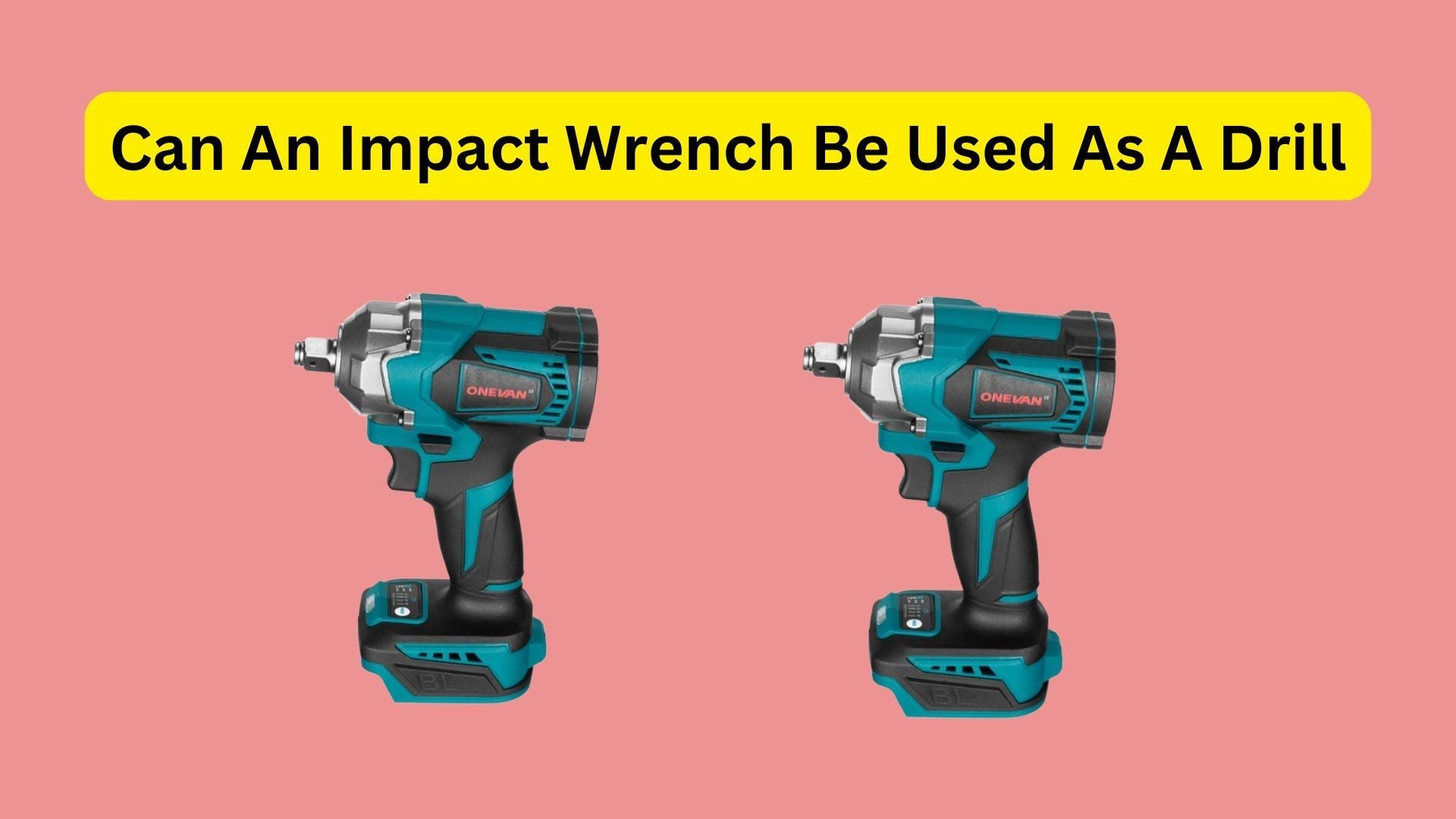
| Impact wrench | Rotational | 1/2-inch, 3/8-inch, or 3/4-inch square drive | Nuts, bolts, and automotive work |
| Drill/driver | No impact in normal mode | Keyless or keyed chuck | Drilling and light fastening |
A hammer drill can spin a socket adapter if its chuck accepts the adapter. That does not turn the tool into an impact wrench. The drill may lack the torque, impact pattern, socket retention, and durability needed for the job.
The safest rule is simple:
- Use a hammer drill for masonry holes.
- Use a drill/driver for normal drilling and light screws.
- Use an impact driver for many screws and small fasteners.
- Use an impact wrench for high-torque nuts and bolts.
How a Hammer Drill Differs From an Impact Wrench
The biggest difference is where each tool applies its impact force.
Hammer drill action
A hammer drill uses two toothed discs or a similar mechanism to create a rapid axial vibration. The bit moves slightly forward and backward as it rotates. This action helps chip masonry as the bit cuts.
That force is useful for concrete and brick. It is not the same as the twisting force needed to break a stuck nut loose.
Most hammer drills have at least two modes:
- Hammer-drill mode for masonry.
- Drill mode for wood, metal, and other materials.
Some models also have a clutch for light screwdriving. The owner’s manual should identify the exact modes and limits for that model.
Impact wrench action
An impact wrench uses a rotating hammer-and-anvil mechanism. The hammer stores energy as the motor spins, then strikes the anvil in short rotational blows.
Those blows create high peak torque while reducing the amount of reaction force sent back through the user’s hands. The tool transfers that force through a square drive and an impact-rated socket.
This design helps with:
- Removing wheel lug nuts.
- Loosening rusted fasteners.
- Installing large bolts.
- Working on vehicle frames and suspension parts.
- Driving fasteners that need more torque than a drill can supply.
The impact mechanism is built for twisting. A hammer drill’s mechanism is built mainly for striking forward.

Can You Put a Socket on a Hammer Drill?
You can attach a socket to some hammer drills, but that does not make the setup a proper impact wrench.
A common setup uses:
- A chuck-held adapter.
- A socket-compatible drive.
- A regular or impact-rated socket.
This setup may work for very light fastening. It can sometimes turn small nuts or bolts when the fastener is already loose. It is not a good choice for stubborn or safety-critical fasteners.
Problems with a socket adapter
A chuck and adapter create several weak points:
- The chuck may loosen when the tool reverses.
- A round-shank adapter may spin inside the chuck.
- The adapter may bend or break under high torque.
- A standard socket may crack under impact force.
- The drill may stall before the fastener moves.
- The chuck may suffer damage from repeated shock loads.
If you must use an adapter for a light task, turn off the hammer mode. Use the lowest useful speed, keep the tool straight, and stop if the adapter slips or the chuck loosens.
Never use a standard chrome socket with repeated impact blows. Impact tools require sockets marked for impact use. These sockets are usually darker and have thicker walls, but color alone is not proof of rating. Check the product marking or package.

When a Hammer Drill May Work
A hammer drill may work for light-duty fastening when all of the following conditions apply:
- The hammer mode is switched off.
- The fastener is small and not seized.
- The tool has enough torque for the job.
- The adapter fits securely.
- The socket is rated for the tool’s action.
- The fastener is not part of a safety-critical system.
- You can finish the job with the correct hand tool or torque wrench.
For example, a hammer drill in standard drill mode might turn a small nut on a furniture project. It might also remove a lightly tightened screw with a suitable bit.
This does not mean it can safely perform every job that an impact wrench can perform. Tool capability depends on more than whether the socket turns. It also depends on torque, speed, heat, control, and the condition of the fastener.
When it should not be used
Do not use a hammer drill as an impact wrench for:
- Vehicle wheel lug nuts.
- Brake caliper or suspension fasteners.
- Engine or transmission bolts.
- Large structural bolts.
- Rusted or seized nuts.
- Fasteners that require a specified installation torque.
- Any job where a broken adapter could cause injury or damage.
A drill may remove a lug nut in one situation and fail completely in another. A loose lug nut and a rusted lug nut can require very different amounts of torque.

Can a Hammer Drill Remove Lug Nuts?
A hammer drill is generally a poor choice for removing lug nuts. Even if the drill has a 1/2-inch chuck and a socket adapter, it may not produce enough usable torque to break the lug nut free.
Lug nuts can be tight because of:
- The vehicle manufacturer’s specified torque.
- Corrosion.
- Over-tightening with an impact tool.
- Heat from braking.
- Dirt or damage on the wheel stud.
- Cross-threading.
A hammer drill may also spin too slowly under load or stop through its electronic protection system. Continuing to force it can overheat the motor, drain the battery, or damage the chuck and adapter.
For wheel work, use one of these methods instead:
- Break the lug nuts loose with a hand lug wrench or breaker bar.
- Use a correctly sized impact wrench with impact sockets.
- Reinstall the lug nuts by hand first.
- Finish tightening with a calibrated torque wrench set to the vehicle maker’s specification.
An impact wrench is useful for speed, but it should not be the final torque-measuring tool unless the manufacturer provides a verified torque-control system and the procedure suits the application.

Hammer Drill vs. Impact Driver vs. Impact Wrench
These tools are often confused because all three may use a motor and some form of impact action.
| Feature | Hammer drill | Impact driver | Impact wrench |
|---|---|---|---|
| Main job | Drill masonry | Drive screws and small bolts | Tighten and loosen larger nuts and bolts |
| Impact direction | Axial | Rotational | Rotational |
| Typical holder | Chuck or SDS | 1/4-inch hex | Square drive |
| Typical accessories | Masonry bits | Hex bits and adapters | Impact sockets |
| Best for lug nuts | No | Usually no | Yes |
| Clutch control | Often available | Varies by model | Varies by model |
| Masonry drilling | Yes | No, unless specially designed | No |
An impact driver is closer to an impact wrench because both use rotational impacts. Still, an impact driver is not automatically suitable for wheel or suspension work. Its 1/4-inch hex interface and lower size range can limit the amount of torque it can safely transfer.
A compact impact wrench may be the right middle ground for basic vehicle work. Choose the drive size and torque range based on the fasteners, not only on the tool’s advertised maximum number.
What to Use Instead
The best substitute depends on the task.
For small screws and light bolts
Use a drill/driver or impact driver. A drill/driver gives better control for delicate materials. An impact driver is useful when you need more driving force and less wrist reaction.
For automotive lug nuts
Use a cordless or pneumatic impact wrench with the correct drive size and impact-rated sockets. Keep a breaker bar available for stubborn nuts.
For final tightening
Use a torque wrench. Find the vehicle or equipment manufacturer’s torque specification. The correct value may be listed in the owner’s manual, service manual, or repair procedure.
Do not guess based on how tight the old fastener felt. Do not rely on the impact wrench’s sound as a torque measurement.
For concrete and masonry
Use the hammer drill. Fit it with a masonry bit of the proper size and use the mode recommended by the bit and tool maker.
For frequent drilling in concrete, a rotary hammer may work better than a standard hammer drill. A rotary hammer uses a more forceful mechanism and often accepts SDS or SDS-Plus bits. It is still not an impact wrench.

Safety Rules for Using a Hammer Drill With an Adapter
If you use a hammer drill to turn a socket for a light job, follow these limits:
- Turn off hammer mode. Axial impacts can damage the fastener, socket, chuck, or adapter.
- Use the correct adapter. Confirm that the adapter fits the chuck and socket.
- Use impact-rated accessories when impacts are present.
- Wear eye protection. Adapters and sockets can break under load.
- Keep your hands clear. Do not hold the socket or adapter while the tool runs.
- Clamp or support the work when possible.
- Use low speed first. High speed can cause loss of control.
- Stop if the chuck slips, the adapter bends, or the tool overheats.
- Do not defeat the tool’s safety controls.
- Check the fastener after installation. Use a torque wrench when a specification exists.
Disconnect the battery or unplug the tool before changing the adapter or socket. For corded tools, keep the cord away from sharp edges, heat, water, and the work area.

Common Mistakes to Avoid
Leaving hammer mode on
This is the most common mistake. Hammer mode is meant to help a bit strike masonry. It does not provide the rotational impact needed for nuts and bolts.
Using the wrong socket
Standard hand-tool sockets may break when exposed to impact force. Use sockets clearly marked for impact use when working with an impact tool.
Treating maximum torque as working torque
Manufacturers may list maximum torque under specific test conditions. Actual performance varies with battery charge, fastener condition, temperature, tool mode, socket fit, and contact time.
A tool with a high advertised number may still struggle with a corroded fastener. Maximum torque also does not tell you how accurately the tool can install a fastener.
Tightening wheel nuts with the tool alone
An impact wrench can over-tighten a lug nut. Excess torque may damage wheel studs, rotors, wheels, or threads. Always use the vehicle’s specified torque and verify it with a torque wrench.
Using the wrong adapter size
A loose adapter can wobble and damage the socket or fastener. A reduced drive can also become the weakest part of the system.

A Simple Decision Guide
Use this quick guide before starting:
| Your task | Recommended tool |
|---|---|
| Drill a hole in brick or concrete | Hammer drill |
| Drill wood or metal | Drill/driver |
| Drive long construction screws | Impact driver or drill/driver |
| Remove a small, loose nut | Drill/driver with a suitable adapter |
| Remove a vehicle lug nut | Impact wrench or breaker bar |
| Tighten a wheel lug nut to specification | Torque wrench |
| Remove a large, seized bolt | Correct-size impact wrench, breaker bar, or professional service |
| Drill large holes in concrete often | Rotary hammer |
The deciding question is not “Can the tool turn the socket?” The better question is “Can it apply the required force safely and accurately without damaging the tool, fastener, or user?”
Frequently Asked Questions
Can I use a hammer drill as an impact driver?
Not properly. A hammer drill may drive screws in standard drill mode, but its hammer action is not the same as the rotational impact action of an impact driver. For frequent screwdriving, use a drill/driver or impact driver.
Can I use a hammer drill to loosen a stuck bolt?
It may turn the bolt if the bolt is already loose, but it is not the right tool for a stuck bolt. Use a breaker bar or an impact wrench with the correct socket. Apply penetrating oil only when appropriate, and avoid heat near fuel, brake, electrical, or plastic components.
Can I use an impact wrench for drilling?
No. An impact wrench is made to turn sockets, not drill bits. A special adapter may physically connect a bit, but the tool’s speed, control, and impact action are not suited to normal drilling.
Is an SDS hammer drill the same as an impact wrench?
No. An SDS hammer drill or rotary hammer is designed for drilling and chiseling masonry. Its chuck system and hammer action are different from those of an impact wrench.
Do I still need a torque wrench if I own an impact wrench?
Yes, for fasteners with a specified torque, especially wheel lug nuts and safety-related vehicle parts. Use the impact wrench for speed, then use a torque wrench for the final check and adjustment.
Conclusion
A hammer drill can sometimes turn a socket through an adapter, but it should not be treated as an impact wrench. Its hammer mechanism strikes forward and backward, while an impact wrench delivers rotational blows designed for high-torque nuts and bolts.
For light fastening, switch the hammer mode off and use the correct accessory. For lug nuts, seized bolts, suspension work, or other high-torque jobs, use an impact wrench or a breaker bar. Finish any specified tightening task with a properly set torque wrench.
The safest next step is to check the fastener’s required torque and your tool’s manual. If the job involves a vehicle safety component or a fastener you cannot loosen without excessive force, use the tool made for that work or ask a qualified mechanic for help.
Recent Tool Guides
 Hammer
How To Hammer Flowers Onto Paper: Easy Guide
Learn how to hammer flowers onto paper with simple steps, helpful tips, and beautiful results for...
Read Guide → Wrench
How To Use A Hex Wrench: Easy Step-By-Step Guide
Learn how to use a hex wrench correctly with simple steps, helpful tips, and common mistakes...
Read Guide → Hacksaw
How To Cut Curtain Pole With Hacksaw: Easy Guide
Learn how to cut curtain pole with hacksaw safely and neatly. Follow simple steps for accurate...
Read Guide → Wrench
How To Use A Husky Torque Wrench: Easy Guide
Learn how to use a Husky torque wrench correctly with simple steps, torque settings, and safety...
Read Guide → Hammer
How To Hold A Hammer: Safe Grip Guide
Learn how to hold a hammer with the right grip, stance, and technique for safer, more...
Read Guide → Hacksaw
How To Cut Flexible Metal Conduit With Hacksaw: Easy Guide
Learn how to cut flexible metal conduit with hacksaw safely and cleanly. Follow simple steps for...
Read Guide →