What Can A Hacksaw Cut: Materials And Uses Guide
A hacksaw can cut many common materials, including steel, aluminum, copper, brass, plastic pipe, bolts, threaded rod, and conduit. It works best on small to medium pieces that you can hold firmly. The blade type, tooth count, and cutting method determine what the saw can cut cleanly.
In the United States, a hacksaw is a common hand tool for plumbing, auto repair, electrical work, metalwork, and home projects. It is slower than a reciprocating saw or angle grinder, but it gives you more control and does not need electricity.

What materials can a hacksaw cut?
A hacksaw can cut most soft and medium-hard materials when you use the correct blade. The standard metal-cutting blade is the best choice for metal, while a fine-tooth blade can also cut some plastics.
| Material | Can a hacksaw cut it? | Best blade or approach |
|---|---|---|
| Mild steel | Yes | Bi-metal blade, 18–24 TPI |
| Stainless steel | Yes, but slowly | High-quality bi-metal blade, 24–32 TPI |
| Aluminum | Yes | 18–24 TPI blade; clear chips often |
| Copper and brass | Yes | 18–24 TPI blade |
| Bolts and threaded rod | Yes | 18–24 TPI blade |
| Steel conduit | Yes | 18–24 TPI blade |
| PVC, CPVC, and ABS pipe | Yes | Fine-tooth blade, about 24–32 TPI |
| Acrylic sheet | Yes, with care | Fine-tooth blade |
| fiberglass rod or tube | Usually | Fine-tooth blade and dust control |
| Wood | Sometimes | Coarse blade, though a wood saw works better |
| Hardened steel | Usually not well | Specialized abrasive or carbide blade |
| Ceramic, glass, concrete, or stone | No | Use a tool made for that material |
The key limit is hardness and thickness. A hacksaw may cut a thin piece of hard material, but the job can become slow, rough, and unsafe as thickness increases.
Metal
Metal is the material a hacksaw is designed to cut. It can cut:
- Mild steel bar and sheet
- Stainless steel
- Aluminum
- Copper tubing
- Brass fittings
- Steel cable
- Nails and screws
- Bolts and threaded rod
- Metal conduit
- Small angle iron and flat bar
A hacksaw does not cut metal by melting it. Its teeth remove small chips as you push the blade forward. This is why the blade must stay tight and why worn teeth make the job harder.
Plastic pipe
A hacksaw can cut PVC, CPVC, and ABS pipe. It is useful when you need to make a quick cut during a plumbing repair.
The cut may have more burrs than one made with a plastic pipe cutter. After cutting, remove the burrs with a utility knife, deburring tool, or fine sandpaper. A smooth edge helps pipe and fittings join correctly.
Wood
A hacksaw can cut thin wood, dowels, or small trim in an emergency. However, it is not the right tool for most wood-cutting jobs.
The small metal-cutting teeth can clog with wood dust. The cut may also be slow and rough. Use a handsaw, backsaw, or jigsaw when wood is the main material.
Fiberglass and composite materials
A fine-tooth hacksaw blade can cut some fiberglass rods, plastic-reinforced parts, and thin composite tubes. The cut can create sharp fibers and fine dust.
Wear eye protection and avoid breathing the dust. A mask rated for fine particles may be needed, especially for repeated work. Follow the material maker’s safety instructions.

Which hacksaw blade should you use?
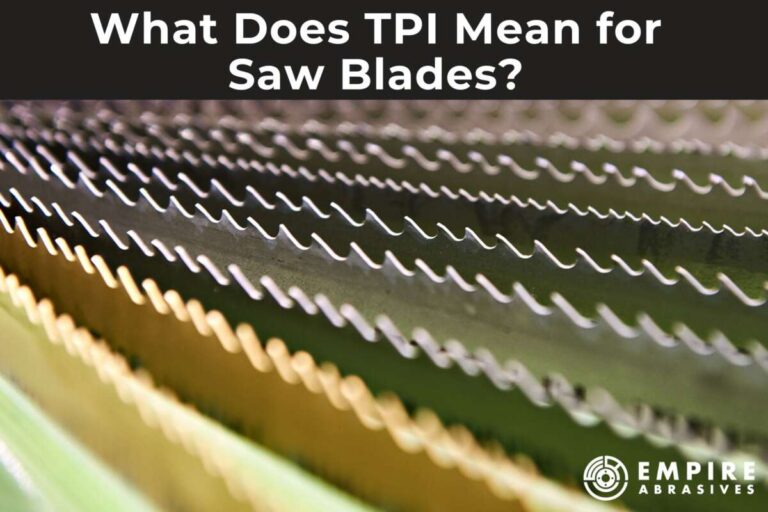
Choose a hacksaw blade by its tooth count, material, and length. Tooth count is measured in teeth per inch, or TPI.
Tooth count
Use the following guide:
- 14–18 TPI: Thick metal, aluminum, brass, and larger stock
- 18–24 TPI: General-purpose steel, bolts, conduit, and tubing
- 24–32 TPI: Thin sheet metal, thin-wall tubing, plastic pipe, and delicate work
Keep at least two or three teeth in contact with the work during the cut. If the material is thin, use more teeth per inch. This reduces the chance of catching the edge and breaking teeth.
If the material is thick, a coarse blade removes chips faster. A very fine blade can fill with chips and cut slowly.
Carbon steel blades
Carbon steel blades cost less and work for light-duty cutting. They are suitable for soft metals and occasional home repairs.
They wear faster than bi-metal blades. They may also break more easily if you twist the frame or apply side pressure.
Bi-metal blades
Bi-metal blades combine a flexible steel backing with harder high-speed steel teeth. They are a strong general choice for household and workshop use.
They usually handle steel, stainless steel, bolts, and conduit better than basic carbon steel blades. They still need the correct TPI and steady pressure.
Blade length and frame fit
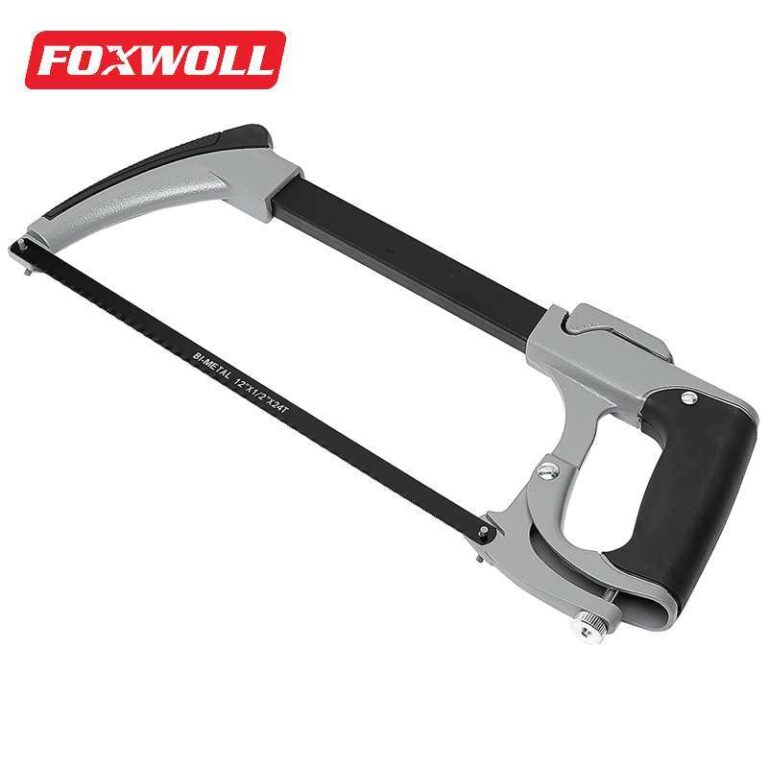
Many full-size hacksaws use 12-inch blades. Some compact models use shorter blades, such as 6 or 10 inches.
The blade must fit the frame and remain tight. A loose blade can bend, wander, or snap. Check the frame instructions before buying a replacement blade.
Install the blade with the teeth pointing forward, away from the handle. Most hacksaw cuts happen on the forward stroke. Some specialty frames may allow a different setup, so follow the tool maker’s instructions when they differ.

How to cut metal with a hacksaw
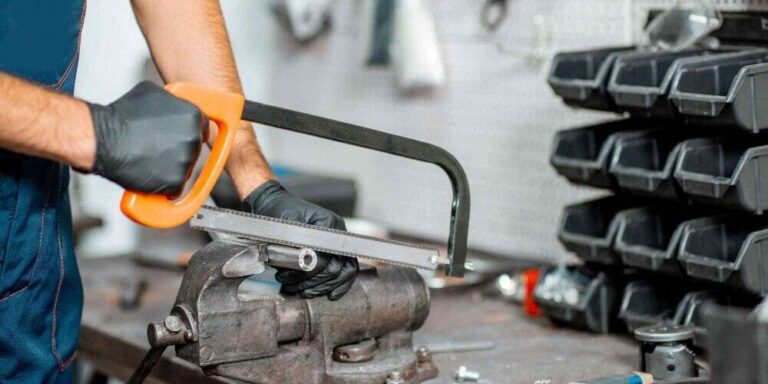
A clean hacksaw cut starts with a stable workpiece and a sharp blade. Do not try to make up for poor setup with extra force.
What you need
Gather:
- A hacksaw with a sound frame
- The correct replacement blade
- A vise or other secure clamp
- A marker or scribe
- Eye protection
- Work gloves if they do not reduce your grip or control
- A file for removing sharp edges
For workplace tasks, use eye protection that meets the applicable safety standard. In the United States, safety glasses marked to the relevant ANSI Z87.1 requirements are widely used for impact protection.
Step-by-step method
-
Mark the cut.
Draw a clear line around the pipe, rod, bolt, or bar. For a straight cut, use a square or wrap paper around round stock as a guide. -
Secure the workpiece.
Clamp it in a vise. Keep the cut line close to the jaws to reduce vibration, but leave enough room for the blade and frame. -
Choose the blade.
Use a coarse blade for thick stock and a finer blade for thin material. Make sure several teeth will contact the work. -
Tighten the blade.
The blade should feel firm and straight. Do not overtighten it, since excessive tension can damage the frame or blade. -
Start with short strokes.
Place the blade on the waste side of the line. Use light strokes to create a shallow groove. This keeps the blade from sliding across the surface. -
Use steady, full strokes.
Once the groove is established, use most of the blade length. Apply pressure on the forward stroke and ease up as you pull back. -
Keep the blade straight.
Do not twist the handle. Side pressure can bend or break the blade and can make the cut run away from the mark. -
Slow down near the end.
Support the waste piece so it does not tear away or bend the last part of the cut. -
Smooth the edge.
Use a file to remove burrs and sharp corners. For plastic pipe, also remove the inner and outer burrs.
Signs of a good cut
A good hacksaw cut is:
- Close to the marked line
- Reasonably square
- Free of major tooth marks or torn edges
- Made without a bent or damaged blade
- Safe to handle after filing
A hacksaw will not always produce a machine-quality finish. If the cut must be highly square or precise, leave a small amount of material and finish it with a file.

What affects hacksaw cutting performance?
The material alone does not determine the result. Blade choice, technique, and workpiece setup matter just as much.
Material thickness
Thin stock needs a fine blade. If the teeth are too coarse, they can catch the edge and damage the material.
Thick stock needs enough space between the teeth to carry chips away. If the blade is too fine, the gullets—the spaces between teeth—can clog.
Material hardness
Soft materials such as aluminum and copper cut easily, but their chips can stick to the teeth. A clean blade and controlled pressure help.
Stainless steel is harder and can heat up if you force the cut. Use a sharp bi-metal blade, steady strokes, and enough time. Do not press so hard that the blade bends.
Hardened steel is a special case. A standard hacksaw may skate across the surface or wear out quickly. If a file cannot scratch the material, it may be too hard for a normal hacksaw blade. Use a tool and abrasive made for hardened steel, or ask a qualified machinist for help.
Workpiece shape
Round stock can roll or move unless clamped securely. Place it so the blade meets a broad surface at the start.
For thin sheet metal, clamp the sheet between pieces of scrap wood. This reduces vibration and can help prevent the blade from grabbing the edge.
For pipe, support both sides of the cut. Unsupported pipe can flex, which makes the blade bind.
Blade tension
A loose blade can wander and produce a crooked cut. A blade that is too tight can snap under load.
Check the blade before use. Replace it if it is cracked, bent, missing teeth, or badly worn.

Can a hacksaw cut bolts, screws, and threaded rod?
Yes. A hacksaw can cut bolts, screws, threaded rod, and small pieces of all-thread.
For a clean result, thread a nut onto the bolt before cutting. After the cut, remove the nut. It can help reform or clean the thread at the end, although it will not repair badly damaged threads.
Use these steps:
- Mark the bolt at the required length.
- Clamp the bolt without crushing the threads.
- Choose an 18–24 TPI blade for most bolts.
- Cut slowly and keep the blade square.
- File the sharp end.
- Turn the nut off carefully to check the thread.
Do not hold a small bolt in your hand while cutting it. The blade can slip, and the cut end can be sharp.
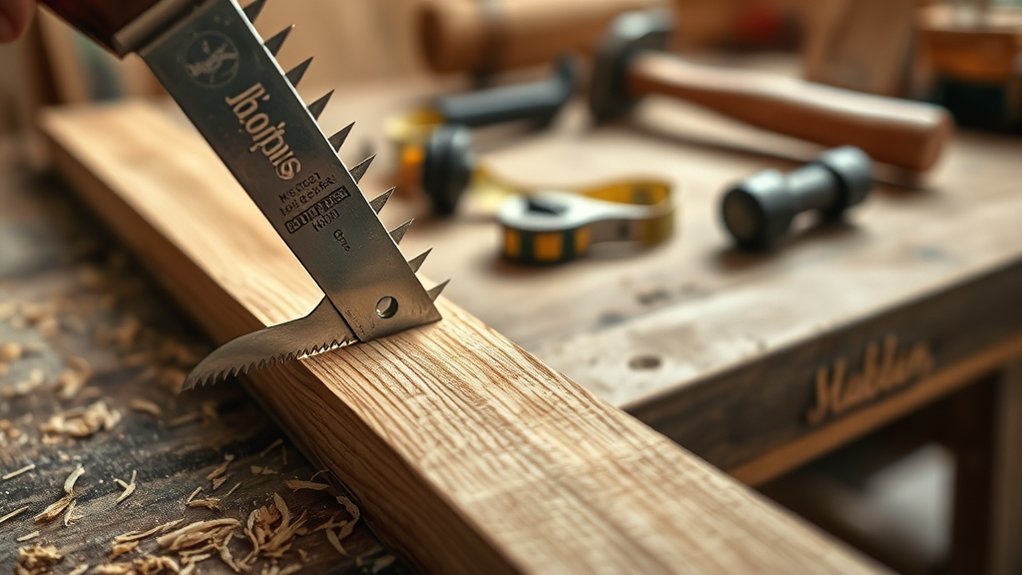
Can a hacksaw cut PVC and other plastic pipe?
Yes, but a hacksaw is not always the cleanest tool for plastic pipe. It works well for occasional cuts, large pipe, or situations where a pipe cutter is not available.
Use a fine-tooth blade and avoid pressing too hard. Excess force can crush thin-wall pipe or make the cut wander.
After cutting:
- Remove the outside burr.
- Remove the inside burr.
- Wipe away plastic shavings.
- Check that the pipe is round.
- Test the fit before applying primer or cement.
For a plumbing joint, a crooked or rough cut can leave a gap or reduce the quality of the connection. Use a ratcheting pipe cutter when the pipe size and material allow it and when a cleaner cut matters.

What a hacksaw should not cut
A standard hacksaw is not a universal saw. Do not use it as the main tool for materials that need a special cutting method.
Glass and ceramic
Glass and ceramic can chip or shatter. A hacksaw blade is not designed to cut them safely.
Concrete, brick, and stone
These materials quickly wear ordinary hacksaw teeth. Use a masonry blade, diamond tool, or another tool rated for the material.
Large structural steel
A hacksaw can technically cut some steel sections, but large beams, thick plate, and heavy pipe may require excessive force and time. Use a powered metal-cutting tool only if you understand its risks and have the right blade.
Live electrical wires
Do not use a hacksaw on energized wiring. Shut off power, verify that the circuit is de-energized, and follow applicable electrical safety procedures. If you cannot confirm that the wire is safe to cut, stop and contact a qualified electrician.
Materials with hidden hazards
Stop before cutting anything that may contain:
- Pressurized gas or liquid
- Flammable residue
- Asbestos
- Lead-based coatings
- Refrigerant
- Stored mechanical tension
- Electrical energy
A hacksaw creates friction and metal sparks in some conditions. Check what is inside a pipe, tank, vehicle part, or wall before cutting.

Hacksaw safety tips
Use a hacksaw with control, not force. Most injuries happen when the workpiece moves, the blade breaks, or the user touches a fresh cut.
- Wear safety glasses.
- Clamp the work securely.
- Keep both hands on the saw when practical.
- Keep fingers away from the blade path.
- Inspect the frame and blade before cutting.
- Replace damaged blades.
- Cut away from your body.
- Keep the blade straight.
- Do not use a pipe, cheater bar, or hammer to add force.
- File sharp edges after cutting.
- Clean up metal chips with a brush, not bare hands.
- Keep loose clothing and cords away from the work.
Gloves can help with sharp edges, but they can also reduce grip or catch on moving tools. Choose gloves that fit the job and do not replace eye protection.
If a blade breaks, stop at once. Do not reach into the work area until the broken pieces are secure and the workpiece is stable.
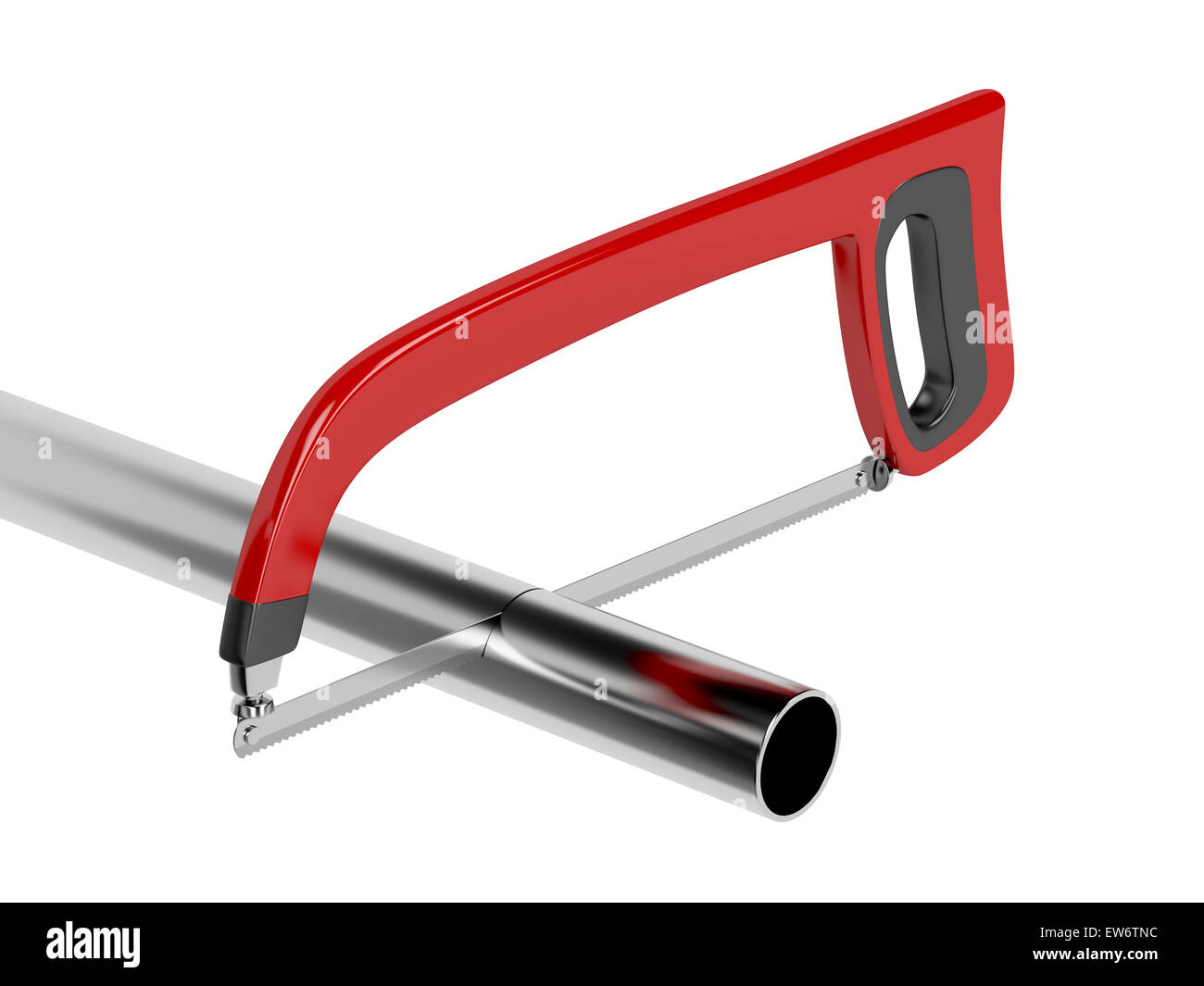
Hacksaw vs. other cutting tools
A hacksaw is often the best choice when you need control, low cost, and no power source. It is not always the fastest or cleanest option.
| Tool | Best use | Main advantage | Main limit |
|---|---|---|---|
| Hacksaw | Small metal, pipe, bolts, and repair work | Low cost and precise control | Slow on thick stock |
| Tubing cutter | Copper, plastic, or thin metal tubing | Clean, square cut | Limited by size and material |
| Reciprocating saw | Demolition and fast rough cuts | Fast and versatile | More vibration and less control |
| Angle grinder | Thick metal and fast cuts | High cutting speed | Sparks, noise, and more hazards |
| Bolt cutter | Soft bolts, chain, and some rods | Very fast on suitable stock | Can crush or deform the cut |
| Jigsaw | Thin sheet, wood, and some plastics | Controlled powered cuts | Needs the correct blade and support |
| Bandsaw | Repeated or accurate shop cuts | Smooth, consistent results | Larger, powered machine |
Choose the hacksaw when the workpiece is manageable, the cut count is low, and control matters more than speed.

Common hacksaw problems and fixes
The blade keeps breaking
Possible causes include loose blade tension, excessive side pressure, a poor-quality blade, or a blade with the wrong tooth count.
Install the blade correctly, tighten it firmly, and use straight strokes. Make sure the material is secure and that at least two or three teeth contact the work.
The cut is crooked
A crooked cut often comes from starting at an angle, twisting the frame, or allowing the workpiece to vibrate.
Start with short strokes. Keep the frame square to the material and clamp the work close to the cut line.
The blade binds
Binding can result from a pinched cut, a moving workpiece, or chips filling the teeth.
Stop cutting, secure the material again, and inspect the blade. For thick metal, switch to a coarser blade or use lighter pressure.
The cut is rough
A rough cut may be normal for a worn blade or an unsuitable TPI. Replace the blade and use a file after cutting.
For plastic, reduce pressure and use more teeth per inch. For thin sheet metal, clamp the work between scrap wood to reduce vibration.
The blade cuts slowly
Check whether the blade is dull, installed backward, or clogged with chips. Confirm that the blade suits the material thickness.
More force is rarely the best fix. A sharp blade and stable setup usually improve speed more than hard pushing.

Key takeaways
- A hacksaw is mainly a hand saw for metal.
- It can also cut PVC, CPVC, ABS, acrylic, fiberglass, bolts, screws, and threaded rod.
- Wood is possible, but a wood saw usually works better.
- Use coarse teeth for thick material and fine teeth for thin material.
- Keep several teeth in contact with the work.
- Clamp the material and keep the blade straight.
- Do not use a standard hacksaw for glass, concrete, stone, or energized wires.
- File sharp edges after every cut.
FAQs
Can a hacksaw cut stainless steel?
Yes. Use a sharp bi-metal blade with about 24–32 TPI. Stainless steel can work-harden when overheated or rubbed without cutting, so use steady strokes and avoid excessive pressure.
Can a hacksaw cut aluminum?
Yes. An 18–24 TPI blade usually works well for aluminum bar, sheet, and tubing. Clean chips from the teeth if they begin to stick.
Can I use a hacksaw to cut PVC pipe?
Yes. Use a fine-tooth blade, support the pipe, and remove the inside and outside burrs after cutting.
Can a hacksaw cut a padlock?
It may cut some exposed shackle materials, but many padlocks use hardened steel. A normal hacksaw may take a long time or fail to make useful progress. Do not cut a lock unless you own it or have permission.
How do I know when to replace a hacksaw blade?
Replace it when the teeth are dull, missing, clogged, bent, or when the blade needs unusual force to cut. A damaged blade is more likely to wander or break.
Which way should the hacksaw blade face?
For a standard hacksaw, the teeth normally face away from the handle. The saw cuts on the forward push stroke. Follow the frame maker’s instructions if the design allows another setup.
Conclusion
A hacksaw can cut far more than basic steel. With the right blade, it handles aluminum, copper, brass, bolts, conduit, plastic pipe, acrylic, and some composite materials. Its limits are mainly material hardness, thickness, and safe access.
For the best result, match the TPI to the material, secure the workpiece, use steady strokes, and finish the edge with a file. If the material is hardened, pressurized, energized, brittle, or unusually thick, choose a specialized tool or get qualified help instead of forcing the hacksaw.
Recent Tool Guides
 Hammer
How To Hammer Flowers Onto Paper: Easy Guide
Learn how to hammer flowers onto paper with simple steps, helpful tips, and beautiful results for...
Read Guide → Wrench
How To Use A Hex Wrench: Easy Step-By-Step Guide
Learn how to use a hex wrench correctly with simple steps, helpful tips, and common mistakes...
Read Guide → Hacksaw
How To Cut Curtain Pole With Hacksaw: Easy Guide
Learn how to cut curtain pole with hacksaw safely and neatly. Follow simple steps for accurate...
Read Guide → Wrench
How To Use A Husky Torque Wrench: Easy Guide
Learn how to use a Husky torque wrench correctly with simple steps, torque settings, and safety...
Read Guide → Hammer
How To Hold A Hammer: Safe Grip Guide
Learn how to hold a hammer with the right grip, stance, and technique for safer, more...
Read Guide → Hacksaw
How To Cut Flexible Metal Conduit With Hacksaw: Easy Guide
Learn how to cut flexible metal conduit with hacksaw safely and cleanly. Follow simple steps for...
Read Guide →