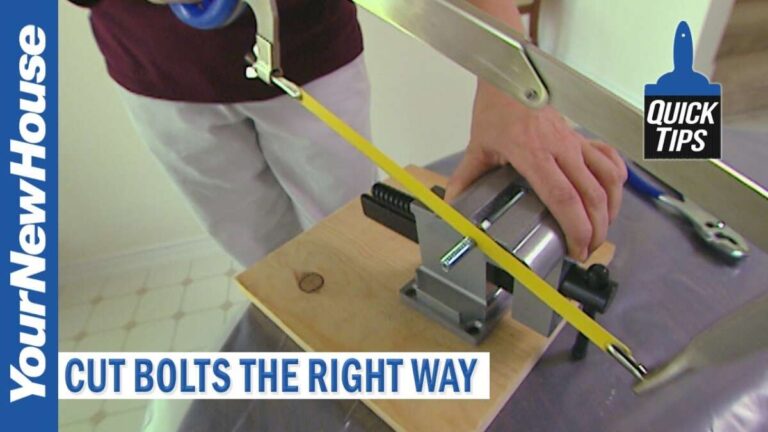
How Tight Should A Hacksaw Blade Be: Perfect Tension
A hacksaw blade should be tight enough to stay straight and secure in the frame, but not so tight that the blade, frame, or tension screw can bend or break. For most hacksaws used in U.S. home shops, the right setting is firm, straight, and free of sag—not “as tight as possible.”
With the blade installed, press it lightly from the side near the middle. It should move only a little and should not feel loose. If the blade bows, twists, rattles, or shifts in the pins, it needs more tension. If the frame bends or the tension knob becomes hard to turn, back it off.
What Proper Hacksaw Blade Tension Feels Like
Proper tension gives the blade a straight path through the cut. It also keeps the blade from twisting when you apply a light, even stroke.
A correctly tensioned blade should:
- Sit straight between the two frame pins.
- Have no visible sag.
- Stay firmly seated in both mounting holes.
- Resist light sideways pressure.
- Cut without rattling or buckling.
- Remain straight after a few test strokes.
The blade does not need to feel like a guitar string. A hacksaw blade is thin and can flex slightly even when set correctly. The goal is control, not maximum force.
Most manual hacksaw frames use a threaded tension screw, a wing nut, or a quick-release lever. Some newer frames use a lever that applies a preset range of tension. Follow the frame maker’s instructions when a specific tension setting is provided.
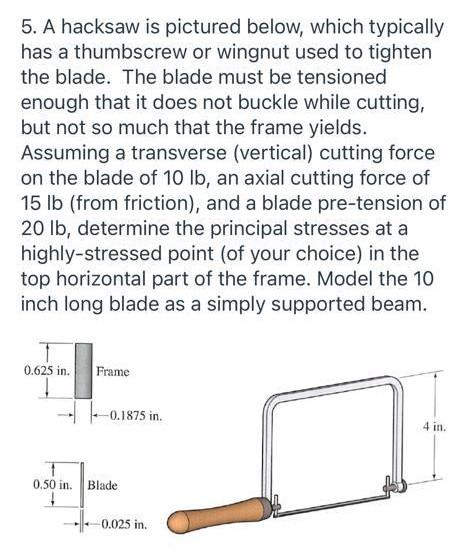
How to Tension a Hacksaw Blade Step by Step
Use this method for a standard hand hacksaw with a threaded tension adjuster.
1. Inspect the blade and frame
Before installing the blade, check the frame, pins, tension screw, and mounting holes. Do not use a blade with cracks, deep rust, missing teeth, or a bent end.
A damaged blade can fail even when the tension is correct. Replace a bent or damaged frame as well.
2. Choose the correct blade
Select a blade that matches the material and its thickness. Common hacksaw blades have tooth counts such as 14, 18, 24, and 32 teeth per inch, or TPI.
As a basic guide:
- 14 TPI: Thick steel, heavy stock, and larger cuts.
- 18 TPI: Medium-thickness steel and general metal work.
- 24 TPI: Thin-wall tubing, sheet metal, and common hardware.
- 32 TPI: Very thin metal and fine cuts.
Keep at least two or three teeth in contact with the work during the cut. A blade with teeth that are too coarse for thin stock can catch and strip teeth. A very fine blade can clog in thick material.
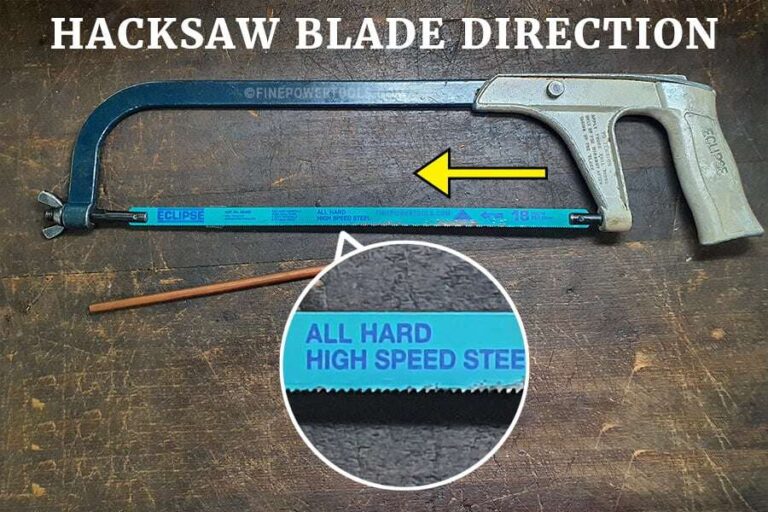
3. Install the blade in the correct direction
For most standard hacksaws, the teeth point away from the handle. The blade cuts on the forward stroke, while the return stroke applies little or no cutting force.
Some specialty frames or compact saws may use a different setup. Check the markings on the blade or the frame if you are unsure.
Wear work gloves when handling a new blade. The teeth and broken ends can cut skin.
4. Seat both blade ends
fit one end of the blade over the pin near the handle. Then fit the other end over the pin at the front of the frame.
Make sure both pins sit fully inside the blade holes. If one end is only partly seated, tightening the frame can bend the blade or pull the hole apart.
5. Tighten the adjuster by hand
Turn the tension knob or nut until the blade becomes straight. Do not use pliers unless the frame instructions specifically allow it.
Stop when the blade has no visible slack. At this point, it should feel firm but not excessively tight.
6. Check the blade alignment
Sight along the blade from the side and front. It should run in one straight line with the frame.
If the blade angles sharply or twists, loosen the tension. Re-seat the blade and check whether the pins, blade holes, or frame are bent.
7. Perform a light flex test
Press the side of the blade lightly with one finger near its center. It should move slightly and spring back into line.
Do not press hard enough to bend the blade. A light check is enough to find obvious slack. If the blade shifts sideways, rattles, or feels loose, add a small amount of tension.
8. Make a test cut
Clamp the work securely and make a few slow strokes. A properly tensioned blade should track the cut without buckling or wandering.
If the blade bends during a straight cut, stop and inspect the tension, blade condition, tooth selection, and work support.
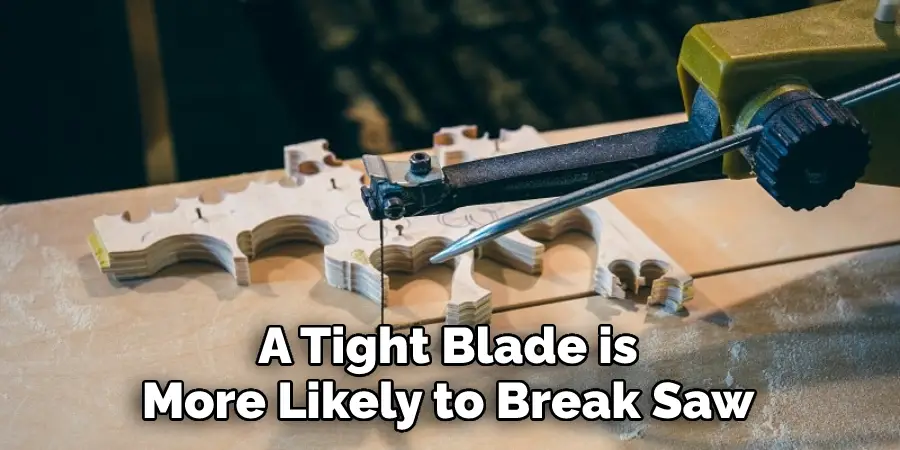
How Tight Is Too Tight?
A hacksaw blade is too tight when the added tension starts to damage the tool or blade. More tension does not always produce a better cut.
Signs of excessive tension include:
- The frame arms bend inward.
- The blade breaks while the saw is not cutting.
- The blade holes stretch or tear.
- The tension screw becomes difficult to turn.
- The frame makes a sharp popping sound.
- The blade or frame looks twisted.
- A quick-release lever will not close normally.
A broken blade can release stored energy and create a sharp flying fragment. Keep your face and hands away from the blade line while adjusting tension.
If the frame has a quick-release system, do not add extra force to close the lever. The mechanism may be damaged, or the blade may be the wrong length.
Do not judge tension by sound alone
Some people tap a blade and listen for a high tone. This is not a reliable measurement for a hand hacksaw. Tone changes with blade length, blade width, material, frame design, and the way the blade is mounted.
Use physical checks instead: straight alignment, secure pins, no sag, and controlled movement during a test cut.
Do not confuse blade tension with cutting pressure
Blade tension holds the blade in the frame. Cutting pressure is the force you apply to the saw.
Even a correctly tensioned blade can bend if you push too hard, twist the frame, or try to turn the saw in a narrow cut. Use light pressure on the forward stroke and let the teeth do the work.
What Changes the Correct Tension?
The best tension depends on the hacksaw frame, blade, and job. There is no single tension value that fits every manual hacksaw.
Frame type
A rigid full-size frame can usually support more tension than a light adjustable frame. A junior hacksaw, mini hacksaw, or compact frame may use a shorter and narrower blade with a different tension system.
The frame should remain straight under normal tension. If it visibly bends, reduce the tension.
Blade length
A longer blade may flex more under the same side force than a shorter blade. This does not mean you should automatically tighten it more. Use the blade length specified for the frame and rely on the frame’s adjustment range.
Blade thickness and width
Thicker blades resist bending better. Thin blades need careful handling and may feel more flexible even when installed correctly.
A wider blade can track a straight cut well, but it may not fit a narrow slot. Choose the blade for the cut rather than trying to solve a blade mismatch with extra tension.
Material and cut shape
Hard steel, stainless steel, aluminum, copper, plastic, and composite materials place different demands on a blade. A blade that binds in the cut can experience a sudden load and break.
Keep the work firmly clamped. Support thin stock close to the cut. If the saw binds, stop and correct the cut rather than tightening the blade further.
Temperature and wear
A blade may loosen slightly during use if the tension screw or frame settles. Check it after the first few strokes.
A worn blade also needs replacement, not extra tension. Dull teeth increase force, heat, binding, and the chance of blade failure.
Troubleshooting Hacksaw Blade Tension
Use the symptom first, then check the most likely cause.
| Symptom | Likely cause | What to do |
|---|---|---|
| Blade sags before cutting | Too little tension or poor seating | Loosen, re-seat both ends, and tighten gradually |
| Blade twists in the frame | Bent blade, bent pin, or uneven mounting | Replace the blade and inspect the frame |
| Blade buckles in the cut | Too little tension, too much pressure, or binding | Add a small amount of tension, reduce pressure, and clamp the work |
| Blade breaks near an end | Excess tension, damaged hole, or poor seating | Replace the blade and inspect the pins |
| Saw cuts at an angle | Blade flex, dull teeth, or poor starting technique | Use a sharp blade, lighter pressure, and a guide mark |
| Blade rattles | Loose tension or worn mounting holes | Tighten slightly or replace the damaged part |
| Teeth strip quickly | Wrong TPI, excessive pressure, or loose work | Choose a finer blade for thin stock and clamp the material |
| Frame bends | Too much tension or a damaged frame | Release tension and replace the frame if it stays bent |
If the blade still feels loose
First, make sure the blade holes are fully over the pins. Next, check that the blade length matches the frame. Some adjustable frames accept more than one length, but the blade must still fit within the adjuster’s safe range.
If the blade remains loose at the end of the adjustment range, do not force the knob. The frame may have a worn thread, a damaged pin, or the wrong blade length.
If the blade keeps breaking
Repeated breakage usually points to more than tension. Check for:
- Excessive tension.
- A bent or damaged blade.
- Blade holes that are not fully seated.
- Too much downward pressure.
- A cut that pinches the blade.
- A frame that twists during use.
- A blade with the wrong TPI for the material.
The correct fix is to remove the cause, not simply tighten the blade again.
Safe Hacksaw Use in a U.S. Home Workshop
Use eye protection whenever you cut metal. Small chips and broken teeth can leave the cut at high speed.
Clamp the work in a vise or another suitable holding tool. Do not hold a small piece in your hand while sawing. Keep your free hand away from the teeth and the line of the blade.
Use a controlled stroke with both hands on the saw when the frame allows it. Start with short strokes to create a shallow groove, then use longer strokes once the blade tracks properly.
Stop work if:
- The blade starts to buckle.
- The frame shifts.
- The work moves in the vise.
- The blade becomes hot enough to affect your grip.
- You see a crack or damaged tooth.
- The cut begins to pinch the blade.
The Occupational Safety and Health Administration guidance on hand and power tools supports basic precautions such as using tools in good condition and wearing suitable eye protection. For a particular hacksaw, the manufacturer’s instructions take priority because frame designs and tension systems differ.

Quick Decision Guide
Use the following simple test before cutting:
- Blade has visible slack: Add tension.
- Blade is straight but moves a little under light finger pressure: Usually correct.
- Blade rattles or shifts at the pins: Re-seat it and add a small amount of tension.
- Frame bends or the adjuster strains: Too tight; release tension.
- Blade bends only during the cut: Check pressure, TPI, work support, and binding.
- Blade breaks without clear cause: Reduce tension and inspect the frame, pins, and blade holes.
The best setting is the lowest tension that keeps the blade secure, straight, and stable during a normal cut.
Frequently Asked Questions
Should a hacksaw blade be tight or loose?
It should be tight enough to remove visible slack and keep the blade straight. It should not be so tight that the frame bends or the blade holes deform.
Can you over-tighten a hacksaw blade?
Yes. Excessive tension can bend the frame, damage the tension screw, stretch the blade holes, or cause the blade to break. Stop tightening when the blade is straight and stable.
Which way should hacksaw teeth face?
On most standard U.S. hacksaws, the teeth face away from the handle. The blade then cuts on the forward stroke. Always check the frame or blade instructions for specialty designs.
Why does my hacksaw blade keep bending?
The common causes are low tension, too much cutting pressure, a dull blade, an unsuitable TPI, a loose workpiece, or a cut that pinches the blade. Check each of these before increasing tension.
How often should I retighten the blade?
Check the blade after installation and again after a few strokes. If it remains secure, you do not need to keep tightening it. Replace the blade when the teeth become dull, damaged, or clogged.
Conclusion
Set a hacksaw blade so it is straight, secure, and free of sag. Use only light pressure to test it, then make a slow trial cut. If the frame bends, the blade breaks, or the cut binds, release tension and check the blade, frame, TPI, and work support.
When in doubt, choose moderate tension rather than maximum tension. A sharp blade, the right tooth count, and a firmly clamped workpiece matter just as much as the tension setting.
Recent Tool Guides
 Hammer
How To Hammer Flowers Onto Paper: Easy Guide
Learn how to hammer flowers onto paper with simple steps, helpful tips, and beautiful results for...
Read Guide → Wrench
How To Use A Hex Wrench: Easy Step-By-Step Guide
Learn how to use a hex wrench correctly with simple steps, helpful tips, and common mistakes...
Read Guide → Hacksaw
How To Cut Curtain Pole With Hacksaw: Easy Guide
Learn how to cut curtain pole with hacksaw safely and neatly. Follow simple steps for accurate...
Read Guide → Wrench
How To Use A Husky Torque Wrench: Easy Guide
Learn how to use a Husky torque wrench correctly with simple steps, torque settings, and safety...
Read Guide → Hammer
How To Hold A Hammer: Safe Grip Guide
Learn how to hold a hammer with the right grip, stance, and technique for safer, more...
Read Guide → Hacksaw
How To Cut Flexible Metal Conduit With Hacksaw: Easy Guide
Learn how to cut flexible metal conduit with hacksaw safely and cleanly. Follow simple steps for...
Read Guide →