Are High Tension Hacksaw Worth It: Honest Buying Guide
Introduction
For most people in the United States, a high-tension hacksaw is worth the extra cost if they cut steel, stainless steel, conduit, threaded rod, or other hard stock on a regular basis. Its stronger frame holds the blade tighter, so the blade bends less and cuts with better control.
For light home use, the answer is less clear. A basic hacksaw can handle a few cuts each year. A high-tension model becomes more useful when you need straighter cuts, faster work, better comfort, or fewer broken blades.
The short answer is simple:
Buy a high-tension hacksaw if you use a hacksaw often or need clean, controlled cuts. Keep a standard hacksaw if you only make occasional light cuts.
What Is a High-Tension Hacksaw?
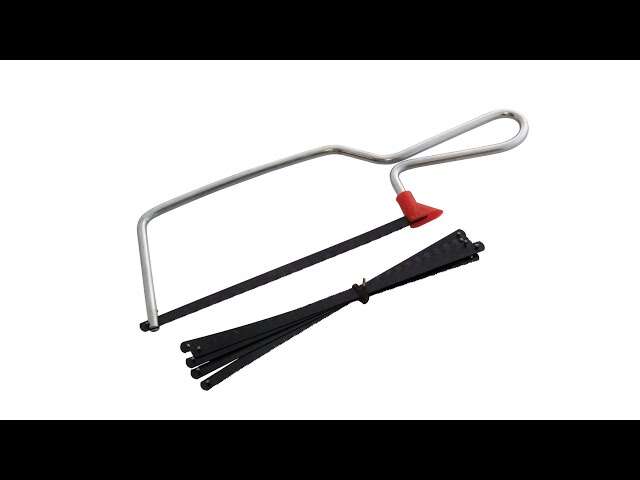
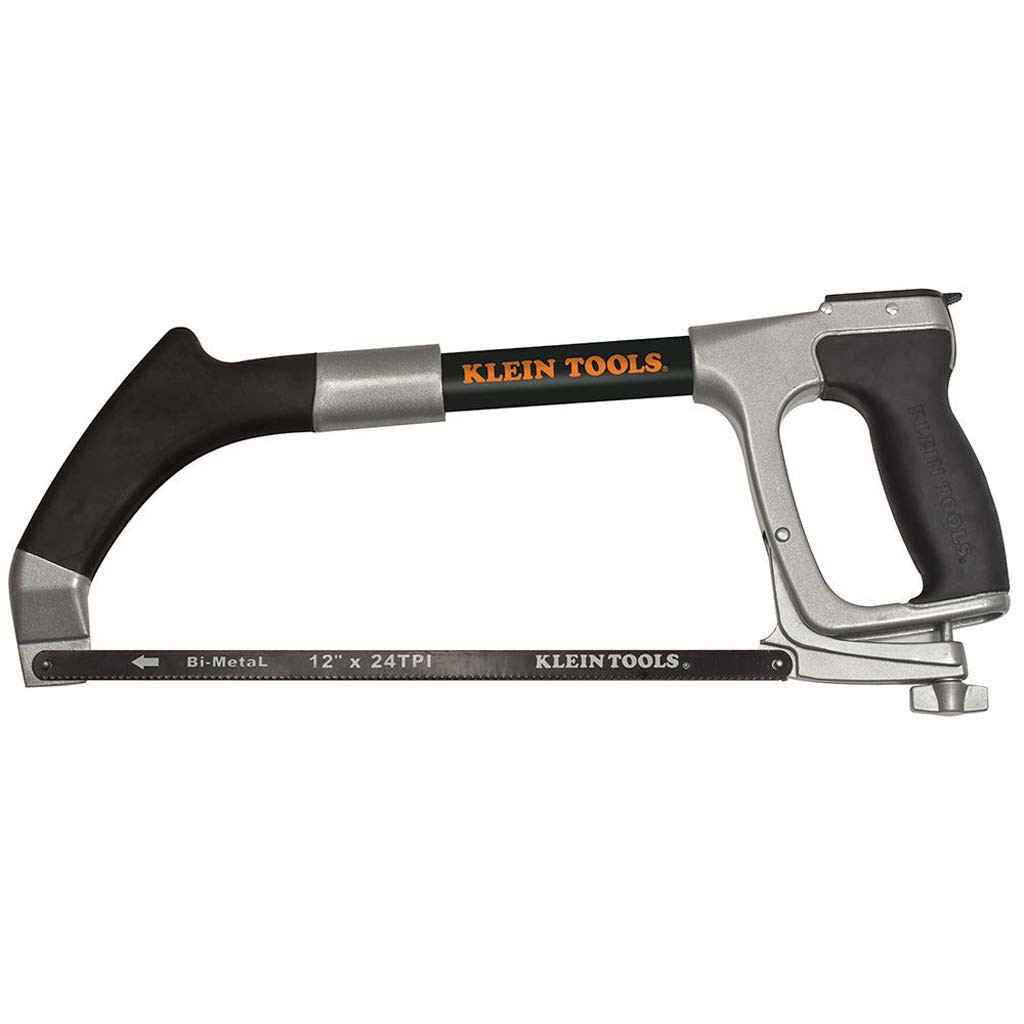
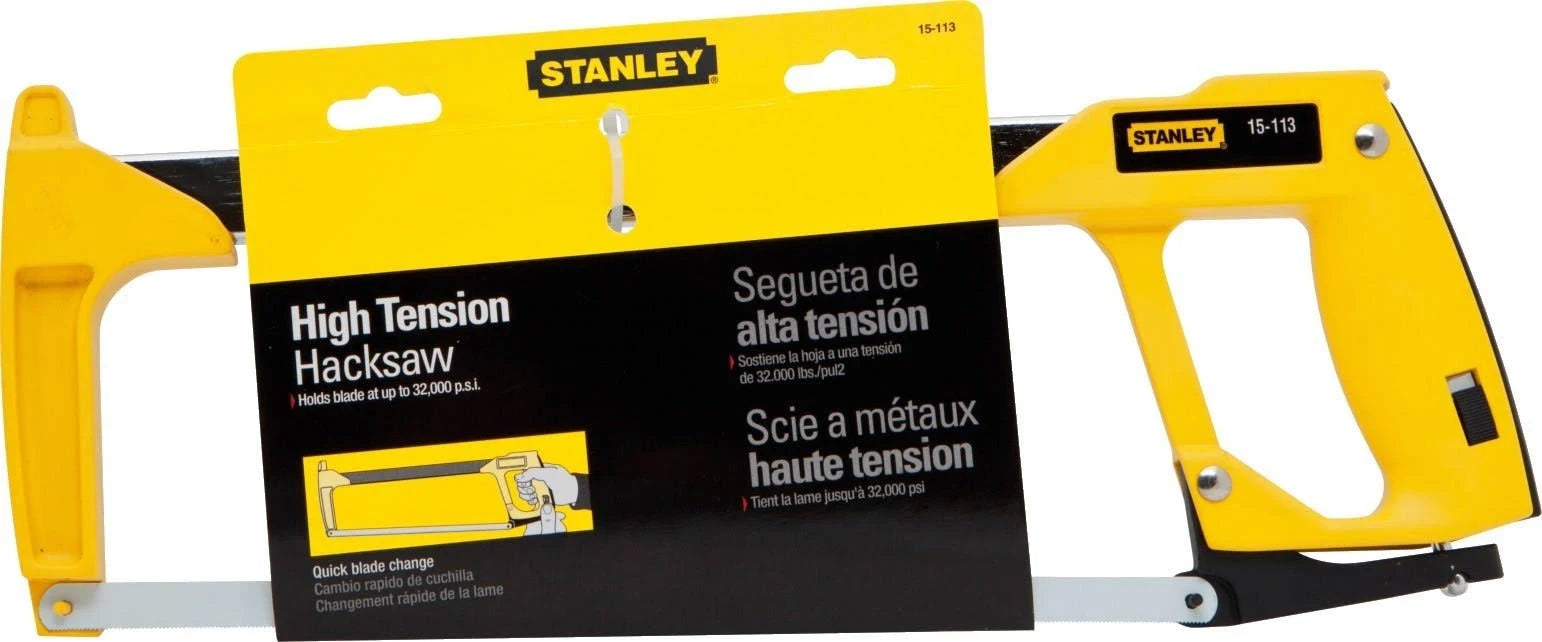
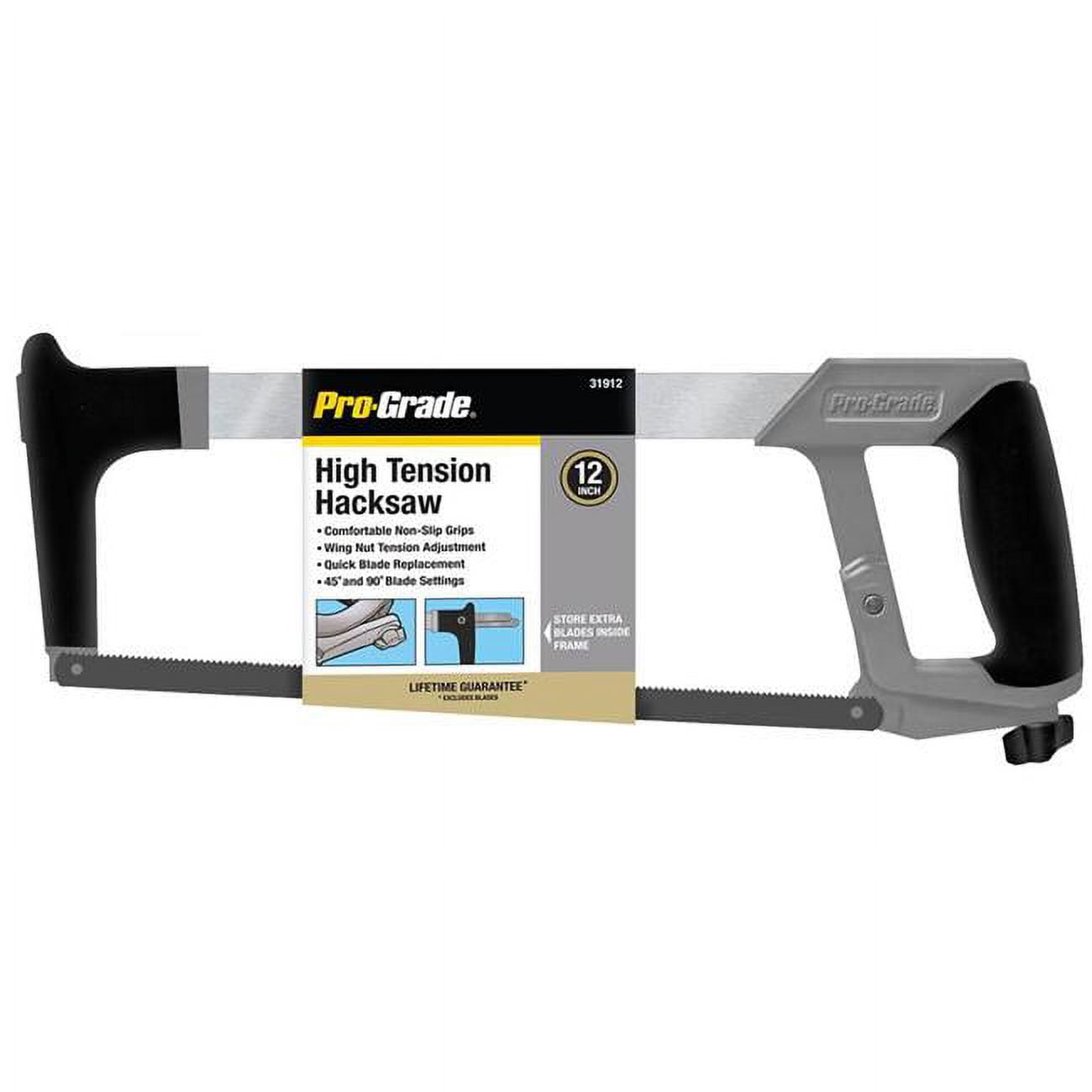
A high-tension hacksaw is a hand saw with a rigid frame and a tension system that pulls the blade tight. The tension may come from a threaded handle, a lever, a cam, or another built-in adjustment system.
A standard hacksaw also tightens its blade. The difference is the amount of tension the frame can hold without twisting, bending, or flexing.
The main parts are:
- Frame: Holds the blade and supports the cut.
- Blade: Uses small teeth to remove metal.
- Tension adjuster: Tightens the blade.
- Front and rear pins: Hold the blade in place.
- Handle: Gives your hand control and leverage.
- Blade guide area: Helps keep the blade aligned during the cut.
High tension does not make the teeth sharper. It does not turn a hand tool into a power saw. Its main job is to keep the blade straight and stable.
That difference matters. A tight blade can help you start a cut with less wandering. It can also reduce side-to-side movement as you push and pull the saw.
Are High-Tension Hacksaws Worth It?
High-tension hacksaws are worth it when control, cut quality, and repeated use matter more than the lowest purchase price.
They offer the most value for:
- Plumbers and pipefitters.
- Electricians cutting metal conduit.
- HVAC workers.
- Mechanics.
- Metal fabricators.
- Maintenance staff.
- DIY users who often work with steel.
- Anyone cutting thick or hard metal by hand.
A high-tension frame may not save time on every cut. The blade type, tooth count, material, and user technique often have a larger effect on cutting speed. Still, a rigid frame helps you apply force in line with the blade instead of wasting motion on flex.
Main benefits
Better blade control: A tight blade is less likely to bow or twist.
Straighter cuts: The frame gives the blade more support, especially when the workpiece is wide or thick.
Less blade chatter: A rigid frame can reduce vibration during a steady cut.
Improved comfort: Less blade movement can make the cut feel smoother. You may also need less effort to keep the saw on track.
Longer blade life in some tasks: A blade that stays aligned is less likely to bend or buckle. This does not guarantee longer life, since poor tooth choice and excess force can still damage it.
More useful adjustment: Many better frames accept different blade positions. This helps with flush cuts, tight spaces, and awkward work.
Main drawbacks
Higher price: A stronger frame and better tension system cost more.
More weight: A rigid metal frame may feel heavy during long overhead work.
No substitute for the right blade: A high-tension frame with the wrong TPI can cut poorly.
Limited access: A hacksaw still needs room for a full stroke. A compact saw, reciprocating saw, or rotary tool may work better in tight spaces.
Possible over-tensioning: Too much tension can damage the blade, the frame, or the blade pins. Follow the tool maker’s instructions.
The best way to view the upgrade is this: a high-tension hacksaw improves the platform around the blade. It does not remove the basic limits of hand cutting.
High-Tension vs. Standard Hacksaw
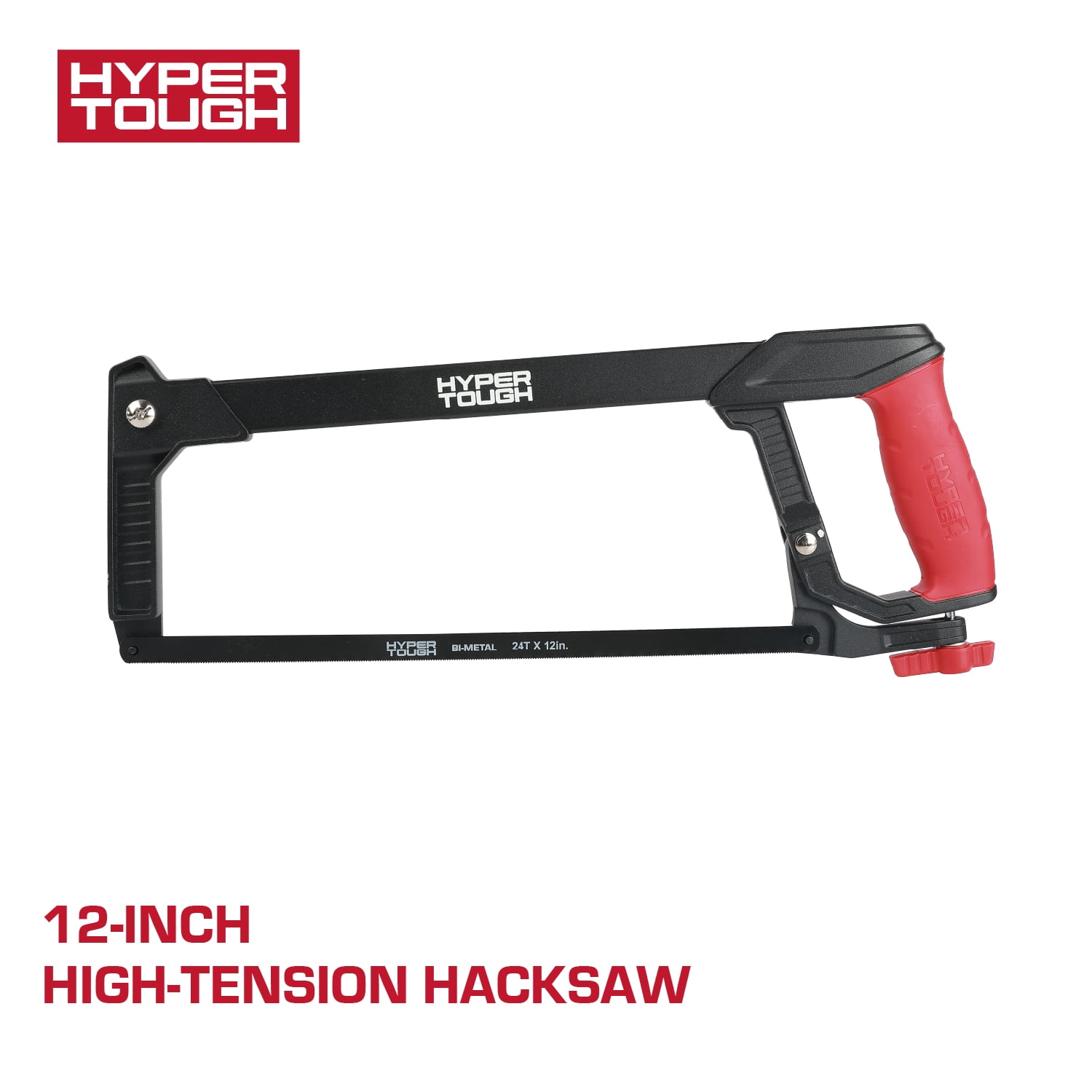
The right choice depends on how often you cut, what you cut, and how much control you need.
| Feature | Standard hacksaw | High-tension hacksaw |
|---|---|---|
| Purchase cost | Usually lower | Usually higher |
| Frame stiffness | Basic to moderate | Moderate to high |
| Blade control | Good for light work | Better for long or hard cuts |
| Cut accuracy | Depends more on technique | Easier to maintain |
| Weight | Often lighter | Often heavier |
| Blade adjustment | May be limited | Often more flexible |
| Best use | Occasional home repairs | Frequent or demanding work |
| Value | Best for low use | Best for repeated use |
A standard hacksaw may be enough for cutting a small bolt, plastic pipe, thin aluminum, or light-gauge steel. A high-tension frame makes more sense when you cut thick steel, stainless steel, conduit, or several pieces in one session.
A simple cost-per-use test
Consider a hypothetical example:
- Standard frame: $15
- High-tension frame: $35
- Extra cost: $20
If you use the saw twice a year, the upgrade may not matter. If you use it twice a month for five years, the high-tension frame may provide better value through improved control and comfort.
This is not a promise that the more expensive tool will last longer. It is a way to compare the tool with your actual use.
Ask yourself:
- How many metal cuts will I make in the next year?
- Do I need clean, straight cuts?
- Do I work with hard or thick metal?
- Does my current hacksaw bend or shake?
- Do I often break blades?
- Will I use the saw in a job where time and comfort matter?
If you answer “yes” to several of these questions, a high-tension hacksaw is likely worth it.

When a Standard Hacksaw Is the Better Buy
A standard hacksaw is often the better choice for occasional household work.
It can handle tasks such as:
- Cutting a loose bolt.
- Trimming a threaded rod.
- Cutting thin-wall conduit.
- Removing a small section of pipe.
- Making a few cuts in aluminum.
- Cutting plastic with a suitable fine blade.
A basic frame also has some practical advantages. It may weigh less, cost less, and be easier to replace. For a tool that spends most of its life in a garage drawer, that can be enough.
The key is to match the frame to the work. Do not choose a standard hacksaw for repeated cuts through thick steel simply because it costs less. A low-cost tool can become expensive if it causes bent blades, poor cuts, hand fatigue, or repeated rework.
What Makes a High-Tension Hacksaw Good?
A high-tension label alone does not prove that a hacksaw is well made. Look at the frame, tension system, grip, blade support, and replacement parts.
Rigid frame
A good frame should resist twisting when you press down. Tubular steel frames and strong cast frames often provide more stiffness than thin stamped frames, but the design and build quality still matter.
Hold the frame by the handle and inspect the blade path. The blade should sit straight between the mounting points. The frame should not visibly flex under normal hand pressure.
Reliable tension adjustment
The adjuster should let you tighten the blade in small steps. It should also hold that setting during use.
A lever-based system can be quick. A threaded system can offer fine control. Neither design is automatically better. The important point is that the mechanism should be easy to use and should not slip.
Comfortable handle
A rigid frame cannot make up for a poor grip. Look for a handle that supports your palm and gives your fingers a secure hold.
A smooth metal grip may become uncomfortable during long cuts. A padded grip can reduce pressure points, but padding should not make the handle hard to control with gloves.
Useful blade positions
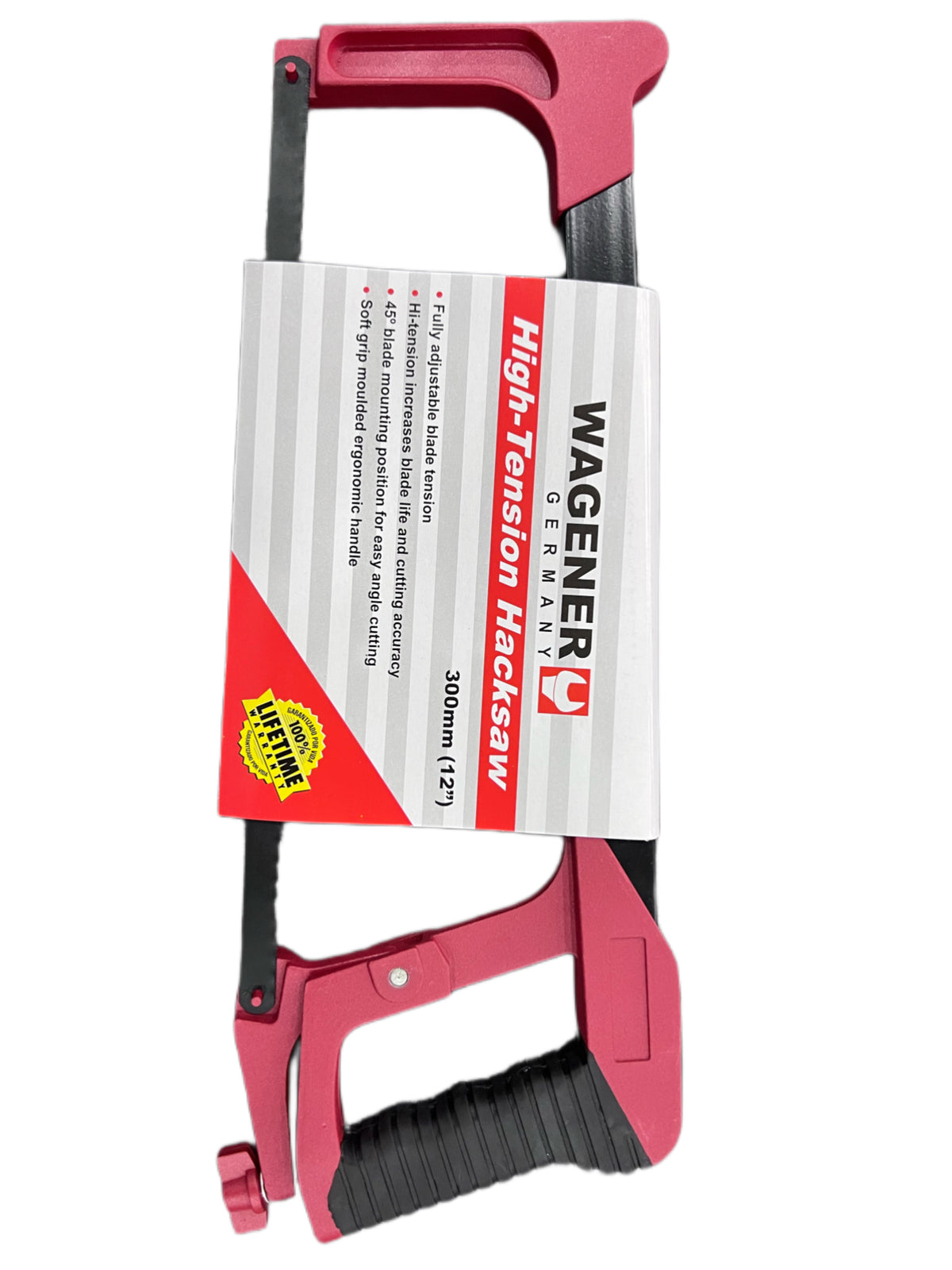
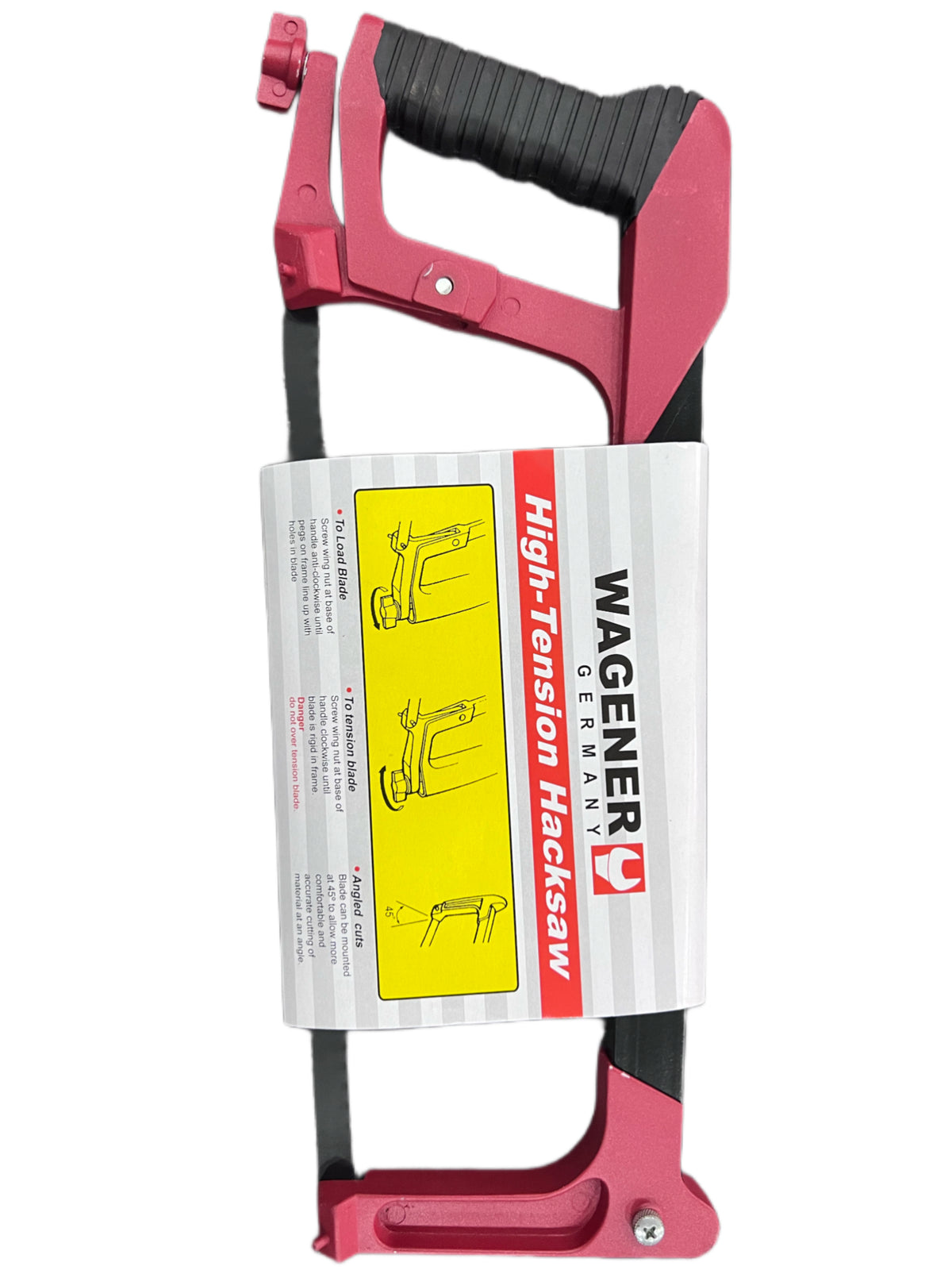
Some frames let you mount the blade with the teeth facing down or sideways. This can help with flush cuts and restricted access.
Check the manual before changing the blade position. The frame must still support the blade correctly, and the handle must remain safe to use.
Common blade size
Many full-size hacksaws use blades about 12 inches long. In the United States, replacement blades are commonly sold by length, TPI, material, and tooth design.
A frame that accepts common blades is easier and less costly to maintain. Check the manufacturer’s listed blade size before buying.
The Blade Matters More Than Many Buyers Expect
The blade often has more effect on cutting performance than the frame.
High-tension hacksaws commonly use blades made from:
- Carbon steel.
- High-speed steel.
- Bi-metal construction.
Bi-metal blades combine a flexible backing with harder cutting teeth. They are often chosen for demanding metal work, but the exact result depends on the blade design and material.
Choosing the right TPI
TPI means teeth per inch. It describes how many teeth fit along one inch of blade.
Use this general guide:
| Blade tooth count | Typical use |
|---|---|
| 14 to 18 TPI | Thick steel, heavy stock, aluminum |
| 18 to 24 TPI | General metal work |
| 24 to 32 TPI | Thin-wall tubing, sheet metal, small parts |
These ranges are a starting point, not a fixed rule. The workpiece should normally have several teeth engaged in the material at once. If only one or two teeth touch the work, the blade may catch, chatter, or lose teeth.
A coarse blade cuts faster in thick material because it clears chips well. A fine blade gives better support in thin material and reduces the chance of snagging.
Do not use a very fine blade on thick stock if it quickly fills with chips. Do not use a coarse blade on thin sheet if it catches and tears the edge.

How to Use a High-Tension Hacksaw Correctly
Correct setup is essential. A rigid frame can improve your cut, but poor technique can still bend the blade or damage the workpiece.
1. Select the blade
Choose the TPI and blade material for the work. Use a blade with sharp, even teeth. Replace it if the teeth are missing, rounded, or damaged.
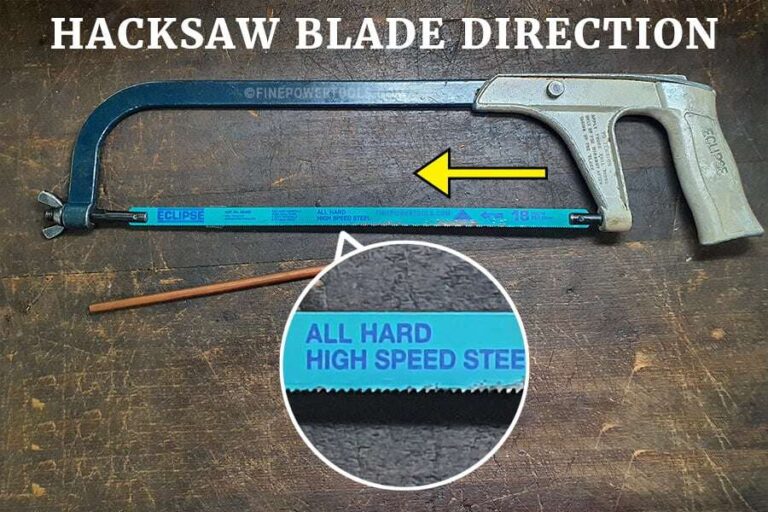
2. Install the blade correctly
Most hacksaw blades cut on the forward stroke. Install the teeth so they point away from the handle unless the tool maker states otherwise.
Make sure both blade pins sit fully in the mounting holes. A blade that is only partly engaged can slip or break.
3. Tighten the blade
Tighten the blade until it feels firm and straight. Do not keep increasing tension without a reason.
The exact safe tension depends on the frame and blade. Follow the maker’s manual. If the blade bows during a normal cut, stop and inspect the blade, frame, and tension setting.
4. Secure the workpiece
Use a vise or another suitable clamp. Keep the cut line close to the vise jaws when possible. This reduces vibration.
Do not hold a small metal part in your hand while cutting it. The blade can catch, and the part can move toward your fingers.
5. Start with light strokes
Use short, light strokes to create a narrow starting groove. Once the blade tracks well, use longer strokes that use most of the blade length.
Let the teeth do the work. Heavy pressure can cause binding, tooth damage, and crooked cuts.
6. Keep the frame aligned
Hold the frame so the blade stays square to the work. Check both directions: side to side and front to back.
A square cut usually comes from steady alignment, not from pushing harder.
7. Slow down near the end
Support the cut-off piece if it may fall. Use lighter pressure as the blade breaks through. This helps prevent torn edges and sudden blade movement.
Signs of a good cut
- The blade stays in the groove.
- The frame moves smoothly.
- Chips come off without heavy binding.
- The cut face is close to square.
- The blade does not bow or twist.
- Your arm does not need extreme force.
If the cut feels rough, stop and check the blade choice, tension, work support, and alignment before continuing.
Common Problems and Fixes
The blade keeps breaking
Possible causes include:
- Too much tension.
- Excessive downward force.
- A loose or moving workpiece.
- A blade that is too fine or too coarse.
- Twisting the frame during the stroke.
- A damaged blade pin or frame.
Start by securing the workpiece and reducing force. Then install a new blade and check that it sits correctly in both mounting points.
The cut wanders
A wandering cut may come from low tension, a dull blade, poor alignment, or starting too quickly.
Create a shallow groove with light strokes. Keep the saw square and use a blade suited to the material.
The blade chatters
Chatter often comes from vibration. Move the cut closer to the vise, clamp the work more firmly, and use a steady stroke.
A blade with the wrong TPI can also chatter. Thin stock often needs more teeth per inch.
The cut takes too long
Check the blade first. A dull blade is the most likely cause. A blade with too many teeth for thick stock can also cut slowly because the gullets fill with chips.
Use a fresh blade with a suitable tooth count. Increase stroke length before increasing pressure.
The blade slips out
Stop using the saw. Check the blade holes, mounting pins, tension mechanism, and frame. Do not continue with a blade that does not lock in place.
High-Tension Hacksaw Safety
A hacksaw is simple, but it can still cause cuts, punctures, and eye injuries.
Use these basic precautions:
- Wear safety glasses when cutting metal.
- Wear work gloves when handling sharp stock and cut edges.
- Secure the work before starting.
- Keep your free hand away from the blade path.
- Keep the blade aligned with the frame.
- Do not use a cracked or bent frame.
- Replace blades with damaged teeth.
- Deburr the cut edge before handling the part.
- Keep loose clothing and cords away from the work.
- Do not use a hacksaw as a pry bar.
Be careful with gloves near rotating tools, but a hand hacksaw does not create the same entanglement risk as powered equipment. Gloves should fit well and should not reduce your grip.
If you cut painted, coated, galvanized, or unknown metal, consider the dust and fumes created by the work. Use ventilation and follow the product’s safety information. Do not assume that a hand tool makes every coating harmless.
High-Tension Hacksaw Alternatives
A high-tension hacksaw is not always the best tool.
Compact hacksaw
A compact hacksaw works well in tight spaces. It gives up some frame support and cutting speed, but it may fit where a full-size frame cannot.
Reciprocating saw
A reciprocating saw is faster for many rough cuts. It also creates more noise, vibration, and dust. It needs power, the correct blade, and greater control around hidden pipes or wires.
Angle grinder
An angle grinder can cut metal quickly. It also creates sparks, heat, noise, and abrasive dust. Use the correct wheel, guard, eye protection, and face protection. This is not a simple replacement for a hand hacksaw.
Band saw
A portable or stationary band saw can produce clean cuts with less hand effort. It costs more and needs power, space, maintenance, and suitable blades.
Bolt cutter
A bolt cutter can remove some bolts, rods, and chain. It does not create a clean cut on every material and may not fit the work.
Choose a high-tension hacksaw when you need quiet, controlled, portable cutting and do not want to use power equipment.
Who Should Buy a High-Tension Hacksaw?
A high-tension hacksaw is a strong choice if you:
- Cut metal several times per month.
- Need straighter hand cuts.
- Work with stainless steel or thick steel.
- Cut conduit or threaded rod often.
- Want less blade movement.
- Use a vise and can make full-length strokes.
- Value a tool that feels stable under pressure.
A standard hacksaw may be enough if you:
- Make only a few cuts each year.
- Cut thin or soft materials.
- Have a tight budget.
- Need a lightweight tool.
- Already own a sound frame.
- Do not need maximum cut control.
The purchase makes less sense if your real need is fast production cutting. In that case, compare a portable band saw or reciprocating saw instead.
Key Takeaways
- High-tension hacksaws are worth it for frequent or demanding metal work.
- Their main benefit is better blade control, not sharper teeth.
- A standard hacksaw remains suitable for occasional light cuts.
- Blade TPI, material, and condition strongly affect results.
- Secure the work, use light starting strokes, and avoid excess force.
- Do not over-tension the blade.
- Consider a powered saw when you need speed or make many cuts.
FAQs
Is a high-tension hacksaw easier to use?
It can be easier to control because the blade flexes less. However, the frame may weigh more. Comfort still depends on the handle, blade, work position, and cutting technique.
Does high tension make a hacksaw cut faster?
Not by itself. High tension can reduce blade movement and wasted effort, but cutting speed depends mainly on the blade, TPI, material, pressure, and stroke length.
Can I use any hacksaw blade in a high-tension frame?
Use the blade size and mounting style listed by the frame maker. Many full-size frames accept common blades, but compact and specialty frames may use different sizes.
How tight should a hacksaw blade be?
Tighten it until the blade is straight and firm, then stop. The correct setting varies by frame and blade. Over-tightening can damage the frame, pins, or blade.
What TPI hacksaw blade should I use?
Use a coarse blade for thick material and a finer blade for thin material. For general metal work, an 18-to-24-TPI blade is a useful starting range.
Conclusion
A high-tension hacksaw is worth the money when you need steady control, cleaner cuts, and dependable performance from a hand tool. It is especially useful for repeated work on steel, stainless steel, conduit, pipe, and threaded rod.
For rare household repairs, a standard hacksaw can do the job at a lower cost. Before upgrading, check your blade choice and technique. A sharp blade with the right TPI, a firm vise, and light steady strokes often improve results as much as a new frame.
Recent Tool Guides
 Hammer
How To Hammer Flowers Onto Paper: Easy Guide
Learn how to hammer flowers onto paper with simple steps, helpful tips, and beautiful results for...
Read Guide → Wrench
How To Use A Hex Wrench: Easy Step-By-Step Guide
Learn how to use a hex wrench correctly with simple steps, helpful tips, and common mistakes...
Read Guide → Hacksaw
How To Cut Curtain Pole With Hacksaw: Easy Guide
Learn how to cut curtain pole with hacksaw safely and neatly. Follow simple steps for accurate...
Read Guide → Wrench
How To Use A Husky Torque Wrench: Easy Guide
Learn how to use a Husky torque wrench correctly with simple steps, torque settings, and safety...
Read Guide → Hammer
How To Hold A Hammer: Safe Grip Guide
Learn how to hold a hammer with the right grip, stance, and technique for safer, more...
Read Guide → Hacksaw
How To Cut Flexible Metal Conduit With Hacksaw: Easy Guide
Learn how to cut flexible metal conduit with hacksaw safely and cleanly. Follow simple steps for...
Read Guide →