How To Change Blade On Junior Hacksaw: Easy Guide
Changing a junior hacksaw blade is simple. First, release the blade tension, remove the old blade from its pins, fit the new blade with the teeth facing forward, and tighten it until the blade is firm. Wear eye protection and keep your fingers clear of the blade teeth.
Introduction
For DIY work in a U.S. garage, workshop, or job site, a junior hacksaw is a handy tool for cutting small metal parts, plastic pipe, bolts, conduit, and thin stock. Its small frame makes it easier to use in tight spaces than a full-size hacksaw.
A worn or broken blade cuts slowly and can slip. The steps below explain how to replace a junior hacksaw blade safely, how tight the new blade should be, and what to check if it will not fit.

What You Need Before You Start
You need a few basic items:
- A replacement junior hacksaw blade
- Safety glasses
- Work gloves, if they do not reduce your grip
- A clean work surface
- A small brush or rag
- Pliers, only if the old blade is broken or stuck
Most junior hacksaws use a short blade with a pin hole at each end. In the United States, many common junior hacksaw blades are about 6 inches long, but sizes can vary. Check the frame and the blade package before buying a replacement.
Choose the right blade
Match the new blade to the frame. The blade must have:
- The correct overall length
- Pin holes at both ends
- A width that fits the frame
- Teeth suited to the material
Teeth per inch, or TPI, describes the number of teeth along one inch of blade.
| Material or task | Useful blade choice |
|---|---|
| Thin sheet metal | Fine teeth, often 24 to 32 TPI |
| Small steel bolts or brackets | Medium teeth, often 18 to 24 TPI |
| Plastic pipe or thin plastic | A blade labeled for plastic or fine cutting |
| Thick, soft metal | Coarser teeth, when the blade maker allows it |
These ranges are general guides, not fixed rules. The package instructions should take priority. A blade with very large teeth can catch in thin stock. A blade with very fine teeth may cut thick material slowly and clog with debris.
Do not install a blade that is bent, cracked, rusty, or missing teeth. A damaged blade can break under tension.
How to Change a Junior Hacksaw Blade
Follow these steps for most junior hacksaws. Some frames use a wing nut. Others use a tension screw, lever, or sliding fitting. The exact hardware may differ, but the basic process is the same.
1. Put the hacksaw on a stable surface
Set the tool on a bench or other firm surface. Point the teeth away from your hand.
If the blade broke during use, let the tool cool first if you were cutting metal. Small pieces of metal may remain sharp. Use pliers to handle a loose piece rather than pulling it out with bare fingers.
2. Release the blade tension
Turn the wing nut or tension screw counterclockwise. Keep turning until the blade becomes loose.
Some junior hacksaws have a small lever. Move the lever to its release position. Do not force the lever. If it will not move, look for a tension screw that must be loosened first.
The goal is to remove tension, not to remove the nut from the frame. Set the hardware aside only if the design requires it.
3. Remove the old blade
Lift one end of the blade off its mounting pin. Then remove the other end.
If the blade is intact, hold it by the smooth back edge. Avoid sliding your fingers along the teeth. If the blade is broken, use pliers or fold a piece of cloth over it before handling it.
Inspect the frame after removal. Clear away metal filings, dirt, or rust around the pins. A dirty pin can stop the new blade from sitting flat.
4. Check the tooth direction
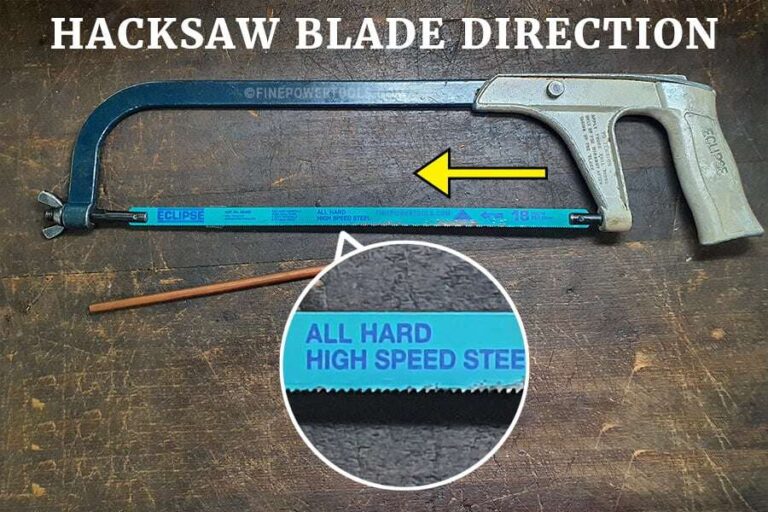
Place the new blade beside the frame before installing it. The teeth should normally point away from the handle.
A hacksaw usually cuts on the forward push stroke. With the teeth facing forward, the blade cuts as you push the tool away from your body.
Some frames have unusual designs or markings. If the frame manual shows a different direction, follow that instruction. The blade must also sit straight, with the smooth back edge facing the rear of the frame.
5. Fit one end of the blade
Hook one blade hole over the mounting pin at one end of the frame. Keep the blade aligned with the frame.
Do not bend the blade sharply to reach the second pin. If the blade seems too short, stop and check the length and the tension mechanism. Forcing it can damage the frame or make the blade snap.
6. Fit the second end
Pull the frame or blade gently until the second hole fits over the other mounting pin. On some models, you may need to turn the tension screw slightly to create enough room.
Make sure both blade holes sit fully over the pins. The blade should not rest on the edge of a pin or sit at an angle.
7. Tighten the blade
Turn the wing nut or tension screw clockwise. Tighten it until the blade is firm and straight.
A properly tensioned blade should have a small amount of spring when pressed lightly from the side. It should not feel loose, twist easily, or sag between the pins.
Do not keep tightening as hard as possible. Too much tension can bend the frame, damage the pins, or cause the blade to break. The correct tension depends on the frame, blade, and maker's instructions.
8. Test the installation
Hold the frame by the handle and check the blade before cutting:
- Both blade holes are fully seated.
- The teeth point away from the handle.
- The blade is straight.
- The blade does not wobble.
- The tension hardware is secure.
- No part of the blade is cracked or bent.
Make one light test cut in scrap material. Use slow, even strokes. If the blade twists, slips, or makes a sharp snapping sound, stop and release the tension before checking it.

How Tight Should a Junior Hacksaw Blade Be?
A junior hacksaw blade should be tight enough to stay straight during a light cut, but not so tight that the frame bends or the blade is at risk of breaking.
Use this simple check:
- Tighten the blade until it no longer sags.
- Press the side of the blade lightly with one finger.
- Confirm that it moves only a little and springs back.
- Check that it stays aligned with the frame.
A loose blade may wander, buckle, or produce a rough cut. An over-tight blade can snap without warning. The blade should not act like a rigid wire under extreme tension.
If your tool has a marked tension setting, use it. If it does not, stop tightening once the blade is straight and stable. You do not need to make the blade “ring” like a guitar string.

Common Problems After Replacing the Blade
Most problems come from the wrong blade size, incorrect tooth direction, or poor seating on the mounting pins.
| Problem | Likely cause | What to do |
|---|---|---|
| Blade will not reach both pins | Blade is too short or the frame is not fully released | Loosen the tension more and verify blade length |
| Blade hangs loose | Tension screw is not tight or a pin is not seated | Reseat both ends and tighten gradually |
| Blade bows during a cut | Blade is loose, damaged, or too fine for the task | Retension or install a suitable blade |
| Blade breaks at once | Excess tension, twisting, or a damaged blade | Release tension and inspect the frame |
| Saw cuts in the wrong direction | Teeth face the handle | Reinstall the blade with teeth facing forward |
| Blade slips off a pin | Blade hole is damaged or the pin is bent | Replace the blade or repair the frame |
| Cut is rough and slow | Dull blade, wrong TPI, or too much pressure | Use a fresh blade and lighter strokes |
If the blade keeps breaking
Release the blade and inspect the frame for bent arms or damaged pins. Then check your cutting method.
Do not twist the frame while cutting. Keep the blade in line with the cut and use steady strokes. Let the teeth do the work. Heavy pressure can bend the blade and cause it to buckle.
Also check the material. A junior hacksaw is suited to small jobs. Thick steel, hardened material, or large sections may require a full-size hacksaw, reciprocating saw, band saw, or another tool designed for that work.
If the blade does not fit
Do not stretch a blade that is too short or force one that is too long. Compare the old blade with the new one and check:
- Blade length
- Pin-hole position
- Frame style
- Blade width
- Tension mechanism
Some small saws look similar but use different blade fittings. The replacement package should list compatible frames or dimensions.

Safety Tips for Changing and Using the Blade
A junior hacksaw is a small tool, but its blade can still cause cuts and eye injuries.
- Wear safety glasses when removing or installing a blade.
- Keep the teeth pointed away from your fingers.
- Do not test sharpness by touching the teeth.
- Remove the blade before putting the tool in a toolbox if it may catch on other tools.
- Clamp the workpiece before cutting.
- Keep both hands behind the blade path.
- Replace a blade that is bent, cracked, rusty, or missing teeth.
- Clean metal filings with a brush, not your bare hand.
- Keep children away from loose blades.
- Follow the instructions for your specific frame if they differ from this general method.
Gloves can help with sharp edges, but they do not replace eye protection or careful handling. Avoid loose gloves, sleeves, jewelry, or hair that could catch on the workpiece or tool.

How to Get a Cleaner Cut
A new blade will work best when the workpiece is secure and the stroke matches the material.
Clamp small metal parts in a vise. Place the cut close to the vise jaws to reduce vibration. Start with short, light strokes until the blade makes a groove. Once the groove guides the blade, use longer strokes that use much of the blade length.
Keep the frame straight. Do not push down hard. A steady rhythm gives better control and helps the teeth clear chips.
For thin metal, use a fine-tooth blade. For thicker, softer stock, a coarser blade may cut faster. If the material becomes hot, pause and let it cool. For some metals, cutting fluid may help, but use only a product suitable for that material and follow its label.

When Should You Replace a Junior Hacksaw Blade?
Replace the blade when it is dull, bent, cracked, rusty, or missing teeth. A blade may also need replacement when it produces a rough cut despite correct tension and technique.
Signs of a dull blade include:
- You need much more force than before.
- The cut takes longer than normal.
- The blade slides instead of forming chips.
- The frame vibrates or wanders.
- The teeth look rounded or worn.
Do not wait for a blade to fail during a cut. A fresh blade is easier to control and reduces the need for excess force.

Key Takeaways
- Release the tension before removing the old blade.
- Use a blade that matches the frame and material.
- Install the blade with the teeth normally facing away from the handle.
- Seat both blade holes fully on the mounting pins.
- Tighten until the blade is straight and firm, not excessively tight.
- Stop if the blade slips, bends, or breaks.
- Wear eye protection and secure the workpiece before cutting.
FAQs
Can you put a junior hacksaw blade in backward?
Yes, it may physically fit, but the saw will usually cut poorly because most hacksaw blades cut on the forward push stroke. Install the teeth facing away from the handle unless the frame maker specifies another direction.
Are junior hacksaw blades universal?
No. Many use a short blade with pin holes, but length, hole spacing, width, and frame design can vary. Check the dimensions listed for your frame before buying a replacement.
Why does my new hacksaw blade keep falling off?
The blade may not be fully seated on both pins, the tension may be too loose, or a pin or blade hole may be damaged. Release the tension, reseat the blade, and inspect the mounting points.
Can a junior hacksaw cut wood?
It can cut some thin wood, but a junior hacksaw is mainly used for small metal and plastic cutting. A wood saw with larger, shaped teeth will usually cut wood faster and clear sawdust better.
Should the teeth face up or down?
On most junior hacksaws, the teeth face forward, away from the handle. The key point is the cutting direction: the blade should cut on the push stroke unless the tool instructions say otherwise.
What should I do with the old blade?
Wrap it in cardboard, thick paper, or tape before placing it in the trash. Do not leave a loose blade in a toolbox, recycling bin, or work area.
Conclusion
To change a blade on a junior hacksaw, release the tension, remove the old blade, install a matching replacement with the teeth facing forward, and tighten it until it is straight and secure. Check the blade by hand before cutting, then make a light test cut in secured scrap material.
If the blade will not fit or keeps breaking, stop forcing it. Check the blade size, mounting pins, frame condition, and tension method.
Recent Tool Guides
 Hammer
How To Hammer Flowers Onto Paper: Easy Guide
Learn how to hammer flowers onto paper with simple steps, helpful tips, and beautiful results for...
Read Guide → Wrench
How To Use A Hex Wrench: Easy Step-By-Step Guide
Learn how to use a hex wrench correctly with simple steps, helpful tips, and common mistakes...
Read Guide → Hacksaw
How To Cut Curtain Pole With Hacksaw: Easy Guide
Learn how to cut curtain pole with hacksaw safely and neatly. Follow simple steps for accurate...
Read Guide → Wrench
How To Use A Husky Torque Wrench: Easy Guide
Learn how to use a Husky torque wrench correctly with simple steps, torque settings, and safety...
Read Guide → Hammer
How To Hold A Hammer: Safe Grip Guide
Learn how to hold a hammer with the right grip, stance, and technique for safer, more...
Read Guide → Hacksaw
How To Cut Flexible Metal Conduit With Hacksaw: Easy Guide
Learn how to cut flexible metal conduit with hacksaw safely and cleanly. Follow simple steps for...
Read Guide →