

A bi-metal hacksaw with 18 to 24 teeth per inch is best for most metal cutting.
Choosing which type of hand saw is best for cutting metal depends on the metal, its thickness, and the cut you need to make. In most home, repair, plumbing, and workshop jobs, a quality hacksaw gives the best mix of control, low cost, clean cuts, and easy blade replacement. This guide explains blade types, tooth counts, saw frames, cutting methods, safety steps, and common mistakes so you can choose with confidence.
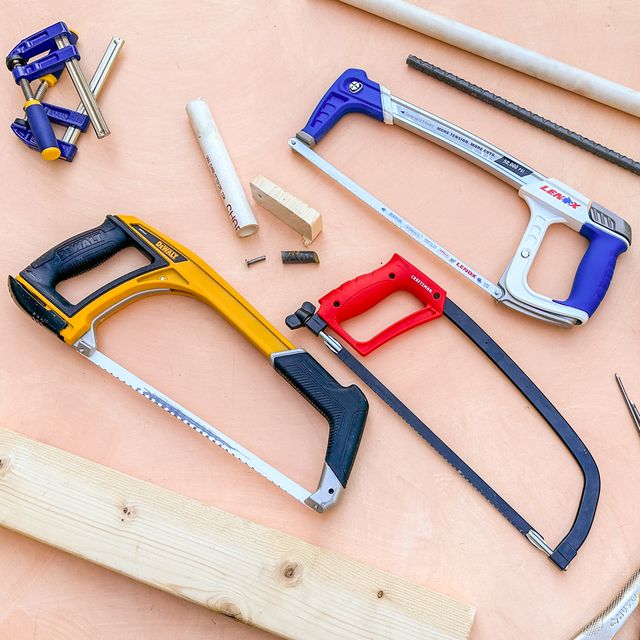
Which type of hand saw is best for cutting metal?
For most metal-cutting tasks, the best choice is a standard hacksaw fitted with a bi-metal blade. A bi-metal blade has a flexible spring steel body and hardened high-speed steel teeth. This design helps the blade bend slightly without snapping while keeping its teeth sharp.
A hacksaw works well on materials such as:
• Mild steel
• Stainless steel
• Aluminum
• Copper
• Brass
• Threaded rod
• Metal pipe
• Bolts and screws
• Thin sheet metal
A hacksaw is also easy to control. Unlike a power saw, it produces little noise, no electrical sparks, and no fast-moving disc. That makes it useful for indoor repairs and precise cuts.
The best blade depends on the work. A coarse blade removes metal quickly from thick stock. A fine blade gives better control on thin tubing, sheet metal, and small hardware.
For general use, choose:
• A 12-inch hacksaw frame
• A bi-metal blade
• 18 teeth per inch for thick metal
• 24 teeth per inch for general work
• 32 teeth per inch for thin metal
In short, which type of hand saw is best for cutting metal? For most people, it is a tensioned hacksaw with the correct bi-metal blade.
Why a hacksaw is the best all-around metal hand saw
A hacksaw is designed to cut through hard materials with a narrow, replaceable blade. Its frame keeps the blade straight and under tension. This prevents the blade from bending during each stroke.
The saw cuts when you push it forward. The return stroke should use light pressure. Pressing hard on both strokes creates heat, damages teeth, and makes the cut wander.
A hacksaw also offers several practical benefits:
• Low purchase cost
• Replaceable blades
• Easy blade selection
• Good control near finished surfaces
• No need for fuel, batteries, or electricity
• Useful for both repair work and fabrication
A hand hacksaw is slower than an angle grinder or metal-cutting saw. However, slow cutting is often an advantage. You can stop at a layout line, protect nearby parts, and make a cleaner cut with less material loss.
A common workshop mistake is choosing a saw based only on speed. The fastest tool is not always the best tool. When a pipe is already installed near a wall, a hacksaw may be safer and more useful than a large power tool.

Types of hand saws for cutting metal
Several hand saws can cut metal, but they serve different purposes. Knowing their strengths will help you avoid using the wrong tool.
Hacksaw
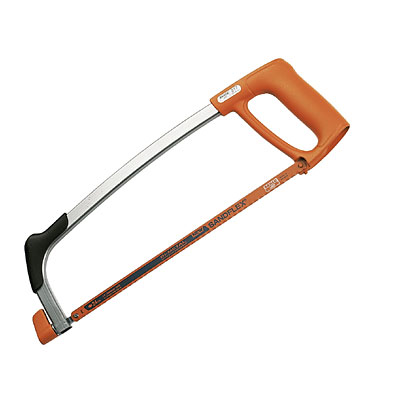
The hacksaw is the most versatile metal hand saw. It uses a thin blade held in a metal frame. Most models accept standard 10-inch or 12-inch blades.
A hacksaw is ideal for:
• Cutting bolts
• Shortening threaded rod
• Cutting pipe
• Trimming brackets
• Cutting angle iron
• Removing damaged fasteners
• Cutting small sections of sheet metal
A full-size hacksaw gives better control and longer blade life. Compact hacksaws are useful in tight spaces, but they often have less blade support.
Junior hacksaw
A junior hacksaw has a smaller frame and a narrow blade. It works well for light cuts in thin metal, plastic, and small tubing.
It is useful when space is limited. However, its small blade can clog faster, and it may feel slow on thick steel.
Mini hacksaw
A mini hacksaw uses a short blade held by a small handle. It is convenient for emergency repairs and tight spaces.
This type is not the best choice for long, straight cuts. The short blade heats quickly and can wear faster than a full-size hacksaw blade.
Jeweler’s saw
A jeweler’s saw uses a very fine blade and a deep, narrow frame. It is made for detailed cuts in thin metal, such as copper, brass, aluminum, and jewelry stock.
It offers excellent control but has limited strength. It is not suitable for thick steel, large pipe, or heavy structural metal.
Hand metal-cutting saws with rigid frames
Some specialized hand saws use rigid frames and small metal-cutting blades. These tools can work well for fine fabrication and model making.
They are less common than hacksaws. Replacement blades may also be harder to find, so they are usually chosen for a specific craft rather than general repairs.
Choosing the right hacksaw blade
Blade choice matters as much as the saw frame. Even the best hacksaw will perform poorly with the wrong teeth per inch, or TPI.
The blade should have at least three teeth engaged in the metal during a cut. This rule helps prevent tooth breakage and keeps the blade from catching.
Use this basic guide:
| Metal and thickness | Recommended blade |
|---|---|
| Thick steel bar or angle iron | 14 to 18 TPI |
| General steel, pipe, or bolts | 18 to 24 TPI |
| Thin-wall tubing | 24 to 32 TPI |
| Sheet metal | 24 to 32 TPI |
| Aluminum and copper | 18 to 24 TPI |
| Very thin metal | 32 TPI |
TPI means teeth per inch. A higher TPI blade has smaller teeth. It cuts more slowly but leaves a smoother edge and is less likely to catch on thin material.
A lower TPI blade has larger teeth. It removes material faster from thick metal, but its teeth may snag or strip thin sheet metal.
Bi-metal blades
Bi-metal blades are usually the best choice for general metal cutting. Their high-speed steel teeth resist wear, while the flexible backing reduces breakage.
They cost more than basic carbon steel blades, but they often last longer. For regular workshop use, the extra cost is usually worthwhile.
Carbon steel blades
Carbon steel blades are inexpensive and work for soft metal and light tasks. They are suitable when you need a disposable blade or only make occasional cuts.
They wear faster on hard steel and stainless steel. They can also break more easily if the frame is twisted or the user applies too much pressure.
Tungsten carbide grit blades
Carbide grit blades do not use normal teeth. Instead, abrasive carbide particles cut the material.
They can work on hardened steel, cast iron, ceramics, and materials that damage standard teeth. They are not usually the first choice for ordinary pipe or mild steel because they cut slowly and cost more.
How to match the saw to different metals
The answer to which type of hand saw is best for cutting metal changes slightly with the material.
Mild steel
Mild steel is common in brackets, bolts, tubing, and angle iron. A bi-metal hacksaw blade with 18 to 24 TPI is a strong general choice.
Use steady strokes and moderate pressure. Let the teeth do the work instead of forcing the blade.
Stainless steel
Stainless steel is tougher and often creates more heat. Use a sharp bi-metal blade with 24 TPI for many common cuts.
Keep the blade moving. Stopping in one spot can cause heat buildup and may harden the surface, making the cut more difficult.
Aluminum
Aluminum is soft but can clog blade teeth. A blade with 18 to 24 TPI often works well.
Clean the teeth often. A small amount of cutting lubricant can reduce clogging, but avoid applying anything that makes the handle slippery.
Copper and brass
Copper and brass cut easily with a sharp hacksaw blade. A medium or fine tooth count gives good control.
Support thin pieces close to the cut. Without support, the metal may vibrate and bend instead of cutting cleanly.
Cast iron
Cast iron is hard and brittle. A hacksaw can cut small sections, but the work takes patience.
For repeated cuts, a carbide grit blade may be more suitable. Brush away dust carefully, because cast iron filings can be sharp and messy.
Hardened steel
Hardened steel can quickly damage ordinary hacksaw teeth. A carbide grit blade or a specialized hardened-steel blade may work better.
If the metal is extremely hard, a hand saw may not be the right tool. Confirm the material before cutting, and consider a professional metal-cutting service for large or critical parts.
How to use a hacksaw correctly
Good technique makes a major difference. Even the right answer to which type of hand saw is best for cutting metal will not help if the saw is used poorly.
Follow these steps:
Mark the cut with a scribe, marker, or layout fluid.
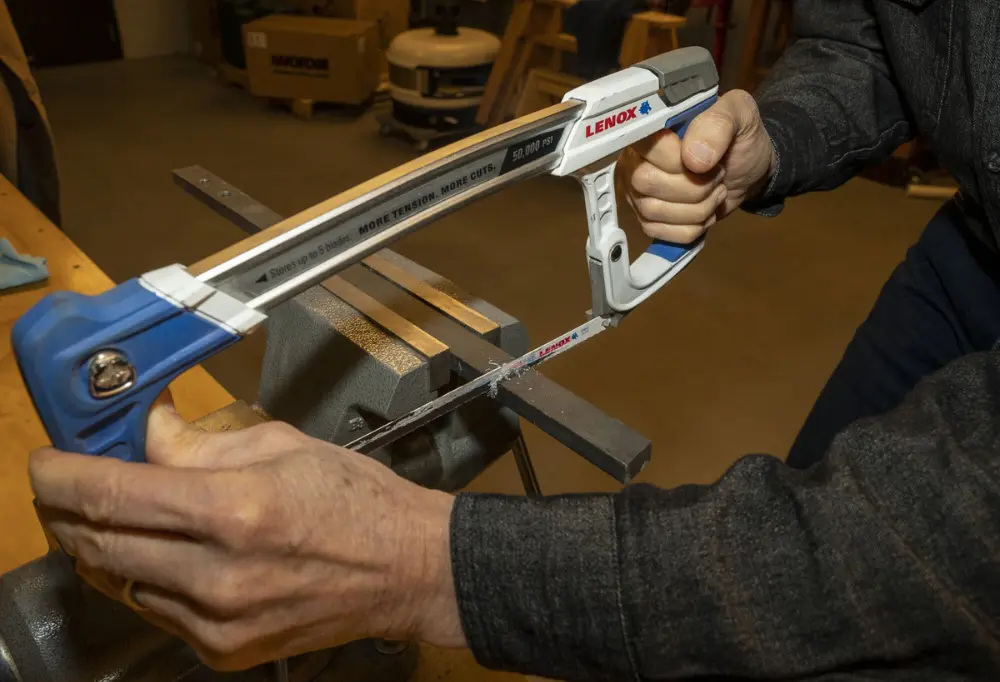
Clamp the work firmly in a vise.
Choose a blade with the right TPI.
Install the blade with the teeth pointing forward.
Tension the blade until it feels firm and straight.
Start with short, gentle strokes to create a groove.
Keep the blade square to the material.
Use long strokes that use most of the blade length.
Apply pressure only on the forward stroke.
Slow down as you approach the end of the cut.
The blade should remain straight throughout the cut. If it bends, reduce pressure and check the workpiece support.
For a long cut, use cutting fluid only when appropriate. Light oil can help with some steel cuts, but aluminum may clog if the wrong lubricant is used. Always follow the blade maker’s guidance.
Common mistakes to avoid
Many poor cuts come from simple errors rather than poor tools. These mistakes can shorten blade life and create unsafe conditions.
• Using a wood saw blade on metal
• Choosing a blade with too few teeth
• Installing the blade backward
• Cutting without clamping the work
• Pushing on the return stroke
• Twisting the frame during a cut
• Using a dull or damaged blade
• Cutting too fast
• Letting the blade overheat
• Failing to remove sharp burrs
One mistake I often see in basic repair work is using a coarse blade on thin tubing. The teeth grab the edge, bend the tube, and create a rough opening. A 24 or 32 TPI blade usually gives a much cleaner result.
Another common mistake is using a short stroke. Short strokes wear only a small part of the blade. They also concentrate heat in one area. A longer, steady stroke spreads wear across more teeth.
Hacksaw safety tips
Hand tools are safer than many power tools, but they still require care. Metal edges and broken blades can cause serious cuts.
Wear safety glasses whenever you cut metal. Small chips can leave the workpiece at high speed, especially when a tooth breaks.
Use these safety habits:
• Wear eye protection
• Secure the work in a vise
• Keep both hands on the tool when possible
• Keep fingers away from the blade path
• Replace bent, cracked, or dull blades
• Remove burrs with a file
• Keep the floor clear of offcuts
• Wear gloves when handling sharp metal, not when they may catch in moving machinery
• Keep cutting oil away from slippery handles
Do not hold a small piece in your hand while sawing it. Clamp it or support it on a stable surface. The final breakthrough can cause the blade to jump.
After cutting, inspect the edge. A sharp burr can cut skin or damage wires and hoses. Use a file, deburring tool, or fine abrasive pad to smooth it.
When another hand saw may be better
The hacksaw is the best general answer, but it is not ideal for every job.
A jeweler’s saw is better for detailed work in thin metal. A mini hacksaw is better for a tight space where a full frame cannot fit. A carbide grit saw may be better for hardened steel, cast iron, or other abrasive materials.
Consider another tool when:
• The metal is too thick for practical hand cutting
• The material is hardened
• You need a very precise internal cut
• The cut is several feet long
• The job involves many repeated cuts
• The material is attached to a sensitive structure
For large or repeated work, a band saw, reciprocating saw with a metal blade, or abrasive cutoff tool may save time. These tools also create more noise, heat, vibration, and possible sparks, so they require stronger safety controls.
The best answer to which type of hand saw is best for cutting metal should always consider the full job, not just the material.
How to get a clean, straight metal cut
A clean cut begins with a clear line. For round pipe, mark the line around the full surface. You can wrap paper or tape around the pipe to create a guide, then trace the edge.
Keep the saw at 90 degrees to the material. Check from the side and front as you begin. Once the groove is straight, the blade will track more easily.
Use light pressure at the start. The first groove acts like a rail. If you force the blade before that groove is formed, it may slide across the surface and damage the finish.
For thin sheet metal, place wood behind the sheet when possible. This reduces vibration and supports the metal near the cut. Afterward, file the edge with smooth strokes in one direction.
In practical work, patience beats force. A steady rhythm feels slower at first, but it usually produces a faster overall result because you avoid crooked cuts and broken blades.

How to maintain a hand saw and its blades
A hacksaw frame can last for years when cared for properly. Wipe metal dust from the frame after use and keep the tension screw lightly lubricated.
Store blades where they will not bend. A bent blade can create a crooked cut even when it appears usable.
Replace the blade when:
• Teeth look rounded
• The cut begins to wander
• You need much more pressure
• The blade overheats quickly
• Several teeth are missing
• The blade binds in the cut
Do not wait for every tooth to disappear. A dull blade wastes time and encourages unsafe force.
Check the frame before each job. Make sure the pins are secure and the tension mechanism works smoothly. If the frame flexes badly, replace it. A rigid frame gives better control and helps the blade last longer.
Frequently Asked Questions About Which Type of Hand Saw Is Best for Cutting Metal
Is a hacksaw the best hand saw for cutting metal?
Yes, a hacksaw is the best general-purpose hand saw for most metal cutting. Its replaceable blades, strong frame, and range of tooth sizes make it suitable for steel, aluminum, copper, pipe, and bolts.
What hacksaw blade is best for steel?
A bi-metal blade with 18 to 24 teeth per inch works well for most steel. Choose 14 to 18 TPI for thick steel and 24 to 32 TPI for thin steel or tubing.
Can a regular wood saw cut metal?
No, a regular wood saw is not designed for metal. Its teeth can become damaged, and the saw may slip or bind, so use a hacksaw or another saw made for metal.
Should hacksaw teeth point forward or backward?
Hacksaw teeth should point forward because the tool is designed to cut on the push stroke. The blade should have light pressure on the return stroke.
Can a hacksaw cut stainless steel?
Yes, a sharp bi-metal hacksaw blade can cut stainless steel. Use steady pressure, keep the blade moving, and select a suitable fine or medium tooth count to control heat and wear.
How many teeth should a hacksaw blade have for thin metal?
A blade with 24 to 32 teeth per inch is usually best for thin metal. The finer teeth reduce snagging and help keep the blade engaged with the material.
Is cutting oil necessary when using a hacksaw?
Cutting oil is not always necessary, especially for short cuts in mild steel. A suitable lubricant can reduce heat and friction, but use it carefully and keep the handle dry.
Conclusion
For most repair and workshop jobs, a 12-inch hacksaw with a bi-metal blade is the best answer to which type of hand saw is best for cutting metal. Match the blade to the material and thickness, use at least three teeth in the cut, clamp the work, and let the saw cut at a steady pace.
Choose 18 to 24 TPI for general metal work, 14 to 18 TPI for thick stock, and 24 to 32 TPI for thin metal. With the right blade and safe technique, a simple hacksaw can make clean, controlled cuts without electricity or expensive equipment.
Before your next project, inspect your frame, select the correct blade, and mark the cut clearly. Explore more metalworking guides, share your experience, or leave a comment about the material you plan to cut.
