

Yes, a hand saw can cut metal when it has the right blade, tooth pattern, and cutting method.
Can a hand saw cut metal safely and cleanly? Yes, but the answer depends on the saw type, the metal’s thickness, and the blade you choose. After using hacksaws and other manual metal cutting tools in workshop projects, I have learned that good results come from steady pressure, firm support, and patience. This guide explains which saws work, how to cut metal by hand, and which mistakes to avoid.
Can a Hand Saw Cut Metal?
A hand saw can cut metal, but not every hand saw is suitable. A standard wood saw has large teeth made for soft materials. Those teeth can catch, bend, or break when they meet steel, aluminum, copper, or other metals.
The best choice for most small metal jobs is a hacksaw. It uses a thin, replaceable blade with small hardened teeth. These teeth remove small amounts of metal with each stroke.
Can a hand saw cut metal such as a steel rod, pipe, bolt, or sheet? Yes, if the blade is made for metal and the workpiece is held firmly. A manual saw may take longer than an angle grinder or bandsaw, but it is often cheaper, quieter, and easier to control.
The result depends on three main factors:
• Blade material and tooth count
• Metal thickness and hardness
• Cutting speed, pressure, and workpiece support
A hand saw works like a row of tiny chisels. Each tooth removes a small chip. If the teeth are too large or the pressure is too strong, the blade can snag instead of cutting smoothly.

Which Hand Saws Cut Metal?
Several types of hand saws can cut metal. Each one fits a different task.
Hacksaw
A hacksaw is the most common hand tool for cutting metal. It has a rigid frame and a narrow blade stretched between two pins.
A standard hacksaw blade is often 10, 18, 24, or 32 teeth per inch. Higher tooth counts suit thin metal. Lower tooth counts suit thicker stock.
Hacksaws are useful for:
• Cutting bolts and threaded rod
• Trimming metal pipe
• Cutting angle iron and flat bar
• Shortening metal brackets
• Removing damaged fasteners
Junior hacksaw
A junior hacksaw has a smaller frame and a shorter blade. It works well in tight spaces, but it removes metal more slowly than a full-size hacksaw.
It is useful for light repairs, model work, and small pieces of thin metal. Its smaller size also gives you less cutting power.
Mini hacksaw
A mini hacksaw has a compact handle and a short blade. It can reach narrow spaces where a full frame will not fit.
This tool is handy for cutting plastic-coated metal conduit, small screws, and thin sheet metal. Use slow strokes because short blades can heat up quickly.
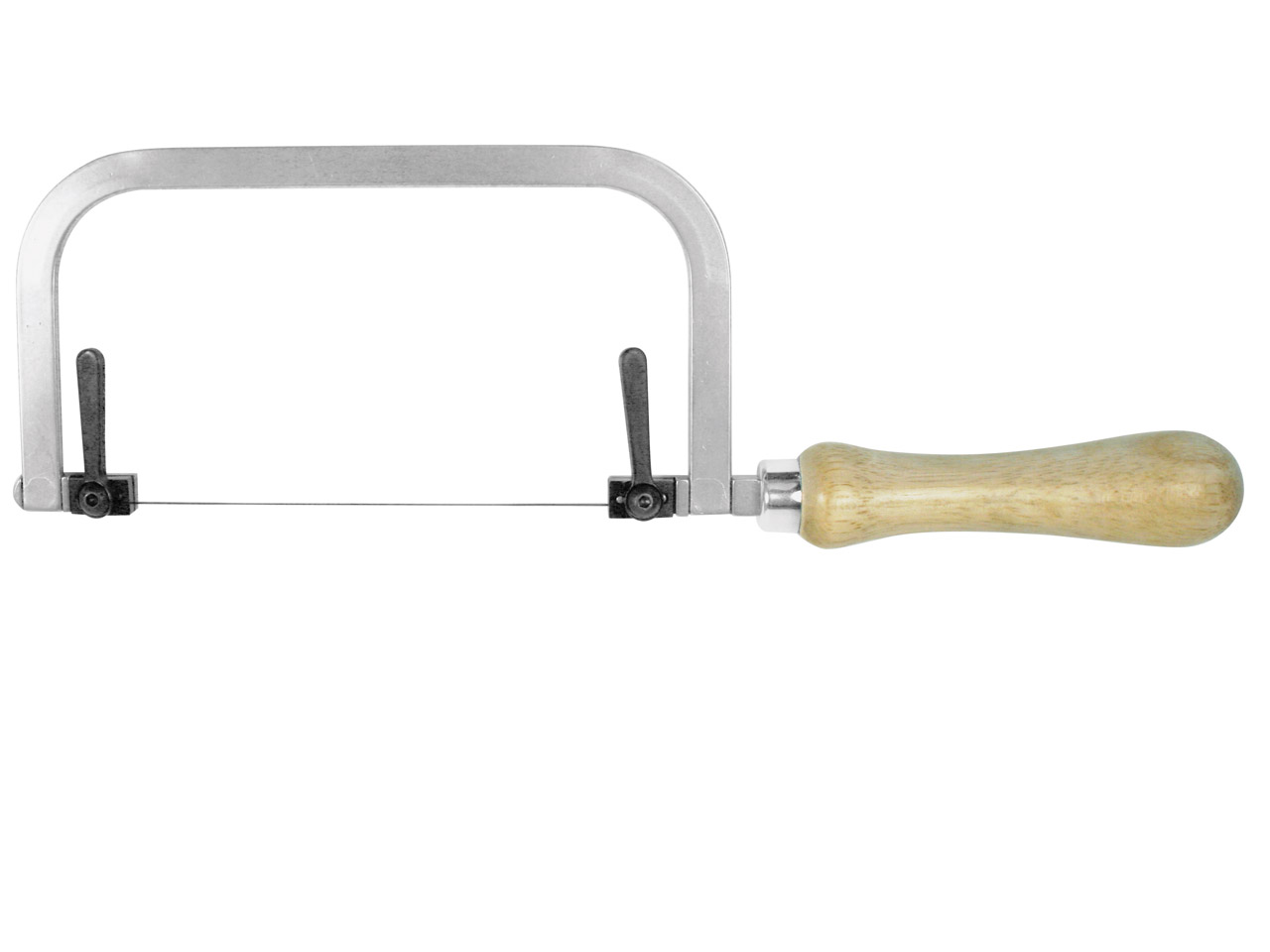
Coping saw with a metal blade
A coping saw can cut thin sheet metal if you install a fine metal cutting blade. However, its flexible frame makes it less stable than a hacksaw.
It is better for curves and small openings than for thick steel. Use it only when the blade is rated for metal.
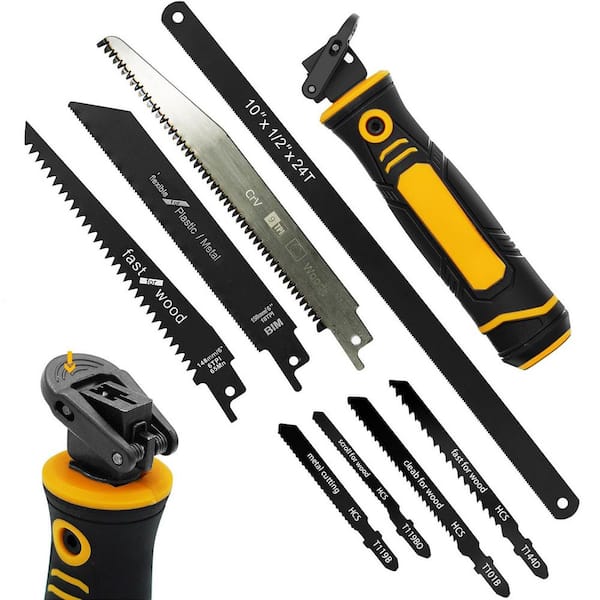
Reciprocating hand saws
A manual reciprocating saw is less common, but some designs use a back-and-forth metal blade. These tools can cut in confined areas, though they need careful control.
Do not confuse them with powered reciprocating saws. A powered saw cuts much faster and creates more heat, noise, and risk.
What Type of Blade Should You Use?
The blade is the most important part of the setup. When people ask, “Can a hand saw cut metal?” the better question is often, “Does the blade match the metal?”
Carbon steel blades
Carbon steel blades cost less and work for mild steel, aluminum, copper, and other softer metals. They wear faster than premium blades.
They are a good choice for occasional home repairs. Replace them when the teeth become dull or the blade begins to wander.
Bi-metal blades
Bi-metal blades combine a flexible alloy body with hardened high-speed steel teeth. They resist breaking and often last longer than basic carbon steel blades.
For regular workshop use, a bi-metal hacksaw blade is often the best all-purpose option. It handles steel tubing, bolts, threaded rod, and many sheet metal jobs.
High-speed steel blades
High-speed steel blades hold their edge well. They work best for harder metals and repeated cutting.
They can cost more, and some are less flexible. Use them when long blade life matters more than the lowest purchase price.
Tooth count
Tooth count is measured in teeth per inch, or TPI.
• 14 to 18 TPI works for thick steel and heavy pipe
• 24 TPI suits general-purpose metal cutting
• 28 to 32 TPI works for thin sheet metal and small tubing
Keep at least two or three teeth inside the metal during each stroke. If only one tooth touches the workpiece, it may catch and break.
How to Cut Metal With a Hand Saw
Can a hand saw cut metal cleanly? It can when you follow a clear process.
1. Mark the cut line
Use a permanent marker, scriber, or soapstone to mark the cut. For a straight cut, wrap paper around a pipe and use its edge as a guide.
A visible line helps you stay accurate. It also reduces the need to remove extra metal later.
2. Choose the correct blade
Select a metal cutting blade with the right TPI. Use finer teeth for thin metal and coarser teeth for thick material.
Check that the blade is sharp and free from cracks. A damaged blade can fail without much warning.
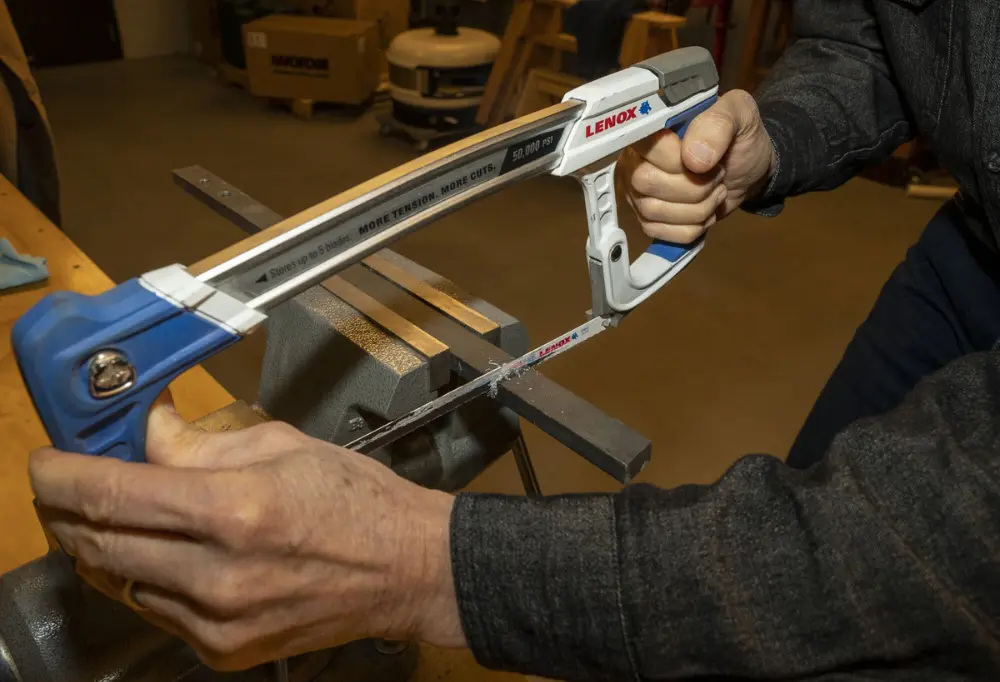
3. Secure the workpiece
Clamp the metal in a vise. Place the cut line close to the vise jaws, but leave enough room for the saw frame.
Support long pieces so they do not vibrate. Movement wastes effort and can cause rough, uneven cuts.
4. Install the blade correctly
Most hacksaw blades cut on the forward stroke. Point the teeth away from the handle.
Tighten the blade until it feels firm. It should not bow during a stroke, but do not overtighten it. Excess tension can damage the frame or snap the blade.
5. Start with short strokes
Begin with light, short strokes to create a shallow groove. This groove helps guide the blade.
Once the groove forms, use longer strokes that cover most of the blade length. Let the teeth do the work instead of forcing the tool.
6. Use steady pressure
Apply pressure only on the forward stroke. Release pressure as you pull the saw back.
Keep the blade square to the metal. A tilted blade creates an angled cut and may twist or break.
7. Slow down near the end
As the cut nears completion, support the loose section. Reduce pressure to prevent the metal from snapping or tearing.
A file can remove burrs after the cut. For sharp edges, a deburring tool gives an even cleaner result.

How to Cut Different Types of Metal
The answer to “Can a hand saw cut metal?” changes slightly with each material.
Steel
Steel is strong and may require firm, steady strokes. Use a bi-metal blade with 18 to 24 TPI for many common steel parts.
Do not rush. Fast strokes create heat and wear the teeth without improving the cut.
Stainless steel
Stainless steel is harder to cut by hand. It can work-harden when you rub the blade across it without removing enough material.
Use a sharp blade, steady pressure, and a constant cutting motion. Avoid stopping in one spot for too long.
Aluminum
Aluminum is soft, but it can clog the teeth. A blade with around 18 to 24 TPI often works well.
Clean the blade if aluminum builds between the teeth. A small amount of suitable cutting lubricant can reduce clogging.
Copper and brass
Copper and brass cut fairly easily with a fine metal blade. They can bend during cutting, so clamp them well.
Use light pressure. Excess force can crush thin tubing instead of cutting it.
Cast iron
Cast iron is hard and brittle. A hacksaw can cut thin sections, but thick cast iron may take a long time.
For heavy cast iron, a powered tool or professional service may be safer and more practical.
Sheet metal
Thin sheet metal needs a fine blade, often 24 to 32 TPI. Support the sheet close to the cut to reduce vibration.
Wear gloves when handling sheet metal. Its edges can be sharper than they look.
Can a Hand Saw Cut Thick Metal?
A hand saw can cut thick metal, but the job becomes slower and more tiring as thickness increases. A thick steel bar may require many strokes and several blade changes.
A hacksaw is practical for small cuts through mild steel, aluminum, copper, and thin-wall tubing. It becomes less efficient for large beams, thick plate, hardened steel, or repeated production work.
Consider another tool when:
• The metal is too thick for the blade to pass through comfortably
• The material is hardened or heat-treated
• You need many identical cuts
• The cut must be extremely fast
• The workpiece cannot be clamped securely
An angle grinder, metal-cutting bandsaw, cold saw, or powered reciprocating saw may suit these jobs better. Each powered tool brings extra noise, sparks, heat, and injury risk, so use the tool that matches your skill and workspace.

Safety Tips for Cutting Metal by Hand
Can a hand saw cut metal safely? Yes, but hand tools still require care.
Wear safety glasses to protect your eyes from metal chips. Add face protection when cutting material that may fragment.
Use gloves when handling raw metal, but keep loose glove material away from the blade and frame. Cut-resistant gloves can help with sharp edges, but they do not make hands safe near moving powered tools.
Follow these safety practices:
• Clamp the work securely
• Keep both hands away from the blade path
• Inspect the frame and blade before use
• Replace blades with missing or damaged teeth
• Wear closed-toe shoes
• Keep the work area bright and clear
• Remove burrs before handling the finished part
• Use cutting fluid only when the product is suitable for that metal
Workplace safety guidance commonly stresses eye protection, secure workholding, and control of sharp edges. Those basics matter in a home garage just as much as they do in a professional shop.

Common Mistakes to Avoid
In my early workshop work, I made the mistake of pressing too hard on a dull hacksaw blade. The cut became crooked, the blade heated up, and the job took longer than it should have. A fresh blade and lighter pressure solved the problem.
These are common errors:
Using a wood saw
A wood saw has the wrong tooth shape and spacing. It may damage the metal, the saw, or both.
Choosing the wrong TPI
Large teeth can catch in thin sheet metal. Very fine teeth can clog or cut slowly through thick material.
Cutting without a vise
A moving workpiece makes the blade jump. It also increases the chance of an uneven cut or broken blade.
Applying pressure on the return stroke
The teeth are designed to cut in one direction. Pulling hard on the return stroke increases friction and blade wear.
Using a dull blade
A dull blade creates heat and requires more force. If the teeth slide over the surface instead of making chips, replace the blade.
Ignoring the finish
Freshly cut metal often has burrs. File or deburr the edge before painting, assembling, or touching the part.

Hand Saw Versus Powered Metal Cutting Tools
A hand saw has clear benefits. It is quiet, portable, inexpensive, and easy to use in places without electricity. It also gives you excellent control over a small cut.
Its main weakness is speed. Manual cutting takes more time and physical effort, especially with thick steel.
| Tool | Best use | Main advantage | Main limitation |
|---|---|---|---|
| Hacksaw | Small metal parts | Low cost and good control | Slow |
| Metal-cutting bandsaw | Repeated straight cuts | Accurate and efficient | Less portable |
| Angle grinder | Fast cuts and removal | Very fast | Sparks, noise, and heat |
| Reciprocating saw | Tight spaces | Flexible access | Can produce rough cuts |
| Cold saw | Precise production cuts | Clean, square results | Higher cost |
For one or two cuts, a hacksaw is often the sensible choice. For a full day of cutting, a powered tool may reduce fatigue and improve productivity.

How to Get a Straighter, Cleaner Cut
Start with a clear mark on all visible sides of the workpiece. On thick stock, this helps you keep the blade aligned as it passes through.
Keep your body relaxed and use both hands on the hacksaw. One hand should guide the handle while the other steadies the frame.
Use long strokes that make full use of the blade. Short, choppy strokes often create uneven wear and a rough cut.
Check your progress instead of forcing the final section. If the blade begins to wander, stop and reset your angle. A few careful seconds can save several minutes of filing.
After cutting, use a flat file to remove burrs. Move the file away from your body and check the edge with care.
Frequently Asked Questions About Can a Hand Saw Cut Metal
Can a regular hand saw cut metal?
A regular wood saw is not designed to cut metal. Use a hacksaw or another hand saw fitted with a blade made for metal.
Can a hand saw cut steel?
Yes, a hacksaw can cut mild steel, steel pipe, bolts, and threaded rod. Use a sharp bi-metal blade with a suitable tooth count and secure the steel in a vise.
What is the best hand saw for cutting metal?
A full-size hacksaw is the best general-purpose option for most home and workshop jobs. A junior or mini hacksaw can help in tight spaces.
Can a hand saw cut aluminum?
Yes, aluminum is usually easy to cut with a fine metal blade. Clamp it firmly and clean the blade if soft aluminum fills the teeth.
Do you need oil when cutting metal with a hand saw?
Not always. Light cutting fluid can reduce friction and heat on some metals, but many small cuts can be made dry with proper technique and a sharp blade.
How do you stop a hacksaw blade from breaking?
Use the correct TPI, keep the blade tight, and apply pressure only on the forward stroke. Do not twist the frame or force a dull blade through the metal.
Is cutting metal with a hacksaw safe?
It can be safe when the metal is clamped, the blade is sound, and you wear eye protection. Always handle the freshly cut edge as if it is sharp.
Conclusion
Can a hand saw cut metal? Yes. A hacksaw with the right metal blade can cut steel, aluminum, copper, brass, pipe, bolts, and thin sheet metal.
The key is simple: choose the correct TPI, clamp the workpiece, use steady strokes, and let the blade cut at its own pace. For small jobs, a hand saw remains a reliable and affordable tool. Try these techniques on your next project, and explore more metalworking guides to build your skills with confidence.
