
In U.S. workshops and home garages, standard hacksaw teeth should face away from the handle. The teeth point forward because most hacksaws cut on the push stroke—when you move the saw away from your body.
If the blade is installed backward, it may slide over the metal, cut poorly, and wear faster. The fix is simple: loosen the frame, turn the blade so the teeth point forward, then tighten it until the blade is firm.
Quick Answer: Which Way Do Hacksaw Teeth Face?
Hacksaw teeth usually face forward, away from the handle.
The handle is the part you hold. The front of the saw is the end farthest from that handle. When you push the saw forward, the teeth should bite into the material.
A standard hacksaw blade looks like this:
Handle → smooth back of blade | teeth →
This setup lets the blade cut on the forward stroke. The return stroke should use light pressure.
Why Do Hacksaw Teeth Face Forward?
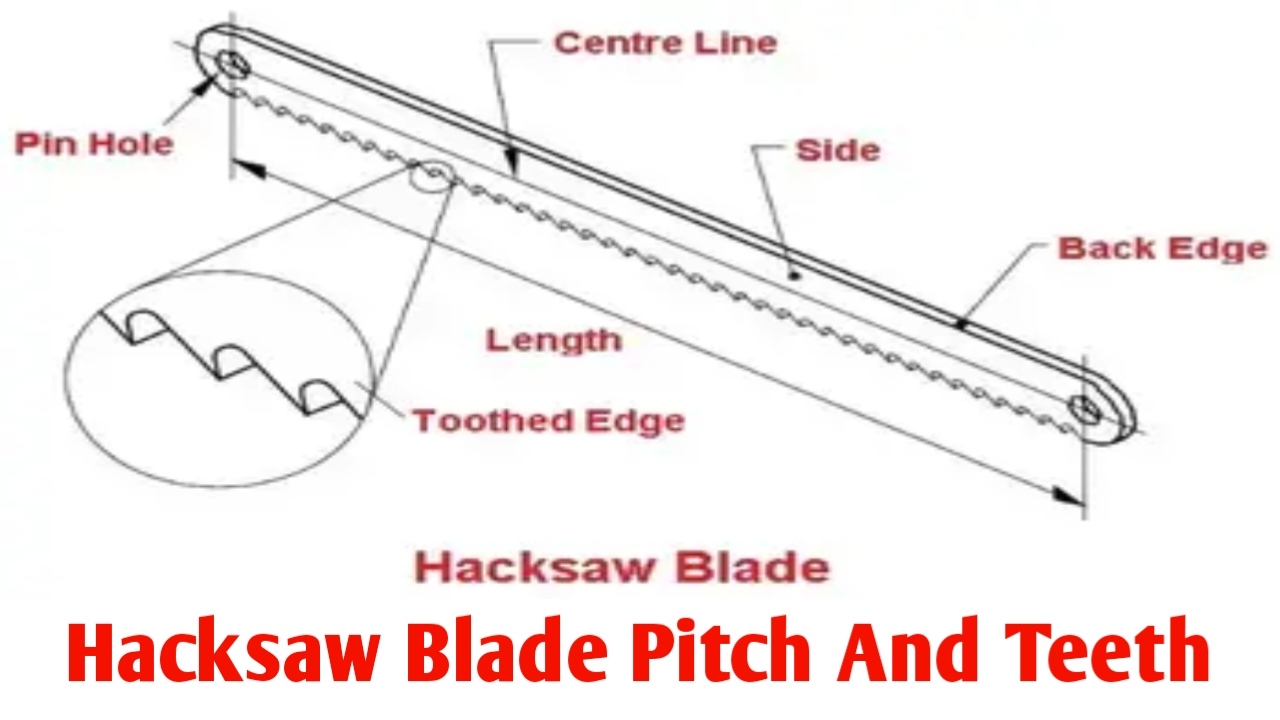
Hacksaw teeth face forward because a standard hacksaw is made to cut during the push stroke.
Each tooth acts like a small cutting edge. When you push the blade across metal, the teeth remove small chips. When you pull the saw back, the teeth should do little or no work.
This cutting pattern gives you better control and helps prevent the blade from bending. It also reduces the chance that the teeth will catch suddenly in the workpiece.
A hacksaw blade is not like a hand saw for wood. Many wood saws cut on the pull stroke or use teeth that cut in both directions. A standard hacksaw normally uses a push-cut design.
How the push stroke works
- Place the blade against the metal.
- Push the saw forward with steady pressure.
- Let the teeth do the cutting.
- Reduce pressure as you pull the saw back.
- Repeat the motion.
Do not force the return stroke. Pulling hard can snag the blade, especially if the teeth face the wrong way or the blade is loose.
What happens if the blade faces backward?
A backward blade may still seem to cut in soft metal, but it will usually perform poorly. Common signs include:
- The blade skates across the surface.
- Cutting takes much longer.
- The teeth become dull sooner.
- The blade vibrates or bends.
- The cut becomes uneven.
- The blade may break under heavy pressure.
If the blade does not cut well, check its direction before changing your cutting speed or applying more force.

How to Install a Hacksaw Blade Correctly
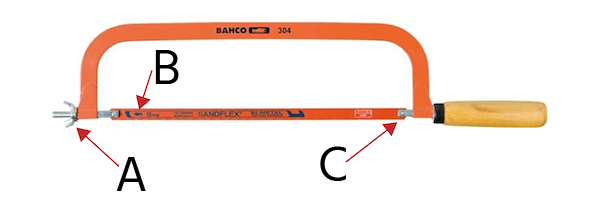
Install the blade with its teeth pointing away from the handle, unless the blade maker gives different instructions.
Most full-size hacksaws use two mounting pins or posts. The blade fits over these points at the front and rear of the frame.
Steps for installing the blade
Release the blade tension.
Turn the tension knob or lever until the old blade becomes loose.Remove the old blade.
Take care with worn teeth and broken sections.Check the new blade.
Find the row of teeth. The teeth should point toward the front end of the frame.Fit the blade onto the mounting pins.
Make sure both ends sit fully on the pins.Tighten the tension.
Turn the tension knob until the blade is firm.Check the blade by hand.
With the saw away from the workpiece, lightly pluck or press the blade. It should feel tight, not loose or floppy.Confirm the frame is secure.
The blade should stay straight and should not twist from side to side.
Do not tighten the blade more than the frame allows. Too much tension can bend the frame or cause the blade to snap.
How tight should a hacksaw blade be?
The blade should be tight enough to stay straight during a cut. It should not bow when you apply light hand pressure.
Some manufacturers give a specific tension value for high-tension frames. If your frame has a tension setting or instruction label, follow it. For a basic hand hacksaw, firm tension is usually enough.
A loose blade tends to wander and vibrate. An over-tight blade can fail suddenly.

How to Use a Hacksaw After Installing the Blade
Use long, steady strokes and keep the blade aligned with the cut line.
For most metal, allow the blade to do the work. Press during the forward stroke, then ease up as you pull the saw back.
A reliable cutting method
Mark the cut.
Use a marker, scribe, or center punch. A shallow groove can help the blade start without slipping.Clamp the workpiece.
Secure the metal in a vise. Keep the cut close to the vise jaws when possible to reduce vibration.Place the blade on the mark.
Hold the frame level and keep the blade square to the workpiece.Make light starter strokes.
Use short strokes until the blade forms a small groove.Use full strokes.
Once the groove is established, use most of the blade length.Keep forward pressure steady.
Push firmly but do not force the blade.Slow down near the end.
Support the loose section so it does not break away and bend the blade.
Should you use the full length of the blade?
Yes. Use as much of the blade length as practical.
Long strokes spread wear across more teeth. Very short strokes wear only a small section of the blade. That small section can become dull while the rest of the blade remains sharp.
Short strokes are useful when starting a cut or working in a tight space. Once the cut is established, longer strokes are usually better.
What blade pitch should you use?
Blade pitch means the number of teeth per inch, or TPI.
| Material or task | General blade choice |
|---|---|
| Thin sheet metal | Higher TPI |
| Small tubing | Higher TPI |
| Steel angle or thick stock | Medium TPI |
| Thick aluminum or soft metal | Lower or medium TPI |
| General workshop cutting | Medium TPI |
Choose a blade with at least two or three teeth in contact with the workpiece during the cut. If the material is thin, use more teeth per inch. If it is thick, use fewer teeth per inch.
A blade with too few teeth can catch and strip teeth. A blade with too many teeth can clog and cut slowly.

Common Hacksaw Blade Direction Mistakes
The most common mistake is installing the blade with the teeth pointing toward the handle.
That error often happens because the blade looks symmetrical. The mounting holes may fit either way, even though only one direction is correct for normal cutting.
Mistake 1: Trusting the blade’s smooth side
The smooth back of the blade does not show the cutting direction. Look closely at the teeth instead.
The pointed edges should face the front of the hacksaw. If the teeth are hard to see, run a finger very carefully along the back of the blade—not across the teeth. Better yet, inspect the blade under good light.
Mistake 2: Using force to fix a dull blade
More pressure will not restore dull teeth. It can bend the blade, damage the workpiece, or cause the blade to break.
Replace the blade when:
- The teeth look rounded.
- The blade slips instead of biting.
- The cut takes much longer than normal.
- Several teeth are missing.
- The blade bends during ordinary use.
Mistake 3: Cutting with a loose blade
A loose blade can twist away from the cut line. It may also produce a rough cut and excessive vibration.
Stop and tighten the blade if it bows, rattles, or shifts during the cut. If the blade still moves, inspect the mounting pins and frame for damage.
Mistake 4: Using the wrong blade for the material
A hacksaw blade made for steel may not be the best choice for plastic, aluminum, or very thin sheet metal. Check the blade label for its intended material and tooth count.
Mistake 5: Ignoring personal protection
Wear safety glasses when cutting metal. Small chips can break away from the workpiece or blade.
Use gloves only when they will not catch on the saw or workpiece. Keep loose clothing, hair, and jewelry away from the blade. Clamp the material instead of holding it in your hand.
Are There Exceptions to the Forward-Facing Rule?
Yes, but they are not common for a standard hacksaw.
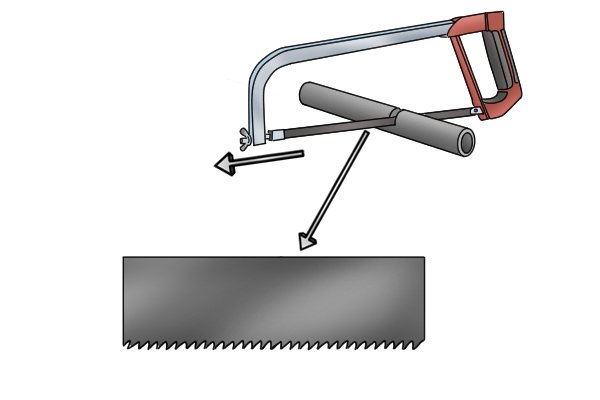
Some specialty frames and blades are designed for pull cutting, flush cutting, or use in a different saw type. A compact junior hacksaw may use a different frame arrangement, but the teeth still need to face the direction of the cutting stroke.
The safest rule is:
Point the teeth in the direction of the stroke that is meant to cut.
For a normal U.S.-style hand hacksaw, that means the teeth face away from the handle.
Always check the instructions printed on the blade package or supplied with the saw. Manufacturer directions take priority if the tool uses a special blade or frame.
What about a reciprocating saw?
A reciprocating saw is not the same as a hand hacksaw. Its blade moves back and forth by power, so the correct tooth direction depends on the blade design and the cut.
Some reciprocating saw blades cut mainly on the pull stroke. Others are made for different materials or flush-cut work. Follow the blade markings and tool instructions.
Do not apply the hand-hacksaw rule automatically to every powered saw.
Troubleshooting: The Blade Is Installed Correctly but Will Not Cut
If the teeth face forward and the saw still performs poorly, check the following items in order.
1. Check blade sharpness
A dull blade is the most likely cause. Replace it if the teeth are worn, chipped, or missing.
2. Check blade tension
A blade that moves sideways cannot make a clean cut. Tighten it until it stays straight, but do not over-tighten it.
3. Check the blade pitch
Make sure the teeth match the thickness of the material. Thin stock needs enough teeth in the cut to prevent snagging.
4. Check your pressure
Use firm pressure on the push stroke. Too little pressure can cause the blade to rub. Too much pressure can bend or break it.
5. Check the workpiece
The metal must be held firmly. Movement can make the saw feel dull even when the blade is in good condition.
6. Check your angle
Hold the blade square to the workpiece unless the job calls for an angled cut. A tilted blade can bind and wear one side of the teeth.
If the blade keeps breaking, stop using the tool. Inspect the frame, mounting pins, and tension system for damage. Replace a damaged frame rather than trying to straighten it by force.

Key Takeaways
- Standard hacksaw teeth face away from the handle.
- The blade should cut on the forward push stroke.
- Install the blade with its teeth pointing toward the front of the saw.
- Use steady pressure on the push stroke and light pressure on the return.
- Keep the blade tight, straight, and suited to the material.
- Replace dull or damaged blades instead of forcing them.
- Wear eye protection and clamp the workpiece securely.
- Follow the blade maker’s instructions for specialty tools.
Frequently Asked Questions
Should hacksaw teeth face toward or away from the handle?
They should face away from the handle on a standard hacksaw. This lets the blade cut as you push the saw forward.
Do hacksaws cut on the push or pull stroke?
Standard hacksaws cut on the push stroke. Use light pressure while pulling the saw back.
Can I use a hacksaw blade backward?
You can physically install some blades backward, but you should not use them that way unless the manufacturer specifically instructs it. A backward blade usually cuts poorly and may wear or break faster.
How do I know which end is the front of a hacksaw?
The front is the end farthest from the handle. The blade teeth should point toward that end.
Why does my hacksaw blade keep bending?
A blade may bend because it is loose, dull, too thin for the job, or used with excessive pressure. A moving workpiece and an uneven cutting angle can also bend the blade.
Should I wear gloves when using a hacksaw?
Eye protection is essential. Gloves may help protect your hands from sharp metal edges, but they must fit well and stay clear of the moving blade. Do not wear loose gloves around powered saws.
Conclusion
For a standard hacksaw, install the blade with the teeth facing forward and away from the handle. The teeth should bite when you push the saw, while the return stroke uses little pressure.
Secure the workpiece, keep the blade tight, choose the right tooth pitch, and replace the blade when it becomes dull. If you are using a specialty frame or powered saw, check its instructions because its cutting direction may differ.