Can A Hacksaw Cut A Bolt: Easy Cutting Guide
Yes, a hacksaw can cut a bolt, especially when you use the right blade, pressure, and support.
Knowing how to cut a bolt with a hacksaw can save a trip to the hardware store and help during repairs, upgrades, and emergency fixes. This guide explains which blade to use, how to make a clean cut, how to protect the threads, and when another tool is a better choice.
Can a hacksaw cut a bolt?
Yes, a hacksaw can cut through most common steel bolts. A hacksaw uses a thin, hardened blade with small teeth that remove metal as you push the tool back and forth.
The job is simple, but it takes patience. Thick bolts, stainless steel bolts, and hardened bolts need more time and a sharper blade. Soft materials, such as brass or aluminum, cut faster but can clog the teeth if you use too much pressure.
A hacksaw works best when:
• The bolt is small or medium in size
• You need a straight cut
• The bolt is easy to hold still
• You do not have a powered cutting tool
• You want a low-cost and controlled method
A standard 12-inch hacksaw can cut bolts used in furniture, bicycles, appliances, vehicles, and home repairs. It may struggle with very large bolts or hardened fasteners.

Why use a hacksaw to cut a bolt?
A hacksaw is one of the most useful hand tools for cutting threaded metal. It is inexpensive, easy to control, and does not create sparks like an angle grinder.
Cutting a bolt may be necessary when:
• The bolt is too long for the job
• Rust has damaged the threads
• A nut is seized in place
• A broken bolt must be removed
• A bolt must fit inside a narrow space
• A threaded rod needs a custom length
A hacksaw also gives you more control than a power tool. That matters when the bolt sits near paint, wiring, plastic, wood, or other parts that could be damaged by heat or sparks.
The main drawback is speed. Cutting a bolt by hand takes longer than using a reciprocating saw, bolt cutter, or angle grinder. Still, the slower pace can prevent mistakes.

What type of hacksaw blade should you use?
The blade matters as much as the saw. A dull or unsuitable blade can bend, slip, and make the cut rough.
Choose the blade by teeth per inch, often called TPI:
• 18 TPI works well for thick bolts and softer metals
• 24 TPI is a good general choice for common steel bolts
• 32 TPI works well for thin bolts, small screws, and fine cuts
For most household bolt-cutting jobs, a 24 TPI bi-metal blade is a reliable choice. Bi-metal blades combine a flexible body with hardened teeth, so they last longer and resist breaking.
Use a finer blade when the bolt is small. Use a coarser blade when the bolt is large and you need faster material removal. Try to keep at least three teeth inside the metal during each stroke. This reduces snagging and helps prevent tooth damage.
Do not use a wood-cutting blade. Its teeth are too large and shaped for wood fibers, not metal.
How to cut a bolt with a hacksaw
Follow these steps for a clean and safe cut.
1. Measure the bolt
Mark the exact cutting point with a permanent marker, scriber, or metal punch. Measure twice before cutting.
If the bolt must pass through a hole, check the required length first. Remember that the cut may remove a small amount of metal and leave a rough edge.
2. Protect the threads
If you plan to reuse the bolt, thread a matching nut onto it before cutting. Place the nut several turns away from the cut line.
After you cut the bolt, remove the nut by turning it over the fresh cut. The nut can help reshape minor damage to the threads.
You can also wrap the bolt with masking tape and mark the tape. The tape creates a clear guide and may reduce small chips on painted or coated bolts.
3. Secure the bolt
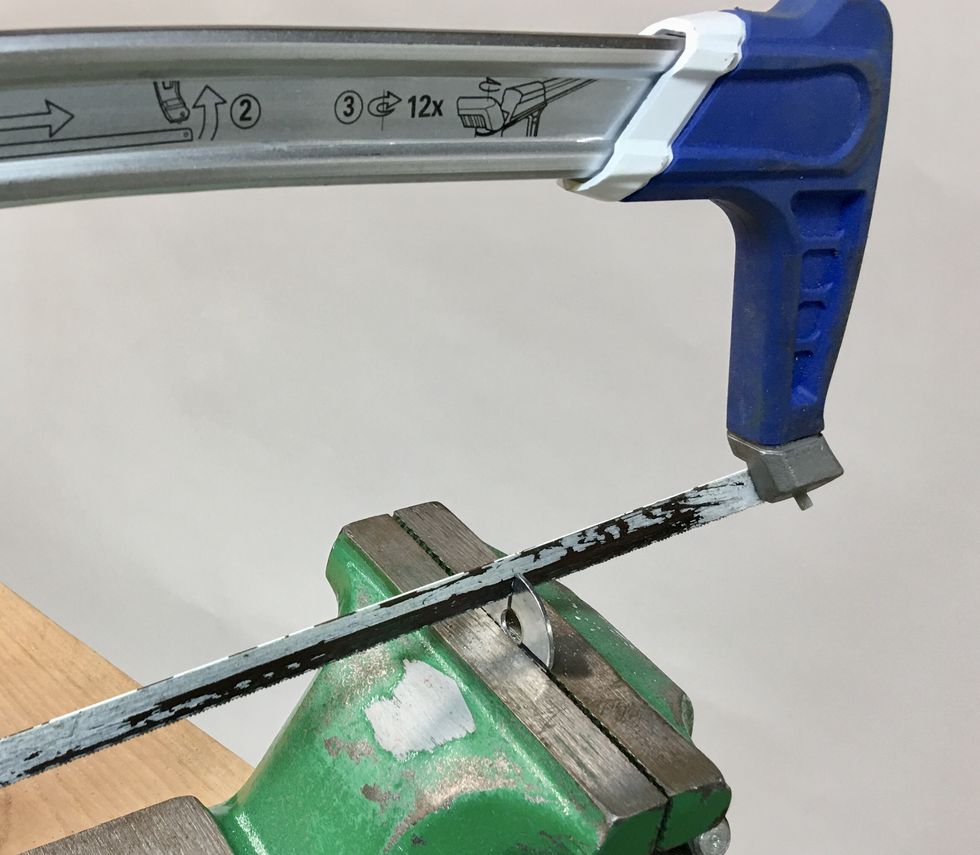
Clamp the bolt firmly in a vise. Place soft jaws, cardboard, leather, or wood between the vise and the bolt if you want to protect the surface.
Keep the cut area close to the vise jaws. A long, unsupported bolt can vibrate, bend, or chatter during the cut. That movement wastes effort and can produce a crooked edge.
Never hold the bolt in your hand while cutting. The blade can slip and cause a serious cut.
4. Fit the blade correctly
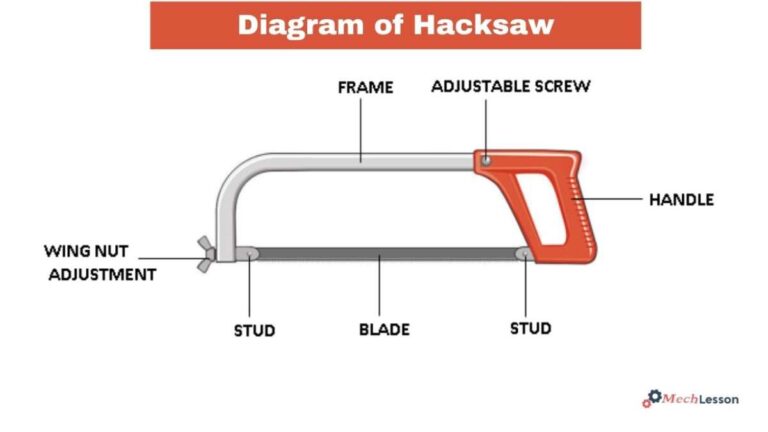
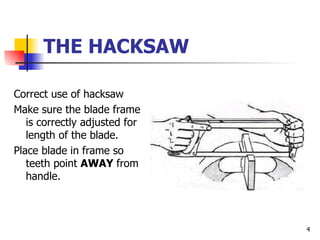
Install the blade so its teeth point forward, away from the handle. Tighten the frame until the blade feels firm.
A loose blade can bend and wander. An overly tight blade can break when it hits a hard spot. The blade should stay straight under moderate hand pressure.
5. Start with light strokes
Place the blade on your mark and make a few short strokes. These first strokes create a shallow groove called a kerf.
Once the groove is clear, use longer strokes that move most of the blade length. Let the teeth do the work. Press on the forward stroke, then reduce pressure as you pull the saw back.
6. Keep the cut square
Hold the hacksaw at a right angle to the bolt. Check the angle from more than one direction as you work.
A crooked cut can make the bolt hard to fit. It can also leave sharp corners and damage the threads. Slow, steady strokes are better than fast, forceful ones.
7. Finish and smooth the edge
Reduce pressure as the cut nears completion. This prevents the bolt from snapping and tearing the last section of metal.
Use a metal file or deburring tool to remove sharp edges. If the bolt will carry weight or pass through a tight hole, smooth the end carefully.
This method answers the question “can a hacksaw cut a bolt?” with a practical yes, but the quality of the result depends on support, blade choice, and patience.

How long does it take to cut a bolt?
A small steel bolt may take less than a minute with a sharp blade and a solid vise. A larger bolt can take several minutes, especially if it is stainless steel or hardened.
The cutting time depends on:
• Bolt diameter
• Metal hardness
• Blade sharpness
• Blade TPI
• Cutting angle
• Stability of the workpiece
• Your stroke length and pressure
If the blade makes fine metal dust but barely cuts, it may be dull or too fine for the bolt. If it catches and skips, the blade may be loose, the bolt may be moving, or the teeth may be too coarse.
A useful workshop lesson is that force rarely solves a slow cut. When a hacksaw feels difficult, stop and inspect the blade, clamp, and cutting angle before pushing harder.

Can a hacksaw cut hardened or stainless steel bolts?
A hacksaw can cut some hardened and stainless steel bolts, but the job may be slow. These metals resist ordinary cutting more than mild steel.
Use a sharp bi-metal blade with about 24 or 32 TPI. Apply steady pressure and use cutting oil if the bolt is thick and the manufacturer of the lubricant allows it.
Do not force a dull blade. Excess pressure can overheat the teeth, strip them, or cause the blade to snap. If the bolt does not show a useful groove after several careful strokes, a powered metal-cutting tool may be more suitable.
Hardened bolts may be marked with strength grades such as 8.8, 10.9, or 12.9. The marking system varies by bolt type and region, but high-strength fasteners are generally harder to cut than ordinary hardware-store bolts.

How to protect the bolt threads
Cutting close to a threaded end requires extra care. Damaged threads can stop a nut from starting or make the bolt unsafe to use.
Use these methods:
• Thread a matching nut onto the bolt before cutting
• Place the cut between two threads when possible
• Make a shallow guide groove before applying more pressure
• Keep the blade square to the bolt
• File the end with a slight bevel
• Test the nut by hand before using a wrench
If the nut will not start smoothly after cutting, do not force it. Stop and clean the threads with a file, thread-restoring tool, or die that matches the bolt size and pitch.
Do not reuse a bolt for a critical load if the cut has damaged its threads, reduced its strength, or removed its head. For brakes, suspension parts, lifting equipment, pressure systems, and structural connections, use the correct replacement fastener.

Safety tips for cutting a bolt
Metal cutting creates sharp edges and small chips. Basic protection makes the task much safer.
Wear:
• Safety glasses or a face shield
• Work gloves when handling the cut metal
• Close-fitting clothing
• Sturdy footwear
Keep your fingers away from the blade path. Make sure the vise is mounted securely and that the hacksaw frame has no cracks.
Avoid using excessive force. A broken blade can leave a sharp point, and a loose workpiece can twist without warning. Remove metal chips with a brush, not your bare hand.
If you use cutting oil, clean the work area afterward. Oily surfaces can make tools and parts slippery. Keep oil away from open flames and follow the product label.
For powered tools, add hearing protection and confirm that the tool and disc are rated for metal. An angle grinder can cut a bolt quickly, but it creates sparks, heat, noise, and a higher risk of injury.

Hacksaw versus other bolt-cutting tools
A hacksaw is not the only option. The best tool depends on the bolt size, location, metal type, and finish you need.
Bolt cutters
Bolt cutters work well on softer bolts, threaded rod, nails, and wire. They are fast, but they may crush the end of the bolt and damage several threads.
Angle grinder
An angle grinder with a metal-cutting disc cuts large or hardened bolts quickly. It is useful for seized fasteners, but it creates sparks and can damage nearby surfaces.
Reciprocating saw
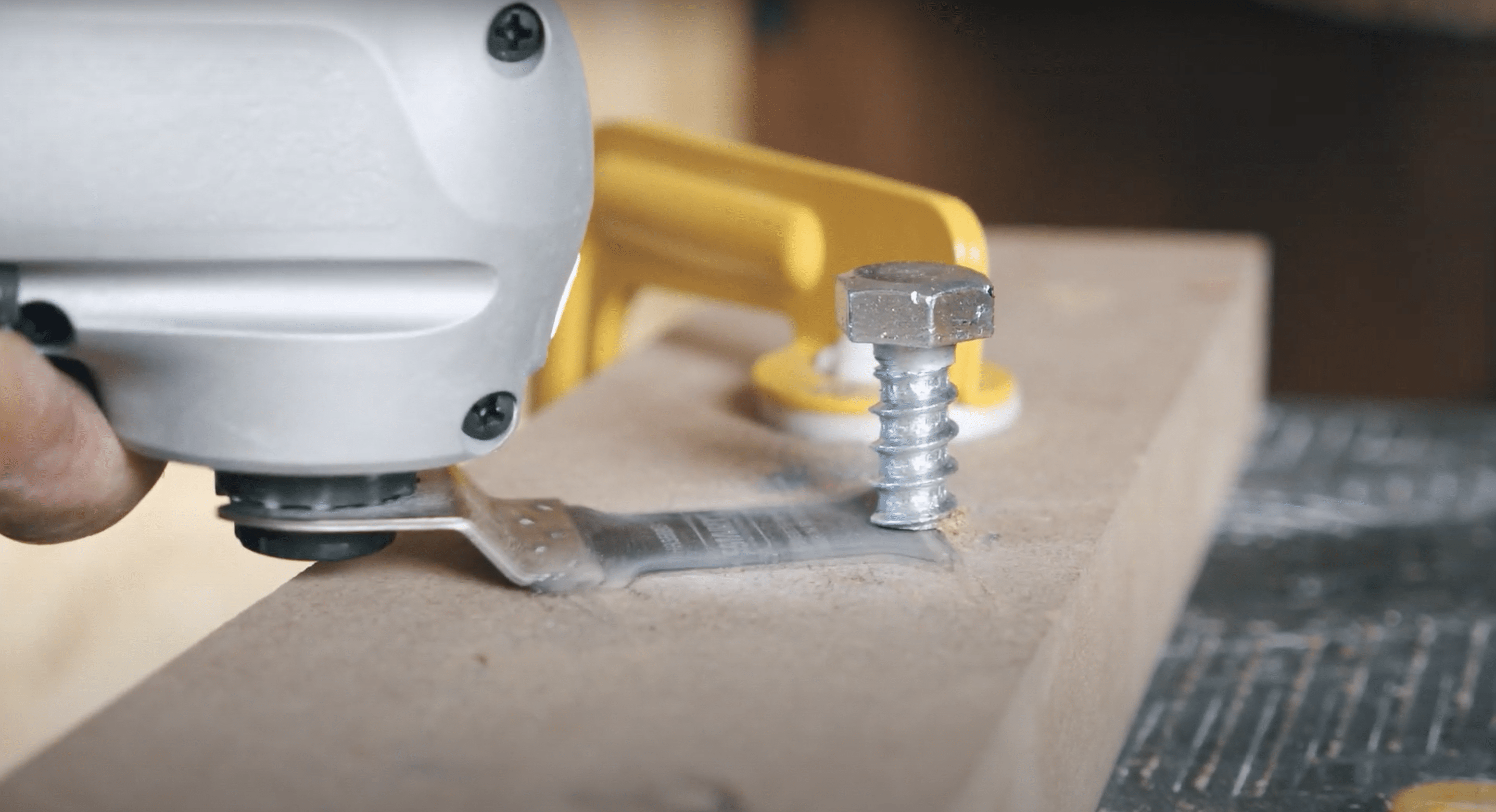
A reciprocating saw with a metal blade can cut bolts in tight spaces. It offers speed but less control than a hacksaw. Secure the workpiece and keep the blade away from wiring and hidden parts.
Rotary tool
A rotary tool with a reinforced metal-cutting wheel works for small bolts and delicate jobs. The wheel wears quickly, and the tool may struggle with thick steel.
Band saw
A band saw provides a clean, controlled cut for repeated work in a workshop. It is less convenient for a bolt already installed in a vehicle or structure.
In many home repairs, the hacksaw remains the safest starting point because it is quiet, affordable, and easy to control.
Common mistakes to avoid
Many poor cuts come from small setup errors rather than a lack of strength.
Avoid these mistakes:
• Using a dull blade
• Installing the blade backward
• Cutting without clamping the bolt
• Using too few teeth for a thin bolt
• Pushing on the return stroke
• Cutting too quickly
• Ignoring the nut-before-cutting method
• Leaving the cut edge sharp
• Reusing a damaged bolt in a critical application
One common mistake is cutting the bolt at the exact length without checking the nut or washer first. Leave enough exposed thread for the nut to engage fully, but avoid leaving a long, sharp section that can catch clothing or skin.
Another mistake is assuming every bolt has the same strength after cutting. Cutting the threaded end usually does not remove the bolt’s main load area, but damage, heat, corrosion, or a poor replacement can still affect safety.
Frequently Asked Questions About Can a Hacksaw Cut a Bolt
Can a hacksaw cut a stainless steel bolt?
Yes, a hacksaw can cut a stainless steel bolt with a sharp bi-metal blade. Use steady pressure, keep the bolt secure, and avoid overheating the blade through excessive force.
What is the best hacksaw blade for cutting bolts?
A 24 TPI bi-metal blade is a strong general choice for common bolts. Use 18 TPI for thicker, softer bolts and 32 TPI for small bolts or fine cuts.
Can a hacksaw cut a bolt while it is installed?
Yes, if you can safely reach the bolt and protect nearby parts. Clamp or support the surrounding work when possible, and use extra care because an installed bolt may move or hide wiring, fuel lines, or other components.
How do you cut a bolt without damaging the threads?
Thread a matching nut onto the bolt before cutting, then remove the nut over the cut end. File away burrs and start the nut by hand to confirm that the threads work correctly.
Can a hacksaw cut a hardened bolt?
It can cut some hardened bolts, but the process may be slow. A new bi-metal blade is essential, and a grinder or reciprocating saw may be a better choice for thick, high-strength fasteners.
Is it safe to reuse a bolt after cutting it?
A cut bolt may be reusable for light-duty work if the threads remain clean and the bolt is not damaged. Replace it for safety-critical, structural, lifting, braking, or suspension applications unless the manufacturer or a qualified professional approves the repair.
Why does my hacksaw keep slipping off the bolt?
The blade may be dull, loose, or poorly aligned. Start a shallow groove with light strokes, secure the bolt close to the vise, and keep the blade square to the cutting line.
Conclusion
A hacksaw can cut a bolt cleanly when you use the right metal-cutting blade, secure the work, and make steady strokes. A 24 TPI bi-metal blade is a dependable choice for many common bolts, while hardened or large fasteners may need a powered tool.
Protect the threads by adding a nut before cutting, smooth the sharp edge with a file, and never reuse a damaged bolt in a critical application. Take your time, work safely, and choose the tool that matches the metal and the job. For more practical tool guides, explore related repair resources and share your own bolt-cutting tips in the comments.
Recent Tool Guides
 Hammer
How To Hammer Flowers Onto Paper: Easy Guide
Learn how to hammer flowers onto paper with simple steps, helpful tips, and beautiful results for...
Read Guide → Wrench
How To Use A Hex Wrench: Easy Step-By-Step Guide
Learn how to use a hex wrench correctly with simple steps, helpful tips, and common mistakes...
Read Guide → Hacksaw
How To Cut Curtain Pole With Hacksaw: Easy Guide
Learn how to cut curtain pole with hacksaw safely and neatly. Follow simple steps for accurate...
Read Guide → Wrench
How To Use A Husky Torque Wrench: Easy Guide
Learn how to use a Husky torque wrench correctly with simple steps, torque settings, and safety...
Read Guide → Hammer
How To Hold A Hammer: Safe Grip Guide
Learn how to hold a hammer with the right grip, stance, and technique for safer, more...
Read Guide → Hacksaw
How To Cut Flexible Metal Conduit With Hacksaw: Easy Guide
Learn how to cut flexible metal conduit with hacksaw safely and cleanly. Follow simple steps for...
Read Guide →