

A hacksaw is called a hacksaw because “hack” once meant to cut roughly, quickly, or with repeated blows.
The name sounds more dramatic than the tool feels, but its history is quite practical. A hacksaw is a fine-toothed frame saw made for cutting metal and other hard materials with short, repeated strokes. Understanding why is it called a hacksaw also explains its design, its limits, and the best way to use it safely.
What Is a Hacksaw?
A hacksaw is a hand tool with a thin, replaceable blade held under tension in a metal frame. Most blades have small teeth that face forward and cut when you push the saw. The tool is common in plumbing, auto repair, construction, maintenance, and home workshops.
Unlike a wood saw, a hacksaw is built for hard materials. It can cut:
• Steel and stainless steel
• Aluminum and copper
• Brass
• Plastic pipe
• Electrical conduit
• Bolts, threaded rod, and metal brackets
The standard hacksaw has a bow-shaped frame and a handle at one end. The blade stretches between two pins or posts. A tension screw keeps the blade tight so it does not bend during use.
The term “hacksaw” describes the tool’s cutting action more than its shape. It does not mean the saw is poorly made. It refers to a rough, forceful, or repeated cutting motion.
:max_bytes(150000):strip_icc():focal(749x0:751x2)/desmond-doss-ceremony-15daf38941a44962a7e821f8c4ab4cdb.jpg)
Why Is It Called a Hacksaw?
The word “hack” has a long history in English. In older use, to hack meant to cut or chop with rough, repeated strokes. A person might hack at wood, meat, stone, or another tough material rather than make one smooth slice.
That older meaning is the key to understanding why is it called a hacksaw. The tool makes many short cuts with small teeth. Each stroke removes a little material. The action is steady and repetitive, much like hacking through a hard object.
The name does not come from computer hacking. That modern meaning developed much later. It also does not suggest that a hacksaw is used only for careless work. A skilled user can make a very clean cut with one.
English tool names often describe action. A handsaw cuts by hand. A backsaw has a reinforced back. A coping saw uses a narrow blade for shaped cuts. In the same way, a hacksaw was named for the way it “hacks” through material.
There is no single, fully proven inventor behind the name. Historical dictionaries and tool references show that “hack saw” and “hacksaw” developed from older uses of the word hack. The exact first date can vary by reference because older spelling was not always consistent.

What Does “Hack” Mean in Older Tool Language?
The word hack once had several related meanings. It could mean to cut roughly, chop into pieces, or make repeated blows. It could also describe an uneven cut or a tool that removed material in a crude but useful way.
That meaning was not always negative. A rough cut can be exactly what a worker needs at the start of a job. For example, a plumber may cut a long threaded rod into smaller pieces before filing the ends. The first cut does not need to be decorative. It needs to be controlled and useful.
This helps explain why is it called a hacksaw rather than a “metal saw.” The older name focuses on the motion. The tool makes a series of small hacks, even though the user guides the blade in a straight line.
The word also appears in other tool terms. A “hack knife” may refer to a heavy cutting knife, while “hack work” once meant rough or routine work. These uses share the idea of repeated effort and practical cutting.
Modern users may hear “hack” and think of computers, shortcuts, or clever tricks. That meaning can create confusion. In the name hacksaw, the word is much older and relates to physical cutting.
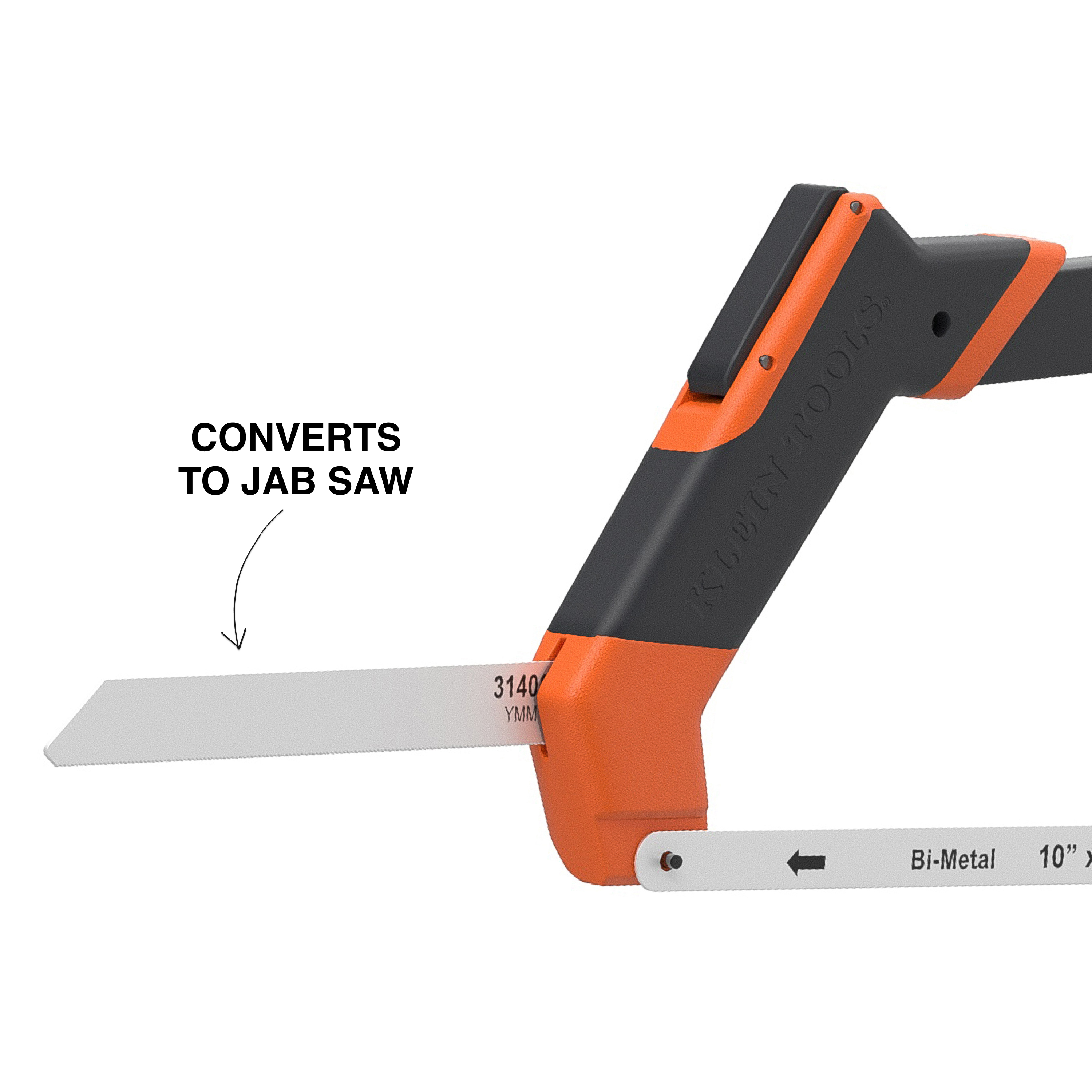
How Does a Hacksaw Cut Metal?
A hacksaw cuts through a process called abrasion and shearing. Each tooth acts like a tiny cutting edge. As the blade moves forward, the teeth bite into the surface and lift out small chips of material.
The blade does not remove a large piece with each stroke. Instead, hundreds of small teeth work together. This is why a hacksaw needs repeated back-and-forth movement.
A good cut depends on several factors:
• Blade tooth count: Fine teeth work well on thin metal. Coarse teeth suit thicker stock.
• Blade tension: A loose blade may wander, twist, or break.
• Pressure: Moderate forward pressure helps the teeth cut. Too much force can damage the blade.
• Speed: Slow, steady strokes reduce heat and wear.
• Lubrication: Cutting oil can reduce friction on many metals.
Most hacksaw blades are made from hardened steel or high-speed steel. Many modern blades use flexible alloy bodies with hardened teeth. This design lets the blade bend slightly without snapping while keeping the teeth hard enough to cut metal.
The cutting stroke is usually the forward stroke. On the return stroke, reduce pressure and let the blade glide. This simple habit protects the teeth and makes the cut smoother.

Why Does a Hacksaw Have Fine Teeth?
Fine teeth give the blade many contact points across a small area. This matters because thin metal can catch or bend if the blade has teeth that are too large.
Hacksaw blades are often described by teeth per inch, or TPI. Common choices include 14, 18, 24, and 32 TPI. The correct choice depends on the thickness and type of material.
A useful rule is to keep at least two or three teeth engaged with the work at all times. If only one tooth touches the material, it can catch and break. If too many teeth are buried in thick stock, chips may clog the gaps between them.
Use these general guidelines:
• 14 TPI: Thick metal, heavy brackets, and large sections
• 18 TPI: Medium-thick steel and general repair work
• 24 TPI: Thin-wall tubing, conduit, and common shop tasks
• 32 TPI: Very thin sheet metal and small parts
These figures are guides, not strict laws. Stainless steel, aluminum, plastic, and brass each behave differently. When unsure, choose a blade that keeps several teeth in contact with the material.
This fine-tooth design is another reason why is it called a hacksaw in a historical sense. The user applies many short cutting actions instead of one deep chop.

Hacksaw History and Development
Early metalworkers used files, chisels, and various saws long before the modern hacksaw became common. As metal production improved, workers needed a hand tool that could cut rods, pipes, bolts, and thin sections with more control.
The modern frame hacksaw developed as a practical metal-cutting tool during the growth of industrial manufacturing. Its basic design solved a key problem: thin blades cut well, but thin blades are difficult to control without support and tension.
The frame holds the blade straight. The tension system prevents excessive bending. The replaceable blade keeps the tool useful even after the teeth wear out.
Over time, manufacturers introduced different frame styles:
• Fixed frames hold one blade length.
• Adjustable frames accept several blade lengths.
• Junior hacksaws use smaller blades and compact frames.
• Heavy-duty frames support thicker blades for demanding work.
• High-tension frames improve straight cuts and reduce blade movement.
Power hacksaws later brought the same basic cutting principle to machines. A motor moves the blade through metal, reducing the physical effort needed for large jobs. Band saws use a continuous loop blade and are often faster, but the hand hacksaw remains useful because it is cheap, portable, and easy to control.
The exact history of the word is less certain than the history of the tool. Language changes gradually. Older references may use “hack saw” as two words, while modern American English usually uses “hacksaw” as one word.
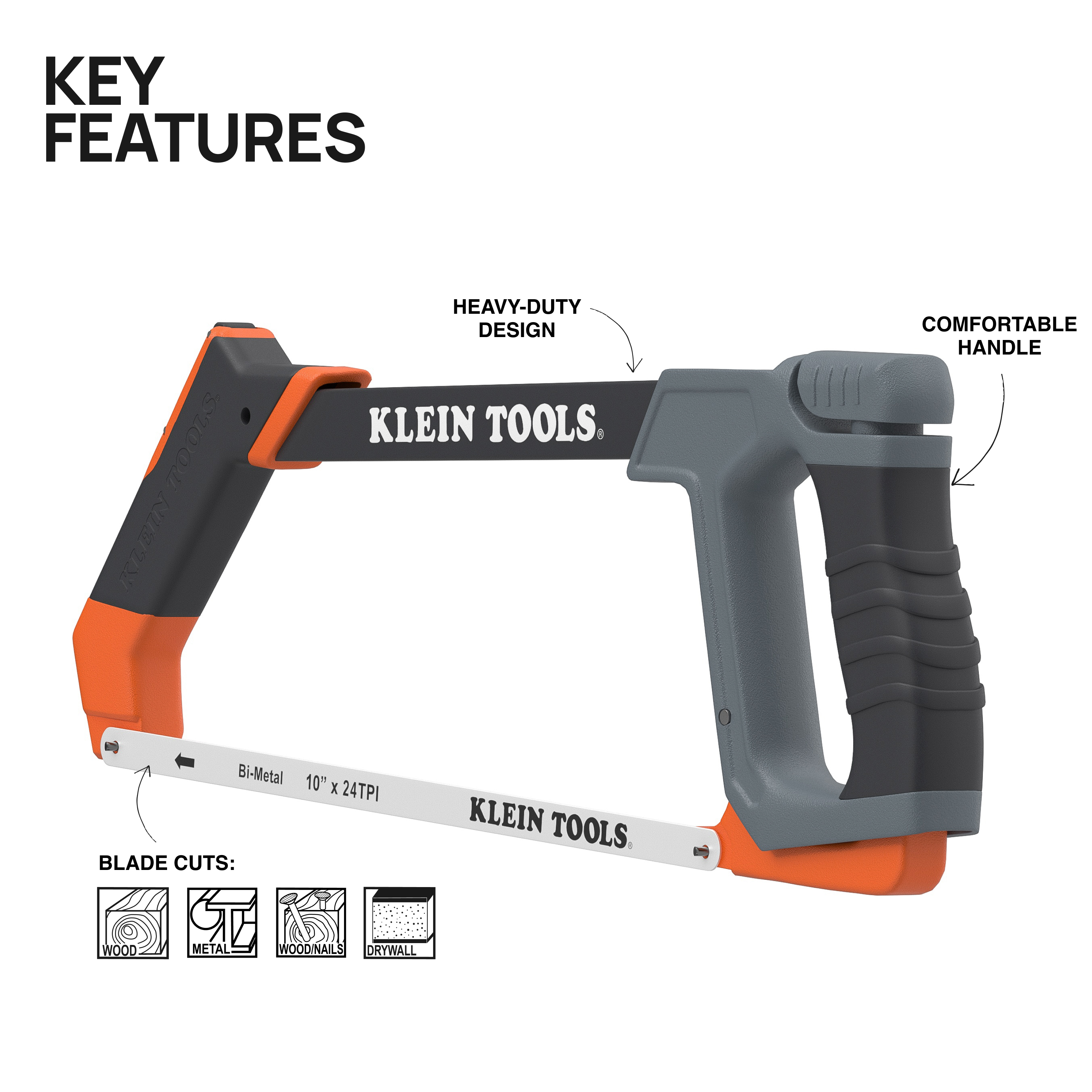
How to Use a Hacksaw Correctly
A hacksaw is simple, but technique affects both safety and cut quality. I have found that most poor results come from rushing, using the wrong blade, or failing to secure the work.
Follow these steps:
- Mark the cut with a pencil, marker, or metal scribe.
- Secure the material in a vise or clamp.
- Select a blade suited to the material thickness.
- Install the blade with the teeth pointing forward.
- Tighten the blade until it feels firm and straight.
- Start with a few light strokes to create a small groove.
- Use long, steady strokes that use most of the blade length.
- Apply pressure only on the forward stroke.
- Keep the frame aligned with the cut line.
- Slow down as the blade nears the end of the cut.
- Support the loose section so it does not tear or fall.
- Smooth sharp edges with a file.
One lesson I learned early is not to force the blade. Heavy pressure feels faster, but it often causes crooked cuts and broken teeth. A calm rhythm usually removes metal more quickly than hard pushing.
Another common mistake is using only the front part of the blade. Short strokes wear one area and waste the rest. Long strokes spread the work across more teeth and help the blade last longer.
Wear safety glasses. Small metal chips can move quickly, and freshly cut edges can be sharp enough to cause serious cuts.

Common Hacksaw Mistakes to Avoid
Even experienced users can damage a blade through small errors. The good news is that most problems are easy to prevent.
• Installing the blade backward: The teeth should normally point away from the handle so they cut on the forward stroke.
• Choosing the wrong TPI: Large teeth on thin material can snag and break.
• Leaving the blade loose: A loose blade can twist and make an uneven cut.
• Pushing on the return stroke: This dulls teeth and increases friction.
• Using excessive speed: Fast strokes create heat and shorten blade life.
• Cutting unsupported material: Vibration can cause rough edges and broken blades.
• Starting without a groove: The blade may slide across the surface and scratch it.
• Ignoring burrs: A cut edge can remain dangerously sharp after the part is removed.
When I cut a bolt or threaded rod, I often place a nut beyond the cut line. After cutting, I remove the nut to help straighten minor damage on the threads. This small trick can save time, but it does not replace filing badly damaged threads.
For stainless steel, use steady pressure and avoid stopping too often. Stainless steel can harden at the surface if the blade rubs without cutting. Once that happens, the next stroke becomes much harder.

Hacksaw Benefits and Limitations
The hacksaw remains popular because it offers several clear benefits:
• It is inexpensive.
• It needs no electricity or battery.
• It fits in a toolbox.
• It can cut in tight spaces.
• Its blades are easy to replace.
• It gives the user strong control over the cut.
• It can cut many metals and plastics.
Still, a hacksaw has limits. It is slower than an angle grinder, reciprocating saw, or band saw for thick material. It also requires physical effort and may leave burrs that need filing.
A hacksaw is best for small repairs, light fabrication, plumbing work, and controlled cuts. It may not be the best choice for thick structural steel, repeated production work, or long cuts through heavy stock.
Power tools can save time, but they bring more noise, sparks, vibration, and safety concerns. A hacksaw produces no sparks under normal use, which can make it a better choice near flammable materials. However, the cut itself can still create hot chips and sharp edges.
The right tool depends on the job. The name explains the tool’s action, but it does not mean a hacksaw is suitable for every cutting task.
Hacksaw, Junior Hacksaw, and Coping Saw
People sometimes confuse a hacksaw with similar frame saws. Their shapes may look alike, but their jobs differ.
A standard hacksaw has a relatively deep frame and a blade made for metal and hard plastic. It is strong enough for bolts, pipe, rod, and conduit.
A junior hacksaw is smaller and lighter. It often uses a narrow blade fixed at one end of a compact frame. It works well for light cuts, small parts, crafts, and limited-access areas.
A coping saw has a thin, narrow blade designed for curved cuts in wood and some other materials. Its frame allows the blade to rotate, which helps the user follow curves. It is not a direct replacement for a hacksaw when cutting heavy metal.
A reciprocating saw uses a powered blade that moves back and forth. It can perform some tasks similar to a hacksaw, but it is louder and less precise in many small jobs.
Knowing these differences prevents a common mistake: choosing a tool based only on appearance. The blade type, tooth pattern, frame strength, and intended material matter more than the general shape.
Frequently Asked Questions About Why Is It Called a Hacksaw
Why is it called a hacksaw instead of a metal saw?
The word “hack” once meant to cut with rough, repeated strokes. The name describes the back-and-forth action of the tool, although a hacksaw can make a clean and accurate cut.
Does a hacksaw cut by hacking?
In the older sense of the word, yes. Its small teeth remove material through many repeated cuts rather than one deep stroke, which matches the historical meaning of “hack.”
Is a hacksaw only for cutting metal?
No. A hacksaw can also cut plastic pipe, conduit, brass, copper, aluminum, and other materials. The correct blade and tooth count depend on the material and its thickness.
Does the word hacksaw relate to computer hacking?
No. The tool name comes from the older physical meaning of “hack,” which meant cutting or chopping roughly. Computer-related uses of “hack” developed much later.
Which way should a hacksaw blade face?
For a standard hacksaw, the teeth usually face forward, away from the handle. This setup lets the blade cut during the forward stroke.
Why do hacksaw blades break?
Blades often break because of excessive force, poor tension, twisting, the wrong tooth count, or cutting with too few teeth engaged. A straight setup and steady strokes greatly reduce breakage.
Can a hacksaw make a straight cut?
Yes. Clamp the material firmly, mark the line, start with light strokes, and keep the frame aligned. A file can remove small burrs or correct minor roughness afterward.
Conclusion
The answer to why is it called a hacksaw comes from the older meaning of “hack”: to cut with repeated, rough strokes. The tool’s fine teeth, tensioned frame, and forward cutting motion all fit that history.
A hacksaw is simple, affordable, and highly useful when matched with the right blade. Choose the correct tooth count, secure the work, use steady strokes, and protect your eyes and hands. Put these habits into practice on your next repair, then explore more hand-tool guides or share your own hacksaw tips in the comments.
