What Is A Hacksaw Blade: Uses And Buying Guide
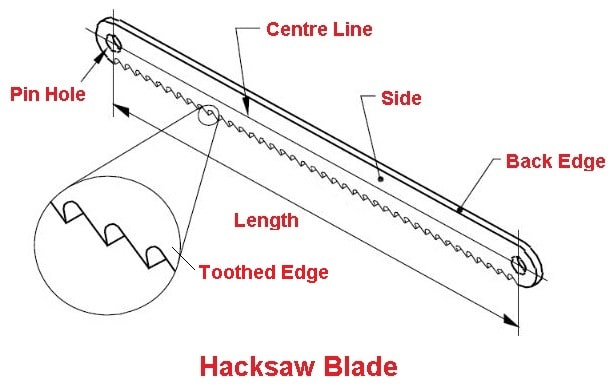
A hacksaw blade is a thin, toothed strip of hardened steel used with a hacksaw frame to cut metal, plastic, conduit, pipe, and other tough materials. In the United States, the most common hacksaw frame uses a 12-inch blade, although shorter blades and smaller junior hacksaws are also available.
The blade’s tooth count, material, length, and tooth pattern affect how well it cuts. A fine-tooth blade works well on thin metal. A coarse-tooth blade removes material faster from thick stock. Choosing the wrong blade can lead to slow cuts, broken teeth, or a rough finish.

How Does a Hacksaw Blade Work?
A hacksaw blade cuts by using many small teeth to remove material during repeated strokes. Each tooth acts like a tiny cutting edge. As you push the saw forward, the teeth scrape and cut the workpiece. On the return stroke, the blade usually does little or no cutting.
Most hacksaw blades are installed with the teeth facing forward, away from the handle. The frame holds the blade under tension so it stays straight during the cut.
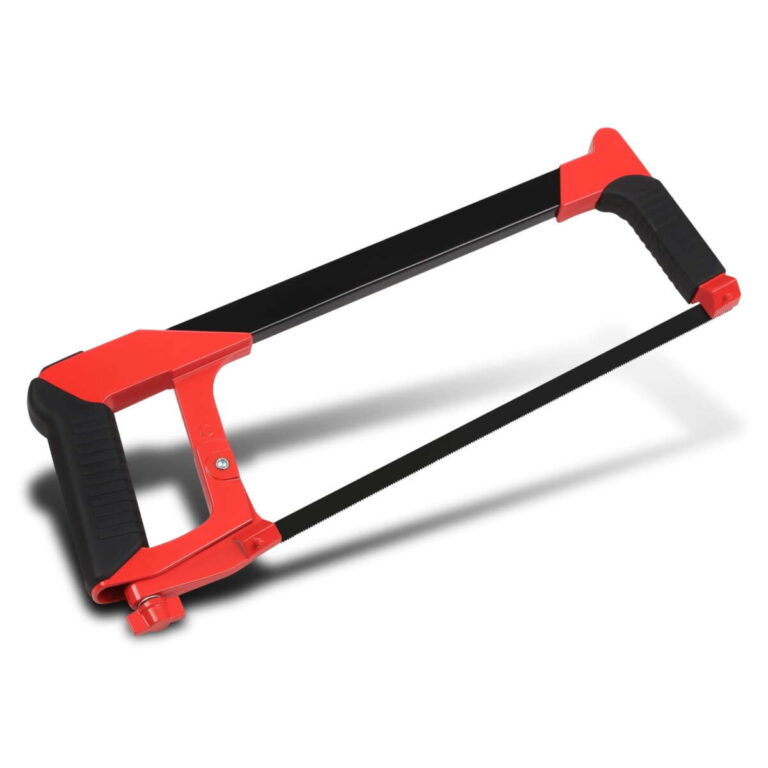
A typical hacksaw has these parts:
- Blade: The toothed strip that does the cutting.
- Frame: The metal holder that supports the blade.
- Handle: The part you grip while sawing.
- Blade pins or holes: The end fittings that connect the blade to the frame.
- Tensioning screw or lever: The mechanism that keeps the blade tight.
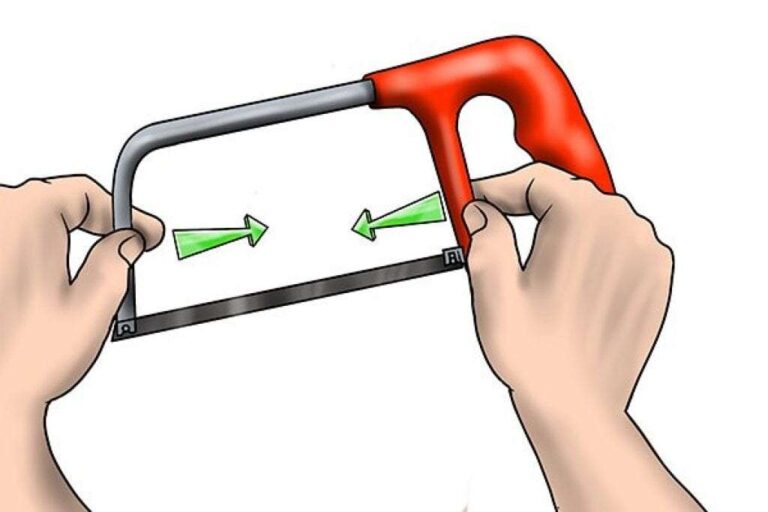
A blade must have enough tension to resist bending, but excessive tension can cause the blade or frame to fail. If the blade bows while cutting, it may be loose, dull, damaged, or poorly supported.

What Are Hacksaw Blades Made Of?
Hacksaw blades are commonly made from carbon steel, high-speed steel, or bi-metal materials. Each type balances cost, flexibility, hardness, and cutting life in a different way.
| Blade material | Main benefit | Common limitation | Typical use |
|---|---|---|---|
| Carbon steel | Low cost and easy to use | Teeth may wear or break sooner | Light-duty cutting |
| High-speed steel | Hard, wear-resistant teeth | Can be less forgiving if brittle | Hard metals and frequent cutting |
| Bi-metal | Flexible body with hard teeth | Usually costs more | General-purpose and professional work |
Carbon steel blades
Carbon steel blades are often the least expensive option. They can work well for occasional cuts through mild steel, plastic, aluminum, and similar materials.
Their teeth may dull faster than those on bi-metal blades. They are also more likely to break if you twist the frame or apply too much force.
High-speed steel blades
High-speed steel, often marked HSS, can hold a sharp edge when cutting harder materials. These blades are useful when wear resistance matters.
A very hard blade is not always the best choice. If the blade lacks flexibility, side pressure or twisting can cause tooth loss or breakage.
Bi-metal blades
A bi-metal hacksaw blade combines two types of steel. The cutting edge uses a hard alloy, while the back of the blade uses a tougher, more flexible steel.
This design helps the blade resist both tooth wear and breakage. Bi-metal blades are a common choice for repair work, metal fabrication, plumbing, automotive work, and maintenance in the United States.
What Does TPI Mean on a Hacksaw Blade?
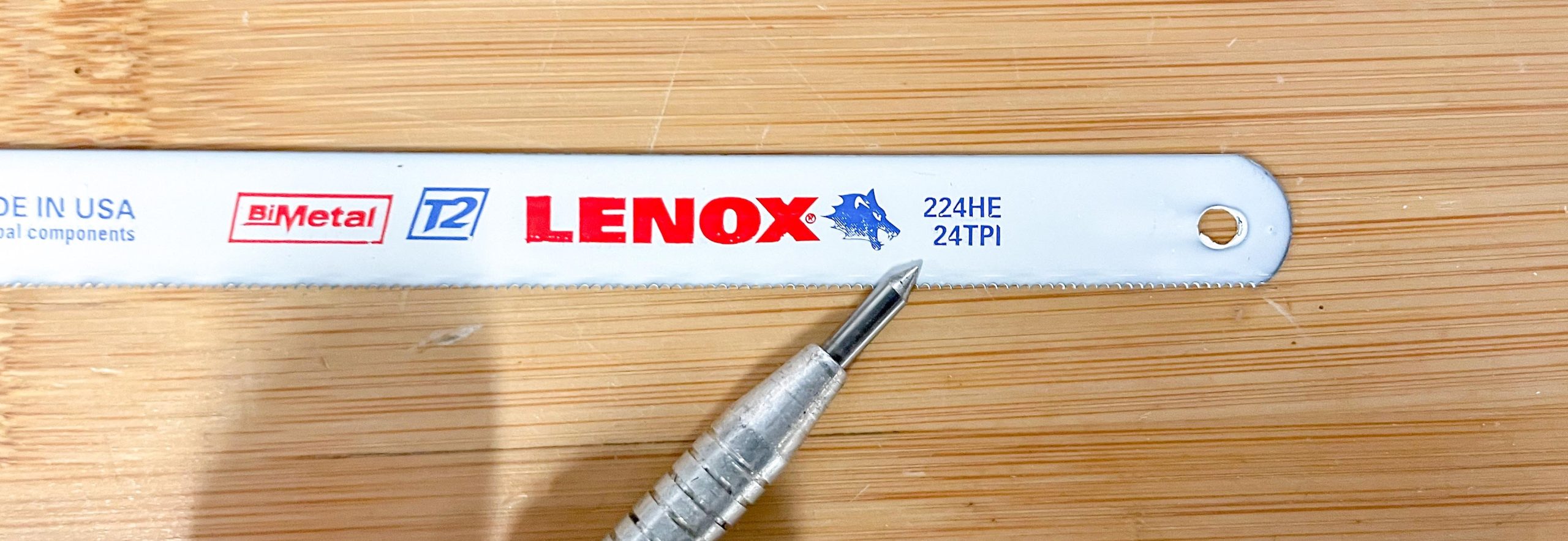
TPI means teeth per inch. It tells you how many teeth appear along one inch of the blade. TPI is one of the most important factors when choosing a hacksaw blade.
A low TPI number means larger teeth and deeper gaps between them. A high TPI number means smaller teeth that make a smoother cut.
| Blade TPI | Tooth type | Suitable materials and jobs |
|---|---|---|
| 10 TPI | Coarse | Thick metal, large plastic sections, soft materials |
| 12–14 TPI | Medium-coarse | General metal cutting and thicker stock |
| 18 TPI | Medium-fine | Medium-thickness metal, tubing, and angle stock |
| 24 TPI | Fine | Thin-wall tubing, sheet metal, and small parts |
| 32 TPI | Very fine | Thin sheet metal, narrow tubing, and delicate cuts |
These ranges are practical guidelines, not strict rules. Blade makers may offer slightly different TPI options.
Match the TPI to the material thickness
Choose a blade so that at least three teeth contact the workpiece during the cut. This reduces the chance of catching and breaking teeth.
For example:
- Use a 10- or 12-TPI blade for a thick steel bar.
- Use an 18-TPI blade for common steel tubing.
- Use a 24- or 32-TPI blade for thin sheet metal.
- Use a fine-tooth blade for thin copper or plastic tubing.
A coarse blade on thin material can snag and strip teeth. A fine blade on thick material can clog with chips and cut very slowly.

What Sizes Do Hacksaw Blades Come In?
The most common full-size hacksaw blade in the United States is 12 inches long, measured from one mounting hole to the other. Many full-size frames also accept blades around 10 or 12 inches, but the frame determines the correct size.
Common blade lengths include:
- 6 inches: Small frames and compact cutting tools.
- 8 inches: Short hacksaws and selected specialty frames.
- 10 inches: Some full-size frames.
- 12 inches: The most common standard hacksaw size.
- 18 inches: Large frames for longer strokes and heavier work.
A junior hacksaw often uses a blade about 6 inches long. These smaller tools are useful for light work, tight spaces, model making, small plumbing repairs, and thin materials.
Before buying a replacement blade, check:
- The blade length required by the frame.
- The distance between the mounting holes.
- The blade width and thickness.
- The blade TPI.
- Whether the frame uses a standard pin-mounted blade.
A blade that is too long may not tension correctly. A blade that is too short may not fit the frame at all.
How Do You Choose the Right Hacksaw Blade?
Choose the blade by considering the material, thickness, cut quality, and available space. No single blade works best for every job.
For steel
Use a medium- or fine-tooth blade for most steel. Thick steel may need a 10- or 12-TPI blade. Thin steel sheet and tubing usually need 18, 24, or 32 TPI.
Hardened steel, stainless steel, and spring steel can be difficult to cut. A sharp bi-metal blade is often more suitable than a basic carbon steel blade, but the cut may still take time.
For aluminum
Aluminum is soft and can clog fine teeth with chips. A medium-coarse blade often works well. Keep the blade moving and clear chips from the cut.
Do not use excessive pressure. Aluminum can grab the blade if the teeth become packed.
For copper and brass
Copper and brass are relatively soft. A fine- or medium-tooth blade can produce a controlled cut, especially on pipe and small parts.
Support tubing close to the cut. Unsupported pipe can flex and make the blade wander.
For plastic
A hacksaw can cut PVC, ABS, plastic conduit, and many other rigid plastics. A medium-tooth blade often gives a useful balance between speed and control.
Fine teeth can reduce chipping on some plastics. After cutting, remove burrs with a file or deburring tool.
For wood
A hacksaw blade is not the right tool for most wood. Its small teeth can clog with sawdust and produce a slow, rough cut. Use a wood saw or another tool designed for wood instead.

How to Install a Hacksaw Blade
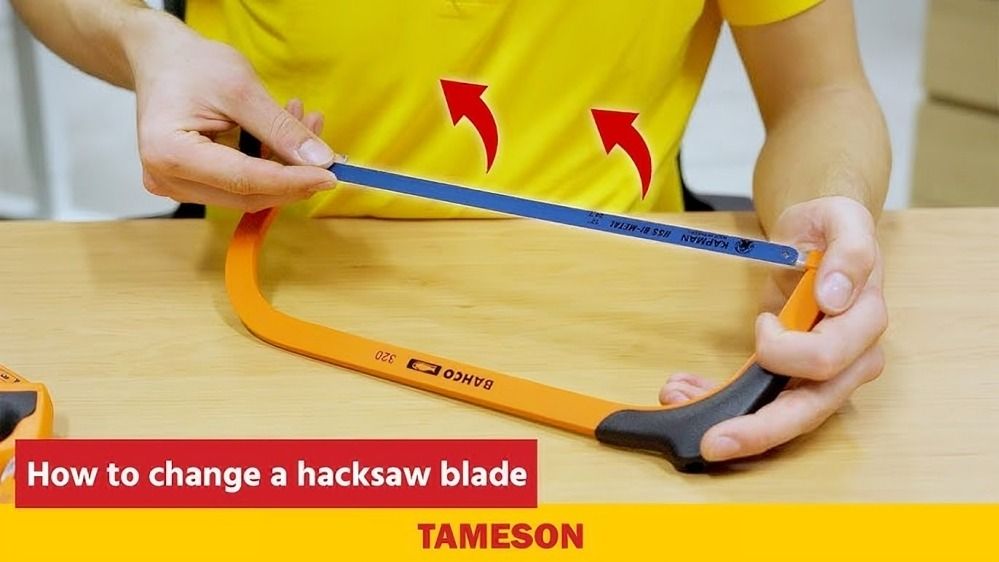
Install a hacksaw blade with the teeth pointing forward unless the frame manufacturer specifies another arrangement.
- Release the blade tension. Turn the tensioning screw or move the release lever.
- Remove the old blade. Take it out carefully because the teeth may still be sharp.
- Check the new blade. Look for bent sections, missing teeth, or cracks.
- Fit the mounting holes over the frame pins.
- Set the teeth in the forward direction.
- Tighten the tensioning mechanism.
- Check the blade by hand. It should feel firm and straight, not loose or severely bowed.
Do not install a blade that has visible cracks or damaged mounting holes. A defective blade can break under tension.
How tight should the blade be?
The blade should be tight enough to stay straight during a normal cut. It should not flap, twist, or move sideways easily.
Avoid treating blade tension like a competition. Over-tightening can damage the frame, strip the tension screw, or contribute to blade failure. Follow the tool maker’s instructions when available.
How to Use a Hacksaw Blade Correctly
A good technique makes the blade cut faster and last longer.
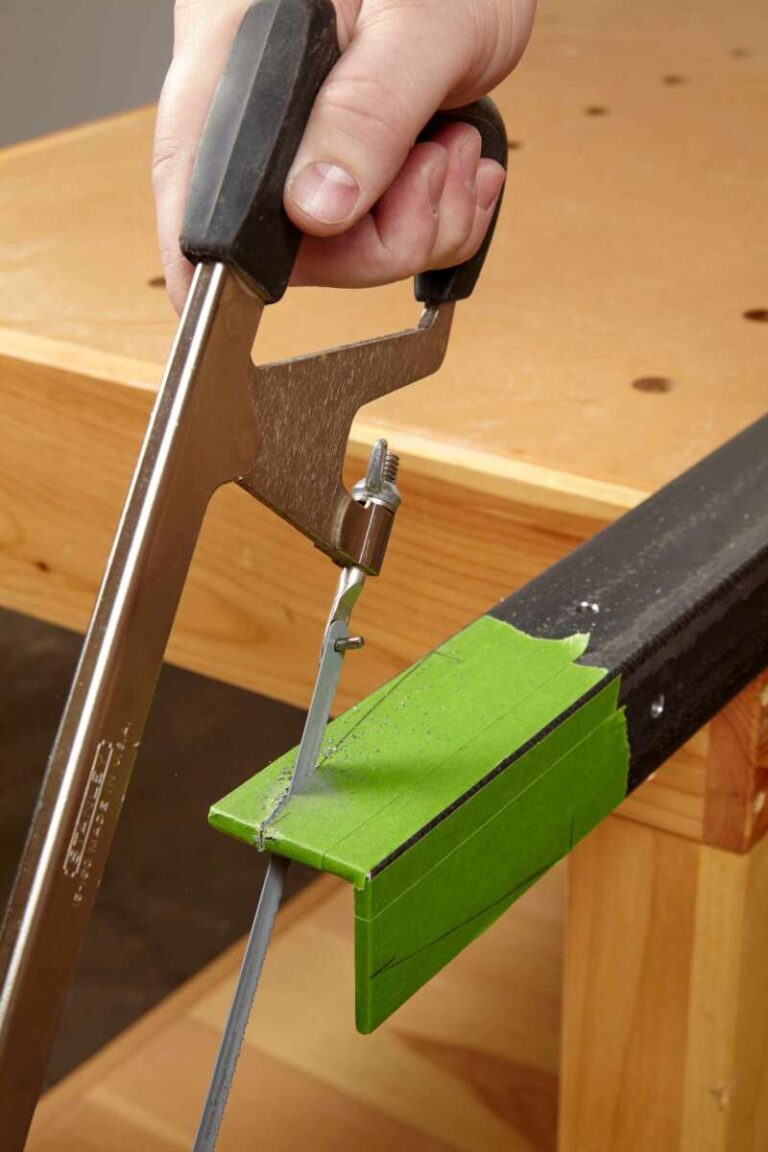
- Secure the workpiece. Clamp it in a vise or hold it with a suitable fixture. Keep both hands away from the cutting path.
- Mark the cut line. Use a marker, scribe, or layout tool.
- Choose the correct TPI. Make sure several teeth will contact the material.
- Start with short strokes. Create a shallow groove on the cut line.
- Use long, steady strokes. Let much of the blade length pass through the material.
- Apply moderate forward pressure. Press on the cutting stroke and ease off on the return stroke.
- Keep the blade square. Use even pressure so the cut does not angle.
- Slow down near the end. Support the cut-off section to prevent tearing or breakage.
- Remove burrs. Use a file or deburring tool after the cut.
A hacksaw works best with steady pressure, not force. Pushing too hard can bend the blade, damage teeth, and make the cut less accurate.

Why Does a Hacksaw Blade Break or Cut Poorly?
A broken or slow blade usually points to a problem with blade choice, setup, or technique.
| Symptom | Possible cause | Practical correction |
|---|---|---|
| Blade bends | Loose tension or side pressure | Tighten the blade and keep the frame square |
| Teeth break | Too much force or wrong TPI | Use lighter pressure and match TPI to thickness |
| Cut takes too long | Dull blade or fine TPI on thick material | Use a fresh blade with a lower TPI |
| Blade clogs | Soft material or packed chips | Use a suitable tooth pattern and clear debris |
| Cut wanders | Poor support or uneven strokes | Clamp the work and start with a shallow groove |
| Material grabs | Coarse teeth on thin stock | Use a finer blade and reduce pressure |
| Rough burrs remain | Dull blade or poor support | Replace the blade and file the edge |
A blade that suddenly skips may have dull teeth, a damaged section, or insufficient tension. Stop cutting and inspect it rather than forcing the tool.

Hacksaw Blade Safety Tips
Wear safety glasses when cutting with a hacksaw. Small metal chips, broken teeth, and fragments from the workpiece can become airborne.
Use these precautions:
- Clamp the workpiece before cutting.
- Keep the blade tight and undamaged.
- Wear gloves when handling blades, but keep gloves away from moving teeth.
- Do not place your fingers in front of the blade.
- Cut away from your body when the setup allows.
- Keep the frame aligned with the cut.
- Do not use a damaged or heavily worn blade.
- Remove sharp burrs after cutting.
- Store spare blades where the teeth cannot injure someone.
- Use hearing protection when cutting for long periods or in a noisy work area.
Be especially careful with coated, painted, or unknown materials. Cutting some coatings can create harmful dust or fumes. If the material may contain lead, asbestos, or another hazardous substance, stop and follow the applicable workplace or local safety guidance.

Hacksaw Blade vs. Reciprocating Saw Blade
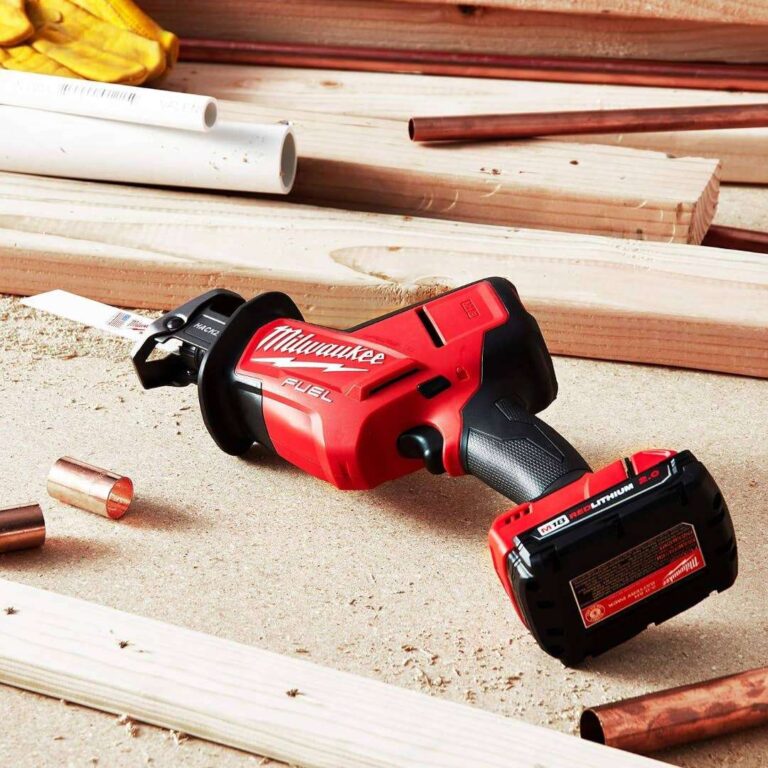
A hacksaw blade is designed for a hand-operated hacksaw. A reciprocating saw blade is designed for a powered saw that moves the blade rapidly back and forth.
The two blades are not interchangeable in most tools. They also differ in thickness, mounting style, tooth design, and operating speed.
Use a hacksaw blade when you need:
- Quiet cutting.
- Precise control.
- A low-cost hand tool.
- Access without electricity or batteries.
- A clean, gradual cut through small parts.
Use a reciprocating saw blade when the material, workspace, and safety conditions support powered cutting. Powered tools cut faster, but they can create more noise, vibration, heat, and flying debris.

Frequently Asked Questions About Hacksaw Blades
Which hacksaw blade is best for metal?
A bi-metal blade with about 18 to 24 TPI is a useful general choice for many metal-cutting jobs. Use a lower TPI for thick metal and a higher TPI for thin metal. The best choice depends on the material and its thickness.
Should the teeth on a hacksaw blade face forward or backward?
On most standard hacksaw frames, the teeth face forward, away from the handle. The blade cuts during the forward stroke. Check the frame instructions if the design is unusual.
Can a hacksaw blade cut stainless steel?
Yes, a sharp bi-metal blade can cut stainless steel. Stainless steel may require more time and steady pressure than mild steel. Avoid forcing the blade, and replace it if the teeth become dull.
How do I know when to replace a hacksaw blade?
Replace the blade when it cuts slowly despite proper technique, skips across the work, has missing or dull teeth, bends repeatedly, or shows cracks. A worn blade can make the job less safe and less accurate.
Can I sharpen a hacksaw blade?
Most replaceable hacksaw blades are not practical to sharpen. Their small, hardened teeth are difficult to restore evenly. Replacing the blade is usually faster and produces a more reliable cut.
Key Takeaways
- A hacksaw blade is a toothed metal strip used in a hand-operated hacksaw frame.
- The most common full-size blade in the United States is about 12 inches long.
- TPI means teeth per inch and helps determine the right blade for the material thickness.
- Use coarse teeth for thick stock and fine teeth for thin stock.
- A bi-metal blade offers a useful balance of tooth hardness and flexibility.
- Install the teeth facing forward on most standard frames.
- Keep the blade tight, the workpiece clamped, and the cut square.
- Replace blades that are dull, cracked, bent, or missing teeth.
Conclusion
A hacksaw blade is a simple cutting tool, but its performance depends on the right match between the blade and the job. Start with the material and thickness, choose a suitable TPI, install the blade correctly, and use steady pressure.
For most household metal-cutting tasks in the United States, a standard 12-inch hacksaw with a sharp 18- or 24-TPI bi-metal blade is a practical starting point. Switch to a coarser blade for thick stock or a finer blade for thin sheet metal and tubing.
Recent Tool Guides
 Hammer
How To Hammer Flowers Onto Paper: Easy Guide
Learn how to hammer flowers onto paper with simple steps, helpful tips, and beautiful results for...
Read Guide → Wrench
How To Use A Hex Wrench: Easy Step-By-Step Guide
Learn how to use a hex wrench correctly with simple steps, helpful tips, and common mistakes...
Read Guide → Hacksaw
How To Cut Curtain Pole With Hacksaw: Easy Guide
Learn how to cut curtain pole with hacksaw safely and neatly. Follow simple steps for accurate...
Read Guide → Wrench
How To Use A Husky Torque Wrench: Easy Guide
Learn how to use a Husky torque wrench correctly with simple steps, torque settings, and safety...
Read Guide → Hammer
How To Hold A Hammer: Safe Grip Guide
Learn how to hold a hammer with the right grip, stance, and technique for safer, more...
Read Guide → Hacksaw
How To Cut Flexible Metal Conduit With Hacksaw: Easy Guide
Learn how to cut flexible metal conduit with hacksaw safely and cleanly. Follow simple steps for...
Read Guide →