What Hacksaw Blade For Steel: Best Cutting Guide
Introduction
For most steel cutting jobs in the United States, use a bi-metal hacksaw blade with 18 or 24 teeth per inch (TPI). Choose 18 TPI for thicker steel and 24 TPI for thinner steel, sheet metal, tubing, and small parts. Use a 14 TPI blade for heavy stock and a 32 TPI blade for very thin metal.
The right choice depends on three things:
- The type of steel
- The thickness of the material
- The shape of the workpiece
A blade with too few teeth can catch and break. A blade with too many teeth can clog, rub, and cut very slowly. The goal is to keep about 2 to 3 teeth in contact with the work at all times.
Best Hacksaw Blade for Common Steel Jobs
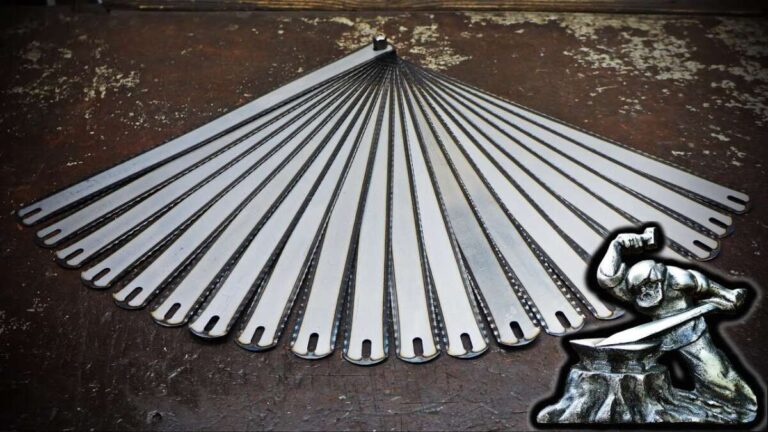
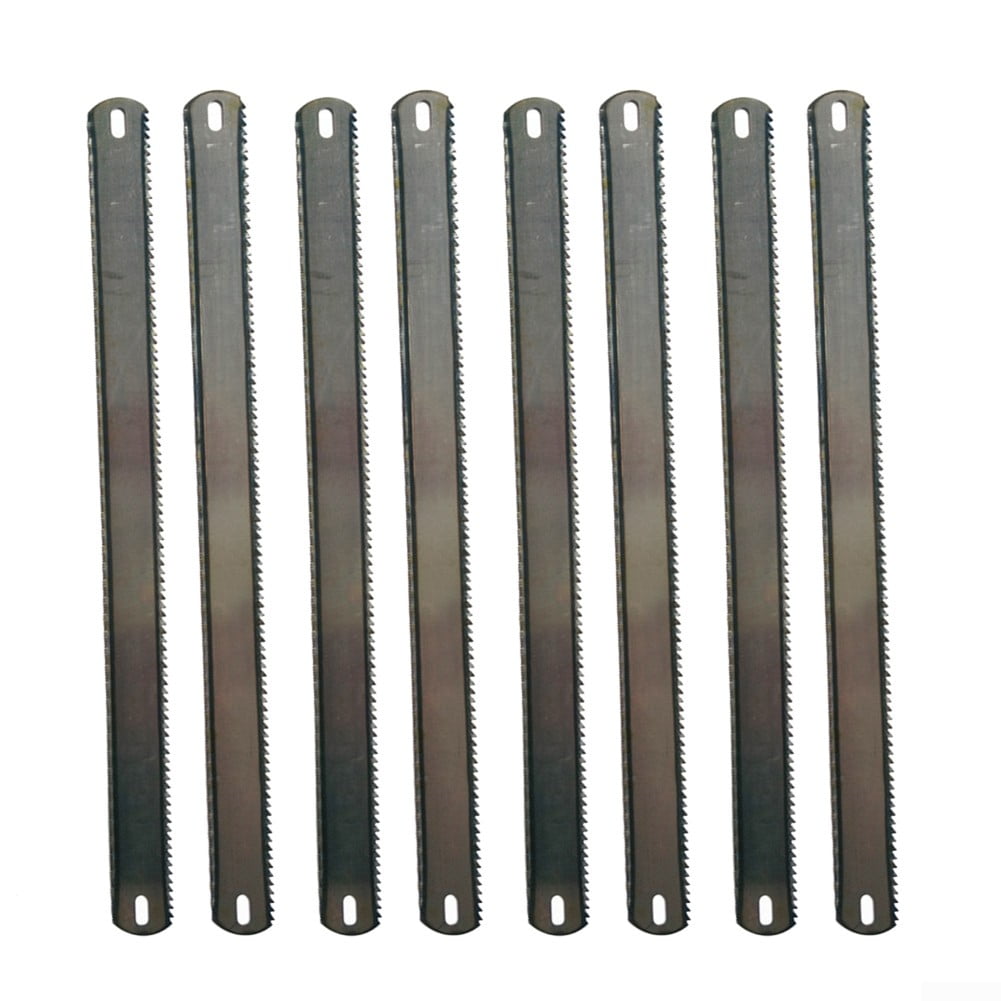
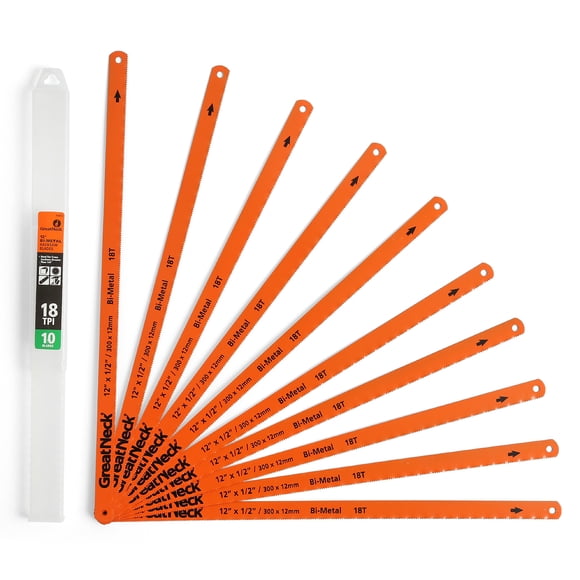
A bi-metal blade is the best all-purpose choice for most steel work. It combines a hard, heat-resistant tooth edge with a flexible spring-steel back. This design helps the blade resist tooth breakage while still bending slightly under hand-saw pressure.
Use this quick guide:
| Steel job | Recommended blade | Why |
|---|---|---|
| Thick steel bar or heavy angle iron | 14–18 TPI | Larger gullets clear chips |
| Steel pipe and square tubing | 18 TPI | Good balance of speed and control |
| General steel repairs | 18–24 TPI | Useful range for common work |
| Thin-wall tubing | 24 TPI | Keeps several teeth engaged |
| Sheet metal | 24–32 TPI | Reduces tooth snagging |
| Stainless steel | 24–32 TPI bi-metal | Handles tougher, work-hardening metal |
| Very small steel parts | 32 TPI | Makes a finer, more controlled cut |
The table assumes a standard hand hacksaw used in a home shop, garage, farm setting, or job site in the United States.
The safest general choice
If you want one blade for mixed steel work, start with:
- 12-inch bi-metal blade
- 24 TPI
- High-tension hacksaw frame
- A tooth pattern suited to steel
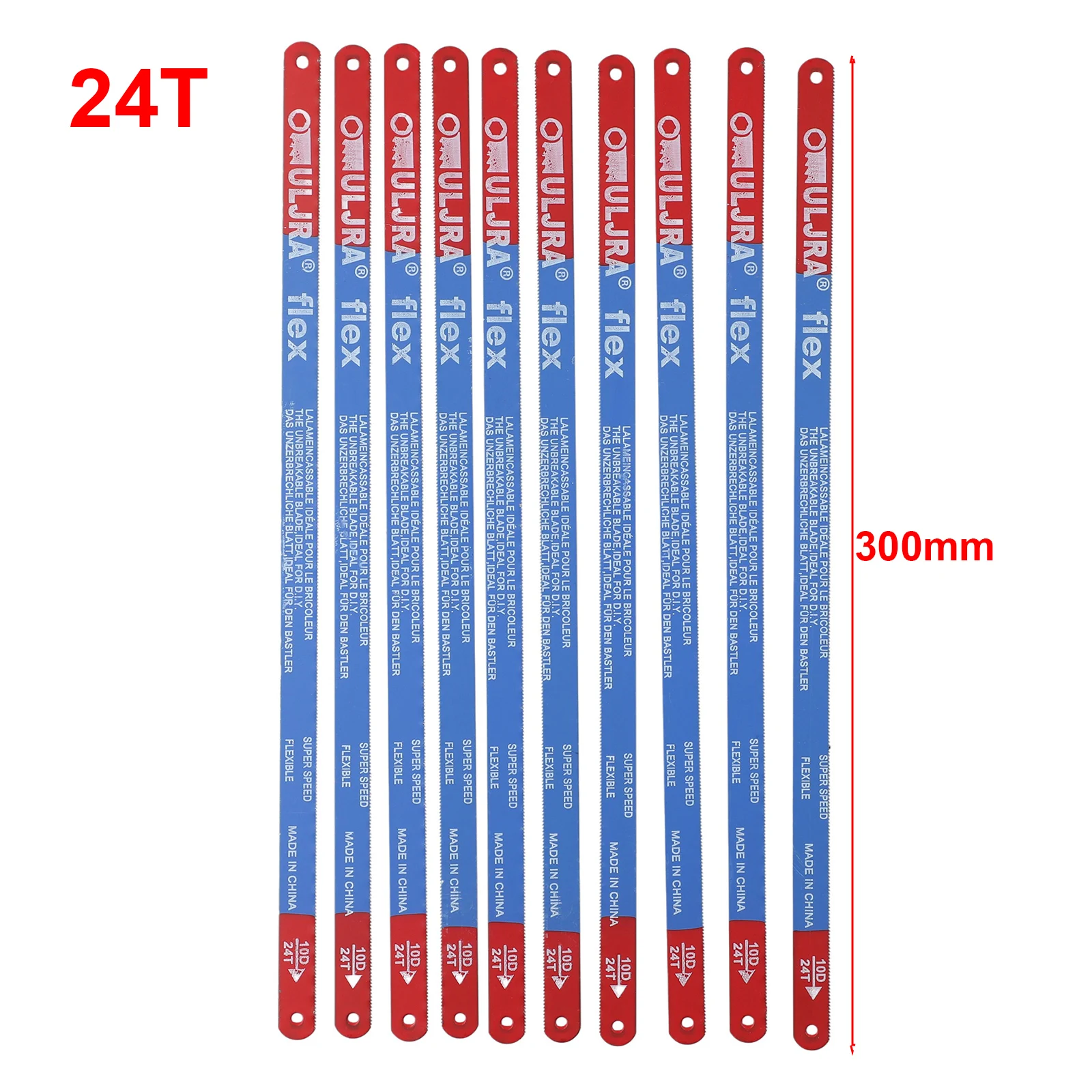
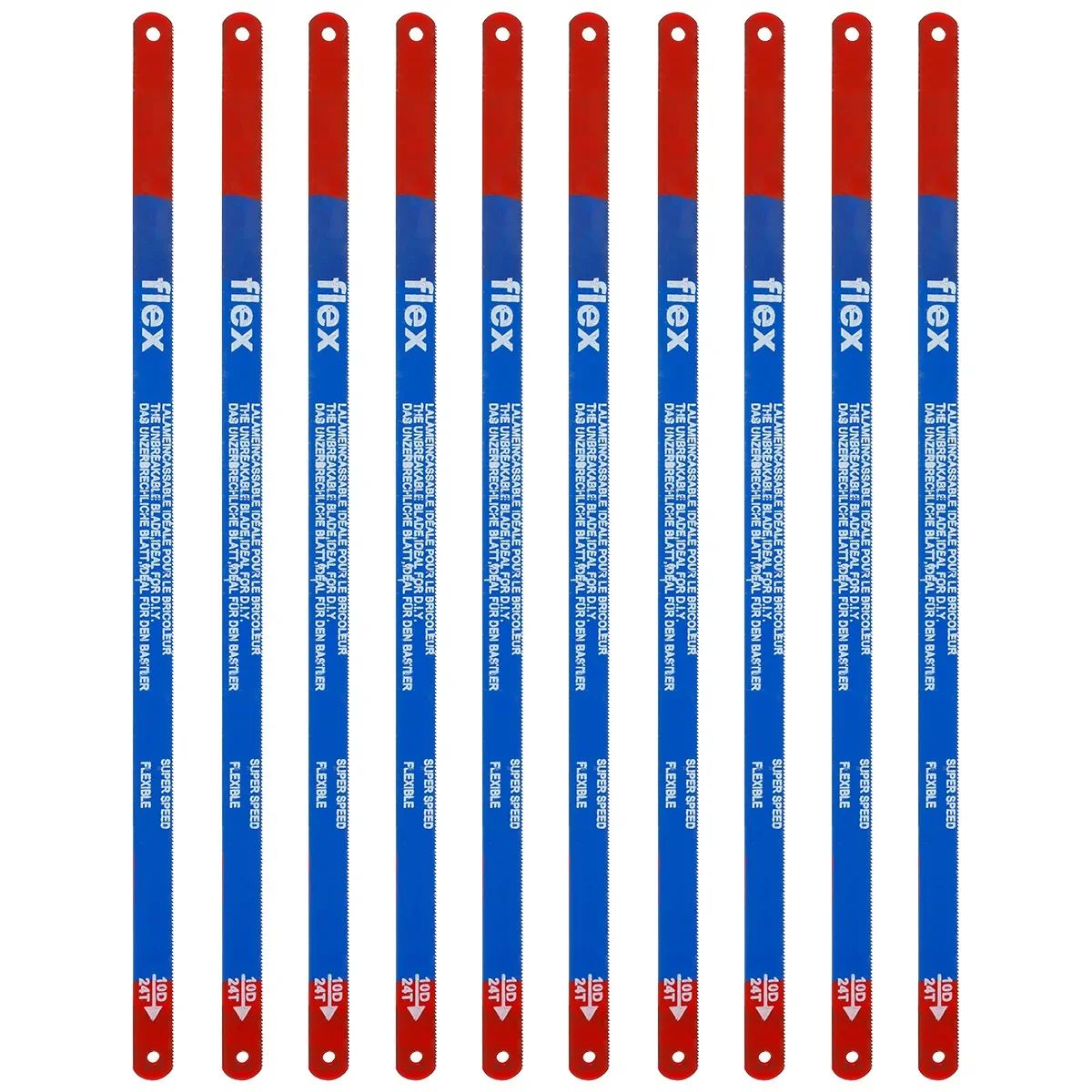
A 24 TPI blade works well for many steel tubes, bolts, threaded rod, brackets, and repair tasks. If you often cut thick bar stock, switch to an 18 TPI blade.
For regular shop use, buying a few TPI options is better than forcing one blade to do every job. A small set with 14, 18, 24, and 32 TPI blades covers most steel cutting needs.

How to Choose the Correct TPI for Steel
TPI means teeth per inch. It describes how many teeth appear along one inch of the blade.
The best TPI is based mainly on the material’s thickness, not just its name. “Steel” can mean thin sheet, heavy plate, hollow tubing, stainless steel, or a small fastener. Each needs a different tooth size.
Use 14 TPI for thick steel
Choose a 14 TPI blade for:
- Thick steel plate
- Large angle iron
- Heavy bar stock
- Large bolts
- Thick structural pieces
The teeth are large and have deep gullets. The gullets carry chips away from the cut. This makes the blade cut faster in thick stock.
Do not use a coarse blade on thin sheet metal. Its teeth may grab the edge and strip or break.
Use 18 TPI for general steel
an 18 TPI blade is a strong choice for:
- Steel pipe
- Square and rectangular tubing
- Medium bar stock
- Angle iron
- Steel brackets
- General fabrication work
It offers a useful balance between cutting speed and tooth support. Many home and maintenance users find 18 TPI the best choice for thicker steel that is not heavy plate.
Use 24 TPI for thin steel and tubing
Choose 24 TPI for:
- Thin-wall tubing
- Small flat bar
- Thin sheet
- Electrical or mechanical brackets
- Bolts and threaded rod
- Small steel hardware
The smaller teeth reduce the chance of catching. More teeth remain in the cut, so the blade runs more smoothly.
A 24 TPI blade may cut thick steel, but it will remove less material with each stroke. The cut can feel slow if the stock is large.
Use 32 TPI for very thin material
A 32 TPI blade suits:
- Thin sheet metal
- Thin-wall tube
- Small precision cuts
- Delicate steel parts
Fine teeth help prevent the work from vibrating or snagging. They also make a narrower cut.
The trade-off is speed. Fine blades clog more easily in thick steel. They also need light pressure.
The two-to-three-tooth rule
A useful rule is to keep at least two or three teeth engaged in the material. This helps prevent individual teeth from taking the full load.
For example, a thin steel wall may be only 1/16 inch thick. A coarse 14 TPI blade may place too few teeth in that wall. A 24 or 32 TPI blade gives better tooth engagement.
This is a practical rule, not a fixed law. Tooth pitch, blade design, material shape, and cutting angle also affect the result.

Bi-Metal, Carbon Steel, or Carbide Grit?
Blade material affects life, flexibility, and cost. For most steel cutting, bi-metal is the best starting point.
Bi-metal blades
Bi-metal blades use two metals in one strip. The tooth edge is hard. The back is more flexible.
Advantages include:
- Better resistance to tooth breakage
- Longer life than basic carbon-steel blades
- Good performance on mild steel
- Better suitability for stainless steel
- More tolerance for hand-saw pressure
A bi-metal blade is usually worth the extra cost when you cut steel often.
Carbon-steel blades
Carbon-steel blades are often less expensive. They can work for:
- Occasional light cuts
- Soft steel
- Small repair tasks
- Low-cost disposable work
They are less forgiving than bi-metal blades. Excess pressure, twisting, or a hard inclusion can damage the teeth.
Carbon-steel blades still have a place in a basic toolbox. They are not the best choice when blade life or stainless-steel performance matters.
Carbide-grit blades
Carbide-grit blades use abrasive particles instead of normal saw teeth. They can help with unusual materials, hardened metal, cast iron, or materials that damage standard teeth.
They are not the default choice for ordinary mild steel. They often cut in a different way and may produce more dust or heat. Follow the blade maker’s instructions before using one.
High-speed steel teeth
Some blades use high-speed steel tooth edges or high-speed steel particles. These blades may resist heat and wear well.
The label alone does not decide performance. Check the blade’s intended materials and TPI. A fine high-speed steel blade can still be the wrong choice for thick stock.

What Blade Works Best for Stainless Steel?
For stainless steel, use a bi-metal blade with 24 or 32 TPI for most hand-cutting jobs. Stainless steel is tougher than common mild steel and can harden when rubbed without cutting.
Use these practices:
- Mark the cut clearly.
- Clamp the work firmly.
- Start with light pressure.
- Keep the blade moving in a straight line.
- Use full, steady strokes.
- Avoid stopping in the same part of the cut.
- Use cutting fluid if the blade maker allows it.
Do not push hard when the blade stops cutting. Too much pressure can create heat and cause the surface to harden. Once the surface hardens, the blade may cut even more poorly.
A sharp, suitable blade matters more than brute force. Replace the blade when it skates, squeals, wanders, or needs much more pressure than before.

Choosing a Blade for Steel Pipe and Tubing
Steel pipe and tubing need a blade that matches both the wall thickness and the shape of the work.
Thin-wall tubing
Use a 24 or 32 TPI blade. Fine teeth reduce snagging as the blade passes through the wall.
Clamp the tube close to the cut. If the tube flexes, the blade may chatter and strip teeth.
Heavy-wall pipe
Use an 18 TPI blade for many heavy-wall pipe cuts. Move to 14 TPI when the wall and overall section are very thick.
Apply pressure on the forward stroke only. Lift or reduce pressure on the return stroke. This helps the teeth cut rather than drag.
Square tubing and angle iron
An 18 or 24 TPI bi-metal blade is often suitable. Choose 18 TPI for thicker sections and 24 TPI for lighter sections.
When cutting angle iron, the blade enters and leaves different wall thicknesses. Keep the frame square and avoid twisting at the corners.
Round pipe
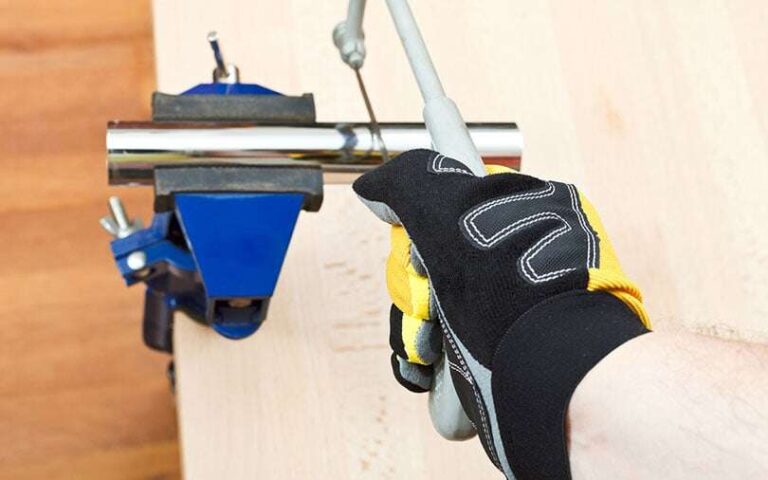
Round pipe can turn or roll under the blade. Secure it in a vise with soft jaws or suitable padding. Do not hold it by hand while cutting.
For larger pipe, a powered band saw, reciprocating saw, or abrasive saw may be more suitable. Use the correct blade and guard for that tool.

Hacksaw Blade Size and Fit
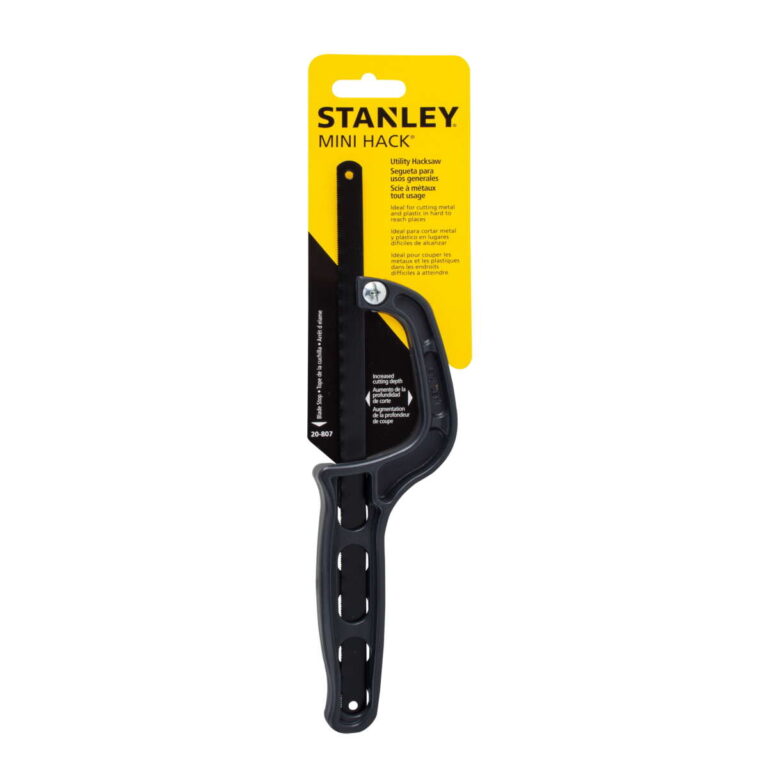
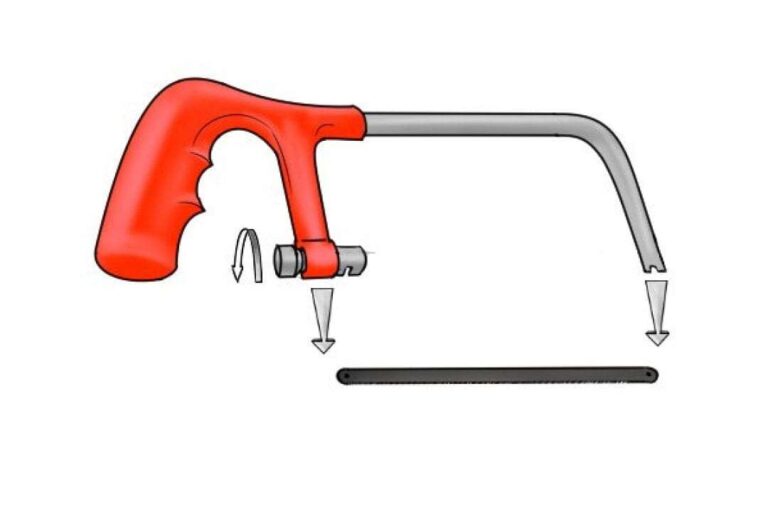
Most full-size hand hacksaws in the United States use blades around 12 inches long, measured from pin hole to pin hole. Some frames accept 10-inch or 12-inch blades. Compact hacksaws may use shorter blades.
Before buying a replacement, check:
- Blade length
- Pin-hole style
- Frame compatibility
- TPI
- Tooth direction
- Tension range
The blade must fit the frame without excessive slack. A loose blade can wander and buckle. A blade forced into the wrong frame can fail under load.
Which way should the teeth face?
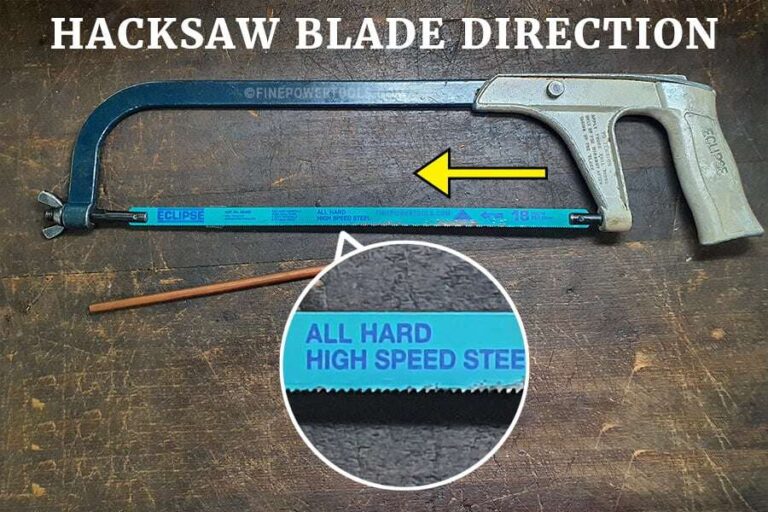
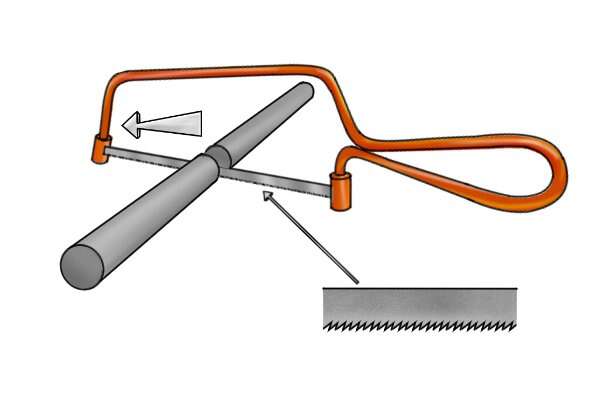
On a standard hand hacksaw, the teeth usually face away from the handle. The blade cuts on the forward stroke.
Check the frame instructions if the design is unusual. Install the blade firmly, then tension it enough to stay straight. Do not over-tighten a light frame.
What blade width should you use?
Standard hacksaw blades are made for full-size frames. Junior hacksaws and compact frames use narrower blades.
A blade that is too wide may not fit the frame. A blade that is too narrow may not sit firmly in the supports. Match the blade to the frame rather than modifying the blade.
How to Cut Steel With a Hacksaw
A good blade can still fail when the setup is poor. Follow this sequence.
1. Mark the cut
Use a scribe, permanent marker, or layout dye. For a straight cut, mark the line around the tube or bar if possible.
A clear line helps you spot blade drift early.
2. Secure the steel
Clamp the work in a vise. Place the cut close to the jaws, but leave enough room for the frame.
The steel should not rock, spin, or vibrate. Loose work wastes teeth and can cause the blade to jump.
3. Fit the blade
Install the blade with the teeth pointing forward. Set suitable tension. The blade should feel straight and firm, not loose.
Wear eye protection before cutting. Gloves may help protect hands from sharp edges, but keep them away from the moving blade.
4. Start the groove
Use short, easy strokes to create a shallow groove. Start at a slight angle, then bring the blade square once the groove guides it.
Do not use heavy force at the start. A deep, straight groove gives the blade control.
5. Use long, steady strokes
Use as much of the blade length as the work allows. Keep the frame straight and let the teeth do the work.
Press on the forward stroke. Reduce pressure on the return stroke. Avoid rocking the frame.
6. Slow down near the end
The final section can break away suddenly. Support the off-cut if it is large or heavy.
Use light pressure as the blade nears the bottom of the cut. This reduces bent teeth and rough breakouts.
7. Deburr the edge
After cutting, remove sharp burrs with a file or deburring tool. Inspect the edge before handling the part.
Cutting Fluid, Lubrication, and Heat
Lubrication can reduce friction and help carry chips from the cut. It may also improve blade life on some steel jobs.
For mild steel, a light cutting oil can help. For stainless steel, lubrication is often useful because heat and rubbing can make cutting harder.
Use only a product suitable for the tool and material. Keep oil away from the hacksaw handle if it makes your grip unsafe. Clean the work area after cutting.
Do not use a liquid if it creates an electrical, fire, or slip hazard. Never apply fluid near powered equipment unless the equipment maker permits it.
A hand hacksaw should produce a controlled cut. If the blade becomes too hot to touch, stop and check:
- Blade TPI
- Blade sharpness
- Cutting pressure
- Workpiece movement
- Blade alignment
- Whether the material is harder than expected
Why a Hacksaw Blade Skips, Breaks, or Cuts Slowly
Blade problems usually come from a mismatch between the blade, the material, and the technique.
| Symptom | Likely cause | What to do |
|---|---|---|
| Teeth strip quickly | Too much pressure or wrong TPI | Use lighter pressure and a finer blade |
| Blade catches | Too few teeth in the cut | Choose a higher TPI |
| Cut takes too long | TPI is too fine or blade is dull | Use a coarser blade or replace it |
| Blade wanders | Work is loose or blade is under-tensioned | Clamp the work and tension the blade |
| Blade breaks | Twisting, poor tension, or damaged teeth | Install a new blade and keep the frame straight |
| Stainless steel stops cutting | Heat and work hardening | Use a sharp bi-metal blade and steady strokes |
| Cut is rough | Dull blade or uneven pressure | Replace the blade and slow down |
| Blade squeals | Excess friction or poor alignment | Check tension, alignment, and lubrication |
Do not keep using a blade with missing or cracked teeth. A damaged blade can fail without much warning.
If a new blade performs poorly, check the material first. Hardened steel, tool steel, spring steel, and some heat-treated parts may need a powered saw or a specialized abrasive or carbide tool.

Common Mistakes to Avoid
Using a coarse blade on thin metal
Large teeth can grab thin material. Use 24 or 32 TPI instead.
Using a fine blade on thick stock
Fine teeth fill with chips. The cut becomes slow, hot, and frustrating. Choose 14 or 18 TPI for thick steel.
Applying force on every stroke
A hacksaw cuts on the push stroke. Heavy pressure on the return stroke increases drag and wear.
Cutting loose material
Movement causes chatter and can break teeth. Clamp the work close to the cut.
Twisting the frame
A sideways load can snap the blade. Keep the frame aligned with the cut.
Reusing a dull blade
A dull blade often creates more heat than cutting. Replacement is usually faster and safer than forcing it.
Ignoring the type of steel
Mild steel and stainless steel do not behave the same way. Stainless steel needs control, a sharp blade, and heat management.
Safety Limits for Hand-Cutting Steel
Wear safety glasses when cutting steel. Small chips and broken teeth can travel farther than expected.
Keep fingers behind the blade path. Do not hold a small workpiece in one hand while sawing toward that hand. Clamp small pieces in a vise or use a suitable fixture.
Remove sharp burrs after cutting. Wear hearing protection if you move to a powered saw, grinder, or other loud tool.
Inspect the hacksaw frame before use. Do not use a frame with a bent handle, damaged tension parts, or loose blade pins.
For thick structural steel, large pipe, hardened steel, or repeated production work, a powered metal-cutting tool may be the better choice. Follow that tool’s guard, blade, and personal protective equipment requirements.
For workplace operations in the U.S., consult the applicable OSHA machine guarding guidance and the tool manufacturer’s instructions. OSHA requirements can vary with the equipment and work setting.

Quick Decision Guide
Choose your blade this way:
- One general blade for steel: 24 TPI bi-metal
- Thick steel bar or heavy angle iron: 14 or 18 TPI bi-metal
- Steel pipe or medium tubing: 18 TPI bi-metal
- Thin tubing or sheet metal: 24 or 32 TPI bi-metal
- Stainless steel: 24 or 32 TPI bi-metal
- Occasional light work: Carbon-steel blade can be adequate
- Hardened or unusual steel: Check the material and blade maker’s guidance before cutting
When unsure, choose the finer of two reasonable options if the material is thin. Too few teeth are more likely to catch and break. For thick stock, choose the coarser option so the gullets can clear chips.

Frequently Asked Questions
Is 18 TPI or 24 TPI better for steel?
Neither is always better. Use 18 TPI for thicker steel and 24 TPI for thinner steel or small parts. A 24 TPI blade is the safer general pick when you do not know the exact thickness.
Can I cut stainless steel with a regular hacksaw blade?
Yes, but use a sharp bi-metal blade. A 24 or 32 TPI blade is usually suitable for hand cutting. Use steady strokes and avoid excessive pressure, since rubbing can harden stainless steel.
Should hacksaw teeth point forward or backward?
On a normal hand hacksaw, the teeth point forward, away from the handle. The blade cuts on the forward stroke.
How often should I replace a hacksaw blade?
Replace it when it skips, wanders, squeals, cuts slowly, or needs much more pressure. Also replace it if teeth are missing, damaged, or visibly dull. Cutting speed, steel hardness, and blade quality affect service life.
Can I use a hacksaw blade to cut hardened steel?
A standard blade may not work well on hardened steel. Confirm the material hardness and use a blade or cutting tool made for that job. Do not force the hacksaw if the teeth only rub and create heat.
Conclusion
The best hacksaw blade for most steel is a bi-metal blade matched to the material thickness. Use 14–18 TPI for thick steel, 18–24 TPI for general steel work, and 24–32 TPI for thin steel, tubing, sheet metal, and stainless steel.
If you need one practical starting point, choose a 12-inch, 24 TPI bi-metal blade. Clamp the steel, keep the blade straight, use steady forward strokes, and replace the blade when it becomes dull or damaged.
Recent Tool Guides
 Hammer
How To Hammer Flowers Onto Paper: Easy Guide
Learn how to hammer flowers onto paper with simple steps, helpful tips, and beautiful results for...
Read Guide → Wrench
How To Use A Hex Wrench: Easy Step-By-Step Guide
Learn how to use a hex wrench correctly with simple steps, helpful tips, and common mistakes...
Read Guide → Hacksaw
How To Cut Curtain Pole With Hacksaw: Easy Guide
Learn how to cut curtain pole with hacksaw safely and neatly. Follow simple steps for accurate...
Read Guide → Wrench
How To Use A Husky Torque Wrench: Easy Guide
Learn how to use a Husky torque wrench correctly with simple steps, torque settings, and safety...
Read Guide → Hammer
How To Hold A Hammer: Safe Grip Guide
Learn how to hold a hammer with the right grip, stance, and technique for safer, more...
Read Guide → Hacksaw
How To Cut Flexible Metal Conduit With Hacksaw: Easy Guide
Learn how to cut flexible metal conduit with hacksaw safely and cleanly. Follow simple steps for...
Read Guide →