Can A Hacksaw Cut Damascus Steel: Best Method Explained
Yes, a hacksaw can cut Damascus steel, but the result depends on the steel’s hardness, thickness, and heat treatment. In a U.S. home workshop, a sharp bi-metal hacksaw blade can cut soft or annealed Damascus stock. It may struggle badly with a hardened Damascus knife blank or finished blade.
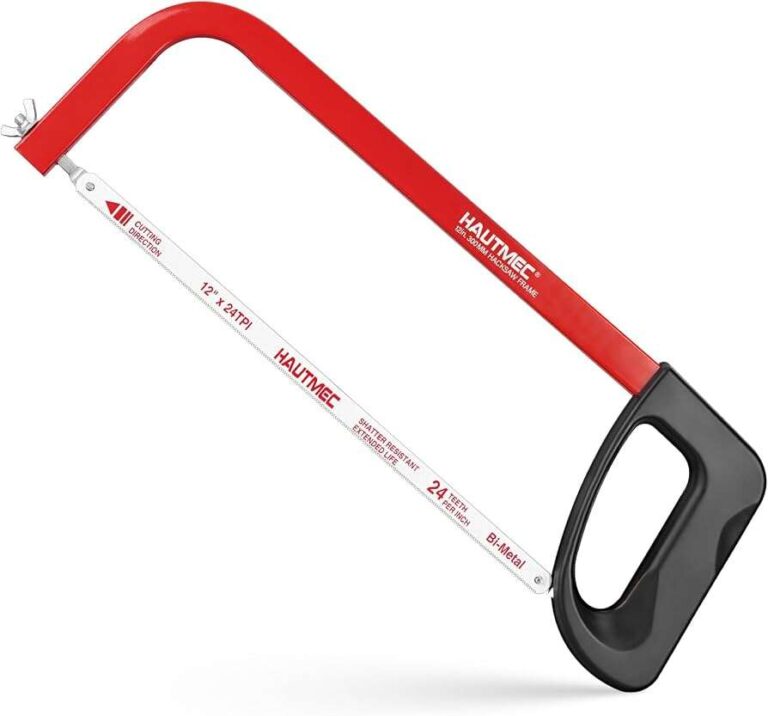
For most small jobs, use a high-quality bi-metal blade with 18 to 24 teeth per inch (TPI), clamp the work firmly, and make slow, steady strokes. If the blade only skates across the surface, the Damascus is likely too hard for a normal hacksaw.
Introduction
For American DIY makers, knife builders, and metalworkers, Damascus steel often means pattern-welded steel made from two or more alloys. The visible pattern does not tell you how hard the material is. A Damascus billet may be easy to saw before heat treatment but very difficult to cut after it has been hardened.
This guide explains when a hacksaw will work, which blade to use, how to cut safely, and when another tool is the better choice.

What Damascus Steel Means for Cutting
Damascus steel is not one single grade of steel. Modern Damascus is usually pattern-welded steel, in which layers of different steels are forged and welded together. Traditional crucible Damascus, sometimes called wootz, is a different material and is less common in modern knife work.
The cutting behavior depends more on the steel’s condition than on its pattern. The main conditions are:
- Annealed: Softened for easier cutting, drilling, and shaping.
- Normalized: Heat-treated to refine the grain and reduce stress.
- Hardened: Made much harder for use as a cutting edge.
- Tempered: Heated after hardening to reduce brittleness and set the final hardness.
- Stainless or carbon steel: The alloy family affects corrosion resistance and cutting behavior.
A hacksaw removes metal by forcing hardened teeth through the work. If the Damascus steel is harder than the teeth, the teeth may become dull without cutting deeply.
A patterned surface also creates a common misconception. The layers do not automatically make Damascus steel impossible to cut. The important question is whether the piece has been heat-treated and how hard it is.
Can a Hacksaw Cut Hardened Damascus Steel?
A hacksaw may cut hardened Damascus steel, but a standard hand hacksaw is usually a poor choice for the job. Hardened knife steel can quickly dull ordinary carbon-steel teeth. A bi-metal blade has a harder cutting edge and is more likely to work, but cutting may still be slow.
The practical answer depends on hardness:
| Damascus condition | Hacksaw result | Recommended approach |
|---|---|---|
| Annealed billet | Usually cuts well | Bi-metal blade, 18–24 TPI |
| Normalized stock | Usually manageable | Bi-metal blade and firm clamping |
| Partly hardened steel | Slow and uncertain | Test with a file before cutting |
| Hardened knife blank | May cut, but teeth wear fast | Abrasive wheel, carbide tool, or professional shop |
| Hardened finished blade | Possible but risky | Avoid unless you can control heat and the workpiece |
A file test can give you a useful clue. If a sharp file bites into the steel, the material may be soft enough for a hacksaw. If the file slides over the surface without leaving a mark, the steel may be hardened beyond what a normal hacksaw blade can handle.
This test is only a rough shop check. It does not replace a Rockwell hardness test or heat-treatment records.
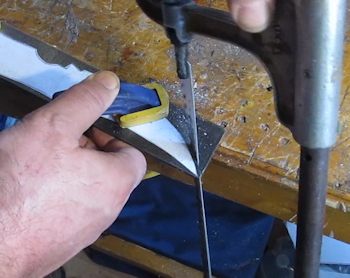
How to Cut Damascus Steel With a Hacksaw
Use this method when the steel is not extremely hard and the cut is small enough to complete by hand.
1. Confirm the material is safe to cut
Check whether the Damascus piece is annealed, normalized, or hardened. If it is a finished knife, assume the edge is heat-treated unless the maker says otherwise.
Do not cut into a coated, painted, or unknown metal object without checking for hazards. Some materials may contain harmful coatings or embedded parts.
2. Choose the right hacksaw blade
Use a bi-metal blade rather than a low-cost carbon-steel blade. Bi-metal blades combine a flexible body with a hardened cutting edge.
Choose the tooth count based on thickness:
- 18 TPI: Good for thicker stock.
- 24 TPI: A useful general-purpose choice for knife blanks and medium stock.
- 32 TPI: Better for thin sheet or narrow sections.
Try to keep at least two or three teeth in contact with the work at all times. If the stock is thin and the teeth are too large, the blade may catch or strip teeth.
3. Mark the cut
Use a layout dye, permanent marker, or scribe. Mark the line on both sides if the steel is thick enough that the cut will pass through slowly.
Leave a small amount of extra material if the final shape must be ground or filed. A hacksaw cut is rarely the final finished edge.
4. Clamp the steel securely
Put the Damascus steel in a sturdy vise. Use soft jaws, wood, leather, or thin copper between the vise and the patterned surface to reduce marks.
Clamp close to the cut. A loose workpiece can vibrate, bend the blade, or cause the teeth to grab.
Do not hold the steel in your hand while sawing.
5. Start with a shallow groove
Hold the blade at a low angle and make several light strokes to create a straight starting groove. Once the groove is established, keep the blade aligned with it.
Avoid heavy downward pressure. The blade should cut because the teeth are sharp, not because you are forcing it.
6. Use long, steady strokes
Use the full length of the blade where possible. Apply pressure on the forward stroke and ease off on the return stroke.
Keep the blade square to the work. Twisting the frame can bend or break the blade and may damage the cut.
If the steel becomes hot enough that you cannot touch it safely, stop and let it cool. Water-based cutting fluid may help on suitable raw stock, but do not soak a hot, heat-treated knife blade unless you understand how that affects the work.
7. Inspect the cut
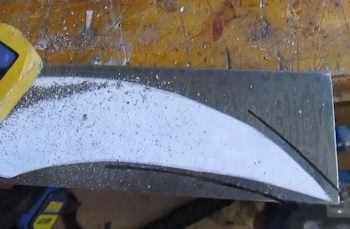
A successful cut will produce a steady kerf with visible chips or fine metal dust. The blade should continue to remove material rather than merely polish the surface.
Stop if:
- The teeth no longer produce chips.
- The blade skates over the steel.
- The cut begins to wander.
- The workpiece moves in the vise.
- The steel becomes excessively hot.
- The blade starts to bind.
If the blade skates from the start, the steel may be too hard. Change tools rather than applying more force.
What Blade Should You Use?
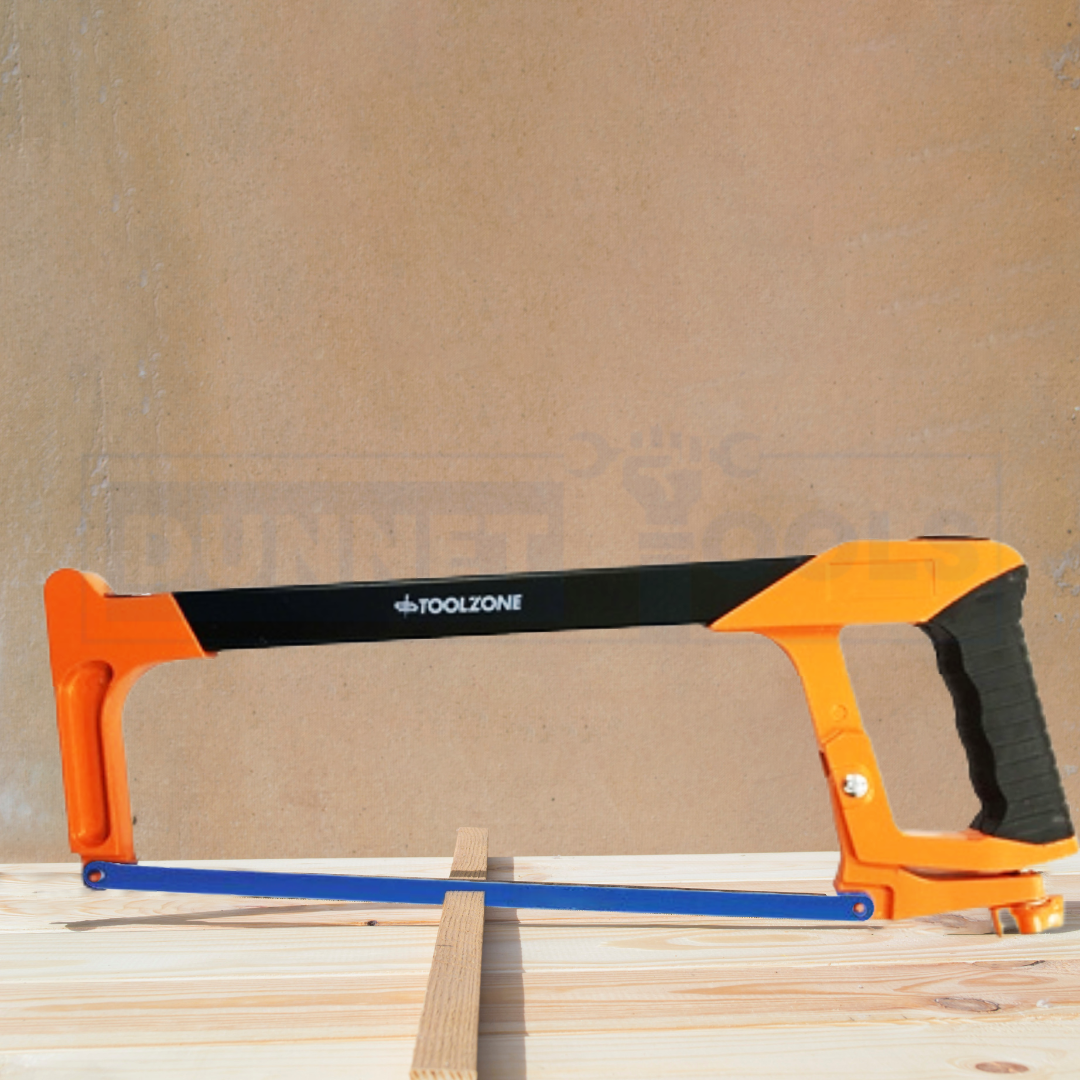
A bi-metal hacksaw blade with 18 to 24 TPI is the best general choice for cutting mild-to-moderately hard Damascus steel by hand.
A few details matter:
- High TPI: Makes a smoother cut in thin steel but removes material more slowly.
- Low TPI: Clears chips well in thicker stock but can catch on thin pieces.
- Variable-pitch teeth: Can reduce vibration and improve cutting in some metals.
- Rigid blade tension: Helps keep the cut straight.
- Sharp teeth: Matter more than brand names or decorative claims.
Avoid using a wood-cutting blade, a worn blade, or a blade with teeth that are too coarse for the stock. A dull blade creates heat and encourages excessive pressure.
For very hard Damascus, a hacksaw blade with carbide grit or carbide teeth may work better, but the tool and technique become more specialized. Carbide products are not automatically safe or suitable for every hardened blade.
Hacksaw vs. Other Cutting Tools
A hacksaw is affordable and gives you good control, but it is not always the fastest or safest option.
| Tool | Best use | Main benefit | Main limitation |
|---|---|---|---|
| Hand hacksaw | Small cuts in soft or annealed stock | Low cost and good control | Slow; blade wear |
| Metal-cutting band saw | Repeated or long cuts | Straight, steady cuts | Requires machine and correct blade |
| Abrasive cut-off wheel | Thick stock and rough blanks | Fast material removal | Heat, sparks, and rough edges |
| Angle grinder | Rough shaping and trimming | Flexible and widely available | Hard to control; heat and sparks |
| Carbide rotary tool | Small detail cuts | Good access to tight areas | Slow and tool wear |
| Waterjet or EDM | Hardened or valuable material | Low heat or high precision | Professional service required |
For knife blanks, the best choice is often to cut the outline before hardening. Once the steel is hardened, shaping becomes slower and creates more heat.
An abrasive wheel can cut hardened Damascus, but it may damage the heat treatment near the cut if used carelessly. A metal-cutting band saw can be a better shop option when the blade and cutting speed match the steel.
How to Avoid Damaging the Damascus Pattern
Cutting does not normally erase the layered pattern, but rough tools can leave burrs, deep scratches, or heat discoloration.
To protect the work:
- Cover finished surfaces with masking tape.
- Use soft vise jaws.
- Keep the blade aligned with the marked line.
- Do not twist the hacksaw at the end of the cut.
- File or grind the burr instead of snapping the last section.
- Keep powered tools moving to prevent a hot spot.
- Do not polish away material near a finished cutting edge unless you can restore the correct geometry.
If the Damascus has already been etched, cutting may expose a bright, unetched surface. The pattern can often be restored only after the area is ground smooth, polished, cleaned, and re-etched with a suitable process. That work may require knowledge of the steel and safe handling of etching chemicals.
Common Problems and Fixes
The blade will not start the cut
The steel may be hardened, the blade may be dull, or the blade may be too coarse.
Try a new bi-metal blade and make a shallow groove with light strokes. If the blade still slides without making chips, stop and reassess the hardness.
The blade keeps breaking
The usual causes are poor tension, twisting, loose clamping, or too much pressure. Tighten the blade correctly, secure the work, and use straight strokes.
The cut wanders
A wandering cut often starts with a poor groove or a flexible blade. Scribe the line again, begin slowly, and keep the frame square. Do not force the blade back onto the line by twisting it.
The steel turns blue
Blue or dark heat colors can indicate overheating. On hardened knife steel, excess heat may reduce hardness near the cut.
Stop cutting and allow the piece to cool naturally. If the heat-treated area is important, use a slower method or have the work completed by a qualified knife or machine shop.
The blade cuts one layer differently from another
Different Damascus layers may have different alloy composition and hardness. A change in cutting feel does not mean the weld has failed. It may simply reflect the properties of the component steels.
Inspect the cut for cracks, gaps, or delamination if the material is a high-value billet.

Safety Rules for Cutting Damascus Steel
Wear safety glasses during hand sawing and add a face shield when using powered tools. Small metal chips and broken teeth can travel quickly.
Use hearing protection with grinders and saws. Keep loose clothing, hair, and gloves away from rotating tools. A glove may protect against sharp edges during hand work, but it can also catch in powered equipment.
For powered cutting, control sparks and keep them away from gasoline, solvents, sawdust, propane cylinders, and other flammable materials. Use the guard supplied with the tool.
Do not use an unknown abrasive wheel. Check that the wheel is rated for the tool’s speed and for cutting metal. Never use a damaged wheel.
After cutting, deburr the workpiece. Damascus edges can be extremely sharp even when they look unfinished.
Should You Cut Damascus Before or After Heat Treatment?
Cutting before heat treatment is usually easier and gives better control. Soft or normalized steel accepts sawing, drilling, filing, and grinding with less tool wear.
A common workflow is:
- Cut the rough blank while the steel is soft.
- Drill holes and remove most excess material.
- Leave a small amount for final grinding.
- Heat-treat the blade.
- Finish-grind with controlled heat.
- Polish and etch the pattern.
The exact sequence depends on the steel combination and the maker’s heat-treatment plan. Some Damascus billets need specific heating, quenching, and tempering conditions. If the steel’s composition is unknown, do not assume that a generic carbon-steel heat treatment will work.
Frequently Asked Questions
Can a hacksaw cut a Damascus knife blade?
It can, but a finished blade may be hardened and difficult to cut. A hacksaw is more suitable for soft, unfinished, or annealed stock. Cutting a hardened blade can dull the blade quickly and may create unwanted heat.
Will a hacksaw ruin the Damascus pattern?
No. The saw does not normally remove the pattern from the rest of the material. It can leave burrs, scratches, and an unetched area that may need to be ground and re-etched.
Can I use a regular steel hacksaw blade?
You can try, but a bi-metal blade is usually the better choice. A regular carbon-steel blade may dull quickly when cutting hard or heat-treated Damascus.
How do I know if Damascus steel is hardened?
Ask the maker for the heat-treatment information or use a cautious file test. A file that bites suggests softer steel. A file that skates across the surface suggests hardened steel, but only a hardness test can provide a reliable value.
Is an angle grinder better than a hacksaw?
An angle grinder is faster for rough cuts, but it produces sparks, noise, dust, and significant heat. A hacksaw is slower but offers more control and less risk of overheating a small workpiece.
Can a hacksaw cut stainless Damascus?
Yes, if the stainless Damascus is soft enough and the blade is suitable. Stainless grades can work-harden when cut with too much pressure or a dull blade, so use sharp teeth, firm clamping, and steady strokes.
Key Takeaways
- A hacksaw can cut Damascus steel, especially when the material is annealed or normalized.
- A bi-metal blade with 18–24 TPI is a practical starting point.
- Hardened Damascus may dull a hacksaw blade or prevent it from cutting at all.
- Clamp the work securely and use light, straight strokes.
- Stop if the blade skates, the cut wanders, or the steel overheats.
- For hardened or valuable work, consider a band saw, abrasive tool, carbide tool, EDM, or a qualified machine shop.
- When possible, cut and shape Damascus before heat treatment.
Conclusion
A hacksaw is a workable tool for cutting soft or moderately hard Damascus steel. It is inexpensive, controlled, and useful for small cuts. It becomes a poor choice when the steel is hardened, thick, valuable, or already finished.
Start with the steel’s condition, not the pattern. If a sharp file can bite and a new bi-metal blade produces chips, proceed slowly. If the blade skates across the surface, do not force it. Choose a tool designed for hardened metal or ask a qualified shop to make the cut.
Evidence and Further Reading
This guide is based on standard metal-cutting principles and manufacturer guidance for hacksaw blade selection, along with technical information on pattern-welded Damascus steel and heat treatment. Product specifications and cutting performance vary by blade, steel grade, hardness, and tool condition.
- U.S. Occupational Safety and Health Administration: Hand and Power Tools
- U.S. Occupational Safety and Health Administration: Abrasive Wheel Safety
- McMaster-Carr: Hacksaw Blades
- ASM International: Heat Treating
- The American Bladesmith Society: Bladesmithing resources

Recent Tool Guides
 Hammer
How To Hammer Flowers Onto Paper: Easy Guide
Learn how to hammer flowers onto paper with simple steps, helpful tips, and beautiful results for...
Read Guide → Wrench
How To Use A Hex Wrench: Easy Step-By-Step Guide
Learn how to use a hex wrench correctly with simple steps, helpful tips, and common mistakes...
Read Guide → Hacksaw
How To Cut Curtain Pole With Hacksaw: Easy Guide
Learn how to cut curtain pole with hacksaw safely and neatly. Follow simple steps for accurate...
Read Guide → Wrench
How To Use A Husky Torque Wrench: Easy Guide
Learn how to use a Husky torque wrench correctly with simple steps, torque settings, and safety...
Read Guide → Hammer
How To Hold A Hammer: Safe Grip Guide
Learn how to hold a hammer with the right grip, stance, and technique for safer, more...
Read Guide → Hacksaw
How To Cut Flexible Metal Conduit With Hacksaw: Easy Guide
Learn how to cut flexible metal conduit with hacksaw safely and cleanly. Follow simple steps for...
Read Guide →