Can I Cut Stainless Steel With A Hacksaw: Easy Guide
Yes, you can cut stainless steel with a hacksaw. A sharp, high-quality bi-metal blade can cut stainless steel sheet, tubing, rod, bolts, and small bar stock by hand.
The main challenge is that stainless steel is tough and can work-harden. If the blade skids, you use too little pressure, or you pause while the blade is rubbing against the metal, the surface can become harder. That makes the next cuts slower and can wear out the blade.
For most DIY jobs in the United States, use a rigid hacksaw frame, a sharp bi-metal blade, steady pressure, and cutting oil. Wear safety glasses, secure the work, and let the blade do the cutting.

What You Need to Cut Stainless Steel
The right blade and setup matter more than brute force. Stainless steel can be cut with common hand tools, but a worn blade or loose workpiece can make the job unsafe and frustrating.
Gather these items before you begin:
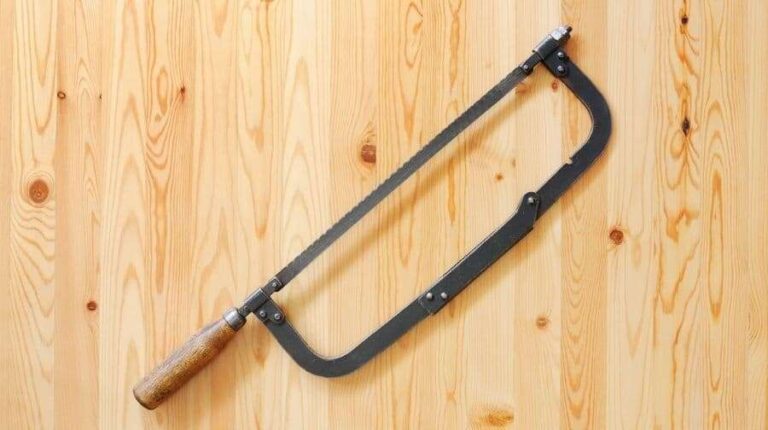
- A rigid hacksaw frame
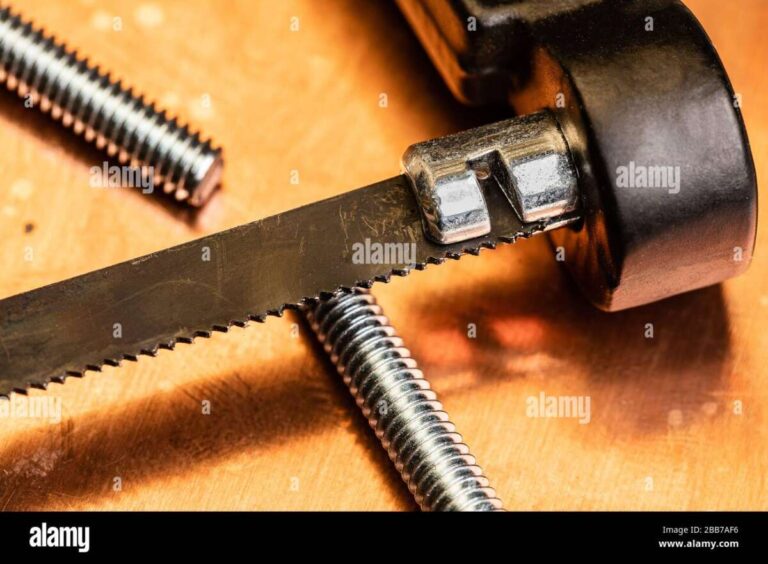
- A bi-metal hacksaw blade
- A blade with the correct teeth per inch, or TPI
- A vise or secure clamp
- Cutting oil made for metalworking
- A file or deburring tool
- Safety glasses
- Work gloves for handling sharp edges
- Hearing protection if the cut creates a loud ringing sound
Choose a bi-metal blade
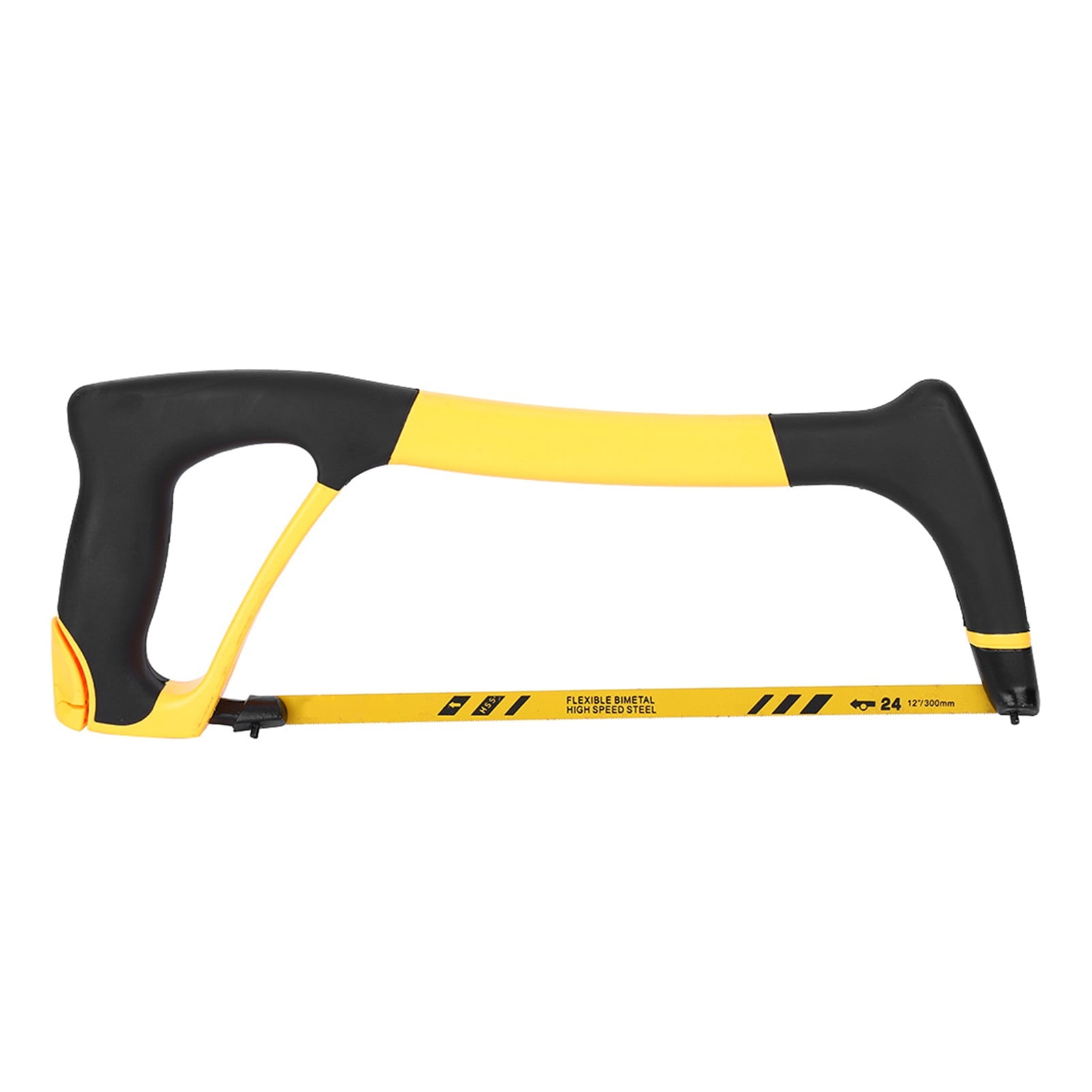
A bi-metal blade combines a flexible spring-steel back with harder high-speed-steel teeth. It is usually a better choice for stainless steel than a basic carbon-steel blade.
Bi-metal blades resist tooth breakage and stay sharp longer. They also handle the vibration that can occur when cutting tubing or thin sheet.
Select the correct tooth count
Use the thickness of the stainless steel to guide your blade choice:
| Stainless steel material | Useful blade range | Reason |
|---|---|---|
| Thin sheet or tubing wall | 24–32 TPI | Helps keep several teeth in the material |
| Medium sheet, angle, or small tubing | 18–24 TPI | Good general-purpose range |
| Thick rod, bar, or heavy plate | 14–18 TPI | Larger gullets clear larger chips |
A useful rule is to keep at least two or three teeth in the workpiece at all times. If the teeth are too large for thin sheet, they may catch and tear the metal. If the teeth are too fine for thick stock, the blade may clog and cut very slowly.
Check the blade direction
Most hacksaw blades cut on the forward stroke. Install the blade so the teeth point away from the handle.
Some specialized frames or blades may use a different setup, so check the blade or frame instructions if the cutting action feels wrong.

How to Cut Stainless Steel With a Hacksaw
Cutting stainless steel by hand is straightforward when the material is marked, supported, and kept cool. Follow these steps in order.
1. Mark the cut line
Use a permanent marker, machinist’s scribe, or a fine-tip marker to mark the cut.
For a straight cut through tubing or round stock, wrap a strip of paper around the material. Align the paper edges, then trace along one edge. This gives you a more even guide than trying to mark around the material by eye.
Leave the cut line visible. Do not place the vise jaws directly over the line.
2. Secure the stainless steel
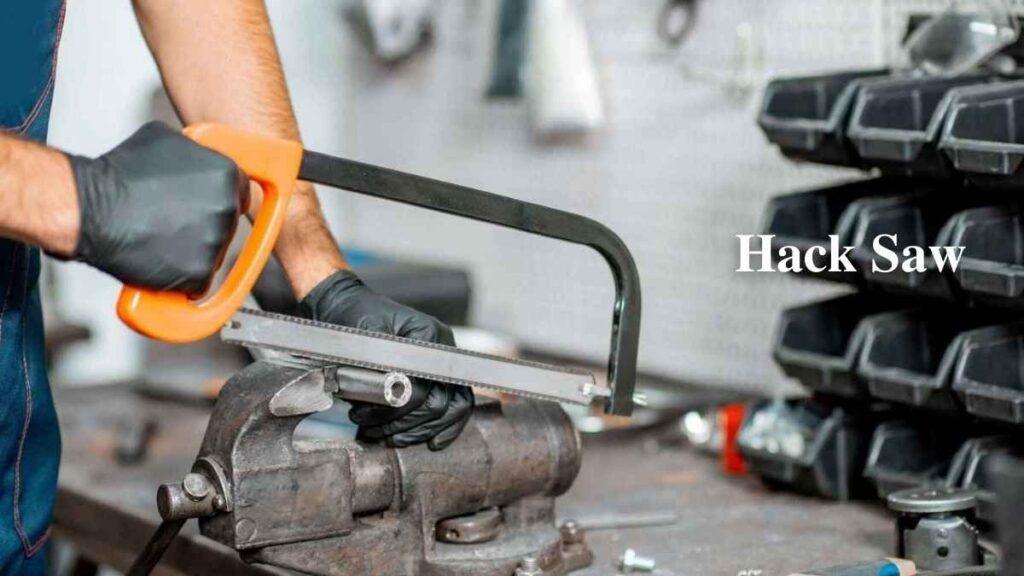
Clamp the work firmly in a vise. The cut line should sit close to the vise jaws, but the blade must still have enough room to pass through the material.
Keep the unsupported length as short as practical. Long, loose pieces can vibrate, bend, or twist. Movement wastes cutting force and can damage the blade teeth.
For thin sheet, place the sheet between pieces of scrap wood or soft jaw covers. This helps reduce vibration and protects the surface from deep vise marks.
3. Start a shallow notch
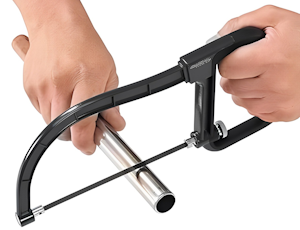
Hold the hacksaw with both hands. Place the blade on the waste side of the mark and make a few light forward strokes.
These first strokes create a shallow groove. Keep the blade aligned with the marked line. Do not begin with hard, fast strokes because the blade can skate across the stainless steel and scratch the surface.
A small piece of masking tape beside the cut line can also help reduce surface scratches and make the mark easier to see.
4. Apply steady forward pressure
Once the groove is established, use firm, even pressure on the forward stroke. Let the blade cut instead of forcing it.
Lift or reduce pressure slightly on the return stroke. Most hacksaw blades are designed to cut in one direction, so pressing hard on the return stroke adds wear without helping the cut.
Use long strokes that involve as much of the blade as possible. Short strokes wear only a small section of the teeth and can create heat.
5. Use cutting oil when appropriate
Apply a small amount of cutting oil to the blade or cut line. Oil can reduce friction and heat, improve chip removal, and extend blade life.
Do not flood the work. A light film is normally enough for a hand hacksaw.
Avoid oil when:
- The stainless part will contact food and cannot be cleaned properly
- The material is part of a medical or clean-room application
- The oil creates a slip hazard
- The product label does not permit use on the material or application
For these jobs, follow the project’s cleaning and contamination rules. Water-based metalworking fluids may be suitable in some settings, but the product instructions control.
6. Keep the blade moving
Do not stop with the blade pressed into the cut. Stainless steel can harden at the surface when heat and pressure build up without enough cutting action.
If you need to pause, reduce pressure and pull the blade clear of the cut. Let the material cool before continuing.
7. Finish the cut carefully
As the blade approaches the far side, reduce pressure. The remaining metal may break suddenly, which can bend the blade or damage the edge.
Support the waste piece so it does not fall and pull against the last few teeth. After the cut is complete, inspect the edge for sharp burrs.
8. Deburr the cut edge
Use a flat file, half-round file, or deburring tool to remove sharp edges. File in a controlled direction and keep your hands behind the cutting edge.
For tubing, check both the outside and inside edges. A small burr inside a tube can cut fingers, restrict flow, or interfere with fittings.
How Fast Should You Cut Stainless Steel by Hand?
Use a steady rhythm rather than a high speed. A hacksaw should make clean, full strokes without bouncing or squealing.
The best cutting speed depends on:
- Stainless steel grade
- Material thickness
- Blade TPI
- Blade sharpness
- Pressure
- Lubrication
- How firmly the part is supported
A practical sign of good technique is a steady stream of small metal chips. If the blade only polishes the surface, it is not cutting effectively.
What the blade and cut tell you
| What you observe | Likely cause | Correction |
|---|---|---|
| Blade skates across the surface | No starting groove or too much force | Start with light strokes |
| Blade squeals | Too much speed, poor lubrication, or a dull blade | Slow down, add suitable oil, or replace the blade |
| Teeth strip quickly | Wrong blade, excessive force, or loose work | Use bi-metal, secure the part, and reduce pressure |
| Cut stops making progress | Blade is dull or stainless has work-hardened | Replace the blade and keep the new blade cutting |
| Sheet bends while cutting | Material is poorly supported | Clamp it between wood or near the cut |
| Cut wanders | Loose frame, weak blade tension, or poor marking | Tighten the frame and use a rigid blade |
| Stainless turns blue or dark | Too much heat | Reduce pressure, improve lubrication, and take short cooling breaks |
Do not keep forcing a blade that no longer cuts. A dull blade creates heat and friction, which can make stainless steel even harder at the cut.

Can a Hacksaw Cut Every Type of Stainless Steel?
A hacksaw can cut many common stainless steel grades, but the result depends more on shape and thickness than on the grade alone.
Common grades such as 304 and 316 stainless steel can usually be cut by hand when the stock is small enough. Hardened stainless components, thick plate, large bar, and some precipitation-hardening grades may require a powered saw or an industrial cutting method.
The material may also be difficult because of its shape:
- Round rod: Usually manageable if firmly clamped
- Threaded rod or bolts: Cut slowly and protect the threads with a nut
- Thin sheet: Easy to cut but prone to vibration and bending
- Tubing: Manageable if supported close to the cut
- Large flat bar: Possible, but slow by hand
- Thick plate: Usually a poor hacksaw job
- Spring or hardened stainless: May need specialized tooling
If the material is valuable, unknown, or unusually hard, test the blade on a small waste section first.
Cutting stainless steel bolts and threaded rod
A hacksaw works well for many stainless bolts and threaded rods. Thread a matching nut onto the bolt before cutting. After the cut, remove the nut over the freshly cut end.
As the nut passes over the end, it can help restore minor thread damage. This does not repair severely crushed or cross-threaded threads, so cut as squarely as possible and deburr the end first.
Use a fine-tooth blade for small-diameter threaded parts. Clamp the bolt without crushing the threads.
Hacksaw Versus Other Stainless Steel Cutting Tools
A hacksaw is not always the best tool. It is useful because it is inexpensive, quiet, portable, and does not create sparks or abrasive dust. The trade-off is speed.
| Tool | Best for | Main advantage | Main limitation |
|---|---|---|---|
| Hacksaw | Small jobs and occasional cuts | Low cost and good control | Slow on thick material |
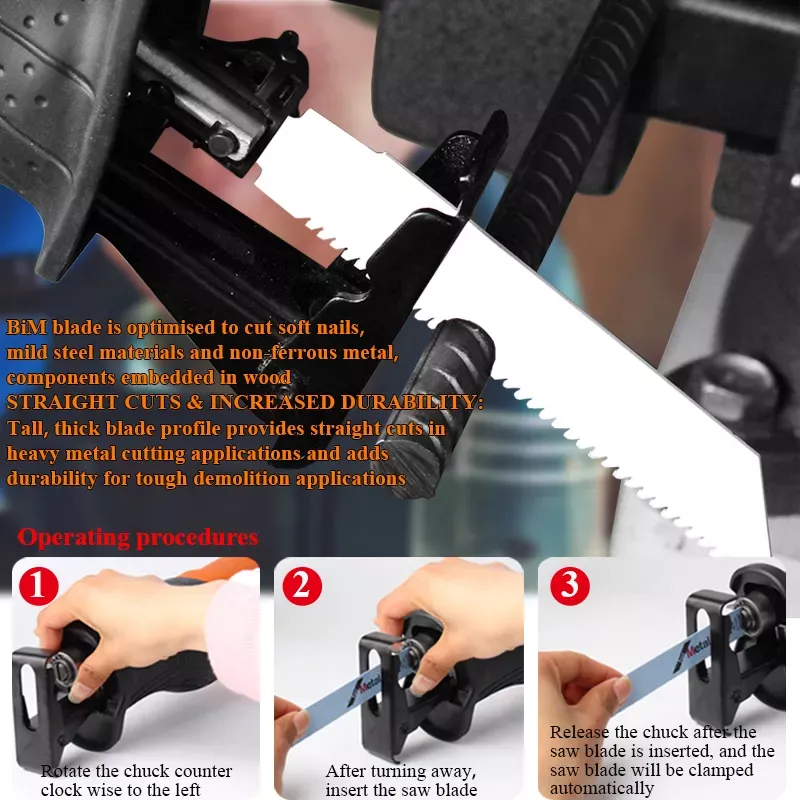
| Reciprocating saw | Rough cuts and installed material | Reaches awkward locations | Can vibrate and leave a rough edge |
| Portable band saw | Repeated cuts and thicker stock | Controlled, cooler cuts | Costs more and needs access |
| Angle grinder with cut-off wheel | Fast cuts in heavy stock | Removes material quickly | Sparks, dust, heat, and rough edges |
| Abrasive chop saw | Repeated straight cuts | Fast on bars and tubing | Noisy, hot, and produces abrasive debris |
| Cold saw | Accurate production cuts | Clean and square results | Requires the right machine and blade |
Choose a powered tool when the stainless is thick, the job has many cuts, or a square finish matters. Use suitable guarding, eye protection, and the tool maker’s instructions.
A grinder or abrasive saw may be a poor choice near flammable materials because it can throw sparks. It can also heat the stainless and discolor the cut edge.
Common Mistakes When Cutting Stainless Steel
Most failed cuts come from technique, not from stainless steel being impossible to cut.
Using a dull blade
A dull blade rubs instead of cutting. It produces heat, noise, and slow progress.
Replace the blade when the teeth are rounded, missing, clogged with metal, or no longer producing chips. Do not try to restore a standard hacksaw blade by filing its teeth.
Using too much pressure
Heavy pressure can bend the blade, break teeth, and make the cut wander. It also increases heat.
Use firm pressure, but keep the blade moving. If you must strain hard to make progress, check the blade, TPI, tension, and material support.
Cutting without securing the work
A loose workpiece can grab the blade or make the cut uneven. It also increases the risk of sharp edges moving toward your hands.
Use a vise whenever possible. Do not hold the stainless steel in one hand while cutting it with the other.
Choosing the wrong TPI
A coarse blade can catch thin sheet. A very fine blade can clog in thick material.
Match the blade to the thickness, and keep several teeth engaged in the work.
Letting the stainless steel overheat
Heat may discolor the surface and reduce blade life. More importantly, rubbing can harden the cut zone.
Use cutting oil when suitable, keep the strokes controlled, and stop if the blade is only polishing the metal.
Cutting through contamination
Stainless steel does not stay corrosion-resistant if its surface becomes contaminated with ordinary steel particles. Avoid using a file, brush, or vise surface that is covered with carbon-steel debris when the finish matters.
Use clean tools reserved for stainless steel when possible. After cutting, remove oil and loose particles. For critical, architectural, marine, or food-related work, follow the specified cleaning process.

Stainless Steel Hacksaw Safety
Wear safety glasses every time. Cutting can create small metal chips, and the finished edge can be extremely sharp.
Use these precautions:
- Secure the material before starting.
- Check that the blade is tight in the frame.
- Keep both hands on the saw when possible.
- Keep fingers away from the blade path.
- Wear gloves while handling the cut piece, not as a substitute for careful technique.
- Do not use a cracked or bent frame.
- Keep cutting oil off the floor and handles.
- Clean up metal chips with a brush or vacuum rather than bare hands.
- Do not use compressed air if it can send chips toward people or contaminate nearby equipment.
- Wear hearing protection if the work creates sustained noise.
- Follow the safety data sheet for any cutting oil or cleaner.
If you use a power tool instead of a hacksaw, add the controls required for that tool. These may include a guard, face protection, hearing protection, dust control, and spark control.
For workplace use in the United States, follow your employer’s hazard assessment and applicable OSHA requirements. A home workshop still needs the same basic habits: secure the work, protect your eyes, and control sharp edges.
What to Do If the Hacksaw Will Not Cut Stainless Steel
Stop and check the setup instead of pushing harder.
- Inspect the teeth. Replace a dull, broken, or clogged blade.
- Check the TPI. Use a finer blade for thin sheet and a coarser blade for thick stock.
- Increase blade tension. A loose blade can flex and wander.
- Secure the material again. Move the cut closer to the vise jaws.
- Check the cutting direction. The teeth should normally point away from the handle.
- Add suitable cutting oil. Use only a product appropriate for the job.
- Start a new groove if the old one has hardened. A fresh blade may cut beside the polished area.
- Reduce speed and use full strokes. Avoid short, rapid rubbing strokes.
- Change tools if the stock is too thick. A band saw or another suitable powered tool may be safer and more efficient.
If the stainless steel has turned blue, the blade is smoking, or the cut zone is visibly hardened, allow it to cool. Do not keep forcing the blade through a hot, polished groove.

Key Takeaways
- Yes, a hacksaw can cut stainless steel.
- Use a sharp bi-metal blade.
- Choose about 24–32 TPI for thin material and 14–24 TPI for thicker stock.
- Clamp the work close to the cut.
- Use steady forward pressure and full strokes.
- Keep the blade moving to reduce work hardening.
- Use a small amount of cutting oil when the application allows it.
- Deburr every cut edge.
- Switch to a band saw, reciprocating saw, or other powered tool for thick or repeated cuts.
FAQs
Can I cut 304 stainless steel with a hacksaw?
Yes. 304 stainless steel is commonly cut with a sharp bi-metal hacksaw blade. Clamp it firmly, use steady pressure, and avoid letting the blade rub in one place.
Can I cut 316 stainless steel by hand?
Yes, for small pieces, tubing, rod, and bolts. 316 stainless steel may feel slow to cut, especially in thick sections. Use a sharp blade, suitable lubrication, and good support.
What is the best hacksaw blade for stainless steel?
A bi-metal blade is usually the best general choice. Use 24–32 TPI for thin sheet or tubing and roughly 18–24 TPI for medium stock. Use a coarser blade for thick bar or plate.
Should I use oil when cutting stainless steel?
Usually, a small amount of cutting oil helps reduce friction and heat. Do not use it when contamination is not allowed or when the finished part must meet a food, medical, or clean-service requirement unless the oil and cleaning process are approved.
How do I stop stainless steel from hardening while I cut it?
Keep the blade moving, use firm but controlled pressure, and avoid letting the blade skid or rub. Use a sharp blade and suitable cutting oil. If the surface has already hardened, start with a new blade beside the damaged groove.
Can I cut stainless steel sheet with a hacksaw?
Yes, but thin sheet can bend and vibrate. Support it between wood blocks or clamp it near the cut. Use a fine-tooth blade and file the sharp edge after cutting.
Conclusion
A hacksaw is a practical way to cut small stainless steel parts in a home workshop or job site. The key is not speed. It is a sharp bi-metal blade, firm support, correct TPI, steady strokes, and enough pressure to make chips without overheating the metal.
For a single bolt, tube, sheet section, or small rod, a hacksaw is often all you need. For thick plate, repeated cuts, or tight accuracy requirements, use a suitable powered saw and follow its safety instructions.
Recent Tool Guides
 Hammer
How To Hammer Flowers Onto Paper: Easy Guide
Learn how to hammer flowers onto paper with simple steps, helpful tips, and beautiful results for...
Read Guide → Wrench
How To Use A Hex Wrench: Easy Step-By-Step Guide
Learn how to use a hex wrench correctly with simple steps, helpful tips, and common mistakes...
Read Guide → Hacksaw
How To Cut Curtain Pole With Hacksaw: Easy Guide
Learn how to cut curtain pole with hacksaw safely and neatly. Follow simple steps for accurate...
Read Guide → Wrench
How To Use A Husky Torque Wrench: Easy Guide
Learn how to use a Husky torque wrench correctly with simple steps, torque settings, and safety...
Read Guide → Hammer
How To Hold A Hammer: Safe Grip Guide
Learn how to hold a hammer with the right grip, stance, and technique for safer, more...
Read Guide → Hacksaw
How To Cut Flexible Metal Conduit With Hacksaw: Easy Guide
Learn how to cut flexible metal conduit with hacksaw safely and cleanly. Follow simple steps for...
Read Guide →