Are Hacksaws Used For Hardwood: The Best Cutting Guide
In the United States, a hacksaw is mainly used to cut metal, plastic pipe, and similar materials. You can use a hacksaw on hardwood, but it is usually a slow and inefficient choice. A hacksaw may work for a small cut in thin wood, a dowel, trim, or a piece of scrap. For regular hardwood work, a wood saw with larger, sharper teeth will cut faster and leave a better edge.
This guide explains when a hacksaw can cut hardwood, why it is not the best tool, which blade to use, and what safer options may work better for your project.
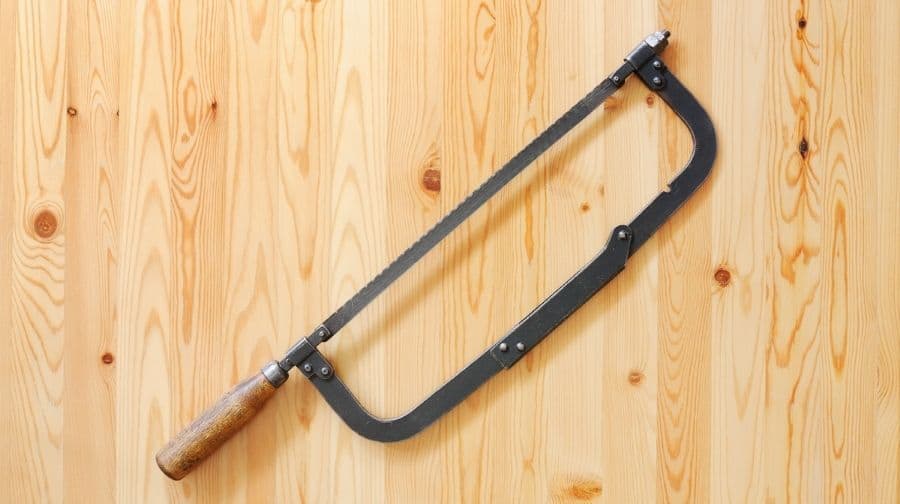
Can a hacksaw cut hardwood?
Yes, a hacksaw can cut hardwood if the wood is thin enough and the blade is sharp. The blade will remove wood as you push and pull it through the material. However, a standard hacksaw blade is made for materials such as steel, aluminum, copper, and plastic—not for efficient wood cutting.
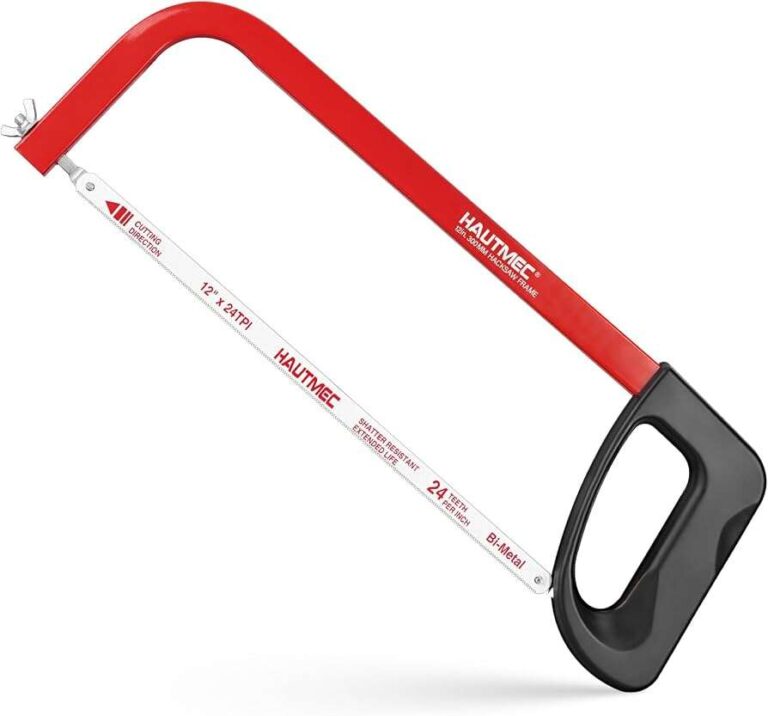
A hacksaw blade often has fine teeth. These teeth are close together and remove only a small amount of material with each stroke. That design helps create a controlled cut in metal, but it can make hardwood cutting slow.
A hacksaw can be useful for:
- Cutting a small hardwood dowel
- Trimming a thin piece of hardwood
- Cutting wood trim in a tight spot
- Removing a damaged wooden fastener
- Making a short cut when no wood saw is available
- Cutting thin plywood or laminate in an emergency
It is less suitable for:
- Cutting thick boards
- Making long rip cuts
- Cutting hardwood flooring
- Cutting large timber
- Making repeated furniture cuts
- Producing a clean, accurate finish
The main issue is not that the hacksaw cannot cut wood. The issue is that the blade and frame are designed for a different cutting job.
Why a hacksaw is not ideal for hardwood
A hacksaw is not ideal for hardwood because its blade geometry, tooth spacing, and frame are optimized for hard metals rather than wood fibers.
Fine teeth remove wood slowly
Most hacksaw blades have a high tooth count per inch, often called TPI. Fine teeth make a narrow cut, but they also remove less material per stroke. Hardwood can make this problem worse because it resists the teeth and creates more friction.
A wood saw usually has larger teeth with deeper gullets. The gullets are the spaces between the teeth. They carry sawdust out of the cut and reduce clogging.
The blade may clog with sawdust
Hardwood dust can pack between fine hacksaw teeth. When this happens, the blade may stop cutting well. The blade can slide across the surface instead of biting into the wood.
This problem is more likely with oily woods, dense exotic woods, and resinous boards. Dust buildup can also cause the blade to heat up.
The cut may wander
A hacksaw blade is narrow and flexible. If you push too hard or twist the frame, the blade can bend and leave the intended cut line. This is especially common when cutting thick hardwood.
A rigid backsaw, handsaw, or powered saw gives better support for a straight cut.
The cut may be rough
A hacksaw can leave a rough or uneven cut in hardwood. Fine teeth do not always produce a smooth wood finish because the teeth are not shaped like typical crosscut or rip-saw teeth.
The result can include:
- Splintering
- Burn marks
- A wavy cut
- Compressed wood fibers
- A cut that needs heavy sanding
These results are not guaranteed, but they become more likely as the wood gets thicker or harder.

Which hacksaw blade should you use on hardwood?
If you must use a hacksaw on hardwood, choose a sharp blade with a moderate tooth count and enough length to pass through the wood. A blade with slightly coarser teeth may clear sawdust better than a very fine metal-cutting blade.
A 12- to 18-TPI blade may be more practical for wood than an extremely fine 24- or 32-TPI blade. This is a general starting point, not a universal rule. The best choice depends on the wood thickness and the blade design.
Use these guidelines:
| Hardwood condition | More suitable hacksaw blade choice |
|---|---|
| Thin trim or veneer | Fine to medium teeth |
| Small dowel | Medium teeth |
| Thick hardwood block | Coarser teeth, although another saw is better |
| Delicate finished surface | Fine teeth with careful support |
| Dense or oily hardwood | Sharp, clean blade with moderate teeth |
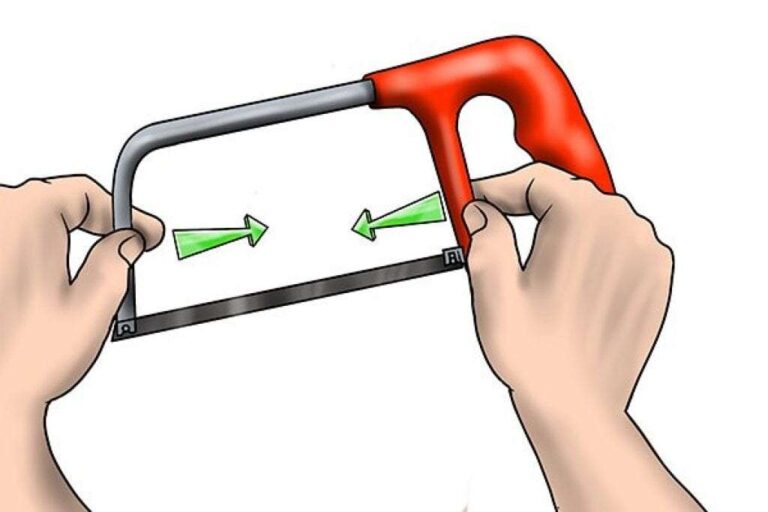
The blade should be tight in the frame. A loose blade can flex, twist, or break. Do not use a blade with missing teeth, heavy rust, or visible bends.
A hacksaw blade made for metal may cut wood, but that does not make it a wood blade. Some multipurpose blades are available, yet their performance still depends on the wood and the quality of the cut you need.
How to cut hardwood with a hacksaw
Use a hacksaw on hardwood only when the piece is small enough to control and the cut does not require high production speed. Secure the wood before you begin.
What you need
Gather:
- A hacksaw with a sound frame
- A sharp blade
- A clamp or sturdy vise
- A pencil or marking knife
- A square or straightedge
- Eye protection
- Hearing protection if the cut creates a loud vibration
- Sandpaper or a file for final cleanup
A dust mask or respirator may also help when the work creates airborne dust. Choose respiratory protection that is suitable for the dust and use it as directed by the manufacturer.
Cutting steps
-
Mark the cut line. Use a sharp pencil or marking knife. A knife line can reduce uncertainty on finished hardwood because it cuts the surface fibers before sawing.
-
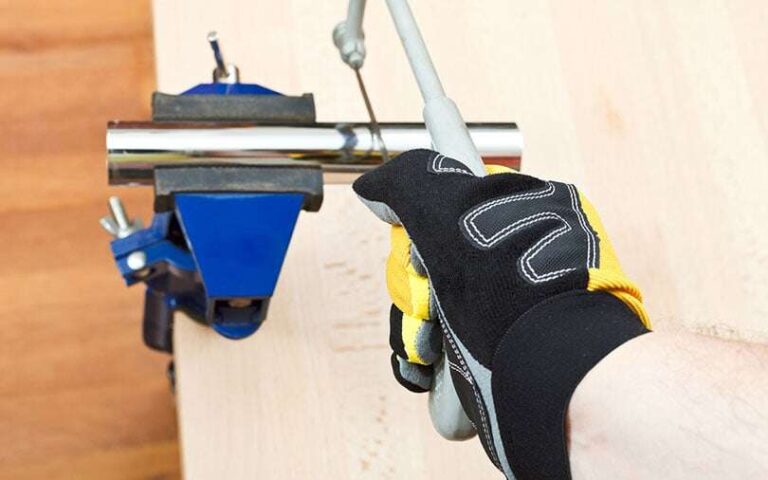
Support the wood. Clamp the workpiece close to the cut line. Keep the waste side supported so it does not break away at the end.
-
Check the blade direction. Most hacksaw blades are installed with the teeth pointing away from the handle. This allows the saw to cut on the forward stroke.
-
Start with short strokes. Hold the blade at a low angle and create a small starting groove. Short strokes help keep the blade on the mark.
-
Use light pressure. Let the teeth do the cutting. Excess force can bend the blade, damage the cut, or break the blade.
-
Use the full blade length. Once the groove is established, use longer strokes. This spreads wear across more teeth and reduces heat.
-
Keep the frame straight. Do not twist the hacksaw while cutting. Check the blade from above and from the side if the cut must be square.
-
Slow down near the end. Support the waste piece and reduce pressure as the blade exits the wood. This helps prevent splintering.
-
Inspect and smooth the cut. Remove loose fibers with fine sandpaper or a sharp block plane. Sand with the grain when possible.
Signs that the method is working
The process is going well when:
- The blade stays on the marked line
- Sawdust clears from the teeth
- The blade remains cool enough to touch after a pause
- The cut advances with steady strokes
- The wood does not vibrate or shift
Stop if the blade bends, binds, overheats, or begins to crack. Replace the blade if it is damaged.

When should you use a different saw?
Use a dedicated wood saw when the hardwood is thick, the cut is long, or the finished edge matters. The right choice depends on the type of cut and the shape of the workpiece.
| Task | Better tool |
|---|---|
| Short crosscut in a board | Crosscut handsaw or backsaw |
| Cutting along the grain | Rip saw |
| Fine trim work | Backsaw, pull saw, or fine-tooth handsaw |
| Cutting curves | Coping saw or jigsaw |
| Repeated straight cuts | Circular saw or table saw |
| Cutting a small dowel | Fine-tooth backsaw or flush-cut saw |
| Cutting a joint | Dovetail saw or backsaw |
| Cutting thick hardwood | Powered saw with a suitable wood blade |
A handsaw designed for wood usually has teeth that remove sawdust more effectively. A backsaw has a stiffened upper edge, which helps it stay straight. A Japanese pull saw cuts on the pull stroke and often has a thin blade, making it useful for trim and joinery.
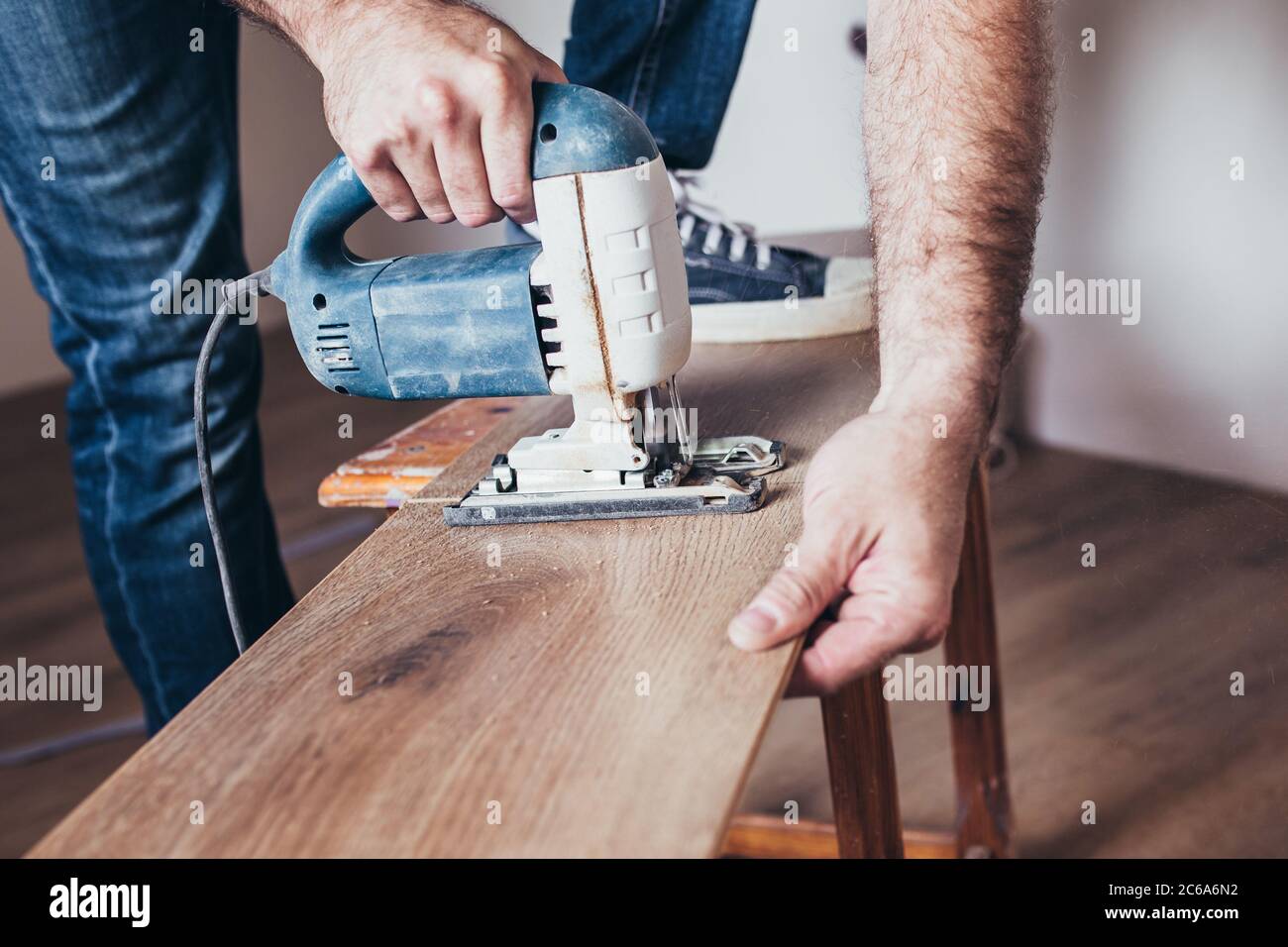
For power tools, use a blade intended for wood and match the blade to the tool and material. Follow the tool manufacturer’s instructions. Do not remove guards or use a blade that is not approved for the saw.
A hacksaw may still be the best option when access is tight or the cut is very small. Tool choice is not only about speed. It also depends on available space, control, finish quality, and the risk of damaging the workpiece.
Hacksaw versus wood saw for hardwood
The difference is easiest to see when comparing the cutting features rather than the tool names.
| Feature | Hacksaw | Wood saw |
|---|---|---|
| Main design purpose | Metal and plastic | Wood |
| Typical blade | Thin, narrow, fine-tooth blade | Blade shaped for wood fibers |
| Sawdust removal | Limited with fine teeth | Better with wood-saw gullets |
| Speed in hardwood | Usually slow | Usually faster |
| Long cuts | Awkward | More practical |
| Small controlled cuts | Possible | Usually better |
| Finish quality | Variable | Better when the saw matches the task |
| Risk of clogging | Higher in some woods | Usually lower |
The term “hardwood” also needs care. In woodworking, hardwood means wood from a broadleaf tree, such as oak, maple, ash, or walnut. It does not always mean the wood is physically harder than every softwood. Some softwoods can be dense, and some hardwoods can be relatively easy to cut.
The wood species, moisture level, thickness, grain direction, and finish all affect the result. A hacksaw that works on a thin piece of poplar may struggle with a thick piece of hard maple.

Common mistakes when using a hacksaw on hardwood
Several mistakes make the job slower and less safe.
Pushing too hard
Heavy pressure does not always produce a faster cut. It can bend the blade and make it jump out of the groove. Use steady pressure and allow the teeth to remove the material.
Using a dull blade
A dull blade creates heat and friction. It may polish the cut instead of removing wood. Replacing the blade is usually better than forcing it through the workpiece.
Holding the wood by hand
Do not hold a small hardwood piece in your hand while sawing it. The blade can slip, and the workpiece can move suddenly. Use a vise, clamp, or another stable method.
Cutting without checking for metal
Reclaimed wood may contain nails, screws, staples, or other hardware. Cutting through hidden metal can damage the blade and create flying fragments. Inspect the wood with care before cutting.
Ignoring the grain
Cutting across the grain and cutting with the grain produce different results. Cutting with the grain can cause the blade to follow the grain or split the wood. Support the work and use a saw suited to the direction of the cut.
Cutting treated or unknown wood without precautions
Painted, treated, or reclaimed wood may create dust or fumes that need extra control. Avoid creating dust when the material is unknown. Check the product label or manufacturer information before cutting treated lumber.
Applying side pressure to the blade
A hacksaw blade is not designed to act as a pry bar. Do not twist it to widen the cut or use it to lever out the waste. This can break the blade.
Skipping eye protection
Small chips can leave the cut at speed. Wear safety glasses that fit well, and keep other people away from the cutting area.
Is a hacksaw safe for cutting hardwood?
A hacksaw can be safe for a small hardwood cut when the wood is secured, the blade is intact, and the user keeps both hands clear of the cutting path. It becomes less suitable when the workpiece is large, unstable, thick, or difficult to clamp.
Before cutting:
- Inspect the frame and blade
- Tighten the blade correctly
- Secure the workpiece
- Mark the cut clearly
- Check for nails, screws, and staples
- Wear eye protection
- Keep the blade path clear
- Work in a well-lit area
Stop if the blade binds or the workpiece moves. Do not try to catch a falling piece while the blade is moving.
If a power saw would make the cut faster but you have little experience with that tool, do not switch tools without learning its controls and safety requirements. A slower hand tool is often preferable to an unfamiliar power tool, provided the work remains stable and controlled.
FAQs about hacksaws and hardwood
Can a hacksaw cut oak?
Yes, a hacksaw can cut thin oak, dowels, and small trim pieces. Thick oak will take more time and may cause the blade to heat, clog, or wander. A sharp crosscut saw or backsaw is normally a better choice.
Can you cut plywood with a hacksaw?
You can cut thin plywood with a hacksaw, but the result may be rough and slow. Support the plywood on both sides of the cut and use light pressure to reduce splintering. A fine-tooth wood saw will usually work better.
Can you use a hacksaw to cut a wooden dowel?
Yes. A hacksaw can cut a wooden dowel, especially when the dowel is small and held securely. Mark the cut around the dowel, keep the blade square, and sand the end after cutting.
Will a hacksaw cut laminate flooring?
A hacksaw may cut a small piece of laminate flooring, but it is not usually the best option. Laminate can damage or dull a blade, and the cut may chip the surface. Use a tool and blade recommended for the specific flooring product.
Does a hacksaw cut faster on a push or pull stroke?
Most standard hacksaws cut on the push stroke because the blade teeth usually point away from the handle. Check the blade installation and frame design before cutting. Do not reverse the blade unless the frame and blade instructions allow it.
Key takeaways
- A hacksaw can cut hardwood, but it is not designed for efficient wood cutting.
- It works best for thin hardwood, small dowels, trim, and short emergency cuts.
- Secure the wood and use a sharp blade with moderate teeth.
- Use light, steady strokes instead of forcing the blade.
- Choose a handsaw, backsaw, pull saw, jigsaw, or circular saw for larger or cleaner cuts.
- Stop if the blade bends, binds, overheats, or shows damage.
Conclusion
A hacksaw is a workable backup tool for small hardwood cuts, but it is rarely the right first choice. Its fine blade and narrow frame can make thick or long cuts slow, rough, and tiring.
For the best result, match the saw to the job. Use a hacksaw for a small, controlled cut when needed. For boards, flooring, furniture parts, and repeated work, choose a saw made for wood and secure the material before cutting.
Recent Tool Guides
 Hammer
How To Hammer Flowers Onto Paper: Easy Guide
Learn how to hammer flowers onto paper with simple steps, helpful tips, and beautiful results for...
Read Guide → Wrench
How To Use A Hex Wrench: Easy Step-By-Step Guide
Learn how to use a hex wrench correctly with simple steps, helpful tips, and common mistakes...
Read Guide → Hacksaw
How To Cut Curtain Pole With Hacksaw: Easy Guide
Learn how to cut curtain pole with hacksaw safely and neatly. Follow simple steps for accurate...
Read Guide → Wrench
How To Use A Husky Torque Wrench: Easy Guide
Learn how to use a Husky torque wrench correctly with simple steps, torque settings, and safety...
Read Guide → Hammer
How To Hold A Hammer: Safe Grip Guide
Learn how to hold a hammer with the right grip, stance, and technique for safer, more...
Read Guide → Hacksaw
How To Cut Flexible Metal Conduit With Hacksaw: Easy Guide
Learn how to cut flexible metal conduit with hacksaw safely and cleanly. Follow simple steps for...
Read Guide →