
Introduction
For most hacksaws used in the United States, the blade teeth point away from the handle. The blade should cut when you push the saw forward, not when you pull it back.
Set the blade so the teeth face toward the front end of the hacksaw frame. The smooth back of the blade faces the handle. This setup gives the teeth a firm bite on the forward stroke and lets the blade slide back with less force.
Which Way Should a Hacksaw Blade Face?
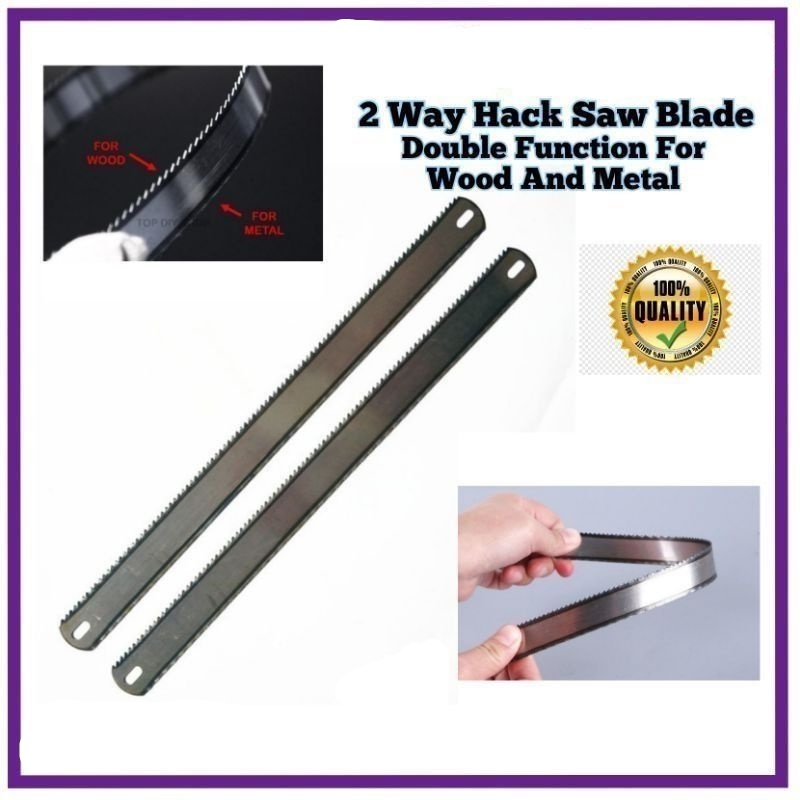
A standard hacksaw blade goes in with its teeth pointing forward and away from the handle.
Look at the blade from the side. The teeth usually lean in the direction of the cut. If the handle is on the left, the teeth should normally point to the right. If the handle is on the right, the teeth should point to the left.
The exact frame shape can vary, but the rule stays the same:
The teeth should point in the direction you push the hacksaw.
A hacksaw normally cuts on the push stroke. This is called a push-cut tool. The teeth remove metal as you move the saw away from your body. On the return stroke, use light pressure and let the blade move back without forcing it.
Quick direction check
Before you cut, confirm these three points:
- The teeth point away from the handle.
- The teeth point toward the front of the frame.
- The blade cuts when you push the saw forward.
If the blade slides over the material without cutting, check the direction first. A backward blade is one of the most common hacksaw setup mistakes.
How to Install a Hacksaw Blade
Installing a hacksaw blade takes only a few steps. The main goals are correct tooth direction, straight alignment, and enough tension.
1. Loosen the frame
Most full-size hacksaws have a tension screw or lever near the front of the frame. Loosen it until the old blade comes free.
Keep your fingers clear of the blade teeth. Even a dull hacksaw blade can scratch or cut skin.
2. Remove the old blade
Lift the blade from the mounting pins or slots at both ends of the frame. Some frames use small holes in the blade. Others use hooks, studs, or quick-release fittings.
Do not twist the blade sharply. Old blades may snap if they are bent or under tension.
3. Check the new blade
Hold the blade next to the frame before you install it. Find the tooth direction and identify the handle end of the saw.
The teeth should point away from the handle. On a common straight hacksaw frame, this means the teeth point toward the front of the frame.
4. Fit both ends onto the pins
Place one blade hole over the rear pin. Then fit the other hole over the front pin.
Make sure the blade sits flat and straight. It should not lean to one side or sit above the mounting points.
5. Tighten the blade
Turn the tension screw or use the frame’s tension lever. Tighten the blade until it feels firm.
A properly tensioned blade should not sag. It may make a light, clear ping when tapped, but do not rely on sound alone. The blade should remain straight under normal hand pressure.
Do not overtighten it. Too much tension can bend the frame, damage the blade, or cause the blade to break during use.
6. Test the setup
Make a short test cut on scrap material. The blade should:
- Start cutting with forward pressure.
- Stay straight in the cut.
- Move without heavy bending.
- Return smoothly when you release pressure.
If the blade pulls sideways, stop and check the alignment and tension.

Why Do Hacksaw Teeth Point Forward?
Hacksaw teeth point forward because the blade is designed to cut on the push stroke.
When you push the saw, the teeth press into the workpiece and remove small chips of material. When you pull the saw back, the teeth should do little or no cutting. This motion helps the user control the saw and reduces the chance of catching the blade.
The frame also supports this cutting method. A typical hacksaw blade is held under tension. Forward pressure during the cut pushes against the frame in a controlled way. Excessive pressure, twisting, or side force can buckle or break the blade.
The tooth direction also works with the blade’s tooth pattern. Most hacksaw blades have teeth arranged for metal, plastic, or other specific materials. The teeth must enter the material at the angle intended by the manufacturer.
How to Use a Hacksaw After Installing the Blade
Correct blade direction is only the first step. Your cutting method affects speed, blade life, and safety.
Secure the workpiece
Clamp the material in a vise or another suitable fixture. Keep the cut close to the support point. A loose pipe, bar, or sheet can shake, bend, or pinch the blade.
Do not hold small metal pieces in your hand while cutting. The blade can slip and injure your fingers.
Start with short strokes
Place the middle part of the blade on the cut line. Use short, light strokes to make a starting groove.
Once the groove is established, use longer strokes. Use as much of the blade length as the work allows. Long strokes spread wear across more teeth.
Push on the cutting stroke
Apply firm but moderate pressure as you push the saw forward. Reduce pressure as you pull it back.
Do not force the blade. A hacksaw should remove material through repeated strokes, not through heavy downward pressure.
Keep the blade straight
Keep the blade square to the work unless you need a deliberate angled cut. Twisting the frame can bend the blade or strip its teeth.
If the blade begins to wander, stop cutting. Widening the cut by twisting the saw can cause the blade to bind.
Use the right speed
Metal cutting usually works best with steady, controlled strokes. Very fast strokes can heat the blade and wear the teeth. Slow, hard strokes can also damage the blade.
The best pace depends on the material, blade tooth count, and blade type. Follow the blade maker’s instructions when they are available.

Does Every Hacksaw Blade Point Forward?
Most standard hacksaw blades point forward, but not every saw uses the same cutting action.
Some specialty saws are made to cut on the pull stroke. Examples may include certain Japanese-style saws, specialty flush-cut saws, and tools with blades designed for a specific frame. These blades are not standard hacksaw blades, even if they look similar.
A few hacksaw frames also allow the blade to mount in different positions. You may be able to place the blade with the teeth facing backward, but that does not make it the standard setup.
Use the blade direction printed in the tool or blade instructions. If no instructions are available, identify the tool type before changing the direction.
Standard hacksaw versus specialty saw
| Tool type | Normal cutting stroke | Usual tooth direction |
|---|---|---|
| Standard U-frame hacksaw | Push stroke | Teeth away from handle |
| Junior hacksaw | Usually push stroke | Teeth toward the front |
| Pull saw | Pull stroke | Teeth toward the handle or user |
| Specialty flush-cut saw | Often pull stroke | Depends on blade design |
| Reciprocating saw blade | Powered back-and-forth motion | Depends on the blade |
Do not assume that every hand saw follows the hacksaw rule. A pull saw and a standard hacksaw are built for different cutting actions.
What Happens If a Hacksaw Blade Is Installed Backward?
A backward blade may still seem to work, but it will not cut in the normal way.
You may notice that the blade:
- Skates across the surface.
- Cuts only when you pull the saw.
- Needs unusual force.
- Vibrates or catches.
- Produces poor control at the start of the cut.
Forcing a backward blade can dull the teeth or make the saw slip. The blade may also bend if you push hard while the teeth face the wrong way.
The simple fix is to stop, release the blade tension, and reinstall it with the teeth pointing away from the handle. Do not turn the blade while it is still tight in the frame.
Choosing the Right Hacksaw Blade
Blade direction matters, but tooth size also affects the cut.
Hacksaw blades are often described by teeth per inch, or TPI. A higher TPI blade has smaller teeth. A lower TPI blade has larger teeth.
Use these general guidelines:
- 14 TPI: Fast cuts in thick, soft material.
- 18 TPI: General work in thicker metal and pipe.
- 24 TPI: Common choice for thinner metal and general-purpose work.
- 32 TPI: Thin sheet metal, tubing, and fine cuts.
Keep at least two or three teeth in contact with the material during the cut. If the material is thin and only one tooth contacts it, the blade may snag or break.
For example, a 24 TPI blade has teeth spaced about 1/24 inch apart. A thin sheet should use a finer blade than a thick steel bar because more teeth need to engage the work at once.
The material also matters. Choose a blade made for the job, such as:
- Carbon steel for light, low-cost work.
- Bi-metal blades for general metal cutting and greater flexibility.
- High-speed steel or specialty blades for harder materials.
Do not use a hacksaw blade that is cracked, badly bent, missing teeth, or heavily worn.

Common Hacksaw Blade Mistakes
Mounting the teeth toward the handle
This reverses the normal cutting action. Reinstall the blade so the teeth point toward the front of the frame.
Using too much pressure
Heavy pressure can bend the blade and cause it to break. Let the teeth do the cutting.
Cutting with only the front of the blade
Short strokes in one small area wear out a few teeth quickly. Use longer strokes when possible.
Failing to clamp the work
A moving workpiece can pinch the blade. It can also cause a crooked cut or sudden blade movement.
Using a coarse blade on thin metal
Large teeth can catch on thin sheet metal. Use a finer blade with more teeth per inch.
Cutting with a loose blade
A loose blade can wander, vibrate, and break. Tighten it until it is firm, but do not overtighten it.
Reusing a damaged blade
A blade with missing teeth or a visible crack can fail without warning. Replace it.
Hacksaw Safety in the United States
Wear safety glasses when using a hacksaw. Cutting metal can create small chips and sharp fragments.
Use gloves when they help you handle sharp stock, but do not let gloves replace safe technique. Keep loose clothing, hair, and fingers away from the blade path.
Secure the work in a vise. Keep both hands on the saw when practical, and keep your body balanced so a slip does not send the blade toward your hand.
After the cut, handle the newly cut edge with care. Metal edges can be sharper than the original stock. Deburr the edge with a file if the part will be handled or installed.
For workplace use, follow your employer’s tool rules and applicable Occupational Safety and Health Administration requirements. OSHA’s hand-tool rule requires employers to keep tools in safe condition and use tools in a safe way. Home users should apply the same basic standard.

Frequently Asked Questions
Should hacksaw teeth face forward or backward?
They should normally face forward, away from the handle. A standard hacksaw cuts on the push stroke.
Which way does the handle go on a hacksaw?
The handle is at the rear of the frame. Install the blade so the teeth point toward the front of the frame and away from the handle.
Can a hacksaw cut on the pull stroke?
A standard hacksaw is designed for a push cut. It may remove some material on a pull stroke, but pulling is not the normal or best cutting action. Use a saw designed for pull cutting when that action is required.
How tight should a hacksaw blade be?
The blade should be straight and firm, with no visible sag. Do not tighten it so much that you bend the frame or risk breaking the blade.
Why does my hacksaw blade keep breaking?
Common causes include too much pressure, a loose workpiece, a blade mounted at an angle, excessive tension, or twisting the saw during the cut. A blade with the wrong tooth size can also catch and break.
Can I install a hacksaw blade upside down?
You can physically mount some blades in the opposite direction, but a standard hacksaw should not be used that way. Install the teeth away from the handle unless the tool or blade maker gives different instructions.
Key Takeaways
- A standard hacksaw blade goes with the teeth pointing away from the handle.
- The teeth should face the front of the frame.
- A hacksaw normally cuts on the push stroke.
- Keep the blade straight, firm, and properly aligned.
- Clamp the workpiece and use steady pressure.
- Replace blades that are cracked, bent, badly worn, or missing teeth.
- Specialty pull saws may use a different blade direction.
Conclusion
When you ask what way hacksaw blades go, use this simple rule: the teeth point in the direction of the push. On a standard hacksaw, that means the teeth face away from the handle and toward the front of the frame.
After installing the blade, check its tension, clamp the material, and begin with short strokes. If the saw does not cut on the forward stroke, stop and check the blade direction before applying more force.