How To Cut Straight With Hacksaw: Easy Pro Tips
To cut straight with a hacksaw, mark the cut clearly, clamp the work firmly, keep the blade square to the material, and use long, steady strokes with light pressure. For most home repairs in the United States, a standard 12-inch hacksaw with the right blade can cut metal, plastic pipe, threaded rod, bolts, and similar materials with good control.
The most common cause of a crooked cut is not the saw. It is movement, poor marking, a dull blade, or starting the cut at an angle. Take time to set up the work before you start sawing.

What You Need Before You Start
Gather the right tools and prepare a stable work area before making the first stroke.
You will usually need:
- A hacksaw with a straight frame
- A sharp blade suited to the material
- A tape measure or steel rule
- A fine-tip marker, pencil, or scribe
- A combination square or small try square
- A bench vise or clamps
- Safety glasses
- Work gloves, if they do not reduce your grip or control
- A file or deburring tool
A hacksaw blade is described by its teeth per inch, or TPI. The correct TPI depends on the material and its thickness.
| Material or job | Common blade choice | Reason |
|---|---|---|
| Thin sheet metal | 24–32 TPI | Smaller teeth reduce snagging |
| Thin-wall tubing | 24–32 TPI | Helps prevent tooth damage |
| General steel bar or threaded rod | 18–24 TPI | Good balance of speed and control |
| Thick steel or aluminum | 14–18 TPI | Larger gullets clear chips faster |
| PVC or plastic pipe | 18–32 TPI | Fine teeth help prevent rough edges |
These ranges are practical starting points, not strict rules. Use a blade with at least two or three teeth in contact with the material during the cut. If only one tooth engages, the blade can catch, chatter, or strip teeth.
Check the blade before use. Replace it if the teeth are missing, rounded, rusty, or uneven. A dull blade needs more force, wanders more easily, and can slip from the cut.

How to Mark a Straight Cut
A straight cut begins with an accurate line around the workpiece. Do not rely on a quick mark made from one side if the cut must be square.
For flat stock or a single face
- Measure from a known end.
- Make a small mark with a scribe or fine marker.
- Place a combination square against the edge.
- Draw a straight line across the material.
- Extend the line to the other sides if the material is thick.
A fine line is better than a wide, fuzzy mark. The blade should follow one clear edge of the line rather than remove the entire line.
For round pipe, rod, or tubing
Wrap a strip of paper around the pipe so its edges meet evenly. Mark along the paper’s edge. This creates a guide that circles the pipe.
You can also use a pipe-cutting guide or a combination square if the workpiece has a flat reference surface. Check the line around the full circumference before cutting. A line that looks straight from one side can still spiral around a round tube.
Allow for the cut width
The blade removes a narrow strip of material called the kerf. If the finished piece must be a precise length, mark the cut on the waste side of the measurement.
For example, if you need a rod to finish at 10 inches, place the cut line at 10 inches and keep the finished side intact. Do not center the blade over the line unless your measurement accounts for the material removed.

How to Cut Straight With a Hacksaw: Step-by-Step
Follow this sequence for the best control.
1. Secure the material
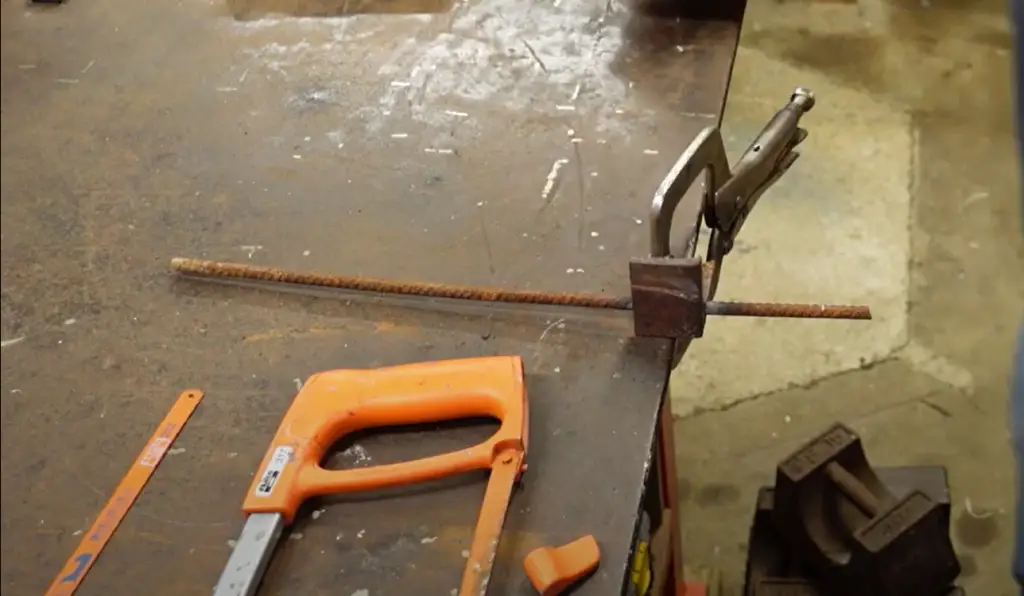
Clamp the workpiece in a bench vise. Place the cut line close to the jaws, but leave enough room for the hacksaw frame to move freely.
The material should not vibrate or rotate. If it moves, the blade can bind and the cut may drift. For thin tubing, use soft jaw covers or a piece of scrap wood to reduce crushing.
Do not hold the workpiece in your hand while sawing. A slipping blade can cause a deep cut, even when you use light force.
2. Install the blade correctly
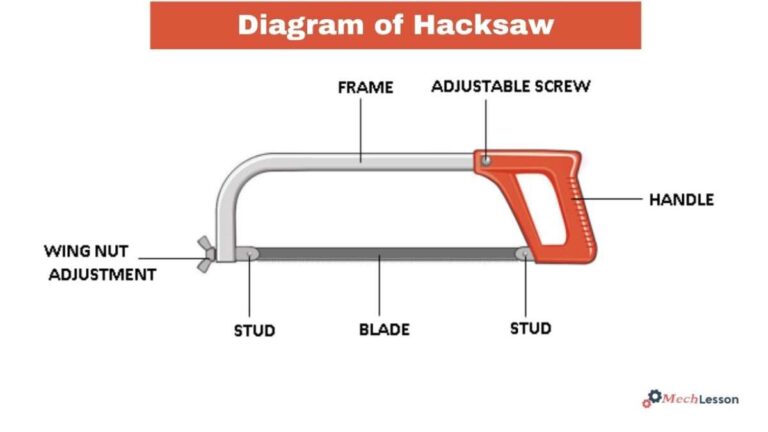
Most hacksaw blades are installed with the teeth pointing away from the handle. The saw cuts on the forward push stroke.
Some frames allow the blade to be mounted in different positions. Keep the blade straight in the frame and tighten it enough that it does not twist under normal pressure. A loose blade can bend and produce a slanted cut.
Do not overtighten the frame. Excessive tension can damage the frame or cause a broken blade to release sharply.
3. Start a shallow guide notch
Place the blade on the waste side of the line. Hold the hacksaw so the blade is square to the face of the material.
Use two or three short, gentle strokes to create a shallow notch. This first groove guides the blade. Starting with long, hard strokes often makes the blade slide across the surface and begin at an angle.
For round material, make the first groove around one small section. Rotate the work only if it remains firmly clamped. Do not chase a wandering cut by twisting the saw.
4. Keep the blade square
Use a combination square as a visual guide. Hold the hacksaw frame vertical and check that the blade meets the face at 90 degrees.
For a square cut, watch the blade from both directions:
- From the front, check left-to-right alignment.
- From the side, check front-to-back alignment.
- Keep the frame level as it moves.
Your eyes should not stay fixed only on the teeth. Look at the blade’s position against the cut line and the workpiece face.
5. Use long, steady strokes
Once the groove is established, use smooth strokes that make use of much of the blade length. Apply light pressure on the forward stroke and reduce pressure on the return stroke.
Let the teeth do the cutting. Excess force can bend the blade, cause chatter, and make the cut wander. A steady rhythm is more useful than speed.
Keep the blade moving. Stopping halfway through a stroke can leave pressure on a single group of teeth and increase the chance of binding.
6. Check the cut as you go
Stop after several strokes and inspect the groove. If it is moving away from the line, correct the angle early.
Do not force the blade back into the line with a sideways twist. Back up, widen the guide groove carefully, and resume with the blade square. Side loading can buckle or break a hacksaw blade.
7. Finish the last part carefully
When only a small section remains, reduce pressure and shorten the strokes. The workpiece may break away suddenly if you push hard.
Support the waste piece if it is large or heavy. Do not allow it to bend the material at the final connection. A sudden break can damage the edge or pinch the blade.
8. Deburr the edge
After cutting, remove sharp burrs with a file. Push the file away from your body and keep the workpiece clamped.
For pipe, remove burrs from both the inside and outside edges. Burrs can cut skin, damage seals, restrict flow, or prevent fittings from seating properly.
How to Keep the Cut Square on Round Pipe
Round pipe is harder to cut straight because the blade can follow a spiral path around the outside.
Use these methods:
- Mark a complete line around the pipe.
- Start with a shallow groove on one side.
- Keep the blade at 90 degrees to the pipe’s length.
- Cut only partway through before checking the groove.
- Rotate the pipe in the vise only when needed.
- Match the new groove to the existing groove before continuing.
If the cut must be very clean, use a fine-tooth blade and make several light passes. Cutting too aggressively can cause the blade to ride up one side of the pipe.
For PVC, a hacksaw can work well, but the edge may need more cleanup. Remove loose plastic strands and test-fit the pipe before applying cement or installing a fitting.

Troubleshooting a Crooked Hacksaw Cut
A crooked cut usually has a clear cause. Use this table to find it.
| Problem | Likely cause | Correction |
|---|---|---|
| The cut starts off the mark | No starting notch or too much pressure | Start with short, light strokes |
| The blade bends | Loose blade, heavy pressure, or side force | Tighten the blade and reduce pressure |
| The cut wanders sideways | Workpiece movement or poor alignment | Clamp closer to the cut and check the angle |
| The blade chatters | Wrong TPI, dull teeth, or uneven pressure | Use a sharper blade and smoother strokes |
| Teeth break | Blade is too fine for thick material or is being twisted | Use a coarser blade and avoid side loading |
| The cut is not square | Saw frame is tilted | Check the blade from two directions |
| Plastic melts or roughens | Excess speed or friction | Use lighter pressure and clear chips |
| The last section snaps | Too much force at the end | Support the waste and finish with short strokes |
If the hacksaw keeps drifting, stop and inspect the blade. A blade that has been bent during an earlier cut may not track straight, even if its teeth still look sharp.

Choosing the Right Blade and Technique
Blade choice affects both accuracy and cutting speed.
Use a finer blade for thin material
Thin sheet metal and small tubing need fine teeth. A coarse blade may catch the edge instead of cutting smoothly.
Keep several teeth engaged in the material. If the work is thinner than the blade’s tooth spacing, use a finer TPI blade.
Use a coarser blade for thick material
Thick steel allows larger teeth to remove material faster. A fine blade may clog with chips and generate unnecessary friction.
Do not use a coarse blade simply because it cuts faster. If the material is thin, large teeth can grab and damage the edge.
Use a blade made for the material
Bi-metal blades are a useful general option for many metal-cutting jobs because they combine a flexible backing with harder teeth. Carbon-steel blades may suit lighter work but can wear or break sooner under demanding use.
For aluminum, use a blade that clears chips well. Aluminum can clog a blade if the teeth are too fine or if the cut is made with excessive pressure.
For plastic, a fine-tooth blade usually leaves better control. A dedicated plastic-cutting blade may produce a cleaner edge than a general metal blade, depending on the pipe and the finish required.

Hacksaw Safety in a U.S. Workshop
Wear safety glasses whenever you cut. Small metal chips and broken teeth can move quickly.
Secure the work before cutting. A vise is safer and more accurate than one hand holding the workpiece. Keep your free hand away from the blade path and do not place fingers under the material near the cut.
Inspect the frame, handle, pins, and blade before use. Do not use a blade that is cracked, badly rusted, loose, or missing several teeth. Replace it rather than trying to repair it.
Keep the work area clear. Oil, loose tools, cords, and scrap can cause slips or interfere with the saw stroke. If you use cutting fluid, apply only a small amount suitable for the material and keep the handle dry.
For workplace tasks, follow the safety rules set by your employer and the applicable Occupational Safety and Health Administration requirements. A hacksaw is a hand tool, but the work may also involve sharp stock, heavy parts, chemicals, or energized equipment. Disconnect and isolate equipment before cutting any part connected to machinery or utilities.

Common Mistakes to Avoid
Cutting without clamping
Even a firm grip cannot match a vise for stability. Hand-held material can twist, and the blade can slip toward your fingers.
Using the wrong side of the line
Decide which part is the finished piece. Cut on the waste side so the blade’s kerf does not shorten the part.
Pushing too hard
More pressure does not always mean faster cutting. It can bend the blade and make a straight cut much harder.
Using a short stroke
A short stroke wears a small area of the blade and can create uneven teeth wear. Use as much of the blade length as the workspace allows.
Twisting the blade
A hacksaw blade cuts along its length. It is not designed to make sideways turns. If the cut is off line, stop and reset rather than forcing the blade sideways.
Ignoring the final few strokes
Many damaged edges occur at the end of the cut. Slow down, support the waste, and let the blade finish the last section.
Skipping deburring
A cut edge may look clean but still have a sharp burr. Always feel the edge carefully only after removing loose chips, and use a file before handling the finished part normally.
When a Hacksaw Is Not the Best Tool
A hacksaw is a good choice when you need low cost, portability, and control. It may not be the best choice when you need many identical cuts, very thick stock, or a highly precise finish.
Consider another tool when:
- You need repeated production cuts.
- The material is too large for the hacksaw frame.
- The cut must meet a tight machine-shop tolerance.
- You need a perfectly square cut on many pieces.
- The material is secured to a structure that cannot be safely clamped.
- The work involves energized electrical, gas, or plumbing systems.
- The cut creates dust, sparks, or fumes that require special controls.
A powered saw may cut faster, but it also adds noise, movement, sparks, kickback, and electrical or battery hazards. Choose the least powerful tool that can complete the task safely and accurately.

Key Takeaways
- Mark the cut with a square or a full wraparound guide.
- Clamp the workpiece close to the cut.
- Install the blade with the teeth pointing toward the cutting stroke.
- Start with a shallow notch and light pressure.
- Keep the blade square in both directions.
- Use long, smooth strokes without twisting the blade.
- Choose blade TPI based on material thickness.
- Slow down near the end and deburr the finished edge.
- Replace dull or damaged blades instead of forcing them through the work.
FAQs
Should hacksaw teeth point forward or backward?
For a standard hacksaw, the teeth usually point forward, away from the handle. The saw cuts on the push stroke. Check the instructions for your specific frame if it uses an unusual blade setup.
Why does my hacksaw cut at an angle?
The most common causes are a loose blade, excessive pressure, a tilted frame, workpiece movement, or side force on the blade. Clamp the material firmly, check the blade tension, and use lighter strokes.
How many teeth should touch the material?
Aim to keep at least two or three teeth engaged with the material. Use a finer blade for thin stock and a coarser blade for thick stock.
Can I cut PVC pipe with a hacksaw?
Yes. Use a sharp fine-tooth blade, clamp the pipe securely, and clean the inside and outside burrs after cutting. Check the edge before connecting the pipe or applying cement.
Can I use oil when cutting metal with a hacksaw?
A small amount of suitable cutting fluid can reduce friction on some metal cuts, but it is not always needed. Keep the handle dry, prevent the work from slipping, and follow the fluid manufacturer’s directions.
What should I do if the blade breaks?
Stop immediately and remove the broken blade carefully. Wear safety glasses and inspect the frame for damage before installing a replacement. Do not continue using a blade with damaged teeth or a bent frame.
Conclusion
A straight hacksaw cut comes from setup more than force. Mark the work clearly, clamp it close to the cut, choose a suitable blade, and let steady strokes guide the teeth. If the blade begins to wander, stop early, correct the setup, and continue without twisting the saw.
Recent Tool Guides
 Hammer
How To Hammer Flowers Onto Paper: Easy Guide
Learn how to hammer flowers onto paper with simple steps, helpful tips, and beautiful results for...
Read Guide → Wrench
How To Use A Hex Wrench: Easy Step-By-Step Guide
Learn how to use a hex wrench correctly with simple steps, helpful tips, and common mistakes...
Read Guide → Hacksaw
How To Cut Curtain Pole With Hacksaw: Easy Guide
Learn how to cut curtain pole with hacksaw safely and neatly. Follow simple steps for accurate...
Read Guide → Wrench
How To Use A Husky Torque Wrench: Easy Guide
Learn how to use a Husky torque wrench correctly with simple steps, torque settings, and safety...
Read Guide → Hammer
How To Hold A Hammer: Safe Grip Guide
Learn how to hold a hammer with the right grip, stance, and technique for safer, more...
Read Guide → Hacksaw
How To Cut Flexible Metal Conduit With Hacksaw: Easy Guide
Learn how to cut flexible metal conduit with hacksaw safely and cleanly. Follow simple steps for...
Read Guide →