

On a standard hacksaw used in the United States, the teeth should face away from the handle. The blade should cut when you push the saw forward, not when you pull it back.
To check the direction, hold the hacksaw with its handle in your dominant hand. The pointed teeth should face toward the front end of the frame. If the teeth face the handle, remove the blade and turn it around.
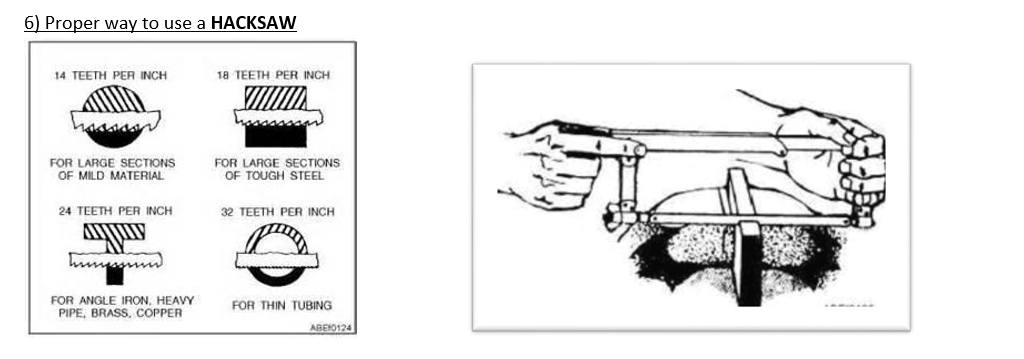
Why Hacksaw Teeth Face Forward
A standard hacksaw is designed to cut on the push stroke. As you push the frame forward, the teeth bite into the material. When you pull the saw back, the blade should glide over the cut with little or no cutting action.
This design matches the usual construction of a hacksaw blade:
- The teeth point forward.
- The blade is held under tension.
- The frame supports the blade during the push stroke.
- The backstroke clears chips and resets the saw.
The teeth work much like small chisels. Each tooth removes a small amount of metal, plastic, or other material as the blade moves forward. If you install the blade backward, the saw may not cut properly and can skid across the workpiece.
Most standard hacksaws sold in the U.S. use this forward-facing tooth pattern. Still, check the blade or tool instructions if the blade has an arrow, printed direction, or a special design.
How to Install a Hacksaw Blade Correctly
Follow these steps to put a standard hacksaw blade in the correct direction.
Release the blade tension.
Turn the tension knob or lever until the old blade becomes loose.Remove the old blade.
Lift the blade away from the mounting pins or posts. Wear gloves if the blade is damaged or has sharp edges.Check the new blade.
Look for an arrow or directional mark. If there is one, point it toward the front of the hacksaw. If there is no mark, point the teeth away from the handle.Fit the blade onto the mounting posts.
Place the holes at each end of the blade over the pins on the frame. Make sure the blade sits flat and straight.Tighten the blade.
Turn the tension knob until the blade is firm. It should not hang loose or twist sideways.Check the direction and alignment.
The teeth should point forward, and the blade should run in a straight line from one end of the frame to the other.Test the saw with light pressure.
Start with a gentle forward stroke. The teeth should engage the material without slipping.
Do not overtighten the blade. Excess tension can bend the frame, damage the blade, or make the blade more likely to snap. The exact tension method varies by frame, so follow the tool maker’s instructions when available.

How to Tell if the Blade Is Backward
A backward blade often gives clear signs during use:
- The saw does not bite when you push it.
- The blade skates across the surface.
- Cutting feels unusually slow.
- You feel resistance mainly on the pull stroke.
- The blade makes noise but removes little material.
- The teeth appear to point toward the handle.
Stop cutting if these signs appear. Set the saw down, release the blade tension, and reinstall the blade with the teeth facing forward.
Do not try to force a backward blade through the material. Extra force can bend the blade, damage the workpiece, or cause the blade to slip from the cut.
Which Hacksaw Blade Should You Use?
Tooth direction is only one part of proper hacksaw setup. The blade’s tooth count also affects how well it cuts.
Hacksaw blades are commonly described by teeth per inch, or TPI. A higher TPI gives more teeth in contact with the material. A lower TPI gives larger teeth and larger spaces between them.
| Material or workpiece | Common blade choice | Reason |
|---|---|---|
| Thin sheet metal or tubing | 24–32 TPI | Helps keep several teeth engaged |
| General steel, aluminum, or hardware | 18–24 TPI | Good general-purpose range |
| Thick steel bar or heavy stock | 14–18 TPI | Larger teeth clear chips more easily |
| Plastic or soft material | 10–18 TPI, depending on thickness | Reduces clogging and heat |
These ranges are practical starting points, not fixed rules. The workpiece thickness matters as much as the material. Try to keep at least two or three teeth in the cut at all times. If only one tooth engages, the blade may catch and break. If too many teeth are buried in thick material, the gullets may fill with chips.
For thin metal, choose a finer blade. For thick material, choose a coarser blade. Use a blade made for the material whenever the manufacturer provides that option.
How to Use a Hacksaw After Installing the Blade
Clamp or hold the workpiece so it cannot move. Mark the cut, then place the blade on the waste side of the mark.
Use long, steady strokes that make use of most of the blade length. Apply moderate pressure on the forward stroke and ease off as you pull the saw back. Let the teeth do the cutting instead of forcing the frame.
Keep the blade at about a right angle to the workpiece unless the cut requires another angle. A crooked blade can bind in the cut or wander away from the mark.
For a cleaner start, make a shallow notch with short strokes. Once the groove is established, use longer strokes. Near the end of the cut, reduce pressure so the remaining material does not break suddenly and damage the edge.
Signs of a good cut
A properly set hacksaw should:
- Cut mainly on the forward stroke.
- Produce a steady line of chips or fine dust, depending on the material.
- Keep the blade straight in the cut.
- Require firm but not excessive pressure.
- Leave the blade secure in the frame.
If the cut wanders, check the blade tension, tooth direction, blade sharpness, and workpiece support.
Common Hacksaw Blade Mistakes
Installing the teeth toward the handle
This is the most common mistake. A standard hacksaw is a push-cut tool, so the teeth should face away from the handle.
Using too much force
Heavy pressure can cause the teeth to strip, the blade to bend, or the frame to twist. Use steady pressure and allow the teeth to remove the material.
Choosing the wrong TPI
A blade with too few teeth can catch on thin stock. A blade with too many teeth can clog when cutting thick material. Match the tooth count to both the material and its thickness.
Cutting with a loose blade
A loose blade can flex, wander, and break. Tighten it enough to keep it straight and stable, but do not force the tension knob.
Using a dull or damaged blade
A dull blade needs more pressure and creates more heat. Replace a blade with missing teeth, cracks, bends, or visible damage.
Failing to secure the workpiece
A moving workpiece can pinch the blade. Use a vise or another suitable clamp, and keep your hands away from the cutting path.
Hacksaw Safety in a U.S. Workshop
Wear safety glasses when cutting metal, plastic, or any material that may produce chips. Gloves can protect your hands while handling blades, but keep loose fabric away from the moving blade and workpiece.
Inspect the frame and blade before use. Do not use a blade that is cracked, badly bent, or missing many teeth. Keep the work area stable and well lit.
Support the workpiece close to the cut. Long, unsupported pieces can vibrate or pinch the blade. If the material becomes hot, let it cool before handling it or use suitable protection.
A hacksaw is a hand tool, but it can still cause cuts and puncture injuries. Follow the safety instructions supplied with the frame and blade. OSHA’s hand and power tool guidance also emphasizes using tools for their intended purpose and keeping them in safe working condition.
What to Do if the Hacksaw Still Will Not Cut
Check the problem in this order:
Confirm tooth direction.
The teeth should point away from the handle.Check the blade tension.
A loose blade may flex instead of cutting.Inspect the blade.
Replace it if the teeth are dull, broken, or clogged.Check the TPI.
Use a finer blade for thin material and a coarser blade for thick material.Secure the workpiece.
Movement can make the blade slip or bind.Change your stroke.
Use smooth forward strokes with light pressure on the return stroke.Check the frame.
A bent frame or damaged mounting pin may not hold the blade straight.
If the blade repeatedly breaks, stop using the frame until you find the cause. Repeated breakage may indicate excessive tension, a bent frame, poor support, a crooked cut, or the wrong blade for the job.
Can a Hacksaw Cut on the Pull Stroke?
A standard hacksaw blade is intended to cut on the push stroke. Some specialty saws and blades are designed for pull cutting, but they are not the normal arrangement for a conventional U.S. hacksaw.
Always follow the arrow or direction mark on a specialty blade. Do not assume every hand saw uses the same tooth direction. Japanese pull saws, coping saws, pruning saws, and certain compact saws may use different cutting actions.
The handle alone is not enough to identify the correct direction. The blade markings and tool instructions take priority.
Frequently Asked Questions
Which way do hacksaw teeth point?
The teeth point away from the handle and toward the front of the hacksaw frame.
Does a hacksaw cut on the push or pull stroke?
A standard hacksaw cuts on the push stroke. Use firm, controlled pressure as you move the saw forward, then reduce pressure as you pull it back.
Can you install a hacksaw blade backward?
You can physically install some blades backward, but a standard hacksaw will not work correctly that way. Turn the blade around so the teeth face forward.
How tight should a hacksaw blade be?
The blade should be tight enough to remain straight and stable during the cut. It should not sag or twist, but avoid extreme tension that could damage the frame or cause the blade to snap.
Should the blade teeth be fine or coarse?
Use fine teeth for thin metal and coarse teeth for thick metal. Choose a tooth pattern that keeps at least two or three teeth engaged in the workpiece during the cut.
Final Answer
For a normal hacksaw, install the blade with the teeth facing away from the handle. The teeth should point toward the front of the frame because the tool is designed to cut on the forward push stroke.
Before cutting, confirm the direction, tighten the blade correctly, choose a suitable TPI, secure the workpiece, and wear eye protection.
