Can Hammer Drill Bits Be Used With Regular Drill: Explained
Yes, some hammer drill bits can be used with a regular drill, but only when the bit has a shank that fits the drill chuck. The drill must also be used in standard rotary mode, not hammer mode.
For most U.S. home projects, a regular corded or cordless drill can use a carbide-tipped masonry bit to make small holes in brick, block, or light concrete. However, drilling will be slower than using a hammer drill, and the bit may heat up more quickly. An SDS or SDS-Plus bit used with a rotary hammer is a different case: it usually will not fit a standard drill chuck.
The key questions are:
- What type of bit do you have?
- What type of chuck does your drill use?
- What material are you drilling?
- How large and deep must the hole be?
What Is a Hammer Drill Bit?
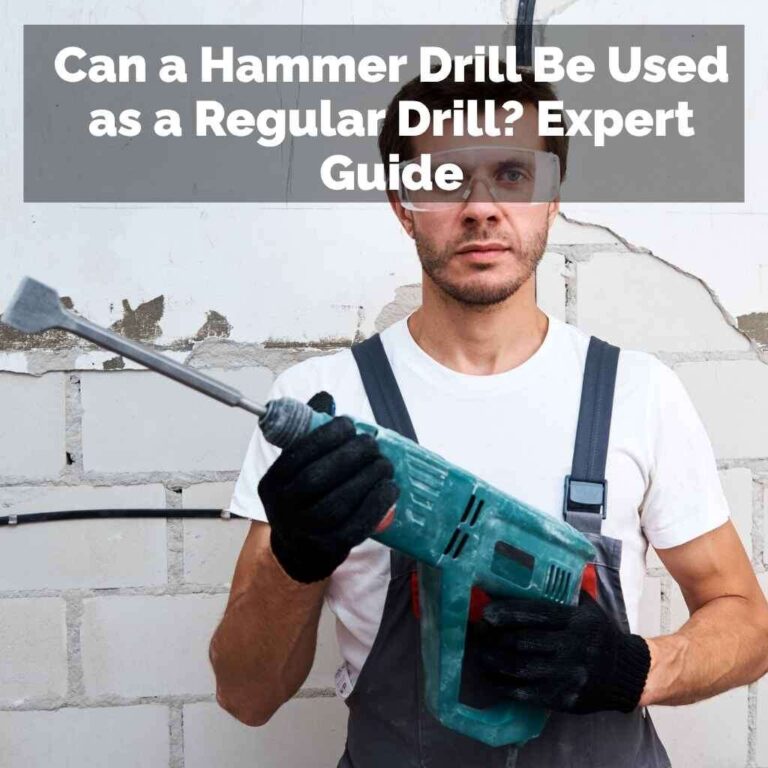
A hammer drill bit is a masonry bit made to cut into hard materials such as concrete, brick, mortar, and concrete block. Many have a carbide tip that helps the bit wear through mineral-based materials.
The phrase “hammer drill bit” can describe several different bit styles:
| Bit type | Common shank | Fits a regular drill? | Best use |
|---|---|---|---|
| Straight-shank masonry bit | Round | Usually yes | Small holes in brick, block, and light concrete |
| Hex-shank masonry bit | 1/4-inch hex or larger | Often yes | Impact-rated drivers or drills with a matching chuck |
| SDS-Plus bit | Grooved SDS shank | Usually no | Rotary hammers |
| SDS-Max bit | Larger grooved shank | No | Heavy-duty rotary hammers |
| Multi-material bit | Round or hex | Usually yes | Wood, metal, tile, brick, and some masonry |
A standard drill uses a three-jaw chuck or a keyless chuck. It holds round and hex shanks by tightening around them. An SDS chuck locks onto grooves in the bit and allows the bit to move back and forth during hammering.
That difference matters. An SDS bit is not simply a better version of a regular masonry bit. It belongs to a different tool system.
When Can You Use a Hammer Drill Bit in a Regular Drill?
You can use the bit if its shank fits the drill and the material is within the drill’s practical limits.
A regular drill is suitable for:
- Small holes for plastic wall anchors
- Pilot holes in brick or mortar
- Light drilling in concrete block
- Occasional holes in soft or older brick
- Tile drilling when using the correct tile or glass bit
- Multi-material bits used in rotary mode
A regular drill is less suitable for:
- Many holes in poured concrete
- Large holes in hard concrete
- Deep holes
- Reinforced concrete
- Fast drilling on a construction site
- Work that requires an SDS-Plus or SDS-Max bit
The bit may be labeled for use with a hammer drill, yet still work in a regular drill. The label usually means the bit can handle hammer action. It does not always mean the bit requires hammer action.
The important exception is an SDS bit. A standard drill chuck normally cannot grip an SDS-Plus or SDS-Max shank correctly. Do not force one into the chuck or use an improvised adapter for demanding work.

Hammer Drill vs. Regular Drill: What Changes?
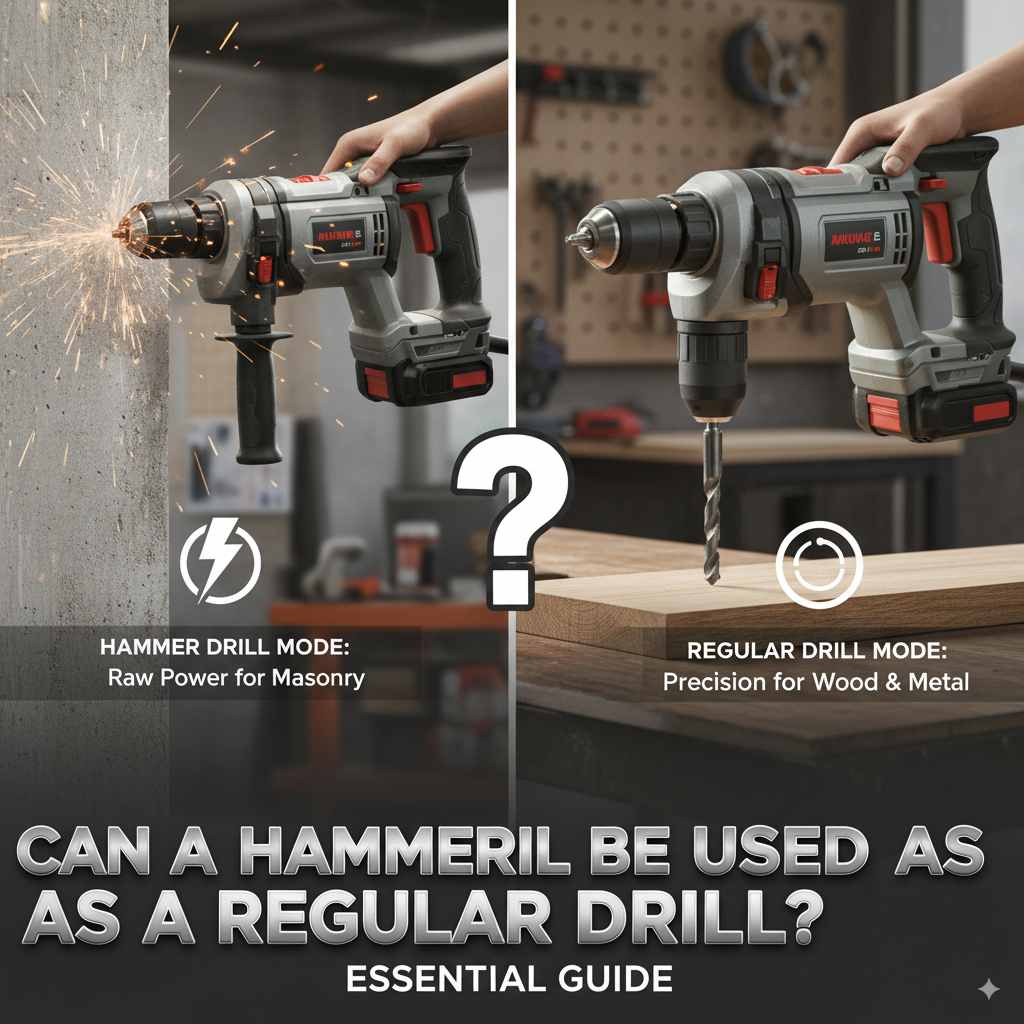
A regular drill turns the bit. A hammer drill turns the bit and adds short forward impacts. Those impacts help break brittle masonry ahead of the cutting edges.
Think of the difference as cutting versus tapping. A regular drill tries to grind through the material. A hammer drill also cracks the material as it works.
Regular drill
A regular drill provides:
- Rotary motion only
- Better control for wood, plastic, and metal
- Less vibration
- Lower noise in many cases
- Slower progress in hard masonry
Hammer drill
A hammer drill provides:
- Rotary motion
- Repeated axial impacts
- Faster drilling in many masonry materials
- More vibration
- More dust and noise
- Greater wear on the bit and tool
When you place a masonry bit in a regular drill, the bit can still scrape and chip the material. It simply does not receive the added impact. That is why the same bit may work well in brick but struggle in dense concrete.
Most hammer drills have a selector for drill-only and hammer-drill modes. If you are using a standard drill bit, wood bit, or metal bit, keep hammer mode off. Hammer action can damage those bits and the material.
How to Use a Hammer Drill Bit With a Regular Drill
Use this process for a small masonry hole when the bit has a compatible round or hex shank.
1. Confirm the bit and chuck match
Inspect the shank before installing the bit.
- A smooth round shank can fit a three-jaw chuck.
- A hex shank can fit a standard chuck or a compatible quick-change holder.
- An SDS-Plus or SDS-Max shank normally requires an SDS rotary hammer.
- A bit that is too large for the chuck should not be forced into it.
Check the drill’s manual for its chuck capacity. A drill with a 3/8-inch chuck cannot safely hold a bit with a shank larger than that capacity.
2. Mark the hole location
Mark the spot with a pencil or marker. If the surface is smooth, place a small piece of painter’s tape over the mark. The tape can help reduce bit wandering when you begin.
Before drilling into a wall, consider what may be behind the surface. Avoid unknown areas near electrical outlets, switches, plumbing fixtures, and water lines. In the United States, local building methods vary, so a stud finder or appropriate wall scanner may help, but no scanner is perfect.
3. Wear suitable protection
Wear safety glasses or a face shield. Masonry creates sharp chips and fine dust.
For dusty indoor work, use ventilation and a suitable respirator selected for the hazard. OSHA’s construction silica guidance treats respirable crystalline silica as a serious workplace hazard. A small household task is not the same as commercial work, but the dust still deserves care.
4. Set the drill to rotary mode
Use the regular drilling setting. Keep hammer mode off unless the tool and bit are designed for it.
Choose a low or medium speed. High speed can create excess heat, especially when the bit is working against dense concrete.
5. Start slowly
Hold the drill square to the surface. Start at low speed with light pressure until the tip forms a shallow guide hole.
Do not lean heavily on the drill. Let the carbide tip do the work. Too much pressure can:
- Overheat the bit
- Wear the carbide tip
- Stall the motor
- Cause the chuck to slip
- Crack tile or masonry
6. Clear dust from the hole
After drilling a short distance, pull the bit out while it is still turning slowly. This helps remove dust from the hole and gives the bit a chance to cool.
For a deeper hole, repeat this process rather than pushing continuously. Do not touch the bit immediately after drilling. It may be hot enough to burn skin.
7. Check the hole
Stop when the hole reaches the required depth. Remove loose dust with a vacuum or a controlled method suited to the material.
The hole is ready when:
- The anchor fits without excessive force
- The hole is close to the intended diameter
- The sides are not badly fractured
- The bit stayed straight
- The surrounding surface is not cracked
If the bit barely advances after several seconds, stop and reassess the tool, bit, speed, and material.

How Well Does a Regular Drill Work in Different Materials?
The material changes the answer more than the label on the bit.
| Material | Regular drill with masonry bit | Practical guidance |
|---|---|---|
| Mortar | Usually works well | Use light pressure and a small bit |
| Soft brick | Often works well | Avoid excessive speed and pressure |
| Concrete block | Usually works for small holes | Clear dust often |
| Hard brick | May work slowly | A hammer drill is more efficient |
| Poured concrete | Limited | Use a hammer drill or rotary hammer for repeated work |
| Reinforced concrete | Poor choice | Stop if you hit steel; use proper equipment |
| Ceramic tile | Use a tile-rated bit | Hammer action can crack the tile |
| Porcelain tile | Difficult | Use a diamond or porcelain-rated bit |
| Stone | Depends on the stone | Check the bit maker’s instructions |
A regular drill is most useful for light-duty masonry work. For example, it may make a few small holes in brick for a cable clip or wall anchor. It is a poor choice for drilling dozens of holes in a concrete foundation.
For hard concrete, a hammer drill is usually the next step. For large holes, deep holes, or heavy concrete work, a rotary hammer with the correct SDS bit is usually the more suitable tool.
What If the Bit Does Not Work?
Slow progress does not always mean the bit is defective. Check the common causes in this order.
The bit spins but makes little progress
Possible causes include:
- The material is too hard for rotary-only drilling
- The bit is worn
- The drill speed is too high
- The bit is not aligned squarely
- Dust is clogging the hole
- The drill lacks enough power
Try a lower speed, lighter pressure, and regular dust removal. If progress remains poor, switch to a hammer drill or rotary hammer.
The bit becomes very hot
Heat usually comes from friction. Stop drilling and let the bit cool. Use shorter drilling intervals and a lower speed.
Do not cool a very hot carbide bit by suddenly placing it in water. A rapid temperature change can damage the bit or loosen its tip.
The chuck slips
A dirty or worn chuck may not hold the bit properly. Remove the bit, clean the chuck jaws, and reinstall the bit so it is centered.
If the bit still slips, the shank may be too small, damaged, or unsuitable for the chuck. Do not wrap the shank in tape or use a makeshift shim.
The hole is larger or rougher than expected
A regular drill may wander more than a hammer drill. The bit can also flex if you use too much force.
Start with a smaller pilot hole if the bit maker permits it. Keep the drill straight and use an anchor sized for the finished hole.
The drill stalls or smells hot
Stop at once. A stalled motor can damage the drill, battery, or power cord.
Reduce pressure and use a smaller bit. If the drill continues to overheat, the material may exceed the tool’s intended workload.
Common Mistakes to Avoid
Avoid these mistakes when using masonry bits in a standard drill:
- Using an SDS bit in a normal chuck: The chuck may not grip it correctly.
- Running at full speed: High speed can overheat the bit.
- Using hammer mode with the wrong bit: Standard twist bits can be damaged.
- Applying body weight: Excess pressure can stall or break the tool.
- Ignoring dust: Masonry dust can harm your lungs and contaminate the work area.
- Drilling into unknown walls: Wires and pipes may be hidden behind drywall.
- Using the wrong bit for tile: A masonry bit may crack delicate tile.
- Continuing after hitting metal: You may have reached rebar, a plate, or another obstruction.
- Using a damaged bit: Cracked carbide or a bent shank can cause poor results and unsafe vibration.
If you suspect a wire, pipe, or structural steel, stop. Do not keep drilling to “see what happens.” A qualified electrician, plumber, or contractor may be needed, depending on the obstruction.
Choosing the Right Tool
Use a regular drill when the job is small, the material is not extremely hard, and the bit fits the chuck.
Use a hammer drill when:
- You need several holes in brick or concrete
- The masonry is dense
- You want faster drilling
- You are using standard masonry bits with a compatible shank
Use a rotary hammer when:
- You need SDS-Plus or SDS-Max bits
- You are drilling large or deep holes
- You are working in hard concrete
- You need a dedicated chipping or hammer function
- You are drilling repeatedly for anchors, bolts, or conduit
A regular drill can complete a small masonry task, but a hammer drill reduces effort and improves speed. The right choice depends on the material, hole size, number of holes, and bit system—not just the name printed on the bit package.
FAQs
Can I use a masonry bit in a regular cordless drill?
Yes, if the masonry bit has a round or hex shank that fits the drill chuck. Use rotary mode, moderate speed, light pressure, and frequent pauses to clear dust and control heat.
Can I use an SDS-Plus bit in a regular drill?
Usually not. SDS-Plus bits are made for rotary hammers with SDS chucks. A standard three-jaw chuck is not designed to hold the SDS grooves securely or provide the bit’s intended movement.
Will a regular drill make a hole in concrete?
It may make a small hole in soft or moderate concrete, but it will be slower than a hammer drill. Dense concrete, deep holes, large holes, and repeated drilling call for a hammer drill or rotary hammer.
Can I use a hammer drill bit on tile?
You can use some masonry bits on tile, but the bit must suit the tile and the drill should remain in rotary mode. For porcelain or delicate tile, use a bit specifically rated for that material. Hammer action can crack the tile.
Should I use water while drilling masonry?
Water may be appropriate for some specialty tasks, such as certain diamond bits, but do not use water around an electric drill unless the tool, bit, and method are designed for wet drilling. Follow the bit manufacturer’s instructions and keep electrical connections dry.
Bottom Line
A hammer drill bit can be used with a regular drill when its shank fits the chuck and the bit is suitable for rotary drilling. This works best for small holes in mortar, brick, block, and some concrete.
Do not use an SDS bit in a standard chuck. For hard concrete, large holes, deep holes, or repeated work, use a hammer drill or rotary hammer. Start slowly, control dust, watch for hidden utilities, and stop if the bit overheats or meets unexpected resistance.
Recent Tool Guides
 Hammer
How To Hammer Flowers Onto Paper: Easy Guide
Learn how to hammer flowers onto paper with simple steps, helpful tips, and beautiful results for...
Read Guide → Wrench
How To Use A Hex Wrench: Easy Step-By-Step Guide
Learn how to use a hex wrench correctly with simple steps, helpful tips, and common mistakes...
Read Guide → Hacksaw
How To Cut Curtain Pole With Hacksaw: Easy Guide
Learn how to cut curtain pole with hacksaw safely and neatly. Follow simple steps for accurate...
Read Guide → Wrench
How To Use A Husky Torque Wrench: Easy Guide
Learn how to use a Husky torque wrench correctly with simple steps, torque settings, and safety...
Read Guide → Hammer
How To Hold A Hammer: Safe Grip Guide
Learn how to hold a hammer with the right grip, stance, and technique for safer, more...
Read Guide → Hacksaw
How To Cut Flexible Metal Conduit With Hacksaw: Easy Guide
Learn how to cut flexible metal conduit with hacksaw safely and cleanly. Follow simple steps for...
Read Guide →