How Do You Change A Hacksaw Blade: Easy Guide
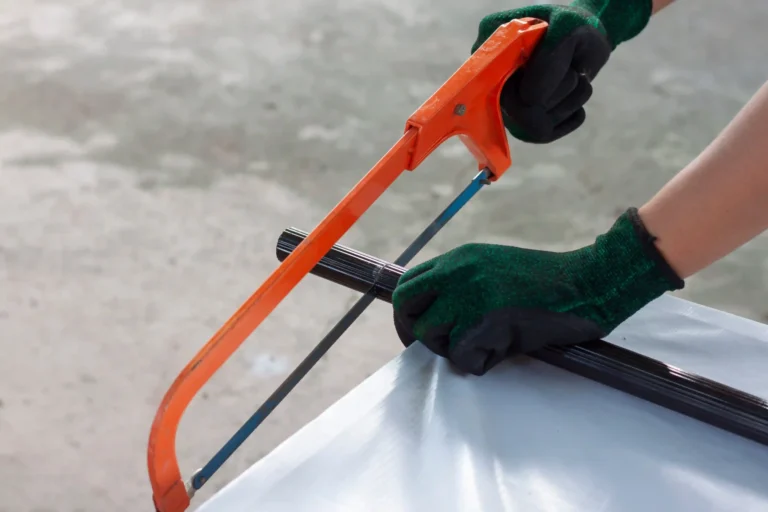
To change a hacksaw blade, first loosen the frame to remove the old blade. Then fit the new blade with its teeth facing forward, tighten the frame until the blade is firm, and check that it sits straight before cutting. The whole job usually takes only a few minutes.
For DIY work in the United States, a hacksaw is a common tool for cutting metal pipe, bolts, threaded rod, plastic pipe, and other materials. A dull or damaged blade makes cutting slow and can cause the blade to slip. Replacing it is safer and easier than forcing a worn blade through the work.

What You Need Before You Start
You need a replacement hacksaw blade, a hacksaw frame, and basic eye protection. A pair of work gloves can help protect your hands from sharp blade edges, but gloves should not replace careful handling.
Check these points before you begin:
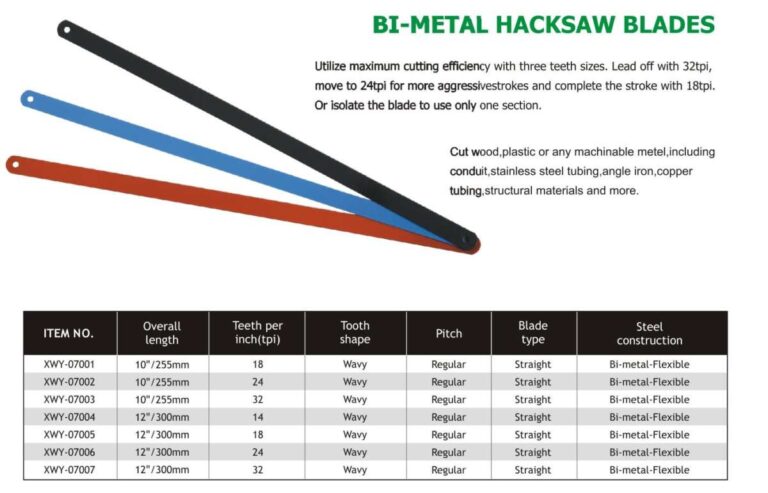
- Blade length: Most full-size U.S. hacksaws use a 12-inch blade. Compact frames may use 10-inch or 6-inch blades.
- Blade type: Use a blade made for the material you plan to cut.
- Tooth count: Fine teeth suit thin metal. Coarse teeth suit thicker stock and softer materials.
- Frame design: Some frames use a wing nut, lever, knob, or quick-release handle to hold the blade.
- Blade condition: Do not reuse a blade with cracks, missing teeth, or a bent edge.
A hacksaw blade has small holes at both ends. These holes fit over pins on the frame. The frame then holds the blade under tension so it stays straight during a cut.
Choose the right tooth count
Hacksaw blades are often sold by teeth per inch, or TPI.
| Blade type | Common use |
|---|---|
| 14 TPI | Thick metal, aluminum, brass, and soft materials |
| 18 TPI | General-purpose cutting |
| 24 TPI | Thin-wall tubing, sheet metal, and small bolts |
| 32 TPI | Very thin sheet metal and delicate cuts |
As a simple rule, at least two or three teeth should touch the work at all times. If only one tooth touches the material, the blade can catch, vibrate, or break.
How to Change a Hacksaw Blade
Follow these steps for most standard hacksaw frames.
1. Put on eye protection
Wear safety glasses before handling or tensioning the blade. Small metal chips can fly during the change or during the next cut.
Place the hacksaw on a stable surface, or hold the frame with the blade pointed away from you. Keep your fingers away from the teeth.
2. Release the blade tension
Find the tension adjuster at the front or rear of the frame. It may look like a wing nut, threaded knob, or lever.
Turn the adjuster counterclockwise to loosen the blade. On a lever-style frame, move the lever to its release position. Do not force the adjuster. If it will not move, hold the frame steady and add small, controlled pressure.
Once the tension is loose, the blade should have enough slack to lift it from the pins.
3. Remove the old blade
Lift one end of the blade away from its mounting pin. Then remove the other end.
Handle the old blade by its smooth back edge when possible. Even a dull blade can have sharp teeth or broken points. If the blade is cracked or badly damaged, wrap it in paper or cardboard before placing it in the trash.
4. Check the new blade
Compare the new blade with the old one. Confirm that:
- The length matches the frame.
- The mounting holes have the same shape and spacing.
- The blade is straight.
- The teeth are sharp and intact.
- The blade is rated for your cutting material.
Many hacksaw blades have an arrow or printed marking that shows the correct direction. Use that marking when one is present.
5. Install the blade with the teeth facing forward
On a normal hacksaw, the teeth point away from the handle. The saw cuts on the forward stroke, when you push the frame away from your body.
Fit one blade hole over its pin. Then place the other hole over the opposite pin. Keep the blade flat and make sure it is not twisted.
Some specialty frames or saws may use a different layout. If the frame or blade has an arrow, follow it. The frame design and blade marking take priority over the usual orientation.
6. Tighten the blade
Turn the tension knob clockwise, or return the release lever to its locked position. Tighten the blade until it feels firm.
The blade should not sag or move from side to side. It should also not be tightened so hard that the frame bends or the blade pins are placed under extreme strain.
A useful check is to lightly pluck the blade with a fingertip. It should feel tight and make a short, clear sound. This is only a rough check, not a measured tension setting.
7. Check the alignment
Look along the blade from the front and side. The blade should be straight, flat, and centered in the frame.
If it angles sharply, twists, or sits loose, stop and refit it. A poorly seated blade can jump out of the frame or break when you begin cutting.
8. Test the saw with a light stroke
Place the hacksaw against scrap material and make one slow stroke. The blade should track in a straight line without wobbling.
If the blade slips, stop and release the tension. Check that both mounting holes sit fully over the frame pins. Then tighten the blade again.

Which Way Should the Hacksaw Blade Face?
The teeth on a standard hacksaw blade should face away from the handle. This lets the saw cut as you push it forward.
The return stroke should use little or no force. Pull the saw back gently, then push forward with steady pressure. This cutting action helps the teeth bite into the material and reduces the chance of bending the blade.
Do not assume every hand saw uses the same direction. A coping saw, bow saw, or specialty frame may work differently. Look for an arrow on the blade and check the tool instructions if the design is unfamiliar.
How Tight Should a Hacksaw Blade Be?
A hacksaw blade should be tight enough to stay straight but not so tight that the frame or blade pins are strained.
Use these signs:
- Too loose: The blade bows, twists, or shifts while cutting.
- Too tight: The frame bends, the adjuster becomes hard to turn, or the blade may snap under strain.
- Correct tension: The blade stays straight and gives slightly when pressed from the side.
Avoid using a wrench or pliers to force the tension knob tighter unless the tool maker specifically allows it. Most hand hacksaw frames are designed for hand adjustment.
A tight blade is not the same as a safe blade. Correct alignment, the right blade type, and controlled cutting force matter just as much.

What to Do If the New Blade Does Not Fit
If the replacement blade will not fit, do not stretch it, bend it, or drill new mounting holes. Check the frame and blade as a set.
Common causes include:
-
The blade is the wrong length.
A compact hacksaw may need a shorter blade than a full-size frame. -
The frame uses a different mounting system.
Some frames accept blades with special ends or slots. -
The blade holes do not match the pins.
The holes must sit fully over the frame pins. -
The frame is damaged.
A bent frame can make a correct blade look too short or too long. -
The tension adjuster is stuck.
Clean dirt from the threads. Do not use the saw if the adjuster or frame is cracked.
Take the old blade to a hardware store when buying a replacement. This is often the fastest way to match the length and mounting style.
Common Hacksaw Blade Problems
The blade keeps coming loose
The blade may not be fully seated on both pins. Release the tension, fit each end again, and tighten the adjuster.
A worn pin or damaged frame can also cause the blade to slip. Replace the frame if it cannot hold the blade securely.
The blade breaks soon after installation
A blade can break because it is too tight, twisted, or used with too much side pressure. It can also break if the teeth are too fine for a thick or hard workpiece.
Install a fresh blade, keep it straight, and use slow, even strokes. Do not twist the frame while cutting.
The saw cuts slowly
A dull blade is the most likely cause. Other causes include the wrong TPI, low blade tension, or excessive downward force.
Let the teeth do the work. Press only enough to keep the blade engaged with the material.
The blade cuts at an angle
The blade may not be aligned with the frame. It may also be bent, installed with uneven tension, or pushed sideways during the cut.
Replace a bent blade. Keep both hands on the frame and use long, straight strokes.
The teeth point the wrong way
Release the tension and reverse the blade. On most standard hacksaws, the teeth should point away from the handle.
Do not cut with a blade installed backward unless the tool maker specifically designed that frame for a different cutting direction.

Safety Tips for Changing and Using a Hacksaw Blade
Use basic hand-tool safety each time you change or use a blade.
- Wear safety glasses.
- Keep the blade pointed away from your body.
- Hold the frame by its handle and grip.
- Keep your free hand clear of the blade path.
- Clamp or secure the workpiece before cutting.
- Do not use a cracked, bent, or heavily worn frame.
- Do not test sharpness with your finger.
- Keep the saw dry and clean.
- Remove metal burrs with care after cutting.
- Dispose of broken blades in a rigid container or wrap them before disposal.
The Occupational Safety and Health Administration advises employers and workers to keep hand tools in safe condition and use the right tool for the job. For home projects, the same principle applies: a sound frame, correct blade, stable workpiece, and eye protection reduce avoidable injuries.
If you are cutting material that may contain asbestos, lead-based coatings, fuel residue, or other hazardous substances, stop and identify the hazard first. A hacksaw can create sharp chips and dust. Follow the product label and applicable local safety rules.

Hacksaw Blade Replacement Checklist
Use this short checklist before making your first cut:
- The new blade matches the frame length.
- The blade is made for the material.
- The teeth face away from the handle on a standard frame.
- Both blade holes sit fully on the frame pins.
- The blade is straight and not twisted.
- The tension is firm but not excessive.
- The workpiece is clamped.
- Eye protection is in place.
- A slow test stroke feels stable.
If all nine checks pass, the hacksaw is ready to use.
Frequently Asked Questions
Can you change a hacksaw blade without tools?
Yes. Most standard hacksaw frames use a hand-operated wing nut, knob, or lever. You normally do not need a wrench.
If the adjuster is stuck, do not force it until you have checked for rust, dirt, or frame damage. A damaged tension system should be repaired or replaced.
How often should you replace a hacksaw blade?
Replace the blade when it becomes dull, bends, loses many teeth, or requires much more force than before. There is no fixed replacement schedule because blade life depends on the material, pressure, cutting speed, and use.
A blade that produces a rough cut or slips often may also need replacement.
Can a hacksaw blade be installed backward?
It can be physically installed backward on many frames, but a standard hacksaw is meant to cut with the teeth facing away from the handle. A backward blade will not cut in the normal forward stroke and may make the tool harder to control.
Should you use a fine or coarse hacksaw blade?
Use a fine-tooth blade for thin metal, sheet metal, and small tubing. Use a coarse-tooth blade for thicker material.
Choose a blade that keeps at least two or three teeth in contact with the work. This helps prevent snagging and tooth damage.
Can you use a hacksaw to cut wood?
A hacksaw can cut some soft materials in an emergency, but its blade is designed mainly for metal and similar materials. A wood saw is usually faster and gives better control because its teeth and set are made for wood fibers.
Final Takeaway
Changing a hacksaw blade is a simple process: release the tension, remove the old blade, fit the new one with the correct direction, and tighten it until it is straight and firm. For most standard frames, the teeth face away from the handle.
Before cutting, check the blade length, tooth count, alignment, and tension. Wear eye protection and secure the workpiece. If the blade will not fit or the frame cannot hold it safely, replace the frame rather than forcing the tool to work.
Recent Tool Guides
 Hammer
How To Hammer Flowers Onto Paper: Easy Guide
Learn how to hammer flowers onto paper with simple steps, helpful tips, and beautiful results for...
Read Guide → Wrench
How To Use A Hex Wrench: Easy Step-By-Step Guide
Learn how to use a hex wrench correctly with simple steps, helpful tips, and common mistakes...
Read Guide → Hacksaw
How To Cut Curtain Pole With Hacksaw: Easy Guide
Learn how to cut curtain pole with hacksaw safely and neatly. Follow simple steps for accurate...
Read Guide → Wrench
How To Use A Husky Torque Wrench: Easy Guide
Learn how to use a Husky torque wrench correctly with simple steps, torque settings, and safety...
Read Guide → Hammer
How To Hold A Hammer: Safe Grip Guide
Learn how to hold a hammer with the right grip, stance, and technique for safer, more...
Read Guide → Hacksaw
How To Cut Flexible Metal Conduit With Hacksaw: Easy Guide
Learn how to cut flexible metal conduit with hacksaw safely and cleanly. Follow simple steps for...
Read Guide →