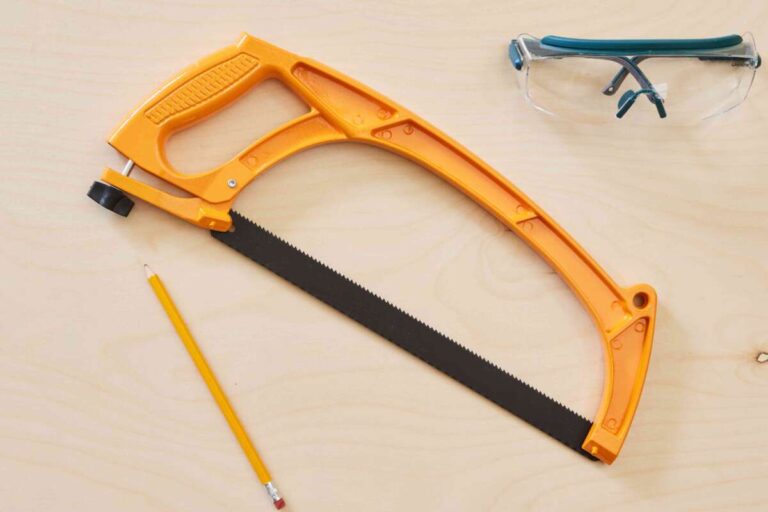
Bi-Metal Vs Carbon Steel Hacksaw Blades: Worth It?
For most cutting jobs in the United States, bi-metal hacksaw blades are worth the extra cost when you cut steel, stainless steel, pipe, or other hard metals often. They resist tooth breakage and usually last longer than carbon steel blades.
Carbon steel blades still make sense for light work, soft materials, occasional repairs, and tight budgets. They cost less and can cut mild steel well when used with the right tooth pitch and light pressure.
The best choice depends on four things:
- The material you need to cut
- How often you use the hacksaw
- How much tooth life matters
- Whether blade replacement time costs you money
This guide compares bi-metal and carbon steel hacksaw blades, explains their construction, and shows when the higher price is justified.
Quick answer: Which hacksaw blade should you buy?
Choose a bi-metal blade if you regularly cut:
- Stainless steel
- Hardened steel
- Steel tubing
- Thick steel plate
- Cast iron
- Bolts and threaded rod
- Metal parts with hard spots
- Materials that may twist or vibrate during cutting
Choose a carbon steel blade if you mainly cut:
- Soft mild steel
- Aluminum
- Copper
- Plastic
- Thin sheet metal
- Small bolts
- Occasional household repair materials
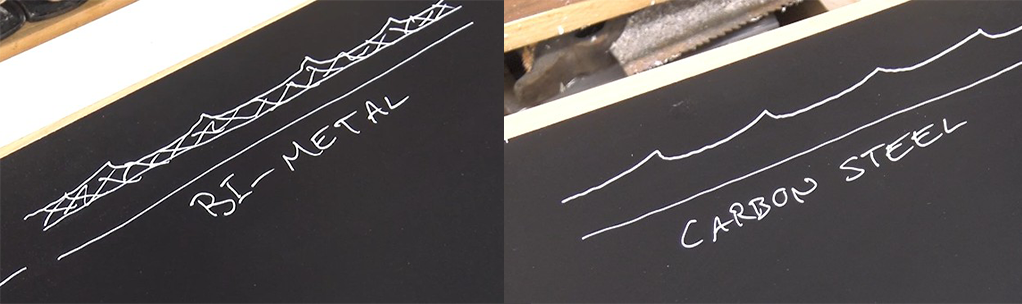
A bi-metal blade is not automatically faster in every job. It is usually more durable because it combines two types of steel. The teeth use a hard, wear-resistant alloy, while the back uses a spring steel that can bend without breaking as easily.
Carbon steel blades use one main steel type. They are simple, affordable, and useful. However, their teeth may dull or break sooner when you apply too much force or cut hard metal.
Bottom line: For occasional home use, carbon steel may be enough. For repeated metal work, a bi-metal blade usually offers better value over its full service life.
What is the difference between bi-metal and carbon steel blades?
The main difference is the blade structure. A carbon steel blade uses one steel body. A bi-metal blade joins two steel types into one blade.
Carbon steel hacksaw blades
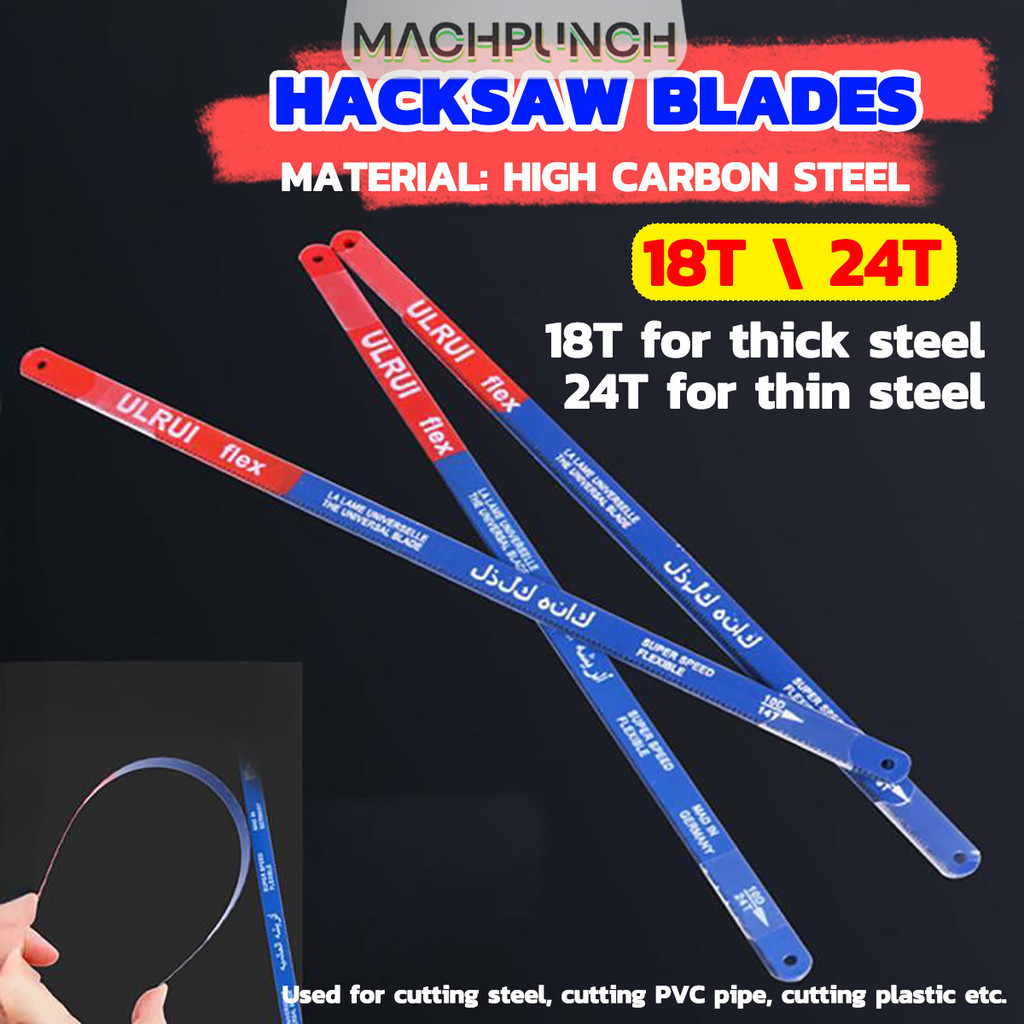
Carbon steel blades are made from carbon steel that is heat-treated to provide a useful mix of hardness and flexibility. Many blades have hardened teeth and a softer or more flexible back.
The exact treatment varies by brand and model. Some low-cost blades may use a fully hardened design. Others may have hardened teeth with a flexible body. Always check the maker’s specifications when the difference matters.
Carbon steel blades are often:
- Less expensive
- Easy to find
- Suitable for light-duty cutting
- Available in many tooth pitches
- More likely to suffer tooth damage under high force
They are a practical choice for a basic 12-inch hand hacksaw used now and then.
Bi-metal hacksaw blades
Bi-metal blades usually have:
- A high-speed steel or similar alloy cutting edge
- A flexible alloy-steel backing strip
The cutting edge provides hardness and wear resistance. The backing strip helps the blade flex without snapping. Manufacturers join the two materials through a welded process.
This design solves a basic materials problem. Hard steel cuts well, but hard steel can be brittle. Flexible steel resists bending, but it may wear faster at the teeth. A bi-metal blade places each property where it helps most.
Common bi-metal benefits include:
- Better tooth wear resistance
- More resistance to tooth stripping
- Greater tolerance for bending
- Better performance on tough metals
- Longer useful life in demanding work
A bi-metal blade can still break. Incorrect tension, side force, a dull blade, or a poor tooth pitch can damage it.
Bi-metal vs. carbon steel: side-by-side comparison
The table below compares common traits. Actual performance varies by blade brand, tooth design, material, and cutting method.
| Feature | Bi-metal blade | Carbon steel blade |
|---|---|---|
| Tooth material | Often high-speed steel or another hard alloy | Carbon steel or heat-treated carbon steel |
| Backing material | Flexible alloy or spring steel | Usually the same steel family as the blade |
| Initial price | Higher | Lower |
| Tooth wear resistance | Usually higher | Usually lower |
| Flex resistance | Generally good | Depends on the design |
| Resistance to tooth breakage | Usually better | More limited under heavy force |
| Best use | Repeated or demanding metal work | Light, occasional cutting |
| Stainless steel use | Usually the better option | May dull quickly |
| Mild steel use | Works well | Often works well |
| Plastic and soft materials | Works, but may be more than needed | Often adequate |
| Long-term cost | Often lower when used frequently | Often lower for occasional use |
The important point is not simply that bi-metal blades cost more. The question is whether the blade gives you enough extra cutting life to offset the price.
For example, a $10 bi-metal blade may be a better buy than four $3 carbon steel blades if it lasts longer and saves time. But if you cut one small aluminum bracket each year, the cheaper blade may be the sensible choice.
Which blade lasts longer?
Bi-metal blades usually last longer when cutting hard or abrasive metal. Their hard tooth edge can resist wear better than a basic carbon steel edge.
That does not mean a bi-metal blade will always outlast a carbon blade. Blade life depends on several factors:
- Workpiece hardness
- Tooth pitch
- Blade tension
- Cutting speed
- Pressure
- Lubrication
- Blade alignment
- Amount of material removed
- Operator technique
A carbon steel blade can last a reasonable time in soft mild steel. A bi-metal blade may show its advantage when the work becomes harder, thicker, or more frequent.
Tooth breakage is different from tooth wear
Tooth wear means the cutting points become dull. Tooth breakage means individual teeth snap, strip, or disappear.
Bi-metal construction can help with both problems, but it is especially useful against tooth loss during flexing or interrupted cuts. A loose workpiece, a crooked stroke, or side pressure can still damage any blade.
If a blade loses teeth in groups, check the setup before blaming the material. The blade may have the wrong pitch, too little tension, or too much pressure.

Is a bi-metal hacksaw blade worth the extra cost?
A bi-metal blade is worth the extra cost when replacement time, cutting difficulty, or tooth life matters more than the lowest purchase price.
Use this simple value test:
Cost per useful cut = blade price ÷ number of useful cuts
This is a hypothetical example:
| Blade type | Price | Useful cuts | Cost per cut |
|---|---|---|---|
| Carbon steel | $3 | 5 | $0.60 |
| Bi-metal | $10 | 25 | $0.40 |
In this example, the bi-metal blade costs more at checkout but less per useful cut.
However, the result can reverse for light work:
| Blade type | Price | Useful cuts | Cost per cut |
|---|---|---|---|
| Carbon steel | $3 | 10 | $0.30 |
| Bi-metal | $10 | 15 | $0.67 |
These numbers are examples, not test results. Your material and technique determine the real outcome.
The time factor
Time can matter more than blade price. If changing a blade takes five minutes, frequent replacement adds labor and interrupts the job. This matters for maintenance teams, contractors, fabricators, and repair shops.
For a homeowner cutting one piece of pipe, the time savings may not matter. For a worker making many cuts, it may matter a great deal.
A practical buying rule
- Buy carbon steel for rare, light-duty use.
- Buy bi-metal for regular steel cutting.
- Buy bi-metal for stainless steel unless the manufacturer gives a different recommendation.
- Buy the correct tooth pitch before buying the more expensive blade.
- Replace a dull blade rather than forcing it through the work.
Choose the right tooth pitch
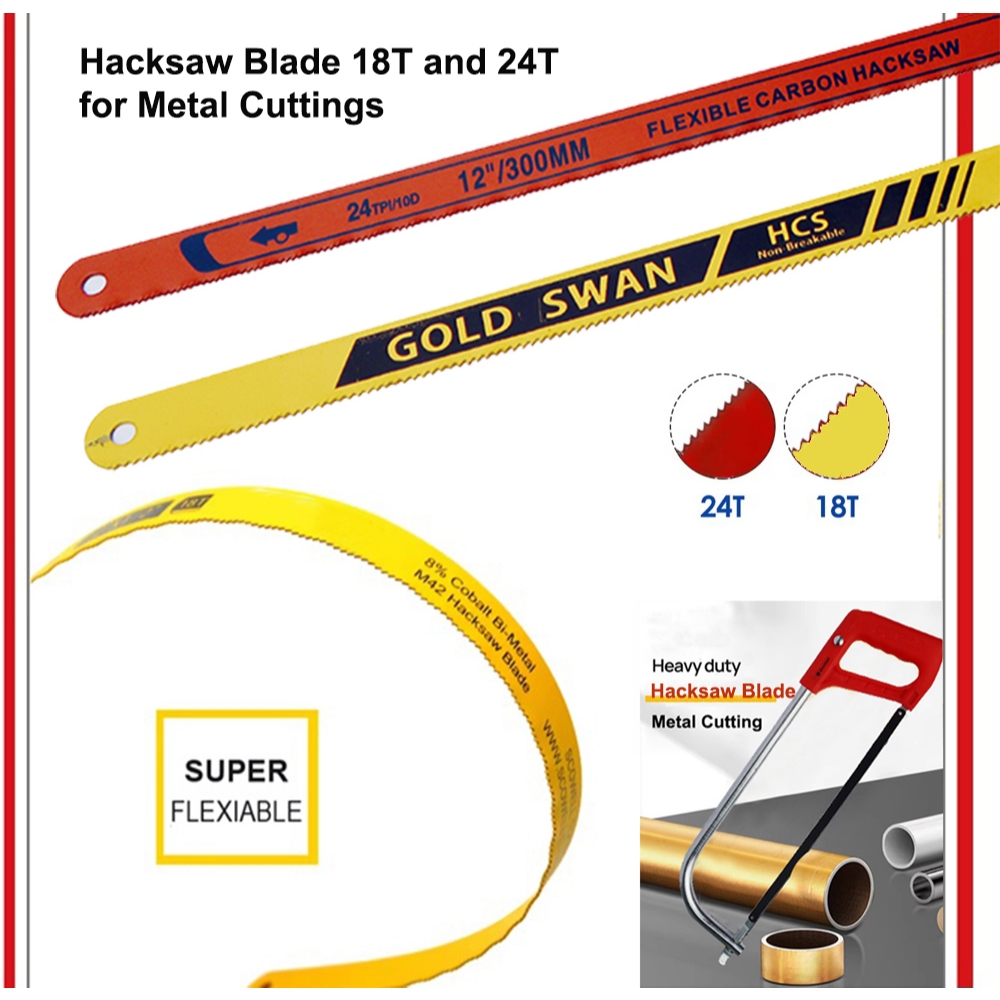
Tooth pitch means the number of teeth per inch, often written as TPI. Hacksaw blades commonly come in coarse, medium, and fine pitches.
The workpiece should contact several teeth at once. If the material is too thin for the tooth pitch, the teeth can catch and strip. If the material is too thick for a very fine blade, cutting can feel slow and the gullets may fill with chips.
A useful starting guide is:
| Material thickness | Common starting pitch |
|---|---|
| Thin sheet or wall tubing | 24–32 TPI |
| Medium stock and general steel | 18–24 TPI |
| Thick bar, pipe, or plate | 14–18 TPI |
| Very thick soft stock | 10–14 TPI, if available |
These are starting points, not universal rules. The correct pitch also depends on the material.
For tubing, count the wall thickness rather than the outside diameter. A large tube with a thin wall needs a finer pitch than a solid bar of the same outside size.
Why at least a few teeth should engage
If only one or two teeth touch the work, each tooth carries a high load. That can cause tooth stripping or snagging. If too many teeth engage, chips have less room to clear and the blade may cut slowly.
The goal is a steady cut with several teeth engaged and enough space for chips to leave the kerf.
Does blade length matter?
Most full-size hand hacksaws in the United States use 12-inch blades, but compact saws may use shorter blades. Match the blade length to the frame.
A blade that is too short may not fit the frame or may provide too little stroke. A blade that is too long may not tension correctly.
Check these points before buying:
- Blade length
- Mounting hole style
- Frame compatibility
- Tooth direction
- Intended material
- TPI
A standard 12-inch blade is not automatically compatible with every powered saw or specialty frame. Reciprocating saws, powered hacksaws, and compact hand saws may use different blade types.
How to get better results from either blade
Good technique can extend blade life more than switching materials.
1. Secure the workpiece
Clamp the work firmly. Movement creates shock loads and side force. Both can damage teeth.
Do not hold small metal pieces in your hand while cutting. Use a vise or another secure method.
2. Set proper blade tension
A loose blade can wander, buckle, or vibrate. Excessive tension can damage the frame or blade.
Use the tension setting recommended by the hacksaw maker. If no value is provided, tighten the blade until it gives a firm, clear feel without forcing the frame.
3. Keep the blade straight
Let the blade cut in one plane. Do not twist the handle to widen the cut.
Side pressure is a common cause of tooth damage. It also makes the cut less accurate.
4. Use steady pressure
Apply pressure on the forward cutting stroke. Ease up on the return stroke.
Do not force the blade. A hacksaw removes metal through repeated tooth action. Heavy force can bend the blade and break teeth without making the cut faster.
5. Use cutting fluid when suitable
A small amount of suitable cutting fluid can reduce heat and friction during metal cutting. This can help with tough metals.
Do not use a fluid that creates a fire, skin, or breathing hazard. Follow the product label and keep fluids away from electrical tools unless the product and tool setup allow it.
6. Use the full stroke
Use as much of the blade length as the work area allows. Short, repeated strokes wear a small part of the blade and can create heat.
7. Clear chips safely
Stop the saw before clearing chips. Do not brush chips away with bare fingers. Use a brush or another safe method, and wear eye protection.
Common mistakes when comparing blade types
Mistake 1: Assuming the most expensive blade is always best
A bi-metal blade cannot fix the wrong TPI, poor tension, or an unstable workpiece. Setup comes first.
Mistake 2: Using a coarse blade on thin wall tubing
Large gaps between teeth can catch the edge of thin material. A finer pitch is often safer and smoother.
Mistake 3: Using a fine blade on thick stock
A fine blade may clog with chips and cut slowly. A coarser pitch can provide better chip clearance.
Mistake 4: Pushing harder when the blade becomes dull
More force increases heat and tooth stress. Replace the blade when it no longer cuts with normal pressure.
Mistake 5: Treating stainless steel like mild steel
Stainless steel can work-harden when overheated or rubbed without cutting. Use a sharp blade, steady pressure, and a suitable tooth pitch. A bi-metal blade is often the safer starting choice for hand cutting.
Mistake 6: Using a hacksaw blade for the wrong tool
A hand hacksaw blade is not the same as a reciprocating saw blade, band saw blade, or powered hacksaw blade. Match the blade to the tool and follow the tool maker’s instructions.

Safety guidance for hacksaw blade use
Wear safety glasses or a face shield when cutting metal. Small chips can leave the cut at high speed.
Keep both hands on the tool when the cut requires them, but keep fingers away from the blade path. Clamp the work instead of trying to hold it steady by hand.
Inspect the blade before use. Replace it if you see:
- Cracks
- Severe bends
- Missing sections of teeth
- A damaged mounting hole
- A loose or separated bi-metal weld
Metal edges can be sharp after cutting. Deburr the part with a file or suitable tool, and handle the cut piece carefully.
For general hand-tool guidance, consult the U.S. Occupational Safety and Health Administration’s hand and power tools guidance at OSHA.gov.
Best choice by user and job
| User or job | Better starting choice | Reason |
|---|---|---|
| Homeowner cutting one small pipe | Carbon steel | Low cost may matter most |
| DIY user cutting steel several times a year | Bi-metal | More forgiving and longer-lasting |
| Plumber cutting steel or threaded pipe | Bi-metal | Frequent cuts and tougher stock |
| Auto repair work | Bi-metal | Bolts and parts may be hard or awkward |
| Cutting thin aluminum | Carbon steel or bi-metal | Either can work with the right pitch |
| Cutting stainless steel | Bi-metal | Better wear resistance is useful |
| Cutting plastic | Carbon steel | A premium metal-cutting edge may not be needed |
| Shop or maintenance work | Bi-metal | Lower downtime can offset higher cost |
| Emergency one-time repair | Whichever fits and is sharp | Correct pitch and safe setup matter most |
This table gives a starting point, not a rule. A high-quality carbon steel blade may outperform a poorly made bi-metal blade. Brand quality, tooth shape, and heat treatment still matter.
What about carbide-grit hacksaw blades?
Carbide-grit blades are a separate option. They do not use normal teeth in the same way. Instead, abrasive carbide particles remove material.
They can be useful for materials that are difficult to cut with standard teeth, such as some hardened materials, fiberglass, composites, or certain ceramics. They may produce a different cut feel and may not be the best choice for ordinary mild steel.
Do not compare carbide-grit blades directly with every bi-metal or carbon steel blade. They are designed for different cutting conditions.
How do carbon steel and bi-metal compare for stainless steel?
For stainless steel, bi-metal is usually the better first choice. Stainless steel can be tough, and it may harden at the surface if the blade rubs without removing material.
Use a suitable fine or medium pitch, keep the blade sharp, and apply steady pressure. Avoid stopping in one spot while pressing hard. A sharp blade should cut rather than polish the surface.
Carbon steel may work for a small stainless steel cut, but it can dull faster. If you cut stainless steel often, the extra cost of bi-metal usually makes more sense.
Frequently asked questions
Are bi-metal hacksaw blades safer than carbon steel blades?
Not automatically. A bi-metal blade may resist tooth loss and bending better, but safe use still depends on the frame, tension, work support, eye protection, and technique.
Can I use a bi-metal blade to cut wood?
You can, but it is usually not the best tool. A wood-cutting blade has a tooth shape and pitch designed for wood fibers. Use the blade made for the material whenever possible.
Are carbon steel hacksaw blades good for aluminum?
Yes. Carbon steel can work well for occasional aluminum cuts. Choose a suitable tooth pitch and prevent the soft aluminum from clogging the teeth. A blade made for nonferrous metal may work better for repeated jobs.
How often should I replace a hacksaw blade?
Replace it when cutting becomes slow, the teeth look dull or missing, the blade wanders, or you must use much more pressure. There is no universal number of cuts because material thickness and hardness vary.
Why does my new hacksaw blade keep breaking?
Common causes include low or excessive tension, side pressure, an unstable workpiece, the wrong tooth pitch, or a damaged frame. Check the setup before assuming the blade is defective.
Key takeaways
- Bi-metal blades usually offer better long-term value for frequent or difficult metal cutting.
- Carbon steel blades are often enough for light work and occasional repairs.
- The right TPI can matter as much as the blade material.
- Secure the work and keep the blade straight.
- Use steady pressure instead of forcing the cut.
- Choose a sharp blade that matches the material and tool.
- For stainless steel and repeated steel work, start with bi-metal.
Final recommendation
If you are buying one blade for occasional household use, choose a good carbon steel blade with the correct tooth pitch. It is affordable and capable of handling many basic cuts.
If you cut metal regularly, work with stainless steel, or dislike frequent blade changes, choose a bi-metal hacksaw blade. Its higher purchase price is often justified by better tooth life, greater durability, and less downtime.
The most useful upgrade is not always the most expensive blade. It is the blade with the right construction, tooth pitch, length, and cutting method for the job in front of you.
Recent Tool Guides
 Hammer
How To Hammer Flowers Onto Paper: Easy Guide
Learn how to hammer flowers onto paper with simple steps, helpful tips, and beautiful results for...
Read Guide → Wrench
How To Use A Hex Wrench: Easy Step-By-Step Guide
Learn how to use a hex wrench correctly with simple steps, helpful tips, and common mistakes...
Read Guide → Hacksaw
How To Cut Curtain Pole With Hacksaw: Easy Guide
Learn how to cut curtain pole with hacksaw safely and neatly. Follow simple steps for accurate...
Read Guide → Wrench
How To Use A Husky Torque Wrench: Easy Guide
Learn how to use a Husky torque wrench correctly with simple steps, torque settings, and safety...
Read Guide → Hammer
How To Hold A Hammer: Safe Grip Guide
Learn how to hold a hammer with the right grip, stance, and technique for safer, more...
Read Guide → Hacksaw
How To Cut Flexible Metal Conduit With Hacksaw: Easy Guide
Learn how to cut flexible metal conduit with hacksaw safely and cleanly. Follow simple steps for...
Read Guide →