

Yes, you can cut a screw with a hacksaw when you use the right blade and technique.
If you need to shorten a screw, remove a damaged head, or make a fastener fit, a hacksaw is a simple and proven tool. In this guide, you will learn when a hacksaw works best, which blade to choose, how to make a clean cut, and how to avoid damaged threads or injury.
Can You Cut a Screw With a Hacksaw?
Yes, you can cut a screw with a hacksaw. A hacksaw uses a fine-toothed metal-cutting blade that can cut through steel, stainless steel, brass, and many other common fastener materials.
This method works best for screws with a small or medium diameter. It is also useful when you need to shorten a screw, cut off a stripped head, or remove a broken screw that sticks out from a surface.
A hacksaw does not cut like a wood saw. Its teeth are small and made for metal. With steady pressure and a controlled motion, the blade slowly wears through the screw.
You can cut:
• Wood screws
• Machine screws
• Self-tapping screws
• Threaded rods
• Small bolts
• Stainless steel screws
• Brass and aluminum screws
However, very large, hardened, or heat-treated screws may require an angle grinder, rotary tool, bolt cutter, or metal-cutting band saw.

When Should You Cut a Screw With a Hacksaw?
You should cut a screw with a hacksaw when you need a low-cost, controlled, and fairly precise method. A hacksaw is often safer than a power tool because it creates little heat, no sparks, and less noise.
Common situations include:
• Shortening a screw that extends too far through a nut
• Removing the damaged head from a stuck screw
• Cutting a threaded rod to length
• Trimming a screw before installation
• Cutting a screw flush with a bracket or metal plate
• Removing a broken fastener that is easy to reach
For example, a screw may be too long for a cabinet hinge. Instead of buying a new fastener, you can cut the screw to the correct length. This saves time and prevents the sharp end from sticking into the cabinet.
Can you cut a screw with a hacksaw when the screw is still installed? Yes, but use extra care. Protect the nearby surface with cardboard or a thin metal shield, and make sure the blade will not hit wiring, pipes, glass, or finished wood.

What Type of Hacksaw Blade Should You Use?
The best blade depends on the screw’s material and thickness. For most household screws, use a bi-metal hacksaw blade with a fine tooth count.
Blade tooth count is measured in teeth per inch, or TPI.
• 14 TPI works well for thick metal and large screws
• 18 TPI is a good general-purpose choice
• 24 TPI works well for most screws and thin metal
• 32 TPI is best for small screws, thin sheet metal, and fine cuts
A 24 TPI blade is a reliable starting point for most projects. It cuts smoothly without removing too much metal at once.
Choose a blade that is longer than the screw’s cutting area. A standard 10- or 12-inch hacksaw blade is suitable for most home repairs.
Avoid using a wood-cutting blade. Its teeth are too large and may catch, bend, or break when cutting metal. A dull metal blade also creates more friction and makes the work harder.
Tools and Materials You Need
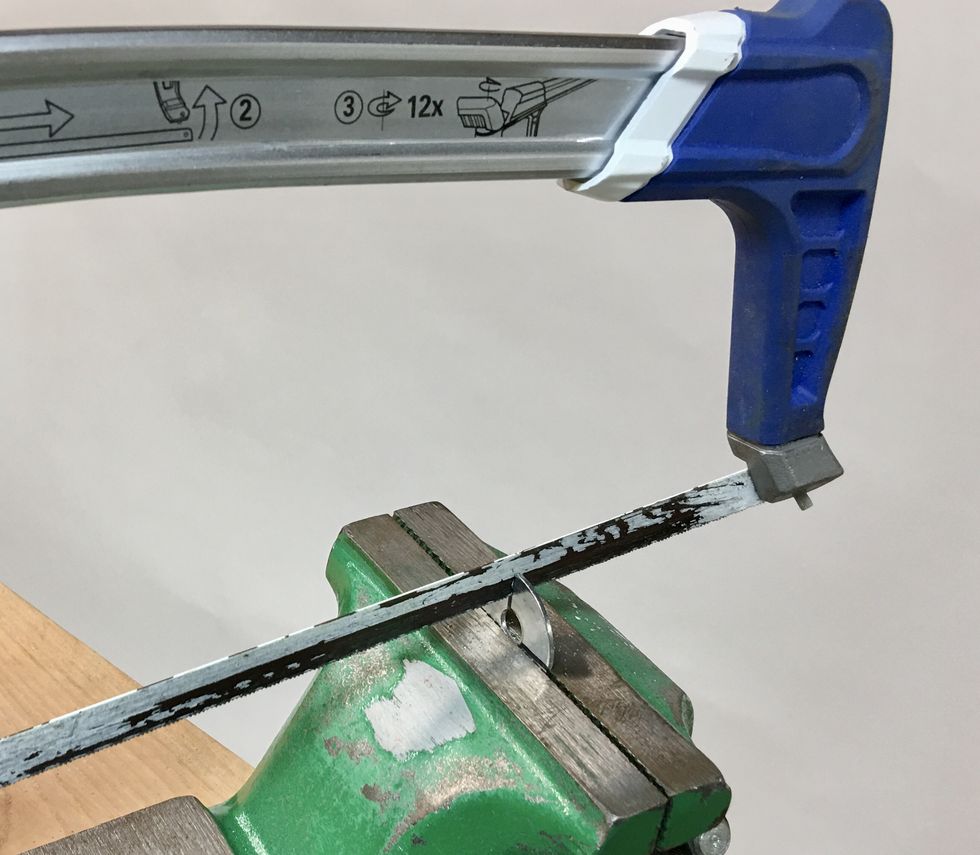
You do not need a large workshop to cut a screw with a hacksaw. A few basic tools will help you make a clean cut and protect your hands.
Gather these items:
• Hacksaw with a sharp metal-cutting blade
• Safety glasses
• Work gloves
• Bench vise or locking pliers
• Ruler or measuring tape
• Permanent marker or scriber
• Metal file or fine sandpaper
• Nut that matches the screw’s threads
• Cutting oil for thick or hard metal
A vise is the best way to hold a screw. It keeps the fastener still and leaves both hands free to guide the hacksaw.
If you do not have a vise, clamp the screw to a sturdy workbench. Avoid holding a small screw in your fingers while cutting. The blade can slip and cause a painful cut.

How to Cut a Screw With a Hacksaw
Follow these steps for a clean and safe cut.
1. Measure the correct length
Place the screw beside the work area and mark the exact point where you want to cut. Measure twice before cutting. A screw that is too short may no longer hold the parts together.
If the screw will pass through a nut, check that enough threads remain for a secure connection.
2. Mark the cutting line
Use a permanent marker or a sharp scriber to draw a clear line around the screw. A full line makes it easier to keep the hacksaw straight.
For a cut that must be very accurate, wrap a strip of paper around the screw. Align the paper edges, then trace along the edge with a marker.
3. Add a matching nut when possible
Before cutting, thread a matching nut onto the screw. Place the nut several threads away from the planned cut.
After you make the cut, remove the nut by turning it over the cut end. The nut can help straighten minor thread damage as it passes over the end.
This simple step is one of the most useful tricks when you cut a screw with a hacksaw.
4. Secure the screw
Place the screw in a vise. Hold it firmly, but do not crush the threads. If the screw has delicate threads, place thin wood, leather, or cardboard between the screw and the vise jaws.
Position the cut line just outside the vise jaws. This reduces vibration and helps the blade stay on the mark.
5. Start with a shallow groove
Hold the hacksaw with both hands. Use slow strokes at first to create a small groove around the marked line.
Do not press too hard. Let the teeth remove the metal. A shallow groove acts like a track and prevents the blade from wandering.
6. Use steady strokes
Move the blade forward and backward in smooth strokes. Apply pressure on the forward stroke, then reduce pressure as you pull the blade back.
Keep the blade straight. If you twist the hacksaw, the blade may bind or snap.
When cutting a screw with a hacksaw, long, even strokes usually work better than short, fast movements.
7. Finish the cut carefully
As the cut nears completion, reduce pressure. The remaining metal may break suddenly, and too much force can bend the screw or damage the threads.
Support the loose end if needed. Finish with a few light strokes rather than forcing the blade through.
8. Remove sharp edges
Use a metal file to remove burrs from the cut end. File around the edge and across the end until it feels smooth.
If you installed a nut before cutting, unscrew it slowly after filing. If the nut feels tight, do not force it. File the end again and apply a small amount of oil.
How to Cut a Screw Flush With a Surface
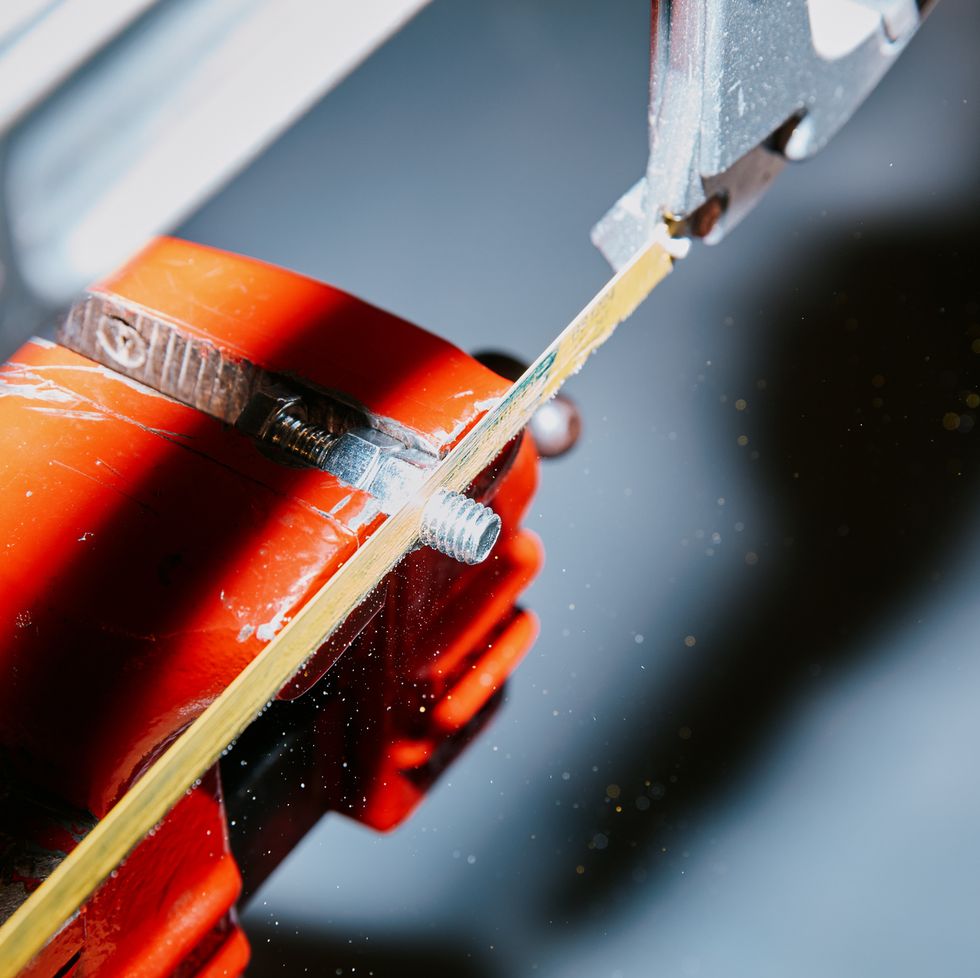
Cutting a screw flush requires more care than shortening a loose screw. The goal is to remove the extra metal without scratching the surface around it.
First, protect the surface with several layers of cardboard, thin plastic, or a scrap of sheet metal. Leave only the screw exposed.
Next, angle the hacksaw so the blade touches only the part of the screw that extends beyond the surface. Use short, gentle strokes until the screw is nearly flush.
For a completely smooth finish, file the remaining metal carefully. Do not force the file across the surrounding surface, especially if it is painted, finished, or made from soft wood.
If the screw must be perfectly flush, a flush-cutting tool or rotary tool may produce a cleaner result. Still, a hacksaw is often enough for basic repairs.

Safety Tips for Cutting Screws
Cutting a screw with a hacksaw is simple, but the blade and cut metal can cause injuries. Follow basic workshop safety rules.
• Wear safety glasses to protect your eyes from metal chips
• Wear gloves when handling cut screws and sharp edges
• Secure the screw before you begin
• Keep your fingers away from the blade path
• Use a sharp blade instead of forcing a dull one
• Check for hidden wires, pipes, and other parts
• Keep the hacksaw frame tight and the blade secure
• Clean up metal filings with a brush rather than bare hands
• Do not use a damaged or bent blade
• Keep children and pets away from the work area
The Occupational Safety and Health Administration recommends suitable eye protection when work may create flying particles. Metal cutting can produce small chips that are difficult to see but can still cause serious eye damage.
A hacksaw creates fewer hazards than a grinder, but it is not risk-free. Treat the cut end as sharp until you have filed it smooth.

Common Mistakes to Avoid
Many poor cuts come from rushing. The most common mistake is using a dull or coarse blade for a small screw. A dull blade slips, creates heat, and may damage the threads.
Other mistakes include:
• Cutting without securing the screw
• Marking the screw only on one side
• Applying too much downward force
• Using a wood blade instead of a metal blade
• Cutting too close to the vise jaws
• Forgetting to file the cut end
• Removing a nut before repairing the threads
• Cutting a load-bearing fastener without checking its strength
• Leaving a sharp screw end exposed
One practical lesson is to plan for the final finish. Cutting removes the unwanted length, but filing removes the danger. A neat repair should leave no sharp burrs or rough edges.
If the screw holds a safety-critical part, such as a brake component, structural bracket, ladder, or pressure fitting, replace it with the correct fastener instead of modifying it.
Can You Cut Different Types of Screws With a Hacksaw?
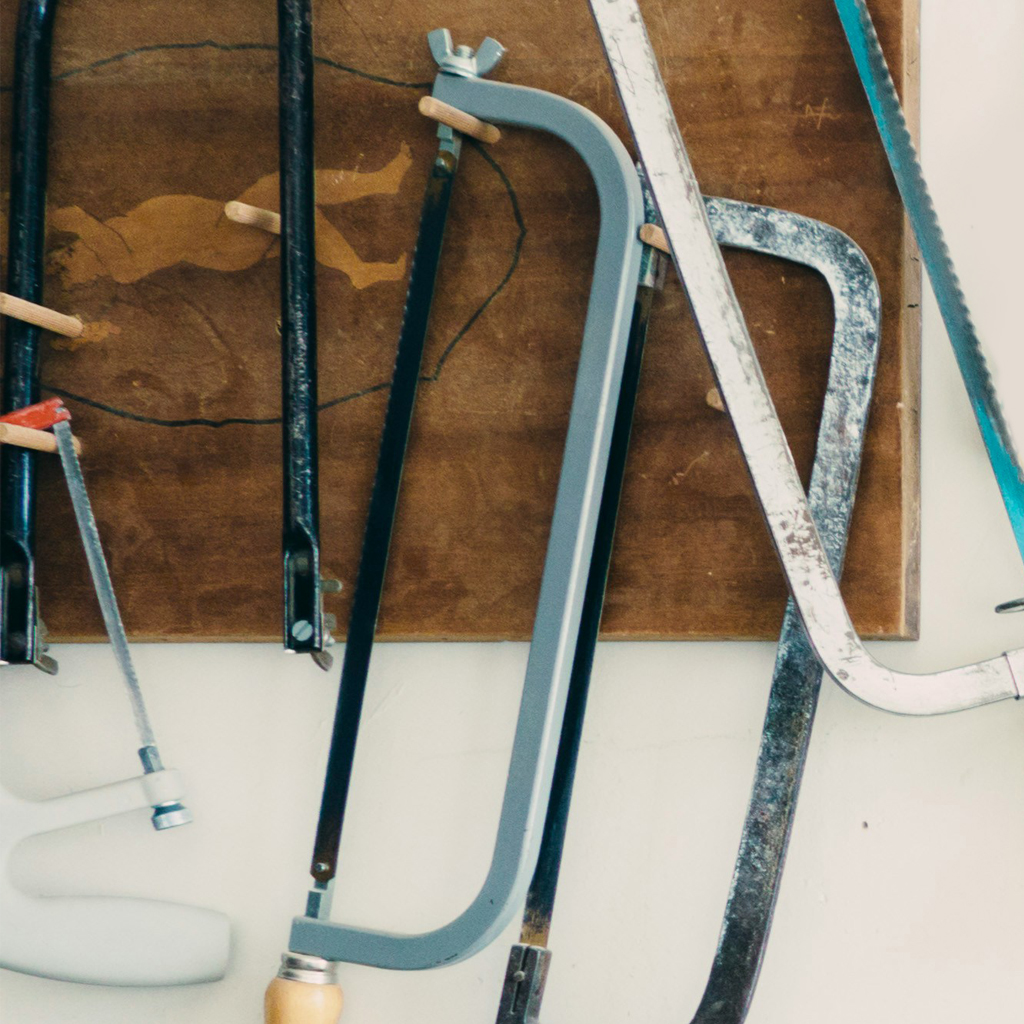
Most common screws can be cut with a hacksaw, but the cutting time and blade wear will vary.
Steel screws
Standard steel screws are usually easy to cut. A 18 or 24 TPI bi-metal blade works well.
Stainless steel screws
Stainless steel is tougher and may cause more blade wear. Use a sharp bi-metal blade, keep the strokes steady, and avoid pushing too hard.
Brass screws
Brass is soft and cuts easily. Use light pressure because the metal can deform near the cut.
Aluminum screws
Aluminum cuts quickly but may clog the blade teeth. Clean the blade if metal builds up between the teeth.
Hardened screws
Hardened screws can be difficult to cut by hand. If the blade barely scratches the surface, stop forcing it. A cutting wheel or professional metal-cutting tool may be more suitable.
Drywall screws
Drywall screws are often hardened and brittle. A hacksaw can cut them, but a rotary tool may be faster for screws embedded in studs or framing.

Hacksaw Alternatives for Cutting Screws
A hacksaw is not the only option. The best tool depends on the screw size, location, material, and finish you need.
• Bolt cutters work well on some soft, exposed screws, but they may crush the threads
• An angle grinder cuts hardened screws quickly but creates sparks and heat
• A rotary tool offers good control in tight areas
• A reciprocating saw can cut large or deeply embedded fasteners
• A metal-cutting band saw provides clean cuts for repeated work
• A screw extractor removes damaged screws rather than shortening them
• A pair of end-cutting pliers may remove small nails or soft fasteners
Power tools save time, but they need more safety protection. Use eye protection, hearing protection, gloves, and appropriate guards. Keep sparks away from fuel, wood dust, paint, and other flammable materials.
For one small screw, a hacksaw is usually the simplest choice. For many screws or thick fasteners, a power tool may be more efficient.
Is It Better to Cut the Screw or Replace It?
Cutting a screw is useful when the fastener remains strong and only the length is a problem. Replacement is better when the screw is rusty, bent, cracked, stripped, or badly worn.
A shortened screw must still provide enough thread engagement. As a general rule, the screw should enter the threaded hole deeply enough to hold the parts securely without bottoming out.
Do not cut a screw if the removed section includes important threads, a shoulder, a locking feature, or a special tip. Some screws are designed to drill, seal, resist loosening, or carry a specific load. Altering them may reduce performance.
When in doubt, compare the modified screw with the manufacturer’s specified fastener. This matters most in machinery, vehicles, electrical equipment, and structural projects.
Frequently Asked Questions About Can You Cut a Screw With a Hacksaw
Can you cut a screw with a hacksaw while it is installed?
Yes, you can cut a screw while it is installed if the area is easy to reach and nearby parts are protected. Cover the surface, check for hidden wires or pipes, and use slow strokes to prevent damage.
What hacksaw blade is best for cutting screws?
A 18 or 24 TPI bi-metal blade is a good choice for most screws. Use a finer 32 TPI blade for small screws or thin metal, and a coarser blade for large fasteners.
Can you cut a stainless steel screw with a hacksaw?
Yes, but stainless steel is harder to cut than ordinary steel. Use a sharp bi-metal blade, maintain steady pressure, and avoid bending the blade during the cut.
How do you restore screw threads after cutting?
Thread a matching nut onto the screw before cutting whenever possible. After cutting, file the end smooth and slowly remove the nut to help clean and reform minor thread damage.
Can a hacksaw cut a hardened screw?
A hacksaw may cut a hardened screw, but the process can be slow and may quickly dull the blade. If the blade does not make progress, use a suitable metal-cutting wheel or ask a professional for help.
Should you use oil when cutting a screw?
A small amount of cutting oil can reduce friction when cutting thick or hard metal. It is usually not needed for a small, soft screw, and too much oil can make the work area slippery.
Can you cut a screw without a vise?
You can, but securing the screw with a clamp or locking pliers is much safer. Never hold a small screw in your fingers while cutting it with a hacksaw.
Conclusion
Yes, you can cut a screw with a hacksaw, and it is often the safest and simplest option for small home repairs. Use a sharp metal-cutting blade, secure the screw, mark the cut clearly, and apply steady pressure.
Always file the cut end smooth, and use a matching nut to protect the threads when possible. If the fastener is hardened, load-bearing, or part of safety-critical equipment, replacement may be the better choice.
Try these steps on a spare screw first, then apply the method to your project with confidence. Share your own workshop tips or explore more practical tool guides for your next repair.
