What Is A Junior Hacksaw Used For: Uses And Cutting Tips
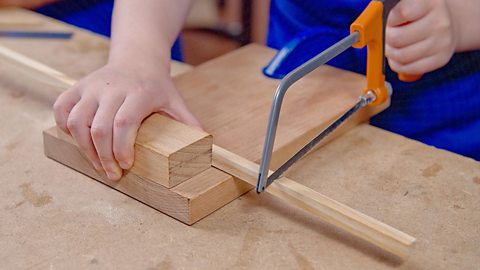
A junior hacksaw is a small hand saw used to cut thin metal, plastic, pipe, wire, bolts, screws, and other light-duty materials. Its narrow blade fits into tight spaces, while its compact frame gives you better control than a full-size hacksaw.
For most home repairs in the United States, a junior hacksaw works well when a regular hacksaw feels too large. It is useful for cutting a small bolt, trimming a plastic pipe, or removing a damaged screw. It is not the right tool for thick steel, large wood boards, or fast production work.
What is a junior hacksaw?
A junior hacksaw is a small version of a standard hacksaw. It has three main parts:
- A small metal frame
- A narrow, replaceable blade
- A handle or grip
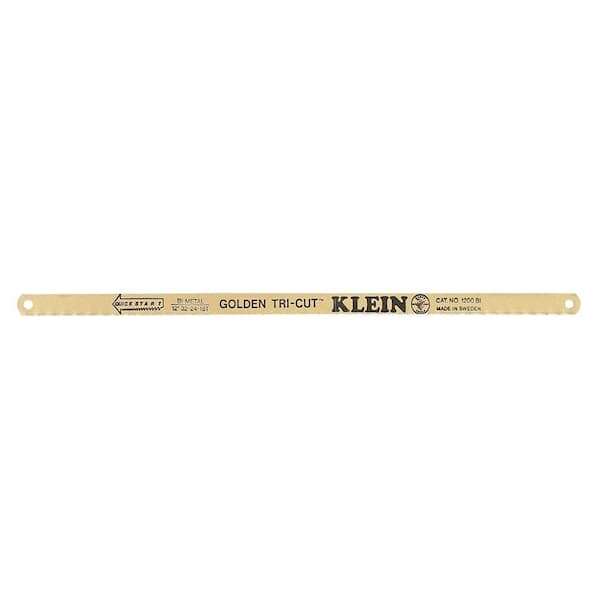
Many junior hacksaws use blades about 6 inches long, but sizes vary by brand and design. The blade has small teeth made for controlled cuts through thin materials.
The frame holds the blade under tension. This keeps the blade straight as you push and pull it across the workpiece. Most models let you replace the blade when the teeth become dull or damaged.
A junior hacksaw is sometimes called a mini hacksaw. The names often describe the same type of tool, though the exact frame shape can differ.

What is a junior hacksaw used for?
A junior hacksaw is used for small, careful cuts where a full-size hacksaw or power saw would be awkward. Common uses include cutting:
- Thin metal sheet
- Small metal rods
- Bolts and screws
- Threaded rod
- Wire and cable
- Copper or plastic pipe
- PVC trim
- Plastic parts
- Small brackets
- Light aluminum stock
- Model-making materials
The tool works best when the material is thin and the cut does not need to be made quickly. Its small size helps you work in narrow areas, such as inside a cabinet, near a bracket, or under a sink.
Cutting bolts and screws
A junior hacksaw can cut a bolt that is too long. This is useful when a nut has already been installed and the extra thread gets in the way.
Thread the nut onto the bolt before cutting. After the cut, remove the nut slowly. The nut can help reshape the first thread and make it easier to start the fastener again.
Protect nearby surfaces with cardboard or a cloth. Metal chips and sharp cut ends can scratch paint, wood, or skin.
Cutting pipe
A junior hacksaw can cut small copper, PVC, ABS, and similar pipes. It may help with plumbing repairs, irrigation parts, or small workshop projects.
Support the pipe close to the cut. A pipe that bends or shakes can pinch the blade and make the cut rough. After cutting plastic pipe, remove burrs with a utility knife or fine sandpaper.
For copper pipe, a tubing cutter usually makes a cleaner and more square cut. A junior hacksaw remains useful when there is not enough room to turn a tubing cutter.
Cutting wire and light metal
The saw can cut light wire, thin brackets, aluminum strips, and small steel parts. Use a blade with fine teeth for thin metal and a coarser blade for thicker stock.
Do not use a junior hacksaw to cut energized electrical wire. Turn off power, verify that the circuit is dead with a suitable tester, and follow local electrical rules. If you cannot confirm that the wire is safe, stop and call a qualified electrician.
How does a junior hacksaw work?
A junior hacksaw cuts by scraping small amounts of material with repeated tooth strokes. Each tooth removes a small chip as the blade moves across the workpiece.
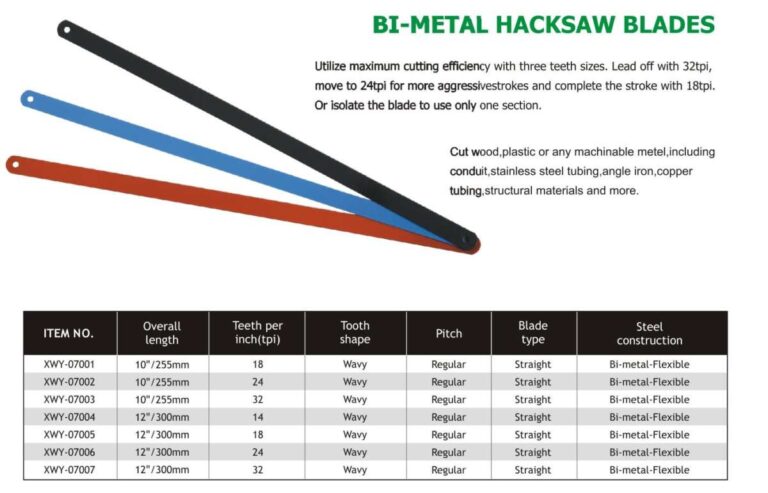
The blade’s tooth count affects the cut:
| Blade type | Best use | Main trade-off |
|---|---|---|
| Fine teeth | Thin sheet metal, wire, small tubing | Cuts more slowly but leaves a smoother edge |
| Medium teeth | General metal and plastic work | Good balance of speed and control |
| Coarse teeth | Thicker metal and softer materials | Cuts faster but may catch or leave a rough edge |
The blade should have several teeth touching the material at the same time. If only one or two teeth engage the workpiece, the blade may catch, chatter, or break.
A simple rule is to use a fine blade for thin stock and a coarser blade for thicker stock. Check the blade package for the maker’s material guide because tooth counts and blade designs differ.
How to use a junior hacksaw safely
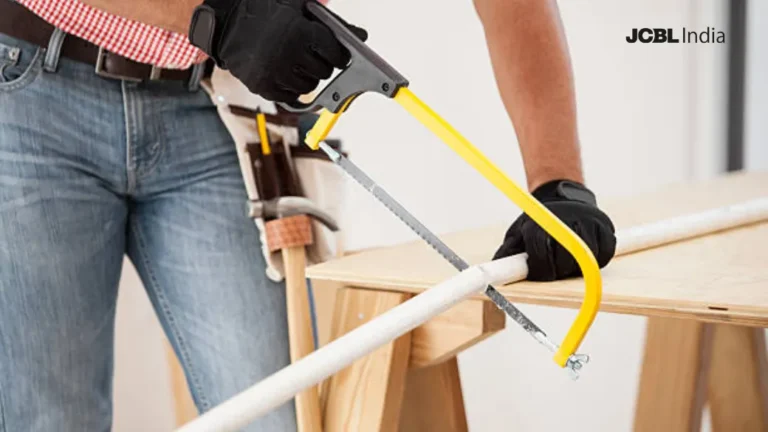
Use a junior hacksaw with the workpiece held firmly and the blade moving away from your body. The following steps help produce a straighter cut.
1. Check the tool
Before cutting, inspect the frame, handle, and blade. Do not use the saw if:
- The blade is cracked
- Teeth are missing
- The frame is bent
- The blade does not stay tight
- The handle is loose
- Rust has weakened the blade
Wear safety glasses. Thin metal chips and broken teeth can travel farther than expected. Use work gloves when handling sharp metal, but keep gloves away from moving power tools and rotating machinery.
2. Choose the right blade
Select a blade made for the material. A fine-tooth blade is often better for thin metal and small tubing. A medium blade suits many home repair tasks.
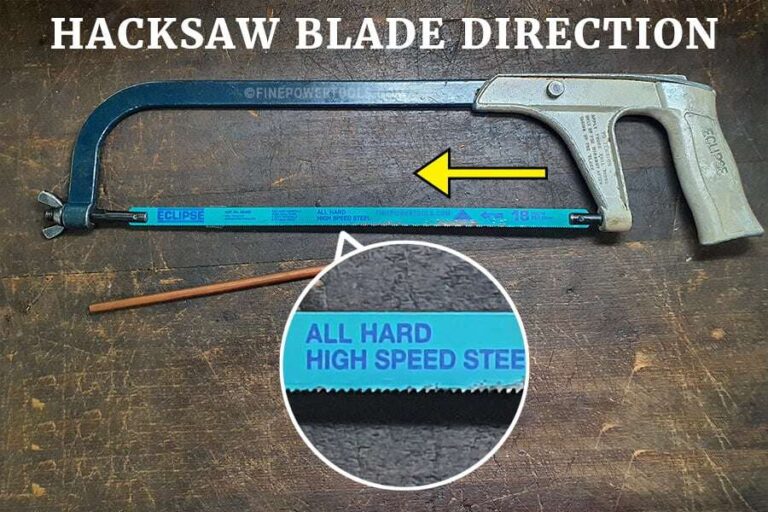
Install the blade so the teeth point in the cutting direction. On most hacksaws, the teeth point away from the handle because the saw cuts on the forward stroke. Follow the blade maker’s instructions if the frame uses a different setup.
3. Mark the cut
Mark the cut with a pencil, marker, or scribe. For metal, a fine marker or scribe gives a clearer line.
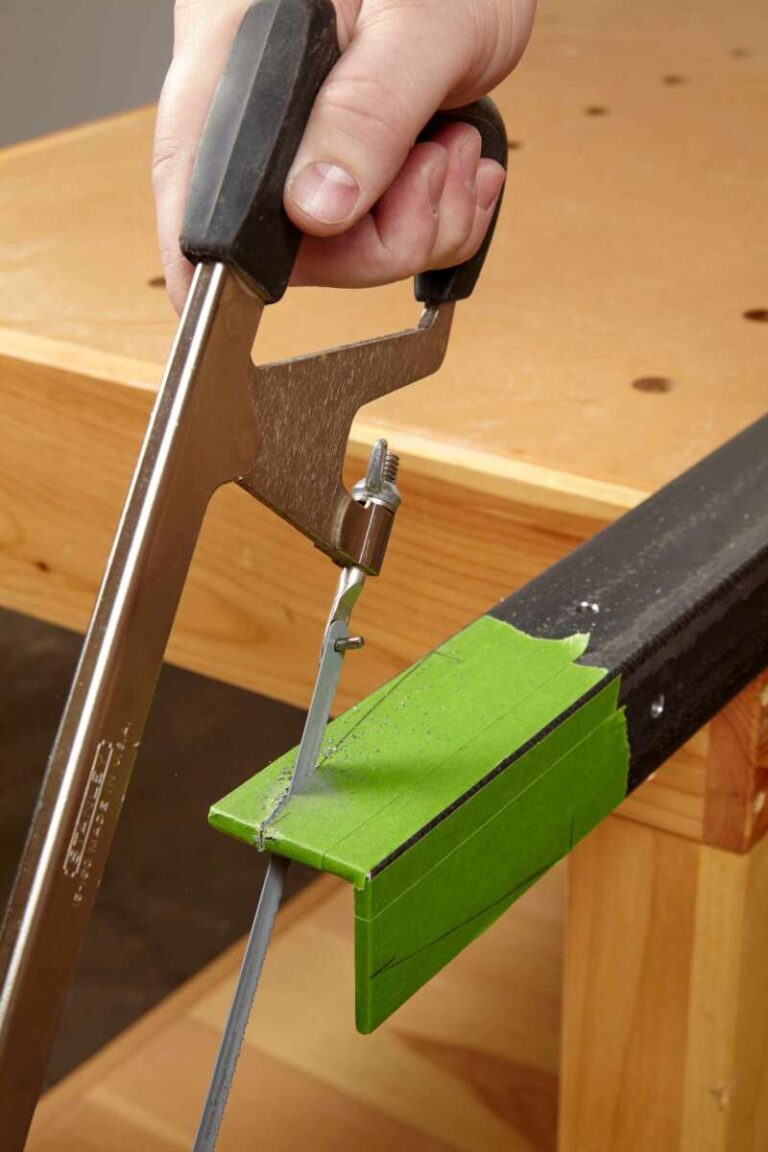
Wrap masking tape around a pipe or round part to create a guide. Check the measurement twice before cutting. A hacksaw removes material, and a cut that is too short cannot be undone.
4. Secure the workpiece
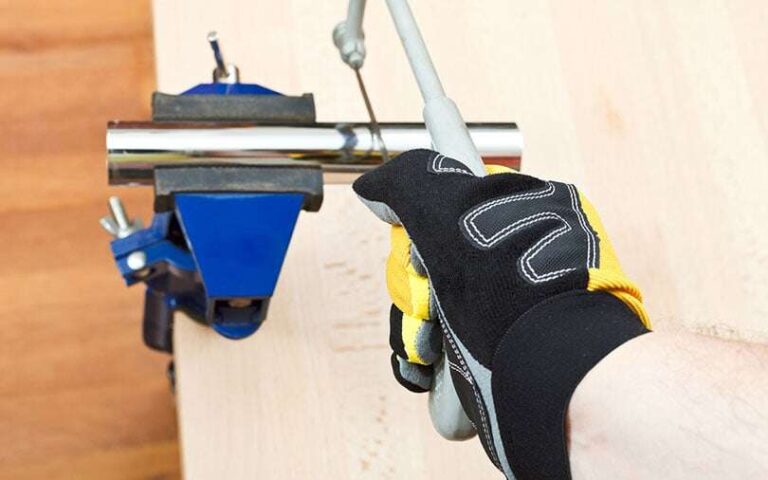
Clamp the material in a vise when possible. Place the cut close to the vise jaws to reduce vibration.
If you hold the workpiece by hand, keep it on a stable surface. Never hold a small part in your palm while sawing toward your hand. Use clamps, a bench vise, or a purpose-made holder instead.
5. Start with short strokes
Place the blade on the cut line. Use short, light strokes at first to create a shallow groove.
Once the groove forms, use longer strokes that use much of the blade. Keep the blade aligned with the mark. Let the teeth do the work instead of forcing the frame.
6. Keep steady pressure
Apply firm pressure on the forward stroke and ease pressure on the return stroke. Do not twist the blade.
If the blade binds, stop and check the workpiece. It may have moved, or the cut may have closed around the blade. Forcing the tool can bend or break the blade.
7. Finish and smooth the edge
Slow down as the blade nears the end of the cut. This helps prevent the remaining material from snapping and tearing.
After the cut, inspect the edge. Remove sharp burrs with a file, deburring tool, or fine abrasive paper. Clean away metal or plastic chips before handling the part.

Which materials can a junior hacksaw cut?
A junior hacksaw can cut many thin materials, but the blade and material thickness control the result.
| Material | Suitable? | Notes |
|---|---|---|
| Thin steel | Yes | Use a sharp fine- or medium-tooth blade |
| Aluminum | Yes | Keep the blade clean to reduce clogging |
| Copper pipe | Yes | A tubing cutter may make a cleaner cut |
| PVC pipe | Yes | Support the pipe and remove burrs |
| ABS pipe | Yes | Use steady strokes to avoid a rough edge |
| Brass | Yes | Clamp small parts firmly |
| Thin sheet metal | Yes | Prevent the sheet from vibrating |
| Wire | Yes | Secure the wire and protect the cut end |
| Thick steel bar | Usually no | Use a larger hacksaw or powered tool |
| Large wood boards | No | Use a wood saw made for the job |
| Masonry or concrete | No | Use a masonry blade or suitable power tool |
| Hardened tool steel | Usually no | The blade may wear or fail quickly |
A junior hacksaw can cut some wood in an emergency, but its metal-cutting blade is not designed for efficient wood cutting. A hand saw, coping saw, or jigsaw is usually a better choice.
The tool is also a poor choice for thick materials. The small blade has limited cutting depth, and the long cut can take too much time. A standard hacksaw, reciprocating saw, band saw, or angle grinder may be more suitable, depending on the material and safety conditions.
Junior hacksaw vs. standard hacksaw
A junior hacksaw is smaller and easier to control. A standard hacksaw is larger and usually cuts faster because it uses a longer blade and gives you more stroke length.
| Feature | Junior hacksaw | Standard hacksaw |
|---|---|---|
| Size | Compact | Larger |
| Best for | Small parts and tight spaces | General metal cutting |
| Control | High for small work | Good for longer cuts |
| Cutting speed | Usually slower | Usually faster |
| Blade length | Often shorter | Often longer |
| Workpiece size | Thin and small | Thin to moderately thick |
| Storage | Easy in a small toolbox | Needs more room |
Choose a junior hacksaw when access and control matter most. Choose a standard hacksaw when you need to cut thicker material or make a longer cut.
A mini hacksaw with a pistol-style handle is another nearby option. It may feel easier to grip, but it does not always provide the same blade support as a framed junior hacksaw. Compare the blade tension, handle comfort, and replacement blade supply before choosing one.
Common mistakes to avoid
Many poor cuts come from setup problems rather than the saw itself.
Using a dull blade
A dull blade needs more force. It may slide across the surface, heat up, or produce a crooked cut.
Replace the blade when it cuts slowly, skips, or leaves a rough edge despite proper technique.
Installing the blade backward
A backward blade may fail to cut or may drag across the workpiece. Check the tooth direction before starting.
Using too much force
Hard pressure can bend the blade and damage the cut line. Use controlled strokes and let the teeth remove the material.
Failing to clamp the material
Movement causes chatter and uneven cuts. It also increases the chance of a broken blade.
Choosing the wrong tooth size
Large teeth can catch in thin sheet metal. Very fine teeth can clog or cut slowly in thicker stock. Match the tooth size to the material.
Cutting without checking what is behind the surface
Before cutting a pipe, panel, or bracket, check the area behind it. Hidden wires, tubes, or finished surfaces can suffer damage.
Leaving a sharp edge
A freshly cut metal edge can cause serious cuts. File or deburr it before installation or handling.
How to keep a junior hacksaw in good condition
Store the saw in a dry place. Wipe metal dust and moisture from the frame after use.
Release blade tension if the manufacturer recommends it for storage. This may reduce long-term strain on some frames, though the exact method depends on the design.
Keep spare blades in their package or a protected container. Do not toss loose blades into a toolbox where the teeth can become damaged or cause injury.
Use the correct replacement blade length and mounting style. A blade that is too long, too short, or poorly secured can slip during a cut.
When should you use another tool?
Use another tool when the material is too thick, the cut must be very precise, or the work involves a safety risk.
A tubing cutter is often better for round copper pipe. A bolt cutter may be better for certain soft metal rods or chains, but it is not suitable for hardened steel. An angle grinder can cut thick metal quickly, but it creates sparks, heat, noise, and abrasive dust.
A reciprocating saw may suit demolition work. A band saw may provide a straighter cut for repeated shop work. A jigsaw may be better for shaped cuts in wood or sheet material.
Choose the tool based on:
- Material type
- Material thickness
- Required accuracy
- Available working space
- Number of cuts
- Dust, heat, and spark hazards
- Your level of tool experience
Never use a junior hacksaw as a substitute for a safe lockout, electrical test, or professional repair. The small size makes it useful, but it does not remove the hazards of the material being cut.
Frequently asked questions
Can a junior hacksaw cut stainless steel?
Yes, it can cut thin stainless steel with a sharp blade made for metal. Stainless steel is tough, so use steady strokes and avoid excessive pressure. For thick stainless steel or repeated cuts, use a larger hacksaw or a powered metal-cutting tool suited to the job.
Can a junior hacksaw cut PVC pipe?
Yes. A junior hacksaw can cut small PVC pipe and fittings. Support the pipe, keep the cut square, and remove the burrs after cutting. For frequent plumbing work, a PVC cutter may be faster and cleaner.
Can a junior hacksaw cut a padlock?
It may cut some thin padlock parts, but the result depends on the lock’s material and hardness. Hardened steel can quickly damage a small hacksaw blade. Do not cut a lock unless you own it or have clear permission to remove it.
How do I know when to replace the blade?
Replace the blade when it slips, skips, cuts slowly, or needs unusual force. Also replace it after a tooth breaks or the blade bends. A new blade often improves the cut more than changing your stroke speed.
Are junior hacksaw blades universal?
No. Blade length, mounting holes, width, and tooth style can vary. Match the replacement blade to the saw frame and check the manufacturer’s instructions or package details.
Key takeaways
- A junior hacksaw is a compact hand saw for thin metal, plastic, pipe, wire, bolts, and small repair work.
- It is most useful where space is limited and control matters.
- Use the blade tooth size that matches the material thickness.
- Clamp the workpiece, wear safety glasses, and use light, steady strokes.
- A standard hacksaw or powered tool is better for thick material or long cuts.
- Deburr every cut before handling the part.
Conclusion
A junior hacksaw is a small but useful tool for controlled cuts in thin materials. It is especially helpful for bolts, pipe, wire, brackets, plastic parts, and light metal in tight spaces.
The best results come from three simple choices: use the right blade, secure the material, and avoid forcing the saw. If the material is thick, hardened, energized, or difficult to access safely, choose a different tool or get qualified help.
Recent Tool Guides
 Hammer
How To Hammer Flowers Onto Paper: Easy Guide
Learn how to hammer flowers onto paper with simple steps, helpful tips, and beautiful results for...
Read Guide → Wrench
How To Use A Hex Wrench: Easy Step-By-Step Guide
Learn how to use a hex wrench correctly with simple steps, helpful tips, and common mistakes...
Read Guide → Hacksaw
How To Cut Curtain Pole With Hacksaw: Easy Guide
Learn how to cut curtain pole with hacksaw safely and neatly. Follow simple steps for accurate...
Read Guide → Wrench
How To Use A Husky Torque Wrench: Easy Guide
Learn how to use a Husky torque wrench correctly with simple steps, torque settings, and safety...
Read Guide → Hammer
How To Hold A Hammer: Safe Grip Guide
Learn how to hold a hammer with the right grip, stance, and technique for safer, more...
Read Guide → Hacksaw
How To Cut Flexible Metal Conduit With Hacksaw: Easy Guide
Learn how to cut flexible metal conduit with hacksaw safely and cleanly. Follow simple steps for...
Read Guide →