What Does Hacksaw Mean: Simple Tool Definition
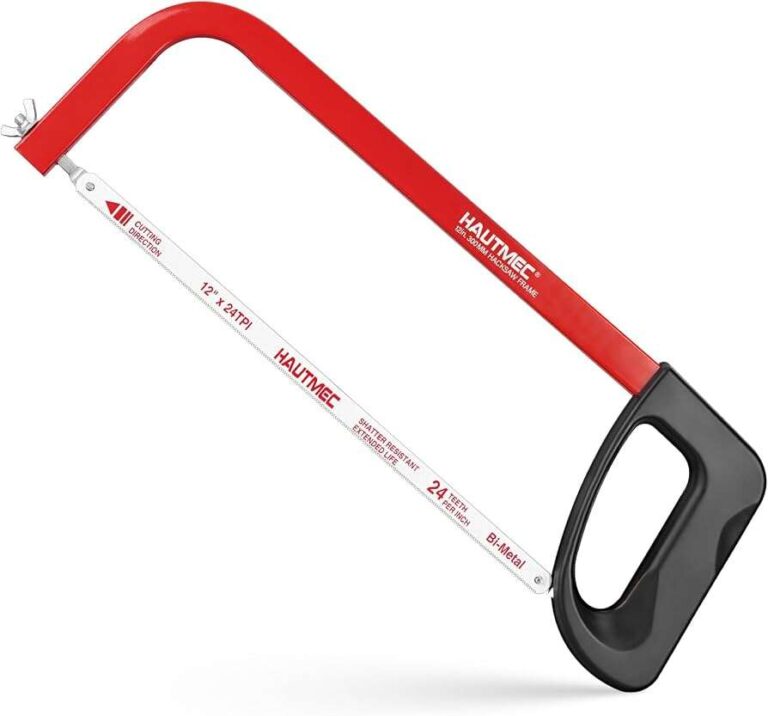
In the United States, a hacksaw is a hand saw with a thin, replaceable metal blade held in a rigid frame. People use it to cut metal, plastic pipe, bolts, screws, and other hard materials. The blade has small teeth, and most hacksaws cut on the forward push stroke.
A hacksaw is common in American home garages, hardware shops, plumbing work, and repair kits. It is simple, low-cost, and useful when a power saw would be too large, noisy, or risky for a small cut.

Hacksaw meaning and basic definition
A hacksaw is a manual frame saw made for cutting hard materials. Its main parts are the frame, handle, blade, tension knobs, and blade pins.
The word “hack” means to cut roughly or forcefully. A hacksaw does not make the smoothest cut, but it can cut through materials that would quickly damage a common wood saw.
Most U.S. hacksaws have these parts:
- Frame: Holds the blade straight and under tension.
- Handle: Gives you a firm grip.
- Blade: A narrow strip of hardened steel with many teeth.
- Blade pins: Fit through holes at each end of the blade.
- Tension screw or lever: Tightens the blade so it does not bend during a cut.
A standard hacksaw blade is often about 12 inches long, though smaller and larger sizes are available. The exact blade length depends on the frame. Always check the frame before buying a replacement blade.
What does a hacksaw cut?
A hacksaw can cut:
- Steel and other metals
- Aluminum and copper
- PVC and other plastic pipe
- Threaded rod
- Bolts and screws
- Metal tubing
- Thin sheet metal
- Plastic hardware
A hacksaw is not the right tool for thick wood. Its fine teeth can clog with wood chips, and the blade may make a rough, slow cut. Use a wood-cutting hand saw for lumber.
The term can also refer to the blade alone. For example, someone may say, “Pass me a hacksaw blade,” even when the frame is not included.

How a hacksaw works
A hacksaw cuts by using many small teeth to remove a little material with each stroke. The user moves the blade back and forth while keeping the blade aligned with the cut line.
Most hacksaw blades are installed with the teeth pointing away from the handle. This setup makes the saw cut when you push it forward. The return stroke should use light pressure.
The blade must be tight. A loose blade can bend, wander, or twist. It can also break more easily. A properly tensioned blade should feel firm and straight, but you should not force the tension screw past its limit.
Blade teeth per inch
Hacksaw blades are often described by TPI, or teeth per inch. TPI tells you how closely spaced the teeth are.
| Blade size | Common use |
|---|---|
| 14 TPI | Thick metal and larger sections |
| 18 TPI | General-purpose cutting |
| 24 TPI | Thin metal, tubing, and common repair work |
| 32 TPI | Very thin sheet metal and delicate cuts |
Choose a blade that keeps at least two or three teeth in the material during the cut. If too few teeth touch the work, the teeth may catch and break. If the teeth are too fine for thick stock, cutting will be slow and the blade may clog.
Many general-purpose jobs work well with an 18- or 24-TPI blade. This is a starting point, not a rule for every material.
Blade materials
Common hacksaw blades include:
- Carbon steel: Usually less costly, but it may wear faster.
- High-speed steel: Hard teeth can cut well, but the blade may be less flexible.
- Bi-metal: A flexible back supports harder teeth. This design is common for demanding repair work.
A blade with hardened teeth may stay sharp longer. However, no blade is safe from damage if the user twists it, applies side force, or chooses the wrong TPI.

How to use a hacksaw correctly
To use a hacksaw, secure the material, select the right blade, and make steady strokes without twisting the frame.
Before you start
Gather:
- A hacksaw with a sound frame
- The correct replacement blade
- A vise or other secure clamp
- Eye protection
- Work gloves if they do not reduce your grip
- A file or deburring tool for the finished edge
Inspect the frame and blade first. Do not use a blade with cracks, missing teeth, severe rust, or a bent body.
Step-by-step method
- Mark the cut. Use a pencil, marker, or scratch line. Wrap thin tape around a pipe to help create a straight guide.
- Secure the work. Clamp the material in a vise. Keep the cut close to the vise jaws to reduce vibration.
- Install the blade. Point the teeth forward if you want the usual push-cut action.
- Set the tension. Tighten the blade until it is straight and firm.
- Start with a shallow groove. Use short, light strokes. This groove helps the blade stay on the marked line.
- Use long strokes. Once the groove is established, use as much of the blade length as the space allows.
- Keep the frame straight. Do not twist the handle or push sideways.
- Reduce pressure near the end. The material may break suddenly, so support the cut piece.
- Remove sharp edges. Use a file or deburring tool. Do not run your bare fingers along the cut edge.
Signs of a good cut
A good hacksaw cut usually has:
- A line that stays close to the mark
- No major bending in the blade
- Even tooth contact
- Limited vibration
- A manageable amount of burr on the edge
The cut may not look polished. A file can improve the edge after the cut is complete.
If the blade wanders
Stop and check the setup. A wandering blade often comes from a loose workpiece, a dull blade, too much pressure, or a frame held at an angle.
Do not correct the problem by forcing the blade sideways. That can buckle or break it. Start a new groove if needed, or replace the blade.

Hacksaw vs. other cutting tools
A hacksaw is best when you need controlled, low-cost cutting by hand. It is not always the fastest tool.
| Tool | Best for | Main trade-off |
|---|---|---|
| Hacksaw | Small metal and plastic cuts | Slow compared with power tools |
| Pipe cutter | Clean cuts on suitable round pipe | Works only within its size and material limits |
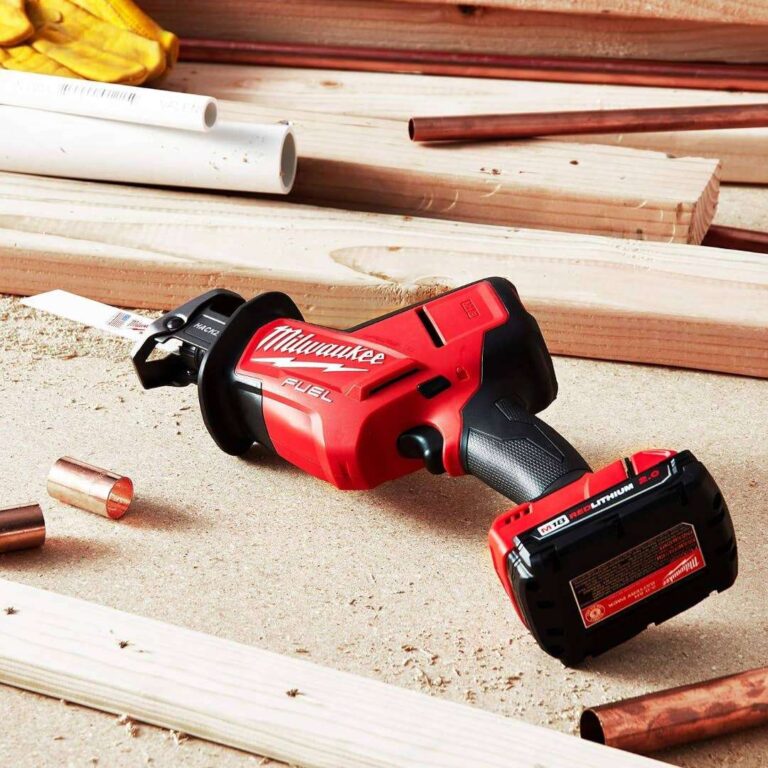
| Reciprocating saw | Fast cuts in many materials | More vibration, noise, and safety risk |
| Angle grinder | Fast metal cutting and grinding | Creates sparks and needs strong protective gear |
| Bolt cutter | Cutting some bolts, chain, and rod | May crush or deform the cut ends |
| Wood hand saw | Lumber and wood products | Teeth are not designed for most metal |
A hacksaw may be the better choice when you are working indoors, near finished surfaces, or in a place without power. It also gives you more control for a small cut.
A powered tool may make sense for repeated cuts or thick stock. Before using one, confirm that the blade or wheel matches the material and follow the tool maker’s instructions.

Hacksaw safety and common mistakes
The main hacksaw risks are sharp edges, broken blades, slipping workpieces, and metal chips.
Follow these basic precautions:
- Wear safety glasses when cutting metal.
- Clamp the work instead of holding it in your hand.
- Keep both hands on the tool when the cut requires control.
- Keep fingers away from the blade path.
- Use a sharp blade with the correct TPI.
- Do not use a bent or damaged frame.
- Do not twist the blade during a cut.
- Brush away chips with a brush, not your bare hand.
- Deburr the finished edge.
- Store spare blades so their teeth cannot cut someone.
The Occupational Safety and Health Administration advises employers to keep hand tools in safe condition and to use the right tool for the job. Its hand and power tools guidance also stresses eye protection where flying particles may create a hazard. Home users should apply the same basic care.
Gloves can help with sharp stock, but they are not a substitute for eye protection or a vise. Avoid loose gloves near powered tools. For a hand hacksaw, choose gloves that let you hold the frame securely.
Common mistakes
Using a wood saw on metal: The teeth may become dull or damaged.
Using a fine blade on thick material: The cut takes too long and can clog the teeth.
Using a coarse blade on thin sheet metal: The blade may catch because too few teeth engage the material.
Pulling hard on the return stroke: Most hacksaws cut on the push stroke. Lift pressure on the return stroke.
Cutting without support: A loose pipe can shake, crush, or move into the blade.
Ignoring burrs: A freshly cut edge can cause a deep cut even after the saw is put away.

Frequently asked questions about hacksaws
Is a hacksaw only for metal?
No. A hacksaw can cut some plastics, including many types of pipe, as well as metal. Its fine teeth make it useful for several hard materials. For wood, use a saw designed for wood unless the material maker gives different guidance.
Why is it called a hacksaw?
The name combines “hack,” meaning to cut roughly or in pieces, with “saw.” The tool is designed for cutting hard stock by hand rather than for making fine woodworking cuts.
Which way should a hacksaw blade face?
For the usual cutting action, point the teeth away from the handle. This makes the blade cut on the forward push stroke. Some frames allow a different blade position, so follow the frame instructions if the design specifies one.
How tight should a hacksaw blade be?
The blade should be straight and firm, with little visible movement when you lightly press it. Do not over-tighten it. Excess tension can damage the frame or blade.
Can a hacksaw cut a bolt?
Yes. A hacksaw can cut a bolt, threaded rod, or screw. Secure the bolt, select a suitable blade, and file away the burr when finished. If you want to preserve the threads, place a nut on the bolt before cutting. After the cut, remove the nut to help reform the thread at the end.
What is the difference between a hacksaw and a junior hacksaw?
A junior hacksaw is a smaller, lighter frame saw. It is useful for narrow spaces and light work. A full-size hacksaw usually gives you a longer blade and a larger grip, which can make longer cuts easier.
Final answer: What does hacksaw mean?
A hacksaw is a hand-operated frame saw with a fine, replaceable blade used mainly to cut metal and plastic. It works through repeated strokes, usually cutting as you push the blade forward.
For the best result, match the blade’s TPI to the material, clamp the work securely, keep the blade tight and straight, and protect your eyes from chips. If you only need one general-purpose blade, an 18- or 24-TPI option is often a practical starting point for common home repairs.
Recent Tool Guides
 Hammer
How To Hammer Flowers Onto Paper: Easy Guide
Learn how to hammer flowers onto paper with simple steps, helpful tips, and beautiful results for...
Read Guide → Wrench
How To Use A Hex Wrench: Easy Step-By-Step Guide
Learn how to use a hex wrench correctly with simple steps, helpful tips, and common mistakes...
Read Guide → Hacksaw
How To Cut Curtain Pole With Hacksaw: Easy Guide
Learn how to cut curtain pole with hacksaw safely and neatly. Follow simple steps for accurate...
Read Guide → Wrench
How To Use A Husky Torque Wrench: Easy Guide
Learn how to use a Husky torque wrench correctly with simple steps, torque settings, and safety...
Read Guide → Hammer
How To Hold A Hammer: Safe Grip Guide
Learn how to hold a hammer with the right grip, stance, and technique for safer, more...
Read Guide → Hacksaw
How To Cut Flexible Metal Conduit With Hacksaw: Easy Guide
Learn how to cut flexible metal conduit with hacksaw safely and cleanly. Follow simple steps for...
Read Guide →