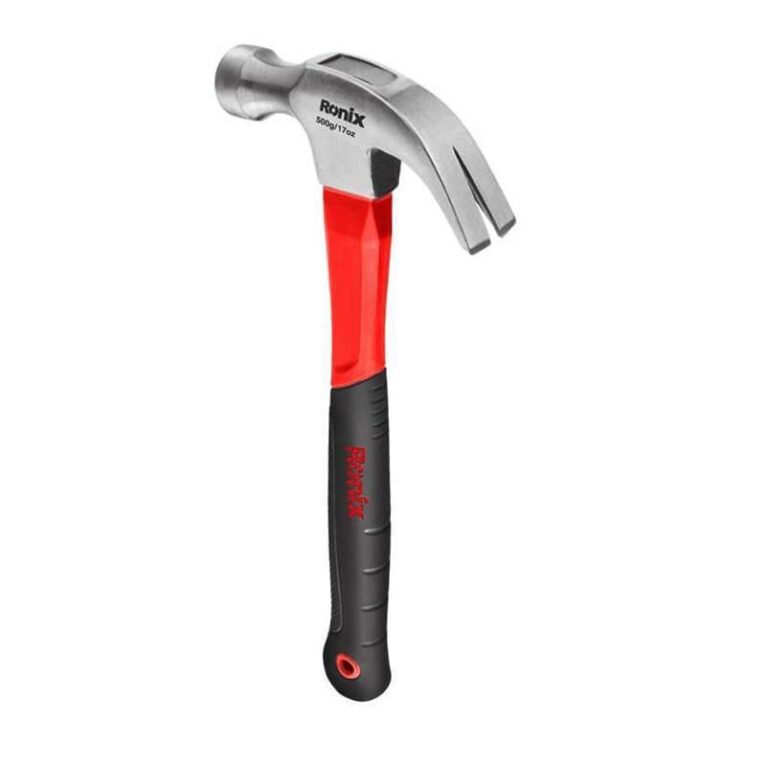
Where Can I Sell Second Hand Tools: Best Places To Sell
Introduction
In the United States, you can sell second-hand tools through local marketplaces, online platforms, pawn shops, tool dealers, consignment stores, auctions, and trade-in programs. The best option depends on the tool’s brand, condition, value, size, and whether you want the highest price or the fastest sale.
For most sellers, Facebook Marketplace and Craigslist work well for bulky hand tools, power tools, and workshop equipment because buyers can inspect and collect items locally. eBay and Mercari may reach more buyers for smaller, branded tools, but shipping, platform fees, and damage risk reduce your profit. Specialty dealers, pawn shops, and local auctions can save time, though they usually offer less than a direct sale.
This guide explains where to sell used tools in the USA, how to price them, how to avoid scams, and how to prepare tools so buyers trust your listing.
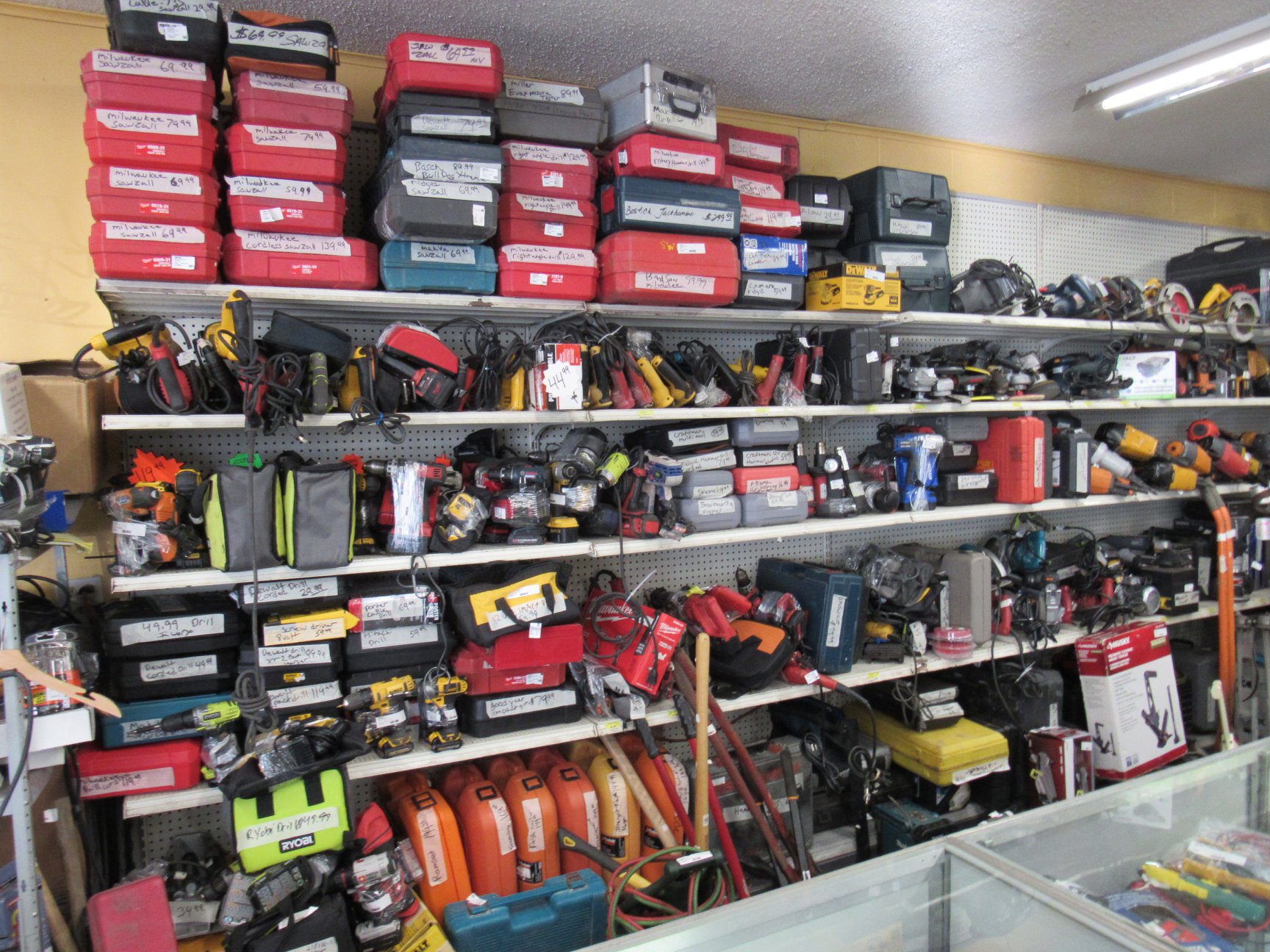
Best Places to Sell Used Tools
The best selling channel depends on your main goal. Use a local marketplace when you want quick cash and no shipping. Use a national marketplace when the tool is easy to ship or has a strong brand following.
| Selling option | Best for | Main advantage | Main drawback |
|---|---|---|---|
| Facebook Marketplace | Large tools, power tools, hand tools, shop equipment | Local buyers and no packing | Scams and no-show buyers |
| Craigslist | Bulky tools and local cash sales | Simple listings and local reach | Less buyer screening |
| OfferUp | Small and medium tools | Easy mobile listings | Buyer quality varies by area |
| eBay | Rare, branded, or collectible tools | National and international reach | Fees, shipping, and returns |
| Mercari | Smaller tools and accessories | Simple shipping process | Less suitable for heavy equipment |
| Pawn shops | Fast cash | Immediate offer | Usually the lowest payout |
| Tool dealers | Professional and high-end tools | Buyers understand tool value | May accept only certain brands |
| Consignment stores | Quality tools you do not need to sell quickly | Store handles the sale | You wait for payment |
| Local auctions | Large collections or estate cleanouts | Can sell many items at once | Final price is uncertain |
| Garage or estate sales | Mixed tool lots and inexpensive items | Fast way to clear a workshop | Lower prices per item |
Facebook Marketplace
Facebook Marketplace is often the most practical place to sell used tools in the USA. It works especially well for table saws, air compressors, ladders, generators, tool chests, cordless tool kits, and other items that are costly or risky to ship.
Create one listing for each valuable tool. For a low-value group of related hand tools, a lot may work better. Add the brand, model number, voltage, condition, included parts, and pickup area.
Avoid publishing your full home address. Meet at a public location when possible, or use a safe pickup area such as a police department exchange zone if your local department provides one.
Craigslist
Craigslist remains useful for local tool sales, especially in larger U.S. cities and suburban areas. It can be a good choice for heavy equipment because buyers expect local pickup.
Use clear titles such as:
DeWalt DWE7485 Table Saw, Stand Included, Works Well
A specific title attracts more serious buyers than “Tools for sale.” Craigslist does not provide the same level of identity or payment protection as some managed marketplaces, so use care with payment and meetings.
OfferUp
OfferUp can work well for common power tools, drills, sanders, nail guns, and tool bundles. It is built around local transactions, although shipping may be available for some listings.
Keep all messages in the platform until you know the buyer is genuine. Be cautious if a buyer asks for your phone number right away, sends a payment link, or offers more money than your asking price.
eBay
eBay is a strong option for compact tools with a known model number, such as vintage hand tools, specialty plumbing tools, machinist tools, testing equipment, and replacement parts. A national audience can help when local buyers do not recognize the item’s value.
Before listing, check completed and sold listings, not just active listings. Active listings show what sellers want. Sold listings show what buyers actually paid.
Calculate your expected profit before listing:
Estimated profit = sale price − platform fees − shipping − packing cost − payment-related charges
Fees and policies can change. Check eBay’s current fee page and shipping rules before you set a price.
Mercari
Mercari may suit smaller tools that fit safely in a box. It is less practical for heavy items, long tools, sharp blades, or equipment that could break in transit.
Photograph the item before packing it. Use strong padding, protect sharp edges, and keep the carrier receipt and tracking record. If a tool arrives damaged, photos and packing evidence may help with a claim or dispute.

Where to Sell Tools for the Highest Price
You are most likely to earn the highest price by selling directly to the person who needs the tool. A specialist buyer may pay more for a professional brand, rare model, or complete kit than a general buyer.
Try these options first:
- Local marketplace: Best for avoiding shipping and reaching nearby tradespeople.
- Specialty online marketplace: Best for rare, vintage, or technical tools.
- Trade groups: Useful for woodworking, automotive, metalworking, construction, and mechanic communities.
- Tool dealer or repair shop: Useful for professional brands and working equipment.
- Auction: Useful when you have many tools and want competitive bidding.
Sell directly to a specialist buyer
A professional may care about details that a general buyer misses. Examples include:
- Battery platform and battery count
- Tool model and revision
- Motor size
- Chuck size
- Cutting capacity
- Calibration status
- Included cases and accessories
- Service records
- Compatibility with current parts
A complete kit often sells better than separate pieces when the items are designed to work together. However, extra batteries and chargers may also sell well on their own if buyers need replacements.
Use brand and model information
Look for the model number on the tool body, nameplate, battery compartment, or manufacturer label. Search that exact model with words such as:
- Used
- Sold
- Completed
- Replacement
- Parts
- Manual
Do not assume that a tool is valuable only because it is old. Some older tools have strong demand because they are durable or collectible. Others are difficult to repair because parts are no longer made.
Consider a dealer or trade-in program
A dealer may be a good fit if you want a simple transaction and the tools are clean, working, and from a recognized professional brand. Some dealers buy used tools, while others accept them only as part of a trade.
Ask these questions before taking your tools in:
- Do you buy used tools or offer store credit only?
- Do you test the tool?
- Do you need proof of ownership?
- Do you accept tools with aftermarket batteries or parts?
- When will you pay?
- Is the offer final after inspection?
A dealer’s offer may be lower than a direct-sale price because the dealer must test, store, market, and resell the item.

Where to Sell Used Tools Quickly
If speed matters more than price, use a pawn shop, local dealer, auction house, or direct local listing.
Pawn shops
Pawn shops can provide a fast offer for common power tools, jewelry, electronics, and some shop equipment. Bring a government-issued ID if required by state or local law. The shop may also record the item’s serial number.
Expect less than a private-sale price. The shop needs room for testing, overhead, possible repairs, and profit. Ask whether the offer is for an outright sale or a pawn loan. A pawn loan creates repayment terms and may include interest or fees.
Local auctions
An auction may be useful when selling a full workshop, estate, contractor inventory, or large collection. It reduces the work of handling many individual listings.
Before signing an auction agreement, ask about:
- Seller commissions
- Listing or removal fees
- Buyer premiums
- Pickup arrangements
- Unsold items
- Payment timing
- Minimum bids or reserves
- Damage or loss during handling
An auction is not always the fastest way to receive money. It may also produce a lower-than-expected result if few buyers attend.
Garage and estate sales
Garage sales work best for inexpensive hand tools, duplicate items, fasteners, clamps, accessories, and mixed lots. High-value tools may receive better treatment in separate online listings.
Keep valuable items near the sales table. Test electrical tools only in a safe setup, and do not allow children or untrained buyers to operate saws, grinders, nail guns, or other dangerous equipment.
Tool donation or recycling
If a tool has little resale value but remains usable, donation may be better than spending hours listing it. Habitat for Humanity ReStore locations may accept certain tools and building items, but acceptance rules vary by location.
Broken electrical tools, damaged lithium-ion batteries, and items with leaking fluids require special handling. Do not place damaged lithium batteries in ordinary household trash. Check your local household hazardous waste or battery recycling program.
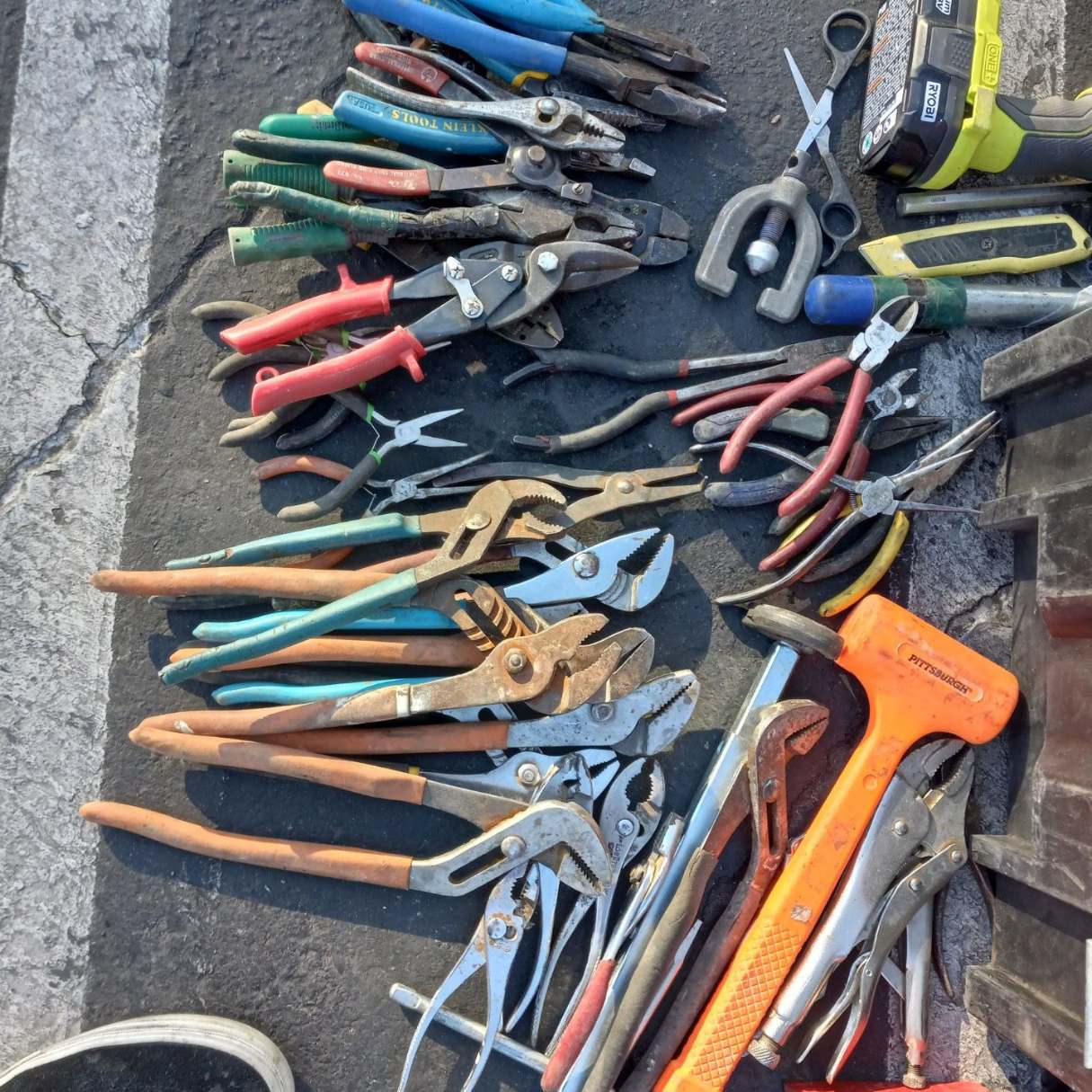
How to Price Second-Hand Tools
Start with recent sold prices for the same brand and model. Then adjust for condition, age, included parts, local demand, and the cost of shipping.
A simple pricing method is:
Fair asking price = recent used selling price − repair cost − missing-part cost
If you want room to negotiate, list slightly above your lowest acceptable price. Do not set the price far above recent sold prices unless the item is rare, unusually complete, or in exceptional condition.
Condition guide
Use honest condition terms:
- New old stock: Unused, often with original packaging
- Excellent: Clean, lightly used, and fully functional
- Good: Normal wear with no major performance issue
- Fair: Works but has visible wear, missing accessories, or cosmetic damage
- For parts or repair: Not fully tested, defective, incomplete, or sold for components
“Untested” does not mean “working.” If you cannot test an item, say that clearly. Buyers may price it as a repair project.
Example pricing calculation
This is a hypothetical example:
- Recent sold prices for the same drill: $90 to $110
- Missing charger: subtract about $20 to $35, depending on the model
- Worn battery: subtract the cost of a replacement battery
- Local pickup: add value because the buyer avoids shipping
A reasonable list price may be around $70 to $85 if the drill works and the battery is usable. The correct price depends on the exact model and current local demand.
Factors that change value
Brand: Professional brands often retain more value, but brand alone does not prove condition.
Age: Older tools can be valuable if parts, manuals, and accessories remain available.
Power source: Cordless tools may lose value when batteries are old, incompatible, or missing. A tool that uses a discontinued battery platform may be harder to sell.
Completeness: Cases, chargers, blades, guides, manuals, and original accessories can affect the price.
Safety and service: A tool with a damaged cord, cracked housing, missing guard, or faulty switch should not be sold as ready for use.

How to Prepare Tools Before Listing
Good preparation can raise buyer confidence and reduce disputes.
1. Clean the tool
Remove dust, sawdust, grease, and loose rust. Use a suitable cleaner and avoid forcing liquid into motors, switches, bearings, or battery contacts.
Do not repaint a tool or hide damage without telling the buyer. Cosmetic cover-ups can make buyers suspect a larger problem.
2. Test safe functions
Only test a tool if you can do so safely. Check:
- Power switch
- Cord or battery connection
- Trigger operation
- Speed control
- Guard movement
- Safety lock
- Charger indicator
- Included accessories
Do not test a dangerous tool without proper knowledge and protective equipment. Never bypass a safety switch or remove a guard just to prove that the motor runs.
3. Check recalls and defects
Search the manufacturer’s recall page and the U.S. Consumer Product Safety Commission’s recall database at CPSC.gov. If a product is recalled, follow the manufacturer’s remedy instructions before selling or giving it away.
Disclose known defects. A buyer should know about a damaged cord, overheating, unusual noise, missing guard, cracked housing, leaking battery, or intermittent switch.
4. Photograph the important details
Take photos of:
- The full tool
- Brand and model number
- Serial number, when appropriate
- Damage and wear
- Blades, bits, and accessories
- Battery and charger labels
- Case and packaging
- A safe proof-of-function photo, if suitable
Do not post sensitive personal information that appears on receipts, shipping labels, or account screens.
5. Write a complete listing
Include:
- Exact item name
- Brand and model
- Condition
- What works
- What does not work
- Included items
- Missing items
- Pickup or shipping terms
- Price
- Payment method
A clear listing reduces repetitive questions and helps buyers decide before they arrive.

How to Avoid Scams When Selling Tools
Most local tool sales are simple, but sellers should watch for fake payments, overpayment schemes, theft, and unsafe meetings.
Common warning signs
Be careful when a buyer:
- Offers more than your asking price
- Sends a check and asks for a refund
- Sends a payment screenshot instead of confirmed funds
- Asks you to buy gift cards
- Wants to move instantly to a strange payment link
- Uses a shipping “agent” you did not select
- Refuses to inspect the tool but wants immediate shipping
- Pressures you to hand over the item before payment clears
Never rely on a screenshot as proof of payment. Confirm the funds inside your bank, payment app, or marketplace account. Do not refund an overpayment until your financial institution confirms that the original payment cannot be reversed.
Safe local sales
For a local transaction:
- Keep messages in the marketplace until the plan is clear.
- Meet during daylight in a public place when practical.
- Bring another adult for expensive or heavy items.
- Tell someone where you are going.
- Do not let a stranger walk through your home or garage alone.
- Count cash in a safe place.
- For electronic payment, confirm receipt before releasing the tool.
- Record the buyer’s name and the sale details for high-value items.
For large equipment that must be collected from your property, move it to a visible area if possible. Do not operate machinery for a buyer unless you can do so safely.
Protect against stolen-property problems
Keep receipts, photos, serial numbers, and ownership records for expensive tools. Do not sell an item if you suspect it was stolen or if its serial number has been removed or altered.
Some pawn shops and dealers check serial numbers and local property records. A clean ownership record can make a professional buyer more comfortable and may protect you if questions arise later.
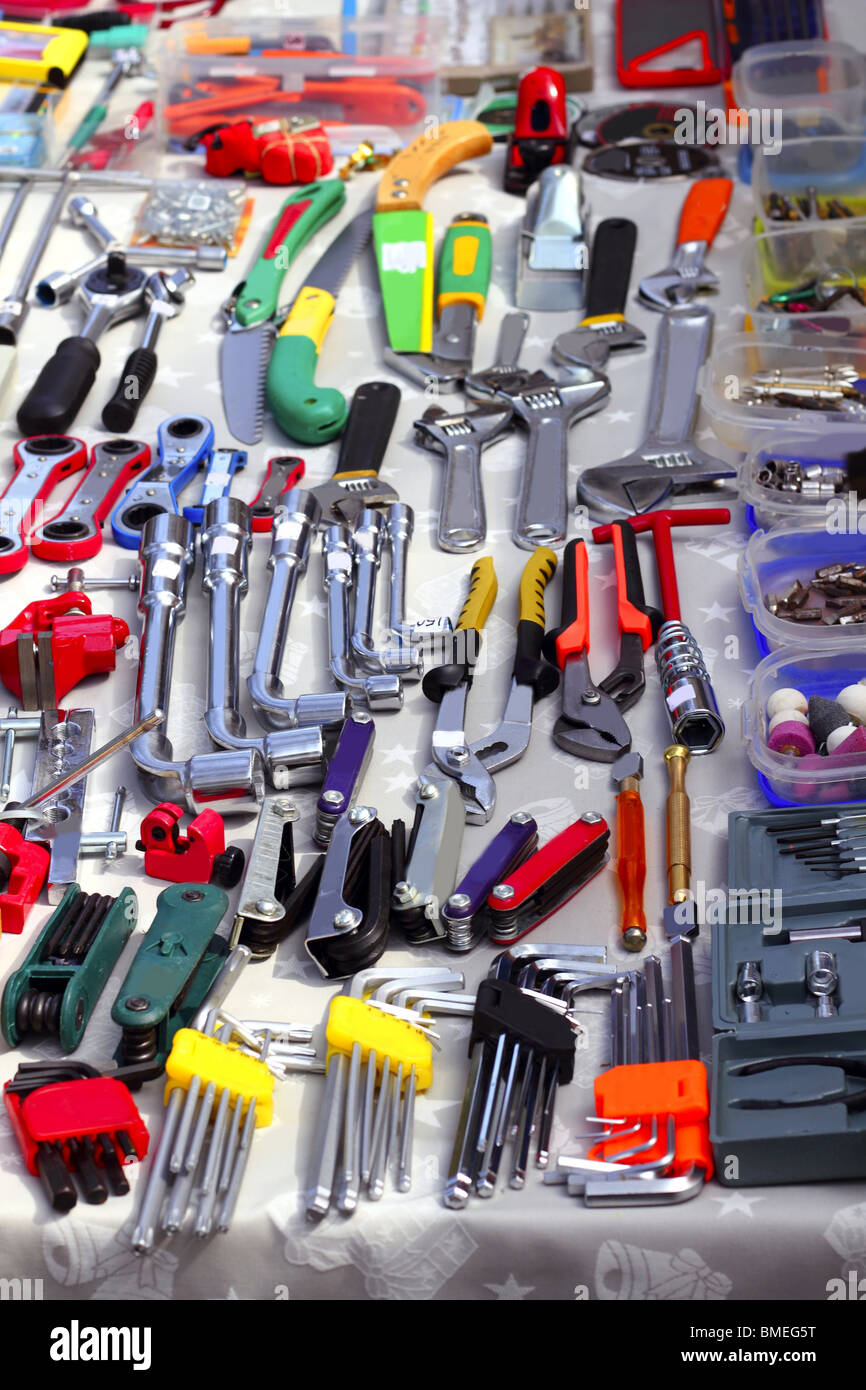
Shipping Used Tools Safely
Ship only when the tool can withstand handling and the shipping cost makes financial sense.
Remove batteries when the carrier and marketplace rules require it. Lithium-ion batteries have specific shipping restrictions, especially when they are damaged, loose, or packed with equipment. Check current guidance from the U.S. Department of Transportation Pipeline and Hazardous Materials Safety Administration and the carrier before shipping.
For ordinary hand tools:
- Wrap sharp edges with cardboard or thick padding.
- Use a strong box with little empty space.
- Protect metal parts from damaging one another.
- Keep small parts in a sealed bag.
- Weigh and measure the packed box before listing.
- Photograph the packed item before sealing the box.
- Use tracking and insurance when the value justifies it.
Do not ship a tool with a cracked battery, swollen battery, leaking fluid, exposed wire, or unknown hazardous material. Local pickup is often safer for damaged or unusually heavy equipment.
Taxes, Records, and Legal Considerations
Keep a basic record of what you sold, when you sold it, the amount received, platform fees, shipping costs, and your original purchase cost when known.
The tax result depends on whether you sold personal property at a loss, sold it for a gain, or regularly operate a business. The IRS explains that personal-use property losses generally are not deductible, while gains may be taxable. Selling tools as part of a business can create different reporting and recordkeeping duties.
Marketplace reporting rules, including Form 1099-K rules, can change. Receiving a form does not by itself determine the amount of taxable income, and not receiving one does not automatically make income non-taxable. Use the current information at IRS.gov or consult a tax professional for a large sale, repeated sales, estate inventory, or business activity.
State and local rules may also affect second-hand dealers, sales tax, and required records. A local attorney, accountant, or tax agency can provide advice for your situation.
Best Selling Method by Tool Type
| Tool type | Usually best place to start | Why |
|---|---|---|
| Cordless drill or impact driver | Facebook Marketplace, OfferUp, eBay | Easy to compare by model and battery platform |
| Table saw or band saw | Facebook Marketplace, Craigslist, local dealer | Heavy and expensive to ship |
| Vintage hand plane or specialty tool | eBay, collector group, specialty dealer | National buyers may understand its value |
| Common screwdrivers and pliers | Garage sale, tool lot, local marketplace | Low individual value |
| Professional mechanic tools | Tool dealer, mechanic group, eBay | Brand and completeness matter |
| Air compressor | Local marketplace, Craigslist, auction | Shipping is costly and difficult |
| Damaged power tool | Parts buyer, repair shop, recycling program | Honest defect disclosure is essential |
| Full workshop | Auction house, estate sale, dealer | One sale can clear many items |
| Newer premium tool set | Direct local sale, dealer, eBay | Complete kits attract serious buyers |
| Tool with recalled or unsafe parts | Manufacturer remedy or proper disposal | Do not sell it as safe to use |
This table is a starting point, not a guarantee of price. Local demand, season, condition, and the exact model can change the best choice.
Common Mistakes When Selling Used Tools
Listing without checking the model
Two tools may look alike but have different power, voltage, capacity, or battery compatibility. Find the exact model before pricing it.
Hiding faults
A missing guard or weak battery may seem minor to the seller, but it can affect safety and value. State the issue in the title or first lines of the description.
Ignoring fees and shipping
A $100 online sale may produce far less after fees, packing, shipping, and returns. Compare the expected net amount with a local offer.
Accepting the first buyer too quickly
For a rare or professional tool, take time to check sold listings. For common low-value items, a fast local sale may be the better trade-off.
Bundling unrelated tools
A mixed box of unrelated tools may sell quickly but often brings less than separate listings. Bundle items only when they serve the same task or appeal to the same buyer.
Meeting in an unsafe place
Do not trade convenience for personal safety. Use a public location, bring help, and avoid inviting unknown buyers into private areas.

Quick Decision Guide
Choose Facebook Marketplace or Craigslist if the tool is large, heavy, or easy to inspect locally.
Choose eBay if the tool is compact, specialized, collectible, or hard to find in your area.
Choose OfferUp or Mercari if the item is small and you want a simple mobile listing.
Choose a pawn shop if you need an immediate offer and accept a lower price.
Choose a dealer or consignment store if the tool is professional-grade and you value convenience.
Choose an auction or estate sale if you need to sell many tools at once.
Choose donation or recycling if the tool has little value, cannot be safely sold, or costs more to prepare than it is worth.
FAQs
What is the easiest place to sell used tools?
Facebook Marketplace is often the easiest option for local sellers because it supports direct listings, local pickup, and no shipping for many items. OfferUp and Craigslist can provide similar results. Use a dealer or pawn shop when speed matters more than price.
Can I sell used power tools without the original receipt?
Usually, yes. A receipt can help prove ownership and warranty status, but it is not always required for a private sale. Provide the model number, describe the condition accurately, and keep your own ownership records for expensive tools.
Should I sell tools individually or as a bundle?
Sell valuable, branded, or specialized tools individually. Bundle inexpensive tools, matching accessories, or items that complete one job. A mixed bundle may sell faster but usually brings a lower total price.
How can I sell tools that do not work?
List them as “for parts,” “repair,” or “not working.” Describe the known fault and identify missing parts. Do not describe an untested tool as working, and do not sell a dangerous tool without clearly disclosing the safety problem.
Is it safe to accept Zelle, Venmo, or cash?
Cash can work for an in-person sale if you meet safely and verify the amount. For digital payments, confirm the payment in your own account before releasing the tool. Do not trust emailed receipts, screenshots, or links supplied by a buyer.
Do I have to pay taxes when I sell used tools?
It depends on the circumstances. Selling personal tools for less than you paid is generally different from selling them for a profit or operating a tool-resale business. Keep records and check current IRS guidance or ask a tax professional when the sale is substantial or repeated.
Conclusion
The best place to sell second-hand tools in the USA depends on the balance you want between price, speed, effort, and safety. Start with a local marketplace for large tools and direct sales. Use eBay or another national platform for compact, rare, or specialized items. Choose a dealer, pawn shop, or auction when convenience matters more than getting the highest possible price.
Before listing, identify the exact model, test the tool only when safe, disclose every known issue, check for recalls, and calculate fees and shipping. A clear listing and a safe payment plan will usually do more to improve the sale than simply posting the tool in more places.
Recent Tool Guides
 Hammer
How To Hammer Flowers Onto Paper: Easy Guide
Learn how to hammer flowers onto paper with simple steps, helpful tips, and beautiful results for...
Read Guide → Wrench
How To Use A Hex Wrench: Easy Step-By-Step Guide
Learn how to use a hex wrench correctly with simple steps, helpful tips, and common mistakes...
Read Guide → Hacksaw
How To Cut Curtain Pole With Hacksaw: Easy Guide
Learn how to cut curtain pole with hacksaw safely and neatly. Follow simple steps for accurate...
Read Guide → Wrench
How To Use A Husky Torque Wrench: Easy Guide
Learn how to use a Husky torque wrench correctly with simple steps, torque settings, and safety...
Read Guide → Hammer
How To Hold A Hammer: Safe Grip Guide
Learn how to hold a hammer with the right grip, stance, and technique for safer, more...
Read Guide → Hacksaw
How To Cut Flexible Metal Conduit With Hacksaw: Easy Guide
Learn how to cut flexible metal conduit with hacksaw safely and cleanly. Follow simple steps for...
Read Guide →