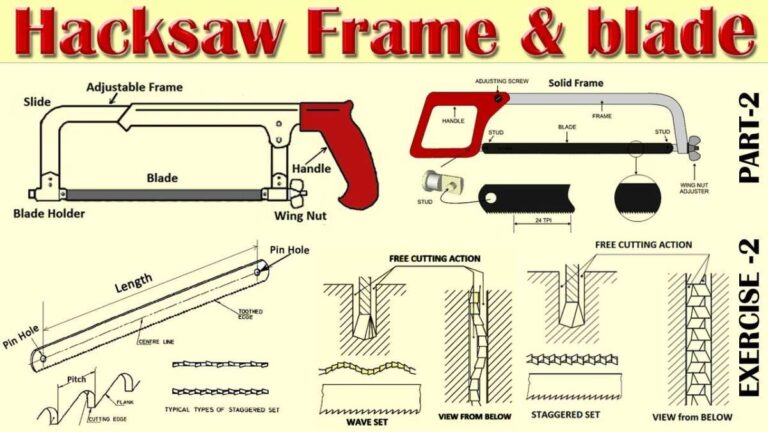
Which Hacksaw Blade To Use: Best Blade Guide
For most cutting jobs in the United States, use a bi-metal hacksaw blade with the right teeth per inch (TPI) for the material thickness. Choose 14–18 TPI for thick steel, 18–24 TPI for medium metal, and 24–32 TPI for thin sheet metal, conduit, and tubing. Use a fine-tooth blade for thin stock and a coarse-tooth blade for thick stock.
The best blade also depends on what you are cutting. A blade for steel pipe is not the same as one for aluminum, copper tubing, plastic pipe, or hardened stainless steel. Picking the wrong blade can cause slow cuts, broken teeth, rough edges, or a blade that binds in the work.
Quick answer: Match the blade to the material and thickness
The main rule is simple:
At least three teeth should contact the workpiece during each cut.
This prevents tooth damage and helps the blade cut smoothly. If the material is thin, use more teeth per inch. If it is thick, use fewer teeth per inch so the gullets—the spaces between teeth—can clear chips.
| Job or material | Recommended blade | Why |
|---|---|---|
| Thick steel bar or heavy wall pipe | 14–18 TPI | Larger teeth remove more material |
| General steel, angle iron, and mild-steel tubing | 18–24 TPI | Good balance of speed and control |
| Thin sheet metal and electrical conduit | 24–32 TPI | Reduces tooth snagging |
| Stainless steel | 24–32 TPI bi-metal | Helps resist tooth wear and heat |
| Aluminum | 14–24 TPI | Coarser teeth help clear soft chips |
| Copper or brass tubing | 24–32 TPI | Fine teeth reduce grabbing |
| PVC or ABS pipe | 14–24 TPI | A general-purpose blade usually works |
| Hardened steel or very abrasive material | Carbide-grit blade | Abrasion cuts better than standard teeth |
These ranges are starting points, not rigid rules. A thick piece of soft aluminum may need a different blade from a thin piece of hard stainless steel.
What does TPI mean on a hacksaw blade?
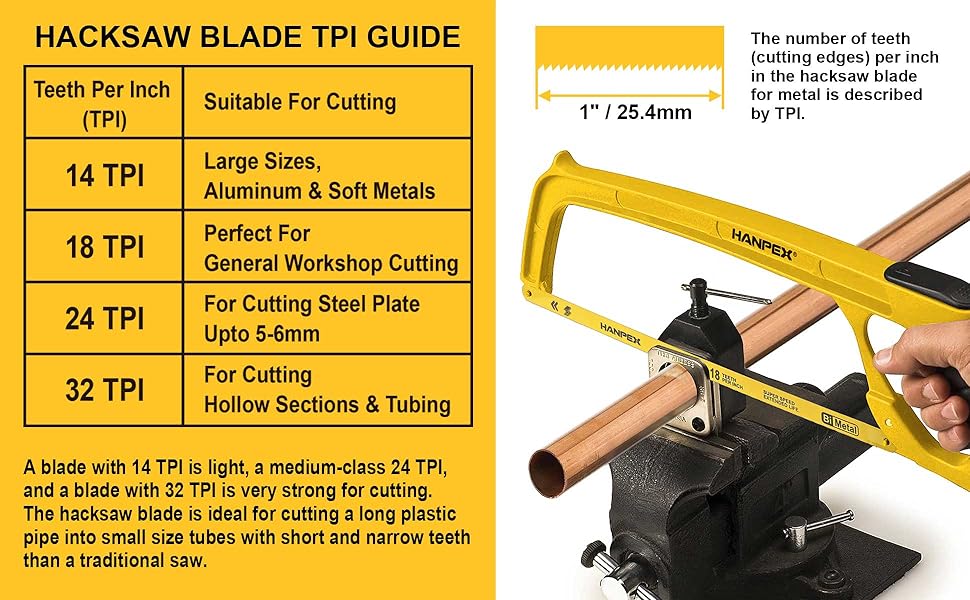
TPI means teeth per inch. It tells you how closely spaced the teeth are along the blade.
A 14-TPI blade has large, widely spaced teeth. It cuts quickly through thick stock but can catch on thin material. A 32-TPI blade has small, closely spaced teeth. It gives a cleaner, more controlled cut but removes material more slowly.
Coarse blades: 14–18 TPI
Use a coarse blade for:
- Thick steel bar
- Heavy-wall steel pipe
- Large angle iron
- Thick aluminum
- Structural metal that is firmly supported
Coarse blades work best when the workpiece is thick enough to keep several teeth engaged. On thin sheet metal, the large teeth may hook the edge and strip or break.
Medium blades: 18–24 TPI
Use a medium blade for common repair work, such as:
- Mild-steel tubing
- Small steel brackets
- Threaded rod
- Thin-wall pipe
- General workshop cuts
A 24-TPI blade is often a useful all-purpose choice for homeowners because it handles many small metal jobs without being too aggressive.
Fine blades: 24–32 TPI
Use a fine blade for:
- Sheet metal
- Thin-wall tubing
- EMT electrical conduit
- Small copper or brass pipe
- Stainless steel with a thin wall
Fine teeth help prevent the blade from grabbing. They also leave a smoother cut, although you may need more strokes.
How to estimate the right TPI
Measure the wall thickness or solid thickness where the blade will cut. Then choose a blade that keeps about three or more teeth in contact.
For example:
- A 1/8-inch sheet is thin, so a 24- or 32-TPI blade is suitable.
- A 1/2-inch solid steel bar can use an 18-TPI blade.
- A 2-inch steel bar may cut faster with a 14-TPI blade.
The measurement is not the outside diameter of a tube. For tubing, use the wall thickness, because that is the material each tooth crosses.

Which hacksaw blade material is best?
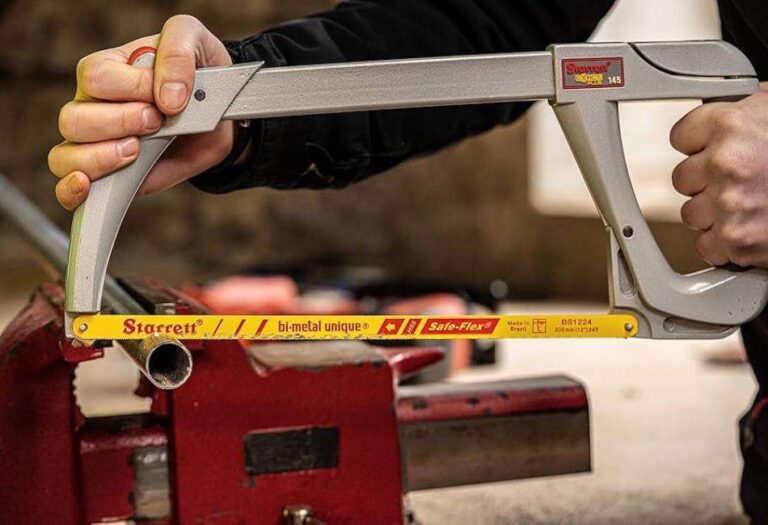
For most users, a bi-metal blade is the best general choice. It combines a flexible alloy-steel body with harder high-speed-steel teeth. This design helps the blade bend without breaking while the teeth resist wear.
Bi-metal blades
Choose a bi-metal blade for:
- Steel pipe
- Stainless steel
- Threaded rod
- Automotive repairs
- Plumbing work
- General maintenance
- Repeated cutting
Bi-metal blades usually cost more than basic carbon-steel blades, but they often last longer and tolerate more bending. They are a practical choice when you want one blade type for many U.S. home, garage, and jobsite tasks.
Carbon-steel blades
Carbon-steel blades are suited to lighter, occasional work. They may be useful for:
- Soft metal
- Plastic pipe
- Small aluminum pieces
- Low-cost general repairs
They are less resistant to heat and tooth wear than bi-metal blades. Avoid forcing a carbon-steel blade through hard stainless steel or thick steel.
High-speed-steel blades
Some blades use high-speed steel at the tooth edge or across the full blade. They hold an edge well but may be less forgiving if the blade bends. In practice, many high-quality bi-metal blades place high-speed steel teeth on a flexible backing.
Carbide-grit blades
Carbide-grit blades do not rely on normal pointed teeth. Instead, abrasive carbide particles grind through hard or abrasive materials.
They can work for:
- Hardened steel
- Cast iron
- Ceramic-coated material
- Fiberglass
- Some hard plastics
- Materials that quickly dull normal teeth
They are not usually the first choice for ordinary mild steel. A standard bi-metal blade is often faster and smoother for common metal.

Which hacksaw blade should you use for each material?
The material changes the best blade choice because hardness, thickness, and chip shape all affect cutting.
Steel and mild steel
Use a bi-metal blade with 18–24 TPI for most mild-steel work. Move to 14–18 TPI for thick bar or heavy-wall pipe.
Support the steel close to the cut. Unsupported steel can vibrate, which makes the teeth chatter and dull faster.
Stainless steel
Use a sharp bi-metal blade with 24–32 TPI for thin or medium stainless steel. Stainless steel can work-harden when rubbed without being cut. Excess pressure, a dull blade, or very slow strokes may create heat and make the cut harder.
Use steady strokes and enough pressure to keep the teeth cutting. Do not repeatedly slide the blade over the surface with little force.
Aluminum
Use a 14–24 TPI blade, depending on thickness. Aluminum is soft, but it can clog fine teeth. A coarse or medium blade gives chips more room to leave the cut.
For thin aluminum sheet, use a finer blade and keep the work well supported.
Copper and brass
Use a 24–32 TPI blade for copper tubing, brass tubing, and small fittings. These metals are soft and can catch coarse teeth.
Keep the blade straight. A twisted cut can distort tubing and make later fitting difficult.
Electrical conduit
For thin-wall steel EMT conduit, a 24-TPI blade is a practical starting point. A 32-TPI blade can give a cleaner edge on very thin conduit.
After cutting, remove the burrs with a file or deburring tool. Sharp edges inside conduit can damage wire insulation.
Plastic pipe
A 14–24 TPI blade can cut PVC and ABS pipe. Use a fine blade for thin-wall plastic and a medium blade for larger pipe.
Do not use a damaged blade. A bent blade can make a slanted cut, which may affect a solvent-welded plumbing joint.
Cast iron and hardened material
Ordinary hacksaw teeth may wear quickly on cast iron or hardened steel. Try a carbide-grit blade or a blade specifically marked for hard materials.
If the material is part of a load-bearing, pressure, brake, gas, or structural system, stop and confirm the correct repair method before cutting.

How to choose blade length and width
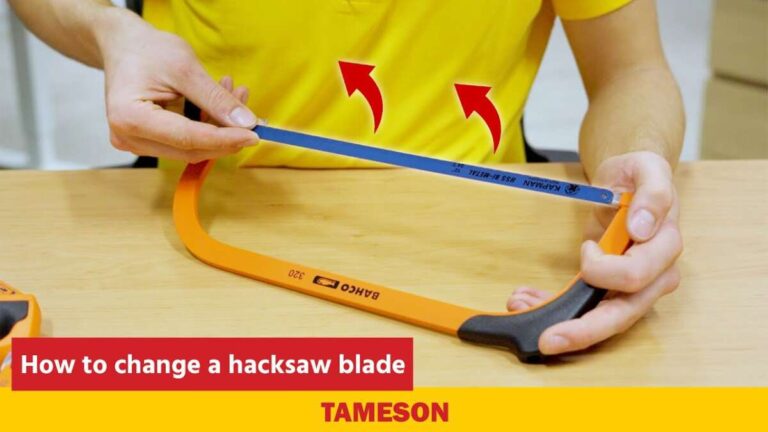
A standard hand hacksaw in the United States often uses a 12-inch blade, but the correct replacement must match the saw frame. Some compact hacksaws use shorter blades.
Check these details:
- Overall blade length
- Mounting hole size and shape
- Frame compatibility
- Blade width
- Blade thickness
- Tension range of the saw
A blade that is too long may not tension correctly. A blade that is too short may not fit the frame or may leave too little room for a safe stroke.
Full-size versus compact hacksaws
A full-size hacksaw gives you a longer cutting stroke and is useful for pipe, rod, and larger repairs. A compact hacksaw is easier to use in tight spaces but may cut more slowly.
Use the longest blade that fits the frame and the work area. Longer strokes usually make better use of the blade’s teeth and reduce wear in one small section.
Blade width and backing strength
Wider blades resist twisting better. Narrow blades can reach tight spaces but may flex more easily.
For straight cuts in thick metal, choose a blade with enough width and stiffness for the saw frame. For confined spaces, accept that a narrower blade may require slower, more careful work.

How to install and use a hacksaw blade correctly
A correct blade can still perform poorly if it is installed or used the wrong way.
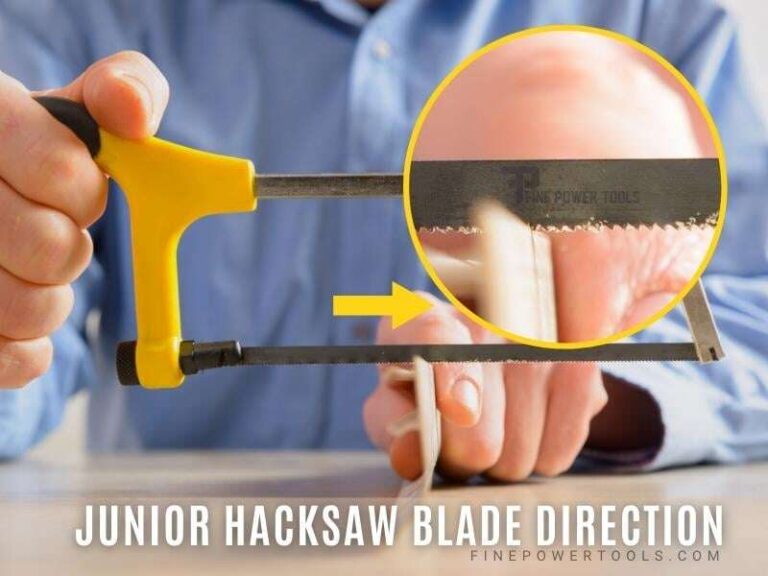
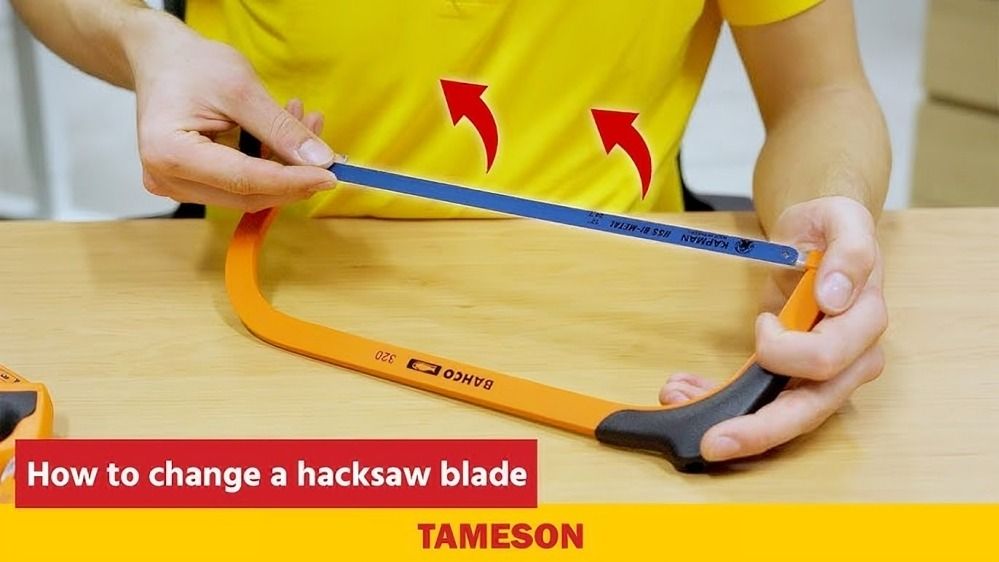
- Check the blade direction. Most hacksaw blades are designed to cut on the forward stroke. The teeth should point away from the handle. Follow the markings on the blade or saw frame.
- Secure the workpiece. Clamp it in a vise close to the cut. Do not hold small metal pieces in your hand while sawing.
- Mark the cut line. Use a scribe, marker, or wraparound tape for pipe.
- Set the blade straight. Keep it square to the material unless you need a planned angle.
- Tension the blade. Tighten it until it is firm and straight. Do not overtighten a frame that is not designed for high tension.
- Start with short strokes. Make a shallow groove on the cut line. This keeps the blade from wandering.
- Use steady pressure. Let the teeth cut. Excess force can bend the blade or strip teeth.
- Use the full stroke. Where space allows, move across as much of the blade as possible.
- Slow down near the end. Thin pieces may break suddenly and leave a rough edge.
- Deburr the cut. Use a file, deburring tool, or suitable abrasive.
Signs that the blade is working properly
A good cut should show:
- A steady groove
- Consistent tooth engagement
- Moderate cutting resistance
- No strong vibration
- No heavy smoke or burning smell
- A reasonably straight kerf
A little heat is normal during metal cutting. Excessive heat, blue discoloration, or a sharp burning smell suggests too much force, a dull blade, poor support, or the wrong TPI.
Why a hacksaw blade breaks, binds, or cuts slowly
Most problems come from a mismatch between the blade and the job or from poor support.
| Symptom | Likely cause | What to try |
|---|---|---|
| Teeth strip at the start | TPI is too coarse or the blade jumps | Start with short strokes and use more TPI |
| Blade binds in the cut | Kerf closes or blade is twisted | Support the work and keep the frame square |
| Cutting takes too long | TPI is too fine or blade is dull | Use a coarser blade for thick stock |
| Blade bends | Too much side pressure | Reduce force and align the frame |
| Blade snaps | Excess tension, twisting, or worn blade | Replace it and check frame tension |
| Teeth clog with metal | Material is soft or blade is too fine | Use a coarser blade |
| Stainless steel becomes harder | Too little cutting pressure or too much rubbing | Use a sharp blade and steady strokes |
| Cut is rough | Blade is worn or the work moves | Clamp the material and replace the blade |
Do not continue using a blade with missing teeth, cracks, severe rust, or a bent body. A damaged blade can fail without warning.
Do you need cutting oil?
Cutting oil can reduce heat and friction when cutting some metals, especially steel and stainless steel. It is not required for every hand-saw cut.
Use a small amount of suitable cutting fluid when:
- The material is thick
- The cut is long
- Heat builds quickly
- You are cutting stainless steel
- The blade begins to drag
Avoid oil when it creates a handling or contamination problem. Do not apply fluid near energized electrical equipment, and clean the work area after cutting.
For aluminum, a product made for aluminum cutting may help prevent chips from sticking. Follow the fluid manufacturer’s instructions and keep oil away from eyes and skin.
Hacksaw blade safety in a U.S. workshop
Wear safety glasses when cutting. Metal chips can be sharp and may travel farther than expected.
Use a stable vise or clamp. Keep your free hand away from the blade path, and do not use your body as a support for the workpiece. Remove loose clothing, jewelry, and anything that could catch on the frame.
If you cut painted, coated, galvanized, or unknown material, consider the dust and fumes. Use ventilation and suitable respiratory protection when the coating or material calls for it. Do not cut containers, pipes, or lines that may hold fuel, refrigerant, gas, pressure, or hazardous chemicals unless the system has been made safe by a qualified person.
For a pipe that carries gas, drinking water, refrigerant, or compressed air, the blade choice is only one part of the job. The repair must also meet the applicable local code and manufacturer requirements.
A simple blade-selection checklist
Before buying or installing a hacksaw blade, answer these questions:
- What are you cutting? Steel, stainless steel, aluminum, copper, plastic, cast iron, or another material?
- How thick is the material at the cut? Measure wall thickness, not only outside diameter.
- Can at least three teeth contact the material? If not, choose a finer blade.
- Is the material hard or abrasive? Use bi-metal or carbide grit when needed.
- How much room do you have? Select a blade length that fits the frame and workspace.
- Will the work move? Clamp it before cutting.
- Will heat matter? Use steady strokes and suitable cutting fluid when appropriate.
- Does the cut need a clean edge? Choose finer teeth and deburr afterward.
Best all-purpose choice
For many household repairs, choose a 12-inch, 24-TPI bi-metal hacksaw blade. It is a useful middle ground for small steel parts, conduit, tubing, threaded rod, and many general maintenance tasks.
Change to 14–18 TPI for thick stock. Change to 32 TPI for very thin metal or small tubing.
Frequently asked questions
Is a 24-TPI hacksaw blade better than a 32-TPI blade?
Neither is always better. A 24-TPI blade cuts faster and suits medium-thickness metal. A 32-TPI blade gives better control on thin material but cuts more slowly. Choose based on thickness and the number of teeth contacting the work.
Should hacksaw teeth point forward or backward?
On most hand hacksaws, the teeth point away from the handle because the blade cuts on the forward push stroke. Check the markings on your specific blade and frame before use.
Can one hacksaw blade cut metal and PVC?
Yes. A general-purpose blade can cut both, but the best TPI may differ. Use a medium blade for many PVC cuts and a finer blade for thin metal. Clean the blade before switching materials if contamination matters.
Can a hacksaw cut stainless steel?
Yes, with a sharp bi-metal blade. Use the correct TPI, firm support, and steady pressure. Avoid rubbing the blade without cutting because stainless steel can harden at the surface.
How long does a hacksaw blade last?
There is no fixed service life. Blade life depends on material hardness, thickness, pressure, alignment, heat, and cutting length. Replace the blade when it cuts slowly, wanders, binds, loses teeth, or requires excessive force.
Is a hacksaw the right tool for every metal cut?
No. A hacksaw works well for small, controlled cuts. For long cuts, thick stock, or repeated work, a reciprocating saw, band saw, cut-off saw, or other power tool may be more suitable. Use the tool only when its blade, guard, speed, and safety method match the material.
Key takeaways
- Choose 14–18 TPI for thick metal.
- Choose 18–24 TPI for general steel and tubing.
- Choose 24–32 TPI for thin sheet, conduit, copper, and small tubing.
- Use a bi-metal blade for the broadest range of metal work.
- Match the blade to the material’s thickness and hardness.
- Keep at least three teeth engaged in the work.
- Clamp the material, use steady strokes, and wear eye protection.
- Replace blades that are bent, cracked, badly worn, or missing teeth.
Conclusion
The right hacksaw blade is the one that matches the material thickness, not simply the material name. Start with a 24-TPI bi-metal blade for general U.S. home and workshop repairs. Move to a coarser 14- or 18-TPI blade for thick stock, or a finer 32-TPI blade for thin metal and small tubing.
When in doubt, support the work, use a sharp blade, keep several teeth in contact, and let the teeth do the cutting.
Recent Tool Guides
 Hammer
How To Hammer Flowers Onto Paper: Easy Guide
Learn how to hammer flowers onto paper with simple steps, helpful tips, and beautiful results for...
Read Guide → Wrench
How To Use A Hex Wrench: Easy Step-By-Step Guide
Learn how to use a hex wrench correctly with simple steps, helpful tips, and common mistakes...
Read Guide → Hacksaw
How To Cut Curtain Pole With Hacksaw: Easy Guide
Learn how to cut curtain pole with hacksaw safely and neatly. Follow simple steps for accurate...
Read Guide → Wrench
How To Use A Husky Torque Wrench: Easy Guide
Learn how to use a Husky torque wrench correctly with simple steps, torque settings, and safety...
Read Guide → Hammer
How To Hold A Hammer: Safe Grip Guide
Learn how to hold a hammer with the right grip, stance, and technique for safer, more...
Read Guide → Hacksaw
How To Cut Flexible Metal Conduit With Hacksaw: Easy Guide
Learn how to cut flexible metal conduit with hacksaw safely and cleanly. Follow simple steps for...
Read Guide →