Will A Hacksaw Cut Through A Screw: Safe Cutting Guide
Yes. A hacksaw can cut through most common screws, including steel wood screws, machine screws, bolts, and threaded rod. The cut works best when you use a sharp blade with the right tooth count, hold the screw firmly, and let the saw do the work.
A hacksaw may struggle with hardened screws, stainless steel, large bolts, or screws in a hard-to-reach spot. In those cases, a reciprocating saw, rotary tool, bolt cutter, or angle grinder may work better.
For homeowners in the United States, the main safety concern is not the screw itself. It is what may be behind it. Before cutting a screw in a wall, cabinet, appliance, vehicle, or other assembly, check for wires, pipes, fuel lines, and moving parts.

What a Hacksaw Can Cut
A hacksaw can cut through many types of metal fasteners because its teeth remove small bits of metal with each stroke. The blade does not need to cut the whole screw at once. It slowly creates a narrow groove until the screw separates.
A standard hacksaw can usually cut:
- Mild-steel screws
- Wood screws
- Drywall screws
- Machine screws
- Small bolts
- Nuts
- Threaded rod
- Aluminum screws and bolts
- Copper and brass fasteners
The result depends on the metal, screw size, blade quality, and access. A small screw may take less than a minute. A large bolt can take much longer.
Screws that may be hard to cut
Some screws are made from hard steel or have a tough surface coating. These include:
- Hardened masonry screws
- High-strength construction screws
- Hardened self-drilling screws
- Some stainless steel screws
- Large structural screws
- Security screws with hard alloy bodies
A hacksaw can still cut some of these, but the teeth may dull quickly. If the blade skates across the screw without making a groove, stop and change tools or use a better blade.

Which Hacksaw Blade Should You Use?
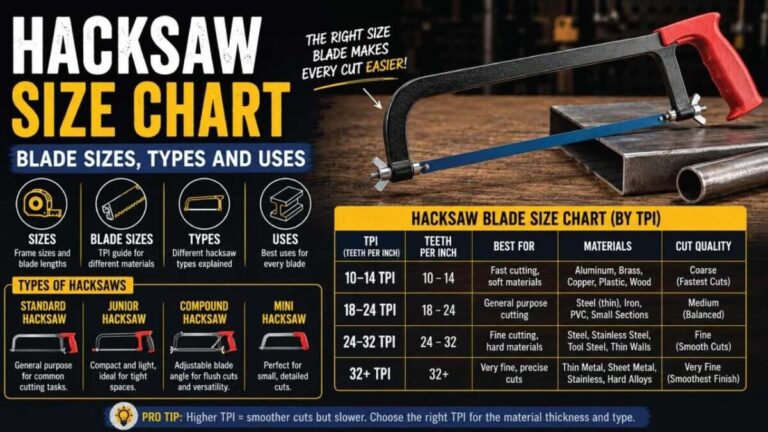
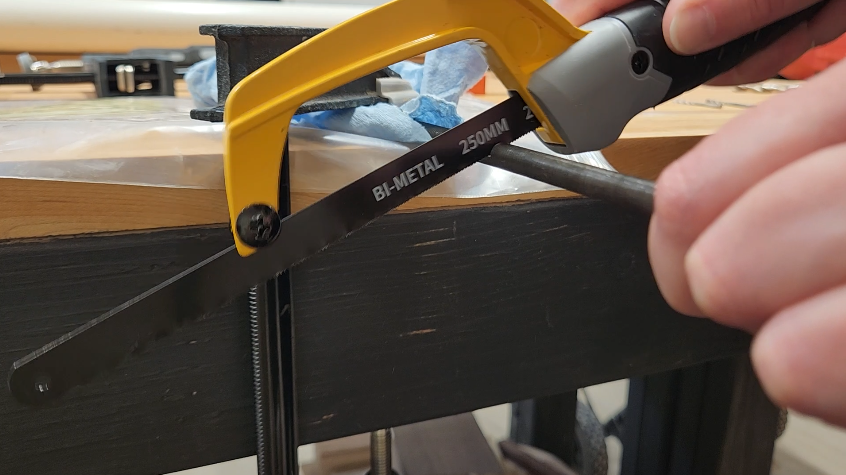
Use a sharp, bi-metal hacksaw blade for most steel screws. Bi-metal blades combine a flexible body with harder cutting teeth, so they tend to last longer than basic carbon-steel blades.
Choose the tooth count based on the screw’s thickness:
| Screw or bolt size | Useful blade range | Why |
|---|---|---|
| Small screw or thin rod | 24–32 teeth per inch (TPI) | Gives a fine cut |
| Medium screw or bolt | 18–24 TPI | Good general choice |
| Large bolt or thick rod | 14–18 TPI | Removes metal faster |
| Very thin sheet or small wire | 24–32 TPI | Reduces tooth snagging |
As a simple rule, keep at least three teeth in contact with the metal during the cut. If the workpiece is thin, use more teeth per inch. If it is thick, use fewer teeth per inch.
A blade with too few teeth can catch and chatter. A blade with too many teeth can clog with metal chips and cut slowly.
Blade direction matters
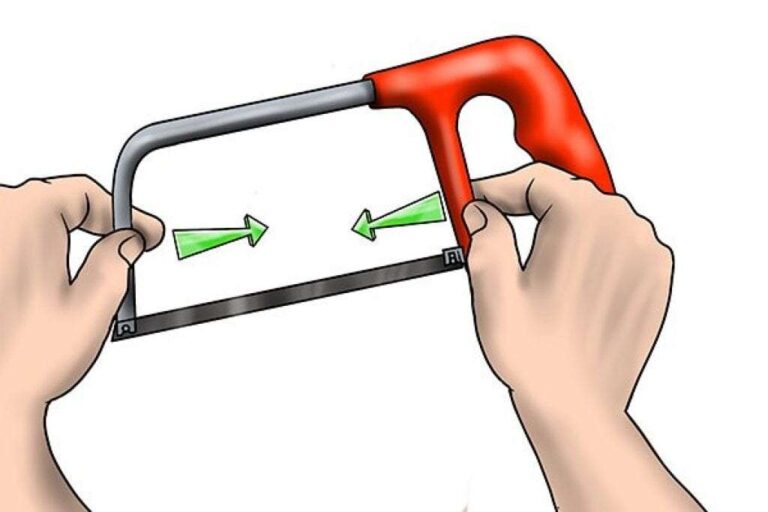
Most hacksaw blades cut on the forward stroke. Install the blade so the teeth point away from the handle. Check the markings on the blade or the instructions for your saw, since some specialty saws may differ.
Use steady pressure on the forward stroke. Lift pressure slightly on the return stroke. Do not force the blade. Heavy pressure can bend the blade, break teeth, or make the saw jump.

How to Cut Through a Screw With a Hacksaw
Follow these steps when the screw is exposed and safe to cut.
1. Check the area first
Make sure the screw is not near:
- Electrical wires
- Water pipes
- Gas or fuel lines
- Hydraulic lines
- Batteries
- Moving machine parts
- Flammable material
If the screw is part of a vehicle, appliance, or machine, disconnect the power source first. For electrical equipment, unplug it or shut off the correct circuit. Do not rely only on a wall switch.
If you cannot confirm what is behind the screw, do not cut it with a powered tool. Consider removing the screw by turning it out instead.
2. Put on basic safety gear
Wear safety glasses with side protection. Metal filings can travel farther than expected.
Wear work gloves when they help you grip the material, but keep gloves away from moving power tools. Avoid loose sleeves, jewelry, and long hair near any powered cutter.
Use hearing protection if the work creates loud noise. A dust mask may help with debris, but it does not replace proper ventilation or control of hazardous coatings.
3. Secure the screw or workpiece
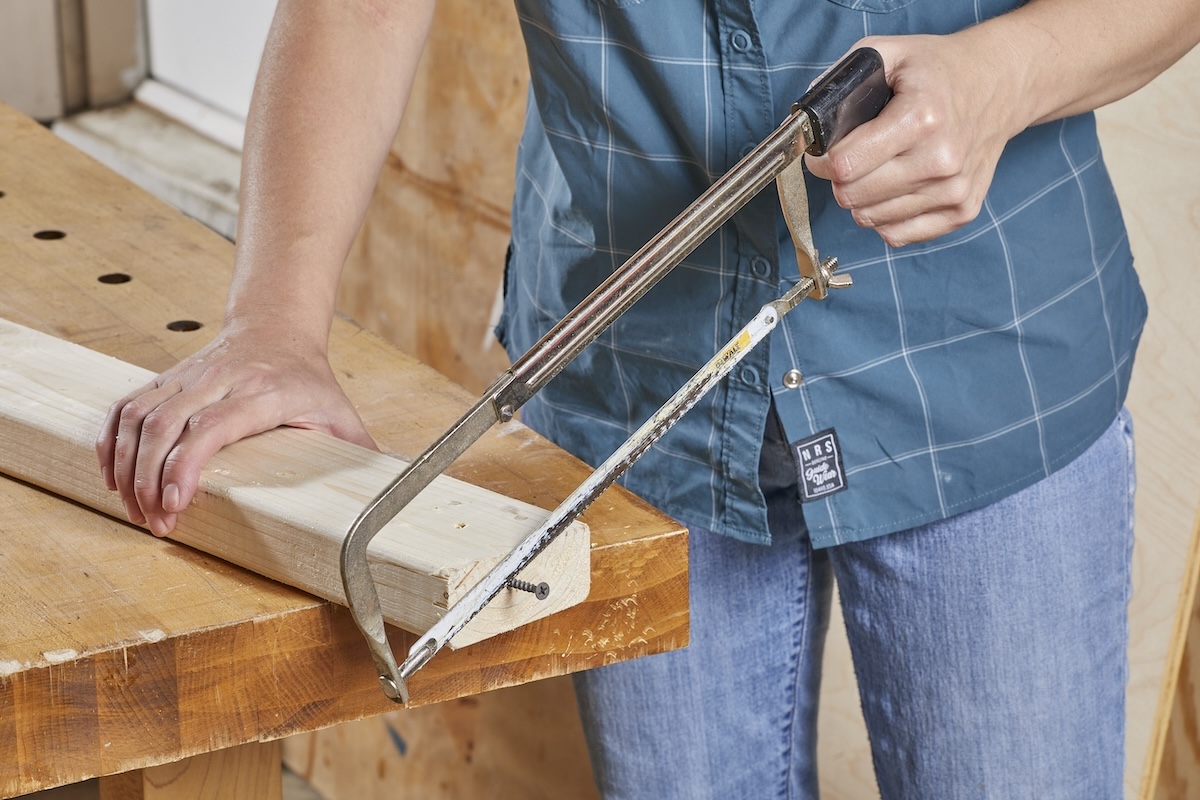
Clamp the screw, bolt, bracket, or connected part in a vise when possible. A secure workpiece makes the cut faster and helps prevent injury.
If the screw is already installed, support the part so it does not move as the screw breaks. Ask another person to hold a large, stable object only when their hands will remain far from the blade.
Do not hold a small screw in your hand while sawing it. Clamp it or place it in a vise.
4. Mark the cut
Use a marker, scribe, or piece of masking tape to mark the cut line. If you need a clean break, mark the line on all visible sides.
For a screw that sticks out of a surface, place the cut as close to the surface as practical. Leave enough room for the hacksaw frame and your hand.
5. Make a shallow starter groove
Place the blade on the mark. Make several short, light strokes to create a groove.
This groove keeps the blade from sliding across the screw. Once the groove is clear, use longer strokes that use most of the blade length.
6. Keep the blade straight
Hold the hacksaw so the blade stays square to the screw. A crooked blade creates a slanted cut and can bind in the groove.
Use smooth strokes. The blade should make a steady rasping sound. If it chatters, check that the workpiece is tight and that the blade is properly tensioned.
7. Support the final section
The screw may bend or break suddenly when only a small section remains. Slow down near the end and support the loose piece.
Do not twist the hacksaw sideways to finish the cut. Side force can snap the blade.
8. Remove the sharp edge
After the cut, inspect the end. A cut screw often leaves a sharp burr.
Smooth it with a metal file, deburring tool, or fine abrasive paper. If the screw will remain in a hole, protect the exposed end with a cap, nut, file, or suitable sealant.
Cutting a Screw While It Is Installed
A hacksaw can cut an installed screw, but access is the main challenge. The screw must be exposed enough for the blade to pass through it without striking the surrounding surface.
For a screw that sticks out of metal or wood, place a thin piece of scrap metal, cardboard, or a purpose-made blade guard between the screw and the surface. This can help reduce scratches, but it is not a complete safety barrier.
A small hacksaw or compact hacksaw frame may fit better than a full-size frame. You can also use a hacksaw blade by itself in tight spaces, but wrap or cover the unused end. A bare blade can cut your hand.
If the screw is flush with a surface, a standard hacksaw may not work well. The frame can block the blade before it reaches the fastener. In that case, consider:
- A flush-cutting tool
- An oscillating multi-tool with a metal blade
- A rotary tool with a reinforced cutoff wheel
- A reciprocating saw with a metal-cutting blade
- An angle grinder with a suitable cutoff wheel
Powered tools cut faster, but they create more sparks, noise, heat, and flying debris. Use them only when the work area is clear and the tool is suitable for the material.
Hacksaw vs. Other Ways to Cut a Screw
The best tool depends on the screw’s size, hardness, location, and the finish you need.
| Tool | Best use | Main advantage | Main limitation |
|---|---|---|---|
| Hacksaw | Small or medium exposed screws | Low cost and good control | Slow on large or hard screws |
| Oscillating tool | Flush cuts in tight spaces | Reaches close to a surface | Can heat the metal and nearby material |
| Reciprocating saw | Large bolts and rough cuts | Fast removal | Less control and more vibration |
| Rotary tool | Small screws and precise cuts | Fits tight areas | Limited cutting depth |
| Angle grinder | Large, hard fasteners | Very fast | Sparks, heat, and high injury risk |
| Bolt cutter | Soft, exposed bolts | Fast on suitable steel | May not cut hardened screws |
| Drill and extractor | Screws that must be removed intact | Can remove the fastener | Requires careful alignment |
A bolt cutter is not automatically better. Many modern construction screws are too hard for ordinary bolt cutters. Trying to force the handles can damage the tool or cause the jaws to slip.
An angle grinder often cuts hardened steel more easily than a hacksaw. However, it creates sparks and can damage nearby surfaces. Never use it near fuel, vapors, flammable dust, or material that may catch fire.

Common Problems and Fixes
The blade will not bite
Likely causes:
- The blade is installed backward.
- The blade is dull.
- The screw is hardened.
- You are using too much pressure.
- The workpiece is moving.
Fix: Check the tooth direction, replace the blade, secure the workpiece, and begin with light strokes. If the blade still slides across the surface, use a tool made for hardened metal.
The blade keeps breaking
Likely causes:
- The blade is loose.
- The saw is twisting during the cut.
- You are pushing too hard.
- The blade is bent or damaged.
- The workpiece moves during the cut.
Fix: Tighten the blade, keep the saw square, and use long, smooth strokes. Replace a bent blade instead of trying to straighten it.
The cut takes too long
Likely causes:
- The screw is large.
- The blade has too many teeth.
- The blade is worn.
- The metal is hard.
- The cutting angle is poor.
Fix: Use a fresh bi-metal blade with a suitable TPI. For a large or hardened fastener, switch to a powered metal-cutting tool if the area is safe.
The cut is rough or slanted
Keep the saw square to the fastener. Start with a shallow groove and do not push the blade sideways. A file can smooth the cut after separation.
The screw gets hot
Metal friction creates heat. Stop and let the screw cool if it becomes too hot to touch or begins to discolor.
For a long cut in thick metal, a small amount of cutting oil may reduce friction. Do not use oil near ignition sources or where it can contaminate electrical parts. Follow the tool and lubricant instructions.

Safety Limits You Should Not Ignore
Do not cut a screw when you cannot verify what lies behind it. A screw may pass through a wall, panel, roof, appliance, or vehicle part and enter a hidden cable, pipe, or line.
Stop immediately if you see:
- Sparks near flammable material
- Smoke
- A burning smell
- A damaged or frayed blade
- Unexpected movement
- Liquid leaking from the work area
- A wire, pipe, or line near the cut
- Paint or coating that may produce harmful fumes
Old paint, coatings, and treated materials may release harmful dust or fumes when cut. Do not cut unknown coatings without checking the material and using suitable controls.
For a screw in a load-bearing structure, gas system, pressure vessel, electrical panel, vehicle safety system, or major plumbing part, get qualified help. Cutting the fastener may affect the strength or safety of the assembly.

Frequently Asked Questions
Can a hacksaw cut through a stainless steel screw?
Yes, but stainless steel can be tougher to cut than mild steel. Use a sharp bi-metal blade, clamp the work securely, and apply steady pressure. If the blade becomes dull quickly, use a powered tool with a metal-cutting blade.
Can a hacksaw cut a screw flush with wood?
Usually, yes, if the saw can reach the screw. A flush-cut or flexible blade can reduce damage to the wood. Place a thin guard between the blade and the wood, and file any remaining sharp edge.
Can I use a hacksaw to cut a stripped screw?
Yes. If the screw head is exposed, cut a slot across it and use a flat-head screwdriver. If you only need to remove the head, cut through the screw below the head. Protect the surrounding surface from scratches and metal filings.
Will a hacksaw cut a hardened screw?
It may, but many hardened screws will dull a standard blade. Try a high-quality bi-metal blade first. If it will not form a groove, use a cutoff wheel or another tool rated for hardened metal.
Should I use oil when cutting a screw?
A small amount of cutting oil can help during a long cut in thick metal. It is not always needed for a small screw. Keep oil away from sparks, electrical parts, flames, and materials that must remain clean.
Final Answer
A hacksaw will cut through most ordinary screws if you use the right blade and secure the work. Choose a sharp 18–32 TPI bi-metal blade, start with a shallow groove, keep the saw straight, and smooth the cut edge afterward.
For hardened screws, flush cuts, large bolts, or hidden fasteners, a different tool may be safer and faster. Before cutting any installed screw, confirm that no wire, pipe, fuel line, or moving part is behind it.
Recent Tool Guides
 Hammer
How To Hammer Flowers Onto Paper: Easy Guide
Learn how to hammer flowers onto paper with simple steps, helpful tips, and beautiful results for...
Read Guide → Wrench
How To Use A Hex Wrench: Easy Step-By-Step Guide
Learn how to use a hex wrench correctly with simple steps, helpful tips, and common mistakes...
Read Guide → Hacksaw
How To Cut Curtain Pole With Hacksaw: Easy Guide
Learn how to cut curtain pole with hacksaw safely and neatly. Follow simple steps for accurate...
Read Guide → Wrench
How To Use A Husky Torque Wrench: Easy Guide
Learn how to use a Husky torque wrench correctly with simple steps, torque settings, and safety...
Read Guide → Hammer
How To Hold A Hammer: Safe Grip Guide
Learn how to hold a hammer with the right grip, stance, and technique for safer, more...
Read Guide → Hacksaw
How To Cut Flexible Metal Conduit With Hacksaw: Easy Guide
Learn how to cut flexible metal conduit with hacksaw safely and cleanly. Follow simple steps for...
Read Guide →