Where To Buy Used Hand Tools: Best Places To Shop
The best places to buy used hand tools in the United States are local estate sales, pawn shops, Habitat for Humanity ReStores, garage sales, flea markets, tool dealers, online marketplaces, and auction sites. Each source has a different balance of price, selection, convenience, and buyer risk.
For the lowest prices, start with estate sales, garage sales, and local marketplace listings. For better selection, check pawn shops, used-tool dealers, and eBay. For safer in-person buying, inspect the tool before paying and avoid any item with cracks, unsafe wear, or signs of a serious repair.
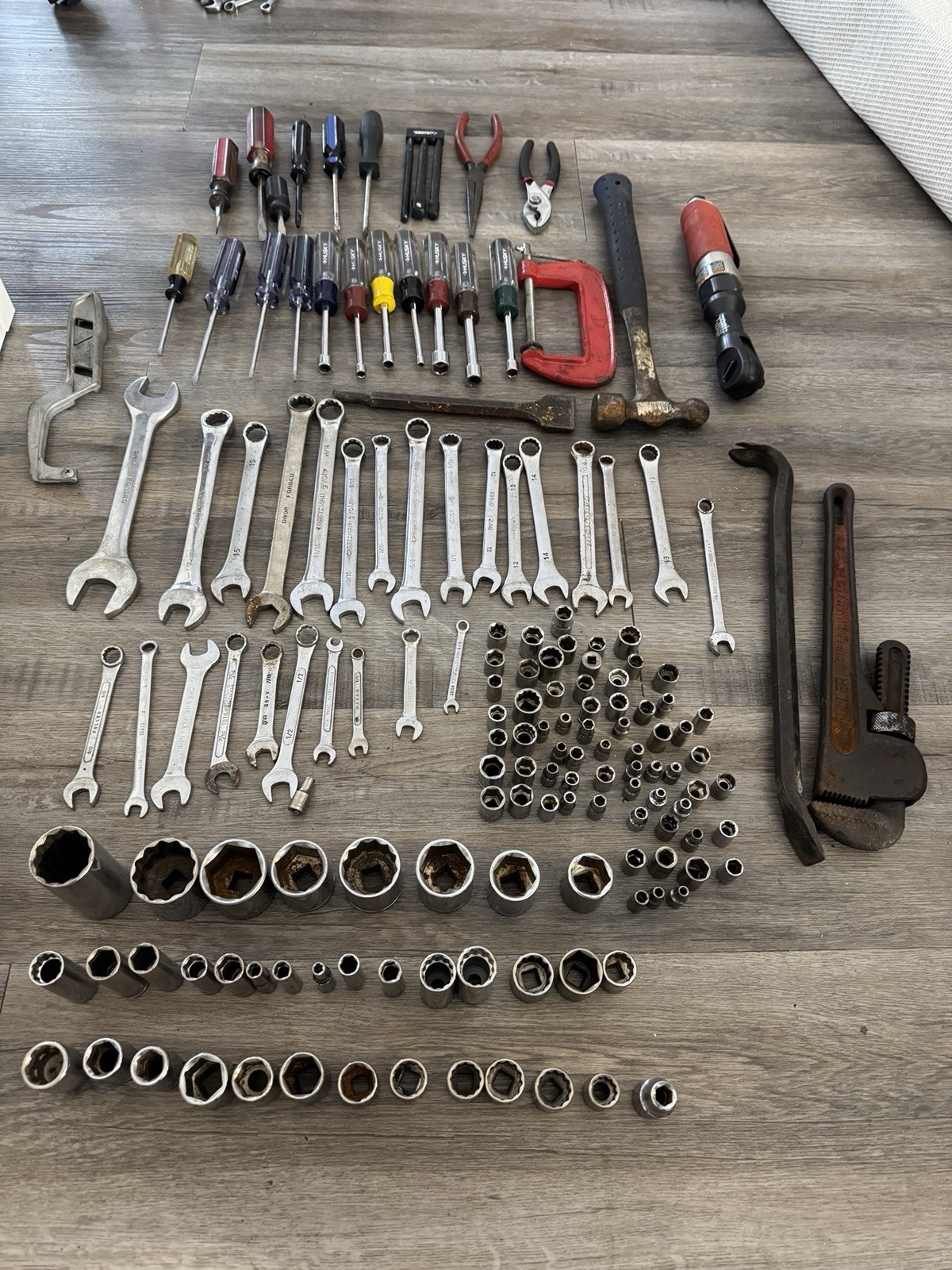
Best places to buy used hand tools
The right seller depends on the type of tool, your budget, and how much risk you can accept. A used screwdriver is easy to judge in person. A damaged torque wrench, punch, or striking tool needs more care.
| Place to buy | Best for | Main advantage | Main risk |
|---|---|---|---|
| Estate sales | Older quality tools and full toolboxes | Low prices and useful bundles | Items may sell quickly |
| Garage and yard sales | Basic household tools | Very low prices | Limited selection |
| Pawn shops | Name-brand tools and power-tool accessories | In-person inspection | Prices may not always be low |
| Habitat ReStores | Basic repair and home-improvement tools | Nonprofit store model and local stock | Inventory changes often |
| Flea markets | Bargain hunting and older tools | Room to negotiate | Tool history may be unclear |
| Facebook Marketplace and OfferUp | Local deals and large items | Easy seller contact | Scams and inaccurate descriptions |
| Craigslist | Local tool lots and workshop clear-outs | Direct, often cash-based sales | Less buyer protection |
| eBay | Hard-to-find tools and specific brands | Large national selection | Shipping cost and hidden wear |
| Used-tool dealers | Professional-grade tools | Better sorting and product knowledge | Higher prices than casual sellers |
| Auctions | Large lots, shop closures, and estate contents | Possible bulk savings | Buyer fees and limited inspection |
1. Estate sales
Estate sales are often among the best places to find used hand tools in the USA. A homeowner’s workshop may include complete socket sets, vintage planes, clamps, wrenches, chisels, vises, and specialty tools.
Search for local estate sale companies through their websites, email lists, and social media pages. Many companies post photos before the sale begins. Use those photos to spot toolboxes, workbenches, and recognizable brands.
Arrive early when you want a specific tool. Arrive later when you want to negotiate on items that remain. Before buying, open every case and check whether the set is complete.
2. Garage and yard sales
Garage sales work well for common tools such as pliers, adjustable wrenches, tape measures, levels, screwdrivers, and hammers. Prices can be low because many sellers want to clear space rather than maximize profit.
Bring a small flashlight, a rag, and a list of the sizes you need. A rag helps remove surface dirt so you can see cracks, deep rust, and damaged edges.
Do not assume that a large toolbox is a bargain. Count the pieces and check the most useful sizes first. A box filled with mismatched or broken tools may cost more than a smaller, complete set.
3. Pawn shops
Pawn shops can be useful when you want to inspect a tool before buying it. Many carry mechanic’s tools, work lights, tool storage, clamps, and accessories.
Ask whether the shop offers a return period. Policies differ by store and by state. Test moving parts, check ratchet direction, and inspect sockets for rounding. For a tool with a serial number, ask whether the shop has any record of its source.
Pawn shops may price items based on brand recognition. Compare the used price with the current price of a similar new tool before you buy.
4. Habitat for Humanity ReStores
Habitat ReStores sell donated building materials, home goods, and many types of tools. Inventory varies by location, so one store may have a strong tool section while another may have only a few basic items.
ReStores can be a good choice for household repairs, painting tools, clamps, levels, and hand tools. They may also carry workbenches, storage cabinets, and hardware that would cost more at a regular retailer.
Inspect every item carefully. Donations may not include a warranty, manual, or complete parts set. Confirm that moving parts work before purchase.
5. Flea markets and swap meets
Flea markets offer a chance to compare many sellers in one trip. They can be especially useful for older American-made tools, woodworking tools, toolboxes, and unusual accessories.
Prices vary widely. Some sellers know the value of vintage tools, while others simply want to sell items from a garage or storage unit. Ask direct questions, but treat a seller’s answer as information rather than proof.
If a tool has deep pitting, a bent handle, or a missing part, price it as a repair project. Surface rust is often manageable. Cracks, distortion, and missing safety parts are more serious.
6. Local online marketplaces
Facebook Marketplace, OfferUp, and Craigslist are common places to find used hand tools in the USA. They are useful for tool lots, shop clear-outs, and heavy items that are expensive to ship.
Search with several terms:
- Used hand tools
- Mechanics tools
- Garage tools
- Workshop cleanout
- Tool lot
- Estate tools
- Vintage tools
- Socket set
- Woodworking tools
- Contractor tools
Use a specific meeting plan. Meet in a public place when possible, or use a police department’s designated exchange area if one is available. For a large toolbox or workbench, bring another adult and use safe lifting methods.
The Federal Trade Commission advises consumers to be cautious with unusual payment requests, pressure to act quickly, and sellers who avoid normal transaction methods. Do not send a deposit for a tool you have not verified unless you fully understand the risk.
7. eBay and other auction sites
Online auction sites are useful when you need a particular brand, size, or discontinued tool. They also make it easier to compare listings from sellers across the country.
Read the full listing, not just the title. Look for:
- Clear photos of both sides
- Photos of jaws, cutting edges, and handles
- Exact model or part numbers
- Measurements
- A statement about working condition
- Shipping costs
- Return terms
A tool listed as “vintage” is not automatically valuable or well made. “Untested” often means the seller has not confirmed that it works. Treat that phrase as a risk, not as a positive feature.
Check the seller’s recent feedback for similar items. Feedback does not guarantee quality, but it can reveal repeated issues such as poor packing or inaccurate descriptions.
8. Used-tool dealers and industrial surplus stores
A used-tool dealer is often the best option when you need professional equipment and want someone to sort the inventory first. These sellers may carry industrial wrenches, machinist tools, woodworking tools, inspection tools, and tool storage.
You may pay more than you would at a garage sale. In return, the dealer may provide better descriptions, organized inventory, or a limited return policy.
Ask whether the tool has been inspected, repaired, calibrated, or simply cleaned. Those words describe different levels of service.
9. Auctions and business liquidations
Construction-company liquidations, factory auctions, and workshop closures can offer large tool lots. Auction sites such as GovDeals and local auction companies may list tools from public agencies, businesses, or estates.
Read the auction rules before bidding. Important details include:
- Buyer’s premiums
- Sales tax
- Removal deadlines
- Loading help
- Payment methods
- Shipping availability
- Inspection dates
- “As-is” language
A low winning bid can become expensive after fees, transport, and missing parts. Calculate the full cost before bidding.
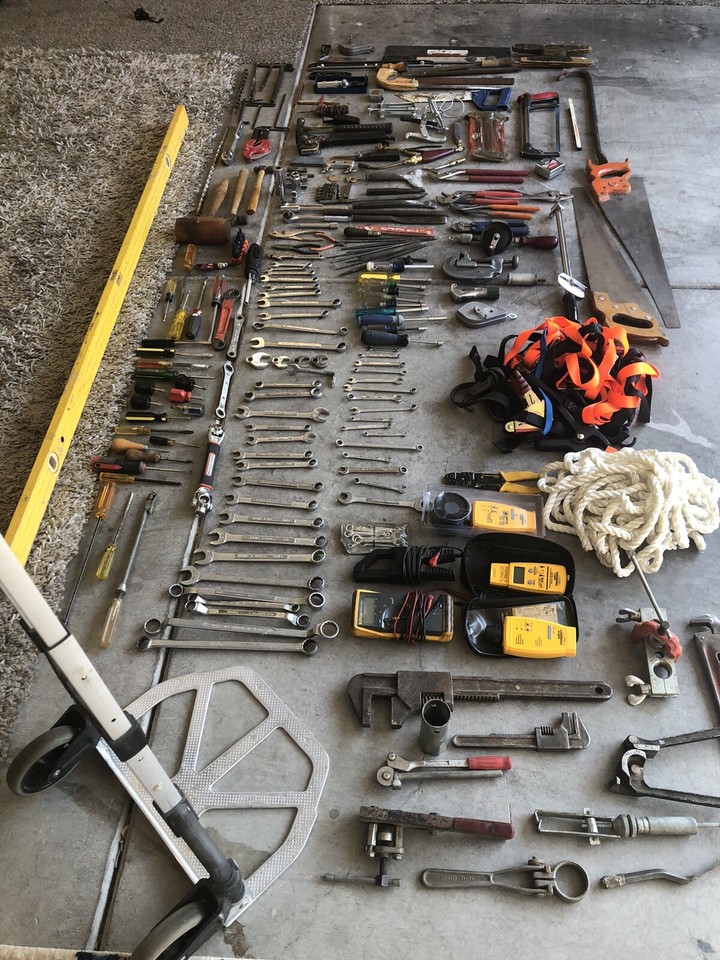
How to choose the best source for your tool
Choose a local source when you need to inspect the tool, avoid shipping, or negotiate. Choose an online source when you need a rare model or want access to a larger national market.
Your best starting point usually looks like this:
- Lowest possible price: Garage sales, estate sales, flea markets
- Best chance of finding a complete set: Estate sales, pawn shops, used-tool dealers
- Best for rare or older tools: eBay, specialty dealers, auctions
- Best for heavy items: Facebook Marketplace, Craigslist, local auctions
- Best for basic home repairs: ReStores, garage sales, local marketplaces
- Best for professional users: Used-tool dealers and industrial auctions
- Best for low buyer risk: A local seller that allows inspection and a clear return policy
Do not search only by brand. Search by the job you need to complete. A less famous tool in good condition may serve you better than a premium tool with worn jaws or a damaged striking face.
What to inspect before buying a used hand tool
Inspect the tool’s safety parts first, then its working parts, then its comfort and completeness. A clean appearance is useful, but it does not prove that the tool is sound.
General inspection checklist
Check these features before paying:
-
Cracks and breaks
Look at handles, jaws, heads, frames, and plastic bodies. Do not buy a tool with a crack in a load-bearing area. -
Bends and distortion
Lay straight tools on a flat surface. A bent ruler, pry bar, wrench, or driver may not work correctly. -
Deep rust and pitting
Light surface rust may be removable. Deep pitting can weaken metal, spoil a gripping surface, or affect accuracy. -
Moving parts
Open and close pliers. Turn ratchets. Move adjustable wrench jaws. Test locks, hinges, and clamps without forcing them. -
Edges and teeth
Check cutters, chisels, punches, saw teeth, files, and jaws. Blunt edges can be sharpened, but chips and missing teeth may not be practical to repair. -
Handles and grips
Avoid loose, split, oily, or badly damaged handles. A loose hammer handle can create a serious strike hazard. -
Completeness
Count sockets, bits, keys, adapters, and specialty parts. A set with missing core sizes may not be a good value. -
Markings and size
Confirm whether the tool is SAE, metric, or both. Check for model numbers, size marks, and manufacturer markings.
Tool-specific checks
Wrenches: Check that the jaws are not spread, rounded, or twisted. An adjustable wrench should move smoothly and hold its setting.
Pliers: Close the jaws and look for a consistent meeting point. Excess side play can reduce control.
Ratchets and sockets: Turn the ratchet in both directions. Check the drive square and socket openings for rounding or cracks.
Screwdrivers: Reject tips that are badly rounded, twisted, or damaged. Do not use a screwdriver as a chisel unless the tool is specifically designed for that purpose.
Hammers and striking tools: Avoid mushroomed metal heads, loose handles, and cracked fiberglass. A mushroomed striking face can shed metal when hit.
Chisels and punches: Look for chipped cutting edges and mushroomed striking ends. A damaged end may need to be ground safely before use.
Files: Check for broken tangs and clogged teeth. A file handle should fit firmly over the tang.
Torque wrenches: Treat calibration as a separate issue from general function. A torque wrench may click and still be inaccurate. Ask for calibration records, and follow the manufacturer’s instructions for testing or recalibration.
Levels and measuring tools: Check for damaged vials, loose parts, bent rules, and faded marks. Accuracy matters more than appearance.

How much should you pay for used hand tools?
A fair used-tool price depends on condition, brand, completeness, local demand, and the cost of a comparable new tool. There is no single percentage that works for every tool.
Use this simple method:
- Find the current price of a comparable new tool.
- Adjust for the used tool’s condition.
- Subtract the estimated cost of missing parts or repairs.
- Add shipping, buyer fees, sales tax, and travel costs.
- Compare the final figure with a new tool’s warranty and return policy.
A hypothetical example
Suppose a comparable new socket set costs $80. A used set is complete but has surface rust and no warranty. You estimate $10 for cleaning and place its practical value at $45 to $55.
If the online listing is $45 but adds $18 shipping and $5 tax, the final cost is about $68. A local used set priced at $50 may be the better buy. A new set may be worth considering if the used one has damaged ratchet teeth or missing sizes.
A tool lot can change the calculation. If you need six items from a box of 20, value the items you will use. Do not pay extra for clutter that will sit unused.
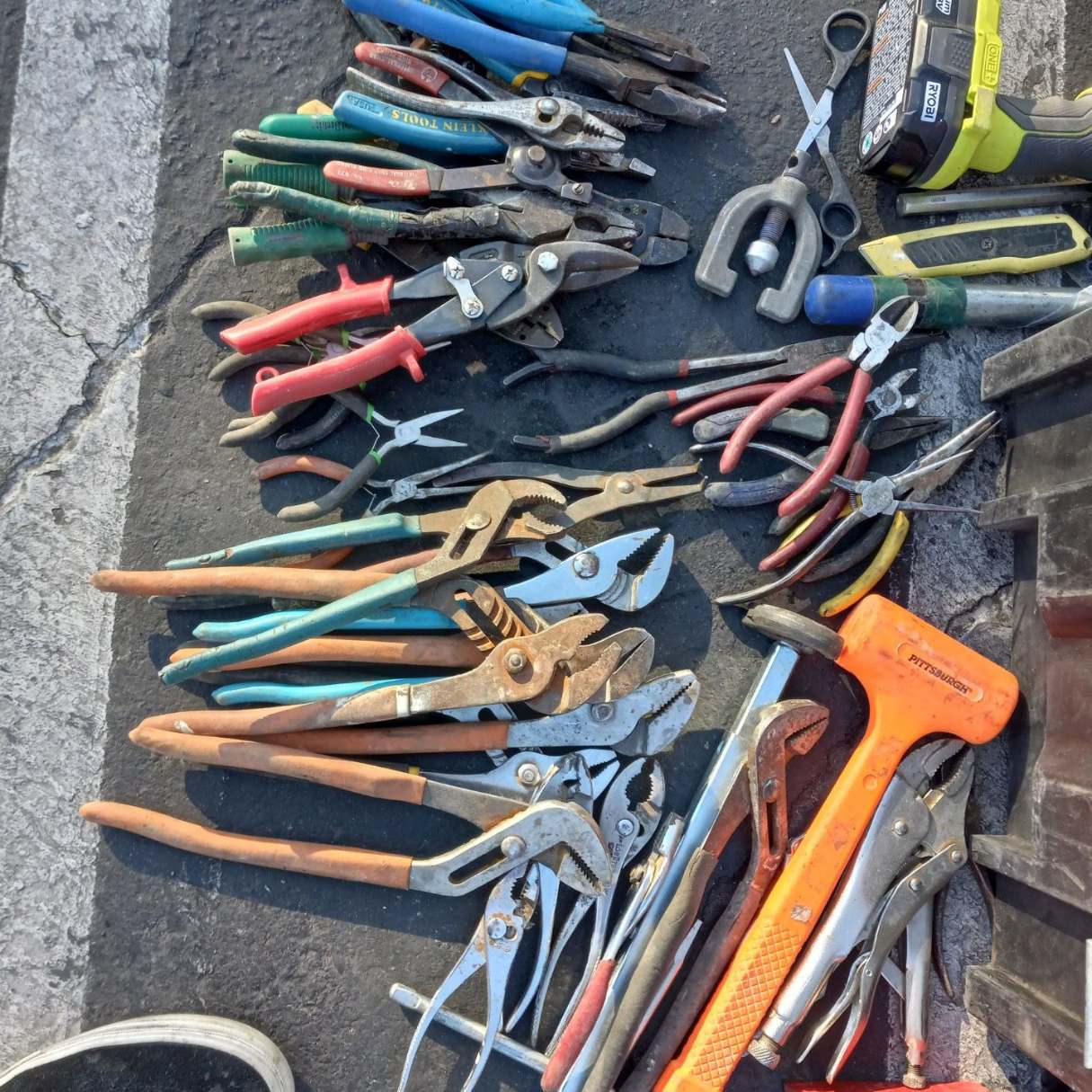
Used hand tools that are usually good buys
Some hand tools age well because they have simple designs and few parts. Good candidates include:
- Combination wrenches
- Box-end wrenches
- Adjustable wrenches in good condition
- Screwdrivers with sound tips
- Pliers with tight joints
- Clamps
- Hand saws with usable teeth
- Pry bars
- Levels with intact vials
- Bench vises
- Toolboxes and storage cabinets
- Woodworking planes that are complete and not cracked
These tools still require inspection. A simple tool can be unsafe or ineffective if it is bent, cracked, loose, or badly worn.
Used tools that need extra caution
Be more careful with tools that control force, measure accuracy, or protect the user. Examples include:
- Torque wrenches
- Striking tools
- Chisels and punches
- Crimpers
- Pipe cutters
- Pullers
- Precision measuring tools
- Insulated electrical tools
- Tools used for automotive lifting or support
Do not assume that an insulated handle makes a tool safe for live electrical work. Inspect the insulation and follow the tool maker’s instructions. For electrical tasks, turn off power and verify that the circuit is de-energized. Use a qualified electrician when the work is beyond your training.
Never use a damaged hand tool for a job that could cause serious injury, equipment failure, or loss of control. The Occupational Safety and Health Administration provides general guidance on safe use of hand and power tools.

How to clean and prepare used hand tools
Clean used tools only after checking that they are structurally sound. Cleaning cannot fix a crack, bent part, unsafe handle, or inaccurate measuring mechanism.
For ordinary steel tools:
- Brush off loose dirt and rust.
- Wipe the tool with a suitable cleaner.
- Dry it fully to prevent new rust.
- Remove light surface rust with a brush or appropriate abrasive.
- Apply a thin protective coat to bare steel.
- Lubricate hinges and moving joints when the manufacturer allows it.
- Store the tool in a dry place.
Do not soak tools with wood handles unless you know the treatment will not damage the handle. Do not use harsh chemicals without checking the product label. Keep cleaners and oils away from children, flames, and poorly ventilated spaces.
If a tool has been exposed to unknown chemicals, sewage, blood, or other hazardous material, cleaning may not be enough. In that case, replacement is often the safer choice.

Common mistakes when buying used hand tools
The most costly mistake is buying a tool based on appearance alone. A polished tool may still have worn jaws, a bent body, or a damaged internal mechanism.
Avoid these errors:
- Buying a large lot without checking the useful pieces
- Paying a vintage premium for a common tool
- Ignoring missing sockets or adapters
- Confusing surface rust with deep pitting
- Buying “untested” tools at a tested-tool price
- Forgetting shipping, buyer fees, and tax
- Using the wrong SAE or metric size
- Trusting a brand name without checking condition
- Paying a deposit to an unverified online seller
- Using a damaged striking tool
- Assuming a torque wrench is accurate without calibration evidence
- Buying electrical tools with damaged insulation
When a seller refuses reasonable inspection, gives vague answers, or pressures you to pay immediately, walk away. Another used tool will appear.

How to buy used hand tools online safely
Online buying works best when you reduce uncertainty before payment. Ask for clear photos and exact measurements. Request a photo of the tool’s markings if the model or size matters.
Use a payment method with buyer protection when available. Avoid sellers who insist on gift cards, cryptocurrency, wire transfers, or payment outside the platform. The FTC’s online shopping guidance explains why unusual payment requests are a warning sign.
Check the manufacturer’s website for recalls, replacement parts, and manuals. The U.S. Consumer Product Safety Commission’s recall search can help you check certain recalled consumer products, although not every used tool or older product will appear there.
For local pickup, inspect the item before paying. For shipped items, photograph the package when it arrives and report damage through the platform within its stated time limit.
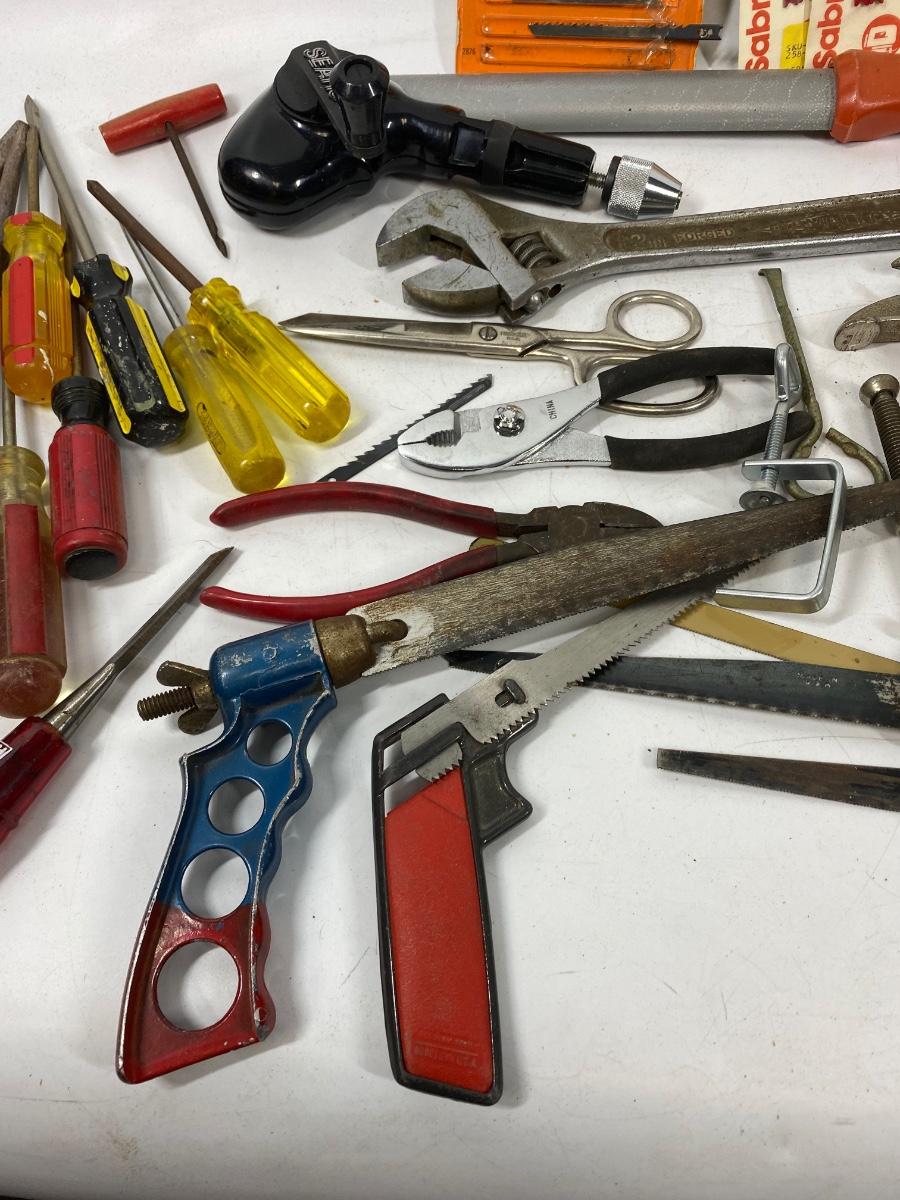
Should you buy used or new hand tools?
Buy used when the tool is simple, easy to inspect, and priced well below a comparable new item. Buy new when safety, accuracy, warranty support, or replacement parts matter more than the initial price.
| Buy used when… | Buy new when… |
|---|---|
| The tool has a simple design | The tool has hidden internal parts |
| You can inspect it in person | You need verified accuracy |
| Replacement parts are easy to find | A warranty is important |
| Wear is easy to judge | Failure could cause serious injury |
| The discount is meaningful | The used price is close to the new price |
| You need an older or rare model | The tool has a current safety revision |
A used bench vise, wrench, or clamp may be a sensible purchase. A damaged torque wrench or questionable lifting tool may not be worth the risk.

Frequently asked questions
What is the best website for used hand tools?
There is no single best website for every buyer. eBay is useful for specific brands and rare tools. Facebook Marketplace, OfferUp, and Craigslist are often better for local pickup and heavy tool lots. Compare the total cost, seller history, photos, return terms, and buyer protection.
Are pawn shops good places to buy hand tools?
Pawn shops can be good places to buy used hand tools because you can usually inspect the item before paying. However, prices vary. Test moving parts, check completeness, and compare the price with a similar new tool.
How can I tell if a used hand tool is good quality?
Look for sound metal, clear size markings, tight joints, straight bodies, secure handles, and working mechanisms. Brand reputation can help, but condition matters more than the logo. Avoid cracks, severe pitting, rounded gripping surfaces, and loose handles.
Is it safe to buy old or vintage hand tools?
Old hand tools can be safe if they are structurally sound and used for the right job. Inspect them for cracks, distortion, mushroomed ends, loose handles, and unsafe repairs. Do not use an old tool for a high-risk task just because it appears well made.
Can I negotiate the price of used hand tools?
Often, yes. Negotiation is more likely at garage sales, estate sales, flea markets, and local online listings. Make a fair offer based on condition, missing parts, repair needs, and comparable prices. Avoid making an unrealistically low offer when the tool is complete and fairly priced.
Conclusion: Find the right used-tool source for the job
For most buyers in the USA, the best plan is to check local estate sales, garage sales, ReStores, pawn shops, and online marketplace listings first. Use eBay, specialty dealers, and auctions when you need a particular brand or hard-to-find tool.
Inspect the tool before paying, calculate the full cost, and treat safety-critical or precision tools with extra caution. The best used-tool deal is not the lowest sticker price. It is a sound tool that fits the job, works as expected, and costs less than a sensible new alternative.
Recent Tool Guides
 Hammer
How To Hammer Flowers Onto Paper: Easy Guide
Learn how to hammer flowers onto paper with simple steps, helpful tips, and beautiful results for...
Read Guide → Wrench
How To Use A Hex Wrench: Easy Step-By-Step Guide
Learn how to use a hex wrench correctly with simple steps, helpful tips, and common mistakes...
Read Guide → Hacksaw
How To Cut Curtain Pole With Hacksaw: Easy Guide
Learn how to cut curtain pole with hacksaw safely and neatly. Follow simple steps for accurate...
Read Guide → Wrench
How To Use A Husky Torque Wrench: Easy Guide
Learn how to use a Husky torque wrench correctly with simple steps, torque settings, and safety...
Read Guide → Hammer
How To Hold A Hammer: Safe Grip Guide
Learn how to hold a hammer with the right grip, stance, and technique for safer, more...
Read Guide → Hacksaw
How To Cut Flexible Metal Conduit With Hacksaw: Easy Guide
Learn how to cut flexible metal conduit with hacksaw safely and cleanly. Follow simple steps for...
Read Guide →