

To cut a metal rod with a hacksaw, secure it firmly, use the right blade, and make steady strokes.
Learning how to cut metal rod with a hacksaw is a useful skill for home repairs, plumbing work, metal projects, and small construction jobs. With the right blade, safe setup, and steady technique, you can make a clean cut without power tools or expensive equipment.
What You Need to Cut a Metal Rod
A hacksaw is a simple hand tool with a thin, toothed blade held under tension in a metal frame. It cuts by removing small chips of metal as you push the blade across the rod.
Before you start, gather these items:
• A hacksaw with a strong, tight frame
• A blade suited to the rod’s metal and thickness
• A steel ruler or tape measure
• A permanent marker or scriber
• A bench vise with soft jaw covers
• Safety glasses or a face shield
• Work gloves for handling sharp edges
• A metal file or deburring tool
• Light cutting oil, if the rod is thick or hard
A vise is the most important item after the saw. It holds the rod still and keeps the cut straight. Trying to hold a metal rod by hand is unsafe and often leads to a crooked cut or a damaged blade.
For occasional work, a standard 12-inch hacksaw works well. An adjustable frame is useful because it can accept different blade lengths and lets you set the blade tension correctly.
Choose the Right Hacksaw Blade
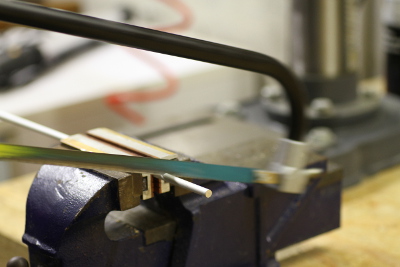
The blade controls how fast and cleanly you can cut. Hacksaw blades are rated by teeth per inch, or TPI. Common choices include 14, 18, 24, and 32 TPI.
• Use a 14 TPI blade for thick, soft metal and large rods.
• Use an 18 TPI blade for general-purpose steel cutting.
• Use a 24 TPI blade for thin wall tubing, small rods, and sheet metal.
• Use a 32 TPI blade for very thin metal that could catch or bend.
As a general rule, at least three teeth should touch the metal at the same time. If only one or two teeth contact the rod, the blade may catch, chatter, or break.
For mild steel rod, a high-quality bi-metal blade is a reliable choice. Bi-metal blades combine a flexible backing with hard cutting teeth. They cost more than basic carbon steel blades, but they usually last longer and resist snapping.
Check the blade before use. Replace it if the teeth are missing, dull, bent, or packed with metal chips. A dull blade does not simply cut more slowly. It also requires more force, which makes slipping more likely.

Prepare the Rod and Work Area
Good preparation makes learning how to cut metal rod with a hacksaw much easier. First, clear the workbench and make sure you have room to move the saw in a straight line.
Measure the required length twice. Mark the cut line with a permanent marker for rough work or a scriber for a sharper, more precise line. If the cut must be exact, mark a full line around the rod rather than relying on a small dot.
Set the rod in the vise so the cut line sits close to the jaws. Keep the waste end supported if it is long. The less the rod vibrates, the smoother the cut will be.
Avoid clamping directly over the section you need to cut. The vise should hold the rod firmly without covering the marked line. Tighten it enough to stop movement, but do not crush thin tubing or soft metal.
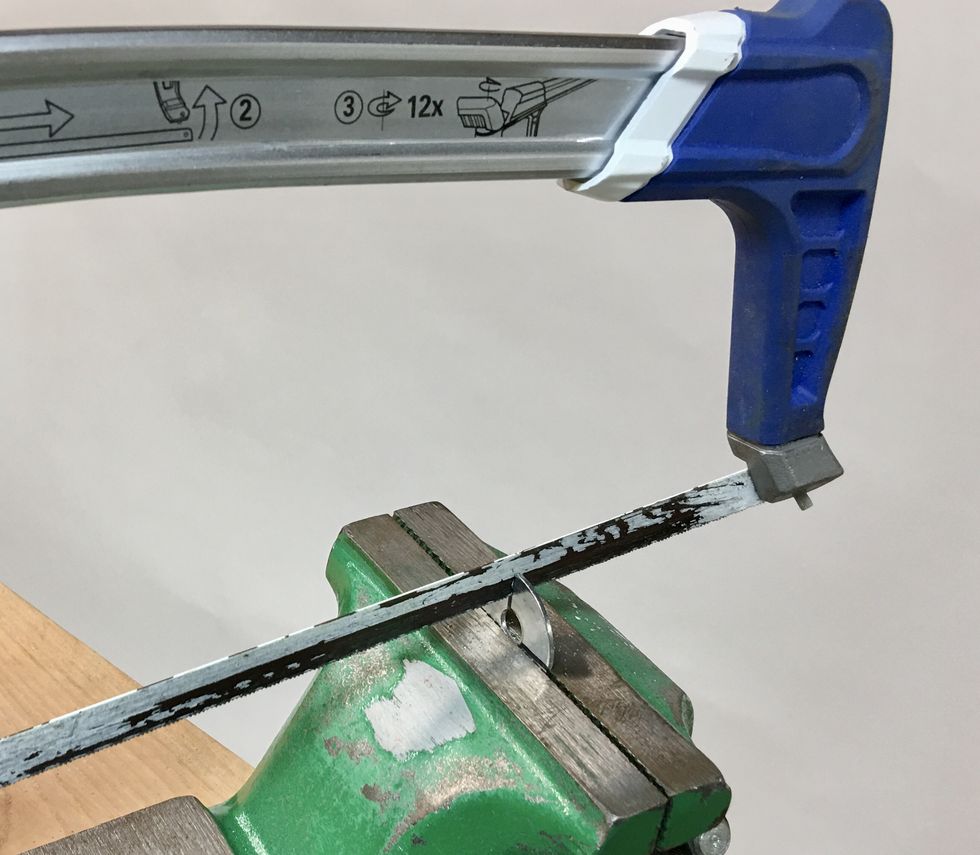
Before cutting, check the blade direction. Most hacksaw blades cut on the forward stroke, so the teeth should point away from the handle. The blade should also be tight enough to produce a clear, firm sound when lightly plucked.

How to Cut Metal Rod With a Hacksaw
Follow these steps for a safe and clean cut.
- Put on safety glasses
Metal chips can break away during cutting. Safety glasses protect your eyes from teeth, filings, and small fragments. A face shield adds extra protection when the rod is large or the blade is worn.
- Secure the rod in the vise
Place the rod between the vise jaws. Align the cut mark close to the jaws, then tighten the vise. Check that the rod cannot twist, slide, or bounce.
- Start with a shallow notch
Place the middle part of the blade on the cut line. Use short, light strokes to create a small groove. This first notch guides the blade and prevents it from wandering across the rod.
Do not press hard at this stage. Let the teeth establish the path, much like a pencil making the first line on paper.
- Use long, steady strokes
Once the groove is established, use longer strokes that move most of the blade length. Push the saw forward with moderate pressure, then release pressure as you pull it back.
The forward stroke does the cutting. The return stroke should be light. Pressing hard in both directions creates heat, wears the teeth, and can bend the blade.
- Keep the blade square
Hold the hacksaw so the blade stays at a 90-degree angle to the rod. Look at the cut from the front and side as you work. A blade that tilts will produce an angled cut.
For a square cut, keep both hands aligned with the blade. Your dominant hand controls the handle, while your other hand guides the front of the frame.
- Reduce pressure near the end
When only a small amount of metal remains, use shorter strokes and less force. The waste piece may break away suddenly, and heavy pressure can damage the final edge.
Support the waste section if it is long. This prevents the rod from bending and tearing at the final few teeth.
- Check and smooth the cut
Remove the rod from the vise only after the cut is complete. Inspect the end for burrs, sharp corners, or a slanted edge. Use a metal file to smooth the cut.
File away from your body and keep both hands behind the file’s cutting edge. A small chamfer around the end can remove sharp corners and make the rod safer to handle.
Hacksaw Technique Tips for a Cleaner Cut
The best way to cut metal rod with a hacksaw is to use control rather than force. A hacksaw is not a wood saw. Its fine teeth work best with a steady rhythm and moderate pressure.
Keep the following points in mind:
• Use the full working length of the blade when possible. This spreads wear across more teeth.
• Let the blade do the work instead of forcing it through the metal.
• Keep the rod close to the vise jaws to reduce vibration.
• Pause if the blade becomes hot or begins to bind.
• Apply a small amount of cutting oil to thick steel when suitable.
• Brush metal chips away with a brush, not your bare hand.
• Replace a blade that starts to skip, bend, or squeal.
For thick rod, you can make a shallow groove around the marked line before deepening the cut. This method helps keep the cut square. It is especially useful when the rod must fit into a threaded fitting, bracket, or drilled hole.
In my workshop experience, one common mistake is using short, fast strokes from the wrist. That motion feels quick, but it creates heat and wears out one small area of the blade. A slower stroke from the elbow gives better control and usually finishes the job faster.

How to Cut Different Types of Metal Rod
The metal affects both blade choice and cutting speed. Mild steel is usually straightforward, while stainless steel and hardened rod require more patience.
Mild steel rod
Mild steel is common in brackets, bolts, frames, and general repairs. Use an 18 or 24 TPI blade, secure the rod well, and use firm but controlled strokes.
Stainless steel rod
Stainless steel is tougher and can harden if overheated or rubbed without cutting. Use a sharp bi-metal blade, steady pressure, and cutting oil when appropriate. Avoid stopping for long periods with the blade pressed against the same spot.
Aluminum rod
Aluminum is soft and can clog a fine blade. Use a blade with a suitable tooth pattern, clean the teeth often, and avoid excessive pressure. A coarser blade may work better on thick aluminum rod.
Threaded rod
When cutting threaded rod, protect the threads near the cut with a nut. Thread the nut beyond the cut line before sawing. After cutting and filing the end, remove the nut to help restore damaged threads.
This technique is useful for shelf brackets, pipe supports, electrical mounts, and light construction work. Still, inspect the threads carefully before using the rod in a load-bearing connection.
Hardened steel rod
Hardened steel may be too difficult for a standard hacksaw. If the blade skates across the surface without forming a groove, stop and confirm the material. A cutoff wheel, abrasive saw, or professional machine may be more suitable.

Common Problems and How to Fix Them
Even when you follow the basic steps, small problems can affect the result. Most are caused by poor support, the wrong blade, or too much pressure.
The blade keeps slipping
The starting groove may be too shallow, or the blade may be angled. Reposition the hacksaw, make a small notch with light strokes, and keep the blade square to the rod.
The cut is not straight
A loose vise or tilted blade can cause an angled cut. Tighten the rod closer to the cut line and check the blade from two directions as you work.
The blade breaks
A blade can break from excessive force, incorrect tension, twisting, or using too few teeth on the metal. Install a new blade, tension it correctly, and use smoother strokes.
The blade gets hot
Heat often means too much pressure, a dull blade, or poor lubrication. Let the blade cool, replace it if needed, and reduce pressure during the forward stroke.
The rod vibrates
Move the cut closer to the vise jaws and support any long overhanging section. Vibration makes the cut rough and can cause the blade to jump.
The cut end has large burrs
Large burrs usually result from a dull blade or a rushed final stroke. Finish with a sharp file, then lightly break the edge around the rod.

Safety Rules for Cutting Metal Rod
A hacksaw is simple, but the rod and blade can still cause cuts, eye injuries, and hand injuries. Follow basic workshop safety practices every time.
• Wear safety glasses that meet recognized impact protection standards.
• Keep both hands on the saw frame or handle while cutting.
• Never hold the rod in one hand while sawing with the other.
• Keep fingers away from the blade path and the vise jaws.
• Remove loose clothing, jewelry, and dangling hair.
• Do not touch the cut end until you have checked for sharp burrs.
• Use a brush or vacuum designed for metal chips.
• Keep oil away from the floor and wipe spills at once.
• Store the hacksaw with the blade protected or removed if it will not be used soon.
Safety guidance from workplace authorities consistently emphasizes eye protection, stable workholding, and control of hand tools. Follow the instructions supplied with your vise, hacksaw, blade, and any cutting lubricant.
Do not use a hacksaw on a rod that is connected to live electrical equipment, pressurized plumbing, or a moving machine. Isolate the system first, and ask a qualified professional for help when the job involves structural loads, gas lines, or electrical hazards.

How to Improve Accuracy
If the rod must be a precise length, allow for the width of the blade cut, known as the kerf. Mark the waste side of the line so you do not remove too much material.
For repeated cuts, make a simple guide from scrap wood or metal. Clamp the guide beside the rod to help keep the hacksaw square. This will not replace careful measurement, but it can improve consistency.
After cutting, measure the rod again. If the end is slightly long, file it down gradually. It is much easier to remove a small amount with a file than to repair a rod cut too short.
When I need a clean end on threaded rod, I cut slightly outside the final mark, file the end flat, and then adjust the length slowly. That extra margin has saved many pieces from becoming scrap.
Hacksaw Alternatives and Their Limits
A hacksaw is affordable, quiet, and useful for small jobs. It also gives you good control over the cut. However, it is slower than powered tools and may not be ideal for large quantities or very hard metal.
Other options include:
• A reciprocating saw for faster cuts on larger steel sections
• An angle grinder with a metal cutoff wheel for quick rough cuts
• A portable band saw for cleaner repeated cuts
• A cold saw for accurate production work
• A bolt cutter for suitable soft rods, though it may deform the end
• An abrasive chop saw for thick stock, with proper guarding and protection
Powered tools create sparks, noise, dust, and greater kickback risks. Choose them only when the material, workspace, and safety equipment are suitable. For one or two small cuts, a hacksaw is often the safer and simpler option.
Frequently Asked Questions About How to Cut Metal Rod With a Hacksaw
What is the best hacksaw blade for cutting metal rod?
An 18 or 24 TPI bi-metal blade is a good general choice for mild steel rod. Use a finer blade for thin rod and a coarser blade for thick, soft metal.
Which way should the hacksaw blade face?
The teeth should normally point away from the handle because most hacksaws cut on the forward stroke. Check the blade markings and the saw manufacturer’s instructions before fitting it.
Can I cut stainless steel rod with a hacksaw?
Yes, but use a sharp bi-metal blade and steady pressure. Avoid rubbing the blade without cutting because stainless steel can harden from heat and friction.
How do I keep the cut square?
Clamp the rod close to the vise jaws and keep the blade at a 90-degree angle. Start with short strokes, then check the blade from the front and side as the cut becomes deeper.
Do I need cutting oil when using a hacksaw?
Cutting oil can reduce friction and heat on thick or hard steel. It is not always needed for small mild steel cuts, and you should follow the lubricant and blade manufacturer’s guidance.
Why does my hacksaw blade keep breaking?
Blade breakage often comes from too much pressure, loose or excessive tension, twisting, or using the wrong TPI. Use smooth strokes, keep the blade straight, and replace damaged blades.
How can I remove burrs after cutting metal rod?
Clamp the rod securely and use a sharp metal file to smooth the end. You can also use a deburring tool, but wear eye protection because small chips may break away.
Conclusion
Cutting metal rod with a hacksaw becomes easy when you combine the right blade, solid workholding, accurate marking, and steady strokes. Secure the rod near the vise, start with a shallow groove, keep the blade square, and reduce pressure as you finish the cut.
Take your time, protect your eyes, and smooth the sharp edge with a file. With practice, you can make clean, reliable cuts for repairs and projects without relying on power tools. Try these steps on a spare piece of rod, then share your results or explore more metalworking guides for your next project.
