Can A Hammer Drill Be Used As A Chisel: Safe Guide
Yes—but only if it is a rotary hammer with a hammer-only or chisel mode. A standard hammer drill is not designed to work as a chisel, even though it makes a hammering motion.
For most U.S. home projects, the key difference is simple:
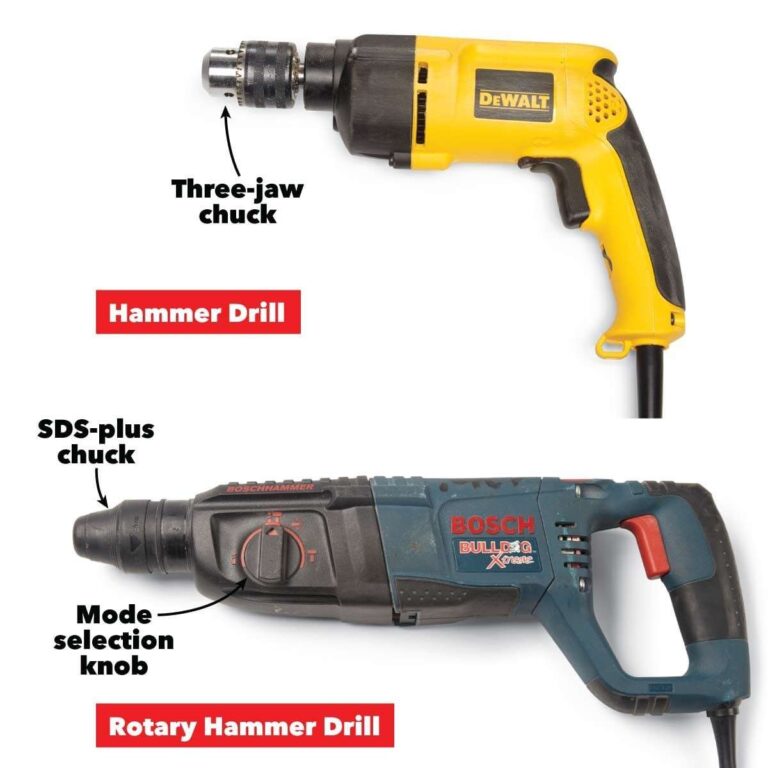
- Hammer drill: Spins the bit while adding light impact. It is made for drilling holes in brick, block, and concrete.
- Rotary hammer: Uses a stronger piston mechanism. Many models can stop the bit from spinning and work in hammer-only mode for chiseling.
- Demolition hammer: Delivers impact without drilling. It is made for heavier breaking work.
Using the wrong tool can damage the drill, break the bit, cause loss of control, or send sharp chips toward your face. Check the tool manual before using any chisel attachment.

Can a Standard Hammer Drill Chisel Concrete?
A standard hammer drill should not be used as a chisel. Its hammer action is meant to help a masonry bit cut into hard material while the bit rotates. It does not usually provide the piston force, bit holder, or safety design needed for striking a chisel without rotation.
A typical hammer drill has three operating actions:
- Drill mode: The chuck turns the bit without impact.
- Hammer-drill mode: The chuck turns the bit while adding rapid impacts.
- Sometimes, clutch or torque settings: These control drilling force but do not create a true hammer-only function.
In hammer-drill mode, the bit must rotate. A chisel that rotates in the chuck can catch, swing, or loosen. A standard drill chuck may also be damaged by repeated impact.
A hammer drill may break a thin tile, remove a small amount of mortar, or loosen a light layer of material when used with the correct rotating masonry bit. That is not the same as chiseling. It is drilling with impact.
Why the tool design matters
A rotary hammer transfers impact through a dedicated chuck and piston system. Many use an SDS-Plus or SDS-Max holder. These holders let the chisel move slightly back and forth while remaining locked against falling out.
A standard hammer drill usually uses a keyed or keyless chuck. That chuck is designed to grip a rotating drill bit. It is not normally designed to hold a loose SDS chisel or absorb repeated direct impact.
The result is a basic rule:
If the tool does not have a clearly marked hammer-only setting, do not use it as a chisel.

When Can a Hammer Drill Be Used for Chiseling?
A hammer drill can be used for chiseling only when the manufacturer identifies it as a rotary hammer, combination hammer, or similar tool with a dedicated hammer-only mode.
Look for one or more of these signs:
- A selector marked with a hammer symbol alone.
- A setting called hammer only, chiseling, or rotation stop.
- An SDS-Plus or SDS-Max bit holder.
- A manual section that lists bull-point, cold, tile, scaling, or flat chisels.
- A product description that calls the tool a rotary hammer or combination hammer.
A combination rotary hammer may offer three or four modes:
| Mode | Bit rotation | Impact | Typical use |
|---|---|---|---|
| Drill | Yes | No | Wood, metal, and other approved materials |
| Hammer drill | Yes | Yes | Drilling concrete, block, and brick |
| Hammer only | No | Yes | Chiseling, scaling, and light demolition |
| Chisel-position adjustment | No | No | Turning the chisel to a better angle |
The exact mode names vary by brand and model. DeWalt, Bosch, Makita, Milwaukee, and other manufacturers use different controls and bit systems. The model manual is the final authority.
What “rotation stop” means
Rotation stop disables the spindle from turning while the impact mechanism continues to strike. This lets the attached chisel chip material rather than drill a round hole.
Rotation stop is not the same as a low-speed setting. Reducing speed does not make a standard hammer drill safe for chiseling. The tool must be built for impact-only operation.

What Is the Right Tool for the Job?
The best tool depends on the material, size of the work, and how much material you need to remove.
| Task | Suitable tool | Why |
|---|---|---|
| Drill a few small holes in brick | Hammer drill | It combines rotation with light impact |
| Drill anchor holes in concrete | Rotary hammer | It removes concrete faster and accepts stronger bits |
| Remove tile adhesive | Rotary hammer with tile chisel | Hammer-only action can scrape and lift material |
| Cut a shallow channel in mortar | Small rotary hammer with narrow chisel | Gives controlled impact |
| Break a concrete step or slab | Demolition hammer | Built for sustained impact and heavy removal |
| Remove a large amount of concrete | Demolition hammer or concrete saw | A small rotary hammer may overheat or wear quickly |
| Chip a tiny spot by hand | Mason’s chisel and hammer | Simple and controlled for very small repairs |
A hammer drill is often the right choice when the primary task is drilling. A rotary hammer is the better choice when the primary task is breaking, scraping, or chipping.
Rotary hammer versus demolition hammer
A rotary hammer can drill and chisel. A demolition hammer usually cannot drill because it has no rotating function.
A rotary hammer is useful for:
- Removing ceramic or stone tile.
- Chipping mortar.
- Making small openings in masonry.
- Removing thin concrete sections.
- Drilling anchor holes between chiseling tasks.
A demolition hammer is better for:
- Breaking thick concrete.
- Removing a slab.
- Chipping a foundation wall.
- Long periods of heavy demolition.
- Jobs where drilling is not needed.
Using a small rotary hammer for a large demolition job may work slowly, but it can create excess heat, vibration, and wear. Tool size should match the material and the amount of removal.

How to Use a Rotary Hammer as a Chisel
Use these steps only when the tool manual permits hammer-only operation and the chisel is compatible with the tool holder.
1. Read the tool manual
Confirm all of the following:
- The tool has a hammer-only mode.
- The chisel shank matches the holder.
- The manufacturer allows the intended chisel type.
- The material is within the tool’s intended use.
- Any limits on duty cycle or continuous use.
Do not rely only on the shape of the switch. Some tools have a hammer icon for hammer drilling, not hammer-only operation.
2. Choose the correct chisel
Common rotary hammer chisels include:
- Bull-point chisel: Starts holes or breaks hard material at a small point.
- Flat chisel: Splits and removes concrete or masonry.
- Tile chisel: Has a broad, angled edge for lifting tile and adhesive.
- Scaling chisel: Removes thin coatings, mortar, rust, or buildup.
- Clay spade: Moves soft soil or clay in tools designed to accept it.
Use a chisel made for the tool’s holder. Do not grind a regular screwdriver, masonry bit, or steel rod into a homemade chisel.
3. Disconnect power before installing it
For a corded tool, unplug it. For a cordless tool, remove the battery if the manual or tool design makes that necessary.
Clean the shank and apply the lubricant specified by the manufacturer. SDS systems often require a small amount of suitable bit grease. Do not use an unapproved lubricant inside the holder.
4. Insert and lock the chisel
Push the chisel fully into the holder. Pull it lightly to confirm that it is locked.
An SDS chisel may move a small amount along its axis. That movement is normal. The bit should not fall out or pull free during a light check.
5. Select hammer-only mode
Set the selector to the hammer-only or rotation-stop symbol. If the tool has a chisel-position setting, use it before starting the motor.
Never change modes while the tool is running unless the manual specifically allows it.
6. Hold the tool with both hands
Keep one hand on the main handle and the other on the auxiliary handle. Stand with your feet balanced and keep the chisel pointed away from your body.
Let the impact mechanism do the work. Heavy downward force can increase vibration and make the chisel bind.
7. Start with light pressure
Place the chisel against the surface before squeezing the trigger. Begin slowly and watch how the material breaks.
Work in short passes. Do not pry sideways with a running chisel unless the manufacturer specifically permits that type of work. Side loading can bend or break the chisel.
8. Check the surface and the tool
Stop often to inspect:
- Chisel sharpness.
- Tool temperature.
- Excess vibration.
- Loose handles.
- Cracks in the material.
- Hidden pipes, wires, or reinforcement.
If the tool becomes unusually hot, smells of burning, loses impact, or makes a new noise, stop using it and inspect the tool.
How to Chisel Tile With a Rotary Hammer
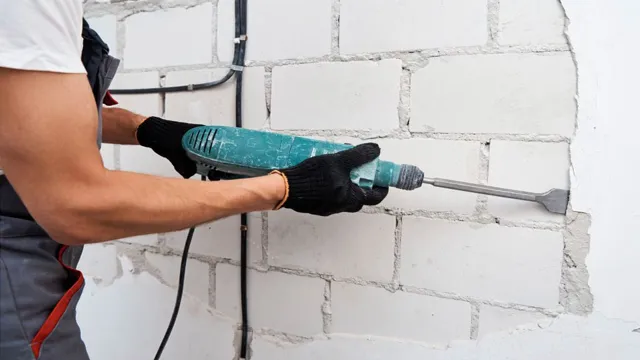
A rotary hammer with a tile chisel can remove tile much faster than a hand chisel, but it can also damage the substrate beneath the tile.
Use this method:
- Remove loose items from the work area.
- Find a starting edge or create a small opening with a hand tool.
- Set the rotary hammer to hammer-only mode.
- Hold a tile chisel at a low angle to the tile.
- Work under the tile or adhesive instead of driving straight into the floor.
- Use short bursts and check the surface often.
- Stop when you reach the underlayment, waterproofing layer, pipe, or electrical conduit.
A tile chisel is usually safer for surface removal than a narrow bull-point chisel. A pointed chisel concentrates force in one small spot and may gouge concrete, crack a slab, or damage a wood or cement board base.
In a bathroom, take extra care. Tile may cover waterproofing, radiant heat, plumbing, or electrical components. If you cannot identify what lies below the tile, use a slower method or ask a qualified professional to inspect the area.

How to Chisel Concrete Safely
Concrete chiseling creates flying fragments, dust, noise, and vibration. Use controls suited to the material and location.
Wear:
- ANSI-rated eye protection.
- A face shield over safety glasses when chips may fly.
- Hearing protection.
- Work gloves that do not reduce tool control.
- Safety footwear with good traction.
- A properly fitted respirator when dust control requires one.
Do not assume a basic dust mask is enough for respirable crystalline silica. OSHA’s construction silica standard, 29 CFR 1926.1153, includes requirements for exposure control, work practices, respiratory protection, and training in covered construction work.
Use dust controls that match the tool and work area. Possible controls include:
- A compatible dust-extraction attachment.
- On-tool vacuum extraction.
- Wet methods when the tool and electrical setup allow them.
- Barriers and ventilation that prevent dust from spreading.
Do not use water around a corded tool unless the equipment and work method are specifically designed for it. Keep cords, plugs, and connections away from wet areas.
Before chiseling a wall, slab, or step, check for:
- Electrical wiring.
- Water lines.
- Gas lines.
- Post-tension cables.
- Rebar.
- Structural damage.
- Embedded heating systems.
Never chip a structural element based only on appearance. A wall, beam, column, foundation, or suspended slab may need review by a qualified building professional.

Common Mistakes to Avoid
The most common mistake is confusing a hammer drill with a rotary hammer. The names sound alike, but the tools have different impact systems and bit holders.
Avoid these errors:
Putting a chisel in a regular drill chuck
A chisel may not lock correctly. It can slip, spin, or come loose. A regular chuck may also suffer impact damage.
Using hammer-drill mode with a chisel
Hammer-drill mode combines impact and rotation. It is meant for a rotating masonry bit, not for scraping or breaking with a fixed chisel.
Forcing the tool into the material
Extra pressure does not always increase removal. It can increase vibration, heat, and wear. Use steady control and let the hammer mechanism strike.
Prying with the chisel
A chisel is not a crowbar. Side pressure can bend the shank or damage the tool’s internal mechanism.
Ignoring hidden services
A small chisel can puncture a pipe or damage wiring in seconds. Check the area before breaking into a wall or floor.
Working without dust control
Concrete and masonry dust can travel well beyond the immediate work area. Protect other people, seal nearby spaces, and follow applicable OSHA requirements when working in a job setting.
Using a dull or damaged chisel
A dull edge makes the tool work harder and may cause more vibration. Replace damaged chisels rather than reshaping them in a way the manufacturer does not approve.

Hammer Drill Chisel Troubleshooting
| Problem | Likely cause | Safe first check |
|---|---|---|
| The chisel spins | Rotation stop is not selected, or the tool lacks that mode | Stop and check the manual |
| The chisel falls out | Wrong shank or incomplete insertion | Disconnect power and inspect the holder |
| Little material is removed | Wrong chisel, dull edge, or unsuitable tool | Match the chisel to the material |
| The tool overheats | Excess pressure, long duty cycle, or internal fault | Stop, let it cool, and check the manual |
| Excessive vibration | Damaged chisel, side loading, or worn tool parts | Stop work and inspect the setup |
| The surface cracks too far | Too much impact or a pointed chisel | Reduce pressure and use a wider chisel |
| Dust blocks visibility | Poor extraction or dry cutting in a confined area | Stop and improve dust control |
If the selector will not move, do not force it. The spindle may need to be in a certain position, or the tool may require a specific switching procedure. Follow the model’s instructions.
If the tool sparks heavily, gives off a burning odor, shocks the user, or has damaged insulation, remove it from service. A qualified repair center should inspect it.

Key Takeaways
- A standard hammer drill should not be used as a chisel.
- A rotary hammer with hammer-only mode can be used for chiseling when paired with the correct bit.
- Use an SDS-compatible chisel in an SDS holder, not in a normal drill chuck.
- Choose a tile, flat, bull-point, or scaling chisel based on the job.
- Wear eye, hearing, and respiratory protection as the work requires.
- Check for wires, pipes, reinforcement, and structural risks before breaking concrete or masonry.
- When in doubt, the tool manual—not the appearance of the switch—determines whether chiseling is allowed.
Frequently Asked Questions
Can I use a masonry bit as a chisel?
No. A masonry bit is designed to rotate and drill. Its tip and shank are not made for hammer-only impact. Use a chisel made for the tool’s holder and impact system.
Can I use a hammer drill to remove tile?
You can use a hammer drill to drill through tile with the correct bit, but it is not normally the right tool for scraping tile away. A rotary hammer with a tile chisel is better for larger removal work.
Is an SDS drill the same as a hammer drill?
Not always. “SDS drill” often refers to a rotary hammer with an SDS bit holder, while “hammer drill” commonly refers to a drill with a standard chuck and added impact. Read the model specifications and look for a hammer-only setting.
Can I use a rotary hammer as a regular drill?
Many rotary hammers can drill when set to drill mode, but they may be heavier and less convenient than a standard drill. Use the correct bit and mode for wood, metal, concrete, or masonry.
What is better for breaking concrete: a rotary hammer or demolition hammer?
A rotary hammer is better for small to medium chipping jobs where drilling may also be useful. A demolition hammer is better for sustained, heavy breaking because it is designed for impact-only work.
Conclusion
A hammer drill is usually a drilling tool with added impact, not a chisel. Do not attach a chisel to a standard chuck or use hammer-drill mode for fixed-impact work.
For chiseling, use a rotary hammer that clearly supports hammer-only operation, install the correct chisel, control dust, and inspect the work area for hidden hazards. If the tool manual does not approve chiseling, choose a different tool.
Sources and further reading
- OSHA: Respirable Crystalline Silica—Construction
- OSHA: Hand and Power Tools
- Bosch Power Tools—Rotary Hammers
- DEWALT—Rotary Hammers and Concrete Tools
- Makita USA—Rotary Hammers
- Milwaukee Tool—Rotary Hammers
Recent Tool Guides
 Hammer
How To Hammer Flowers Onto Paper: Easy Guide
Learn how to hammer flowers onto paper with simple steps, helpful tips, and beautiful results for...
Read Guide → Wrench
How To Use A Hex Wrench: Easy Step-By-Step Guide
Learn how to use a hex wrench correctly with simple steps, helpful tips, and common mistakes...
Read Guide → Hacksaw
How To Cut Curtain Pole With Hacksaw: Easy Guide
Learn how to cut curtain pole with hacksaw safely and neatly. Follow simple steps for accurate...
Read Guide → Wrench
How To Use A Husky Torque Wrench: Easy Guide
Learn how to use a Husky torque wrench correctly with simple steps, torque settings, and safety...
Read Guide → Hammer
How To Hold A Hammer: Safe Grip Guide
Learn how to hold a hammer with the right grip, stance, and technique for safer, more...
Read Guide → Hacksaw
How To Cut Flexible Metal Conduit With Hacksaw: Easy Guide
Learn how to cut flexible metal conduit with hacksaw safely and cleanly. Follow simple steps for...
Read Guide →