How To Use A Mason’s Hammer: Expert Tips
A mason’s hammer is used to shape, trim, score, and lightly break brick, concrete block, stone, and mortar. In the United States, the common brick hammer has a flat striking face on one end and a thin chisel edge on the other. Hold the handle near its end, mark the material first, score along the cut line, and use light, controlled blows rather than heavy swings.
Used well, a mason’s hammer gives you control. Used poorly, it can chip masonry without a clean line, damage nearby work, or send sharp fragments toward your eyes.

What Is a Mason’s Hammer?
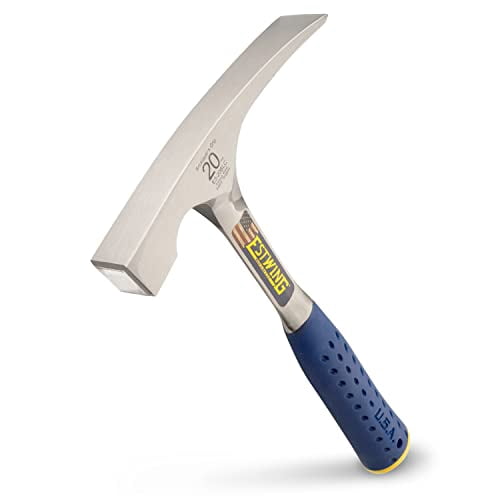
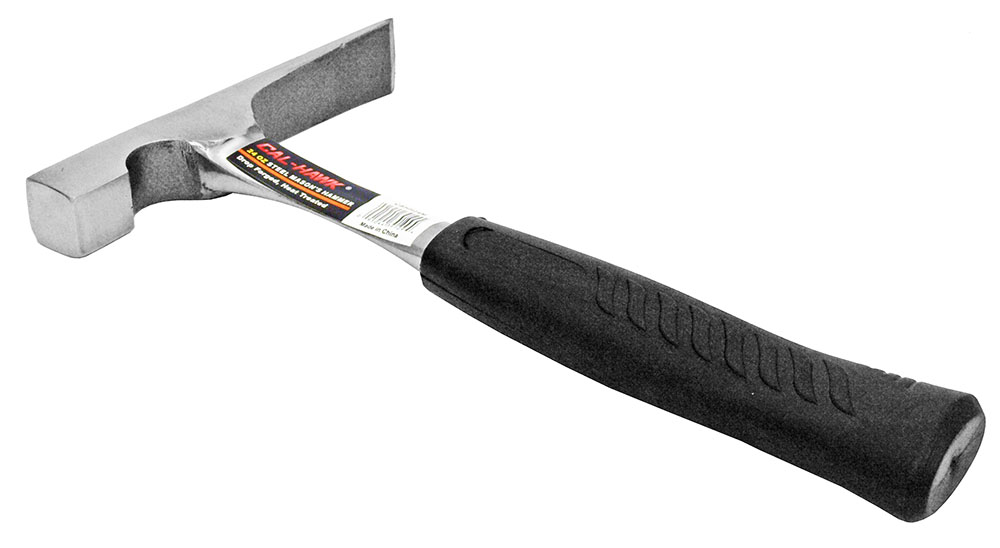
A mason’s hammer is a hand tool made for masonry work. It is also called a brick hammer, bricklayer’s hammer, or, in some cases, a masonry hammer.
Most brick hammers have two working ends:
- Flat face: Used to strike a chisel, tap a brick into place, or make small adjustments.
- Chisel edge: Used to score, trim, split, and chip brick or block.
- Handle: Usually made from wood, fiberglass, or another shock-resistant material.
The tool is not the same as every hammer used on masonry. A lump hammer or drilling hammer has two striking faces and is better for driving cold chisels or breaking hard material. A brick hammer gives better control for brick and block work because its narrow edge can create a planned break.
What a mason’s hammer can do
A mason’s hammer is useful for:
- Trimming a brick to fit an opening
- Removing small pieces of brick or concrete block
- Cutting shallow lines before a split
- Cleaning excess mortar from brick
- Tapping masonry into alignment
- Shaping soft or medium-hard stone
- Removing loose masonry during repair work
What it should not do
Do not use a mason’s hammer as a substitute for a demolition hammer, rotary hammer, or powered masonry saw when the task requires deep cutting or major removal.
Avoid using it to:
- Break reinforced concrete
- Cut through rebar
- Remove load-bearing walls
- Cut utility lines or masonry that may hide wiring and pipes
- Strike hardened steel tools unless the hammer is rated for that use
- Drive nails, except in an emergency and only with the correct hammer
The right tool depends on the material, the depth of the cut, and the amount of control required.

Choose the Right Hammer and Tools
Start with a hammer that matches the material and the work. A light brick hammer gives more control for trimming brick. A heavier hammer can remove more material but may increase the chance of cracking the piece or damaging nearby surfaces.
Before starting, gather:
- Mason’s or brick hammer
- Pencil, crayon, or masonry marker
- Masonry chisel, if you need a straight deep cut
- Brick set, if you are splitting brick along a marked line
- Tape measure and straightedge
- Safety glasses with side protection
- Hearing protection for repeated striking
- Work gloves
- Long pants and sturdy, closed-toe boots
- Dust control, such as a spray bottle or suitable respirator
- Stable work surface
- Clamp or support blocks for loose pieces
Inspect the hammer
Check the tool before each use.
Do not use a hammer if:
- The head is loose
- The handle is cracked, bent, or badly worn
- The striking face has dangerous chips or sharp raised edges
- The chisel edge is mushroomed or badly deformed
- The handle has oil, mud, or another slippery coating
A loose head can fly off during a swing. A damaged striking face can shed metal fragments.
Pick the safest work area
Work on a firm, level surface. Support the brick or block so that the cut line is not resting directly on the ground.
Keep bystanders away. Masonry chips can travel farther than expected, especially when the material is hard or already cracked.
Before striking existing masonry, check for:
- Electrical wires
- Plumbing
- Gas lines
- Structural supports
- Hidden reinforcing steel
- Fragile tile, glass, or finished surfaces nearby
If the work may affect a wall, chimney, foundation, retaining wall, or other structural element, stop and ask a qualified professional to assess it first.
How to Use a Mason’s Hammer Step by Step
Use short, controlled strikes. The goal is to create a weak line in the material, not to smash through it in one blow.
1. Measure and mark the cut
Measure the piece and mark the cut line on all visible sides. A line on only one face may not guide the break accurately.
For a brick, mark:
- The top
- The bottom
- One or both sides, when accessible
A square line helps the brick break where you want it to break. If the cut must be precise, use a straightedge rather than drawing by eye.
2. Support the masonry
Place the brick or block on a stable surface. Leave the waste side overhanging the edge when practical.
Do not hold a small piece in your hand while striking it. Your hand can slip into the path of the hammer or a flying fragment.
For larger pieces, use blocks or a clamp that will not interfere with the cut. The material should not bounce during the strike.
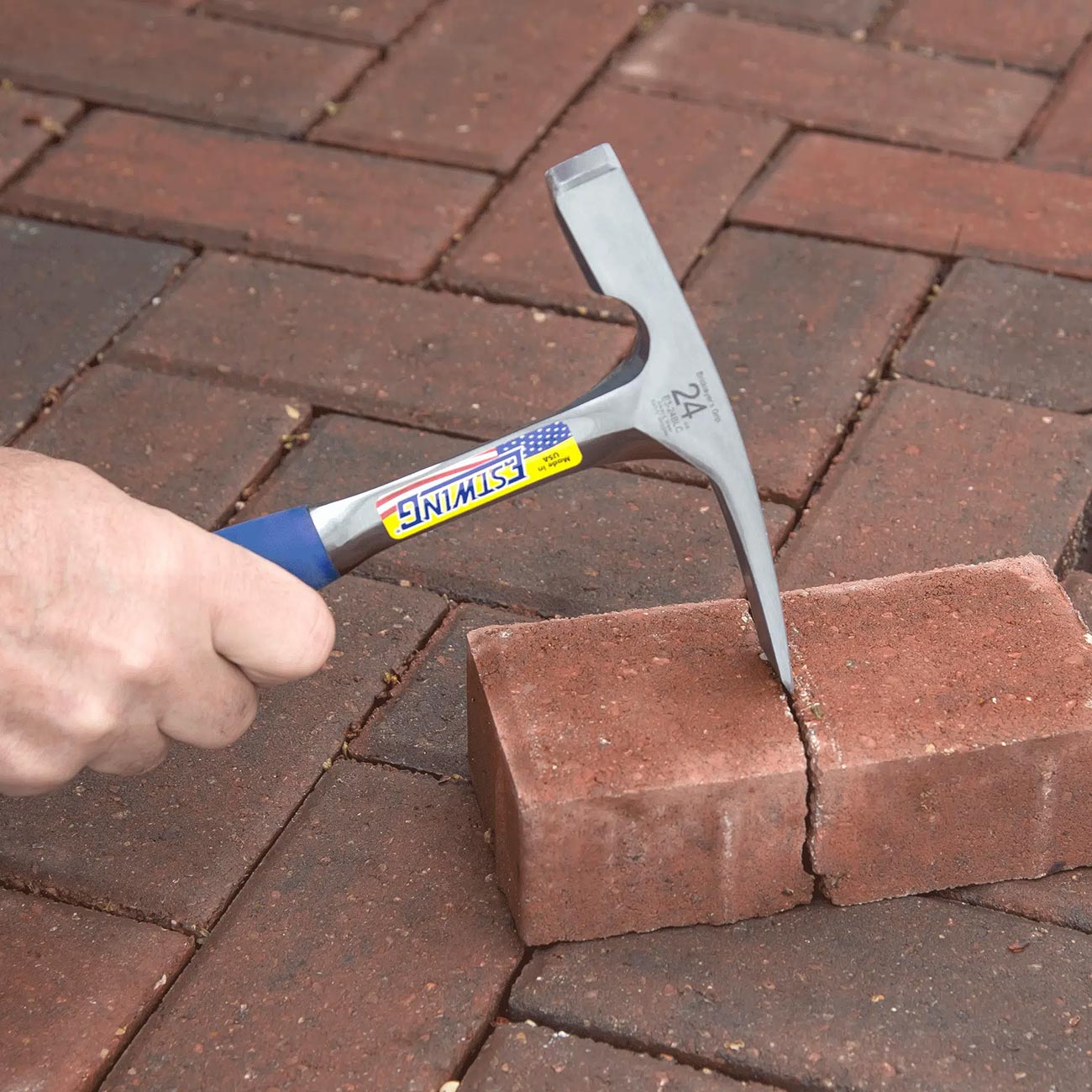
3. Score the line with the chisel edge
Hold the hammer firmly but do not squeeze it so hard that your hand and arm become rigid. Position the chisel edge on the marked line.
Tap along the line with light blows. Move from one end to the other, then repeat. The first passes should create a visible groove rather than remove a large amount of material.
For a clean break:
- Make one light pass along the full line.
- Make a second pass to deepen the groove.
- Turn the piece and repeat on the other marked faces.
- Keep the groove in the same plane on each side.
A continuous groove helps control the force. It works like a tear line in paper, but on a much harder material.
4. Deepen the score gradually
Increase the force only after the line is clear. Use the chisel edge to deepen the groove a little at a time.
Keep the hammer path close to the work. Avoid wide swings. A short swing gives better aim and places less stress on your wrist and shoulder.
If the material starts to crack away from the line, stop. The piece may have an internal flaw, or the groove may not be deep or even enough.
5. Make the final split
When the groove is deep enough, place the chisel edge near the center of the line and deliver a controlled blow.
For thicker brick or block, use a masonry chisel or brick set on the groove. Strike the chisel with the flat face of the hammer. Keep your other hand behind the chisel and away from the striking path.
The final blow should finish a cut that you have already prepared. Do not rely on one powerful strike to create the entire break.
6. Dress the edge
After the piece separates, remove small high spots with light taps. You can also use a masonry rubbing stone or abrasive block to smooth the edge.
Do not keep striking a piece that is already thin or unstable. Small fragments may break off unpredictably.
7. Check the fit
Place the trimmed brick or block in position without mortar first. Check the gap, alignment, and face position.
If it is slightly too large, remove a small amount at a time. It is easier to take off more material than to repair a piece that you cut too short.

How to Cut Brick Cleanly
Brick cuts are cleaner when you use a straight line, even support, and several light passes.
For a basic brick cut:
- Mark the cut on all accessible sides.
- Score the line with the chisel edge.
- Turn the brick and repeat the score.
- Deepen each groove evenly.
- Place the brick on a firm support.
- Strike the groove with a controlled blow.
- Trim small projections after the break.
For a more accurate cut, use a brick set or masonry saw. A hammer is well suited to small adjustments and traditional brick trimming, but a saw is usually better for a long, visible cut where edge quality matters.
Do not strike the finished face repeatedly. The face can spall, which means small chips break away from the surface. Work from the waste side when the cut design allows it.
Cutting concrete block
Concrete masonry units, often called CMUs or cinder blocks, can be harder and more brittle than common clay brick.
For a concrete block:
- Mark every face you can reach.
- Score the line more deeply than you would for a soft brick.
- Support the block close to the cut.
- Use a brick set or masonry chisel for the final break.
- Expect a rougher edge than a saw-cut edge.
If the block contains reinforcement, stop rather than trying to cut through the metal with the hammer. Use a method designed for reinforced material, or have the work assessed by a qualified contractor.

How to Remove Mortar With a Mason’s Hammer
A mason’s hammer can remove small amounts of loose or excess mortar. It is not the best tool for aggressive removal from sound brick.
Hold the chisel edge at a shallow angle to the mortar. Tap lightly and work in small sections. Keep the edge pointed toward the mortar rather than the brick.
Use extra care on older brick. Historic or soft brick may be weaker than the mortar around it. A hard strike can remove part of the brick face and cause more damage than the mortar itself.
Stop if:
- The brick face begins to flake
- The mortar does not release with light taps
- The joint is part of a structural wall
- The wall begins to move
- You uncover a crack that extends beyond the work area
For repointing or repair on an older building, test a small area first. The correct mortar and removal method depend on the brick and the existing joint.
Mason’s Hammer Technique: Control Beats Force
The best technique is based on control, not power.
Keep your elbow and wrist relaxed. Let the hammer head do the work. Use a short swing and strike with the intended working surface.
Follow these habits:
- Keep your eyes on the point of contact.
- Strike squarely instead of glancing across the material.
- Use light blows when starting a groove.
- Reposition the work instead of twisting your wrist.
- Let the hammer rebound naturally.
- Take breaks during repeated work.
- Keep your non-striking hand out of the impact zone.
A glancing blow can send the hammer sideways or chip the edge of the material. If the tool keeps sliding off the line, stop and improve the mark, support, or angle.
Flat face versus chisel edge
Use the chisel edge when you need to score, trim, or split masonry.
Use the flat face when you need to:
- Tap a brick into place
- Strike a separate masonry chisel
- Make a small adjustment to a supported piece
Do not use the sharp edge as a general striking face. Do not use the flat face on a hard steel chisel unless the hammer is designed for that job.

Common Problems and Fixes
| Problem | Likely cause | Safer correction |
|---|---|---|
| The brick breaks in the wrong place | The score line is shallow or uneven | Mark all faces and deepen the groove in stages |
| The edge is badly chipped | Strikes are too hard or placed on the finished face | Use lighter blows and work from the waste side |
| The hammer slips | The handle or glove is oily, wet, or poorly held | Clean the handle and use a firm, controlled grip |
| The piece bounces | The support is unstable | Use a solid work surface and support the masonry near the cut |
| The hammer misses the line | The swing is too wide or the mark is unclear | Shorten the swing and remark the line |
| The tool damages nearby brick | Force is traveling through the wall | Remove loose material first and use a smaller tool |
| The masonry will not split | The material is too hard, thick, reinforced, or poorly supported | Use a brick set, masonry saw, rotary hammer, or professional help |
| Dust becomes heavy | Dry cutting or repeated impact is releasing fine particles | Stop, improve ventilation and dust control, and use suitable respiratory protection |
A failed cut often means the method or tool is wrong, not that you need to swing harder.

Mason’s Hammer Safety
Wear eye protection every time you strike masonry. Ordinary sunglasses do not provide the same protection as safety glasses marked for impact resistance.
Use hearing protection when striking for long periods or working in an enclosed space. Masonry impact can create sharp, sudden noise.
Control dust. Cutting and breaking masonry can release respirable crystalline silica. The Occupational Safety and Health Administration (OSHA) identifies respirable silica as a serious workplace hazard. Avoid creating unnecessary dust, use wet methods where appropriate, improve ventilation, and follow the instructions for any respirator you use.
Also follow these precautions:
- Wear sturdy gloves, but do not let gloves reduce your grip.
- Keep both feet stable.
- Do not strike toward another person.
- Cover nearby glass and finished surfaces.
- Keep children and pets away.
- Clean chips with a brush or suitable vacuum rather than blowing them into the air.
- Do not use a damaged hammer.
- Stop work if you feel pain, numbness, or loss of control.
For a workplace project, OSHA requirements may apply to training, hazard control, protective equipment, and silica exposure. Residential work still deserves the same basic care.

When to Use a Different Tool
A mason’s hammer is a good choice for small, controlled work. Choose another tool when accuracy, depth, or material strength makes hammer-only work unsuitable.
| Task | Better tool or method |
|---|---|
| Small brick trim | Mason’s hammer and brick set |
| Long, clean brick cut | Masonry saw |
| Deep hole in brick or block | Rotary hammer with masonry bit |
| Large concrete removal | Demolition hammer or rotary hammer |
| Reinforced concrete | Professional equipment and proper planning |
| Removing large areas of mortar | Mortar rake, grinder with dust control, or specialist tool |
| Fine stone shaping | Stoneworking hammer and appropriate chisels |
| Structural wall alteration | Qualified contractor or structural professional |
A powered tool is not automatically safer. It can create more dust, noise, vibration, and flying debris. Use the least powerful tool that can complete the task safely and accurately.
Mason’s Hammer FAQs
Can I use a regular claw hammer on brick?
A claw hammer is not the best choice. Its face and claw are designed mainly for nails and wood. Striking masonry with it can damage the hammer, chip the brick unpredictably, or bend the claw.
Should I wet the brick before using a mason’s hammer?
Lightly dampening the work area can help reduce dust, but water does not make every cut safer or cleaner. Keep the handle dry, avoid creating a slippery work surface, and follow the requirements of your dust-control method.
How do I sharpen a mason’s hammer?
Do not grind the head casually. The working edge should remain properly shaped and free of dangerous deformation. If the edge is badly damaged, follow the maker’s instructions or replace the tool.
Why does my brick keep shattering?
The brick may be brittle, unsupported, damaged, or unsuitable for hammer trimming. The score may also be uneven. Use lighter blows, mark all sides, support the brick correctly, and switch to a masonry saw when the edge must be precise.
Can a mason’s hammer break concrete?
It can chip or remove small amounts of plain concrete, but it is not efficient for thick or reinforced concrete. For larger work, use the correct powered tool and control dust, noise, and flying debris.
Is a mason’s hammer safe for historic brick?
Not always. Older brick may be soft or already weakened. Test a small area, use very light strikes, and consult a masonry restoration professional if the wall is valuable, fragile, or structural.
Key Takeaways
- Use the chisel edge to score and trim masonry.
- Mark the cut on more than one face.
- Support the brick or block on a stable surface.
- Start with light blows and deepen the groove gradually.
- Use the flat face for tapping or striking a separate masonry chisel.
- Wear impact-rated eye protection and control silica dust.
- Stop if the material is reinforced, structural, unstable, or breaking away from the line.
- Switch to a masonry saw or rotary hammer when the job needs a deep, long, or precise cut.
Conclusion
To use a mason’s hammer well, treat it as a control tool rather than a heavy demolition tool. Mark the masonry, score the line, support the piece, and deepen the groove with short, measured strikes. If the material resists, cracks unpredictably, or may be structural, stop and choose a safer method or get qualified help.
Recent Tool Guides
 Hammer
How To Hammer Flowers Onto Paper: Easy Guide
Learn how to hammer flowers onto paper with simple steps, helpful tips, and beautiful results for...
Read Guide → Wrench
How To Use A Hex Wrench: Easy Step-By-Step Guide
Learn how to use a hex wrench correctly with simple steps, helpful tips, and common mistakes...
Read Guide → Hacksaw
How To Cut Curtain Pole With Hacksaw: Easy Guide
Learn how to cut curtain pole with hacksaw safely and neatly. Follow simple steps for accurate...
Read Guide → Wrench
How To Use A Husky Torque Wrench: Easy Guide
Learn how to use a Husky torque wrench correctly with simple steps, torque settings, and safety...
Read Guide → Hammer
How To Hold A Hammer: Safe Grip Guide
Learn how to hold a hammer with the right grip, stance, and technique for safer, more...
Read Guide → Hacksaw
How To Cut Flexible Metal Conduit With Hacksaw: Easy Guide
Learn how to cut flexible metal conduit with hacksaw safely and cleanly. Follow simple steps for...
Read Guide →