Difference Between Hand Tools And Power Tools: Guide
For homeowners, DIY users, and tradespeople in the United States, the main difference is simple: hand tools use human force, while power tools use an energy source such as electricity, batteries, compressed air, or fuel.
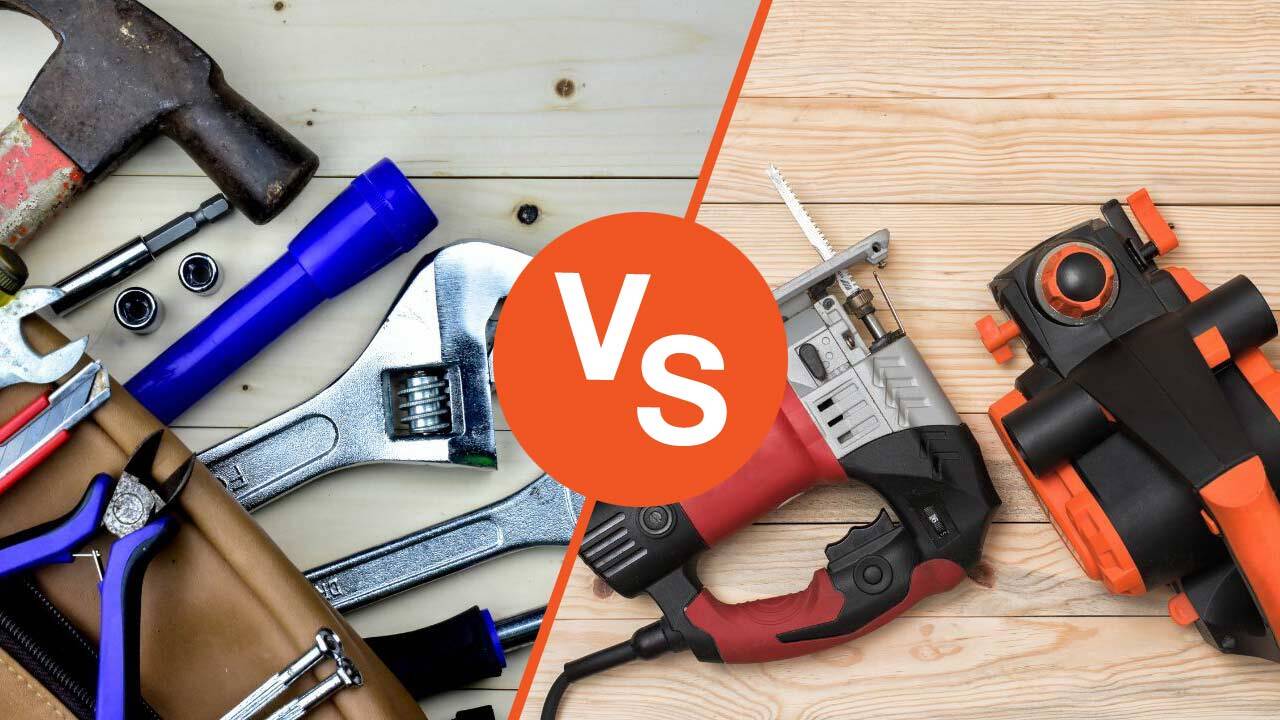
A screwdriver, hammer, handsaw, and wrench are hand tools. A drill, circular saw, angle grinder, and impact driver are power tools. Hand tools often give better control and need little setup. Power tools usually complete the same work faster and with less physical effort, but they bring more noise, moving parts, and safety risks.
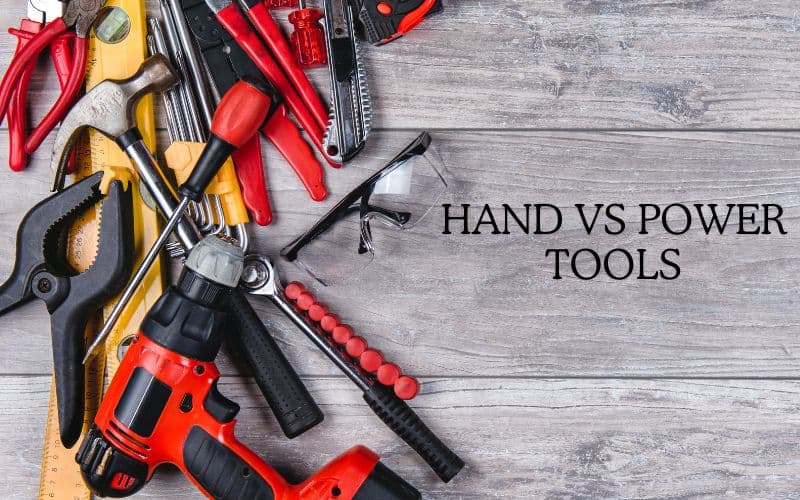
Hand tools and power tools at a glance
Hand tools are tools operated mainly by your hands and body. Power tools use a motor or another powered system to move, cut, drill, sand, fasten, or shape material.
| Feature | Hand tools | Power tools |
|---|---|---|
| Main energy source | Human effort | Electricity, battery, air, or fuel |
| Speed | Usually slower | Usually faster |
| Control | High for small, careful work | High output, but can be harder to control |
| Setup | Little setup | May need power, batteries, bits, blades, or air lines |
| Noise | Usually low | Often moderate to very loud |
| Cost | Often lower at first | Often higher, especially with accessories |
| Maintenance | Basic cleaning and inspection | Charging, cord checks, blade care, and motor care |
| Best use | Light work, precision, access, and short tasks | Repeated work, hard materials, and large projects |
| Main risk | Cuts, pinches, strains, and impact injuries | Cuts, kickback, electric shock, noise, dust, and entanglement |
The line is not always absolute. A hand tool can cause a serious injury if used poorly. A small cordless tool may be easy to control. The tool type matters, but the material, task, user skill, and work area matter too.
What are hand tools?
Hand tools are devices that do not use a motor to do their main work. The user supplies the force through pushing, pulling, turning, striking, or squeezing.
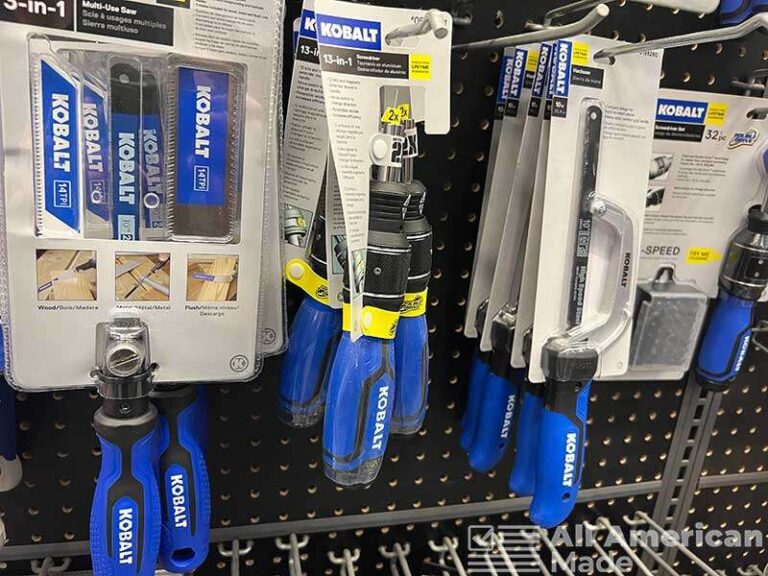
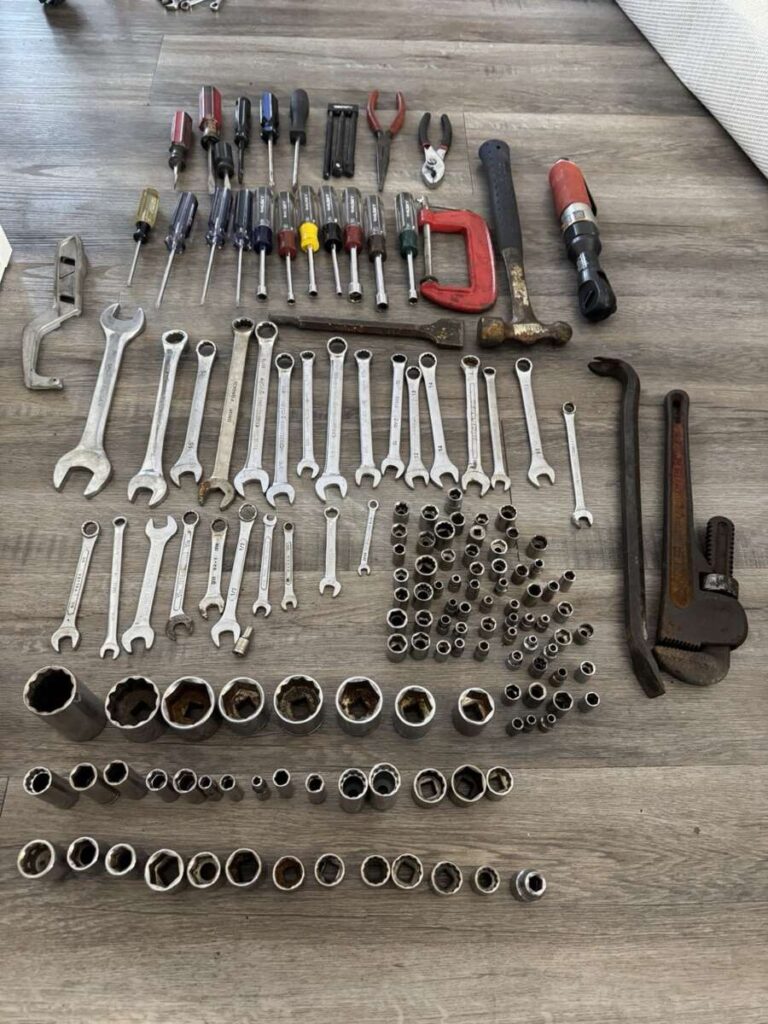
Common hand tools include:
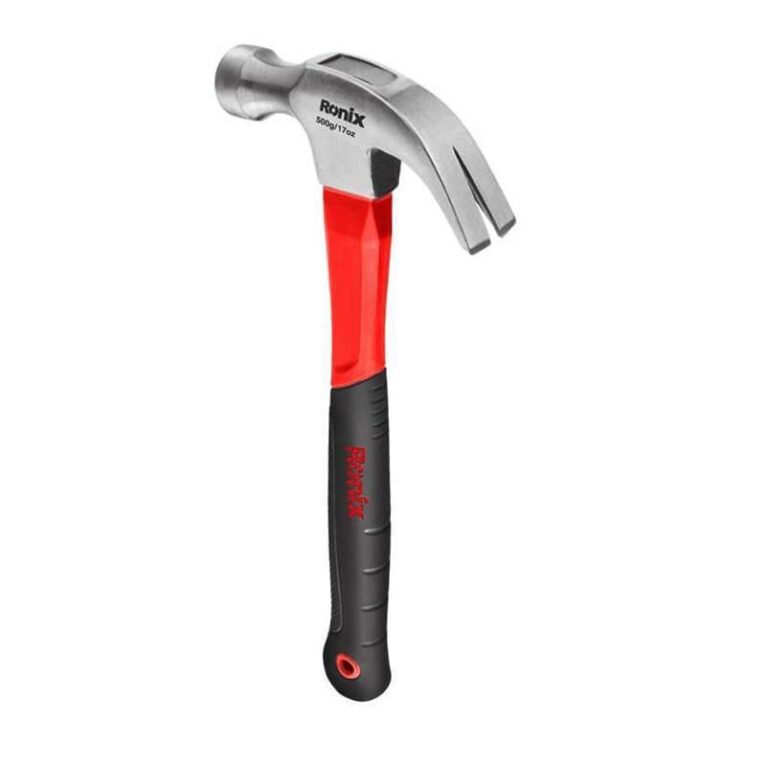
- Hammers and mallets
- Screwdrivers
- Pliers
- Wrenches and socket sets
- Tape measures
- Utility knives
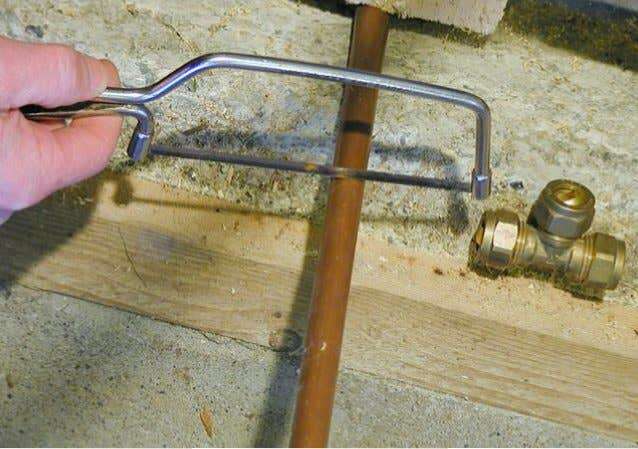
- Handsaws
- Chisels
- Levels
- Clamps
- Files
- Manual pipe cutters
A hand tool may still use a simple mechanism. For example, pliers increase gripping force through a pivot. A ratchet lets you turn a fastener without removing the socket after each movement. These tools are still hand tools because they do not use a motor or external power source.
Strengths of hand tools
Hand tools work well when you need control, low noise, or a quick fix. A screwdriver can be safer than a drill when a small fastener sits near a fragile surface. A handsaw may also give you better feedback when you need to make a small cut.
Their main benefits include:
- Fine control: You can feel changes in resistance and alignment.
- Low setup: Most are ready to use at once.
- Low operating cost: They do not need fuel, charging, or a power cord.
- Easy access: Many fit into small spaces.
- Quiet operation: They suit occupied homes and indoor work.
- Simple upkeep: Cleaning, sharpening, and inspection often cover most needs.
Limits of hand tools
Hand tools need more time and physical effort for many jobs. Repeated turning, cutting, or striking can tire your hands and arms. Fatigue can then reduce control and raise the chance of mistakes.
A hand tool is not always the safer choice. A dull handsaw may bind. A damaged wrench may slip. A poorly fitted screwdriver can damage the fastener and slide into your hand. The Occupational Safety and Health Administration (OSHA) advises users to keep tools in good condition and use the right tool for the job.

What are power tools?
Power tools use an external energy source to perform work. Most use an electric motor, but some use compressed air or a small combustion engine.
Common power tools include:
- Corded drills
- Cordless drills and impact drivers
- Circular saws
- Reciprocating saws
- Jigsaws
- Sanders
- Routers
- Angle grinders
- Rotary hammers
- Nail guns
- Air compressors and pneumatic tools
- Gas-powered chainsaws and outdoor equipment
A power tool does not remove the need for skill. It changes how force reaches the work. The motor can spin a blade or bit far faster than a person can move a hand tool, so the tool can finish many tasks quickly.
Main types of power tools
Corded electric tools draw power from a wall outlet. They can run as long as electricity is available, but the cord can limit movement and create a trip or cut hazard.
Cordless electric tools use rechargeable batteries. They are easy to carry and work well where no outlet exists. Their run time depends on the battery, load, temperature, and tool design.
Pneumatic tools use compressed air. They often appear in auto shops, factories, and construction work. They need a compressor, hose, fittings, and suitable air pressure.
Gas-powered tools use fuel and an engine. They can deliver high output outdoors, but they create exhaust, noise, vibration, and fuel-handling concerns.
Strengths and limits of power tools
Power tools reduce the time and force needed for many repeated tasks. A drill can make a row of holes in seconds. A circular saw can cut sheet goods far faster than a handsaw. An impact driver can drive many long screws with less wrist effort than a manual screwdriver.
Their limits include:
- Higher purchase and accessory costs
- More noise and vibration
- Greater injury potential
- Dust and flying debris
- Battery charging or fuel needs
- Cord, hose, or exhaust concerns
- More parts that need inspection and care
Power tools are best viewed as force multipliers. They can save effort, but they can also multiply an error.

The key differences between hand tools and power tools
The most useful comparison is not simply “slow versus fast.” Each tool type changes the work in several ways.
1. Speed and output
Power tools usually win when the job involves many cuts, holes, fasteners, or large surfaces. A cordless drill is more efficient than a manual screwdriver for assembling a large deck frame, for example.
Hand tools may be faster for one small task. If you need to tighten one loose screw, reaching for a screwdriver may take less time than finding a charged drill and the correct bit.
2. Control and precision
Hand tools often provide better feedback. You can feel whether a screw is cross-threaded or whether a chisel is cutting cleanly. This makes them useful for delicate work and final adjustments.
Power tools can also be precise when used with the right guide, speed setting, blade, and technique. However, high speed leaves less time to correct a mistake. A router or grinder can remove material very quickly.
3. Physical effort
Power tools reduce the force needed from your hands and arms. This can help during repetitive work, but it does not remove physical risk. Vibration, awkward posture, kickback, and heavy tools can still cause strain.
Hand tools may require more muscle effort over time. A well-designed handle and correct body position can reduce that load. Take breaks before fatigue affects your grip or judgment.
4. Portability
Cordless tools are highly portable, but they depend on charged batteries. Hand tools are usually lighter and need no battery, cord, or charger.
Corded tools can be practical in a workshop. They are less convenient on a roof, in a yard, or inside a partially built structure. Pneumatic tools also need a hose and compressor, which can limit movement.
5. Cost
The purchase price is only one part of power-tool cost. You may also need batteries, chargers, blades, bits, discs, lubricants, replacement parts, or a compressor.
Hand tools usually have fewer ongoing costs. Yet cheap, poorly made tools can bend, slip, or fail sooner. Choose tools based on fit, durability, and the demands of the job rather than price alone.
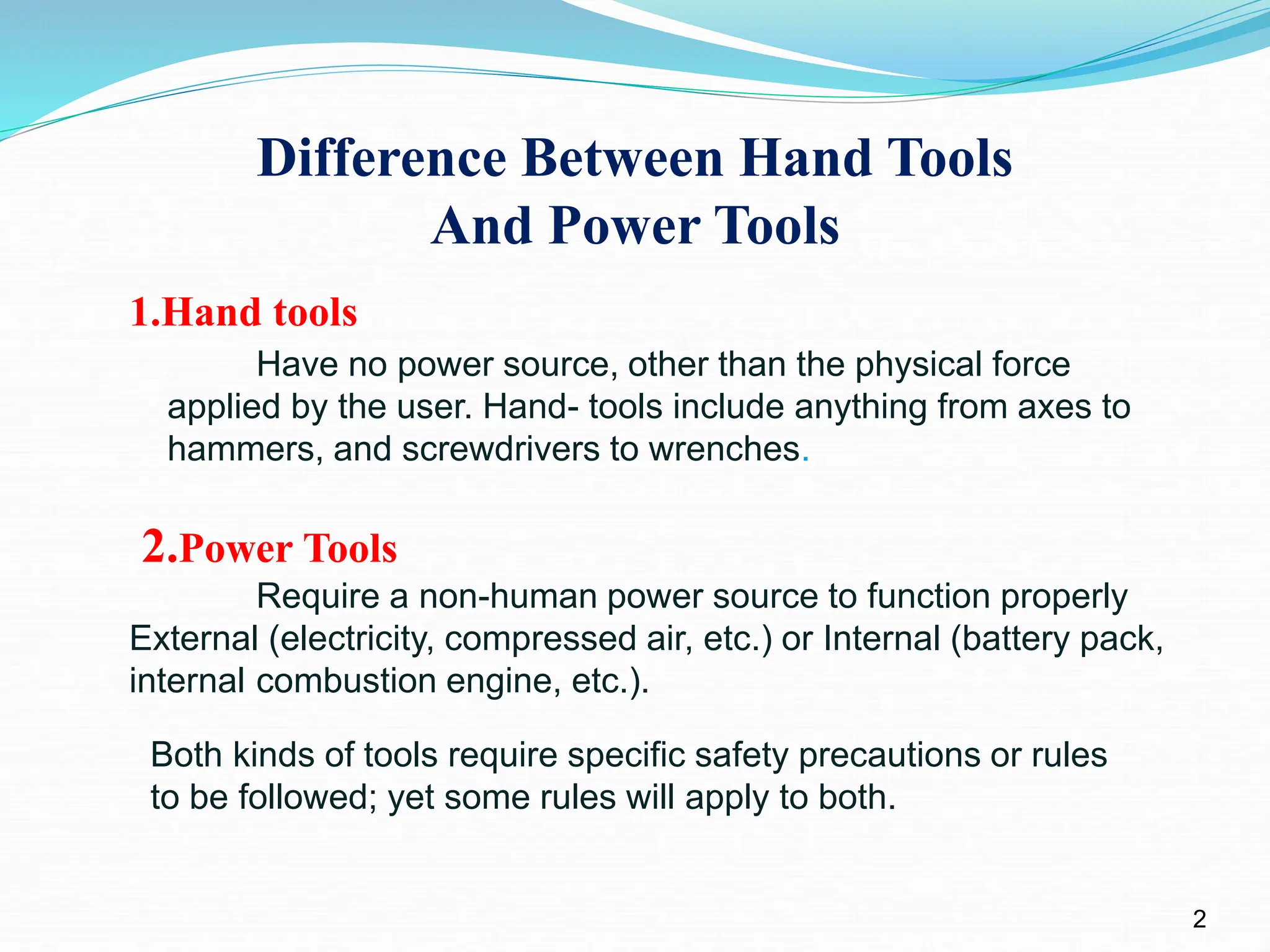
When should you use a hand tool or a power tool?
Choose a hand tool when the task is small, delicate, quiet, or close to a surface that could be damaged. Choose a power tool when the task is repetitive, time-sensitive, physically demanding, or involves hard material.
Use this decision guide:
| If your task involves… | Start with… | Why |
|---|---|---|
| One or two screws | Hand screwdriver | Fast setup and good control |
| Dozens of screws | Drill or impact driver | Less repetitive wrist work |
| A small trim cut | Handsaw or flush-cut saw | Better control near finished surfaces |
| Many long cuts | Circular or table saw | Faster material removal |
| A small repair indoors | Hand tools | Less noise and less setup |
| Thick wood or masonry | The correct power tool | More cutting or drilling capacity |
| Delicate hardware | Hand tool | Lower risk of over-tightening |
| Large sanding work | Power sander | More even output with less effort |
| Work near water or wiring | Stop and assess first | Electrical and shock hazards may exist |
A useful rule is: use the least powerful tool that can complete the job safely and correctly. That does not mean avoiding power tools. It means matching the tool’s force to the material and task.
For example, a hand screwdriver is a sensible choice for a small cabinet hinge. A drill is more useful for pilot holes. An impact driver may be excessive for tiny brass screws because its torque can damage the fastener or material.
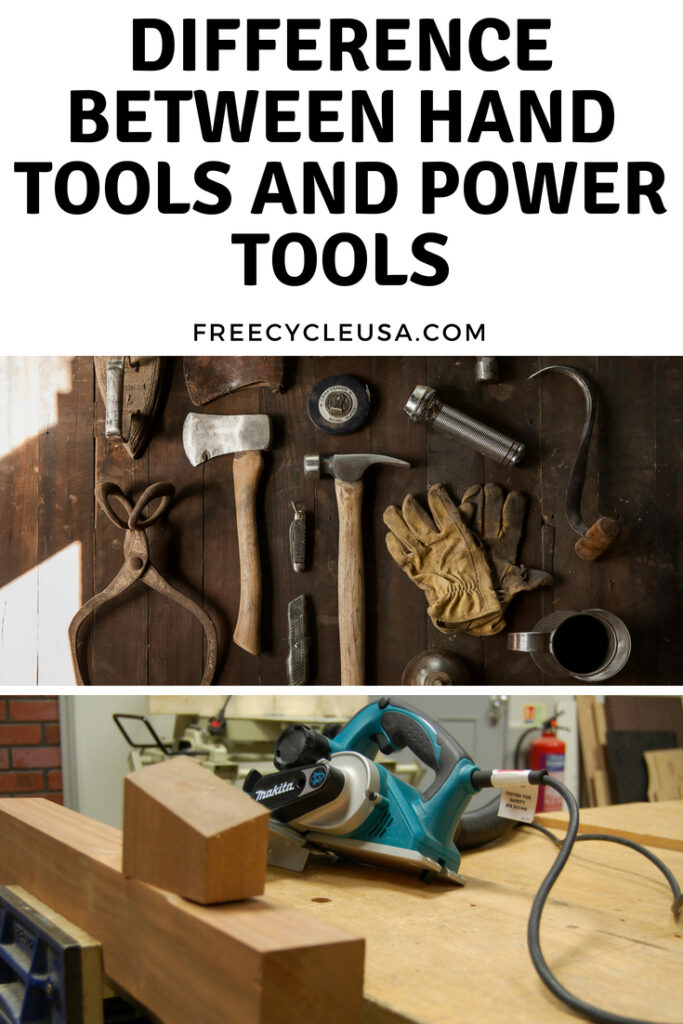
Can power tools replace hand tools?
Power tools cannot fully replace hand tools. Most projects need both.
Power tools remove material or install fasteners quickly. Hand tools help with measuring, holding, aligning, trimming, tightening, and finishing. A carpenter may use a circular saw for rough cuts, then a block plane, chisel, or handsaw for a final fit.
Many power tools also need hand tools for setup. You may need a wrench to change a blade, a hex key to adjust a guide, or a screwdriver to replace a part.
The best tool set is not the largest one. It is the set that covers your common tasks without adding tools you cannot store, maintain, or use safely.
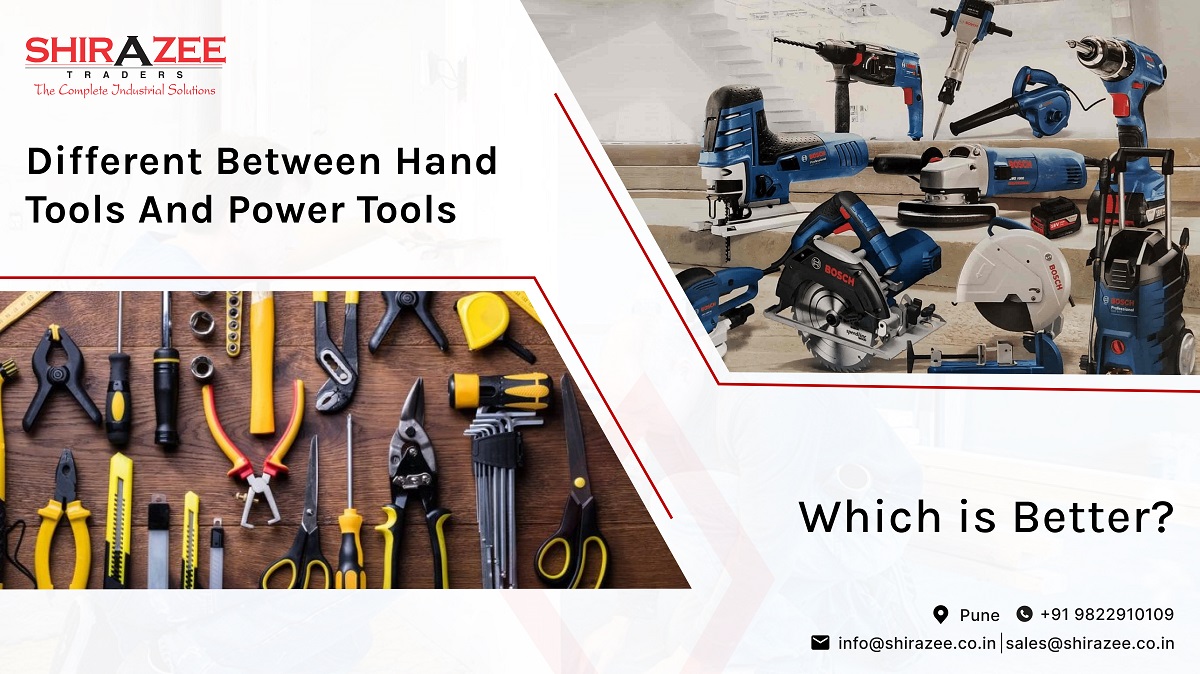
Safety differences between hand tools and power tools
Power tools generally create more severe hazards because they combine high speed, stored energy, sharp parts, and electricity or fuel. OSHA’s hand and power tool rules address issues such as guards, safe condition, and proper use in workplaces. Home users should apply the same basic care.
Hand-tool safety
- Use the correct size and type of tool.
- Keep cutting edges sharp and protected.
- Do not use a wrench as a hammer unless it is designed for that purpose.
- Replace cracked handles and damaged grips.
- Keep your non-working hand away from the cutting path.
- Wear eye protection when striking, cutting, or breaking material.
- Do not use a screwdriver as a pry bar or chisel.
Power-tool safety
- Read the manufacturer’s instructions before use.
- Inspect the cord, plug, housing, guard, blade, and bit.
- Disconnect power before clearing a jam or changing an accessory.
- Remove the battery from cordless tools before service or accessory changes when the manual directs you to do so.
- Keep hands away from the moving part.
- Secure the workpiece with a clamp or vise.
- Wear eye protection for work that can create chips or dust.
- Use hearing protection around loud tools.
- Control dust with the tool’s collection system, ventilation, or suitable respiratory protection.
- Keep loose clothing, hair, and jewelry away from rotating parts.
- Never remove a guard because it makes the work easier.
The U.S. Consumer Product Safety Commission warns that power tools can cause serious injuries when users ignore guards, instructions, or protective equipment. A tool’s safety features only work when they remain installed and functional.
Electrical and battery concerns
Do not use a corded tool with a damaged cord or plug. Keep cords away from heat, oil, sharp edges, water, and the cutting path. Use outlets and extension cords that are suitable for the tool and work area.
Charge batteries with the charger and battery system specified by the manufacturer. Stop using a battery that is swollen, leaking, hot, cracked, or damaged. Do not place damaged lithium-ion batteries in household trash; check your local disposal or household hazardous-waste program for proper handling.
Dust and noise
Cutting, sanding, grinding, and drilling can release harmful dust. Wood dust, masonry dust, and coatings may create different hazards. Use the control methods listed by the tool maker and follow applicable OSHA or National Institute for Occupational Safety and Health guidance for workplace exposure.
Noise can also harm hearing. If you must raise your voice to talk near a tool, hearing protection may be needed. Keep children and bystanders away from the work zone.

Common mistakes when choosing between the two
The most common mistake is choosing a tool by speed alone. Faster is not better if the tool removes too much material, damages the workpiece, or becomes hard to control.
Other frequent errors include:
- Using a dull or damaged blade
- Choosing the wrong bit, blade, or disc
- Skipping a pilot hole in material that may split
- Holding a small workpiece in one hand while cutting it
- Ignoring kickback direction
- Using a corded tool near water
- Over-tightening small fasteners with a high-torque tool
- Wearing gloves near rotating parts when the manufacturer warns against it
- Working while tired or distracted
- Assuming a battery tool has no electrical risk
- Using an extension cord that is too long or too light for the load
If a tool binds, sparks, smells hot, vibrates unusually, or loses control, stop. Disconnect it when safe, inspect the tool and accessory, and check the manual. Do not keep using a tool to “see if it gets better.”
Which type is better for beginners?
Hand tools are often easier for beginners to understand because they move at a slower pace and provide direct feedback. They are a good way to learn measuring, alignment, pressure, cutting paths, and fastener control.
Beginners can use power tools safely when they start with a simple task, a stable workpiece, and a tool with suitable guards and controls. Begin at a low speed when the tool allows it. Practice on scrap material before working on a finished project.
A basic U.S. home toolkit might include:
- Tape measure
- Combination or torpedo level
- Screwdriver set
- Pliers
- Adjustable wrench
- Utility knife
- Clamps
- Hammer
- Cordless drill with common bits
- Eye protection
Add tools as your projects require them. Buy the accessory for the material, not just the tool. A wood blade, masonry bit, and metal drill bit are made for different work.

Frequently asked questions
Are hand tools safer than power tools?
Not automatically. Hand tools usually operate at lower speed and may be easier to control, but they can still cause cuts, strains, punctures, and impact injuries. Power tools add hazards such as kickback, electric shock, noise, and flying debris. Safe use depends on the tool, task, condition, and user.
Do power tools use more electricity than hand tools?
Hand tools use no external electricity. Corded power tools use electricity while running. Cordless tools use stored battery energy, and charging adds electricity use. The amount depends on the tool’s motor, workload, run time, and battery system.
Is a cordless drill a hand tool or a power tool?
A cordless drill is a power tool. It uses a battery and motor to rotate a chuck and bit. Its small size does not change its category or remove the need for eye protection and safe handling.
What is the difference between an impact driver and a drill?
A drill provides smooth rotary motion and is suited to drilling and controlled screw driving. An impact driver adds short bursts of rotational force, which help drive long or stubborn fasteners. An impact driver can damage small screws or delicate materials if used with too much force.
Should I buy hand tools or power tools first?
Start with basic hand tools for measuring, tightening, holding, and small repairs. Add one versatile power tool, often a drill, when your projects involve repeated holes or screws. Choose later tools based on real tasks rather than a large starter kit.
Conclusion
Hand tools rely on human force and usually offer simple setup, quiet operation, and fine control. Power tools use electricity, batteries, air, or fuel to deliver more speed and force. They are useful for repeated work, hard materials, and large projects, but they need more care and safety control.
For most U.S. homeowners, the practical answer is not hand tools or power tools. It is hand tools and power tools used for the jobs they fit best. Start with the least powerful tool that can do the work well, inspect it before use, and follow the manufacturer’s instructions.
Recent Tool Guides
 Hammer
How To Hammer Flowers Onto Paper: Easy Guide
Learn how to hammer flowers onto paper with simple steps, helpful tips, and beautiful results for...
Read Guide → Wrench
How To Use A Hex Wrench: Easy Step-By-Step Guide
Learn how to use a hex wrench correctly with simple steps, helpful tips, and common mistakes...
Read Guide → Hacksaw
How To Cut Curtain Pole With Hacksaw: Easy Guide
Learn how to cut curtain pole with hacksaw safely and neatly. Follow simple steps for accurate...
Read Guide → Wrench
How To Use A Husky Torque Wrench: Easy Guide
Learn how to use a Husky torque wrench correctly with simple steps, torque settings, and safety...
Read Guide → Hammer
How To Hold A Hammer: Safe Grip Guide
Learn how to hold a hammer with the right grip, stance, and technique for safer, more...
Read Guide → Hacksaw
How To Cut Flexible Metal Conduit With Hacksaw: Easy Guide
Learn how to cut flexible metal conduit with hacksaw safely and cleanly. Follow simple steps for...
Read Guide →