What Is A Power Hacksaw: Uses, Parts & Working Guide
A power hacksaw is a machine tool that cuts metal with a straight, reciprocating blade. An electric motor drives a crank or gear system, which moves the blade back and forth through the workpiece. The blade cuts mainly on its forward stroke and returns on the idle stroke.
In the United States, power hacksaws are found in machine shops, maintenance rooms, fabrication shops, and school training labs. They are useful for cutting steel, aluminum, brass, copper, and other metals into bars, pipes, rods, and sections.
Unlike a hand hacksaw, a power hacksaw feeds the blade with machine force. Unlike a band saw, it uses a short blade that moves in a back-and-forth path rather than a continuous loop.
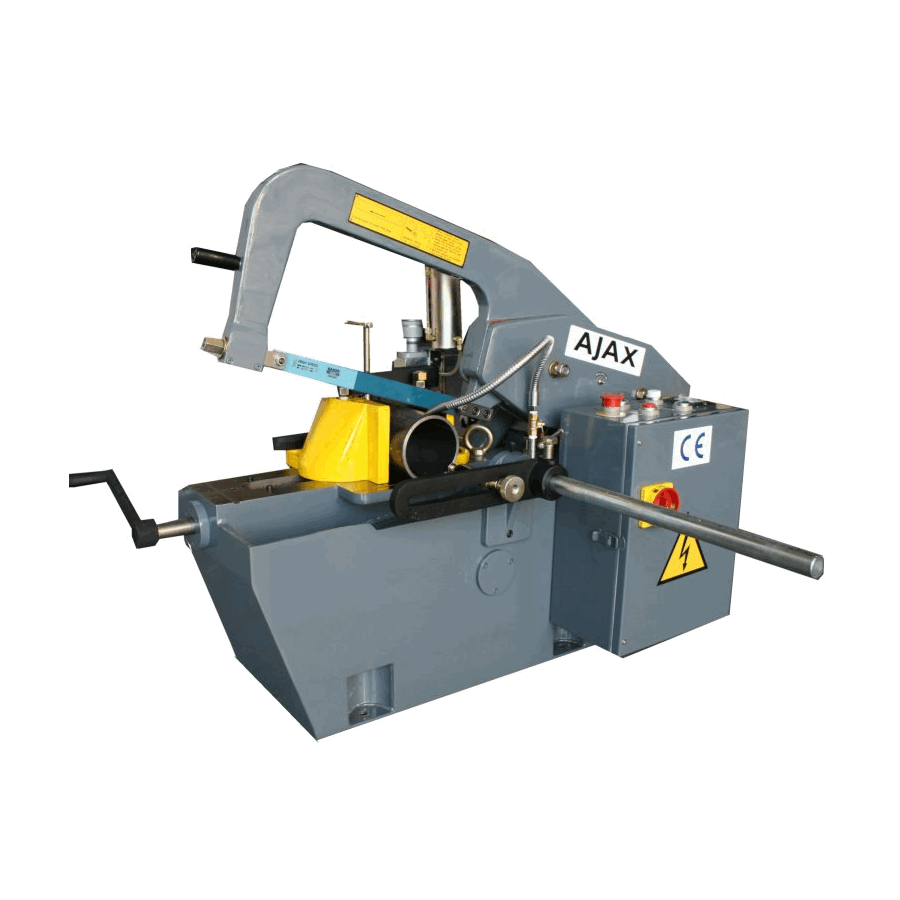
How Does a Power Hacksaw Work?
A power hacksaw converts the rotary motion of an electric motor into the back-and-forth motion of a saw frame. The motor turns a pulley, gearbox, or crank. That drive system moves the blade frame through each cutting stroke.
The blade usually cuts in one direction. On the return stroke, the machine may slightly lift the blade or reduce its pressure against the metal. This lowers friction and helps protect the teeth.
A typical cutting cycle works like this:
- The operator clamps the workpiece in the vise.
- The motor moves the blade frame forward.
- The blade teeth remove a small amount of metal.
- The frame returns to its starting position.
- The machine repeats the cycle until the cut is complete.
The cutting rate depends on the blade stroke length, strokes per minute, tooth pitch, feed pressure, and material. A harder or thicker workpiece usually needs a slower cut and a blade with a suitable tooth pattern.
Many machines use a weighted saw frame or adjustable feed mechanism. The weight creates downward pressure on the blade. Some models let the operator control the feed with a hydraulic or mechanical system.

Main Parts of a Power Hacksaw
The main parts of a power hacksaw support the blade, hold the workpiece, and control the cutting motion.
| Part | Function |
|---|---|
| Motor | Supplies power to the cutting mechanism |
| Drive system | Transfers motor power through belts, gears, or a crank |
| Saw frame | Holds the blade and moves it back and forth |
| Blade | Uses hardened teeth to remove metal |
| Blade holders | Secure each end of the blade |
| Vise | Holds the workpiece during cutting |
| Feed mechanism | Applies controlled pressure to the blade |
| Base and table | Support the machine and reduce movement |
| Coolant system | Reduces heat and carries chips away on equipped models |
| Controls | Start, stop, speed, and feed controls |
The vise is especially important. A loose workpiece can vibrate, produce a rough cut, damage the blade, or become a serious hazard. The work should sit firmly against the vise jaws and should have support if a long section extends beyond the machine.
The blade is a consumable part. It can become dull, lose teeth, crack, or break. A damaged blade should be replaced rather than forced through the material.

What materials Can a Power Hacksaw Cut?
A power hacksaw can cut many common metals when the blade, speed, and feed match the material.
Common materials include:
- Mild steel
- Stainless steel
- Tool steel
- Aluminum
- Brass
- Bronze
- Copper
- Cast iron
- Metal pipe and tubing
- Solid bar stock
- Angle iron and channel
The machine is not designed for every material. Wood, plastic, and composite materials may require different blades and cutting methods. Never assume that a metal-cutting blade is suitable for another material.
Material thickness also affects the cut. Thin tubing can catch or strip teeth if the blade tooth pitch is too coarse. Very thick stock can overload a fine-tooth blade. The correct choice keeps several teeth engaged with the work at once.
Check the machine manual and blade maker’s instructions before cutting unfamiliar material. Coated, painted, plated, or contaminated metal may create extra dust, fumes, or cutting problems.

Power Hacksaw vs. Band Saw
Both machines cut metal, but they use different blade motions.
| Feature | Power hacksaw | Metal-cutting band saw |
|---|---|---|
| Blade motion | Reciprocating | Continuous loop |
| Cutting action | Mainly one cutting stroke | Continuous cutting |
| Typical operation | Often slower and steady | Often faster and smoother |
| Blade format | Short, replaceable blade | Welded or looped blade |
| Best fit | Small shops, repair work, basic stock cutting | Production work and frequent cutting |
| Typical noise | Mechanical stroke and return noise | Motor and blade-running noise |
| Cut interruptions | Blade returns without cutting | Teeth remain in the cutting path |
A power hacksaw can be a good choice when purchase cost, simple operation, and low production volume matter. A band saw may be better for repeated cuts, larger stock, angled cuts, or faster production.
Neither machine is automatically better. The right choice depends on the workpiece size, required speed, cut quality, available floor space, and maintenance skill.

Power Hacksaw vs. Hand Hacksaw
A hand hacksaw uses the operator’s arm to move the blade. A power hacksaw uses a motor and mechanical drive to repeat the cutting stroke.
A power hacksaw can:
- Reduce manual effort
- Produce repeated cuts with less operator fatigue
- Hold a more consistent cutting path
- Cut larger metal sections than most hand hacksaws
- Run with limited operator input after setup
A hand hacksaw can still be more useful for:
- Small repair jobs
- Tight spaces
- On-site work
- One or two quick cuts
- Materials that cannot be secured in a machine vise
A powered machine does not remove the need for setup. The operator must still choose the blade, secure the work, set the feed, and monitor the cut.
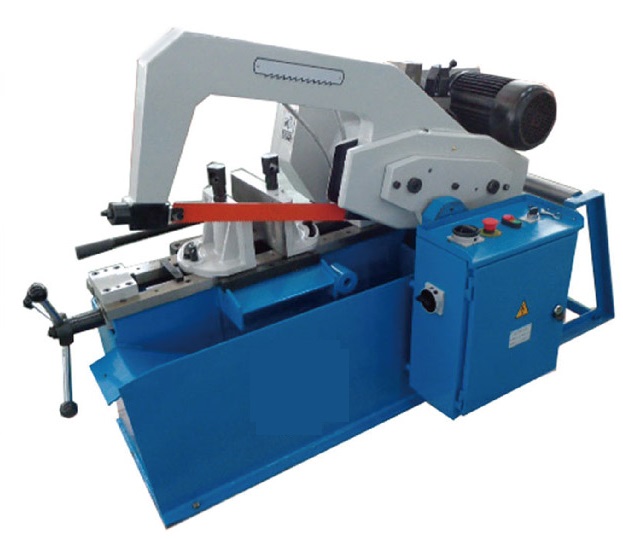
How to Choose the Right Blade
Blade selection affects cutting speed, surface quality, tooth life, and safety.
Tooth pitch
Tooth pitch describes the number of teeth per inch, often written as TPI. A fine-tooth blade has more teeth per inch. A coarse blade has fewer teeth per inch.
Use these general rules:
- Fine teeth: thin-wall tubing, thin sheet, and small sections
- Medium teeth: common steel bars and general shop work
- Coarse teeth: thick solid stock and large sections
The exact range depends on the blade maker and machine. A useful rule is to keep at least several teeth engaged in the material during the cut. If only one or two teeth contact the work, the teeth may snag or break.
Blade material
Common blade materials include:
- Carbon steel: lower-cost option for lighter work
- Bimetal: flexible backing with harder cutting teeth; common for general metal cutting
- High-speed steel: hard teeth for demanding applications, though the correct use depends on the blade design
Blade length and thickness
The blade must match the machine’s required length, width, and thickness. A blade that is too short may not fit the holders. A blade that is too thin or too wide may not track correctly.
Never install a blade by forcing it into place. Follow the manufacturer’s instructions for orientation and tension.

How to Operate a Power Hacksaw Safely
Before operating the machine, read the manual for the exact model. Machine controls, blade changes, feed systems, and guarding vary.
Use this general procedure:
- Inspect the machine. Look for loose guards, damaged wiring, broken blade teeth, leaks, and unusual wear.
- Choose the blade. Match the tooth pitch and blade type to the material and section size.
- Measure and mark the workpiece. Confirm the cut location before clamping.
- Clean the vise and workpiece. Chips under the material can tilt the cut.
- Clamp the work securely. Keep the cut line close to the vise when practical.
- Support long stock. Use stable supports that do not interfere with the moving frame.
- Set the feed. Start with a conservative feed and adjust only as needed.
- Check blade direction and tension. The teeth must face the correct cutting direction.
- Clear the area. Keep hands, clothing, tools, and loose items away from moving parts.
- Start the machine. Stand in a safe position and watch the first part of the cut.
- Use coolant only as intended. Follow the machine and coolant manufacturer’s instructions.
- Stop the machine before removing the work. Wait for all motion to stop.
- Remove chips with a brush or approved tool. Do not use bare hands.
The Occupational Safety and Health Administration requires machine guarding where needed to protect workers from hazards such as points of operation and moving parts. The machine’s guards should remain in place during use.
Wear appropriate eye protection. Additional protection may be needed for noise, sharp chips, or coolant exposure. Do not wear loose clothing, jewelry, or gloves near moving blade mechanisms unless the machine’s safety procedure specifically addresses that risk. Gloves can catch in moving parts.

Common Power Hacksaw Problems
Most cutting problems come from an incorrect blade, poor clamping, excessive feed, or lack of maintenance.
| Symptom | Possible causes | Useful checks |
|---|---|---|
| Blade breaks | Excessive feed, poor tension, loose work, misalignment | Reduce feed, check tension, tighten the vise |
| Teeth strip | Wrong tooth pitch, workpiece movement, hard surface | Use a finer pitch and secure the stock |
| Cut is not square | Work is tilted, blade is worn, frame is misaligned | Clean the vise, check alignment, replace the blade |
| Cut takes too long | Dull blade, low feed, wrong blade, hard material | Inspect teeth and confirm blade selection |
| Excessive vibration | Loose machine, unsupported stock, worn parts | Secure the base and support the work |
| Blade wanders | Dull teeth, incorrect tension, frame alignment issue | Replace the blade and inspect alignment |
| Motor overheats | Overloading, blocked ventilation, mechanical drag | Stop the machine and inspect it before restarting |
| Rough cut | Worn blade, vibration, excessive pressure | Use a suitable blade and reduce feed |
Turn off and isolate the machine before adjusting, cleaning, or repairing it. For service work, follow the employer’s lockout/tagout procedure where applicable. Do not reach into the cutting area while the machine is connected to power.

Advantages and Limitations of a Power Hacksaw
A power hacksaw offers simple, dependable cutting for many metalworking tasks. Its main strengths are its straightforward mechanism, strong cutting force, and ability to work with solid stock.
Advantages
- Cuts steel and other metals with little manual effort
- Handles bars, rods, pipe, and structural sections
- Uses relatively simple mechanical parts
- Can provide repeatable straight cuts
- Often suits repair shops and low-volume work
- May produce less airborne dust than abrasive cutting
Limitations
- Usually cuts more slowly than some powered band saws
- Needs room for the reciprocating frame
- Does not usually offer the same flexibility as a band saw for angled cuts
- Requires proper blade selection and tension
- May create vibration and mechanical noise
- Needs regular inspection of blades, drive parts, and the vise
- Cut quality depends on alignment and feed control
A power hacksaw is often a practical tool for occasional or moderate metal cutting. It may be a poor fit for high-volume production where cycle time and automated feeding matter more.

Power Hacksaw Maintenance
Routine maintenance helps prevent poor cuts and unexpected breakdowns.
Before each use, check:
- Blade condition and tooth loss
- Blade tension
- Vise cleanliness and clamping action
- Guards and covers
- Power cord, switch, and plug
- Lubricant or coolant level, if fitted
- Unusual noise or vibration
- Loose fasteners
- Crank, pulley, belt, and gearbox condition
Keep the machine clean, but do not direct compressed air at bearings, seals, electrical parts, or nearby people. Compressed air can spread sharp chips and contaminants.
Lubricate only the points listed in the owner’s manual. Too much lubricant can attract chips, while the wrong lubricant can damage seals or create a slip hazard.
If the blade repeatedly breaks, the motor overheats, or the frame binds, stop using the machine. Continued operation can turn a small maintenance issue into a larger mechanical or safety problem.

Is a Power Hacksaw Worth Using?
A power hacksaw is worth using when you need controlled cuts in metal but do not need the speed or flexibility of a production band saw. It can serve a small American machine shop, maintenance department, repair garage, or training facility well when the work matches its limits.
Choose a power hacksaw when:
- Most cuts are straight
- The material is metal stock
- Cutting volume is low or moderate
- A simple machine is preferred
- Manual hacksaw work is too slow or tiring
- The available stock fits the vise and machine capacity
Consider a band saw, cold saw, abrasive saw, or plasma cutter when you need faster production, frequent angle cuts, larger capacity, or a different finish. Each alternative has its own blade, spark, noise, heat, and safety concerns.
The best choice is based on the work, not the machine name. Compare stock size, material, cut tolerance, speed, noise, maintenance, and operator training before buying or installing equipment.

Frequently Asked Questions
Is a power hacksaw the same as a reciprocating saw?
No. A power hacksaw is usually a stationary metal-cutting machine with a vise and a rigid saw frame. A reciprocating saw is a handheld or portable tool with a narrow blade. The two tools use similar back-and-forth motion, but their design, capacity, control, and safety risks differ.
Can a power hacksaw cut aluminum?
Yes, many power hacksaws can cut aluminum when fitted with a suitable blade and set to an appropriate feed. Aluminum can clog unsuitable teeth, so blade choice and chip clearance matter. Follow the blade manufacturer’s guidance for nonferrous metals.
Why does the blade break during a cut?
Common causes include excessive feed pressure, incorrect blade tension, a loose workpiece, poor alignment, or a blade with the wrong tooth pitch. Stop the machine, isolate the power, and inspect the blade and setup before trying again.
Does a power hacksaw need coolant?
Not always. Some cuts can be made dry, while coolant may help control heat, improve blade life, and carry chips away. Use only a coolant approved for the machine and material. Keep fluids away from electrical parts and clean spills promptly.
What should I do if the cut is not square?
First, stop the machine and secure it against unexpected movement. Check that the vise and workpiece are clean and level. Then inspect blade tension, tooth wear, frame alignment, and feed pressure. Replace a worn blade before making alignment changes.
Key Takeaways
- A power hacksaw is a stationary metal-cutting machine with a reciprocating blade.
- Its motor and crank or gearbox move the blade through repeated cutting strokes.
- It can cut steel, aluminum, brass, copper, pipe, bar stock, and similar materials.
- Blade tooth pitch must match the material thickness and type.
- Secure clamping, correct feed, blade inspection, and machine guarding are essential.
- It is a strong option for straight, low- to medium-volume metal cuts, but a band saw may be faster or more flexible.
Conclusion
A power hacksaw uses a motor-driven reciprocating blade to cut metal with controlled, repeated strokes. Its vise, frame, blade, drive system, and feed mechanism work together to produce straight cuts in common shop materials.
The machine performs well when the blade matches the work, the stock is clamped firmly, and the feed remains controlled. Before using one, review the exact model manual, keep guards in place, wear suitable eye protection, and stop the machine before making adjustments.
Sources for Further Reading
- OSHA Machine Guarding — 29 CFR 1910.212
- OSHA Control of Hazardous Energy — Lockout/Tagout
- OSHA Hand and Power Tools
- The owner’s manual for the specific power hacksaw model
- The blade manufacturer’s application and tooth-selection guide
Recent Tool Guides
 Hammer
How To Hammer Flowers Onto Paper: Easy Guide
Learn how to hammer flowers onto paper with simple steps, helpful tips, and beautiful results for...
Read Guide → Wrench
How To Use A Hex Wrench: Easy Step-By-Step Guide
Learn how to use a hex wrench correctly with simple steps, helpful tips, and common mistakes...
Read Guide → Hacksaw
How To Cut Curtain Pole With Hacksaw: Easy Guide
Learn how to cut curtain pole with hacksaw safely and neatly. Follow simple steps for accurate...
Read Guide → Wrench
How To Use A Husky Torque Wrench: Easy Guide
Learn how to use a Husky torque wrench correctly with simple steps, torque settings, and safety...
Read Guide → Hammer
How To Hold A Hammer: Safe Grip Guide
Learn how to hold a hammer with the right grip, stance, and technique for safer, more...
Read Guide → Hacksaw
How To Cut Flexible Metal Conduit With Hacksaw: Easy Guide
Learn how to cut flexible metal conduit with hacksaw safely and cleanly. Follow simple steps for...
Read Guide →