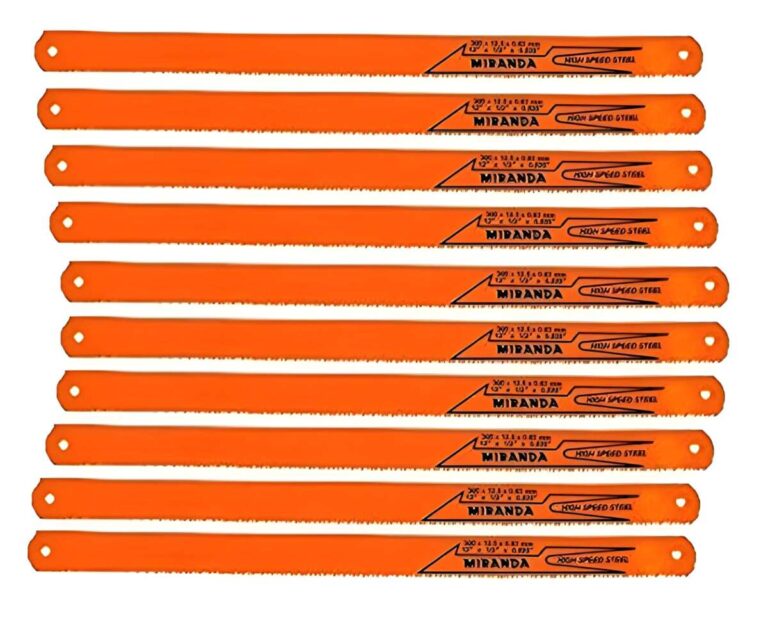
How To Cut Metal With A Hacksaw: Easy Guide
A hacksaw can cut many common metals found in U.S. homes, garages, and workshops. The key is to use the right blade, secure the work, and make long, steady strokes without forcing the saw.
For most jobs, you need a hacksaw, a sharp blade with the right tooth count, a vise or clamp, eye protection, and a file for removing sharp burrs. This guide explains how to cut steel, aluminum, copper, threaded rod, conduit, and similar metal parts by hand.
Introduction
A hacksaw is a hand saw made for cutting metal. It has a rigid frame and a thin, replaceable blade with small teeth. Unlike a wood saw, a hacksaw removes metal slowly and works best with steady pressure.
This method suits many small repair and fabrication tasks in the United States, such as cutting EMT conduit, steel rod, bolts, pipe, brackets, and aluminum stock. It is not the right tool for cutting live electrical parts, pressurized pipe, large structural members, or metal with an unknown coating.
What You Need Before Cutting
Gather the right tools and prepare the work area before you start. Good preparation prevents most problems, including crooked cuts, broken blades, and flying metal chips.
Basic tools and supplies
- Hacksaw frame
- New or sharp hacksaw blade
- Bench vise or strong clamp
- Safety glasses with side protection
- Work gloves for handling sharp metal edges
- Flat file or deburring tool
- Tape measure or ruler
- Permanent marker or scribe
- Cutting oil, when suitable for the metal
- Hearing protection if the cut creates a loud vibration
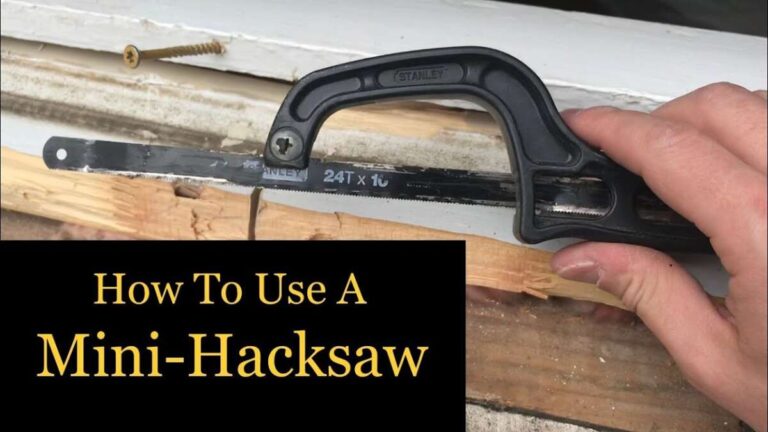
A standard 12-inch hacksaw is suitable for most household and workshop jobs. Smaller compact hacksaws can work in tight spaces, but their shorter stroke takes more effort.
Check the hacksaw
Before use, inspect the frame and blade.
- Make sure the frame is not bent or cracked.
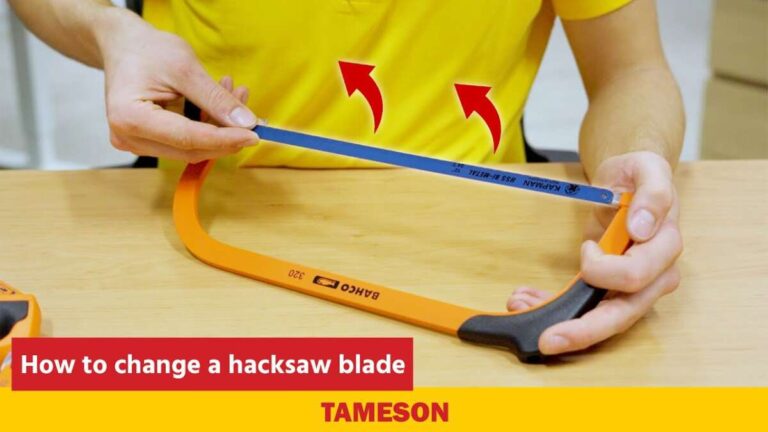
- Check that the blade is tight and straight.
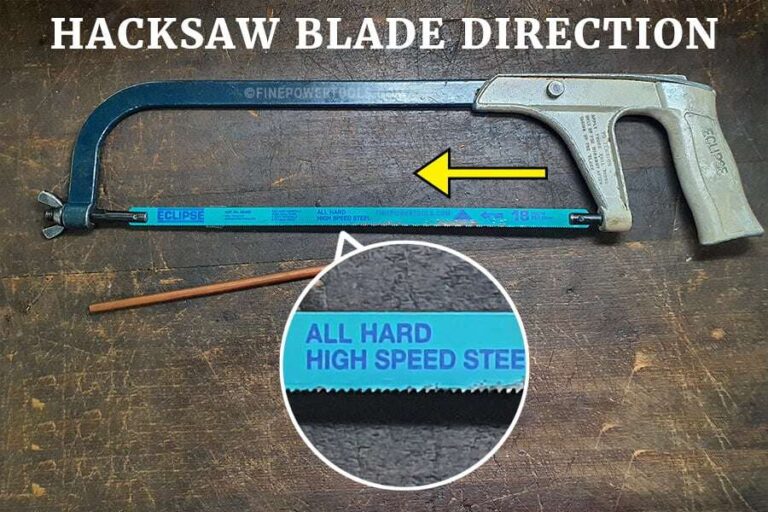
- Confirm that the teeth point forward, away from the handle.
- Replace a blade with missing, dull, or damaged teeth.
- Make sure the blade sits fully in both mounting pins.
Most hacksaw blades are installed with the teeth facing forward because the saw cuts on the push stroke. Some specialty frames may use a different setup, so check the frame instructions if the design is unusual.
Choose the right blade
Hacksaw blades are commonly rated by teeth per inch, or TPI. A higher TPI blade has smaller teeth and makes a smoother cut in thin material. A lower TPI blade has larger teeth and removes metal faster from thicker stock.
| Metal thickness | Useful blade range | Typical use |
|---|---|---|
| Less than 1/8 inch | 24–32 TPI | Sheet metal, thin-wall tubing |
| About 1/8 to 1/4 inch | 18–24 TPI | Brackets, conduit, small tubing |
| More than 1/4 inch | 14–18 TPI | Rod, bar stock, thick-wall pipe |
These ranges are starting points, not strict rules. The blade should have at least two or three teeth in contact with the metal during the cut. If the teeth are too large for the material, they may catch and break. If the teeth are too fine, the blade may clog and cut very slowly.
Bimetal blades are often a useful general choice. They combine a flexible blade body with harder teeth. Carbon-steel blades can work for light jobs but may dull or break sooner.

How to Cut Metal With a Hacksaw
Follow these steps for a clean and controlled cut.
1. Measure and mark the cut
Measure the part with a ruler or tape measure. Mark the cut line with a permanent marker, machinist’s scribe, or fine-tip paint marker.
For a cut that must be precise, wrap masking tape around round stock and align the tape edges. Check the measurement around the full part. A mark that slopes around a pipe can produce an angled cut.
If the cut will remove a section, mark the waste side clearly. This helps you avoid cutting the wrong side of the line.
2. Secure the metal
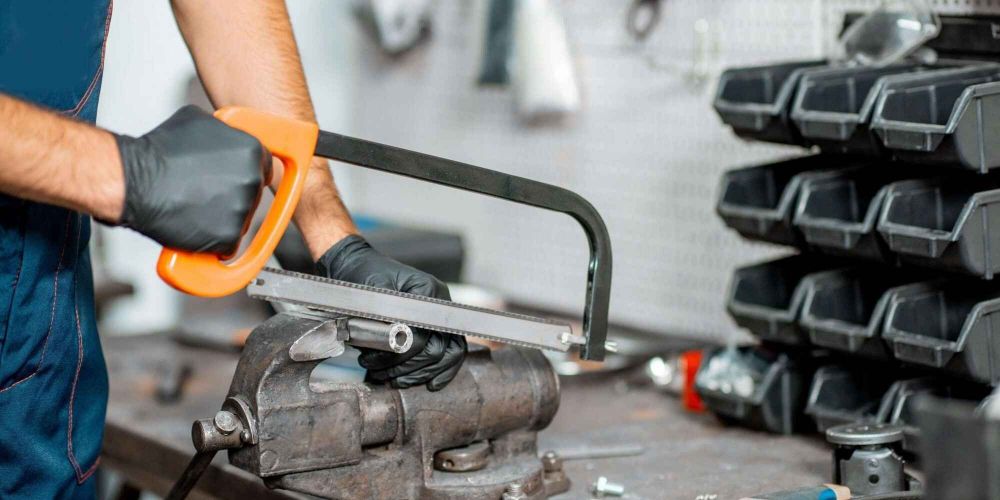
Clamp the work firmly in a bench vise. Place the cut line close to the vise jaws, but leave enough room for the hacksaw frame to move.
For round metal, tighten the vise enough to prevent movement without crushing thin-wall tubing. Use soft jaw covers if the surface must remain clean.
The metal should not chatter, twist, or lift during the cut. A moving workpiece makes the cut less accurate and can cause the blade to bind.
3. Set a comfortable stance
Stand with a stable footing and keep the hacksaw in line with the cut. Hold the handle with your dominant hand. Place your other hand on the front of the frame to guide it.
Keep your shoulders relaxed. Let your arms guide the saw rather than using your whole body to push it. Position yourself so the blade can travel forward and back without hitting the vise or another object.
4. Start a shallow notch
Place the blade on the waste side of the mark. Use short, light strokes to create a small groove.
Keep the blade at about a 90-degree angle to the material for a straight cut. On wide stock, you can start with the blade slightly angled to give the teeth a smaller entry area, then level the saw once the groove is established.
Do not begin with hard, fast strokes. A light start helps the teeth stay on the line.
5. Use long, steady strokes
Once the groove is established, use smooth strokes across as much of the blade as the work area allows. Apply firm pressure on the forward stroke and reduce pressure as you pull the saw back.
The blade should cut on the push stroke. Do not bear down on the return stroke. A steady rhythm usually cuts faster than short, jerky movements.
Keep the saw aligned with the mark. Let the teeth do the work. Excess force can bend the blade, widen the cut, or break teeth.
6. Use cutting fluid when appropriate
A small amount of cutting oil can reduce heat and friction when cutting steel or other tough metals. Apply it to the cut line with a brush or cloth, not with your fingers near the blade.
Do not assume oil is needed for every material. Aluminum can clog some blades, and a blade designed for aluminum may work better than adding fluid. Keep oils away from surfaces where contamination could cause a problem.
Follow the product label and keep oily rags away from sparks and heat.
7. Support the waste piece
As the cut nears completion, support the piece that will fall away. This prevents the metal from snapping, bending, or pinching the blade.
Reduce pressure during the final few strokes. Let the last section break free under control rather than forcing the saw through it.
8. Finish and deburr the cut
After cutting, inspect the edge. Use a flat file to remove sharp burrs and small raised edges.
File from the cut edge toward the center of the part. For tubing, remove burrs from both the outside and inside edges. A deburred edge is safer to handle and easier to fit.
Clean away metal chips with a brush. Do not wipe loose chips with your bare hand.

How to Get a Straight, Clean Cut
A straight cut comes from stable work, the correct blade, and consistent motion. Cutting harder is usually not the answer.
Use these habits:
- Keep the blade square to the material.
- Start on the waste side of the line.
- Use a fresh blade.
- Keep the work close to the vise jaws.
- Take long strokes when space allows.
- Watch the blade, not just the end of the handle.
- Slow down as the blade approaches the far side.
- Check the cut from more than one angle.
If the cut starts to wander, stop and inspect it. Continuing to force the blade can make the error worse. You may be able to correct a slight angle by changing the blade position, but a badly angled cut is often easier to restart with a new mark.
For repeated cuts, make a simple guide from scrap wood or metal. The guide can help keep the blade square, but it must not interfere with the teeth or create a pinch point.

How to Cut Different Types of Metal
The best approach changes with the metal’s thickness, hardness, and shape.
Steel
Use a sharp bimetal blade, often in the 18–24 TPI range for common small stock. Apply moderate pressure and use cutting oil if the cut creates excess heat or friction.
Do not push so hard that the blade bows. A bowed blade can make an uneven cut and may snap.
Stainless steel
Stainless steel is harder to cut by hand than mild steel. Use a sharp, fine-to-medium blade and maintain a steady pace. Avoid stopping and rubbing the blade in one spot, because heat can build quickly.
Let the teeth cut rather than scraping the surface. Replace the blade if it becomes dull.
Aluminum
Aluminum is soft, but it can clog hacksaw teeth. Use a blade intended for nonferrous metals when possible. A suitable lubricant can reduce clogging, but keep the blade clean and avoid excessive pressure.
A coarse blade may grab thin aluminum. For thin sheet or tubing, a finer blade often gives better control.
Copper and brass
Copper and brass are generally easy to cut with a sharp hacksaw blade. Thin-wall tubing can collapse if clamped too tightly, so use light vise pressure and support the material well.
Deburr the inside of tubing after the cut. The burr can restrict flow or damage wires pushed through conduit.
Threaded rod and bolts
Cut threaded rod with a fine-to-medium blade. Thread a nut onto the rod before cutting. After the cut, file the end lightly and remove the nut over the cut area.
The nut can help restore the thread as it comes off, but it will not fix badly crushed or distorted threads. For a clean result, keep the blade square and avoid excessive force.
EMT conduit and metal pipe
For conduit, mark the cut around the full circumference. A tube cutter may make a cleaner cut on some thin-wall tubing, but a hacksaw works well when used carefully.
Support the conduit close to the cut. Afterward, remove the inner and outer burrs. Burrs can cut hands or damage wire insulation.

Troubleshooting Hacksaw Problems
Most cutting problems have a simple cause. Stop cutting before making an adjustment.
| Problem | Likely cause | Fix |
|---|---|---|
| Blade slips off the mark | Cut started too fast or with too much force | Make a shallow notch with light strokes |
| Blade breaks | Excess pressure, twisting, or poor tension | Use steady strokes and keep the blade straight |
| Cut is angled | Saw was not square or work moved | Re-clamp the part and check the blade angle |
| Cutting takes too long | Blade is dull or TPI is too high | Replace the blade with the right tooth size |
| Teeth clog | Soft metal or unsuitable blade | Use a blade for aluminum or nonferrous metal |
| Metal vibrates | Work is not clamped close enough | Move the cut nearer the vise and tighten the clamp |
| Teeth strip from the blade | Too few teeth engaged or excessive force | Use a finer blade and lighter pressure |
| Edge is very rough | Dull blade, bent blade, or rushed finish | Replace the blade and file the edge |
If the blade binds, stop and pull it back gently. Do not twist the frame to free it. Check whether the work has shifted or the cut is closing around the blade.
If the metal becomes too hot to touch, pause and let it cool. Excess heat can dull the blade and may damage nearby finishes.

Hacksaw Safety Rules
Use a hacksaw only when the workpiece and cutting conditions are under control. A hacksaw is slower than a power tool, but it can still cause cuts, eye injuries, and puncture wounds.
Wear safety glasses whenever you cut metal. Small chips can break from the blade or workpiece and travel farther than expected.
Secure the metal before starting. Never hold a small piece in your hand while sawing. Keep your free hand away from the blade path and do not place fingers under the cut.
Do not cut:
- Live electrical wires or energized components
- Pressurized gas, steam, water, or hydraulic lines
- Containers that may hold flammable vapor
- Unknown painted or coated metal without assessing the coating
- Load-bearing or structural members without proper approval
- Metal near flammable liquids, vapors, or combustible dust
If the metal may contain lead, asbestos, or another hazardous coating, stop and identify the material before cutting. Mechanical cutting can release hazardous dust or chips. Workplace projects may also require controls under applicable OSHA rules and local requirements.
Gloves can protect against sharp edges, but they do not replace safe positioning. Keep loose clothing, jewelry, and long hair away from the blade and work area.

Hacksaw vs. Other Metal-Cutting Tools
A hacksaw is useful when you need control, low noise, and no power source. It is not always the fastest or cleanest option.
| Tool | Best for | Main limitation |
|---|---|---|
| Hacksaw | Small repairs, conduit, rod, brackets | Slow on thick stock |
| Tubing cutter | Round thin-wall tubing | Limited access and size range |
| Metal-cutting band saw | Repeated or accurate cuts | Larger, powered equipment |
| Angle grinder with cutoff wheel | Fast cuts in many metals | Sparks, noise, heat, and more kickback risk |
| Reciprocating saw with metal blade | Demolition and awkward access | Less control and rougher cuts |
| Bolt cutter | Certain soft bolts, chain, and rod | May crush or deform the cut end |
Choose a hacksaw when the part is small enough to hold securely and the cut does not justify powered equipment. Choose another tool when the metal is thick, the number of cuts is high, or the work cannot be clamped safely.

Frequently Asked Questions
Should hacksaw teeth face forward or backward?
For most standard hacksaws, the teeth face forward, away from the handle. The blade then cuts as you push the saw. Install the blade according to the frame’s instructions if your hacksaw uses a different design.
How tight should a hacksaw blade be?
The blade should be tight enough to stay straight under normal pressure. It should not sag or twist during a stroke. Do not overtighten it, because excessive tension can damage the frame or cause the blade to break.
Can a hacksaw cut stainless steel?
Yes. Use a sharp blade suited to hard metal, keep the saw square, and use steady pressure. Do not force the cut or allow the blade to rub without cutting.
Why does my hacksaw blade keep breaking?
Common causes include too much pressure, a loose workpiece, a bent frame, incorrect blade installation, or twisting the saw during the stroke. A blade with too few teeth engaged in the metal may also catch and break.
Can I use a hacksaw to cut a bolt?
Yes. Mark the bolt, clamp it securely, and use a suitable blade. Thread a nut onto the bolt first if you need to restore the threads after cutting. File the cut end before removing the nut.
What should I do if the cut is not straight?
Stop and check the blade, vise, and workpiece. Re-clamp the metal, confirm that the blade is square, and start a new shallow groove on the correct side of the mark. Do not force the blade sideways to correct a large error.
Key Takeaways
- Use a sharp blade with the right TPI for the metal thickness.
- Secure the work firmly in a vise or clamp.
- Start with light strokes, then use long, steady push strokes.
- Keep the blade square and avoid twisting it.
- Support the waste piece near the end of the cut.
- File away burrs before handling or installing the part.
- Stop if the material is energized, pressurized, coated with an unknown substance, or unsafe to clamp.
Conclusion
To cut metal with a hacksaw, mark the work, clamp it firmly, install the blade with the teeth facing forward, and make controlled strokes. The right blade and a steady pace matter more than force.
After the cut, inspect the edge, remove burrs, and clean up metal chips safely. If the part is hazardous, structural, pressurized, or too large to secure, use a qualified professional or a tool suited to that work.
Recent Tool Guides
 Hammer
How To Hammer Flowers Onto Paper: Easy Guide
Learn how to hammer flowers onto paper with simple steps, helpful tips, and beautiful results for...
Read Guide → Wrench
How To Use A Hex Wrench: Easy Step-By-Step Guide
Learn how to use a hex wrench correctly with simple steps, helpful tips, and common mistakes...
Read Guide → Hacksaw
How To Cut Curtain Pole With Hacksaw: Easy Guide
Learn how to cut curtain pole with hacksaw safely and neatly. Follow simple steps for accurate...
Read Guide → Wrench
How To Use A Husky Torque Wrench: Easy Guide
Learn how to use a Husky torque wrench correctly with simple steps, torque settings, and safety...
Read Guide → Hammer
How To Hold A Hammer: Safe Grip Guide
Learn how to hold a hammer with the right grip, stance, and technique for safer, more...
Read Guide → Hacksaw
How To Cut Flexible Metal Conduit With Hacksaw: Easy Guide
Learn how to cut flexible metal conduit with hacksaw safely and cleanly. Follow simple steps for...
Read Guide →